
Reviewed · WILDEBEEST MIGRATION SAFARIS
8 Days Great Migration – Grumeti River
Follow the herds across northern Tanzania. This safari links Tarangire, Lake Manyara, the Serengeti, and Ngorongoro Crater, with the best chance of seeing wildebeest near the Grumeti River between May and July. I especially like the unlimited mileage policy, which gives your guide freedom to spend more time searching for animals, and the small group limit of six, which should make the 4×4 more comfortable and personal.
I also like the mix of wildlife and local culture. The walk through Mto wa Mbu includes farms, a local beer factory, a school, and a carving factory, while the Maasai village visit adds another point of view before you reach the Serengeti. The main caution is that the advertised title says eight days, while the supplied schedule covers six safari stops and describes the duration as about six days. Confirm the exact number of nights, accommodations, and final drop-off before paying.
In This Review
- Key points to know before booking
- What this six-day route actually includes
- Tarangire: elephants, birds, and dry-season wildlife
- Mto wa Mbu and Lake Manyara: a useful cultural pause
- The Serengeti entrance and the Grumeti River crossing
- Two Serengeti days give you time, not a guarantee
- Ngorongoro Crater: a powerful final game drive
- Guides, vehicles, and the value of unlimited mileage
- What the $4,984.62 price covers
- Who should choose this safari?
- Should you book the Grumeti River safari?
- FAQ
- How long does this safari last?
- What is the best time to see the Grumeti River migration?
- How many people can join the safari?
- What kind of vehicle is used?
- Are park fees and meals included?
- What is the cancellation policy?
Key points to know before booking
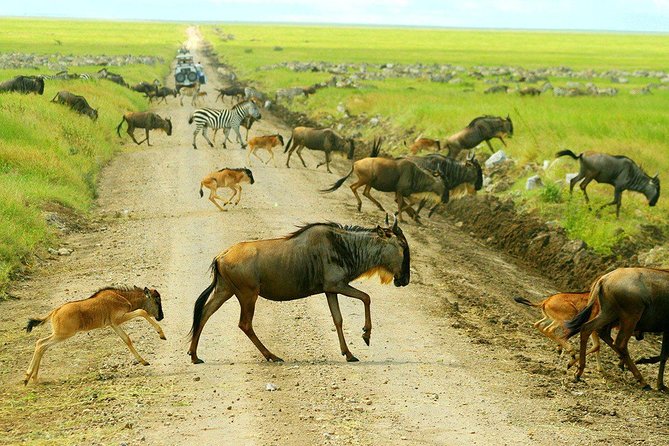
- The Grumeti River timing matters: The migration may pass through this part of the Serengeti between May and July, but animal movements are seasonal and never guaranteed.
- Unlimited driving is a real advantage: The company says drivers are not limited by mileage while searching for wildlife, giving you more flexibility in the parks.
- The group is capped at six: You travel in a 4×4 with a pop-up roof, a useful setup for photography and game viewing.
- Mto wa Mbu adds local contact: The walking tour visits farms, a school, a beer factory, and a carving workshop rather than focusing only on wildlife.
- The safari covers Tanzania’s major wildlife areas: Tarangire, Lake Manyara, three Serengeti days, and Ngorongoro Crater create a strong first-time safari route.
- Check the operator details carefully: Positive feedback praises guide Mike and the company’s care, but one serious complaint describes being left stranded and raises concerns about advance payment.
What this six-day route actually includes
The route begins in Arusha at 7:30 a.m. and moves west toward Tarangire National Park. From there, you continue to Lake Manyara, enter the Serengeti for three separate days, and finish at Ngorongoro Crater.
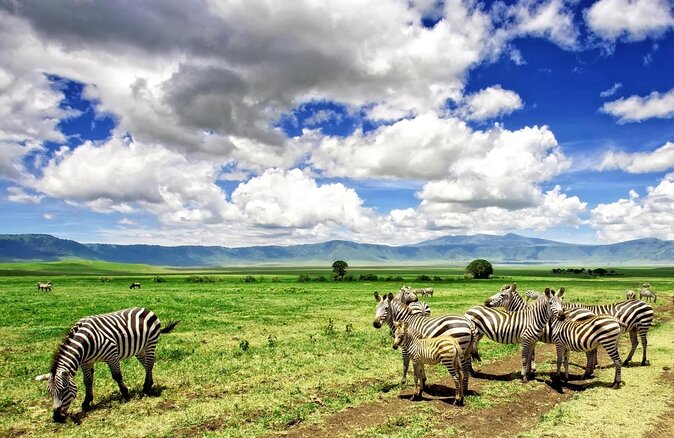
That order gives you a good variety of habitats and wildlife. You get elephants and baobab country in Tarangire, lake and forest scenery at Manyara, open grassland in the Serengeti, and a compact wildlife basin at Ngorongoro.
The stated price is $4,984.62 per person. That is not a budget safari price, but it includes several major costs: 4×4 transport, park entrance fees, full-board accommodation, drinking water, government taxes, and an English-speaking or other-language guide. Since the accommodation is described only as Recommended Accommodation, you need the actual lodge and camp names before deciding if the price is fair.
The six-person limit is helpful. A full vehicle can make wildlife viewing feel crowded, especially when everyone wants a clear view through the open roof. A smaller group also gives you a better chance to discuss what you want to see, such as predators, birds, elephants, or migration crossings.
More migration safaris:
- 8 Days Great Wildebeest Calving Migration Safari from Arusha
★ 5.0 · 254 reviews - 10-Day Serengeti Wildebeest Migration Safari from Arusha
★ 5.0 · 218 reviews - 8 Day Spectacular Migration Serengeti mid -Range Tanzania Safari
★ 5.0 · 161 reviews
Tarangire: elephants, birds, and dry-season wildlife
Your first safari day begins with an early breakfast, a packed lunch, and a drive to Tarangire National Park. The planned park time is about eight hours, so this is a full opening day rather than a quick stop on the way to another destination.
Tarangire is known for large elephant concentrations and a high number of breeding bird species. The Tarangire River draws wildebeest, zebra, and gazelles, which in turn attract lions, cheetahs, and leopards. The park can be particularly productive in the dry season, when animals gather near remaining water.
The route also lists less commonly seen species such as kudu, oryx, and gerenuk. That gives your guide plenty to look for beyond the standard safari checklist. The giraffe-like gerenuk, in particular, is a special sight if you happen to find one.
I like starting here because Tarangire gives you a strong wildlife introduction before the longer Serengeti days. You can settle into the rhythm of scanning the bush, watching animal behavior, and accepting that some sightings take patience.
The trade-off is time. After an early start and a long game drive, you continue to your accommodation for dinner and the night. Ask how far the accommodation is from Tarangire, since the schedule does not name the property or explain the evening transfer.
Mto wa Mbu and Lake Manyara: a useful cultural pause
The second day begins with a walking tour in Mto wa Mbu, a farming town described as home to more than 120 different African tribes. The walk visits rice and banana plantations, a local beer factory, a school, and a carving factory.
This is one of the most distinctive parts of the route. Safari programs can become a string of vehicle rides and animal sightings, so time on foot in a working town adds social and cultural context. You get to see how farming, craft work, education, and local production fit together.
The schedule does not say how long each stop lasts, so you should ask if you have a strong interest in the village portion. It is also worth confirming whether the beer factory visit is a viewing stop or includes a tasting, since that detail is not provided.
Lake Manyara National Park is only a short drive from Mto wa Mbu. The park centers on a soda lake that can attract pink-hued flamingos, and it is also known for baboons, birdlife, elephants, giraffes, hippos, and buffaloes.
The scenery here changes quickly from the farming town to the park. The lake creates broad views, while the surrounding area offers a different feel from Tarangire’s river country. Bird lovers may find this day especially rewarding, although flamingo numbers can vary with conditions.
The planned duration is about seven hours. That makes this a shorter safari day than the later Serengeti outings, but it still combines a walking tour with a national park drive. You should expect an active day and bring suitable walking shoes, sun protection, and water, although unlimited mineral water is included.
The Serengeti entrance and the Grumeti River crossing
On the third day, you drive toward the Serengeti and stop at a Maasai village along the way. The visit is intended to give you an insight into the lifestyle of the Maasai, often described through their pastoral traditions and warrior culture.
As with Mto wa Mbu, the value depends on how the stop is handled. A respectful, locally guided visit can add meaning to the journey. Ask what is included and how village visits are organized so you know what to expect.
After a picnic lunch, you enter the Serengeti for a game drive. The planned day lasts about nine hours, and the park itself is vast. Reaching the right part of the Serengeti can take time, but the drive also becomes part of the safari experience.
The central promise of this trip is the possibility of seeing wildebeest cross the Grumeti River. The schedule identifies May through July as the likely window. During a crossing, the herds face fast-moving water and crocodiles, with predators waiting nearby.
That is an extraordinary natural event, but you should treat it as a possibility, not a scheduled performance. The migration moves according to rain, grass, water, and animal behavior. Even during the right months, the herds may be elsewhere, and a crossing may happen when your vehicle is not in the right place.
The company’s unlimited mileage policy is especially useful here. A driver who is not restricted to a fixed distance can spend more time following signs of the herds or searching other areas. Still, unlimited mileage cannot control weather or animal movements.
A few more options to weigh up in Arusha
- Balloon Safari & Bush Breakfast in Serengeti – Miracle Experience
★ 5.0 · 1,646 reviews - Tanzania Classic – 7 Days
★ 5.0 · 1,151 reviews - 4 Days Group Camping Safari
★ 5.0 · 1,101 reviews - 5 Days Group Camping Safari
★ 5.0 · 730 reviews
Two Serengeti days give you time, not a guarantee
The fourth day starts early and is devoted to following the herds across the plains. The planned duration is about ten hours, so you should expect a long day in the vehicle with an early departure and a return for dinner.
The Serengeti is described as a place where you may see the Big Five: lion, elephant, leopard, rhino, and buffalo. It also supports large herds of hoofed animals and the predators that follow them. The appeal of this day is not only one dramatic sighting. It is the chance to watch the wider movement of animals across open country.
An early start makes sense. Cooler morning hours can be productive for wildlife, and a full day gives your guide more time to adjust the route. The schedule also highlights views from the accommodation over the Serengeti, though the actual property is not named.
The fifth day focuses on the central Serengeti. This area is known for lions and leopards, with game viewing described as strong throughout the year. You might also see cheetahs, elephants, giraffes, hippos, ostriches, and other species.
The day again lasts about ten hours. Two long Serengeti days are a major strength of the route because they reduce the feeling of simply passing through. You have time to wait for a predator to become active, search for cats in different areas, or pause for the scenery.
There is a practical cost. Three consecutive Serengeti days can be tiring, particularly if you are not comfortable spending many hours in a safari vehicle. The open-roof 4×4 helps with views and photographs, but it does not change the basic fact that safari travel involves long periods of sitting on uneven roads.
Ngorongoro Crater: a powerful final game drive
The final scheduled stop is Ngorongoro Crater, with about seven hours planned for the day. The crater is described as sheltering close to 30,000 animals, including the Big Five, and the list of possible sightings includes zebra, buffalo, lions, wildebeest, baboons, elephants, flamingos, ostriches, hippos, cheetahs, and black rhino.
Ngorongoro offers a different kind of wildlife viewing from the Serengeti. Instead of endless open plains, the crater creates a more contained setting where many animals can be found within a relatively compact area. That can make it a strong place to finish a first safari.
The scenery is a major part of the appeal. The changing colors and clouds are described as almost surreal, and the crater is recognized as one of Africa’s Seven Natural Wonders.
The phrase last game drive needs clarification. The schedule says you drive to recommended accommodation in the late afternoon for dinner and an overnight stay, but it does not say whether this is the final night of the package or whether another transfer follows. Confirm the departure plan before booking flights or adding other arrangements.
Guides, vehicles, and the value of unlimited mileage
The safari uses a 4×4 with a pop-up open roof for the entire trip. That design gives you a better upward view for giraffes, birds, and elephants, and it is useful for photography. You should still ask about seating arrangements if you are booking with friends or family.
The company promises professional guides with wildlife knowledge and says drivers are not limited while searching for animals. That policy may matter more than a polished vehicle or fancy camp. A guide who can respond to your questions and adapt the day can make a large difference in the Serengeti.
Previous praise has singled out Mike for patience, driving, organization, and special care. Another positive account credits Mike and the company owner with making no shortcuts while covering central and northern Serengeti. Those comments point to the qualities you want most: a driver who listens, watches carefully, and does not rush every sighting.
There is also a serious warning to weigh. One unhappy customer described being left stranded in Ngorongoro and accused a person named Godfrey of mishandling advance payment. The company response apologized and said Godfrey was only one part of the business, while also referring to money problems involving an accountant.
You should not ignore that complaint simply because other feedback praises the service. Before sending a large advance payment, get written confirmation of the company’s legal name, payment terms, accommodation bookings, airport pickup, emergency contact, and what happens if an operator fails to deliver. Free cancellation is offered up to 24 hours before the 7:30 a.m. start, but that policy does not remove the need to check payment protection and contract details.
What the $4,984.62 price covers
The package includes:
- 4×4 transport with a pop-up open roof
- National park entrance fees
- Full-board accommodation listed in the schedule
- Unlimited mineral water
- Government taxes
- An English-speaking or other-language guide
- Unlimited mileage during the safari
Tips, travel insurance, and international flights are not included. Pickup is offered, and group discounts may be available.
The price can make sense if the accommodation is of a good standard and the package really covers all six safari days without extra park fees or transfer charges. Park entrance fees and full-board meals can add a large amount to a Tanzania safari, so having them bundled makes budgeting easier.
But the accommodation details are too vague to judge the value fully. Ask for the exact names, room type, meal plan, and location of every lodge or camp. Also clarify the mismatch between the eight-day title and the roughly six-day schedule. Two extra nights could change the price calculation considerably.
Who should choose this safari?
I would consider this route for a first safari in northern Tanzania, especially if you want the classic combination of Tarangire, Lake Manyara, Serengeti, and Ngorongoro. It suits people who want wildlife variety, a possible migration sighting, and some contact with local communities rather than a park-only trip.
It is also a good fit for photographers and wildlife fans who value time in the parks. The two full Serengeti days, plus the extra central Serengeti day, give you more chances to find lions, leopards, cheetahs, elephants, and large herds.
You may want a different plan if you prefer slow mornings, luxury lodges, or short driving days. The schedule includes several days of seven to ten hours, early departures, packed lunches, and long vehicle rides.
Families and small groups may appreciate the six-person maximum and the group discount option. Still, ask about child policies, room arrangements, and vehicle seating because those details are not supplied.
Should you book the Grumeti River safari?
This is an appealing northern Tanzania route with strong wildlife coverage, a small group limit, and an unlimited mileage promise that could help your guide search widely. Its best feature is the balance between major parks, cultural stops, and three Serengeti days.
I would book only after receiving the missing details in writing. Confirm the true trip length, every accommodation, the final transfer, the guide assigned to your vehicle, and the payment protections. Ask specifically about the company’s response to the Ngorongoro complaint and avoid assuming that a possible Grumeti crossing is guaranteed.
If those checks are satisfactory, this safari could offer good value for someone who wants a serious wildlife trip rather than a quick park sampler. If the operator cannot clearly explain the eight-day versus six-day difference or the accommodation plan, choose a better-documented option.
FAQ
How long does this safari last?
The tour title refers to eight days, but the provided duration is about six days and the schedule lists six main stops. Confirm the exact number of days and nights before booking.
What is the best time to see the Grumeti River migration?
The schedule identifies May through July as the period when wildebeest may cross the Grumeti River. A crossing is possible during that window but is not guaranteed.
How many people can join the safari?
The tour has a maximum of six travelers.
What kind of vehicle is used?
Transport is provided in a 4×4 vehicle with a pop-up open roof for the entire safari.
Are park fees and meals included?
Yes. National park entrance fees and full-board accommodation are included. Tips, travel insurance, and international flights are not included.
What is the cancellation policy?
You can cancel at least 24 hours before the 7:30 a.m. start time for a full refund. Cancellations or changes made less than 24 hours before the start are not accepted for a refund.
Just added in Arusha
- Safari “Kifaru” – 5 days in the most famous Parks in the world★ 5.0 · 4 reviews
- Saadani Day Trip★ 5.0 · 13 reviews
- 3 Days Tanzania Short and Spicy★ 5.0 · 6 reviews
- 5 Day Tanzania Safari Camping Adventure Private Tour★ 5.0 · 2 reviews
- Day Trip to Ngorongoro Crater from Arusha★ 5.0 · 1 review
- SERENGETI NATIONAL PARK Tour★ 4.5 · 5 reviews
- 3 Days Serengeti Park & Ngorongoro Crater Adventure Safari★ 5.0 · 8 reviews
- 6 Days Tanzania Bush Experience Safari★ 5.0 · 6 reviews
Wildebeest Migration Safaris, compared.
8 Days Great Wildebeest Calving Migration Safari from Arusha
Read our review →
10-Day Serengeti Wildebeest Migration Safari from Arusha
Read our review →
8 Day Spectacular Migration Serengeti mid -Range Tanzania Safari
Read our review →
9-Day Serengeti Migration Footsteps Tanzania Safari
Read our review →
Private 6-Day Great Migration Ndutu Serengeti Safari Tour
Read our review →
4 Day Great Migration Safari Serengeti & Ngorongoro Crater
Read our review →Browse the lists this tour appears in