
Reviewed · HIKING & TREKKING
9 Days Kilimanjaro Hiking or Climbing via Northern Circuit route
Africa’s highest summit rewards patience. This 9-day Kilimanjaro climb uses the Northern Circuit, beginning on the quieter Lemosho side and circling north before joining the final approach to Uhuru Peak. I like the gradual altitude schedule, which gives you more time to adjust, and I like the route’s changing scenery, from rainforest and heather to volcanic desert and ice-cold summit terrain.
The price is $1,584 per person, with park fees, crew wages, meals, transfers, and airport pickup and drop-off included. That is strong value for a supported mountain trip, though you still need to budget for tips, flights, visas, insurance, and personal hiking gear.
The main caution is the summit day. Day 8 can take about 14 hours, begins around midnight, and includes a major climb from School Hut to Uhuru Peak followed by a long descent to Mweka Camp. This is not a sightseeing walk with a summit photo added on. It is a serious high-altitude trek.
In This Review
- Key points before you book
- Why nine days matters on Kilimanjaro
- Day 1: Londorossi Gate to Mti Mkubwa
- Day 2: Mti Mkubwa to Shira 1 Camp
- Day 3: Exploring the Shira Plateau
- Day 4: Lava Tower and Moir Hut
- Day 5: Moir Hut to Buffalo Camp
- Day 6: Buffalo Camp to Third Cave
- Day 7: Third Cave to School Hut
- Day 8: The midnight push to Uhuru Peak
- Day 9: Mweka Camp to Moshi
- What the $1,584 price really covers
- Who should choose this route?
- Booking advice and cancellation terms
- Should you book the Northern Circuit climb?
- FAQ
- How long is the Kilimanjaro Northern Circuit tour?
- Where does the climb begin?
- What time does the tour start?
- Is airport pickup included?
- Are meals included?
- Is accommodation included before and after the climb?
- What happens if bad weather cancels the climb?
Key points before you book
- The Northern Circuit takes nine days, giving you a slower altitude gain than shorter Kilimanjaro routes.
- The route begins at Londorossi Gate and ends at Mweka Gate, with access through the Lemosho trailhead.
- The summit push starts around midnight, reaching Uhuru Peak at 19,341 feet before descending the same day to Mweka Camp.
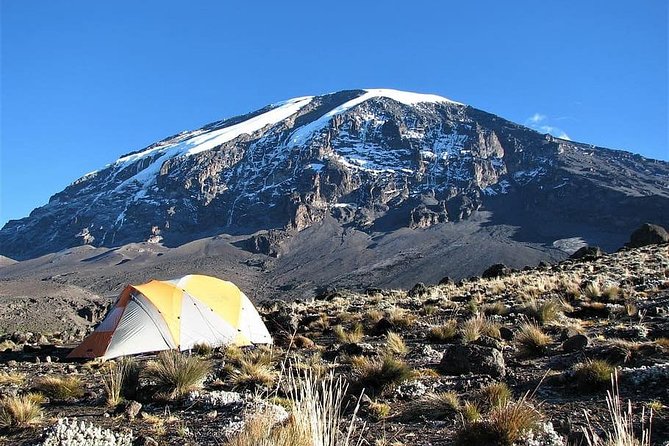
- The scenery changes sharply, from rain forest and tall heather to the Shira Plateau, alpine desert, volcanic rock, and Arctic summit conditions.
- Meals, park costs, crew wages, and transfers are included, but tips, flights, insurance, visas, and gear are extra.
- The route has a remote feel, especially around Moir Hut, Buffalo Camp, and Third Cave on Kilimanjaro’s northern slopes.
Why nine days matters on Kilimanjaro
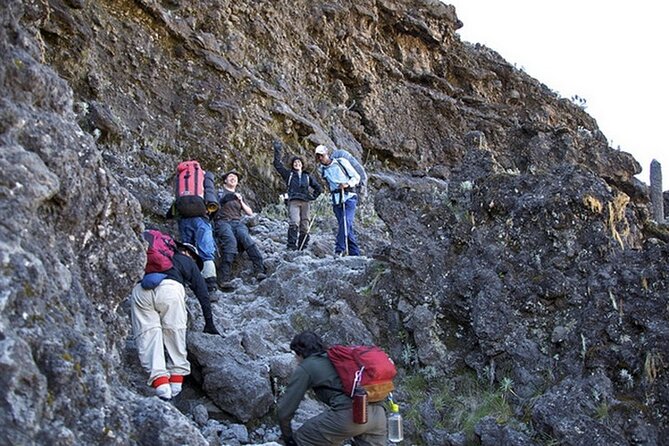
Kilimanjaro is not a technical climb in the usual mountaineering sense. You do not need ropes or rock-climbing skills on this route, based on the information provided. The hard part is altitude, cold, fatigue, and the need to keep moving when your body would prefer a warm bed.
The Northern Circuit is useful because it spreads the climb over nine days. You spend several nights above 10,000 feet before summit day, giving your body more time to adjust. One earlier climber described the route as a good choice for less experienced hikers because of this slower adjustment period.
That does not remove the risk of altitude sickness. It simply gives you a better schedule than a very short route. You still need to walk slowly, follow your guide’s instructions, drink as directed, and speak up if you feel unwell.
The route also has a quieter character than the busiest southern approaches. The northern slopes are remote, and the program specifically describes Buffalo Ridge and the valleys beyond it as rarely traveled. If you want a sense of open mountain country rather than a steady line of tents, this is a good reason to choose the Northern Circuit.
One practical note: the advertised maximum is 500 people. That is a very large possible capacity, although it does not tell you the size of your actual departure group. Ask the operator how many climbers, guides, and support staff will be assigned to your specific date.
More treks in Moshi:
- Private Kilimanjaro Hike 7 Day Lemosho Route
★ 5.0 · 60 reviews - Best Kilimanjaro hiking day trip tour with Kilinge Adventures
★ 4.5 · 54 reviews - #1. Best Kilimanjaro Day hike Tour-Machame Route-ISMANI
★ 4.2 · 47 reviews
Day 1: Londorossi Gate to Mti Mkubwa
Your first day begins with departure from Moshi and a drive of about four hours to Londorossi Gate. You complete park entry formalities there before continuing by vehicle to the Lemosho trailhead.
The walk to Mti Mkubwa Camp is short by Kilimanjaro standards: about 6 kilometers, or 4 miles, taking 3 to 4 hours. You climb from 7,742 feet to 9,498 feet through rain forest.
This is a gentle introduction, but do not treat it as a throwaway day. The forest can be damp, and the trail winds through relatively undisturbed growth. It gives you your first taste of walking with a pack at altitude without immediately exhausting yourself.
Your overnight camp at Mti Mkubwa also brings the first change in routine. Days begin early, meals are taken on the mountain, and your body starts adapting to cooler nights and thinner air.
Day 2: Mti Mkubwa to Shira 1 Camp
The second day covers 8 kilometers, or 5 miles, in about 5 to 6 hours. You leave the rain forest and enter the heath zone, where tall grasses, heather, volcanic rock, and lichen replace the thicker greenery.
The route climbs through rolling ground and crosses several streams before reaching Shira Ridge. After the ridge, the trail drops gently toward Shira 1 Camp. This is where Kibo, Kilimanjaro’s main volcanic cone, first comes into view across the plateau.
The elevation rises from 9,498 feet to 11,500 feet. That gain is noticeable, but the walking time remains manageable. Keep your pace slow. The best strategy here is not to prove your fitness, but to save energy for the days ahead.
Shira is one of the memorable parts of this route because the forest disappears so quickly. You can feel the mountain opening up around you, with larger views and fewer signs of ordinary life.
Day 3: Exploring the Shira Plateau
Day 3 is a shorter walking day, covering 7 kilometers, or 4 miles, in around 3 to 4 hours. You move from Shira 1 to Shira 2 Camp at about 12,500 feet.
The trail crosses moorland meadows on the Shira Plateau. Wildflowers and distinctive Senecio trees add detail to the otherwise broad, open setting. This is a useful day for taking photographs, checking your equipment, and letting your body settle before the bigger altitude gain ahead.
The short distance can make this day feel easy. That is exactly why it matters. A rest-friendly schedule gives you time to adjust without wasting a full day in camp.
The downside is simple: the higher you go, the colder and more exposed the conditions can feel. You should have warm layers close at hand, even if the morning in Moshi was hot.
A few more options to weigh up in Moshi
- Kilimanjaro climb by Lemosho Route (7-day)
★ 5.0 · 651 reviews - Safari Serengeti And Ngorongoro
★ 5.0 · 288 reviews - Kilimanjaro climb, Machame Route (7-day)
★ 5.0 · 262 reviews - Kilimanjaro Climbing Lemosho Route 8 Days.
★ 5.0 · 186 reviews
Day 4: Lava Tower and Moir Hut
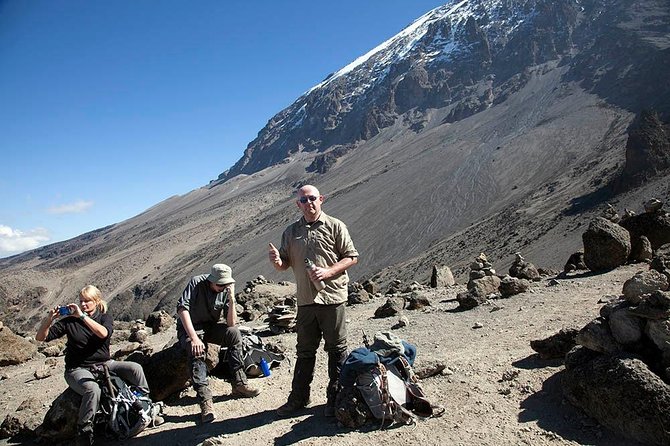
Day 4 is the first major altitude test. You climb from Shira 2 at 12,500 feet to Lava Tower at 15,190 feet, covering about 7 kilometers in 3 to 4 hours. Lava Tower is a striking volcanic rock formation, described in the program as about 300 feet tall.
From Lava Tower, you descend to Moir Hut at 13,580 feet. This second section covers another 7 kilometers and takes about 2 to 3 hours. The full day can last about eight hours.
This climb high and sleep lower pattern is valuable for acclimatization. You reach a substantial altitude during the day, then spend the night at a lower camp than Lava Tower. The walking is not the longest of the trip, but the thinner air can make the climb feel slow.
Moir Hut sits at the base of Lent Hills and is less used than many other camp areas. Optional walks on Lent Hills provide an extra chance to move at altitude, though your guide should decide how much is sensible based on your condition.
This is also a demanding day mentally. You may feel strong at the start and suddenly feel the altitude near Lava Tower. That is normal enough to discuss with your guide, not something to hide.
Day 5: Moir Hut to Buffalo Camp
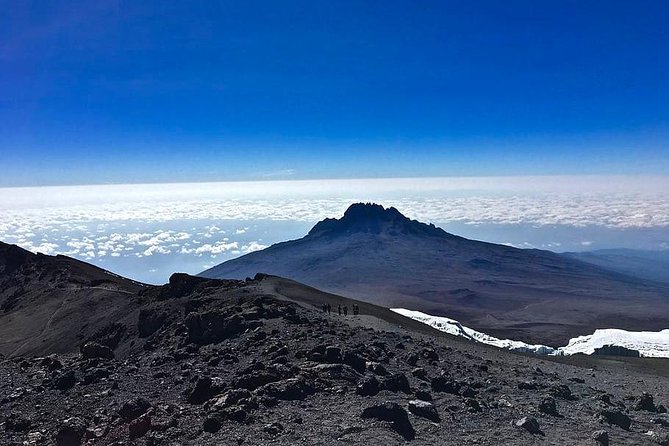
The fifth day covers 12 kilometers, or 7 miles, in 5 to 7 hours. You leave Moir Valley with a moderately steep climb, reach the top of Lent Hills, and then return to the main route.
The trail crosses a rock field and continues with gentle ups and downs to Buffalo Camp. The elevation changes only slightly, from 13,580 feet to 13,200 feet, but the distance and uneven ground require steady effort.
The reward is the view north across the plains toward the Kenya and Tanzania border. This side of Kilimanjaro has a more remote feel than the heavily photographed southern slopes.
You may find this day tiring because it lacks one long, obvious ascent. Instead, the route keeps undulating. Short rises can be surprisingly costly at 13,000 feet, so keep your walking rhythm even and avoid rushing downhill.
Day 6: Buffalo Camp to Third Cave
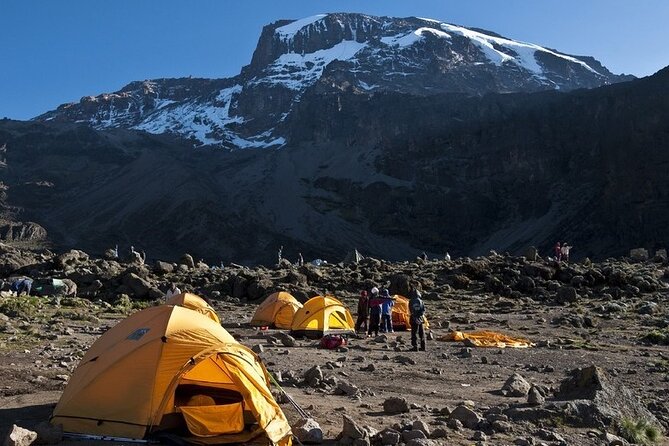
Day 6 continues across the northern side of the mountain. The route covers 8 kilometers in about 5 to 7 hours, with elevation dropping slightly from 13,200 feet to 12,700 feet.
You climb Buffalo Ridge, cross remote valleys, and continue toward Third Cave. The description of this section as rarely traveled is important. It suggests a quieter mountain experience, with more open space and fewer encounters along the path.
The terrain becomes increasingly sparse as you go higher. You are now well beyond the forest, and the scenery has a stark volcanic character. There is less shelter, so clothing and sun protection become increasingly important.
This is a good day to keep your expectations realistic. The distance is not huge, but the combination of altitude, rough ground, and several hours on your feet can wear you down. A calm pace is more useful than speed.
Day 7: Third Cave to School Hut
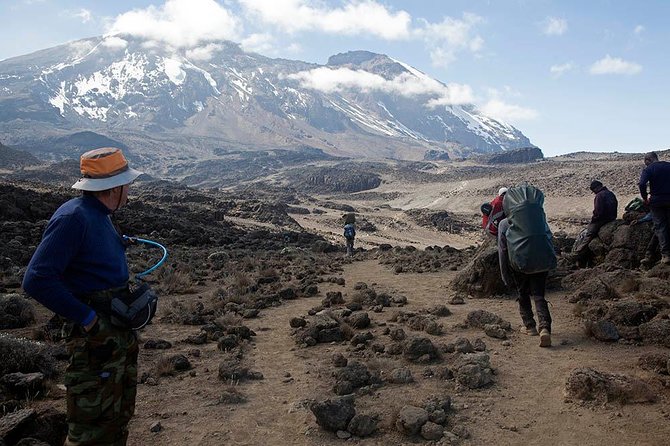
The seventh day is short in distance but important in preparation. You walk 5 kilometers, or 3 miles, in 4 to 5 hours, climbing from 12,700 feet to School Hut at 15,600 feet.
The trail crosses the Saddle, the broad high area between Kibo and Mawenzi. From here, the route feels increasingly serious. Vegetation is scarce, the air is thin, and the summit cone is close enough to dominate your attention.
At School Hut, you rest and eat an early dinner before the summit attempt. The early meal matters because you will likely try to sleep soon afterward, then rise around midnight for the final climb.
Do not expect a luxurious evening. The purpose of this camp is recovery and preparation. Lay out your summit clothing, water, snacks, headlamp, and gloves before trying to sleep. A few minutes of preparation can save a lot of fumbling in the dark.
Day 8: The midnight push to Uhuru Peak
This is the defining day of the climb. You leave School Hut around midnight and climb from 15,600 feet to Uhuru Peak at 19,341 feet. The ascent covers 6 kilometers and takes roughly 6 to 8 hours.
The climb begins in darkness, often in strong wind and intense cold. You take frequent short breaks while moving slowly upward. The final approach is physically hard, but the mental challenge can be just as large. Progress may feel painfully slow.
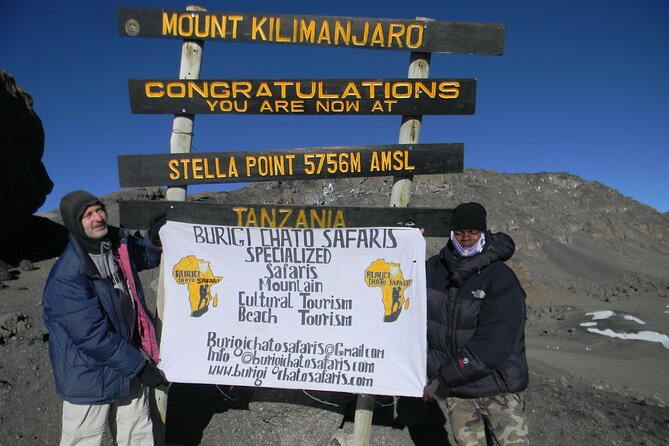
At Gilman’s Point, around 18,600 feet, you may reach the rim in time to see sunrise over Mawenzi Peak. That view is one of the strongest moments built into the route. From there, the trail continues along the crater rim toward Uhuru Peak, the highest point on Mount Kilimanjaro.
After the summit, you descend to Mweka Camp at 10,065 feet. This second section covers about 12 kilometers, or 7 miles, and takes another 4 to 6 hours. The total day can last about 14 hours.
That descent is not a minor add-on. Once you have reached the summit, your legs are tired, concentration is lower, and loose volcanic ground can make downhill walking awkward. Reaching Mweka Camp on the same day is efficient, but it is also one of the reasons this itinerary demands good preparation.
The summit habitat is listed as Arctic. Expect the coldest conditions of the trip there, even though temperatures and weather can vary. You need proper personal hiking gear, because gear is not included in the price.
Day 9: Mweka Camp to Moshi
The final day descends from Mweka Camp at 10,065 feet to Mweka Gate at 5,380 feet. The walk covers 10 kilometers, or 6 miles, and takes 3 to 4 hours through rain forest.
Lower sections can be wet and muddy. After several days in dry, exposed country, the return to thick forest feels like a major change. Trekking poles and shoes with good grip would be sensible, but personal equipment is your responsibility.
At Mweka Gate, you collect summit certificates. The route then continues for about another hour to Mweka Village, where a vehicle takes you back to your Moshi hotel.
This final transfer is included in the operating costs described for the trip. It is a welcome finish after the long summit day, though you should confirm the exact hotel arrangement before booking because the accommodation before and after the climb can either be arranged by the operator or booked directly by you.
What the $1,584 price really covers
At $1,584 per person, this trip offers a substantial package for nine days on the mountain. Included costs cover park fees and taxes, gate transfers, airport pickup and drop-off, crew wages, mountain operating costs, and full-board meals.
The meal allowance is listed as eight breakfasts, nine lunches, and eight dinners. That matches the mountain schedule, though you should ask how meals are handled on arrival and departure days.
Hotel accommodation before and after the climb is available, but the wording means you should confirm whether it is included in your quoted price or simply available to arrange through the operator. This is the one part of the package that needs clarification.
You must pay separately for:
- International and local flights
- Visa costs
- Medical and travel insurance
- Personal hiking gear
- Tips for the climbing crew
Tips deserve special attention. Crew wages are included, but tipping is not. Ask for the operator’s recommended tipping practice before you arrive so you can plan your cash and avoid an awkward end to the climb.
Group discounts are available, and pickup is offered. The listed meeting point is Burigi Chato Safaris on Mkwawa Street in Shanty Town, Moshi, with a stated start time of 8:30 a.m.
Who should choose this route?
I would point this trip toward a fit adult who can walk for several hours on uneven ground and accept basic mountain conditions. The route is also suited to someone who prefers a slower schedule and wants more time for altitude adjustment.
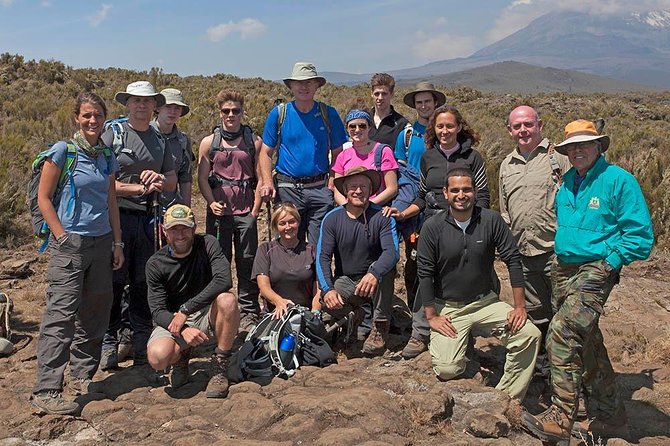
It has worked for mixed-age groups, including people from their twenties through their sixties, and it is not limited to expert hikers. Still, age alone tells you little. Your ability to manage long days, cold, poor sleep, and altitude matters more.
You should choose another plan if you want a short, easy walk or a fixed guarantee of reaching the summit. No itinerary can promise that result. Weather and health can change the plan, and poor weather may lead to a new date or a full refund.
The operator has received particularly strong praise for friendly guides and drivers, smooth support from airport arrival onward, and helping climbers reach the summit. That support matters most when you are tired and need clear instructions, not just cheerful company.
Booking advice and cancellation terms
Confirmation is provided at booking, and most people can participate according to the supplied information. The experience ends back at the Moshi meeting point after the Mweka Village transfer.
You can cancel up to 24 hours before the 8:30 a.m. start for a full refund. Cancellation within 24 hours is not refundable, and changes inside that period are not accepted. Since poor weather can affect the climb, the operator offers another date or a full refund if weather causes cancellation.
Before paying, ask four direct questions: the exact hotel arrangements, the size of your group, the guide-to-climber ratio, and the recommended personal gear list. These answers will tell you more about the practical quality of the trip than the headline price.
Should you book the Northern Circuit climb?
I would book this route if you want the best available time allowance for altitude adjustment, enjoy quieter northern slopes, and can handle a very long summit day. The price is attractive because it includes the major park, food, crew, and transfer costs that can quickly add up on Kilimanjaro.
I would not choose it if you are unprepared for a midnight start, extreme cold, or the 14-hour summit-and-descent day. The Northern Circuit is forgiving in schedule, not easy in effort.
For a first Kilimanjaro climb, the nine-day timing is the strongest reason to consider it. Add proper insurance, suitable gear, a realistic tip budget, and enough rest before the climb. If those pieces are in place, this route gives you a strong chance to enjoy the mountain rather than simply survive it.
FAQ
How long is the Kilimanjaro Northern Circuit tour?
The experience lasts approximately nine days, from the Moshi departure through the return from Mweka Village.
Where does the climb begin?
The route begins at Londorossi Gate, followed by a drive to the Lemosho trailhead. The first hiking section goes to Mti Mkubwa Camp.
What time does the tour start?
The stated start time is 8:30 a.m. at Burigi Chato Safaris on Mkwawa Street in Shanty Town, Moshi.
Is airport pickup included?
Yes. Airport pickup and drop-off are included, along with gate transfers and crew wages.
Are meals included?
Yes. The package lists eight breakfasts, nine lunches, and eight dinners.
Is accommodation included before and after the climb?
Hotel accommodation before and after the climb can be arranged by the operator or booked directly by you. Confirm the exact accommodation cost and arrangement before booking.
What happens if bad weather cancels the climb?
If poor weather causes cancellation, you will be offered a different date or a full refund. For personal cancellations, you must cancel at least 24 hours before the start time to receive a full refund.
Just added in Moshi
- Zanzibar: Stone Town tour and Nakupenda beach with Lunch★ 5.0 · 1 review
- day trip lake manyara★ 5.0 · 2 reviews
- Mt Kilimanjaro 6 days Marangu route hike★ 5.0 · 3 reviews
- machame route★ 5.0 · 16 reviews
- Private Cycle to Kilimanjaro Bike Park Safari★ 5.0 · 6 reviews
- West Kilimanjaro cycling Adventures★ 4.5 · 8 reviews
- Wildlife Extravaganza: Manyara, Tarangire & Ngorongoro in 3 Days★ 5.0 · 3 reviews
- 3 Days Private E-Bike Tour in West Kilimanjaro★ 5.0 · 3 reviews
Hiking & Trekking, compared.

8-Day Small-group Lemosho Kilimanjaro Summit Trekking
Read our review →

Private Full Day Hiking Experience to Marangu Route
Read our review →

From Arusha/Moshi: Kilimanjaro Hike Marangu Route Day Trip
Read our review →
4 days Best experience Kilimanjaro Hike, Serengeti &Ngorongoro
Read our review →
Best Kilimanjaro hiking day trip tour with Kilinge Adventures
Read our review →Browse the lists this tour appears in