
Reviewed · HISTORICAL TOURS
Bagamoyo Historical Tour – Everyday
History feels close to the road here. This 8-hour trip from Dar es Salaam takes you to Bagamoyo, the former capital of German East Africa and one of the most important ports on the east-central African coast. I like the way the tour connects several eras in one day: Arab trade, the slave and ivory trade, German rule, Christian missions, and present-day coastal life.
I also like the combination of major sites and time by the sea. The Kaole Ruins, Old Boma, Catholic Museum, prison, First Cross, and German graves give the day real substance, while Bagamoyo’s beaches offer a quieter finish. The main caution is communication: one recent booking rated the English of the guide poorly, while other reports praised the guiding and the amount of historical detail.
The tour costs $187 per person, including air-conditioned transport, an English-speaking guide, water, soft drinks, and hotel pickup. That is a serious day-trip price, but it may be fair if you value private or small-group transport, a full historical program, and the ease of having a driver manage the long road from Dar es Salaam.
In This Review
- Key points to know before booking
- Why Bagamoyo deserves a full day from Dar es Salaam
- The road north and the practical comfort of the trip
- Kaole Ruins and an older coastal story
- Bagamoyo’s slave-trade sites and the weight of the name
- Old Boma and the German chapter
- The Catholic Museum, Dr. Livingstone, and the First Cross
- Beaches and the quieter side of Bagamoyo
- What the guiding can add to the day
- Is $187 per person good value?
- Who should book this Bagamoyo day trip?
- Final verdict: book it for history, not just the beach
- FAQ
- How long does the Bagamoyo Historical Tour last?
- Where is Bagamoyo located?
- Is hotel pickup included?
- What language is the tour conducted in?
- Is transportation air-conditioned?
- Is food included in the price?
- What are the Kaole Ruins?
- What can you see at the Old Boma?
- What Christian sites are included?
- Can you cancel for a full refund?
- Can you reserve the tour and pay later?
- Is the tour wheelchair accessible?
Key points to know before booking
- Bagamoyo lies about 65 kilometers north of Dar es Salaam, on the coast opposite Zanzibar, making it a practical full-day history outing from the city.
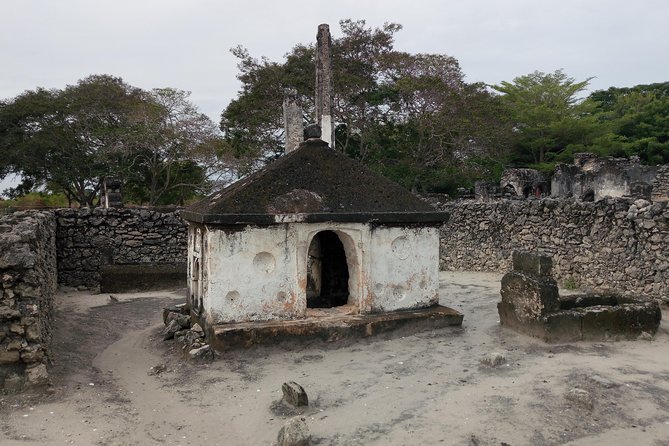
- Kaole Ruins sit 5 kilometers south of Bagamoyo and include 30 tombs plus one of the oldest mosques in East Africa.
- The former slave prison gives the day its hardest lesson, with the name Bwagamoyo often explained as Here I throw down my heart.
- German and British colonial history appears at Old Boma, built as a German statehouse in 1897 and later taken over by the British.
- Christian history is central here, with the Catholic Museum, Dr. Livingstone’s former resting place, and the First Cross from 1867.
- Michael and Sedic are names to note, as one especially positive account praised Michael’s safe driving and Sedic’s detailed narration.
Why Bagamoyo deserves a full day from Dar es Salaam
Bagamoyo is more than a collection of old buildings. Its position on the coast made it a meeting point for merchants, religious workers, colonial officials, enslaved people, and explorers. The town’s past is difficult in places, but that is exactly why the visit matters.
From Dar es Salaam, the journey gives you a useful change of pace. One recent account described the trip as a chance to watch the city’s intensity ease as the road moved toward Bagamoyo. That observation helps explain the appeal: you are not only visiting historic sites, you are also leaving behind the pressure of Dar es Salaam for a coastal town with a slower rhythm.
I would choose this outing if you want history explained in place, rather than read from a guidebook after the fact. You can see the sites connected to trade, imprisonment, colonial government, religion, and war within a single day.
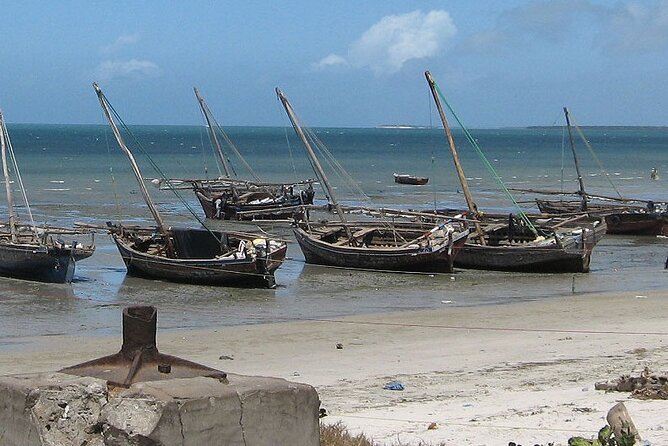
The route is also useful for anyone interested in how geography shaped Tanzania. Bagamoyo’s coastal position opposite Zanzibar helped make it a major port. The town’s location was not a footnote. It was the reason so many different powers and people passed through.
More History Tours in Dar es Salaam
- Dar es Salaam History and Architectural Tours
★ 5.0 · 36 reviews - Bagamoyo Historical Tour – Everyday
★ 5.0 · 13 reviews - Private Tour in Historical Dar es Salaam with Lunch
★ 4.5 · 6 reviews
The road north and the practical comfort of the trip
The advertised duration is eight hours, so plan on giving the tour most of your day. The exact starting time depends on availability, but pickup is included from your hotel. The driver is expected to wait in the hotel lobby with a sign bearing your name, a helpful arrangement when you are leaving a large city and do not want to negotiate a meeting point.
Air-conditioned transportation matters in coastal Tanzania. You will be moving between Dar es Salaam and several outdoor sites, so a cool vehicle gives you a needed break between stops. Water and soft drinks are included, but meals are not. You should plan for that gap rather than assume lunch is part of the package.
The driving itself is part of the experience. As you leave Dar es Salaam, the road shows the shift from the city’s crowded energy toward Bagamoyo’s quieter setting. One highly positive account singled out Michael for safe driving and pleasant company, which is worth noting because road comfort can shape your opinion of a long day tour as much as the monuments do.
The tour is offered every day and includes a live English-speaking guide. The language point needs a fair warning. Several accounts praised the guide’s historical explanations, including one from Tanzania, but one recent booking reported that the guide’s English was difficult to understand. If precise spoken English is essential to your visit, confirm the guide arrangements before paying.
Kaole Ruins and an older coastal story
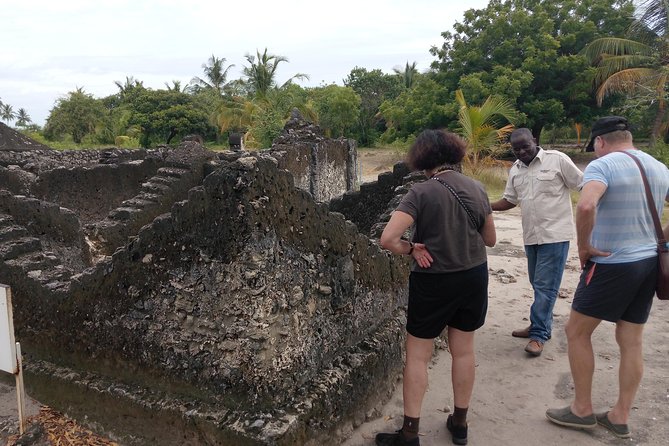
The first major historical stop is Kaole, about 5 kilometers south of Bagamoyo. The ruins belong to an ancient Arab town that declined after the Portuguese arrived in the 15th century. That detail gives the site a wider setting: coastal East African history was shaped not only by local communities, but also by long-distance trade and changing foreign control.
The remains include 30 tombs and what is described as the oldest mosque in East Africa. The tombs are especially important because they show that Kaole was not simply a trading outpost. It was a settled community with religious and social structures.
I like this stop because it gives you historical depth before the later colonial sites. You begin with an older coastal town, then follow the changes brought by Portuguese influence, later trade networks, and European rule. The sequence helps you see Bagamoyo as a place with centuries of history, not a town created by the Germans.
The ruins are archaeological remains, so you should expect a site visit focused on interpretation rather than polished attractions. Your experience will depend heavily on the guide’s explanations. This is one of the places where clear English and good storytelling make a major difference.
Bagamoyo’s slave-trade sites and the weight of the name
Bagamoyo’s most painful history is tied to the slave and ivory trade. The tour visits the prison where enslaved people were held captive. This is not a stop to rush through with a camera. It asks you to confront the system that moved people away from their homes and toward the coast.
The name Bwagamoyo is commonly explained as Here I throw down my heart, a phrase linked to the despair of people who believed they would never return to Africa. That translation gives emotional force to the town’s history, but the site itself should still be treated with care. The story is not just an atmospheric detail for a day trip. It concerns real suffering and forced movement.
I appreciate that the itinerary does not soften Bagamoyo’s past by focusing only on attractive ruins and beaches. The prison connects the town’s buildings to the lives of people who had no choice about being there. It also helps explain why Bagamoyo became historically important and why its story reaches far beyond Tanzania.
The drawback is that the information supplied for the visit does not specify how much time you spend at the prison or what interpretation is provided on site. Ask your guide questions if the explanation feels brief. A good account of the slave trade should include context, not only a grim location.
A different kind of day out entirely:
- Dar es Salaam: City Tour
★ 4.7 · 159 reviews - Dar es Salaam City Center: Walking Tour
★ 4.8 · 102 reviews - Dar es Salaam City Tour – Everyday
★ 5.0 · 64 reviews - MIKUMI NATIONAL PARK – 3 Days
★ 4.5 · 63 reviews
Old Boma and the German chapter
The Old Boma brings you into the colonial period. The Germans built this statehouse in 1897, and the British later took it over after the First World War. Its changing ownership reflects the political shifts that followed Germany’s defeat.
This stop works best when you look beyond the building itself. The Old Boma represents government power, administration, and the way European control was made visible through official buildings. It is a useful counterpoint to Kaole’s religious remains and the prison’s human story.
The tour also takes you to the tombs of German leaders who died during the First World War. That detail can surprise you. Bagamoyo was not only connected to trade and missionary work. It was also caught up in the wider conflict that affected colonial Africa.
I would listen closely here for dates, names, and explanations of the German and British transition. The site’s meaning can be easy to miss if you only see it as an old colonial structure. A guide who connects the building to the war and the change in colonial rule adds real value.
The Catholic Museum, Dr. Livingstone, and the First Cross
Christian history forms another important part of the day. The Catholic Museum includes the former resting place of Dr. Livingstone, the famous explorer. The tour then continues to the First Cross, erected by French missionaries in 1867.
These sites show how Bagamoyo became linked to missionary activity and European exploration as well as trade. Dr. Livingstone’s connection gives the visit a familiar name, but the missionary story is broader than one explorer. The First Cross marks the efforts of French missionaries to establish a Christian presence in the region.
I like this section because it adds another layer to the town’s identity. Kaole points to an older Islamic coastal society. The Catholic Museum and First Cross show a later Christian presence. The colonial buildings show European political control. Together, the stops make Bagamoyo’s past easier to follow.
You should also keep your expectations measured. The information provided does not promise a large museum collection or a long indoor visit. The value comes from the historical connections and the guide’s explanation, not from expecting a modern museum experience.
Beaches and the quieter side of Bagamoyo
The final reward is Bagamoyo’s coast. Beautiful beaches and hotels have made the town a place to relax during a stay in Dar es Salaam, and the tour allows you to experience that gentler side after a demanding day of history.
This is not presented as a dedicated beach holiday. You should think of the coast as a change of mood and a chance to appreciate Bagamoyo as a living town, not only an open-air history lesson. After the prison, colonial sites, graves, and missionary history, a little time near the water can make the day feel more balanced.
The warm hospitality is part of the appeal, though the tour details do not promise a specific beach activity or a set amount of free time. If the coast matters most to you, ask how the day is paced. If history is your priority, the earlier stops should carry the greatest weight.
What the guiding can add to the day
The strongest positive feedback centers on the people running the experience. Michael was praised for safe driving and good company on the road. Sedic was described as an added bonus who quickly provided narration about immigration, rulers, education, art, and the setting of this important port.
That range is encouraging. The best guide here should help you connect separate sites rather than recite isolated facts. You want to understand how Bagamoyo’s trade, religion, colonial government, and coastal position fit together.
Another booking praised the guide for giving a great deal of information about Bagamoyo’s past. A Tanzanian visitor also valued the explanations from both the guide and driver about Tanzania, its people, and Bagamoyo. These are the qualities that make the $187 price easier to defend.
Still, the mixed language feedback matters. This is not a reason to reject the tour outright, since most of the available comments are positive. It is a reason to confirm who will guide you and to tell the operator that detailed historical explanation is important to you.
Is $187 per person good value?
At $187 per person, this is not a bargain-priced city outing. The fee covers air-conditioned transport, an English-speaking guide, hotel pickup, water, and soft drinks, but not meals or alcohol. You are paying mainly for convenience, transport, and guided access to a full day of sites.
I see reasonable value if you are staying in Dar es Salaam and want Bagamoyo covered in one organized day. You do not need to arrange a car, find the historic sites yourself, or work out the order of Kaole, the prison, Old Boma, the German graves, and the Catholic sites.
The value is weaker if you only want a beach visit or prefer to explore independently. Much of the tour’s worth rests on interpretation. If the guide explains the history clearly, the day becomes a connected story. If the commentary is hard to follow, you are left paying a premium for transport to places you may not fully understand.
Free cancellation up to 24 hours before departure and the option to reserve now and pay later reduce the financial risk. Wheelchair access is also listed, which may help you decide if the tour fits your needs, though you should still confirm the practical conditions at each historic site.
Who should book this Bagamoyo day trip?
I would recommend it most strongly to you if you enjoy history, geography, archaeology, or the story of East African coastal trade. One particularly enthusiastic assessment highlighted all four interests, including topography, and praised the outing as a welcome break from Dar es Salaam’s pace.
It also suits anyone who wants a broad introduction rather than a single museum visit. In eight hours, you move from an ancient Arab settlement to the slave trade, German administration, First World War graves, Christian missions, and the modern coast.
Families and mixed-interest groups may also find the range useful, though the prison and slave-trade history can be heavy for young children. The trip may be less suitable if you want a slow beach day, a food-focused outing, or a short excursion with very little time in the vehicle.
I would be cautious if you need highly polished English interpretation. The feedback is mostly favorable, but the language concern is specific enough to address before booking.
Final verdict: book it for history, not just the beach
Book this tour if you want Bagamoyo’s major historical themes explained in one day and value hotel pickup, air conditioning, and a dedicated driver and guide. The combination of Kaole Ruins, the former slave prison, Old Boma, German graves, Catholic sites, and the coast gives you a fuller picture than a quick walk through town.
Skip it if your main goal is simply to sit by the water or if $187 feels too high for a transport-heavy day. Before confirming, ask who your English-speaking guide will be and how much time is planned at the beaches and each historic stop.
With the right guide, Bagamoyo can turn a day away from Dar es Salaam into a clear lesson in Tanzania’s coastal past. The tour earns its strongest praise for the driving, historical detail, and sense of relief that comes with leaving the city for a quieter port.
FAQ
How long does the Bagamoyo Historical Tour last?
The tour lasts 8 hours.
Where is Bagamoyo located?
Bagamoyo is in Tanzania’s Pwani Region, about 65 kilometers north of Dar es Salaam on the coast opposite Zanzibar.
Is hotel pickup included?
Yes. Pickup is included, and the driver waits in your hotel lobby with a sign showing your name.
What language is the tour conducted in?
The live tour guide speaks English.
Is transportation air-conditioned?
Yes. Air-conditioned transportation is included.
Is food included in the price?
No. Meals are not included. Water and soft drinks are included, while alcohol is not included.
What are the Kaole Ruins?
The Kaole Ruins are the remains of an ancient Arab town about 5 kilometers south of Bagamoyo. The site includes 30 tombs and the oldest mosque in East Africa, according to the tour information.
What can you see at the Old Boma?
The Old Boma is a statehouse built by the Germans in 1897. The British later took it over after the First World War.
What Christian sites are included?
The tour includes the Catholic Museum, Dr. Livingstone’s former resting place, and the First Cross erected by French missionaries in 1867.
Can you cancel for a full refund?
Yes. You can cancel up to 24 hours in advance for a full refund.
Can you reserve the tour and pay later?
Yes. The reserve-now-and-pay-later option lets you hold your place without paying immediately.
Is the tour wheelchair accessible?
Yes. The activity is listed as wheelchair accessible.
Just added in Dar Es Salaam
- Zanzibar: Spice farm Private tour with Lunch★ 5.0 · 1 review
- Mbudya island from Dar es salaam safari.★ 4.2 · 3 reviews
- Maasai, Mikumi NP & Chizua Falls 3 Days From Dar es salaam★ 5.0 · 4 reviews
- From Dar es Salaam: Mikumi National Park Day Trip★ 5.0 · 3 reviews
- From Dar Es Salaam: Mikumi National Park 2 Nights and 3 Days★ 5.0 · 2 reviews
- Explore Dar es Salaam: Full-Day Private City Tour★ 5.0 · 2 reviews
- Escape to Paradise A day of sun, sand and adventure Mbudya★ 5.0 · 1 review
- DAR ES SALAAM:BONGOYO ISLAND SNORKELING TOUR & BEACH ESCAPE★ 4.7 · 9 reviews
Historical Tours, compared.
Stone Town Historical Cultural Walking Guided Tour
Read our review →
Arusha Guided Walking City Tour, Culture, Lifestyle & History
Read our review →
Stone Town’s Hidden History: Private Guided Walking Tour
Read our review →
Browse the lists this tour appears in