
Reviewed · HIKING & TREKKING
Book Day Hike at Rau Forest Reserve, Near Moshi Town in Tanzania
A quiet forest break near Moshi.
Rau Forest Reserve gives you a close look at Tanzania beyond the big safari parks and Mount Kilimanjaro routes. I like the chance to see black and white colobus monkeys and blue monkeys in an underground-water forest, and I like that the walk can include rice farms, tree nurseries, and local conservation work. The main consideration is that this is a short nature walk, not a strenuous mountain hike, and the forest itself may feel modest if you expect a major wilderness adventure.
I also like the private format. Your group has its own guide, so the pace can focus on wildlife, trees, farming, or conservation rather than following a large crowd. Guide Peter has earned particular praise for his friendly manner, wildlife interest, hotel pickup, and ability to explain local plants, animals, and farming life. Still, confirm pickup arrangements before setting out, since the listed meeting point is on Ghala Road.
In This Review
- Key points to know before you book
- Why Rau Forest makes a good Moshi side trip
- A three-and-a-half-hour walk with room to adjust
- Watching for colobus and blue monkeys
- Trees with cultural meaning, not just scenery
- Adding the rice farms to the forest walk
- Taking part in conservation at the tree nursery
- What the private format and pickup mean
- Is $39.47 good value for this outing?
- Who will enjoy Rau Forest most?
- Booking, cancellation, and practical planning
- Should you book the Rau Forest hike?
- FAQ
- Where is the Rau Forest Reserve hike located?
- How long does the tour last?
- What animals might I see?
- Is hotel pickup available?
- Where does the activity end?
- Is this a private tour?
- What is included in the price?
- Is a tip for the guide included?
- Can I visit the rice fields?
- Can I take part in conservation work?
- What fitness level is required?
- What happens if the weather is poor?
Key points to know before you book
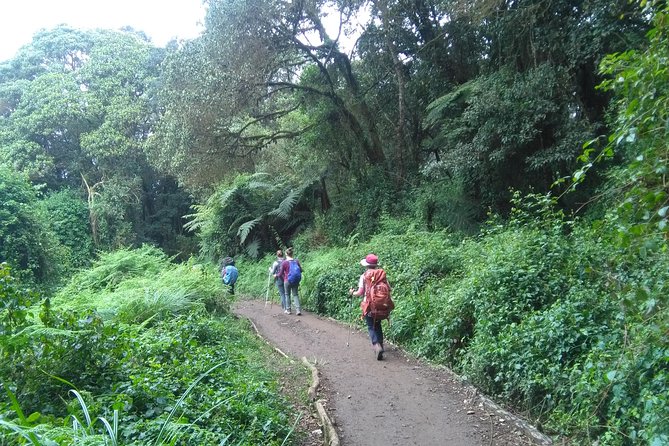
- Three-and-a-half hours in an underground-water forest: Rau protects natural springs, useful tree species, and animals close to Moshi.
- Two monkey species are a main attraction: Watch for black and white colobus monkeys and blue monkeys.
- The walk can reach rice farms: From the southern edge, the route may extend into more than 3,000 hectares of irrigated rice plots.
- Conservation is part of the visit: You can spend 30 to 45 minutes watering and managing seedlings, or plant trees.
- Private guiding adds flexibility: Only your group participates, with a professional guide included.
- The price is moderate for a private outing: At $39.47 per person, the value depends on group size and how much of the forest, farms, and conservation work you include.
Why Rau Forest makes a good Moshi side trip
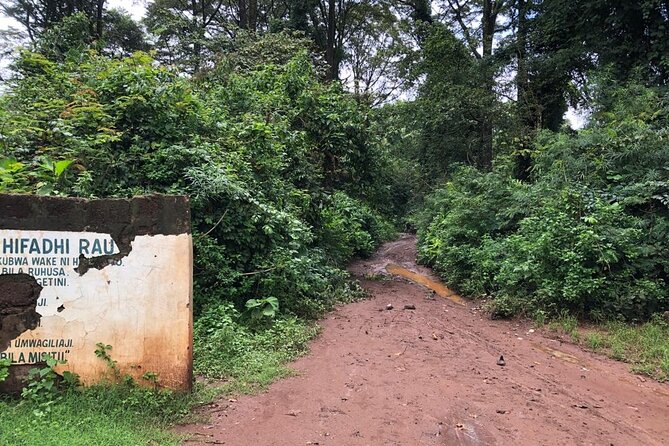
Moshi is best known as the gateway to Kilimanjaro, but you do not need a week-long trek to find nature nearby. Rau Forest Reserve sits in the lowland area around town and offers a quieter change of pace for a few hours.
This is not a safari drive. You walk through the forest, look up into the trees, and rely on your guide to point out wildlife and plants. That makes the outing feel more personal than simply checking off another viewpoint. I like this kind of activity when you have a spare morning or afternoon and want to understand the area around Moshi rather than spend every hour on a major attraction.
The reserve is also important for practical reasons. It is an underground-water forest with natural springs and catchment value. In plain terms, the forest helps protect water resources. That gives the walk a purpose beyond scenery, especially when you add time at the nursery or plant a tree.
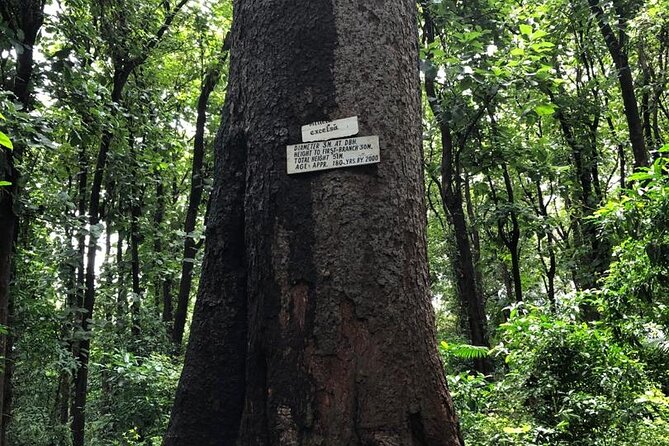
The forest is also tied to nearby communities. A particular tree is used by traditional healers for rituals and medicinal purposes, with the bark serving as the useful part. Some local beliefs hold that the tree can help drive away evil spirits. Your guide can provide the cultural setting, but you should treat the subject with respect rather than as a staged performance.
More treks in Moshi:
- Private Kilimanjaro Hike 7 Day Lemosho Route
★ 5.0 · 60 reviews - Best Kilimanjaro hiking day trip tour with Kilinge Adventures
★ 4.5 · 54 reviews - #1. Best Kilimanjaro Day hike Tour-Machame Route-ISMANI
★ 4.2 · 47 reviews
A three-and-a-half-hour walk with room to adjust
The listed duration is about three hours and 30 minutes. That is long enough to see the forest at an unhurried pace, yet short enough to fit around other Moshi plans. You might schedule it on a day before or after a longer excursion, when your legs and attention need something gentler.
The exact order of activities can depend on your guide, the weather, and your interests. The basic outing centers on the forest, while the rice fields and conservation work can add depth to the visit. Since the tour is private, you have a better chance of asking for more time with one part of the experience.
You should expect a nature walk rather than a technical hike. A moderate fitness level is required, but the information provided does not describe steep climbs, difficult scrambling, or a long mountain route. If you want a hard workout, this may feel too easy. If you want a manageable walk with wildlife and local context, the pace should suit you well.
Good weather matters. If poor weather cancels the activity, you can receive a full refund or choose another date. That policy is useful in a region where a wet day can change the comfort and quality of a forest walk.
Watching for colobus and blue monkeys
The reserve is known for two monkey species: black and white colobus monkeys, identified in the tour information as Colobus guereza, and blue monkeys. Seeing them is not guaranteed, since wild animals move on their own schedule, but they are a central reason to choose Rau over an ordinary town stroll.
The two species give the walk a clear wildlife focus. You may spend part of the outing scanning branches, listening for movement, and learning where different animals live. The forest also contains other animal species, though no full wildlife list is provided, so you should not book this as a promise of a long catalogue of sightings.
The best part of a guided forest walk is often the interpretation. Peter has been praised for explaining animals, trees, fruits, and plants while keeping the mood light. His strong interest in wildlife is useful because small details can be easy to miss when you walk alone.
Bring patience. A monkey sighting may last only a moment, and the forest can reward careful looking more than fast progress. If you have binoculars, they could be useful, but binoculars are not listed as part of the tour.
Trees with cultural meaning, not just scenery
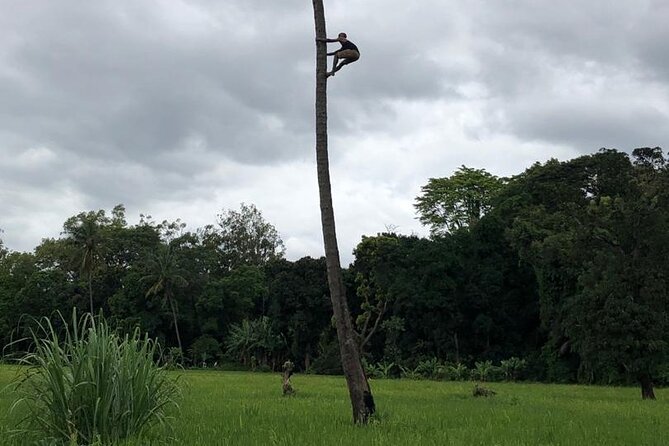
Rau is a place to learn how plants fit into local life. The tree used by traditional healers offers a direct link between the forest and nearby communities. Its bark has medicinal and ritual uses, and some people connect it with protection from evil spirits.
This part of the walk can be especially valuable if you want more than a parade of species names. A tree is not only a biological object here. It can also carry practical, spiritual, and cultural meaning. You should listen carefully and avoid treating beliefs as a novelty for photographs.
The information does not identify the tree species, so do not expect a formal botany lesson about one named plant. Instead, think of this as a chance to understand how the forest is used and respected. The guide’s explanation will matter greatly, which is another reason a private tour can be worthwhile.
The reserve contains other valuable tree species and fruits as well. You may see plants that are unfamiliar to you, but the precise examples can vary. Ask questions as you walk. With a private guide, you do not need to save every question for a formal stop.
A few more options to weigh up in Moshi
- Kilimanjaro climb by Lemosho Route (7-day)
★ 5.0 · 651 reviews - Safari Serengeti And Ngorongoro
★ 5.0 · 288 reviews - Kilimanjaro climb, Machame Route (7-day)
★ 5.0 · 262 reviews - Kilimanjaro Climbing Lemosho Route 8 Days.
★ 5.0 · 186 reviews
Adding the rice farms to the forest walk
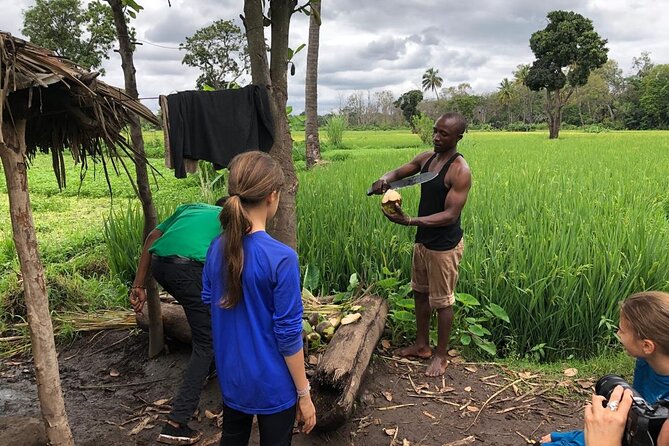
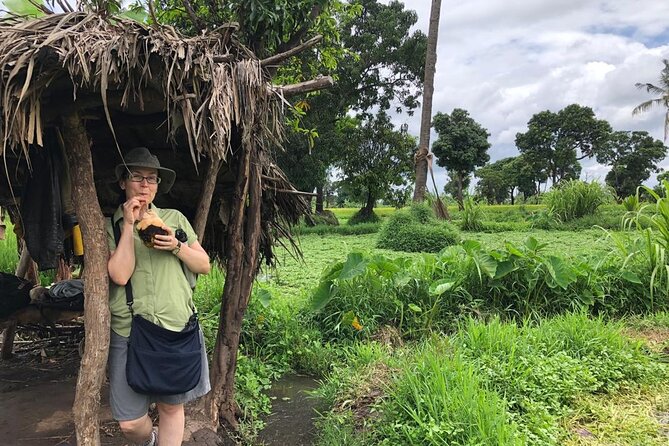
From the southern edge of Rau Forest, the outing can extend to rice farms. Local farmers use irrigation to cultivate more than 3,000 hectares of rice plots. This changes the feel of the excursion from a woodland walk to a broader look at how water, farming, and community life connect.
You can walk between the fields and observe the irrigation system and farming area. The rice plots provide a useful contrast with the forest. In the reserve, water is protected by trees and springs. In the fields, that water supports food production and local livelihoods.
I like this addition because it helps you see Moshi’s lowland area as a working place, not just a stop for tourists. The farms are not presented as a museum display. They are part of everyday life, and your guide can explain the farmers’ way of working and the local setting.
The rice-field extension may not fit every three-and-a-half-hour visit in equal depth. If you care most about monkeys, you may prefer to spend more time in the forest. If farming and local life interest you, ask whether the rice fields can be included and how that affects the walking time.
Taking part in conservation at the tree nursery
The conservation option is one of the most useful features of this experience. You can spend 30 to 45 minutes watering and managing young seedlings in the tree nurseries, or plant trees to support forest conservation.
This is hands-on rather than symbolic sightseeing. Watering and caring for seedlings gives you a small sense of the work required before a tree becomes part of a forest. Planting a tree can also make the visit feel connected to the future of the reserve.
Do not expect a large conservation project or a full volunteer placement. The available information describes a short activity within the forest walk. That is exactly why it works well for a short Moshi visit: you can contribute some time without committing to a separate multi-day program.
Ask how the conservation portion fits into your schedule. If the weather is hot or you have already been walking for several hours, you may prefer a shorter nursery visit. The private format should make that conversation easier.
What the private format and pickup mean
This is a private tour, so only your group participates. That can make a real difference on a forest walk. You can pause for a monkey, ask about a medicinal tree, or spend more time at the rice fields without trying to match the needs of strangers.
A professional guide and all fees and taxes are included. Tips for the guide are not included, so bring some money if you feel the service deserves it. Peter’s strong reputation for humor, wildlife interest, and personal attention suggests that the guide can shape the experience as much as the forest itself.
Pickup is offered, and Peter has picked people up at a hotel and returned them afterward. The stated meeting point is Ghala Road in Tanzania, with the activity ending back there. Because both arrangements appear in the practical details, confirm the exact pickup point and return plan within 48 hours of booking, when confirmation is issued subject to availability.
The tour is near public transportation, which gives you another way to reach the start if hotel pickup is not arranged. No specific vehicle type or transfer time is provided, so you should not assume a particular transport setup.
Is $39.47 good value for this outing?
At $39.47 per person, this is a reasonable price for a private, guided nature activity lasting about three and a half hours. The value is strongest if you are traveling with a small group and make use of several parts of the experience: forest wildlife, cultural plant knowledge, conservation work, and the rice fields.
For a solo visitor, the per-person cost may feel less attractive than it would for a couple or family sharing a private guide. Still, the price includes professional guiding and all fees and taxes, which keeps the final cost easier to understand. Your guide’s role is not just to lead you along a path. It is to help you notice wildlife, interpret plants, and connect the forest with farming life.
The price is less compelling if you only want a quick walk and do not care about the conservation or rice-field portions. It is also not the right comparison for a full-day safari or a serious mountain hike. Rau offers a short, local nature experience, and it should be judged on that scale.
Who will enjoy Rau Forest most?
I would recommend this activity to you if you:
- Have a free half-day in Moshi
- Want wildlife without booking a full safari
- Enjoy walking at a moderate pace
- Like learning about plants and local customs
- Want a private guide rather than a large group
- Are interested in conservation and farming
- Prefer an experience close to town
It may be less suitable if you need guaranteed wildlife sightings, want a demanding physical challenge, or expect a large, untouched wilderness. The reserve is valuable because it is accessible and connected to local life. That also means it is not designed as a remote expedition.
Families and mixed-age groups may appreciate the short duration, though every participant should be able to manage moderate physical activity. Since the activity requires good weather, keep a little flexibility in your schedule if possible.
Booking, cancellation, and practical planning
Confirmation is sent within 48 hours of booking, subject to availability. The activity is commonly booked about six days ahead, so planning several days early is sensible if your Moshi schedule is fixed.
You can cancel for a full refund up to 24 hours before the start time. Cancellations or changes made within 24 hours are not accepted for a refund. The cut-off follows local time in Tanzania, so check the clock carefully if you are arranging the tour from another country.
The included list is short: professional guide, fees, and taxes. Tip money is separate. The information does not specify meals, drinks, equipment, or transport as included, so ask about any item you consider essential before booking.
Wear shoes suitable for a forest walk and bring what you normally need for several hours outdoors. The tour details do not provide a packing list, so you should confirm current weather and any guide recommendations before departure.
Should you book the Rau Forest hike?
Book it if you want a compact, private introduction to Moshi’s natural and working surroundings. The strongest reasons are the chance to look for colobus and blue monkeys, hear about plants used by traditional healers, visit irrigated rice fields, and spend time on practical conservation.
I especially like the balance between nature and daily life. You are not only walking among trees. You are seeing why the forest matters, how water supports farming, and how local communities use plant resources.
Skip it if your main goal is a strenuous hike or guaranteed close wildlife viewing. For everyone else, $39.47 is a fair price for a flexible half-day outing, particularly when guide Peter is available and you want a personal introduction to the Rau Forest area.
FAQ
Where is the Rau Forest Reserve hike located?
The activity takes place near Moshi, Tanzania, in the Rau Forest Reserve in the Moshi lowland area.
How long does the tour last?
The hike lasts approximately three hours and 30 minutes.
What animals might I see?
The reserve is known for black and white colobus monkeys and blue monkeys. Other animal species are also present, but specific sightings are not guaranteed.
Is hotel pickup available?
Pickup is offered, and hotel pickup and return have been provided. The stated meeting point is Ghala Road, so confirm the exact arrangement after booking.
Where does the activity end?
The activity ends back at the meeting point.
Is this a private tour?
Yes. Only your group participates in the activity.
What is included in the price?
A professional guide and all fees and taxes are included.
Is a tip for the guide included?
No. A tip for the guide is not included.
Can I visit the rice fields?
The hike can be extended from the southern edge of the forest to rice farms using an irrigation system across more than 3,000 hectares of rice plots.
Can I take part in conservation work?
Yes. You can spend 30 to 45 minutes watering and managing young seedlings in the tree nurseries, or plant trees.
What fitness level is required?
You should have a moderate level of physical fitness.
What happens if the weather is poor?
If poor weather causes cancellation, you will be offered another date or a full refund. You can also cancel up to 24 hours before the start time for a full refund.
Just added in Moshi
- Zanzibar: Stone Town tour and Nakupenda beach with Lunch★ 5.0 · 1 review
- day trip lake manyara★ 5.0 · 2 reviews
- Mt Kilimanjaro 6 days Marangu route hike★ 5.0 · 3 reviews
- machame route★ 5.0 · 16 reviews
- West Kilimanjaro cycling Adventures★ 4.5 · 8 reviews
- Wildlife Extravaganza: Manyara, Tarangire & Ngorongoro in 3 Days★ 5.0 · 3 reviews
- Private Cycle to Kilimanjaro Bike Park Safari★ 5.0 · 6 reviews
- 3 Days Private E-Bike Tour in West Kilimanjaro★ 5.0 · 3 reviews
Hiking & Trekking, compared.

8-Day Small-group Lemosho Kilimanjaro Summit Trekking
Read our review →

Private Full Day Hiking Experience to Marangu Route
Read our review →

From Arusha/Moshi: Kilimanjaro Hike Marangu Route Day Trip
Read our review →
4 days Best experience Kilimanjaro Hike, Serengeti &Ngorongoro
Read our review →
Best Kilimanjaro hiking day trip tour with Kilinge Adventures
Read our review →Browse the lists this tour appears in