
Reviewed · COOKING CLASSES
Dar es Salaam: Taste of Tanzania Cooking Class and Food Tour
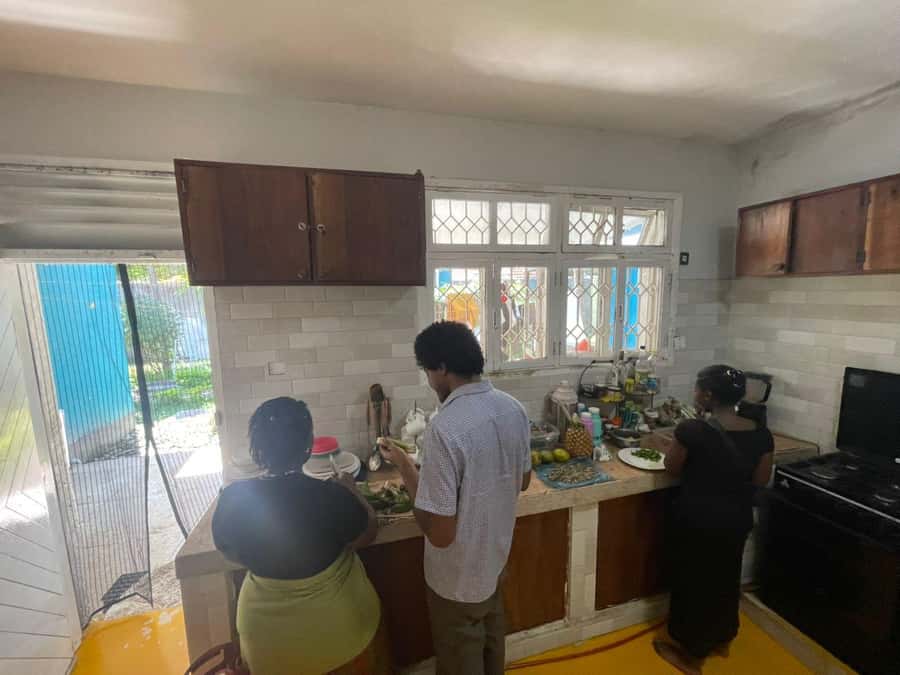
Bring an appetite and a little patience. This Taste of Tanzania experience combines street food, a local market, and a hands-on cooking class, so I like that you meet the food at three levels: buying it, preparing it, and eating it. I also like the use of traditional tools such as the mbuzi coconut scraper, kinu mortar, and chungu clay pot. The main consideration is logistics: transportation is not included, the meeting point can change, and one booking had trouble reaching the listed phone number.
The food itself is the star, with possible dishes including ugali, pilau, and chapati, followed by a sit-down meal and drinks. Angel and Irene are named as hosts, with Shipra handling booking and arrangements, but you should confirm the meeting details and working contact number at least 48 hours ahead.
In This Review
- Key points to know before booking
- What this Tanzanian food tour is really about
- Starting with Tanzanian street food
- Shopping for ingredients at the local market
- Cooking with a mbuzi, kinu, and chungu
- Sitting down to eat what you prepared
- Optional swimming, fruit, and coconut extras
- Is $45 a fair price?
- The important contact and meeting-point warning
- Who will enjoy this cooking class most?
- Practical preparation for the day
- Should you book Taste of Tanzania?
- FAQ
- Where does the Taste of Tanzania cooking experience take place?
- How much does the experience cost?
- How long does the experience last?
- What food might I prepare?
- Are drinks included?
- Is transportation included?
- Is the class suitable for beginners?
- Can I cancel the booking?
Key points to know before booking
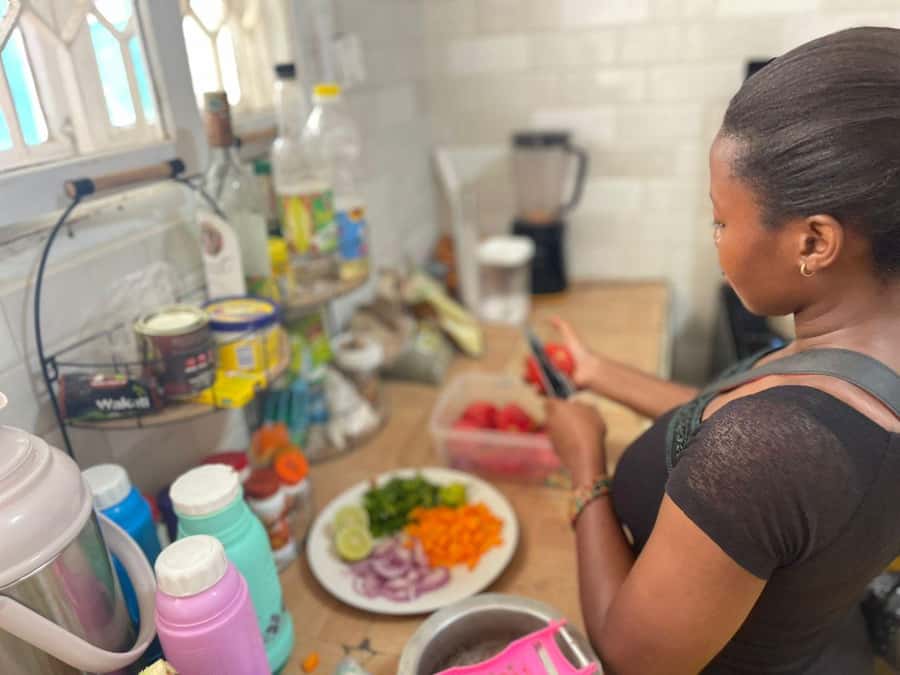
- Three-part food experience: Walk through streets, shop at a local market, then cook and eat your meal.
- Traditional kitchen tools: Use a mbuzi coconut scraper, ungo sieve, kinu mortar and pestle, chungu clay pot, sufuria steel pot, and mikeka woven mats.
- Classic Tanzanian dishes: The class may include ugali, pilau, or chapati, along with seasonal vegetables and local drinks.
- Small-scale setting: Private and small-group options are available, which can make hands-on instruction easier.
- Good value at $45: The price includes the food tour, market stop, cooking class, prepared meal, drinks, and candid photos.
- Check the meeting details: Transport is not included, and the meeting point depends on the option you book.
What this Tanzanian food tour is really about
This is more than a cooking lesson. You begin with food as part of daily life, see ingredients being sold, then use those ingredients in a local kitchen. That order matters. You are not simply handed a recipe and told to stir a pot. You get a sense of where the food comes from and why it matters.
The setting is listed in the Unguja South Region of Tanzania, while the experience title refers to Dar es Salaam. That makes it especially important to check the exact meeting point before you commit. The meeting location varies by option, and your own transport to that point is not part of the $45 price.
The experience lasts between two and five hours. That is a wide range, so ask which version you are booking and how much time is planned for the market, cooking, meal, and any extras. A shorter option may suit you if your schedule is tight. A longer one gives you more time to shop, cook, eat, and perhaps add swimming or fruit.
More Cooking Classes in Dar Es Salaam:
- Zanzibar Cooking Class & Spice Tour
★ 4.5 · 77 reviews - Zanzibar: Spice Farm Tour with Traditional Cooking Lesson
★ 4.8 · 77 reviews - Half-Day Kuza Cave Swimming Adventure and Cooking Class
★ 4.5 · 44 reviews
Starting with Tanzanian street food
The first part takes you through local streets and food stalls, with stops to sample Tanzanian snacks and street foods. This is where you get the quick, everyday flavors that do not always appear on a formal restaurant menu.
I like this beginning because it gives the cooking class some context. When a guide explains the history and significance of a dish before you make it, the food becomes easier to understand. You are not just learning that pilau contains spices. You are learning how a familiar dish fits into local food culture.
The tour also supports local vendors, described as an important part of Tanzanian culinary life. That gives the stop a practical benefit beyond sightseeing. You buy food from people who prepare and sell it as part of their daily work.
You should arrive ready to walk and sample food. Comfortable shoes are recommended, and a water bottle is sensible, especially in the sun. Sunscreen and a camera are also advised. The food sampling is part of the experience, so tell the hosts in advance about any dietary needs you may have, although no specific dietary accommodation is promised.
Shopping for ingredients at the local market
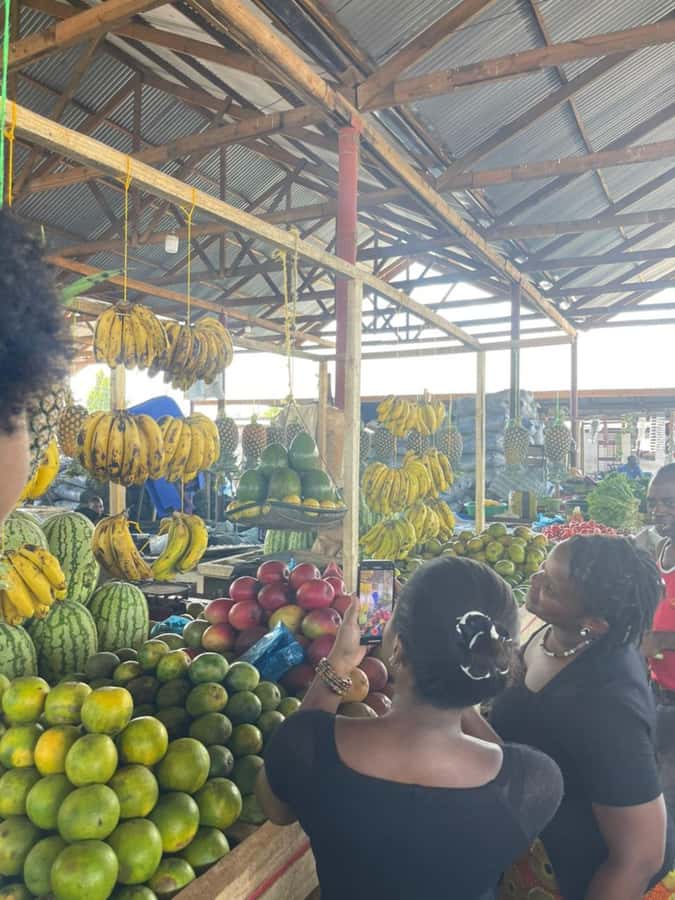
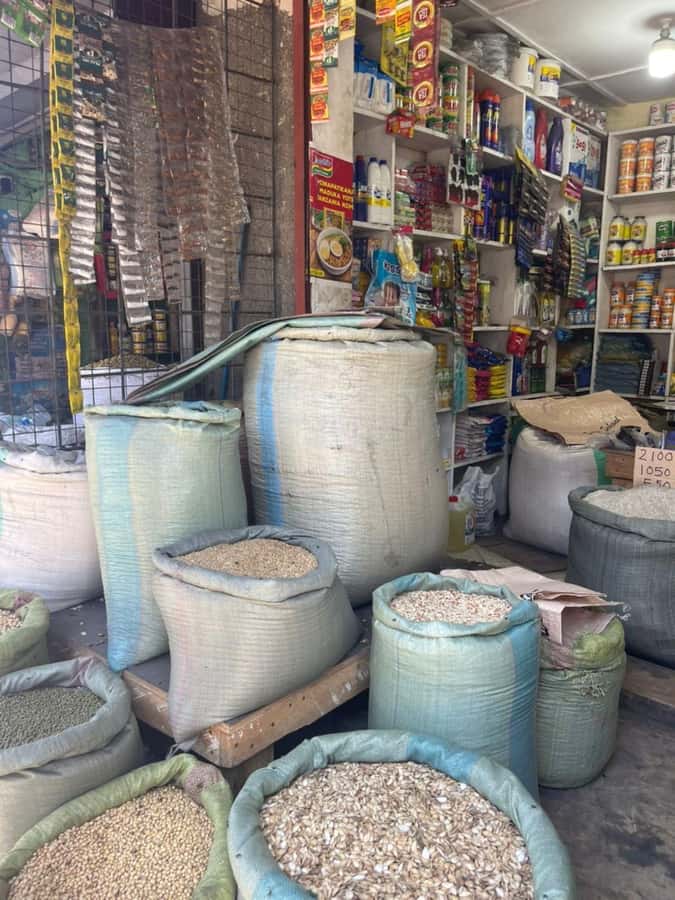
At the market, you look for fresh ingredients for the class. Expect seasonal produce, spices, and traditional staples arranged among colorful stalls. The exact market and shopping list are not specified, so the details may change with the option and the day.
This stop gives you one of the best chances to see how Tanzanian cooking begins. Instead of treating ingredients as anonymous items in a kitchen, you can see the produce, smell the spices, and meet the vendors who sell them. The guide can also explain what you are buying and how it will be used.
I would pay attention to this part rather than treating it as a quick errand. Ask about the spices, the cooking method, and which ingredients are seasonal. Since the class uses local tools and recipes, the market helps connect those traditions to food you can actually prepare.
Personal shopping is not included. You may find items you want to buy, but those purchases are your responsibility. Keep some cash available if you plan to shop, though the experience does not state which payment methods individual vendors accept.
Cooking with a mbuzi, kinu, and chungu
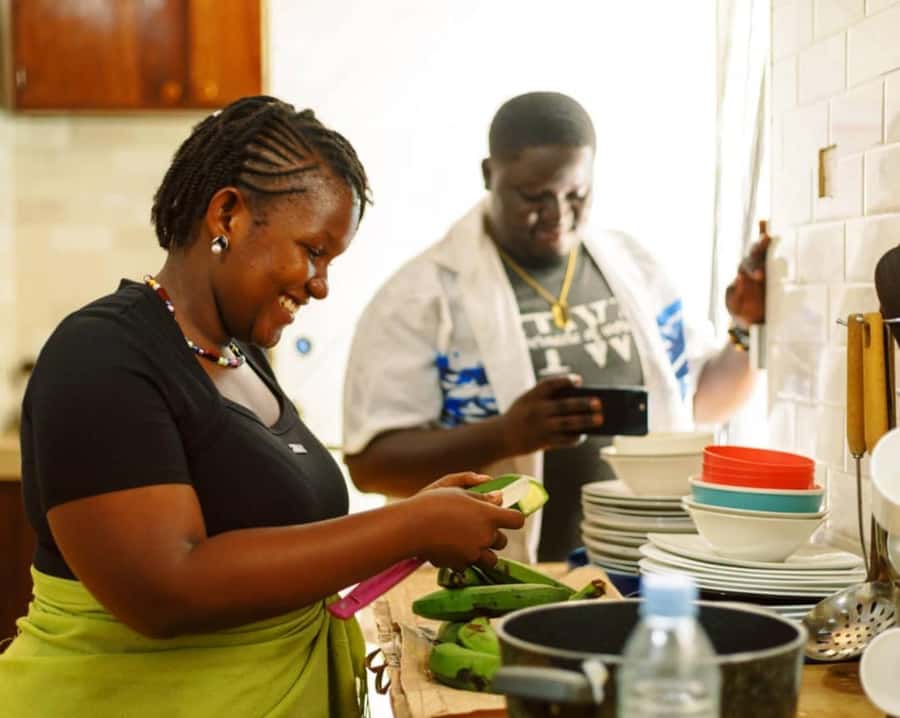
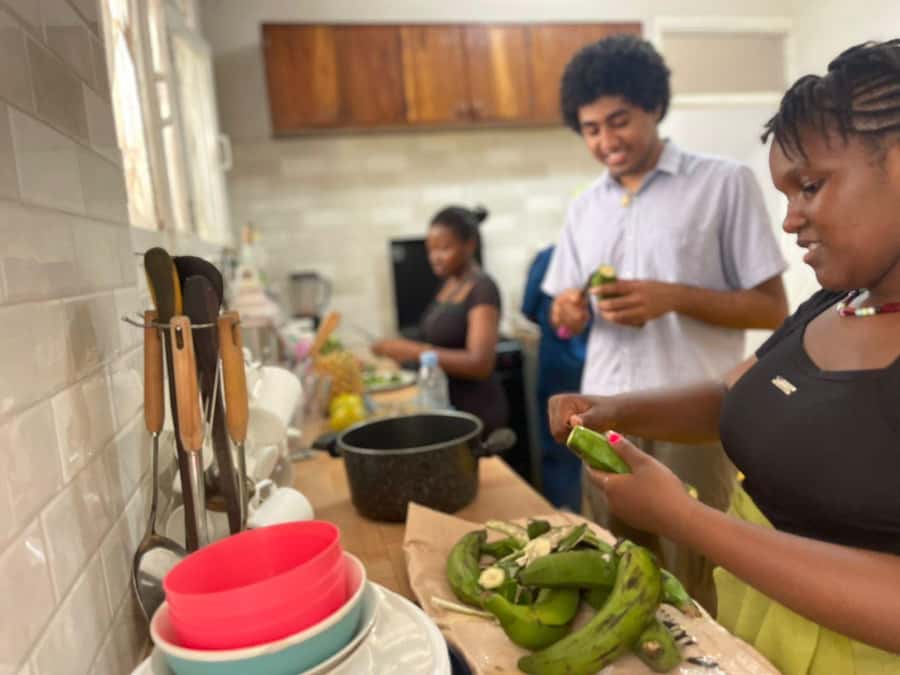
After the market, you enter a home-style kitchen and begin preparing the meal. The class is designed for beginners as well as experienced cooks, so you do not need advanced kitchen skills. You will use traditional equipment rather than relying only on modern appliances.
The mbuzi is a coconut scraper. The ungo is a sieve. The kinu is a mortar and pestle. You may also work with a chungu clay pot, a sufuria steel pot, and mikeka woven mats. These tools are not just decorative props. They show how ingredients are handled and how cooking fits into an ordinary household setting.
The hands-on quality is one of the strongest reasons to book. You are not watching a chef do everything while standing safely at the edge of the room. You roll up your sleeves and take part in preparing the dishes. The exact division of tasks is not provided, but you can expect an active lesson rather than a demonstration only.
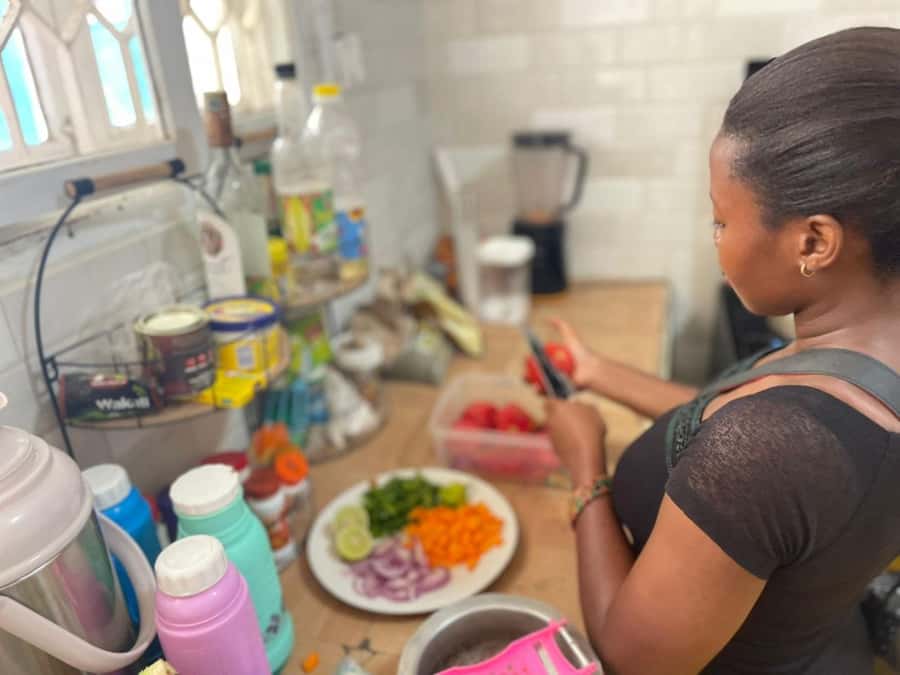
The possible dishes include ugali, pilau, and chapati. Ugali is a firm staple made from cooked flour, pilau is a spiced rice dish, and chapati is a flatbread. The final menu can vary, so do not assume that all three will appear in every class.
I like this menu because it covers several basic parts of Tanzanian cooking. You get a staple, a rice dish, or a flatbread, and the meal is paired with seasonal vegetables. The recipes are provided for you to try at home, which adds value after the class ends.
More Food Tours in Dar Es Salaam:
- Dar es Salaam: Tuk-Tuk Tour, Street Food & Local Lifestyle
★ 3.3 · 3 reviews - Stonetown: Food Markets and Street Food Walking Tour
★ 4.7 · 151 reviews - Authentic Street Food Tours in Stone Town, Zanzibar
★ 5.0 · 46 reviews - Arusha: Traditional Tanzania Cooking Class & Food Market Tour
★ 5.0 · 34 reviews
Sitting down to eat what you prepared
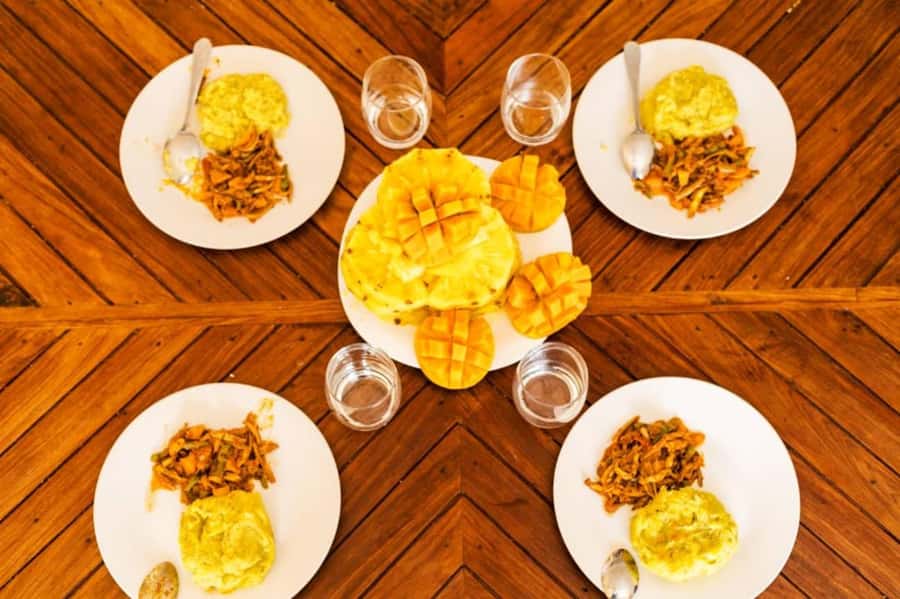
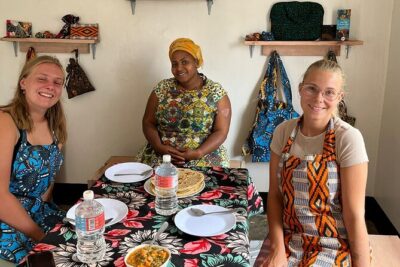
Once the cooking is finished, you sit down and eat the dishes made during the class. Drinks include hibiscus juice or maziwa mgando, a cultured milk drink. Seasonal vegetables accompany the meal, helping keep the focus on fresh, local ingredients.
This shared meal is an important part of the experience. Cooking can be fun, but the reward is sitting down with the finished food and tasting what your work produced. It also gives you time to talk with the hosts instead of rushing straight to the next stop.
Candid photos are included, which is useful if you want a record of the class without constantly stopping to take pictures yourself. Still, ask before photographing people at the market or in the cooking area. A camera is recommended, but it should not replace being present.
One confirmed booking described the food as delicious and praised Angel and Irene for making the setting feel welcoming. That is the kind of personal hosting that can make a small cooking class work well. Shipra was also credited with handling booking and arrangements promptly, though a separate booking had a serious communication problem, discussed below.
Optional swimming, fruit, and coconut extras
The experience offers optional add-ons, including swimming, exotic fruit platters, and a fresh coconut drink. These are not included in the base price, so confirm the extra cost before agreeing to them.
The fruit platter could be a pleasant way to finish a food-focused afternoon, especially if seasonal fruit is available. The coconut drink offers a simple refreshment after walking and cooking. Swimming may appeal if you want the day to feel less like a formal lesson and more like a relaxed local outing.
The details are limited, so do not assume that swimming is available at every location or that towels and changing facilities are provided. Ask where the swimming takes place, how long it lasts, and what you should bring. The same applies to the fruit platter and coconut drink.
Handmade Tanzanian items can also be arranged, including beaded sandals, waist beads, aprons, dresses, and Tanzanian or Maasai cloth. These are separate purchases, and some items may need to be handmade in advance. If you want a particular piece, tell the provider before the day of the activity rather than expecting it to be ready at the last minute.
Is $45 a fair price?
At $45 per person, the price is reasonable if you want several activities bundled together. You receive a guided food walk, a market visit, a cooking class, a traditional tools demonstration, a meal, drinks, and candid photos. That is more useful than paying for a short demonstration alone.
The value depends on the duration and the option booked. A two-hour version offers less time for walking, shopping, cooking, and eating than a five-hour version. Since the duration range is so broad, compare the available start times and ask what each option includes.
Transport is not part of the price. You need to reach the meeting point yourself, and the meeting point may vary. Add the cost and time of your own ride when comparing this with other food activities.
The price becomes stronger for a private or small group. You are more likely to get a turn with the tools, ask questions, and receive help with chapati or pilau. If the group is larger, the practical value may depend on how the tasks are shared.
You can reserve now and pay later, which keeps your plans flexible. Free cancellation is available up to 24 hours in advance for a full refund. The provider asks you to book at least 48 hours before the activity, even if the booking system allows a later reservation.
The important contact and meeting-point warning
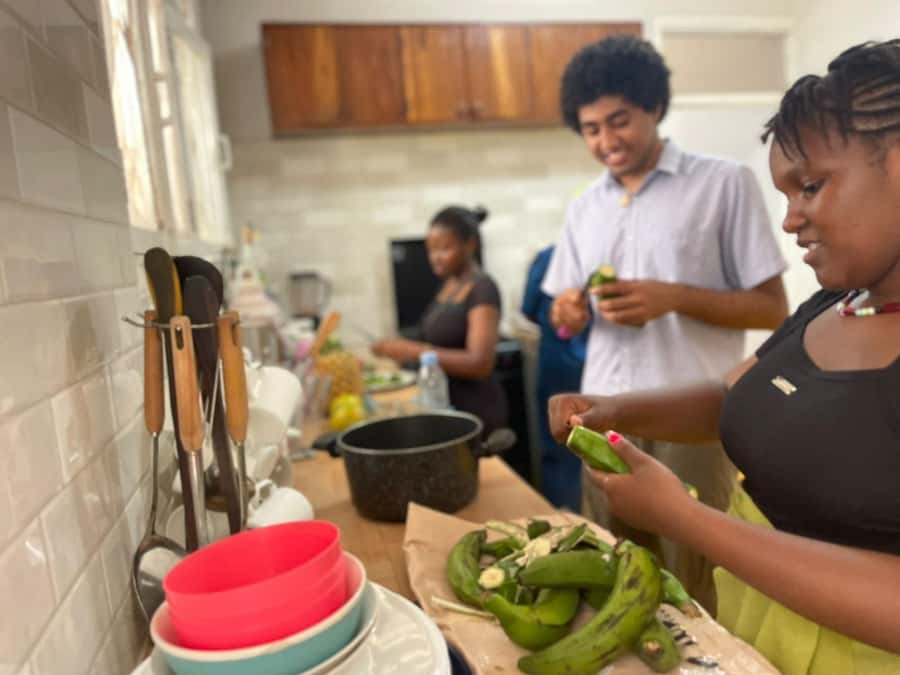
This experience needs more planning than a standard attraction with a fixed entrance gate. You must confirm the meeting point, transport plan, start time, and phone contact before the day of the class.
The provider says the experience can operate daily from 6 a.m. to 11 p.m. with advance notice. That wide schedule may help if your itinerary is crowded, but it also means you should not assume a fixed daily departure time.
There is a temporary contact number, +601125581518, because the provider’s phone was lost and the number on the voucher has been blocked for the time being. One booking ended badly when a ride could not find the address and the supplied phone number disconnected. Messages through the app and chat also went unanswered in that case.
That problem deserves serious attention. Contact the provider well before your activity, confirm that your message was received, and save the meeting details in writing. Do not rely only on a driver finding an unfamiliar address. If you are using a ride service, make sure you have the exact location and a working contact before setting off.
This warning does not cancel out the positive hosting report, but it does affect the practical risk. The cooking experience may be excellent once you arrive. Getting there requires care.
Who will enjoy this cooking class most?
I would recommend this for you if food is one of your main ways of understanding a place. It suits curious beginners, couples, families, and small groups who want to do more than eat in a restaurant. The traditional tools and market visit give the experience a local feel that a standard cooking studio may not provide.
It also suits anyone who wants recipes to take home. Ugali, pilau, and chapati are practical dishes to remember, and the class lets you see the process instead of relying on a recipe card alone.
You may want to skip it if you have very little time and dislike uncertain logistics. The two to five-hour range, changing meeting point, separate transport, and contact issue require more preparation than a simple scheduled tour.
It may also be a poor fit if you want a polished restaurant-style class with a fixed menu and modern equipment. The appeal here is the homey setting, traditional tools, market ingredients, and local food customs. That means the experience may feel informal and flexible rather than highly standardized.
Practical preparation for the day
Wear comfortable walking shoes. The food walk and market visit involve time on your feet, and the cooking area may not be designed like a formal culinary school.
Bring sunscreen and a water bottle. The provider also recommends a camera, and candid photos are included, but keep your phone or camera secure while walking through the market.
Confirm the menu if you have allergies or strong food preferences. The listed dishes are examples rather than a guaranteed full menu, and drinks may include hibiscus juice or maziwa mgando.
Ask about the optional extras before the class begins. Swimming, an exotic fruit platter, coconut drinks, and handmade souvenirs cost extra. If you want sandals, waist beads, clothing, or an apron made for you, arrange it in advance.
Finally, book at least 48 hours ahead. The provider needs preparation time, and advance contact is especially important given the temporary phone arrangement.
Should you book Taste of Tanzania?
Book it if you want a personal food experience built around local streets, a market, traditional equipment, and a meal you help prepare. The strongest parts are the hands-on cooking, the chance to use tools such as the mbuzi and kinu, and the warm hosting associated with Angel and Irene.
I would not book it casually at the last minute. Confirm the exact location, working phone number, duration, menu, and transport plan before paying. If those details are clear, $45 offers a fair package for a private or small-group food experience. If communication remains uncertain, choose an activity with a fixed meeting point.
For food-minded visitors who value participation over polish, this can be a memorable way to meet Tanzanian cooking on its own terms. Just make the logistics part of your preparation, not an afterthought.
FAQ
Where does the Taste of Tanzania cooking experience take place?
The experience is listed in the Unguja South Region of Tanzania, while the activity title refers to Dar es Salaam. The meeting point may vary depending on the option booked, so confirm the exact location before going.
How much does the experience cost?
The listed price is $45 per person.
How long does the experience last?
The duration is between two and five hours. Starting times and the exact length depend on availability and the option you choose.
What food might I prepare?
Possible dishes include ugali, pilau, and chapati. The exact menu may vary, and seasonal vegetables accompany the prepared meal.
Are drinks included?
Yes. Drinks are included, with examples such as hibiscus juice or maziwa mgando. A coconut drink is available as an optional add-on.
Is transportation included?
No. Transportation to the meeting point is not included, and the meeting point depends on the option booked.
Is the class suitable for beginners?
Yes. The class is designed for both experienced cooks and beginners.
Can I cancel the booking?
You can cancel up to 24 hours in advance for a full refund. The provider also offers a reserve now and pay later option.
Just added in Dar Es Salaam
- Zanzibar: Spice farm Private tour with Lunch★ 5.0 · 1 review
- Mbudya island from Dar es salaam safari.★ 4.2 · 3 reviews
- Maasai, Mikumi NP & Chizua Falls 3 Days From Dar es salaam★ 5.0 · 4 reviews
- From Dar es Salaam: Mikumi National Park Day Trip★ 5.0 · 3 reviews
- From Dar Es Salaam: Mikumi National Park 2 Nights and 3 Days★ 5.0 · 2 reviews
- Explore Dar es Salaam: Full-Day Private City Tour★ 5.0 · 2 reviews
- Escape to Paradise A day of sun, sand and adventure Mbudya★ 5.0 · 1 review
- DAR ES SALAAM:BONGOYO ISLAND SNORKELING TOUR & BEACH ESCAPE★ 4.7 · 9 reviews
Cooking Classes, compared.
Half-Day Kuza Cave Swimming Adventure and Cooking Class
Read our review →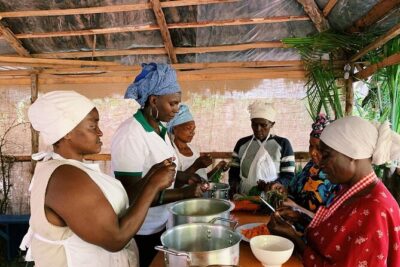
NGO Lifted Strong – Traditional Tanzanian Cooking Class
Read our review →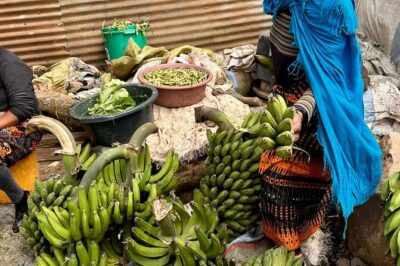
Traditional Tanzania Cooking Class & Food Market Tour
Read our review →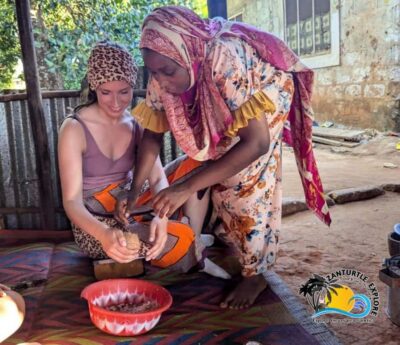
Cooking and Sewing & Jewelry Workshops in Arusha
Read our review →
Mnemba Dolphin Tour, Clear Kayak, Cooking Class, Horse Riding
Read our review →Browse the lists this tour appears in