
Reviewed · HIKING & TREKKING
Hiking Mt Kilimanjaro 8 days, the most scenic route up Kili
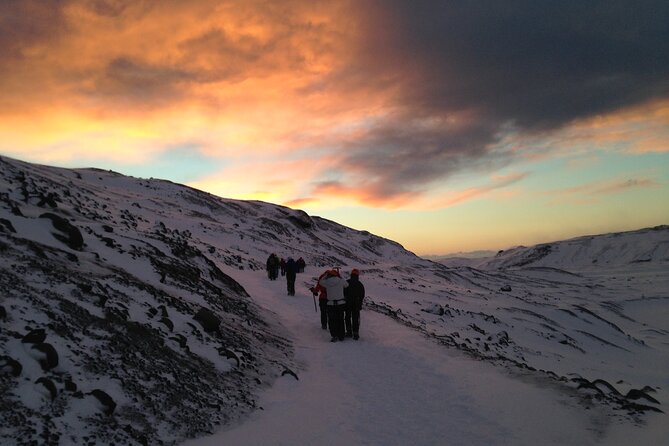
Kilimanjaro rewards patience. This 8-day Lemosho route gives you broad mountain views, quieter trails, and a gradual climb through five distinct habitats. I like its strong balance of scenery and acclimatization, and I like that the group is limited to seven people. The main drawback is the price, $2,900 per person, plus the final summit night, which is long, cold, and physically demanding.
Safari Soles Tours runs the trip from Moshi or Arusha, with pickup offered and free cancellation up to 24 hours before departure. The crew receives especially strong praise for care, safety, and summit support. Guides named in the feedback include Emanuel Mkumbo and Franky, while Bryson is praised for helping coordinate both mountain climbs and safaris.
In This Review
- What makes this Kilimanjaro climb worth considering
- Why the Lemosho Route is Kilimanjaro’s scenic choice
- Day 1: Londorossi Gate to Big Tree Camp
- Day 2: Crossing the Shira Ridge
- Day 3: Shira Plateau and Lent Hills
- Day 4: Lava Tower, Shark’s Tooth, and Barranco
- Day 5: The Barranco Wall to Karanga
- Day 6: Karanga to Barafu Hut
- Day 7: Stella Point and Uhuru Peak
- Day 8: Descending through Mweka
- What $2,900 includes in practical value
- Who should choose this eight-day climb
- Booking details worth knowing before departure
- FAQ
- How long is the Kilimanjaro Lemosho tour?
- Where does the tour begin?
- How large can the group be?
- What fitness level is required?
- When does the summit climb begin?
- How high is Uhuru Peak?
- What happens if bad weather cancels the climb?
- Should you book the Lemosho route?
What makes this Kilimanjaro climb worth considering
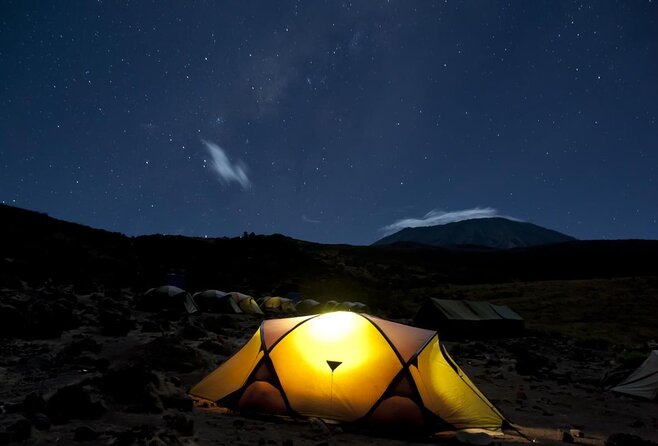
- Lemosho begins in quiet rainforest: The first walking day passes through undisturbed forest before reaching Big Tree Camp.
- The route crosses several mountain zones: You move from rainforest to moorland, semi-desert, and alpine desert as you gain height.
- Extra acclimatization is built in: The Shira plateau, Lent Hills, Barranco, and Karanga sections help break up the climb.
- The summit day begins around midnight: You reach Stella Point for sunrise, then continue to Uhuru Peak at 19,341 feet.
- The South Circuit provides changing views: The route approaches the summit from several angles before joining the Mweka descent.
- The small group matters: A maximum of seven people allows closer contact with guides and a less crowded camp routine.
Why the Lemosho Route is Kilimanjaro’s scenic choice
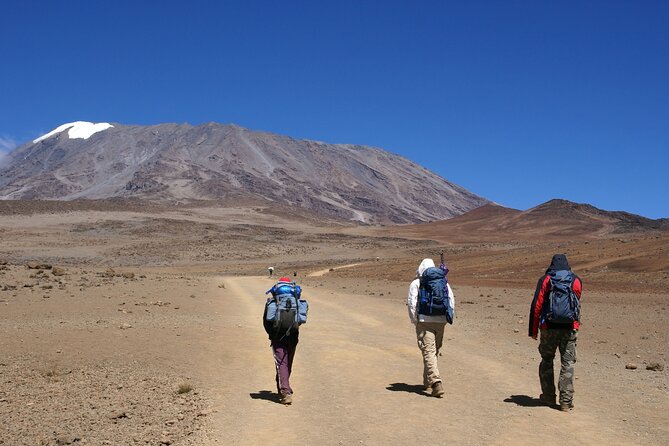
Kilimanjaro is not a technical climbing mountain on this route, but it is a serious high-altitude trek. Lemosho earns its reputation because it starts on the western side of the mountain and takes a long, curving path toward the summit. You see Kibo, the main summit cone, from different positions instead of walking straight toward it from one direction.
That longer approach has a practical benefit. You gain height in stages, with several days devoted to acclimatization before the summit push. The route is still demanding, but the schedule gives your body more time to adjust than a rushed ascent.
I especially like the change in scenery. On day one, you walk beneath rainforest. By day two, the trees give way to tall grasses, heather, and volcanic rock covered with lichen. Later, the ground becomes open moorland and then stark alpine desert. You do not get one unchanging mountain path.
The route is also described as having lower traffic than some other Kilimanjaro approaches. That does not mean you will have the mountain to yourself, but it should make the walking feel less congested. The combination of scenic variety, lower traffic, and acclimatization is the main reason I would place Lemosho near the top of a first Kilimanjaro shortlist.
More treks in Moshi:
- Private Kilimanjaro Hike 7 Day Lemosho Route
★ 5.0 · 60 reviews - Best Kilimanjaro hiking day trip tour with Kilinge Adventures
★ 4.5 · 54 reviews - #1. Best Kilimanjaro Day hike Tour-Machame Route-ISMANI
★ 4.2 · 47 reviews
Day 1: Londorossi Gate to Big Tree Camp
The day begins with a drive from Arusha or Moshi to Londorossi Gate, which takes about four hours. From there, allow another hour for the vehicle to reach the Lemosho trailhead. That transfer is long, so do not think of day one as a quick morning start followed by a short walk.
After lunch at the trailhead, you begin through rainforest. The first section feels more like a forest trek than a high mountain climb, with thick vegetation and a damp, shaded setting. The route ends at Big Tree Camp, also called Forest Camp, at about 9,500 feet.
The walking distance is 6 kilometers, with roughly three to four hours on the trail. You start around 7,800 feet and finish in the rainforest zone. This is a sensible opening day because the distance is modest and the height gain is noticeable without being extreme.
You stay on full board, meaning meals are provided throughout the mountain portion. The key practical point is to use this first night to settle into the group and pay attention to how your body responds. Do not treat the easy distance as permission to walk too fast.
Day 2: Crossing the Shira Ridge
After breakfast, the route leaves the forest and enters a broad zone of tall grass, heather, and exposed volcanic rock. Several streams cross the trail as you climb toward Shira Ridge. The route then drops gently to Shira One Camp.
This is your first major change in scenery. The forest disappears, the views open up, and Kibo becomes visible across the plateau. The view of the glaciered summit from Shira is one of the memorable parts of the western approach because you can see the mountain ahead while still standing in a wide, open setting.
The supplied schedule does not give a distance or walking time for this day, but it is listed as a full day on the mountain. You should expect a steady climb rather than a short stroll. Shira One is high enough for some people to notice the altitude, even though the walking itself may not feel severe.
This is where the slow pace becomes important. The guides are praised for monitoring wellbeing and helping people reach the summit, and that support matters more than simply having a fast hiking group. A steady pace now can save energy later.
Day 3: Shira Plateau and Lent Hills
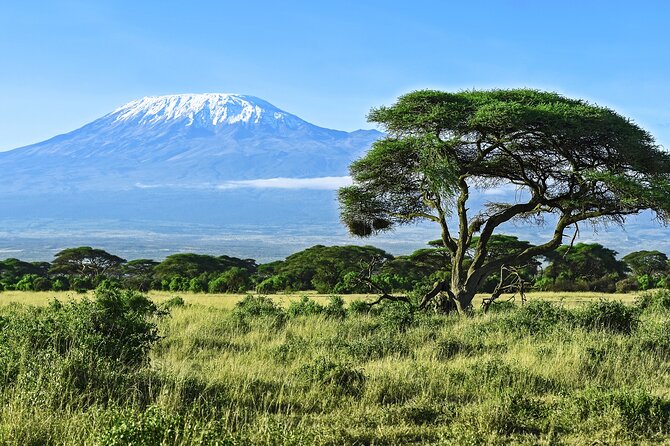
Day three is a gentle eastward walk across the Shira plateau toward Shira Two Camp or, depending on the plan, Moir Hut at the base of Lent Hills. The listed figures are about 14 kilometers, five to seven hours, and a climb from 11,500 to 13,800 feet.
Shira is one of the highest plateaus on earth, so this day gives you an unusual combination of relatively gentle walking and serious altitude. You may find the air noticeably thinner even when the trail is not steep.
The Lent Hills area is useful for acclimatization. Several walks are available there, allowing the day to be adjusted around energy levels and the group’s needs. I like this flexibility because acclimatization is not only about reaching a high camp. It is also about spending time at altitude without rushing straight to the summit.
The drawback is that the day can feel exposed and repetitive compared with the forest. The reward is the open view and the chance to let your body adjust before the route climbs higher.
A few more options to weigh up in Moshi
- Kilimanjaro climb by Lemosho Route (7-day)
★ 5.0 · 651 reviews - Safari Serengeti And Ngorongoro
★ 5.0 · 288 reviews - Kilimanjaro climb, Machame Route (7-day)
★ 5.0 · 262 reviews - Kilimanjaro Climbing Lemosho Route 8 Days.
★ 5.0 · 186 reviews
Day 4: Lava Tower, Shark’s Tooth, and Barranco
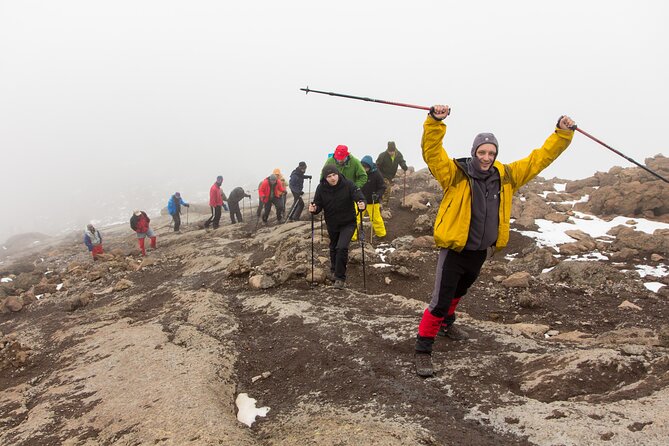
Day four is one of the most important acclimatization days. From Shira Two or Moir Hut, you walk southeast toward Lava Tower, then pass the area known as Shark’s Tooth. The route reaches about 16,000 feet near the Arrow Glacier junction before dropping to Barranco Hut at roughly 13,000 feet.
The listed distance is only 7 kilometers, with four to six hours of walking, but altitude makes this day harder than the distance suggests. You climb high, then sleep lower. That rise and drop is valuable preparation for the summit attempt.
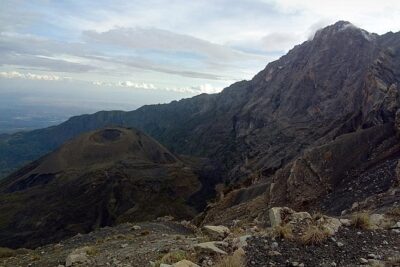
The environment is semi-desert, with much less vegetation than on the opening days. The volcanic terrain feels bare and severe, a useful reminder that Kilimanjaro is not a casual hill walk.
This is also a day when you should listen closely to your guide. The strongest praise for this company focuses on the guides’ attention to safety and personal wellbeing. Emanuel Mkumbo is specifically named as a guide who looked after a climber’s condition and helped keep the ascent on track. That kind of support is crucial when a short route section feels difficult because of altitude.
Day 5: The Barranco Wall to Karanga
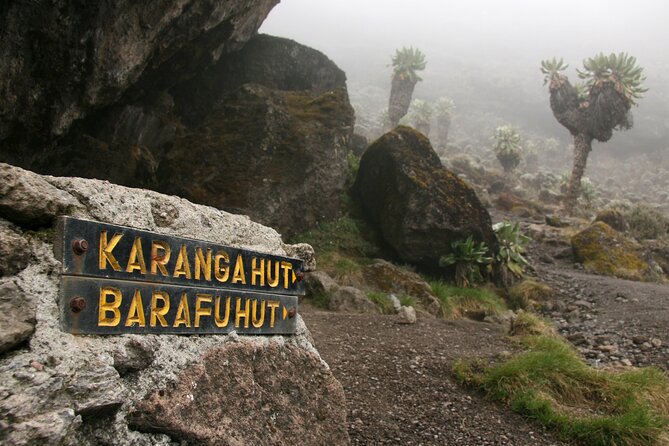
Leaving Barranco, you climb a steep ridge beside the Barranco Wall and continue to Karanga Valley Camp. The distance is about 5 kilometers, and the walking time is listed as four to five hours. You gain only about 100 feet overall, from 13,000 to 13,100 feet, but the trail is not flat.
This short day is designed to provide more acclimatization time. The Barranco Wall adds a physical challenge, yet the day does not force you to cover a large distance. You should expect some steep sections and uneven volcanic ground, but the route is part of a managed trekking schedule rather than a race.
Karanga sits in the alpine desert zone. The surroundings are increasingly sparse, and the summit feels close. This is a good point to take stock of your energy, feet, and appetite. By now, small problems can become large ones if ignored.
The best advice is simple: eat what you can, drink regularly, and tell the guide early if you feel unwell. The day is short for a reason. Save your strength.
Day 6: Karanga to Barafu Hut
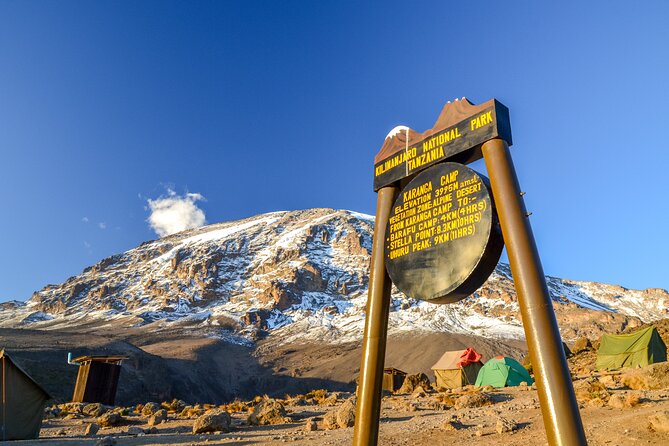
From Karanga, you join the junction with the Mweka Trail and continue upward to Barafu Hut. The route covers about 4 kilometers in four to five hours, climbing from 13,100 to 15,300 feet.
Barafu is the final camp before the summit attempt. From here, you can see both Mawenzi and Kibo, Kilimanjaro’s two main peaks. You have also completed the South Circuit, which gives views of the summit from several angles.
The walking distance is short, but the altitude and anticipation change the mood. You rest, eat dinner, and prepare for the midnight start. This is not the night to spend time sorting gear or making last-minute decisions. Keep essential clothing, water, and personal items ready before you lie down.
You should also expect limited sleep. The summit schedule requires an early start, so the rest period at Barafu is part of the challenge. I would judge this day by how efficiently the crew handles meals, camp, and preparation. The available information does not specify tent arrangements or exact meal menus, so ask the operator about those points before booking.
Day 7: Stella Point and Uhuru Peak
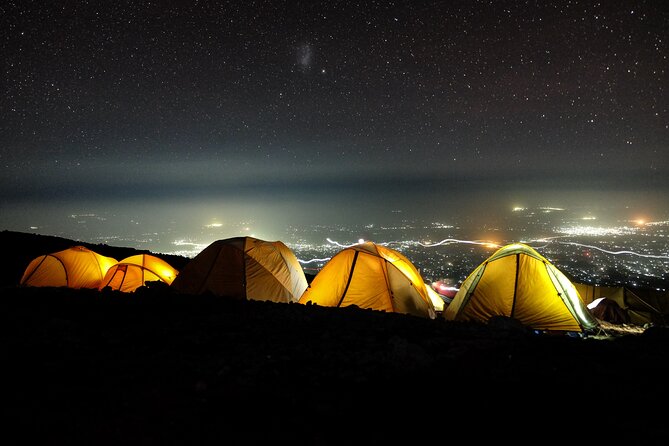
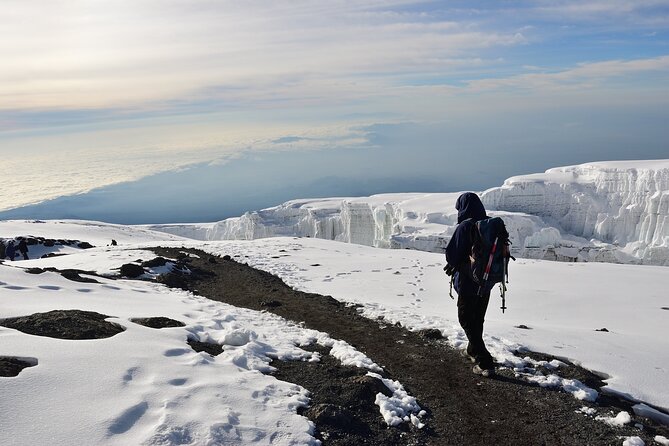
The summit push begins between midnight and 12:00 a.m. You climb northwest through heavy scree, passing between the Rebmann and Ratzel glaciers on the way to Stella Point. This is described as the most mentally and physically difficult part of the trek.
At Stella Point, you reach about 18,600 feet and pause for a short rest. If weather cooperates, sunrise appears over the crater rim. From Stella, the route continues for about an hour toward Uhuru Peak, the highest point on Kilimanjaro and in Africa, at 19,341 feet.
Snow may appear on the final section. The summit day is listed as lasting about 12 hours, so you should prepare for a long stretch of walking, rest stops, and changing conditions. The combination of darkness, scree, cold, thin air, and fatigue is harder than the mileage alone suggests.
The guides are central here. Several positive accounts praise the crew for helping climbers reach the top, with Franky singled out for especially strong guidance and encouragement. Another account describes a seven-day Lemosho climb being completed in six days because the team adapted the route to the group’s fitness. That flexibility may appeal to strong hikers, but you should not assume a shorter schedule is automatically better. More time can be a real advantage at altitude.
After Uhuru Peak, you descend from the summit area. The supplied schedule gives the complete summit day as approximately 12 hours but does not spell out every overnight location after the descent. Ask for the exact day-seven camp plan before departure.
Day 8: Descending through Mweka
After breakfast, you continue down to Mweka Park Gate. The transfer from the gate takes you back to your hotel in Arusha or Moshi, with vehicles waiting at Mweka.
The final day is listed as about three hours and has no admission charge. It is much easier than summit day, but tired legs can make downhill walking surprisingly awkward. Take your time and use your poles if you carry them.
The Mweka descent also gives the trip a clean finish. You do not retrace the entire route, so the ascent and descent show different sides of the mountain. Once you reach the vehicle, the climb is finished, but you may still feel its effects for a while.
What $2,900 includes in practical value
At $2,900 per person, this is not a budget outing. The value comes from the eight-day schedule, full-board mountain stays, park admission during the climb, transport from the gate back to Moshi or Arusha, and a small maximum group size of seven.
The longer schedule is important. A cheaper six-day option may look attractive, but Lemosho’s appeal is its gradual approach and extra time for acclimatization. The price also pays for a guided operation rather than an independent walk, and the most consistent praise focuses on the crew’s care, safety, and ability to help people reach the summit.
Still, the published details do not list every inclusion. Before paying, confirm whether airport transfers, personal equipment, hotel nights, tips, drinks, and any extra rescue or insurance costs are included. The trip offers pickup, but the information does not specify the pickup area or whether it covers both Moshi and Arusha in every case.
Group discounts may reduce the cost for larger bookings. Since the maximum group is seven, ask how the discount works and whether a group remains private or joins other climbers.
Who should choose this eight-day climb
I would recommend this route to you if you want the most scenic approach and prefer a measured ascent over a quick summit attempt. It suits people with a moderate fitness level who can commit to long walking days, steep sections, and a difficult midnight summit push.
You do not need to be an experienced mountaineer based on the information provided, but you do need to respect the altitude. One account came from an experienced hiker who quickly realized that strong guides were still essential. That is a useful warning: fitness helps, but it does not remove the need for pacing and mountain judgment.
This may not suit you if you want a relaxed holiday with flexible sleeping hours. The transfers are long, the summit day lasts about 12 hours, and conditions depend on the weather. The route also requires you to be comfortable with basic mountain camping arrangements, though the exact facilities are not listed.
The company has a perfect 5 rating from eight submitted ratings, with repeated praise for the crew and successful climbs. That is encouraging, but it is still a small sample. I would use it as a positive sign, then ask direct questions about guide-to-climber ratios, equipment, meals, safety procedures, and tipping.
Booking details worth knowing before departure
Confirmation is provided at booking. Pickup is offered, and the experience is available with a mobile ticket. The group limit is seven people, which should help keep the pace and communication manageable.
You need a moderate level of physical fitness. The experience also depends on good weather. If poor weather forces cancellation, you are offered another date or a full refund.
For a full refund after booking, cancel at least 24 hours before the local start time. Cancellations or changes made inside that 24-hour window are not accepted for a refund. That is a fair policy, but the weather provision gives you some protection when conditions make the climb unsafe.
FAQ
How long is the Kilimanjaro Lemosho tour?
The scheduled duration is approximately eight days.
Where does the tour begin?
Pickup is offered from Arusha or Moshi, and the first mountain transfer goes to Londorossi Gate and then the Lemosho trailhead.
How large can the group be?
The maximum group size is seven people.
What fitness level is required?
The tour states that you should have a moderate physical fitness level.
When does the summit climb begin?
The summit attempt starts around midnight, between 12:00 a.m. and midnight.
How high is Uhuru Peak?
Uhuru Peak is listed at 19,341 feet, the highest point on Kilimanjaro and in Africa.
What happens if bad weather cancels the climb?
You are offered a different date or a full refund if poor weather causes cancellation.
Should you book the Lemosho route?
I would book this tour if scenery, acclimatization, and close guide support matter more to you than finding the lowest price. Lemosho gives you a varied route, several high-altitude adjustment days, a small group cap, and a descent through Mweka rather than simply repeating the ascent.
The strongest reason to choose Safari Soles Tours is the repeated praise for its guiding team, including Emanuel Mkumbo and Franky. The main caution is to clarify what the $2,900 covers and to be honest about the summit night. If you accept the cold, altitude, long hours, and uncertainty of mountain weather, this is a well-structured way to aim for Africa’s highest point.
Just added in Moshi
- Zanzibar: Stone Town tour and Nakupenda beach with Lunch★ 5.0 · 1 review
- day trip lake manyara★ 5.0 · 2 reviews
- Mt Kilimanjaro 6 days Marangu route hike★ 5.0 · 3 reviews
- machame route★ 5.0 · 16 reviews
- Private Cycle to Kilimanjaro Bike Park Safari★ 5.0 · 6 reviews
- West Kilimanjaro cycling Adventures★ 4.5 · 8 reviews
- Wildlife Extravaganza: Manyara, Tarangire & Ngorongoro in 3 Days★ 5.0 · 3 reviews
- 3 Days Private E-Bike Tour in West Kilimanjaro★ 5.0 · 3 reviews
Hiking & Trekking, compared.

8-Day Small-group Lemosho Kilimanjaro Summit Trekking
Read our review →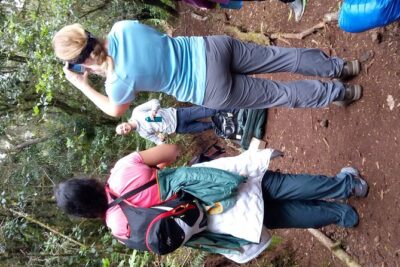

Private Full Day Hiking Experience to Marangu Route
Read our review →

From Arusha/Moshi: Kilimanjaro Hike Marangu Route Day Trip
Read our review →
4 days Best experience Kilimanjaro Hike, Serengeti &Ngorongoro
Read our review →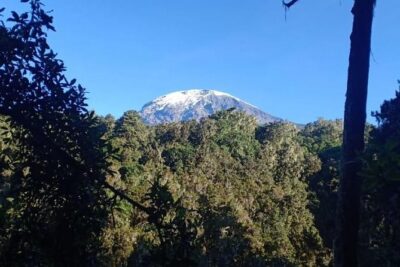
Best Kilimanjaro hiking day trip tour with Kilinge Adventures
Read our review →Browse the lists this tour appears in