
Reviewed · MACHAME ROUTE CLIMBS
Kilimanjaro Climb Via Machame Route
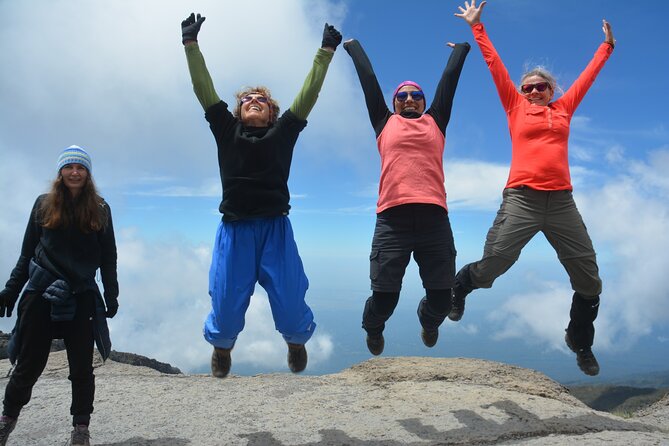
Africa’s highest summit demands patience. This seven-day Machame Route climb gives you Kilimanjaro’s classic scenery, from rainforest and heather to volcanic rock, glaciers, and an Arctic summit zone. I like the route’s changing habitats and the careful climb-high, sleep-lower pattern on Day 3. I also like that Sirikwa Travel keeps groups to a maximum of 10 people, while providing transportation, guides, and all listed meals.
The catch is simple: Machame is tough. The route is steep, and the seven-day schedule leaves less time to adjust than longer Kilimanjaro itineraries. You need a moderate fitness level, a willingness to walk slowly, and enough determination for a cold midnight summit attempt.
In This Review
- Key Points Before You Book
- What You Are Really Signing Up For
- Day 1: Machame Gate to Rainforest Camp
- Day 2: Heather, Moorland, and Shira Plateau
- Day 3: Lava Tower and the Drop to Barranco
- Day 4: The Barranco Wall and Karanga Valley
- Day 5: Karanga to Barafu Camp
- Day 6: Midnight to Uhuru Peak, Then Down to Mweka
- Day 7: Mweka Camp to Moshi
- Guides, Group Size, and the Human Side
- Food, Fitness, and What to Pack
- Is $2,550 Good Value?
- Who Should Choose This Machame Climb?
- Should You Book It?
- FAQ
- How long does the Kilimanjaro Machame Route climb take?
- Where does the Machame Route begin?
- How difficult is the Machame Route?
- What is the highest point reached?
- Is a guide included?
- Are meals included?
- What is the cancellation policy?
Key Points Before You Book
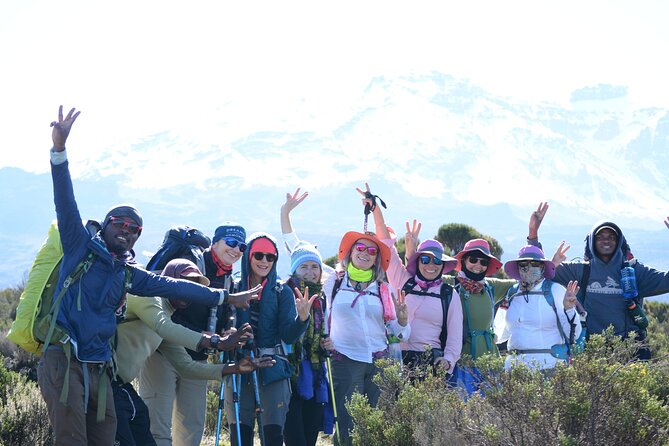
- A scenic south-side approach: You move from thick rainforest to open moorland, alpine desert, and the Arctic summit zone.
- A serious seven-day climb: Machame is popular, but it is not an easy route. The Barranco Wall and summit night require strength and patience.
- Useful acclimatization on Day 3: The trail climbs to Lava Tower at 15,190 feet before dropping to Barranco Camp at 13,044 feet.
- A midnight summit push: You begin around midnight from Barafu Camp, reach the summit area after seven to eight hours, then descend to Mweka Camp.
- Small-group support: The maximum group size is 10. Past departures have also included much larger hiking parties, so confirm your group size before booking.
- Strong praise for the local crew: The company’s staff, including names such as Ole and Oinoth, receive repeated praise for patience, organization, encouragement, and care.
What You Are Really Signing Up For
At $2,550 per person, this is not a sightseeing walk with a mountain in the background. It is a full high-altitude expedition lasting about seven days, with long walking days, basic mountain camps, cold conditions, and a summit night that can last through sunrise.
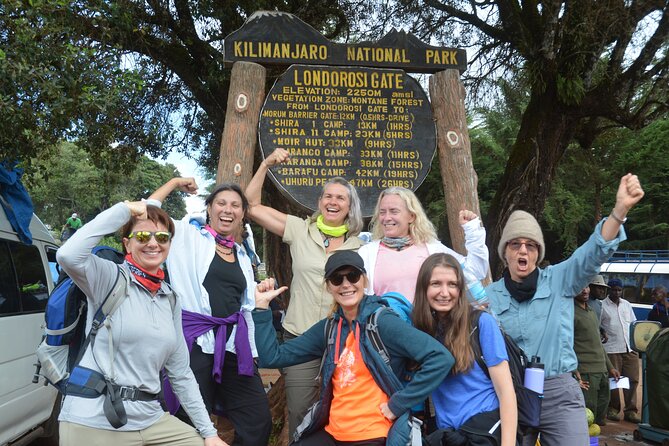
The route begins near Moshi, with a drive of about 50 minutes to Machame Gate. You then approach Kilimanjaro from the south, cross the Shira Plateau, follow the Southern Circuit beneath the mountain’s southern ice fields, and summit from Barafu. The descent uses the Mweka route.
That route design is one of Machame’s great strengths. You do not simply march straight uphill. You pass through several climate zones and approach the summit from different angles. The drawback is that the trail is steep and rugged, especially for anyone unused to long days on uneven ground.
The package includes transportation, a tour guide, breakfast, lunch, and dinner for the seven-day program. The description does not spell out every service behind the price, so I would ask about accommodation before and after the climb, park and camping fees, equipment, porter arrangements, tips, and any medical or rescue costs. Those details can make a major difference to the true value of a Kilimanjaro package.
More Kilimanjaro climbs:
- Mount Kilimanjaro Day Hike Through Marangu Route to Mandara Hut
★ 5.0 · 37 reviews - Mount Kilimanjaro Day Hike
★ 4.5 · 23 reviews - 7 Day Kilimanjaro Climb Lemosho Route & 2 Day Safari
★ 5.0 · 16 reviews
Day 1: Machame Gate to Rainforest Camp
The first morning starts with the drive from Moshi through Machame village to the park gate. This short road journey gives you a first look at the lower slopes of Kilimanjaro before you begin walking at about 5,380 feet.
The trail enters dense rainforest and follows a winding path up a ridge. You walk roughly 11 kilometers, or seven miles, over five to seven hours, finishing at Machame Camp around 9,350 feet.
This is a beautiful opening day, but do not treat it as a gentle warm-up. The trail climbs steadily, and humidity in the forest can make the effort feel heavier than the distance suggests. The forest also means possible wet and muddy ground, depending on conditions.
I like that the first day introduces the mountain gradually. You get time to settle into the walking rhythm, learn how your guide manages the pace, and find out how your boots and clothing perform. Keep your day pack organized, because you will need easy access to water, rain protection, and an extra layer.
Day 2: Heather, Moorland, and Shira Plateau
Day 2 leaves the rainforest behind. The trail climbs toward a steep, rocky ridge, then opens onto the heather and moorland of the Shira Plateau.
The distance is shorter, about five kilometers, or three miles, but the altitude rises from 9,350 to 12,500 feet. The walking time is listed as four to six hours. You cross a large river gorge before reaching Shira 2 Camp.
This day shows why Machame is prized for scenery. The enclosed forest gives way to open high country, with wider views and a sense that you are moving into a different world. The open terrain can also expose you to sun, wind, and sudden weather, so apply the practical mountain rule: keep rain gear and warm layers close, not buried in your duffel.
The shorter distance does not mean an easy day. Altitude affects people differently, and you may notice headaches, reduced appetite, or unusual fatigue. Walk slowly, drink regularly, and tell your guide early if you feel unwell. Waiting until symptoms become severe is poor mountain strategy.
Day 3: Lava Tower and the Drop to Barranco
Day 3 is the route’s most useful acclimatization day. From Shira 2 Camp at 12,500 feet, you climb to Lava Tower at 15,190 feet, covering about seven kilometers in four to five hours.
Lava Tower is a striking volcanic rock formation about 300 feet high. After reaching it, you descend three kilometers to Barranco Camp at 13,044 feet, which takes another two to three hours.
You begin and end the day at nearly the same height, but you spend important time much higher in between. That climb-high, sleep-lower pattern is one of the best features of this itinerary. It gives your body a chance to experience higher altitude before you settle back at Barranco.
The descent is not a free ride. By this point, you have already spent several hours climbing, and tired legs still have to negotiate rocky ground. The reward is the unusual Senecio Forest, with giant plants that give this section a strange, memorable character.
This is also a good day to judge how well the schedule fits you. If you are already struggling badly, speak plainly with your guide. A caring crew should take your condition seriously, not simply urge you onward.
More Machame Route climbs:
- 7-Day Machame Kilimanjaro Summit Tour from Arusha
★ 5.0 · 125 reviews - 6 Days: Hiking Kilimanjaro via Machame Route
★ 5.0 · 24 reviews - 6-Day Guided Tour in Machame Route Mt Kilimanjaro
★ 5.0 · 17 reviews - KILIMANJARO MACHAME ROUTE, (Climb 7days)
★ 5.0 · 16 reviews
Day 4: The Barranco Wall and Karanga Valley
Day 4 covers only about five kilometers, but it includes one of the route’s best-known obstacles. From Barranco Camp, you descend into a ravine and reach the base of the Great Barranco Wall.
The wall rises nearly 900 feet. The climb is steep but non-technical, meaning it does not require mountaineering equipment or rope work according to the supplied itinerary. You use your hands at times for balance and move carefully over rocky sections.
At the top, the trail crosses a series of hills and valleys before dropping sharply into Karanga Valley. One final steep climb brings you to Karanga Camp at 13,106 feet.
This is a short day by distance, designed for acclimatization. I like that the itinerary does not force you to cover a huge number of miles just before the summit. Still, the Barranco Wall can feel intimidating, particularly if you dislike exposure or steep scrambling.
Your guide’s patience matters here. The repeated praise for Sirikwa’s staff focuses on encouragement, safety, and calm help during difficult sections. That kind of support is not a luxury on Kilimanjaro. It can make the difference between panic and a manageable challenge.
Day 5: Karanga to Barafu Camp
The trail from Karanga climbs four kilometers to Barafu Hut, moving from 13,106 to 15,331 feet. Walking time is listed as four to five hours.
This section completes the Southern Circuit, the broad route around the mountain’s southern side. You have seen the summit from several angles, and now you reach the high camp used for the final push.
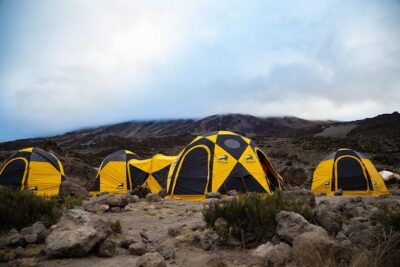
Barafu means ice, an appropriate name for a camp at this height. The setting is rocky and exposed, with little shelter from wind or cold. From camp, you can see Mawenzi and Kibo, two of Kilimanjaro’s major peaks.
The schedule calls for rest and an early dinner before summit night. This is where the practical side of the climb becomes important. You need to eat even if altitude has reduced your appetite, organize your day pack, and protect your water from freezing conditions as much as possible.
Do not expect a long, comfortable night. You are likely to rest for only a few hours before starting around midnight. Keep your summit clothing ready before lying down, because fumbling with gear in the cold is a miserable way to begin the hardest part of the climb.
Day 6: Midnight to Uhuru Peak, Then Down to Mweka
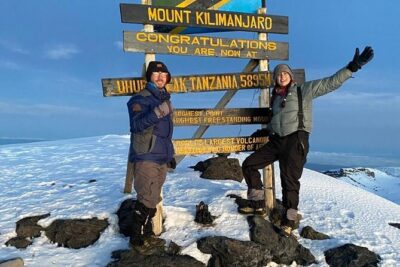
Day 6 is the test. You leave Barafu Camp around midnight and climb from 15,331 feet toward Uhuru Peak at 19,341 feet.
The summit ascent covers about five kilometers and is listed at seven to eight hours. You climb in darkness, taking frequent short breaks in severe cold and wind. Near Stella Point, at about 18,900 feet, the reward is sunrise over Mawenzi Peak.
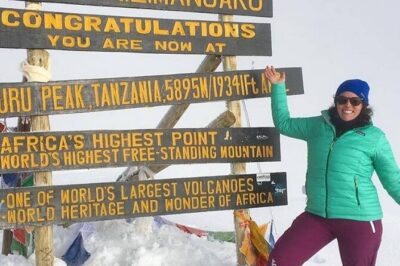
From Stella Point, you continue toward Uhuru Peak, Kilimanjaro’s highest point. The final stretch can feel slow and demanding, with altitude making every step more expensive. The goal is not speed. It is steady movement, careful breathing, and listening to your guide.
The descent is long. After reaching Uhuru Peak, you descend 12 kilometers, or seven miles, to Mweka Camp at 10,065 feet. That section takes another four to six hours and drops you from the Arctic zone back toward rainforest.
This is a very full day, and the itinerary lists about 12 hours of activity. The combination of little sleep, cold, altitude, and a long descent is the main reason I would not recommend this climb to someone with no hiking or high-altitude background. You may be physically fit and still find the summit night difficult.
The supplied experiences repeatedly praise the staff’s patience and support during this stage. That is especially important if one person in a group moves more slowly or needs extra encouragement. A successful summit is not just about strength. It is also about pacing and good judgment.
Day 7: Mweka Camp to Moshi
The final day descends from Mweka Camp at 10,065 feet to Mweka Gate at about 5,380 feet. The distance is approximately 10 kilometers, or six miles, and takes three to four hours.
The lower forest can be wet and muddy. Your boots and trousers may finish the climb looking less polished than when they began, which is perfectly normal. At Mweka Gate, you collect summit certificates before continuing about one hour to Mweka Village.
A vehicle meets you at the village for the drive back to your hotel in Moshi. This transfer is a welcome finish after seven days on foot, though the description does not specify the hotel arrangements or how long you stay in Moshi. Ask about that before paying if you need a room after the climb.
The last day is physically easier than summit day, but tired knees can make downhill walking surprisingly uncomfortable. Use trekking poles if you have them, and take care on muddy ground.
Guides, Group Size, and the Human Side
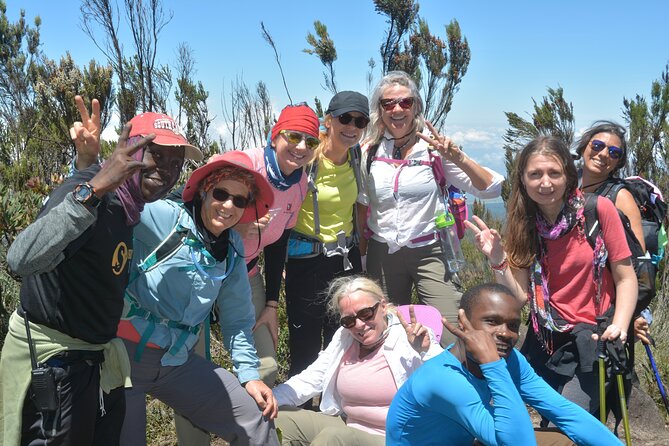
Sirikwa Travel is a local Tanzanian operator, and the strongest praise centers on its people. Names connected with past trips include Ole and Oinoth, while several accounts describe the wider team as friendly, strong, professional, and encouraging.
The most useful detail is not the cheerful atmosphere alone. It is the repeated emphasis on careful organization, airport and hotel transfers in some arrangements, food, acclimatization checks, and support during hard sections. One group specifically noted evening medical checks and attention to meals and acclimatization.
Those services matter because Kilimanjaro is a slow-moving logistics exercise. Food must reach camp, equipment must be organized, and health changes must be noticed early. A small group of no more than 10 can also make communication easier, though you should confirm the actual size and guide-to-climber ratio for your departure.
The package includes a guide, but the supplied information does not specify porter numbers, sleeping arrangements, tents, or gear rental. Ask direct questions. A reputable operator should explain what the price covers and what you need to bring or pay separately.
Food, Fitness, and What to Pack
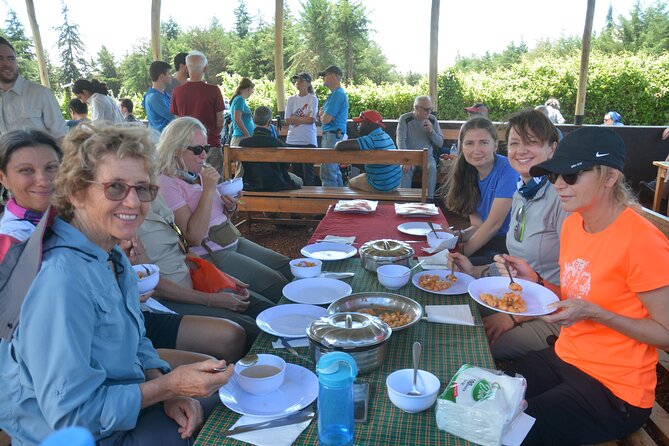
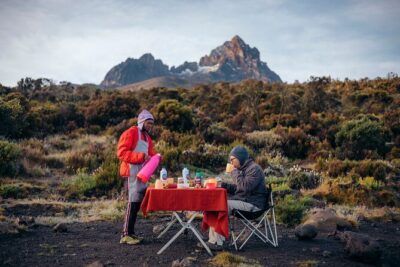
Breakfast, lunch, and dinner are included for all seven days. Vegetarian meals are available if requested at booking, and you should provide any dietary requirements in advance.
The food details are limited, so I would not assume that every dietary need can be handled without notice. Tell the operator clearly about allergies, medical restrictions, and vegetarian requirements before arrival.
The stated requirement is moderate physical fitness. That phrase should not be read as permission to arrive unprepared. You need to handle five to eight hours of walking on several days, steep climbs, long descents, and a summit day of about 12 hours.
Training should focus on long uphill and downhill walks, stair sessions, and carrying the day pack you expect to use. Practice with your boots and layers before Tanzania. The route is not technical, but it is physically demanding.
Children must be accompanied by an adult. A current valid passport is required on the day of travel. The listed dress code is smart casual, though mountain clothing is the practical priority once you leave Moshi.
Is $2,550 Good Value?
The price is $2,550 per person. For seven days of guided Kilimanjaro travel, transportation, and three daily meals, that can be a reasonable package price, especially if the operator provides the necessary mountain logistics and a well-supported crew.
But the description leaves several cost questions open. It says anything extra not mentioned is excluded. Before booking, ask if the price includes park entry, camping, permits, tents, sleeping mats, porter support, airport transfers, hotel nights, rescue coverage, and tips.
I also recommend asking how the company handles an early descent or an unsuccessful summit attempt. That is not pessimism. It is sensible planning for a high-altitude climb where health must come before the certificate.
Free cancellation is offered if you cancel at least 24 hours before the experience starts. Changes or cancellations within 24 hours are not accepted for a refund, and cut-off times use local Tanzanian time.
Who Should Choose This Machame Climb?
I would choose this route if you want Kilimanjaro’s most varied scenery and are comfortable with a demanding schedule. It suits fit hikers, backpackers, and adventurous first-time high-altitude climbers who understand that success depends on pacing rather than rushing.
I would be cautious if this is your first serious hiking trip, if you dislike steep rocky trails, or if you want a relaxed holiday with plenty of sleep. A longer Kilimanjaro itinerary may offer a gentler adjustment schedule, though this seven-day route does include a useful acclimatization day at Lava Tower.
The repeated praise for Sirikwa’s staff makes this package appealing for people who value local support and close guidance. I would book after confirming the exact inclusions, the guide team, porter welfare practices, camp arrangements, and the number of people in my group.
Should You Book It?
Book this Machame climb if you want a scenic, challenging route and are ready for a midnight summit attempt, long walking days, and basic mountain conditions. The combination of rainforest, Shira Plateau, Lava Tower, Barranco Wall, Southern Circuit views, and Uhuru Peak gives you a memorable cross-section of Kilimanjaro.
Skip it if you want an easy route or if the seven-day schedule feels rushed. For the right climber, the price and support can offer solid value, but only after you confirm what the $2,550 package includes beyond meals, transportation, and a guide.
FAQ
How long does the Kilimanjaro Machame Route climb take?
The climb lasts approximately seven days.
Where does the Machame Route begin?
The route begins at Machame Gate, reached by a drive of about 50 minutes from Moshi through Machame village.
How difficult is the Machame Route?
It is considered difficult, steep, and challenging, particularly because the seven-day schedule is relatively short. Moderate physical fitness is required.
What is the highest point reached?
The itinerary reaches Uhuru Peak at 19,341 feet.
Is a guide included?
Yes. A tour guide is included in the package.
Are meals included?
Yes. Breakfast, lunch, and dinner are listed for all seven days. Vegetarian meals are available if requested when booking.
What is the cancellation policy?
You can receive a full refund by canceling at least 24 hours before the experience starts. Cancellations or changes made less than 24 hours before the start time are not accepted for a refund.
Just added in Arusha
- Safari “Kifaru” – 5 days in the most famous Parks in the world★ 5.0 · 4 reviews
- Saadani Day Trip★ 5.0 · 13 reviews
- 3 Days Tanzania Short and Spicy★ 5.0 · 6 reviews
- 5 Day Tanzania Safari Camping Adventure Private Tour★ 5.0 · 2 reviews
- Day Trip to Ngorongoro Crater from Arusha★ 5.0 · 1 review
- SERENGETI NATIONAL PARK Tour★ 4.5 · 5 reviews
- 3 Days Serengeti Park & Ngorongoro Crater Adventure Safari★ 5.0 · 8 reviews
- 6 Days Tanzania Bush Experience Safari★ 5.0 · 6 reviews
Machame Route Climbs, compared.
Climbing Kilimanjaro through 7 days Machame Route
Read our review →
7-Day Machame Kilimanjaro Summit Tour from Arusha
Read our review →
7 Days Kilimanjaro via Machame route affordable price
Read our review →
#1. Best Kilimanjaro Day hike Tour-Machame Route-ISMANI
Read our review →
The Best of Machame Route in 6 Days: Your World’s Summit Guide
Read our review →Browse the lists this tour appears in