
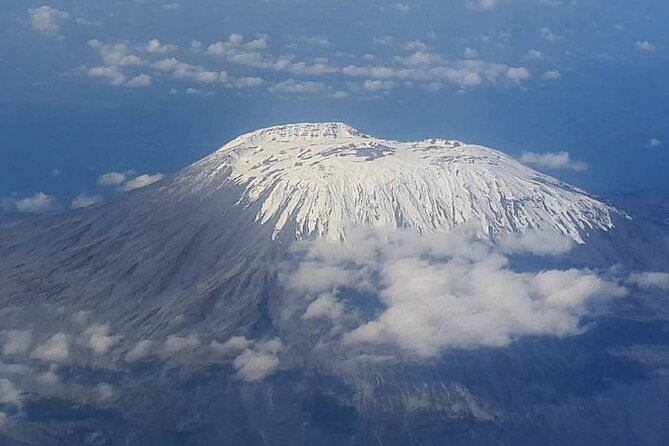
Reviewed · LEMOSHO ROUTE CLIMBS
Mountain Kilimanjaro Climbing 8 Days Lemosho Route
Reach Africa’s highest point the patient way. This 8-day Lemosho route gives you time to cross forest, moorland, volcanic ridges, and high desert before the summit push. I like the steady acclimatization plan and the striking views across the Shira Plateau. I also like that camping equipment, sleeping gear, and meals adapted to your dietary needs are included.
The main caution is the schedule near the top. The climb to Barafu Camp is tough, the summit begins around midnight, and sleeping at Crater Camp after reaching Uhuru Peak adds another demanding layer. The price is $2,756.93 per person, which can represent solid value if the promised guides, porters, food, equipment, and airport or hotel transport are all delivered as planned.
In This Review
- Key points to know before you book
- Why the Lemosho Route Is Worth Eight Days
- Day One: Forest From 2,100 to 2,650 Meters
- Day Two: Open Moorland and Shira 1 Camp
- Day Three: Shira Plateau Views and Acclimatization
- Day Four: Lava Tower at 4,640 Meters
- Day Five: The Barranco Wall and Karanga Valley
- Day Six: Barafu Camp and the Midnight Start
- Day Seven: Uhuru Peak and Crater Camp
- Day Eight: Forest Descent and the Return to Moshi
- Guides, Porters, Meals, and Equipment
- Is $2,756.93 Good Value?
- Who Should Choose This Climb?
- Booking, Timing, and Cancellation Details
- My Verdict: Book It for the Route, Not Just the Summit
- FAQ
- Where does the Kilimanjaro climb take place?
- How long is the tour?
- How much does the experience cost?
- Where is the meeting point?
- What time does the tour start?
- How many people can join the group?
- What level of fitness is required?
- Are meals and sleeping equipment included?
- Can I cancel for a full refund?
Key points to know before you book
- Shira Plateau scenery: Days two and three cross open grassy moorland, volcanic rock, and high views toward Kibo.
- Gradual altitude gain: The route uses several camps and acclimatization walks before the summit attempt.
- Crater Camp extension: After Uhuru Peak, you sleep inside the crater near Furtwangler Glacier, an unusual and demanding addition.
- Small group size: The maximum is 15 people, allowing a more personal guiding setup than a large expedition.
- Included mountain support: Sleeping gear, equipment, meals, guides, and porters are part of the experience as described.
- Strong past approval: The available feedback gives the experience a 5 rating from 10 reviews, with 100 percent recommending it.
Why the Lemosho Route Is Worth Eight Days
Kilimanjaro is not a technical climbing trip in the usual mountaineering sense, but it is a serious high-altitude trek. The challenge comes from thin air, cold, long walking days, and the need to keep moving when your body would rather sit down with a cup of tea.
I like the Lemosho route because it spreads the approach over several days. You begin at about 2,100 meters and gradually reach camps above 4,000 meters. That extra time gives you more room to adjust than a rushed ascent, although no route can remove the risks of altitude.
The route covers approximately 40 kilometers to the summit according to the tour description. The exact effort is greater than that figure may suggest because the trip includes steep sections, repeated ascents and descents, and the walk down through the forest at the end.
You should also understand the character of this trip. It is not a relaxed scenic walk with a summit photo added at the end. Day six involves a steep ascent to Barafu Camp at 4,640 meters, followed by an early night and a wake-up between 11 p.m. and midnight. Day seven then asks you to reach Uhuru Peak and continue to Crater Camp.
More Kilimanjaro climbs:
- 6 Days Climbing Mount Kilimanjaro Machame Route
★ 5.0 · 40 reviews - Kilimanjaro Climbing 5 days Marangu route
★ 5.0 · 22 reviews - 6 Day Kilimanjaro Climbing Via Marangu Route
★ 5.0 · 6 reviews
Day One: Forest From 2,100 to 2,650 Meters
The first section begins on Mount Kilimanjaro at roughly 2,100 meters. You walk through the lush forest zone, following the trail toward the lower northern slopes and the Shira Plateau.
The day takes about three hours, with the night at Mti Mkubwa Camp at 2,650 meters. This is a useful opening day because it introduces the mountain without immediately demanding a full day of hard walking.
The forest is also an important change from daily life in Moshi. You are surrounded by thick vegetation before the route gradually opens higher up. I would treat this day as a chance to settle into a slow pace, organize your gear, and learn how the guiding team manages breaks and meals.
Pickup is offered, and the listed meeting point is Kilimanjaro International Airport on Kilimanjaro Airport Road. The stated start time is 7 a.m., so confirm the pickup plan carefully if your flight arrives at another time.
Day Two: Open Moorland and Shira 1 Camp
Day two shifts from forest to open high country. You cross grassy moorland and heather, with volcanic rock formations scattered across the route.
The walk lasts about seven hours, and portions are fairly steep. The destination is Shira 1 Camp, where Kibo Peak may appear above the clouds. That view is one of the route’s early rewards, but the bigger benefit is the altitude gain handled at a walking pace.
The open setting changes how the mountain feels. There is less shelter than in the forest, and the volcanic formations make the route feel more exposed and unusual. I like this section for the sense of distance, though you should expect the weather and walking effort to feel more serious than on day one.
Day Three: Shira Plateau Views and Acclimatization
Day three remains on the Shira Plateau, with a steady climb across moorland and wide views toward Kibo. From the western side of the mountain, you may see the northern ice fields and unusual angles of the summit cone.
You spend the night at Shira 2 Camp after another roughly seven-hour day. In the afternoon, the schedule includes an acclimatization walk before returning to camp for dinner and sleep.
That short additional walk matters. The idea is to gain altitude during the day and then return to camp, giving your body more practice at handling the thinner air. It is not a sightseeing extra to skip casually. If you are feeling strong, use it to settle into the correct slow rhythm. If you are struggling, tell the guide early.
The Shira Plateau is probably the scenic high point before the summit section. You get volcanic ground, broad views, and a feeling of being far above the settled areas below without yet facing the most severe altitude of the trip.
More Lemosho Route climbs:
- 8 Days Kilimanjaro Hike via Lemosho Route
★ 5.0 · 39 reviews - Lemosho Route
★ 5.0 · 21 reviews - Kilimanjaro climb by Lemosho Route (7-day)
★ 5.0 · 651 reviews - Kilimanjaro Climbing Lemosho Route 8 Days.
★ 5.0 · 186 reviews
Day Four: Lava Tower at 4,640 Meters
Day four is one of the smartest parts of the route. You climb to Lava Tower, reaching 4,640 meters, then descend to Barranco Camp at 3,960 meters.
The walk takes about four hours according to the schedule, but the altitude makes it more demanding than the time suggests. The route enters the upland desert zone, with bare volcanic ridges beneath the glaciers of the Western Breach. Lava Tower provides the high point for the day and a place to eat lunch.
The descent to Barranco is steep. Your camp sits at the base of the Great Barranco Valley, protected by high cliffs with broad views toward the plains.
This high climb followed by a lower overnight stop is valuable for acclimatization. It also shows why you should not judge a day by hours alone. At altitude, four hours can leave you more tired than a much longer walk at low elevation.
Day Five: The Barranco Wall and Karanga Valley
Day five begins by descending into the upper part of the Great Barranco before climbing the Barranco Wall. This is a rock scramble rather than a technical climbing pitch, but it is long, steep, and tiring.
You pass beneath the Heim and Kersten Glaciers while heading toward Karanga Valley. From there, the route climbs steeply to Karanga Camp at 3,963 meters.
For people who still feel strong, the schedule adds an afternoon acclimatization walk to about 4,200 meters, followed by a return to camp. That optional effort could help your preparation, but it should not become a test of pride. The best summit strategy is usually a conservative one.
The Barranco Wall is likely to be a memorable physical section. You use your hands at times and move carefully over rock, but the description makes clear that technical climbing skills are not required. Good guiding matters here, especially in a group where people move at different speeds.
Day Six: Barafu Camp and the Midnight Start
Day six takes you from Karanga to Barafu Camp at 4,640 meters. The route crosses bare scree slopes with no vegetation, and the climb is steep.
This is where the trip changes from a long mountain walk into a serious summit attempt. The altitude makes every step harder, and the schedule gives you the afternoon to eat, rest, stay warm, and drink enough water.
You have an early dinner and try to sleep before waking between 11 p.m. and midnight. The listed duration is 12 hours, which reflects how demanding this day and the summit sequence can be.
I would pay close attention to the guide’s instructions here. Keep warm clothing close, protect your water from the cold, and avoid wasting energy at camp. You may feel fine when you arrive at Barafu, then feel very different a few hours later when walking in darkness and high altitude.
Day Seven: Uhuru Peak and Crater Camp
The summit approach begins before dawn. You aim to reach Uhuru Peak, at 5,895 meters, in the early afternoon, when the summit area may be quieter.
Reaching Uhuru Peak is the obvious goal, but this program does not stop there. After a short descent, you continue to Crater Camp, located in the bowl of the crater near the famed Furtwangler Glacier.
Crater Camp is an added challenge rather than a route on its own. Sleeping inside the crater is unusual and available to only a small number of climbers because it adds effort after the summit. In practical terms, you should regard this as a demanding extension, not a free bonus.
The seven-hour estimate should not make this day sound easy. You begin before dawn, gain the summit, and then descend to a high overnight camp. Fatigue and altitude are both at their strongest. I would choose this trip only if you are comfortable with the extra crater night and understand that the final descent is not simply a quick walk after the summit photo.
Day Eight: Forest Descent and the Return to Moshi
The last day covers the remaining section of the mountain and descends through the forest to the gate. A vehicle then takes you back to your hotel in Moshi.
The walk is listed at about five hours. After the summit and crater night, the downhill route may feel welcome, though tired legs can make even a simple descent uncomfortable.
This is also when you say goodbye to the guides, cooks, and porters. Tipping is specifically requested, so bring enough local currency or another accepted form of payment and ask the operator how the team prefers tips to be handled.
The return to Moshi gives you a clear end point: mountain clothes off, food in front of you, and a proper celebration. Airport transport is also part of the stated pickup offering, but the exact return arrangements should be confirmed before departure.
Guides, Porters, Meals, and Equipment
The strongest praise connected with this experience centers on the staff. Timothy is named as a main guide by one couple, while Oscar Swai appears as a company contact who helped coordinate airport pickup and responded to customer feedback.
The feedback repeatedly highlights polite staff, expert guiding, strong organization, and helpful service. One account also describes a delayed luggage problem that took several days to resolve, yet the company worked with the client through it. That is useful context: problems can happen on an international mountain trip, and responsive support matters.
Sleeping gear and other equipment are included, which reduces the amount of specialist kit you need to arrange separately. Still, I would ask for a precise equipment list before paying. The supplied information does not specify every item, brand, size range, or condition.
Meals are included for all eight days, with food adjusted to dietary requirements. Tell the company about allergies or restrictions before the climb rather than assuming the camp kitchen will know.
The group limit is 15 people. That is small enough for direct contact with guides, but the actual feel depends on the size of your booking. A group of five will move differently from a full group of 15, especially on the Barranco Wall and summit morning.
Is $2,756.93 Good Value?
At $2,756.93 per person, this is not a cheap mountain holiday. It is also not fair to compare the cost with a simple guided day hike.
The price covers an eight-day expedition with guiding, porters, cooks, camping support, meals, sleeping gear, equipment, and transport offerings. The route also includes a crater night, which requires extra effort and mountain logistics.
I see the price as potentially good value for someone who wants a supported Kilimanjaro climb and does not want to arrange each part independently. The value depends heavily on what the equipment package includes and how the operator manages staff, food, permits, and transport.
Before booking, ask for a written list of inclusions and exclusions. The supplied information does not say if flights, hotel nights, park fees beyond the stated tickets, personal clothing, tips, or travel insurance are included. Tipping is clearly your responsibility.
Who Should Choose This Climb?
I would recommend this experience to an active person with a moderate fitness level who wants more time for altitude adjustment and likes the idea of a less direct approach to Uhuru Peak.
It suits you best if you:
- Can handle several hours of walking on consecutive days
- Accept steep ascents and descents
- Are prepared for cold conditions and high altitude
- Want a camping trip rather than a lodge-based mountain holiday
- Like wide volcanic scenery and the Shira Plateau
- Consider Crater Camp a major attraction, not an optional afterthought
I would hesitate if you want a gentle holiday, dislike basic camping, or would rather reach the summit and descend immediately. The crater extension adds a special element, but it also adds strain at exactly the point when your body is most tired.
The tour requires moderate physical fitness, but that phrase should not be treated as a guarantee that preparation is unnecessary. A long summit night at altitude is a serious undertaking even for fit people.
Booking, Timing, and Cancellation Details
Confirmation is provided at booking. The listed meeting point is Kilimanjaro International Airport, with a 7 a.m. start time and pickup offered.
The mobile ticket is convenient, but it does not replace practical preparation. Keep the operator’s contact details available and confirm the airport meeting instructions, especially if your flight arrives late or outside the stated start time.
You can cancel up to 24 hours before the experience begins for a full refund. Cancellations or changes made less than 24 hours before the start time are not refunded or accepted. The cut-off follows local time.
The climb depends on suitable weather and a minimum number of participants. If poor weather or insufficient numbers cause cancellation, you are offered another date or experience, or a full refund.
My Verdict: Book It for the Route, Not Just the Summit
I like this climb because it gives you time on the mountain, striking Shira Plateau scenery, a sensible high-and-low acclimatization pattern, and strong staff praise connected with guides such as Timothy and company contact Oscar Swai.
I would book it if the operator confirms the equipment list, meal arrangements, airport transfer, and exact Crater Camp plan in writing. I would also make sure I was physically ready for the Barafu to Uhuru Peak schedule.
Choose it for the full eight-day experience, not simply for a summit certificate. The forest, moorland, volcanic rock, Barranco Wall, glaciers, and crater night are what make this route memorable. If you want the extra adventure and accept the hard final push, this is a well-supported option. If you want a simpler summit day, choose an itinerary without the Crater Camp extension.
FAQ
Where does the Kilimanjaro climb take place?
The experience takes place on Mount Kilimanjaro in Tanzania, within the Kilimanjaro National Park area.
How long is the tour?
The climb lasts approximately eight days.
How much does the experience cost?
The listed price is $2,756.93 per person.
Where is the meeting point?
The listed starting point is Kilimanjaro International Airport on Kilimanjaro Airport Road, Tanzania.
What time does the tour start?
The stated start time is 7 a.m.
How many people can join the group?
The maximum group size is 15 people.
What level of fitness is required?
The experience requires a moderate level of physical fitness.
Are meals and sleeping equipment included?
Yes. Equipment, including sleeping gear, is provided, and meals are included across the eight days. Meals can be adapted to dietary requirements.
Can I cancel for a full refund?
Yes. You can cancel at least 24 hours before the local start time for a full refund. Cancellations made less than 24 hours before the start time are not refunded. If poor weather or insufficient numbers cancel the experience, you are offered another date or experience, or a full refund.
Just added in Kilimanjaro
- Tanzania Wildlife Encounters – 6 Days★ 5.0 · 1 review
- Day Trip To Tarangire National Park★ 4.5 · 2 reviews
- Mount Kilimanjaro 7 Days – Machame Route★ 5.0 · 5 reviews
- 5 days Serengeti Wildebeest Migration Safari★ 5.0 · 3 reviews
- Mount Kilimanjaro 6 days – Machame route★ 4.0 · 5 reviews
- Marangu Cultural tour.★ 5.0 · 1 review
- Lemosho Route★ 5.0 · 21 reviews
- Airport Transfers at Kilimanjaro International Airport – JRO★ 5.0 · 2 reviews
Lemosho Route Climbs, compared.


8-Day Small-group Lemosho Kilimanjaro Summit Trekking
Read our review →



Climbing Kilimanjaro through 8 days Lemosho Route
Read our review →Browse the lists this tour appears in