
Reviewed · WILDEBEEST MIGRATION SAFARIS
Private 6 Day Great Wildebeest Migration Ndutu Calving Season
The calves arrive by the thousands. This six-day private safari follows the wildebeest migration through Ndutu during the calving season, with time in Lake Manyara National Park and the Ngorongoro Conservation Area. I like the focus on the migration itself, rather than treating it as a quick stop on a standard northern Tanzania route. I also like the private format, which gives your own group a professional driver-guide and all transportation. The main drawback is the pace: several days involve long game drives, and the $3,450 price per person is a serious commitment.
Jacob’s sharp wildlife spotting receives especially warm praise, including his ability to notice a rhino at a distance before anyone else did. The safari is also organized through a direct contact, Almachius Audax, who is praised for replying quickly and keeping arrangements clear. Still, you should remember that wildlife never follows a timetable. Calves may be born during your stay, but no guide can promise a particular sighting.
In This Review
- Key points to know before you book
- Why Ndutu is the right place for a calving safari
- Day 1: A gentle arrival in Arusha
- Day 2: Lake Manyara brings birds, elephants, and woodland
- Day 3: The first full day with the Ndutu herds
- Day 4: A nine-hour search for predators in Ndutu
- Day 5: Calves, predators, and the move toward Ngorongoro
- Day 6: Ngorongoro Crater before returning to Arusha
- What the private format changes
- What the $3,450 price includes
- Who should choose this safari
- Booking details worth checking
- Should you book the Ndutu calving safari?
- FAQ
- Where does the safari start?
- How long is the experience?
- Is this a private tour?
- What is the main focus of the safari?
- When does the calving season take place?
- Which national parks and protected areas are included?
- Are meals included?
- Is accommodation included?
- Can I cancel for a full refund?
Key points to know before you book
- Ndutu is the main event: Spend three substantial days around Lake Ndutu and the southern Serengeti, where wildebeest gather during the calving season.
- Calving season is seasonal: The main birth period runs from December through February and can extend into March, with the wider migration in this area often continuing into April.
- You get a private safari: Only your group takes part, with a professional driver-guide and private transportation.
- The route adds variety: Lake Manyara brings birdlife, elephants, acacia woodland, and the possibility of tree-climbing lions before you reach Ndutu.
- Ngorongoro closes the trip well: The final afternoon includes a game drive in the crater before the return to Arusha and airport drop-off.
- Meals and lodging are largely covered: Accommodation, six breakfasts, five lunches, four dinners, transportation, and parking fees are included. Tips are extra.
Why Ndutu is the right place for a calving safari
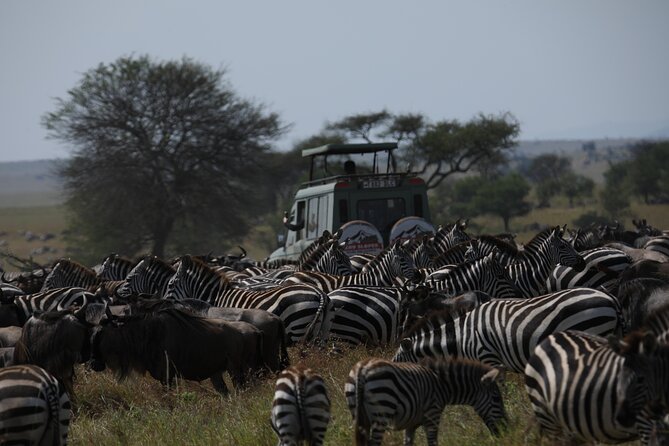
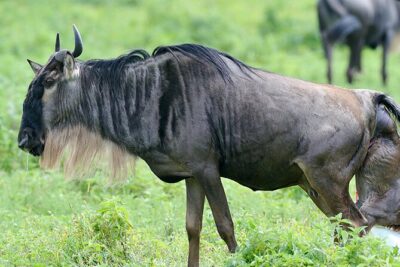
The great wildebeest migration is not just one moving line of animals. It is a huge cycle tied to rainfall, grazing, birth, and survival. During the calving season, the herds gather on the short-grass plains around southern Serengeti and the Ndutu area, which crosses the Serengeti and Ngorongoro Conservation Area region.
The tour description puts the number of newborn wildebeest calves at roughly 8,000 per day during the busiest part of the season. That figure helps explain why Ndutu is so important. You are not simply searching for one dramatic herd. You are entering an area where wildebeest, zebra, gazelles, and predators all respond to the same seasonal event.
Zebras and gazelles travel with the wildebeest, adding movement and variety to each drive. The young calves also attract lions, cheetahs, and hyenas, so the best sightings may involve both birth and danger in the same few hours.
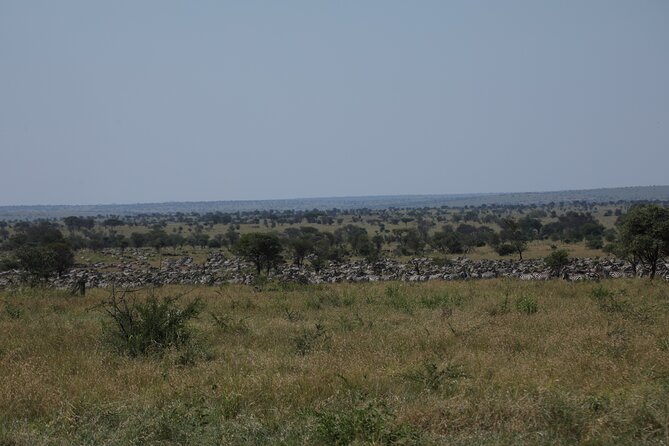
You should book with realistic expectations. A six-day safari gives you a useful amount of time, but the migration is spread across a large area. Weather, animal movement, road conditions, and park rules can all affect what you see. The private format helps because your guide can spend more time on the sightings that matter most to your group.
More migration safaris:
- 8 Days Great Wildebeest Calving Migration Safari from Arusha
★ 5.0 · 254 reviews - 10-Day Serengeti Wildebeest Migration Safari from Arusha
★ 5.0 · 218 reviews - 8 Day Spectacular Migration Serengeti mid -Range Tanzania Safari
★ 5.0 · 161 reviews
Day 1: A gentle arrival in Arusha
Your safari begins at Arusha Airport at about 6:30 p.m. An airport office specialist meets you on arrival and helps with questions about passport control or visa processing. You then receive refreshments at the office and meet your guide before transferring to your Arusha hotel for dinner and the night.
This is a practical first evening rather than a sightseeing program. Arusha sits near Mount Meru and serves as a gateway to Tanzania’s main safari areas. If you arrive tired, the short orientation and hotel night spare you from heading straight into a national park after a flight.
One detail worth checking before departure is the airport wording. The meeting point is given as Arusha Airport, while many international visitors arrive through Kilimanjaro Airport. The arrival support specifically refers to Kilimanjaro Airport, so confirm your flight details and pickup location with Meru Slopes Tours and Safaris before you travel.
Day 2: Lake Manyara brings birds, elephants, and woodland
After breakfast, you spend a full day in Lake Manyara National Park. The drive is a useful introduction to Tanzania because the park offers a different setting from the open plains around Ndutu.
Lake Manyara is especially strong for birdlife. More than 400 bird species have been identified in the park, and the tour description notes that you might see 100 species in a single day. That makes this a good opening safari for anyone who enjoys watching smaller details rather than counting only large mammals.
The park also includes a narrow strip of acacia forest beside the floodplain. This is the habitat associated with Lake Manyara’s famous tree-climbing lions, along with large elephants with notably long tusks. You may see the lions, but the word famous should not be confused with guaranteed. Wildlife sightings depend on the day and the guide’s luck.
At midday, your driver prepares a hot lunch under the shade of the vehicle. The meal includes soup, bread rolls, a main course, fruit salad, and a drink of wine, tea, or coffee. That is more comfortable than a cold packed lunch, though the day remains long, at about seven hours of game viewing.
Lake Manyara is a strong addition if you want variety. If your only goal is to maximize time with wildebeest, you may feel that this day takes time away from Ndutu. I see it as a worthwhile trade because it gives the trip a change of habitat before the migration takes center stage.
Day 3: The first full day with the Ndutu herds
After breakfast at your lodge, you head toward southern Serengeti and the Ndutu region. This is where the safari begins to feel fully focused on the migration.
The area includes short-grass plains, swamps, woodland, and soda lakes. Lake Ndutu is alkaline, yet animals still use it as a water source. The changing habitats matter because wildlife does not gather in one identical setting. One drive may place you beside open grassland, while another may take you near woodland or wet ground.
The main target is the large wildebeest herd, but zebra and other grazing animals are part of the picture. Around midday, your driver sets up a hot lunch in the shade of the vehicle. After eating, you continue the game drive until dark before returning to the lodge for dinner and the night.
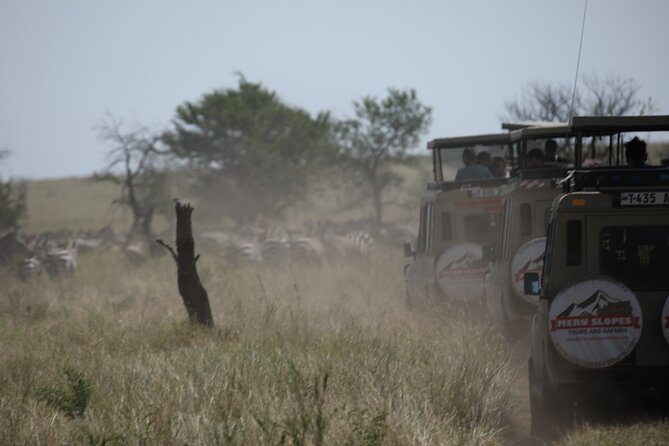
This is a long day, about seven hours. The private vehicle makes that easier because your group does not need to follow the interests of strangers. If you want to linger over a herd or move on after a sighting, the conversation is with your own guide.
A few more options to weigh up in Arusha
- Balloon Safari & Bush Breakfast in Serengeti – Miracle Experience
★ 5.0 · 1,646 reviews - Tanzania Classic – 7 Days
★ 5.0 · 1,151 reviews - 4 Days Group Camping Safari
★ 5.0 · 1,101 reviews - 5 Days Group Camping Safari
★ 5.0 · 730 reviews
Day 4: A nine-hour search for predators in Ndutu
Day four gives you the longest wildlife session of the safari, about nine hours. After a relaxed breakfast at camp, you head out for a full day around Ndutu, with a break for a hot meal and an afternoon rest before another late-day drive.
That split is useful. A full day in the vehicle can become tiring, especially when roads are rough or sightings require long periods of waiting. Returning to camp for food and a nap gives you a chance to reset before the afternoon and evening drive.
This is also the day when predator sightings receive special attention. Lions, leopards, and cheetahs are listed among the animals you may see, with the herds providing the reason they remain in the area. Do not expect each predator to appear on cue. The value of this day is the extra time to search.
The tour includes a game drive that continues into the evening before you return for dinner and an overnight stay. That later timing may improve your chances of seeing animals when the day cools, but you should be prepared for a full schedule. If you prefer short, gentle outings, this is not the right safari style.
Day 5: Calves, predators, and the move toward Ngorongoro
Your last major Ndutu morning follows the grassy plains and woodlands where wildebeest and zebra gather. The central hope is to see newborn calves and the predators that track the herds, including lions, cheetahs, and hyenas.
This is the most emotionally charged part of the trip. Calving season offers scenes of new life, but it also reveals how quickly predators respond to vulnerable young animals. You should be ready for nature as it is, not as a polished wildlife documentary.
A hot lunch is served beneath an acacia tree with shade from the vehicle. The menu again includes soup, bread rolls, a main dish, fruit salad, and wine, tea, or coffee. After lunch, the game drive continues into the evening, then you travel toward Ngorongoro for dinner and the night.
The day lasts about eight hours and combines wildlife viewing with a transfer. That makes it productive, but it can also feel busy. You are leaving Ndutu just as the safari has built momentum, so this route suits you if you want to add Ngorongoro without extending the trip.
Day 6: Ngorongoro Crater before returning to Arusha
After breakfast, you head to the Ngorongoro Crater for an afternoon game drive. The crater is a huge intact volcanic caldera, about 300 square kilometers across, roughly 20 kilometers wide, and around 600 meters deep.
Those figures give you a sense of the place, but the real appeal is how much wildlife can occupy one contained natural area. The crater provides a strong final setting after the open plains of Ndutu. You may see a different mix of animals and enjoy broad views from the crater walls.
Your driver prepares another hot lunch in the vehicle’s shade, with soup, bread rolls, a main course, fruit salad, and wine, tea, or coffee. After lunch, you continue the game drive, then return by road to Arusha in the late afternoon for an airport drop-off.
The final day is roughly seven hours, though the exact length depends on the game drive and transfer. You should avoid booking a tightly timed onward flight unless you have confirmed the schedule with the operator. The tour says airport drop-off is provided, but the return is by car after the crater visit.
What the private format changes
A private safari is not automatically better, but it is often more useful for a migration trip. You and your own group can discuss how long to stay at a sighting, when to stop for lunch, and how much energy to spend on another search for predators.
The driver-guide matters greatly. Jacob receives particularly strong praise for punctuality, professionalism, and sharp eyesight. His ability to spot a distant rhino before the rest of the group is exactly the sort of skill that can change a game drive.
The operator’s communication also earns attention. Almachius Audax is praised for answering emails quickly and organizing the safari carefully. That is important on a trip involving airport arrival, several lodges or camps, park entries, meals, and a long return transfer.
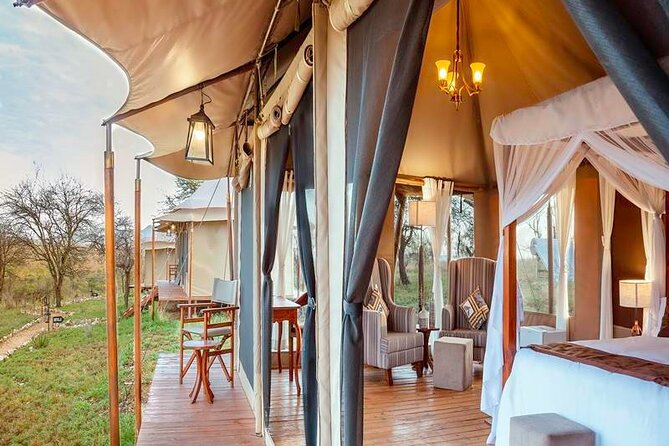
You should still ask practical questions before paying. Confirm the exact accommodation names, vehicle details, airport pickup point, and the schedule for the final airport transfer. The supplied information confirms accommodation is included unless you choose an upgrade, but it does not name each property.
What the $3,450 price includes
At $3,450 per person, this is a high-cost safari. The value depends on how much you want the private vehicle and the Ndutu focus.
The price includes all accommodation unless upgraded, a professional driver-guide, transportation, parking fees, six breakfasts, five lunches, and four dinners. Hot lunches are described in detail, often with soup, bread rolls, a main course, fruit salad, and a choice of wine, tea, or coffee. Tips are not included.
The meal coverage reduces the number of extra costs once the trip begins. The private arrangement also means you are paying for a dedicated safari setup rather than a seat in a larger shared group.
The main value is time in the right area during the right season. You receive three days centered on Ndutu, including one nine-hour day and another day focused on calves and predators. Lake Manyara and Ngorongoro add variety, so this is more than a single-purpose migration chase.
The price will make less sense if you are happy with a shared vehicle, have limited interest in calving season, or want a luxury camp upgrade that adds to the cost. It makes more sense if a private schedule, direct support, included meals, and a concentrated Ndutu program are worth paying for.
Who should choose this safari
I would recommend this trip to you if you want:
- A private Tanzania safari with only your own group
- A strong chance to see wildebeest during the calving period
- Several full days of game viewing rather than a quick migration stop
- A mix of open plains, woodland, soda lakes, crater scenery, and birdlife
- A guide-led trip with airport assistance and included transportation
- A schedule that includes hot lunches and a mix of game drives and lodge or camp nights
This safari may not suit you if you dislike long drives, need a fixed short daily schedule, or want a trip built around luxury accommodation details. The information provided does not name the lodges or camps, so accommodation quality should be confirmed before booking.
The season is also crucial. The tour is built around December through February, with calving continuing into March and the migration in the area often lasting into April. If you visit outside that window, the central reason for choosing this specific route may be weaker.
Booking details worth checking
Confirmation is provided at booking, and free cancellation is available if you cancel at least 24 hours before the local start time. A cancellation within 24 hours is not refundable, and late changes are not accepted.
Most people can participate, and the tour is described as being near public transportation. It is a private activity, so only your group takes part. Pickup is offered, and the stated start point is Arusha Airport, with the arrival assistance referring to Kilimanjaro Airport.
Because airport arrangements are important on the first and final days, send the operator your flight information and ask them to confirm the exact meeting place. This small check can prevent a confusing start after a long international flight.
Should you book the Ndutu calving safari?
Book it if you want a private, migration-focused safari and can travel during the calving season. The strongest reasons are the three substantial Ndutu days, the chance to see newborn wildebeest and predator activity, the experienced guide support associated with Jacob, and the practical organization praised in connection with Almachius Audax.
Think twice if you want a slower holiday, named luxury properties, or a lower price. This is a demanding six-day route with long game drives and a late return to Arusha on the final day.
For the right person, the focus is excellent. You are not merely checking Tanzania’s famous parks off a list. You are spending the heart of the trip in the place where birth, migration, grazing, and predation meet, then finishing with Ngorongoro’s remarkable crater.
FAQ
Where does the safari start?
The stated meeting point is Arusha Airport in Tanzania, with a start time of about 6:30 p.m. Arrival assistance also refers to Kilimanjaro Airport, so confirm the exact airport transfer details before departure.
How long is the experience?
The safari lasts approximately six days.
Is this a private tour?
Yes. Only your group participates, with a professional driver-guide and private transportation.
What is the main focus of the safari?
The main focus is the wildebeest migration and calving season in southern Serengeti and the Ndutu region, along with predator sightings and the surrounding wildlife.
When does the calving season take place?
The calving season generally runs from December through February and can extend into March. The migration in the Ndutu area often occurs from December through April.
Which national parks and protected areas are included?
The route includes Lake Manyara National Park, the Ndutu area of southern Serengeti, and the Ngorongoro Conservation Area.
Are meals included?
Yes. The package includes six breakfasts, five lunches, and four dinners. Tips are not included.
Is accommodation included?
Yes. Accommodation is included unless you select an upgrade.
Can I cancel for a full refund?
You can receive a full refund if you cancel at least 24 hours before the experience start time. Cancellations or changes made within 24 hours are not accepted for a refund.
Just added in Arusha
- Safari “Kifaru” – 5 days in the most famous Parks in the world★ 5.0 · 4 reviews
- Saadani Day Trip★ 5.0 · 13 reviews
- 3 Days Tanzania Short and Spicy★ 5.0 · 6 reviews
- 5 Day Tanzania Safari Camping Adventure Private Tour★ 5.0 · 2 reviews
- Day Trip to Ngorongoro Crater from Arusha★ 5.0 · 1 review
- SERENGETI NATIONAL PARK Tour★ 4.5 · 5 reviews
- 6 Days Tanzania Bush Experience Safari★ 5.0 · 6 reviews
- 3 Days Serengeti Park & Ngorongoro Crater Adventure Safari★ 5.0 · 8 reviews
Wildebeest Migration Safaris, compared.
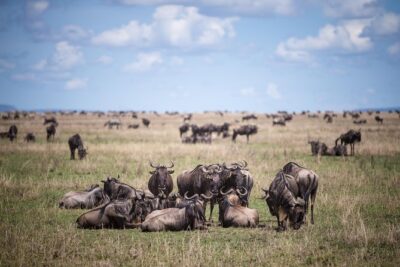
8 Days Great Wildebeest Calving Migration Safari from Arusha
Read our review →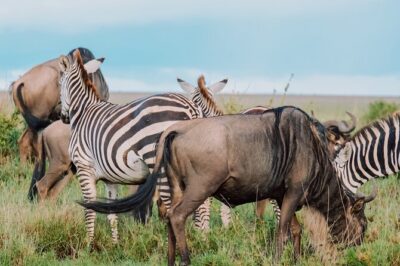
10-Day Serengeti Wildebeest Migration Safari from Arusha
Read our review →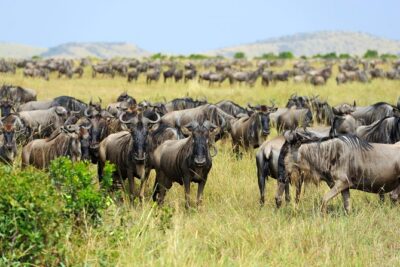
8 Day Spectacular Migration Serengeti mid -Range Tanzania Safari
Read our review →
9-Day Serengeti Migration Footsteps Tanzania Safari
Read our review →
Private 6-Day Great Migration Ndutu Serengeti Safari Tour
Read our review →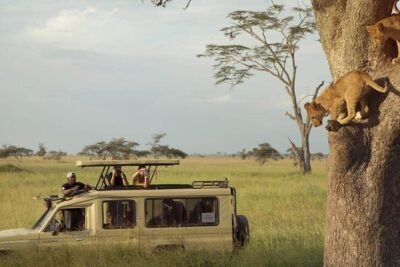
4 Day Great Migration Safari Serengeti & Ngorongoro Crater
Read our review →Browse the lists this tour appears in