
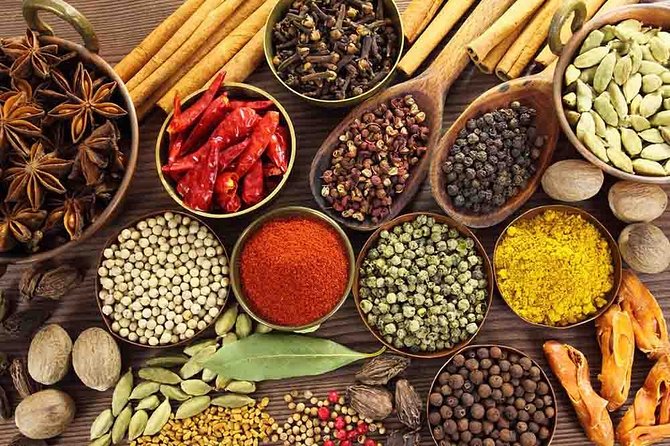
Reviewed · SPICE FARM TOURS
Spice farm walking tour with Zanzibar fruits tasting
Fresh fruit tastes better at the source. This three-hour Zanzibar walk takes you from the People’s Palace Museum into village farms, where you’ll see spices growing, watch local people climb trees, and taste tropical fruit. I like the hands-on village setting and the chance to buy spices directly from the farm. I also like the playful palm-leaf decorations, which add a bit of fun without changing the focus of the tour.
The main thing to consider is transport. Hotel pickup is not included, although pickup and drop-off at the meeting point are included. The 7:00 am start also means an early morning in Stone Town, but that timing can help you avoid the strongest midday heat.
In This Review
- Key points at a glance
- Starting at the People’s Palace Museum at 7:00 am
- Walking through Zanzibar’s spice-growing villages
- Understanding cloves, cinnamon, ginger, and lemongrass
- Watching local people climb spice and coconut trees
- Palm-leaf rings, glasses, ties, and bracelets
- Tasting pineapple, bananas, oranges, and watermelon
- Buying spices directly from the farm
- What the $30 price covers
- A private tour with a personal pace
- Who will enjoy this Zanzibar spice walk
- Timing, cancellation, and practical planning
- Should you book the spice farm walking tour?
- FAQ
- Where does the spice farm tour start?
- What time does the tour begin?
- How long does the experience last?
- Does the tour include hotel pickup?
- What is included in the $30 price?
- Is the tour private?
- Can I cancel for a full refund?
Key points at a glance
- See spices growing in village farms: Learn to identify cloves, cinnamon, ginger, lemongrass, and other plants where they grow.
- Watch tree climbing in action: Local people may climb spice trees and coconut trees during the visit.
- Taste Zanzibar fruit: Pineapple, bananas, oranges, watermelon, and other seasonal fruit are part of the farm stop.
- Enjoy palm-leaf decorations: You can be fitted with simple leaf ties, rings, bracelets, and glasses.
- Travel as a private group: Only your group takes part, which allows for a more personal pace.
- Pay $30 for a short, focused outing: The price covers the guide, entrance fees, taxes, fruit tasting, and meeting-point transfers.
Starting at the People’s Palace Museum at 7:00 am
The tour begins at the People’s Palace Museum on Mizingani Road in Zanzibar. The stated start time is 7:00 am, so I would arrive a little early and confirm the exact meeting point before setting out. The location is given as R5QR+X6C, Mizingani Road, Zanzibar, Tanzania.
The activity ends back at this same meeting point. That return arrangement is useful if you are staying in or near Stone Town and want to plan another activity afterward. It also keeps the day simple, since you do not need to arrange a separate return from a farm outside the city.
Hotel transport is not included in the $30 price. You can contact the operator if you need transport, but you should settle that detail before the morning of the tour. The included pickup and drop-off refer to the meeting point, not automatic collection from your hotel.
More Food Tours in Zanzibar
- Stonetown: Food Markets and Street Food Walking Tour
★ 4.7 · 151 reviews - Authentic Street Food Tours in Stone Town, Zanzibar
★ 5.0 · 46 reviews - Stone Town Evening Walk Tour With Visit Food Markets
★ 4.5 · 28 reviews
Walking through Zanzibar’s spice-growing villages
The heart of the outing is a guided walk through local villages and spice plantations. This is not only a stop at a shop filled with jars and labels. You get to see the plants in the soil and hear how they are used.
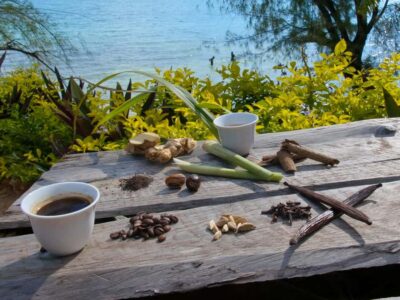
Your guide introduces spices such as cloves, cinnamon, ginger, and lemongrass. You may already know these from cooking, but seeing the plants helps connect the finished spice in your kitchen with its natural form. The guide also explains their uses and gives context about Zanzibar’s role in the spice trade.
The walking format matters. You move through farms rather than viewing everything from a vehicle, so you have more time to look closely at leaves, bark, fruit, and growing methods. The pace is likely to feel relaxed, but you should still wear comfortable walking shoes and clothing suited to a warm morning. The supplied information does not give a detailed description of the paths, so I would not assume they are paved or fully level.
The village setting is a strong part of the experience. You get a look at working agricultural land and local daily life, not just a polished retail presentation. At the same time, this is a three-hour introduction, not a specialist farming course. If you want a technical lesson on cultivation, exports, or spice processing, ask your guide questions as you walk.
Understanding cloves, cinnamon, ginger, and lemongrass
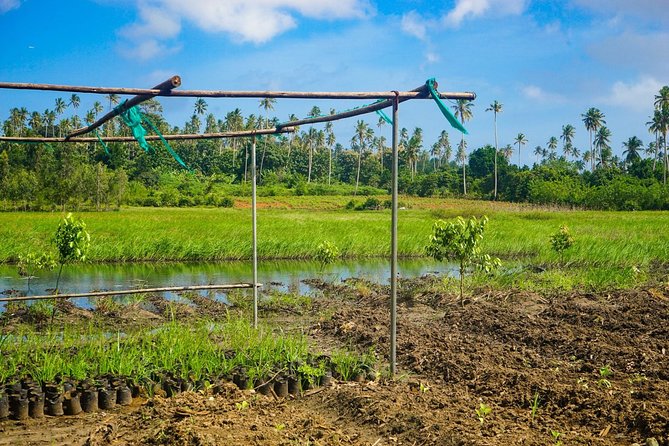
The spice education gives this tour its main purpose. Cloves, cinnamon, ginger, and lemongrass are named specifically, along with other spices found on the farms. Each plant has a different appearance and use, so the walk gives you a useful introduction to Zanzibar’s plant life and food traditions.
Cloves are especially important to Zanzibar’s spice identity, while cinnamon and ginger are familiar to many cooks around the world. Lemongrass brings a different scent and cooking use. Rather than simply hearing a list of names, you can see how varied the plants are and ask the guide how they are used locally.
The tour also connects farming with Zanzibar’s trade history. The guide explains the island’s spice trade, giving you a better sense of why plantations became such an important part of Zanzibar’s economy and image. The information provided does not promise a museum-style lecture or a fixed historical presentation, so the amount of detail may depend on your guide.
That personal element can be a plus. If you are curious, ask about the parts of the plant used, how spices are prepared, and which ones are used in local cooking. Questions will help turn a short walk into a more useful lesson.
Watching local people climb spice and coconut trees
One of the more unusual parts of the outing is the chance to see local people climb spice trees and coconut trees. This gives the farm visit a practical edge. You are not only looking at plants, you may also see the skill and effort involved in reaching them.
Tree climbing can be a memorable sight, especially for children and anyone interested in traditional work. It also helps explain why farms are not simply flat rows of low plants. Some useful crops grow high above the ground, and harvesting them requires balance, strength, and experience.
The wording is important: you get a chance to see people climb, but a performance is not guaranteed at a precise moment. I would treat it as a possible highlight rather than the sole reason to book. The tour is still worthwhile for the spice walk and fruit tasting if the timing does not allow a climb.
This is also a good moment to stay respectful. Watch, listen, and let the guide explain what is happening. The focus is on local farm life, not on turning every activity into a staged show.
More Walking Tours in Zanzibar
- Stone Town Private Walking Tour
★ 5.0 · 371 reviews - Zanzibar: 3 Hours Private Stone Town walking Tour with Guide
★ 4.6 · 301 reviews - Zanzibar: Stone Town Historical Cultural Walking Guided Tour
★ 4.5 · 179 reviews - Zanzibar Stone Town Walking Tour
★ 5.0 · 145 reviews
Palm-leaf rings, glasses, ties, and bracelets
At the spice farm, you will be decorated with palm-leaf accessories. These can include ties, rings, bracelets, and glasses. It is a lighthearted touch, and it gives the walk a playful visual memory.
I like this detail because it uses a local natural material rather than adding another manufactured souvenir. It may be especially enjoyable for families or groups who want a few casual photographs. The accessories are part of the experience, not a separate paid upgrade according to the information provided.
Still, you should see this as a small extra rather than a major cultural activity. The tour’s real substance comes from the farm walk, guide, and tasting. The palm leaves add fun, but they do not replace a proper explanation of the plants.
Tasting pineapple, bananas, oranges, and watermelon
Fruit tasting is included in the price. The listed fruits include pineapple, bananas, oranges, and watermelon, with the possibility of other tropical fruit. The exact selection may depend on what is available at the farm on the day.
This is a simple but valuable part of the visit. Fruit picked or served close to where it is grown gives you a direct taste of Zanzibar’s farming traditions. It also breaks up the walking and makes the outing more appealing to children and anyone who enjoys food-based activities.
You should not expect a full meal. The information promises tasting, not breakfast or lunch. Since the start time is early, eat beforehand if you need a substantial meal, or confirm with the operator what the tasting includes. The fruit is included, but additional food is not listed.
The tasting also gives you a chance to slow down and ask questions. You might ask which fruits are commonly grown locally, how they are eaten, or which ones are seasonal. The supplied details do not promise demonstrations of cooking or juice making, so keep your expectations focused on tasting fresh fruit.
Buying spices directly from the farm
You have the opportunity to buy fresh spices at the source. This is one of the better reasons to carry a little extra money if you want souvenirs that you can actually use.
Buying at the farm can be more meaningful than picking up a generic spice packet later in the trip. You can ask what each spice is, how it is used, and how best to store it. The exact products, sizes, and prices are not provided, so do not assume that every spice will be available or that purchases are included in the $30 fee.
I would also treat shopping as optional. You do not need to buy anything to take part in the walking tour and tasting. If you do shop, check the packaging and any restrictions that may apply when taking agricultural products home. The operator information does not give customs guidance, so you remain responsible for checking the rules of your destination.
What the $30 price covers
At $30 per person, this is a reasonably focused half-day-style activity. The price includes the guide, entrance fees, all fees and taxes, fruit tasting, and pickup and drop-off from the meeting point.
That bundle matters. You are not paying the tour price and then adding separate entrance charges at the farm. The private format also gives the price more value for couples, families, or small groups who prefer not to share the outing with strangers.
For a large group, the value depends on how much you care about a private setting. A group of 32 pensioners used this operator for several Zanzibar tours, including a spice plantation visit, with Mackie involved and Mahomed and Ramadan named as guides. Their experience points to an operator used to handling groups and providing patient, friendly service, but your assigned guide may be different.
Hotel transport is the main possible extra cost. Ask about it before booking if your accommodation is not close to the People’s Palace Museum. Once that is clear, the $30 price is easier to judge.
A private tour with a personal pace
This is a private activity, so only your group participates. That is a major advantage if you want to stop for photos, ask plenty of questions, or keep the walk at a comfortable pace.
A private guide can also adjust the explanation to your interests. You may want more information about spices, while someone else in your group may care more about fruit or village life. The listing does not promise a custom route or a specific language, so confirm any special request in advance.
The private format can be less valuable if you are a solo visitor hoping to meet other people. You will not be placed into a shared group through this booking. For families and friends, though, private participation usually makes the early start and meeting-point arrangements easier to manage.
The operator’s named team includes Mackie, Mahomed, and Ramadan. If you have a preference based on a previous contact with the company, ask whether that person will be leading your tour. Guide assignment is not guaranteed in the supplied details.
Who will enjoy this Zanzibar spice walk
I would recommend this experience most strongly to you if you want a short cultural outing with several types of activity in one morning. You walk through farms, learn about spices, watch tree climbing, taste fruit, and have time to shop.
It suits:
- First-time visitors who want an introduction to Zanzibar’s spice-growing traditions
- Families looking for an active but manageable morning
- Food lovers interested in seeing ingredients before they reach the kitchen
- Private groups who prefer their own guide and pace
- Visitors staying near Stone Town who can reach the meeting point easily
It may be less suitable if you want a long plantation visit, a formal agricultural lecture, or a full meal. It is also not the best fit if hotel transport is essential and you do not want to arrange it separately.
The information says most people can participate and service animals are allowed. Since the tour is a walking activity and the path details are not supplied, contact the operator if you have specific mobility needs or require a particular accommodation.
Timing, cancellation, and practical planning
The tour starts at 7:00 am and lasts about three hours. I would plan for the full morning, including the return to the People’s Palace Museum, rather than treating the three hours as a flexible estimate.
Confirmation is received at booking, and the activity uses a mobile ticket. Keep the booking details available on your phone, especially since the meeting point is in a busy part of Zanzibar.
You can cancel for a full refund if you do so at least 24 hours before the local start time. Changes or cancellations made less than 24 hours before the start are not accepted for a refund. That rule is worth noting if your Zanzibar plans are still changing.
Should you book the spice farm walking tour?
Book it if you want a compact, private introduction to Zanzibar’s farms and like the idea of learning by walking, tasting, and looking closely. The combination of spices, tree climbing, fruit, and palm-leaf decorations gives the morning more variety than a simple plantation stop.
I would book with three points clear in advance: how you will reach the People’s Palace Museum, who your guide will be, and what fruit and spice purchases are likely to be available. At $30, the tour offers good value when you use the included guide, entrance, tasting, and private format.
Skip it if you want a full-day agricultural program or a meal-based tour. For most visitors with a free morning in Stone Town, though, this is an easy way to connect Zanzibar’s famous spices with the farms and people behind them.
FAQ
Where does the spice farm tour start?
It starts at the People’s Palace Museum, R5QR+X6C, Mizingani Road, Zanzibar, Tanzania.
What time does the tour begin?
The tour starts at 7:00 am.
How long does the experience last?
The guided walking tour lasts approximately three hours.
Does the tour include hotel pickup?
No. Transport from your hotel is not included. Pickup and drop-off from the stated meeting point are included, and you can contact the operator if you need hotel transport.
What is included in the $30 price?
The price includes fruit tasting, a tour guide, all fees and taxes, entrance fees, and pickup and drop-off from the meeting point.
Is the tour private?
Yes. Only your group participates in this private activity.
Can I cancel for a full refund?
Yes, if you cancel at least 24 hours before the local start time. Cancellations or changes made less than 24 hours before the start are not accepted for a refund.
More Farms in Zanzibar
- Zanzibar: Stone Town & Spice Farm Tour with Lunch
★ 4.5 · 97 reviews - Zanzibar:Stone Town & Spice Farm Private Tour Lunch Included
★ 4.2 · 94 reviews - Zanzibar full day Jozani forest + Spice farm and stone town
★ 4.7 · 90 reviews - Zanzibar: Spice Farm Tour with Traditional Cooking Lesson
★ 4.8 · 77 reviews
More Spice Farm Tours in Zanzibar
- Zanzibar: Stone Town, Spice Tour, Prison Island with Lunch
★ 4.4 · 1,219 reviews - Zanzibar: Prison Island, Stone Town, & Spice Farm Tour
★ 4.5 · 579 reviews - Zanzibar: Stone Town, Spice tour & Prison Island with Lunch
★ 4.6 · 453 reviews - Full-Day Private Stone Town +Spice Farm and Prison Island Tour
★ 4.5 · 216 reviews
Just added in Zanzibar
- Zanzibar:Ngoma local culture workshop,The Knowledge of Ngoma★ 5.0 · 1 review
- ZANZIBAR:Mnemba island, Spice farm and Jozani Forest★ 5.0 · 1 review
- Zanzibar: Zipline Adventure At Masingini Forest★ 4.6 · 2 reviews
- Zanzibar Walking Tour: Unveiling the Secrets of Stonetown★ 4.8 · 11 reviews
- Zanzibar: Walking Spice Farm with Local Cooking Class★ 4.4 · 9 reviews
- Zanzibar: Walking Tour★ 4.0 · 1 review
- Zanzibar: Uzi Island Mangrove Kayak Tour with Guide★ 5.0 · 1 review
- Zanzibar: Unique Guided Mangrove Tour by SUP or Kayak★ 5.0 · 1 review
Spice Farm Tours, compared.
Stone Town, Spice Tour, Prison Island with Lunch
Read our review →

Stone Town, Spice tour & Prison Island with Lunch
Read our review →
Full-Day Private Stone Town +Spice Farm and Prison Island Tour
Read our review →

The Swahili Spice Experience – Spice Tour + Culinary Journey
Read our review →Browse the lists this tour appears in