
Reviewed · CAMPING SAFARIS
4-Day fascinating Camping Safari in Tanzania
Three parks, four days, one very full safari. This $935 camping tour packs Tarangire, Serengeti, and Ngorongoro into a short route, with park fees, meals, camping gear, and Arusha transfers included. I like the chance to see elephants among baobabs in Tarangire, then move on to the wide-open Serengeti and wildlife-packed Ngorongoro Crater. The main drawback is the pace: days of 10, 12, and 16 hours mean you spend plenty of time on the road.
I also like that the practical pieces are handled for you. A professional driver-guide, sleeping bag, tents, food, and round-trip transfers are part of the price, so you do not have to assemble a safari from separate bookings. Still, this is camping, not a lodge holiday. Bath towels, tips, personal items, and international flights are extra, and the early 6:00 a.m. start demands some stamina.
The strongest praise has focused on the guides and organization. Names such as Maximilian, Hasan, Fidelis, and Bakari appear in especially warm feedback, with guests noting their wildlife knowledge, patience, good humor, and sharp eyes. Chef Johnson, also mentioned by name, helped make the camping meals a highlight.
In This Review
- Key points to know before booking
- Why this four-day route works
- Day 1: Elephants and baobabs in Tarangire
- Day 2: A long road to the Serengeti
- Day 3: From Seronera to the Ngorongoro rim
- Day 4: A crater floor filled with wildlife
- What the guide and chef add to the experience
- Is $935 a good value?
- Who should choose this safari?
- What to pack for four nights of camping
- Should you book the four-day camping safari?
- FAQ
- How long is the safari?
- Where does the safari begin?
- Which national parks and conservation areas are included?
- Are park fees included?
- Is camping equipment provided?
- Are meals included?
- What is not included?
- What is the maximum group size?
- Can I cancel for a full refund?
Key points to know before booking
- Tarangire begins the wildlife story: Expect elephants, baobab trees, and a long first day with a picnic lunch inside the park.
- Serengeti gets the most time: Day two lasts about 16 hours and includes the journey to the Seronera area plus an afternoon game drive.
- Ngorongoro is the finale: You descend more than 600 meters into the crater for a six-hour game drive around Lake Magadi and the crater floor.
- The $935 price covers the essentials: Park fees, three nights of accommodation, camping equipment, a sleeping bag, meals, guide, taxes, and transfers are included.
- The schedule is demanding: You leave Arusha at about 6:00 a.m., and the Serengeti day is especially long.
- It can be a large group: The maximum listed size is 50 people, though the exact group arrangement should be confirmed before you pay.
Why this four-day route works
This safari gives you three very different wildlife settings without asking you to spend a week away from Arusha. Tarangire has elephant country and dramatic baobabs. Serengeti offers immense open plains and one of Africa’s best-known wildlife regions. Ngorongoro brings a concentrated final game drive in a natural crater.
I like the progression. The tour starts with a relatively accessible park near the northern safari circuit, then takes you through the high farmland around Karatu and the Ngorongoro Conservation Area before reaching the Serengeti. After spending time on the plains, you return toward Ngorongoro for a final morning among animals.
The trade-off is easy to see. Four days is enough for a strong first taste, but not enough for a leisurely safari. Long drives connect the parks, and the second day is particularly ambitious. You should book this with the expectation of early starts, road time, and changing camp locations rather than long afternoons at one comfortable base.
More Camping Safaris in Arusha:
- 4 Days Group Camping Safari
★ 5.0 · 1,101 reviews - 5 Days Group Camping Safari
★ 5.0 · 730 reviews - 3 Days Serengeti & Ngorongoro Group Camping Safari
★ 5.0 · 574 reviews
Day 1: Elephants and baobabs in Tarangire
The first morning begins after breakfast, with departure at about 6:00 a.m. The group stops in Arusha Town for last-minute purchases before heading to Tarangire National Park. That stop is useful, since it gives you one final chance to buy personal items before the safari settles into its remote rhythm.
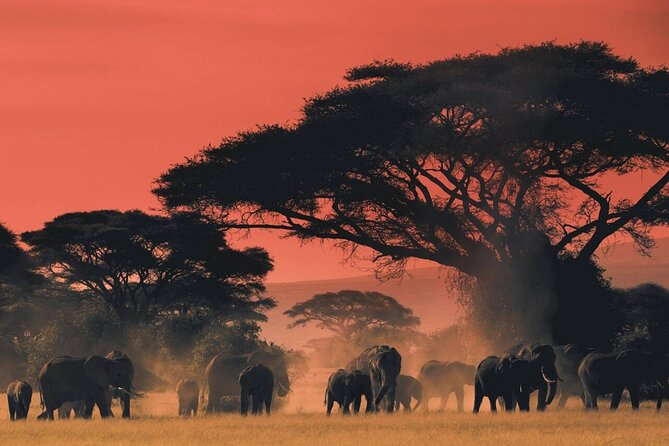
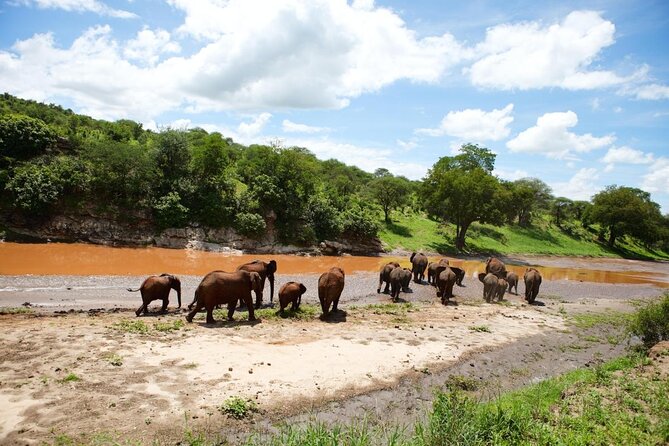
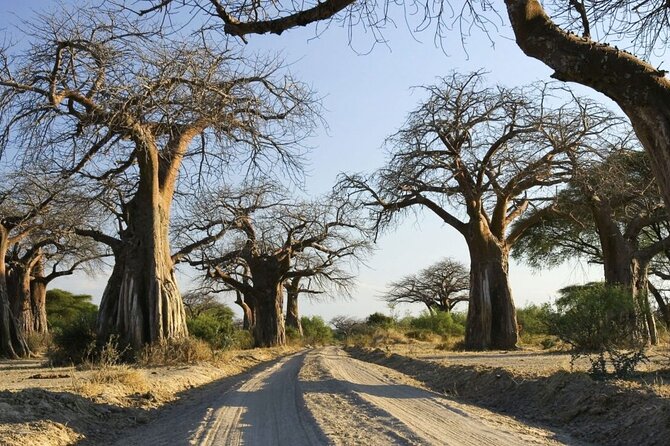
Tarangire is a strong opening act. The park is known for its large elephant population and distinctive baobab trees, which give the setting a look unlike the open Serengeti. It also forms part of an annual movement of animals that can include up to 3,000 elephants, 25,000 wildebeest, and 30,000 zebras.
You have a game drive with a picnic lunch in the park. That means your first wildlife viewing begins right away, rather than after a hotel check-in or a long transfer to a separate lunch stop. Keep your camera ready, but remember that wildlife sightings are never guaranteed on a fixed schedule.
The day lasts about 10 hours, followed by dinner and an overnight stay at either Jambo Campsite or Fanaka Campsite. The provided camping gear and sleeping bag reduce the amount of equipment you need to bring. Bath towels are not included, so pack your own along with personal toiletries and other small necessities.
The first day may feel long, especially after an international flight or a short night in Arusha. I would treat the Arusha shopping stop as practical preparation, not as sightseeing. Buy anything you cannot easily do without, then settle in for the park drive.
Day 2: A long road to the Serengeti
Day two is the endurance test. After breakfast, you leave for Serengeti National Park, passing through the high farmland around Karatu and the Ngorongoro Conservation Area. The route changes gradually from cultivated highlands to the open plains associated with the Serengeti.
The drive is part of the experience, but it is also the day’s biggest cost in comfort. The stated duration is about 16 hours, including the journey and game viewing. You should expect a full day in the safari vehicle, with limited downtime.
The destination is the central Serengeti, especially the Seronera area. This region is considered one of the park’s strongest wildlife zones because the Seronera River provides an important water source. That water draws animals and helps support a broad range of species.
You arrive in time for lunch and continue with an afternoon game drive. This timing gives you a chance to see the Serengeti after crossing its varied approaches, rather than simply arriving at a camp late in the day. The open plains can feel almost unreal in scale, with the view stretching far beyond the vehicle.
I would pay close attention to the guide on this day. The most useful part of a safari is not simply spotting an animal. It is learning why that animal is there, how it behaves, and what clues to look for. Guides such as Maximilian, Hasan, Fidelis, and Bakari have been praised for explaining wildlife and the environment, finding animals at a distance, and adjusting the pace when possible.
Still, do not book this day expecting a relaxed transfer. The Serengeti is far from Arusha, and the route takes time. If you dislike long vehicle journeys, this compressed itinerary may feel too rushed. If you have only four days and want the Serengeti included, the trade-off may be worthwhile.
Day 3: From Seronera to the Ngorongoro rim
After time in the Serengeti, day three turns back toward Ngorongoro. The plan allows for a more relaxed morning followed by an early lunch, then a drive through the Serengeti toward the crater area.
This route gives the guide another chance to explain Tanzania’s animals and natural features along the way. It is also a useful change of mood. The Serengeti’s plains give way to the high country around Ngorongoro, and the overnight stay is on the crater rim.
You spend the night at Simba Campsite, with dinner included. Sleeping near the crater makes the final morning practical, since the next day begins with an early breakfast and a descent into Ngorongoro.
The phrase crater rim may sound grand, but the practical point is more important: you are positioned for an early start. That saves some road time before the game drive and lets you reach the crater while the day is still young.
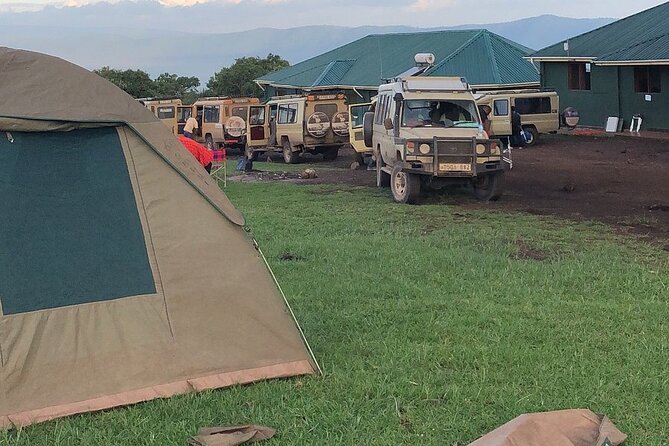
This night is also where the camping format becomes most apparent. You have accommodation, equipment, meals, and a sleeping bag supplied, but you should not expect the same private facilities or personal space found at a lodge. The maximum group size is listed as 50, so ask how your departure will be arranged if quiet evenings and a small vehicle matter to you.
A few more options to weigh up in Arusha
- Balloon Safari & Bush Breakfast in Serengeti – Miracle Experience
★ 5.0 · 1,646 reviews - Tanzania Classic – 7 Days
★ 5.0 · 1,151 reviews - Materuni Waterfalls, coffee tour & Kikuletwa Hot Springs
★ 5.0 · 643 reviews - 7-Day Premium Luxury Tanzania Safari All-Inclusive
★ 5.0 · 426 reviews
Day 4: A crater floor filled with wildlife
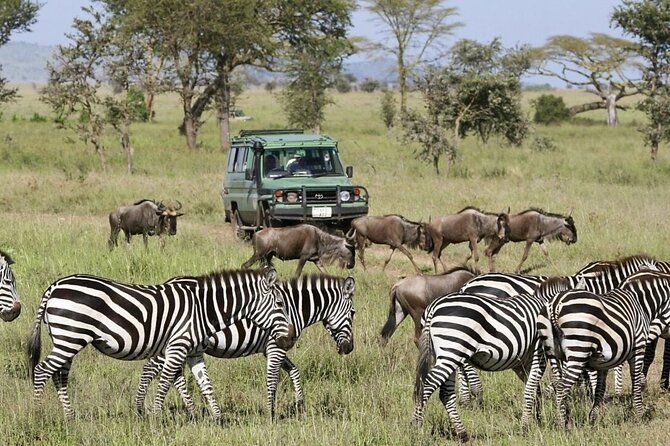
The final morning begins early. After breakfast, you descend more than 600 meters into Ngorongoro Crater for about six hours of wildlife viewing.
Ngorongoro is valuable on a short safari because its enclosed setting can bring many animals into one concentrated area. The crater has year-round water and grazing, supporting wildebeest, zebra, buffalo, eland, warthog, hippo, and large African elephants.
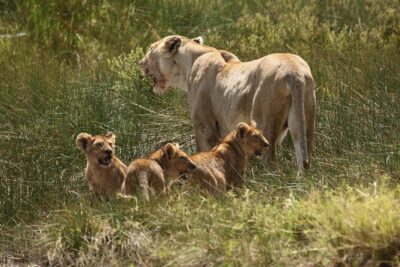
Predators are a major draw. Lions, hyenas, jackals, cheetahs, and leopards are all listed among the species found in the conservation area. A leopard sighting still requires luck and a good eye, so it is best to see the list as a guide to what may be present, not a promise of a checklist.
The route includes Lake Magadi, a large shallow alkaline lake in the southwestern part of the crater. It is one of the crater’s key features and can attract wildlife. The changing water levels and animal activity mean conditions can vary, but the lake gives the game drive a clear landmark within the broad crater floor.
After the crater drive, you return to Arusha. The final day is shorter than the Serengeti day, listed at about six hours, but it still includes an early start and the return journey. Your exact arrival time in Arusha is not specified, so do not schedule a tight onward flight without confirming the timing first.
What the guide and chef add to the experience
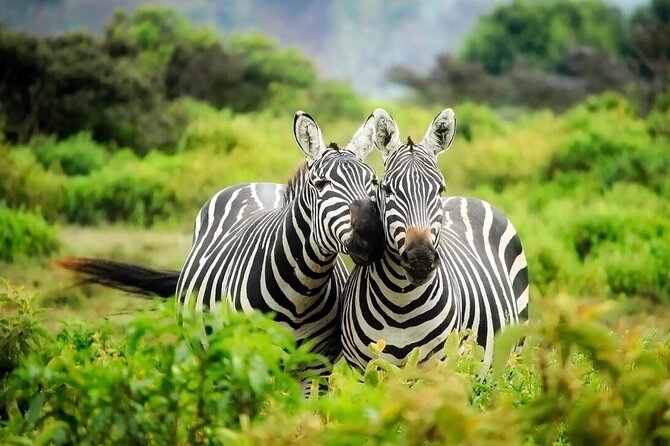
A safari vehicle is only as useful as the person driving it. The strongest feedback about this operator centers on guides who can identify animals, explain Tanzania’s wildlife and history, and keep the mood positive during long hours on the road.
Maximilian has been praised for patience and for locating requested animals. Hasan is described as friendly and attentive, with a sharp eye for distant wildlife. Fidelis and Bakari also received strong praise for finding good viewing spots and explaining what you were seeing.
Those names are useful when you speak with the company, but they are not a guarantee that one particular guide will lead your departure. Ask who is assigned to your trip and how many people will share the vehicle.
Food is another bright spot. All lunches, three dinners, and three breakfasts are included. Several detailed accounts describe the meals as hot and good, and Johnson and John are among the cooks named in the feedback. That matters on a camping safari, where a warm meal after a long game drive can change the whole evening.
The price includes food, but not tips or personal items. Carry the basics you need for four days and set aside money for gratuities if you feel the guide or camp staff have served you well.
Is $935 a good value?
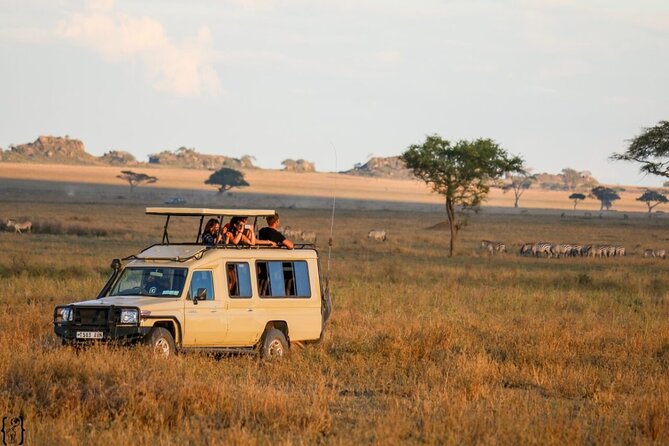
At $935 per person, this is not a bare-bones bus ride. The cost includes national park fees, all accommodation, camping equipment, a sleeping bag, a professional driver-guide, all taxes and VAT, meals, and round-trip transfers.
That package has real value. Park fees alone can make a Tanzania safari expensive, and handling them through the operator keeps the booking simpler. You also avoid renting or buying camping equipment for a one-time trip.
The value is strongest for someone who wants the major northern circuit highlights in four days and is comfortable with camping. You receive a lot of wildlife access and logistical support for the price.
The price is less attractive if you want a private vehicle, a small group, or lodge accommodation. The group can reach 50 people, and the published plan does not clearly state whether every departure uses a large shared arrangement or a smaller safari vehicle. Confirm that detail before booking, especially if photography, window space, or quiet game drives are important to you.
Airport transfer is included, as is pickup from Arusha. The experience has a mobile ticket and free cancellation up to 24 hours before the start time. If the minimum number is not reached and the company cancels, you should be offered another date or a full refund.
Who should choose this safari?
I would recommend it to a first-time safari visitor who wants Tarangire, Serengeti, and Ngorongoro without planning every transfer separately. It also suits people who value wildlife time over polished accommodation and who are happy to sleep at campsites.
It can work well for couples, families, and solo visitors who like a social group setting. The available feedback includes couples, families, and people taking their first trip to Africa. One account also mentions a Maasai village visit, but that is not part of the stated four-day schedule, so you should not assume it is included.
This tour is less suited to anyone who needs a slow pace, dislikes long drives, or expects a hotel-style safari. The 16-hour Serengeti day is the clearest warning. You will cover impressive ground, but you will not have much spare time.
For photography, I would ask about vehicle seating, group size, and whether the guide can allow extra time at sightings. The feedback from a photographer praised the dedication of the driver, which is encouraging, but a shared departure can still limit how long you remain at one spot.
What to pack for four nights of camping
The company provides camping equipment and a sleeping bag, but not bath towels. I would bring:
- A towel and basic toiletries
- Comfortable clothing for warm days and cooler evenings
- Personal medication and useful small items
- A camera with spare power if needed
- Money for tips and personal purchases
- Anything you need before leaving Arusha, since the first morning includes the last-minute shopping stop
Keep your packing simple. You will move between Tarangire, Serengeti, and Ngorongoro, and the safari works best when you can reach what you need without unpacking everything at camp.
Should you book the four-day camping safari?
Book it if you want a well-supported introduction to northern Tanzania and accept that the schedule is tight. The combination of included park fees, meals, equipment, guide, and transfers makes $935 a sensible package for a short safari, especially when the Serengeti is a priority.
Think twice if you want private, quiet, lodge-based travel. Confirm the group size, vehicle arrangement, assigned guide, and final return time before paying. If those details suit you, this is a strong way to see elephants in Tarangire, reach the Seronera plains, and finish among the animals of Ngorongoro without spending a week on the road.
FAQ
How long is the safari?
The experience lasts approximately four days.
Where does the safari begin?
It begins in Arusha, Tanzania, with pickup offered and a stated start time of 6:00 a.m.
Which national parks and conservation areas are included?
The route includes Tarangire National Park, Serengeti National Park, and the Ngorongoro Conservation Area.
Are park fees included?
Yes. Park fees are included in the price.
Is camping equipment provided?
Yes. Camping equipment and a sleeping bag are included.
Are meals included?
Yes. The package includes four lunches, three dinners, and three breakfasts.
What is not included?
International flights, bath towels, tips, and personal items are not included.
What is the maximum group size?
The activity has a maximum of 50 travelers.
Can I cancel for a full refund?
Yes, if you cancel at least 24 hours before the experience start time. Cancellations made less than 24 hours in advance are not refunded.
Just added in Arusha
- Safari “Kifaru” – 5 days in the most famous Parks in the world★ 5.0 · 4 reviews
- 3 Days Tanzania Short and Spicy★ 5.0 · 6 reviews
- 5 Day Tanzania Safari Camping Adventure Private Tour★ 5.0 · 2 reviews
- Saadani Day Trip★ 5.0 · 13 reviews
- Day Trip to Ngorongoro Crater from Arusha★ 5.0 · 1 review
- SERENGETI NATIONAL PARK Tour★ 4.5 · 5 reviews
- 3 Days Serengeti Park & Ngorongoro Crater Adventure Safari★ 5.0 · 8 reviews
- 6 Days Tanzania Bush Experience Safari★ 5.0 · 6 reviews
Camping Safaris, compared.
3 Days Serengeti & Ngorongoro Group Camping Safari
Read our review →
2 Days Tarangire and Ngorongoro Group Camping Safari
Read our review →
3 Days Tarangire, Ngorongoro & Lake Manyara Group Camping Safari
Read our review →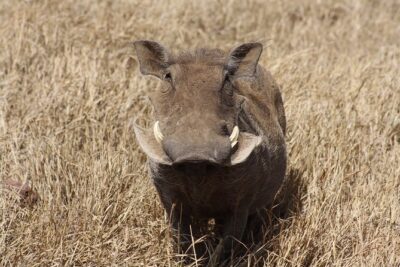
5-Day private Camping Safari Tour in Tanzania
Read our review →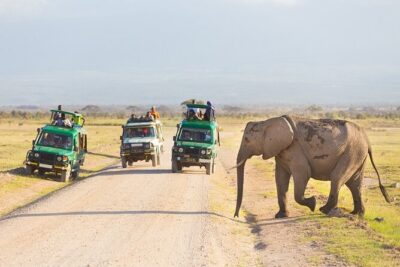
Browse the lists this tour appears in