
Reviewed · MARANGU ROUTE CLIMBS
6 Day Kilimanjaro Climbing Via Marangu Route
The roof of Africa demands respect. This Kilimanjaro climb gives you a clear five-stage ascent toward Uhuru Peak, with experienced guides, porter support, meals, sleeping gear, and a route that moves from rainforest to high volcanic desert. The Marangu Route is a classic way up the mountain, and its hut accommodation may appeal if you prefer a fixed bed and roof over tent camping.
I like the strong guide support, shown by the care Antipas gave a 70-year-old father in one family group, and I like the steady change through Kilimanjaro’s ecological zones. The included meals, water, camping equipment, sleeping bag, park fees, and airport pickup also make the $2,196 price easier to judge. The main concern is the schedule inconsistency: the experience is sold as six days, but the supplied itinerary lists five trekking days, and the overview refers to the Machame Route and deluxe camping even though the day-by-day plan follows Marangu huts.
In This Review
- Key points before you book
- What the Marangu Route offers
- Day 1: Marangu Gate to Mandara Hut
- Day 2: Heathland and the climb to Horombo Hut
- Day 3: The alpine desert and Kibo Hut
- Day 4: The pre-sunrise summit attempt
- Day 5: Returning through the forest
- Meals, equipment, and what the price covers
- Guide care and group expectations
- Pickup, cancellation, and practical planning
- Who should choose this climb?
- Should you book the Marangu climb?
- FAQ
- Where does the Kilimanjaro climb start?
- What time does the activity start?
- Where does the activity finish?
- Which Kilimanjaro route is used?
- How high is Uhuru Peak?
- How many days does the experience last?
- Where do you sleep during the climb?
- Are meals included?
- Are a sleeping bag and equipment included?
- Are international flights and visas included?
- Can I cancel for a full refund?
Key points before you book
- Marangu Route hut trek: You sleep at Mandara, Horombo, and Kibo Huts rather than following a tent-based plan in the daily schedule.
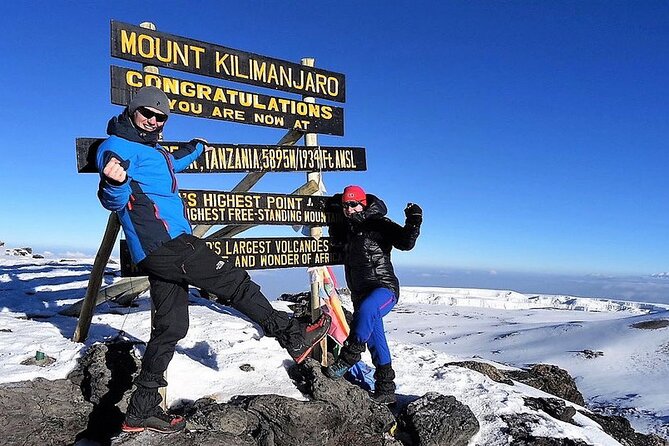
- Uhuru Peak attempt: The summit push begins in the early morning on Day 4, with the goal of reaching the 19,340-foot summit before sunrise.
- Five ecological settings: Expect rainforest, heathland, alpine desert, and the harsh arctic zone near the summit.
- Experienced staff: Guides named in the trip feedback include Antipas, William, Tuliza, and Emanuel. Their care, English skills, encouragement, and good humor receive the strongest praise.
- Useful inclusions: Park fees, meals, bottled water, tea or coffee, snacks, a sleeping bag, camping equipment, and a guide are included.
- Important timing check: The activity begins at 7:30 a.m. at Kilimanjaro International Airport and is described as a six-day tour, while the detailed plan covers five days.
What the Marangu Route offers
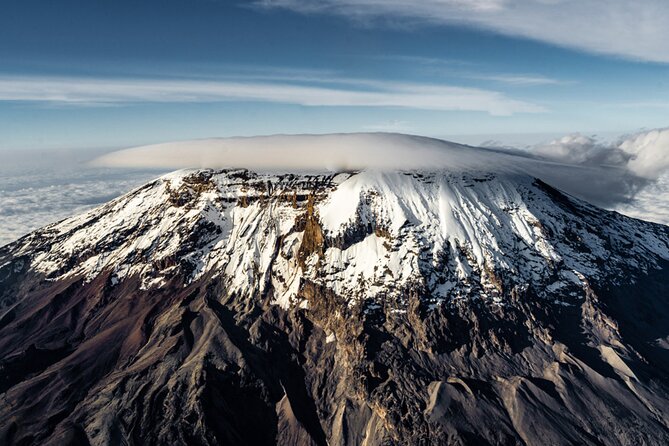
Marangu is often called the easier-looking Kilimanjaro route because the trail is described as relatively gentle at the start and uses huts instead of tents. That does not make the mountain easy. The summit reaches 19,340 feet, and altitude becomes the central challenge long before you reach the top.
The route gives you a simple rhythm. You walk uphill during the day, eat and rest at a mountain hut, then continue higher the next morning. That structure can feel reassuring, especially if this is your first major high-altitude trek.
The scenery changes quickly. At the Marangu Gate, you begin among thick rainforest. Higher up, the trees thin into heathland, then give way to alpine desert around Kibo Hut. The upper mountain is colder, drier, and far less forgiving. You can expect broad views toward Mawenzi Peak and the saddle between Mawenzi and Kibo.
One point needs clearing up before you pay. The overview describes the Machame Route, which is a different route, and mentions signature camping. The itinerary itself repeatedly names the Marangu Route and lists Mandara, Horombo, and Kibo Huts. Ask Spirit of Kilimanjaro to confirm the exact route and sleeping arrangements in writing.
More Kilimanjaro climbs:
- 6 Days Climbing Mount Kilimanjaro Machame Route
★ 5.0 · 40 reviews - Kilimanjaro Climbing 5 days Marangu route
★ 5.0 · 22 reviews - Mountain Kilimanjaro Climbing 8 Days Lemosho Route
★ 5.0 · 10 reviews
Day 1: Marangu Gate to Mandara Hut
Your morning starts at Kilimanjaro National Park’s Marangu Gate. Park formalities take place here, and you meet the guides and porters who will accompany the climb. The trip begins at the stated meeting point, Kilimanjaro International Airport, at 7:30 a.m., so allow enough time to be ready and organized before setting out.
The first walk covers about 8 kilometers and takes roughly four hours. The trail passes through rainforest, the greenest section of the route. You may see unusual plants, birds, and possibly monkeys, though wildlife sightings are not guaranteed.
This opening day is described as relatively easy, which is good news for finding your walking pace. Do not treat it as a race. Your best use of Day 1 is to settle into slow movement, regular hydration, and the routine of walking with a group.
Mandara Hut sits at about 2,700 meters. Reaching this first overnight stop marks a useful change in altitude, but it is not the time to assume your body has adjusted. Pay attention to how you feel, eat the provided dinner, and rest.
Day 2: Heathland and the climb to Horombo Hut
After breakfast, you leave much of the rainforest behind. The route enters heathland, where the scenery opens up and Mawenzi Peak may come into view. Mawenzi is one of Kilimanjaro’s two major volcanic cones, and its jagged form gives this part of the route a memorable backdrop.
The day covers about 12 kilometers and ends at Horombo Hut, roughly 3,700 meters above sea level. The supplied timing says three minutes, which is plainly inconsistent with a full mountain trekking day. Treat the distance and altitude as the useful information, and confirm the expected walking time with the operator.
Horombo is an important stop because the elevation increases sharply from Mandara. You may feel fine at the start and notice the height later. This is where the basic advice matters most: walk slowly, drink regularly, eat even if your appetite drops, and tell your guide if you feel unwell.
The guides receive repeated praise for kindness and encouragement. One six-day account describes a supportive team that kept the climb entertaining, while another credits the staff with speaking good English and making the group feel respected. Those details matter here, when steady morale can be as useful as strong legs.
Day 3: The alpine desert and Kibo Hut
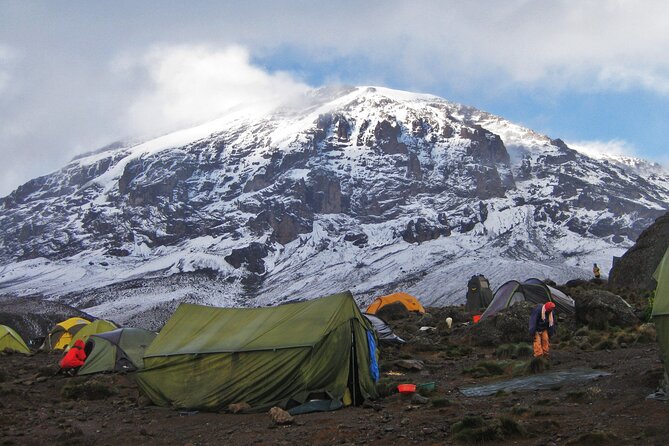
Day 3 takes you toward Kibo Hut at about 4,700 meters. The forest and heath are gone now. You enter the alpine desert, with a much more open and severe setting around you.
The route brings your first clear view of the saddle between Mawenzi and Kibo. These are dormant volcanic cones, and the broad saddle gives you a sense of the final climb still ahead. The scenery may look stark, but that is part of the appeal. Kilimanjaro keeps removing familiar vegetation as you gain height.
This is a demanding day because the altitude is now obvious. The itinerary specifically stresses pacing and hydration, and you should take that advice seriously. You do not gain anything by pushing hard here. A controlled pace leaves more strength for the summit attempt.
Kibo Hut is the staging point for the hardest section. Eat dinner, prepare your summit clothing and gear, and rest as much as possible. The exact sleeping setup deserves clarification because the supplied material lists huts in the daily schedule but also includes camping equipment and describes signature camping elsewhere.
More Marangu Route climbs:
- 6 Days Marangu Route Trekking
★ 5.0 · 2 reviews - Marangu Cultural tour.
★ 5.0 · 1 review - Kilimanjaro climb, Marangu route (6-day)
★ 5.0 · 72 reviews - Climbing Kilimanjaro – Marangu Route
★ 5.0 · 65 reviews
Day 4: The pre-sunrise summit attempt
Day 4 is the heart of the trip. You begin the summit ascent in the early hours, aiming to reach Uhuru Peak before sunrise. The route from Kibo Hut is physically and mentally demanding, with cold, darkness, steep ground, and thin air all adding pressure.
The reward is Africa’s highest point. The stated summit elevation is 19,340 feet. Reaching Uhuru Peak is not simply a matter of fitness. Your pace, altitude response, preparation, and the decisions made by your guide all matter.
This is where the guide team’s role becomes especially important. Feedback gives specific praise to Antipas, who paid close attention to an older climber, and to Tuliza, William, and Emanuel, who are described as serious, friendly, supportive, or encouraging. The accounts also show that plans can change. One climber needed seven days but completed the ascent in six with team support, while another had originally planned a five-day Marangu climb and finished in four. That does not mean you should expect a shortened schedule. It means the operator has dealt with different pacing needs.
After celebrating at the summit, you descend to Kibo Hut and continue down to Horombo Hut. This makes Day 4 extremely long and tiring. You gain the summit, then must keep walking. A good night at Horombo will be welcome.
Day 5: Returning through the forest
The final listed trekking day leads from Horombo Hut back to the Marangu Gate. You pass again through heath and rainforest, but the descent gives the route a different feel. The air should become easier as you lose height, and the vegetation returns around you.
The supplied plan says you might spot colobus monkeys and birds. Wildlife is a possibility, not a promise, so keep your attention on the trail as well as the trees.
At the gate, you receive summit certificates and say goodbye to the guides and porters. That farewell is more than a formal ending. The staff handle the practical work that makes a climb possible, and several accounts place their friendliness and care among the best parts of the experience.
The biggest practical issue remains the advertised duration. The heading says six days, the summary says about five days, and the detailed itinerary has five days. Before booking flights or arranging a hotel, ask what happens on the sixth day. It may involve transfers or a different schedule, but that is not explained in the supplied details.
Meals, equipment, and what the price covers
At $2,196 per person, this is not a casual day hike. The price needs to be judged against the mountain services included. You receive five breakfasts, five lunches, and five dinners, along with bottled water, snacks, coffee or tea, a sleeping bag, camping equipment, a tour guide, and all fees and taxes.
That list can represent meaningful value because Kilimanjaro trips require more than a trail permit. You are also paying for staff, mountain logistics, food, and equipment. The supplied information does not specify meal menus, tent quality, hut conditions, porter numbers, private transfers, or the exact equipment brands, so I would ask those questions before comparing this price with another operator.
The word camping needs care here. Camping equipment is included, but every listed overnight stop is a hut. The overview also promises spacious tents and deluxe comfort, which does not match the daily route description. Get a clear answer on whether you sleep in huts, tents, or a mixture of both.
International flights and a visa are not included. You should budget for those separately, along with any personal items the operator does not list. The supplied information does not say whether tips, airport transfers beyond the stated pickup, or personal insurance are included, so ask before departure.
Guide care and group expectations
The strongest praise centers on the people leading the climb. Antipas is singled out for watching over a 70-year-old father in a family group. Other accounts praise William’s organization, Tuliza’s leadership, and Emanuel’s companionship during a six-day ascent.
The descriptions point to a team that is friendly, serious when needed, encouraging, and able to communicate in English. One group also appreciated the humor, saying the staff helped keep the climb from feeling tiring. That is valuable on a mountain where long hours can wear down your mood.
The maximum group size is listed as 100 people. That is a large possible capacity, though your actual group may be smaller. Ask how many climbers will be assigned to each guide and whether groups are split by walking pace. A smaller working group can make communication easier, especially during the summit push.
The activity says most people can participate, but that is not a promise of an easy climb. You still need to prepare physically and discuss altitude concerns with a medical professional. Proper acclimatization is specifically presented as vital to a safe ascent.
Pickup, cancellation, and practical planning
Pickup is offered, and the meeting point is Kilimanjaro International Airport on Kilimanjaro Airport Road, Tanzania. The listed start time is 7:30 a.m. The activity ends back at the meeting point, so confirm whether that means the airport itself or a nearby transfer point on the final day.
Confirmation is provided at booking. The tour is near public transportation, although that matters less than the airport pickup for most people arriving for the climb. The maximum stated capacity is 100 people.
You can cancel for a full refund if you do so at least 24 hours before the local start time. Within 24 hours, the amount paid is not refunded, and changes made inside that period are not accepted.
Who should choose this climb?
I would consider this trip if you want a structured Kilimanjaro ascent with meals, a sleeping bag, park fees, and a dedicated guide team bundled into one price. It may suit you if hut accommodation sounds more appealing than carrying or sleeping in a tent, though the operator must confirm the actual setup.
The route is also a good fit if you value changing scenery. You begin in rainforest, pass through heathland, cross alpine desert, and finish the upper climb in a cold arctic setting. The visual variety helps break up the long physical effort.
I would be more cautious if you need a clearly defined six-day schedule, private group size, detailed meal information, or guaranteed tent accommodation. The contradictory route and camping descriptions are not minor wording points. They affect where you sleep, how you pack, and how you plan transport.
Should you book the Marangu climb?
This looks like a promising Kilimanjaro package, especially because the guide team receives warm praise for care, communication, organization, and encouragement. The $2,196 price also covers many major costs, and the Marangu route offers a direct way to experience the mountain’s changing ecological zones.
I would book only after confirming three points: the actual number of days, the route, and the overnight accommodation. If Spirit of Kilimanjaro confirms a five-day Marangu hut climb, or explains the sixth day clearly, this could be a good-value choice for a prepared climber who wants strong staff support and an all-inclusive arrangement.
FAQ
Where does the Kilimanjaro climb start?
The meeting point is Kilimanjaro International Airport on Kilimanjaro Airport Road in Tanzania.
What time does the activity start?
The listed start time is 7:30 a.m.
Where does the activity finish?
The activity ends back at the meeting point.
Which Kilimanjaro route is used?
The detailed day-by-day plan follows the Marangu Route. The overview also mentions the Machame Route, so you should confirm the route with Spirit of Kilimanjaro before booking.
How high is Uhuru Peak?
The supplied information gives the summit elevation as 19,340 feet.
How many days does the experience last?
It is advertised as a six-day climb, but the detailed itinerary lists five trekking days and the summary says approximately five days. Confirm the final schedule before making travel arrangements.
Where do you sleep during the climb?
The itinerary lists Mandara Hut, Horombo Hut, and Kibo Hut as overnight stops. Camping equipment is also included, and the overview refers to signature camping, so confirm the exact sleeping arrangements.
Are meals included?
Yes. The package includes five breakfasts, five lunches, and five dinners, along with coffee or tea, snacks, and bottled water.
Are a sleeping bag and equipment included?
Yes. A sleeping bag and camping equipment are included.
Are international flights and visas included?
No. International flights and visas are not included.
Can I cancel for a full refund?
Yes, if you cancel at least 24 hours before the experience start time. Cancellations and changes made within 24 hours are not accepted for a refund.
Just added in Kilimanjaro
- Tanzania Wildlife Encounters – 6 Days★ 5.0 · 1 review
- Day Trip To Tarangire National Park★ 4.5 · 2 reviews
- Mount Kilimanjaro 7 Days – Machame Route★ 5.0 · 5 reviews
- 5 days Serengeti Wildebeest Migration Safari★ 5.0 · 3 reviews
- Mount Kilimanjaro 6 days – Machame route★ 4.0 · 5 reviews
- Marangu Cultural tour.★ 5.0 · 1 review
- Lemosho Route★ 5.0 · 21 reviews
- Airport Transfers at Kilimanjaro International Airport – JRO★ 5.0 · 2 reviews
Marangu Route Climbs, compared.


Private Full Day Hiking Experience to Marangu Route
Read our review →
From Arusha/Moshi: Kilimanjaro Hike Marangu Route Day Trip
Read our review →
Mount Kilimanjaro Day Hike Through Marangu Route to Mandara Hut
Read our review →
Best Kilimanjaro Adventures 6 Days Marangu Route Experience
Read our review →
Kilimanjaro Private Climbing in 6 Days Marangu Route
Read our review →Browse the lists this tour appears in