
Reviewed · MARANGU ROUTE CLIMBS
6 Days Marangu Route Trekking
Africa’s highest summit begins in a wet forest. I like this six-day Marangu Route trek for its steady pace and hut accommodation, which means you sleep in wooden huts rather than tents. I also like the built-in acclimatization day at Horombo, a smart pause that can improve your chance of handling the altitude.
The main consideration is the summit day. You start around midnight, climb steep scree toward Gillmans Point, continue to Uhuru Peak, then descend a long way in the same day. At $1,800 per person, the price includes guides, cooks, porters, taxes, meals listed in the program, and transfers, but you still need to budget for flights, insurance, visa costs, drinks, and personal equipment.
In This Review
- Key Points Before You Book
- Why the Marangu Route Appeals to Many Climbers
- Day 1: Marangu Gate to Mandara Hut
- Day 2: Mandara to Horombo Through Changing Terrain
- Day 3: A Useful Rest Day at 3,720 Meters
- Day 4: Horombo to Kibo Across the Saddle
- Day 5: Gillmans Point, Uhuru Peak, and the Long Descent
- Day 6: Returning Through the Rainforest
- What the $1,800 Price Really Covers
- Guide Support and Group Style
- Who Should Choose This Trek
- Should You Book the Six-Day Marangu Route?
- FAQ
- How long is the Marangu Route trek?
- Where does the experience begin?
- Is airport pickup available?
- Where do you sleep during the trek?
- Is an acclimatization day included?
- What is the highest point reached?
- What is included in the $1,800 price?
Key Points Before You Book
- Hut-based route: You sleep at Mandara, Horombo, and Kibo huts, but you still need your own sleeping bag.
- Acclimatization matters: Day 3 gives you short hikes around Horombo, including Zebra Rock and an optional walk toward Mawenzi Peak.
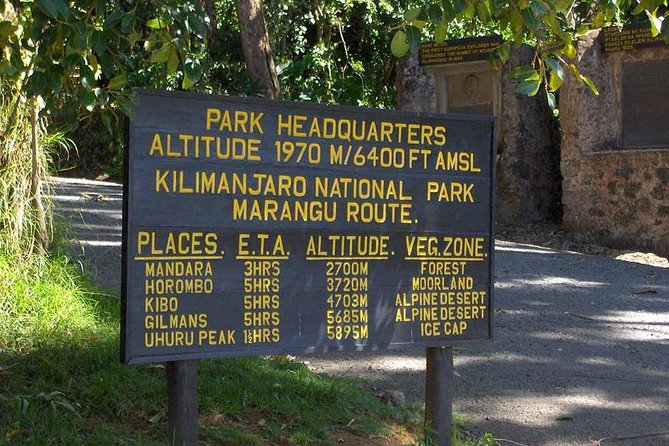
- The summit starts at midnight: The hardest day includes Gillmans Point at 5,685 meters and Uhuru Peak at 5,895 meters.
- A private group experience: Only your group participates, with professional guides, cooks, and porters supporting the climb.
- The scenery changes quickly: You move from misty rainforest to alpine meadows, moorland, lava stone, and the stark upper slopes.
- Guide support gets high praise: Hashim is specifically praised for steady help and assistance throughout the climb.
Why the Marangu Route Appeals to Many Climbers
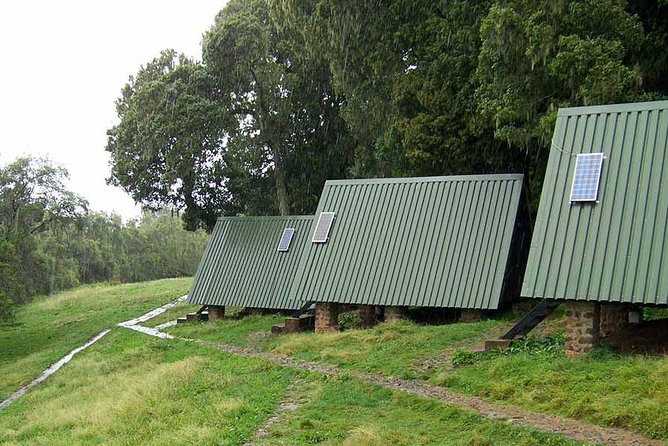
The Marangu Route is often called the hut route because overnight accommodation is provided in simple wooden buildings. That makes it appealing if you prefer not to sleep in a tent every night. The huts contain bunk beds, but the arrangement is basic, and you must bring or rent a sleeping bag separately.
This route also uses the same trail for the ascent and descent. That is less varied than a route that climbs one side of Kilimanjaro and descends another, but it gives you a useful advantage: you know what to expect on the way back. The rainforest you passed through in mist may look quite different after the summit, and the familiar path can feel reassuring when your legs are tired.
The six-day schedule is important. A shorter climb may cost less time and money, but it gives your body less time to adjust to thin air. Here, Day 3 is set aside for acclimatization at Horombo. You climb higher during the day, then return to sleep at the same hut. That basic pattern is valuable because altitude, not just muscle strength, is the central challenge on Kilimanjaro.
This is a private activity, so your group is not combined with strangers. That can make meal times, walking speed, and rest stops easier to manage. It also means the quality of your experience depends heavily on communication with your guide, so use the first day to discuss pacing, water, symptoms, and how the summit attempt will work.
More Marangu Route climbs:
- Kilimanjaro Climbing 5 days Marangu route
★ 5.0 · 22 reviews - 6 Day Kilimanjaro Climbing Via Marangu Route
★ 5.0 · 6 reviews - Marangu Cultural tour.
★ 5.0 · 1 review
Day 1: Marangu Gate to Mandara Hut
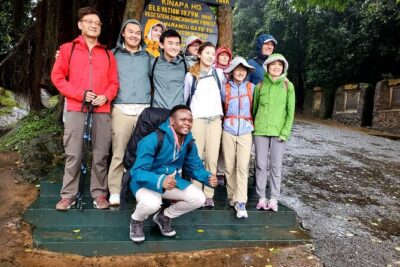
Your meeting point is Kilimanjaro International Airport at 7:30 a.m., with pickup and transfer to the route gate. At Marangu Gate, located at 1,843 meters, you complete park registration and meet the mountain crew before beginning the walk.
The first hours lead through dense forest, often covered in mist. This is one of the more pleasant parts of the climb because the trees provide shade and the trail feels alive. Blue monkeys, black and white colobus monkeys, and bushbabies may be spotted. Wildlife sightings are never guaranteed, but keep your eyes open rather than treating the forest as a simple warm-up.
A picnic lunch is planned at Kisambioni. From there, you continue toward Mandara Hut at 2,700 meters. The stated walking time is about four hours, although your exact pace will depend on the group and trail conditions.
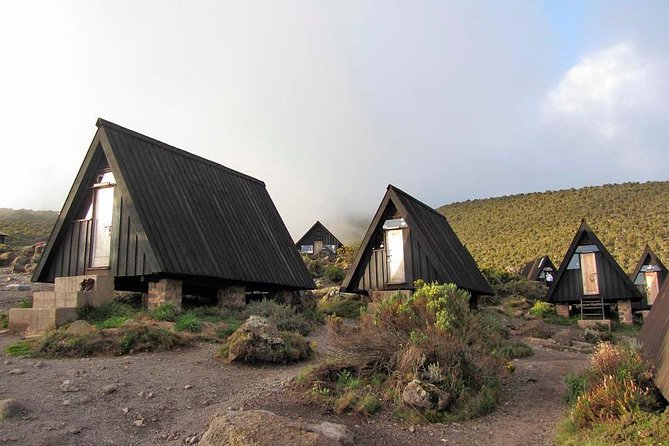
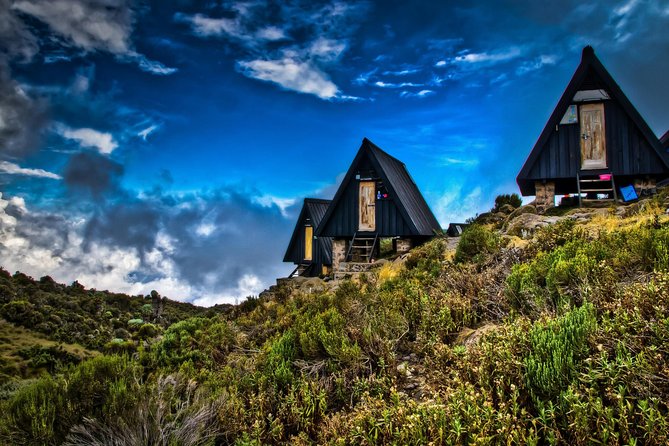
Mandara consists of wooden, A-shaped huts with rooms containing four bunk beds each. The huts offer a roof and a bed, but do not expect hotel comforts. Your sleeping bag remains essential, and you should keep clothing and small items organized because shared hut space can become cluttered quickly.
This first day is relatively short by Kilimanjaro standards. That is useful. You are not trying to prove anything on the opening stretch. Walk slowly, drink regularly, and save energy for the higher, colder sections ahead.
Day 2: Mandara to Horombo Through Changing Terrain
Day 2 takes about six hours and brings a clear change in scenery. You begin around Maundi Crater, the remains of a volcanic vent. Tussock grasses cover the area, and the route can provide broad views when the weather is clear.
The trail then moves northwest through alpine meadows. You cross a stream before reaching grassland and moorland. This shift from forest to open high country is one of the memorable parts of the climb. You can see more sky, feel the altitude more directly, and watch the mountain environment become less tropical with each hour.
Horombo Hut sits at 3,720 meters in a rocky valley. On a clear day, you may see Moshi far below. The end of this day can bring a fine sunset, although mountain weather is changeable and cloud may block the view.
Horombo is a key stop, not just another bed for the night. You are now high enough for altitude symptoms to become a real concern. Headaches, unusual tiredness, poor sleep, and loss of appetite should be reported to your guide. Do not treat discomfort as a contest. The point of a guided climb is to make sensible decisions before a small problem becomes a dangerous one.
Day 3: A Useful Rest Day at 3,720 Meters
Day 3 is the reason I view this itinerary more favorably than a rushed climb. You remain based at Horombo and take a guided acclimatization walk lasting roughly three to five hours, with about 10 kilometers of walking and an altitude gain and loss of 818 meters.
One option is Zebra Rock at about 4,000 meters, reached in a couple of hours. Another is a longer outing toward Mawenzi Peak, the eastern summit of Kilimanjaro, taking four to five hours there and back. You return to Horombo rather than sleeping higher that night.
This day can feel strange. You are walking when your body seems to want rest, but the controlled increase in altitude helps prepare you for the next stages. Keep the pace gentle. The purpose is not to exhaust yourself or reach a dramatic viewpoint at any cost.
The Mawenzi option should appeal to strong walkers who want more altitude practice, while Zebra Rock may suit anyone feeling the effects of the climb. Your guide can help choose the right outing. I would favor a conservative plan if you have a headache or feel unusually weak.
More treks in Kilimanjaro:
- 8 Days Kilimanjaro Hike via Lemosho Route
★ 5.0 · 39 reviews - 6 Days Machame Route Kilimanjaro Trekking
★ 5.0 · 13 reviews - 8-Day Small-group Lemosho Kilimanjaro Summit Trekking
★ 5.0 · 186 reviews - Mountain Kilimanjaro Day Hike
★ 5.0 · 102 reviews
Day 4: Horombo to Kibo Across the Saddle
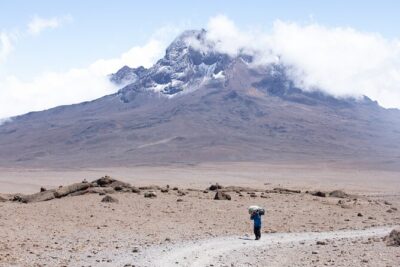
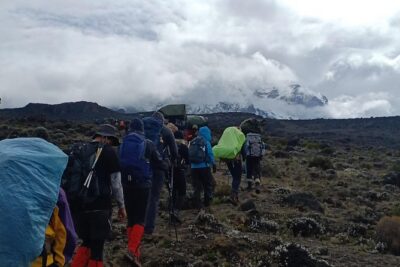
After Horombo, the route becomes steeper and rockier. You pass a place known as Last Water, then enter a much barer setting as you climb toward the Saddle, the broad lava-stone ridge between Mawenzi and Kibo.
The walk takes about six hours and ends at Kibo Hut, at 4,703 meters. The views of Kilimanjaro’s upper reaches can be striking here, but the thin air may make even a moderate pace feel demanding. This is where the value of the earlier acclimatization day becomes clear.
A hot meal is planned at Kibo in the afternoon, followed by a quiet evening and an early bedtime. Do not expect a full night of sleep. The summit hike begins around midnight, so your evening is mainly about eating, preparing clothing, checking equipment, and lying down.
Pack the things you need for the summit before you rest. The last-minute scramble in a dark hut is no fun when you are tired and cold. Keep your headlamp, warm layers, water, snacks, gloves, and required personal items close at hand. The supplied information does not specify an equipment list, so confirm gear requirements with the operator before departure.
Day 5: Gillmans Point, Uhuru Peak, and the Long Descent
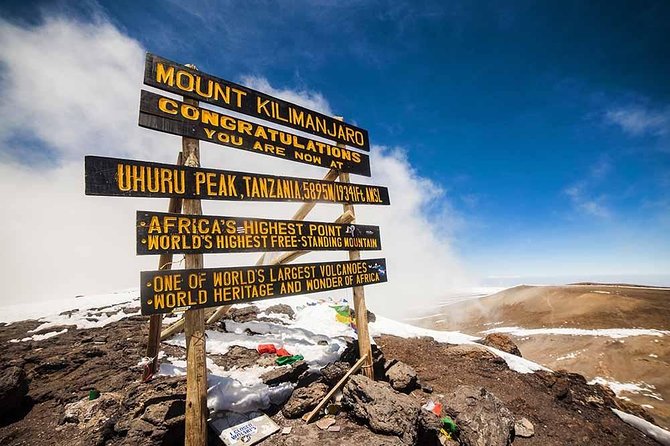
Day 5 is the physical and mental center of the trip. You leave around midnight, following a long scree slope toward Hans Meyer Cave. From there, the route turns into a single-file zigzag on steep ground.
The climb to Gillmans Point at 5,685 meters is described as the hardest section. It includes a rocky stretch requiring some scrambling. In the dark, the mountain can feel reduced to the next step, the person ahead, and the rhythm of your breathing. Slow progress is normal here.
At Gillmans Point, you reach the crater rim. Uhuru Peak is still about two hours away, at 5,895 meters. Reaching Gillmans Point is a major achievement, but the final section should not be underestimated. Fatigue and altitude remain serious factors.
At Uhuru Peak, you are at the highest point in Africa. The reward is usually the sunrise over the ice fields and Mawenzi peaks, though weather can affect what you see. The itinerary allows only a short time at the summit. That is sensible because staying at this altitude for too long is not wise.
The day does not end at the summit. You descend, return for food and rest, and continue down the mountain. The supplied schedule gives six hours for this day, but the midnight start and summit route make it the most demanding day by far. Confirm the exact walking plan with the operator, since timing can vary with weather, pace, and the condition of the group.
You should also be clear about the difference between reaching Gillmans Point and reaching Uhuru Peak. Both are significant, but they are not the same destination. Ask your guide how the summit decision will be handled if altitude or weather becomes a problem.
Day 6: Returning Through the Rainforest
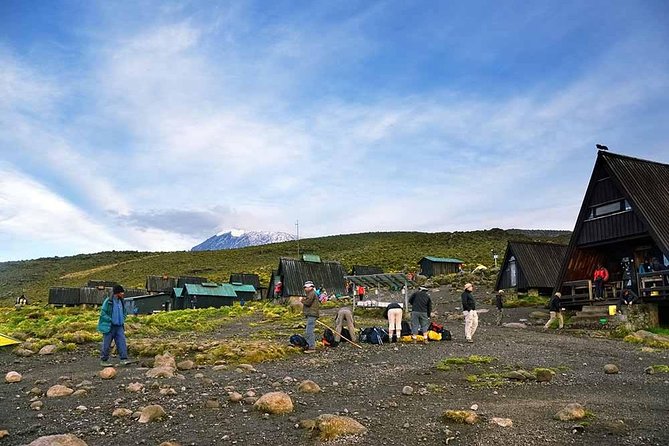
After breakfast, you retrace the route toward Marangu Gate. You pass Mandara Hut, then descend through the rainforest before reaching the gate.
The stated walking time is about five hours. After the exposed upper mountain, the forest may feel warm, green, and almost lush by comparison. Your knees may notice the descent more than you expect, so walking poles can be useful if they are permitted and included in your personal kit.
At the gate, you receive summit certificates and have a short celebration with the porters. You are then driven back to your hotel for a hot shower and rest. A Kilimanjaro beer is optional, and alcoholic drinks are not included in the price.
This final day is simple, but it matters. You finish with a clear endpoint, formal recognition, and a transfer back to comfort. The return to a hotel is especially welcome after the cold and limited facilities of Kibo.
What the $1,800 Price Really Covers
At $1,800 per person, this is not a budget day hike, but Kilimanjaro costs include far more than trail access. The package includes professional mountain guides, cooks, and porters, government taxes, parking fees, and transfers to and from the route gate. Breakfast is listed among the included meals, though you should ask for a complete meal plan because the daily schedule refers to picnic lunches and hot meals without spelling out every meal included.
The porter and cook team is a major part of the service. You are not carrying every shared supply yourself, and the cook prepares meals on the mountain. That support allows you to focus on pacing and altitude management, but it also makes it important to ask how luggage limits and porter welfare are handled.
The price does not include international flights, travel insurance, visa fees, or alcoholic and non-alcoholic drinks. Your own sleeping bag is also required, so equipment may add to the real cost. If you do not already own mountain gear, ask the operator what can be hired locally and what you must bring.
Transfers are included from Kilimanjaro International Airport, with a stated start time of 7:30 a.m. Confirm your arrival timing before booking flights. The information provided does not state the hotel location, airport transfer schedule after the climb, or whether airport pickup is available for a late arrival.
Guide Support and Group Style
The company presents itself as a Tanzania-based team offering guiding across culture, nature, history, wildlife, adventure, and biking. For this climb, the important part is the mountain crew: professional guides, cooks, and porters.
Hashim is specifically praised for support and assistance during the climb. That detail matters because a good guide does more than lead the trail. On a high-altitude trek, you need clear pacing, honest updates, and someone who pays attention when you are not feeling right.
The activity is private, meaning only your group takes part. This is useful if your party has a shared fitness level and wants a more personal rhythm. It can also place more responsibility on your group to communicate well. If one person wants a faster pace and another needs more rest, discuss this before the climb.
The company has an overall rating of 5 from two posted ratings, but the written comments are limited. One account praises an unforgettable climb and names Hashim. Another praises the company’s care during a six-day Machame hike, which is a different route from Marangu. I would treat that as a positive sign about the operator’s general support, not as direct evidence about every detail of this particular route.
Who Should Choose This Trek
This trek suits you if you have moderate physical fitness, can walk for several hours on consecutive days, and are willing to follow a slow, steady pace. You do not need to be an elite athlete, but you do need to prepare for steep ground, cold conditions, early starts, and the long summit day.
The route is a good match if you prefer huts to tents and like having a fixed six-day structure. It also suits private groups that want to climb together without being added to a larger party.
It may be less suitable if you want a quiet, gentle mountain holiday. The summit attempt is serious, and the midnight departure can be physically and emotionally tiring. It may also disappoint you if you expect luxury accommodation. The huts provide bunk beds, not private rooms or hotel-style facilities.
The itinerary includes a valuable acclimatization day, but no route can guarantee a summit. Your health, weather, pace, and response to altitude all matter. Travel insurance is not included, and you should arrange it before arrival.
Cancellation is free if you cancel at least 24 hours before the local start time. Changes or cancellations inside that window are not accepted for a refund.
Should You Book the Six-Day Marangu Route?
I would book this trek if you want a structured Kilimanjaro climb with hut accommodation, a private group, and a planned acclimatization day. The strongest practical features are the Horombo rest day, the support crew, and the airport and gate transfers included in the price.
I would pause before booking if you have not prepared for the summit day or if you are counting on a relaxed schedule. Ask for the full meal plan, equipment requirements, porter luggage limits, exact airport transfer details, and the plan for handling altitude problems.
For a prepared walker who accepts basic huts and a very demanding final day, this is a sensible way to approach Kilimanjaro. The route gives you time to adjust, changes scenery dramatically, and ends with the possibility of standing at Uhuru Peak above Africa. The mountain makes the final decision, but this six-day plan gives you a fair chance to meet it ready.
FAQ
How long is the Marangu Route trek?
The experience lasts approximately six days. The route includes five days of ascent and summit activity, followed by the descent to Marangu Gate on Day 6.
Where does the experience begin?
The stated meeting point is Kilimanjaro International Airport on Kilimanjaro Airport Road, Tanzania. The start time is 7:30 a.m.
Is airport pickup available?
Yes. Pickup is offered, and transfers to and from the Kilimanjaro route gate are included. Confirm the exact transfer arrangements with the provider before arrival.
Where do you sleep during the trek?
You sleep in wooden huts at Mandara Hut, Horombo Hut, and Kibo Hut. The huts have bunk beds, but you must bring your own sleeping bag.
Is an acclimatization day included?
Yes. Day 3 is based at Horombo Hut and includes guided short hikes. Options include Zebra Rock at about 4,000 meters and a longer walk toward Mawenzi Peak.
What is the highest point reached?
The summit goal is Uhuru Peak at 5,895 meters. The route also passes Gillmans Point on the crater rim at 5,685 meters.
What is included in the $1,800 price?
The listed inclusions are breakfast, parking fees, transfers to and from the route gate, government taxes, and professional mountain guides, cooks, and porters. International flights, travel insurance, visa fees, drinks, and your sleeping bag are not included.
Just added in Kilimanjaro
- Tanzania Wildlife Encounters – 6 Days★ 5.0 · 1 review
- Day Trip To Tarangire National Park★ 4.5 · 2 reviews
- Mount Kilimanjaro 7 Days – Machame Route★ 5.0 · 5 reviews
- 5 days Serengeti Wildebeest Migration Safari★ 5.0 · 3 reviews
- Mount Kilimanjaro 6 days – Machame route★ 4.0 · 5 reviews
- Marangu Cultural tour.★ 5.0 · 1 review
- Lemosho Route★ 5.0 · 21 reviews
- Airport Transfers at Kilimanjaro International Airport – JRO★ 5.0 · 2 reviews
Marangu Route Climbs, compared.
Private Full Day Hiking Experience to Marangu Route
Read our review →
From Arusha/Moshi: Kilimanjaro Hike Marangu Route Day Trip
Read our review →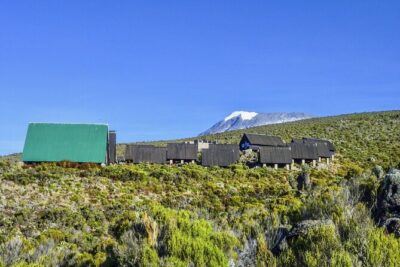
Mount Kilimanjaro Day Hike Through Marangu Route to Mandara Hut
Read our review →
Best Kilimanjaro Adventures 6 Days Marangu Route Experience
Read our review →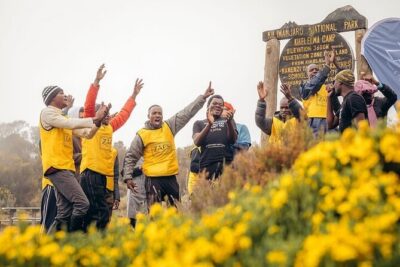
Kilimanjaro Private Climbing in 6 Days Marangu Route
Read our review →Browse the lists this tour appears in