
Reviewed · LEMOSHO ROUTE CLIMBS
7 Day: Hiking Kilimanjaro via Lemosho Route
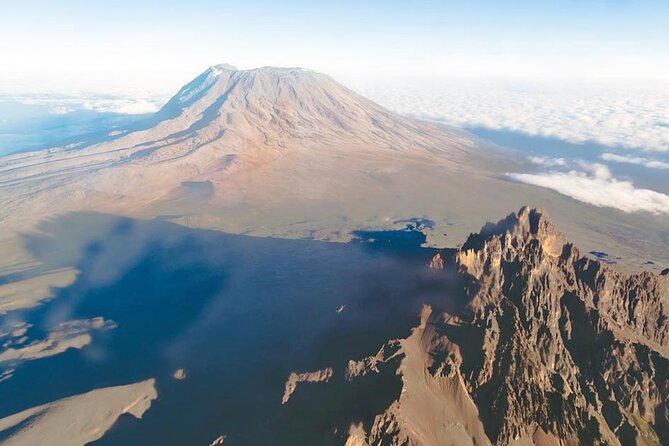
Africa’s highest summit starts with a quiet forest walk. This 7-day Lemosho Route trek gives you a scenic western approach to Kilimanjaro, with low traffic, changing plant zones, and a strong focus on acclimatization. I like the route’s gradual height gain and the chance to cross the Shira Plateau before reaching the summit circuit.
I also like that the price includes park fees, transport to and from the mountain, guides, porters, a cook, and all listed meals. The main consideration is the pace: summit night begins around midnight to 2 a.m., and seven days leaves less spare time than longer Kilimanjaro routes.
The trip is run as a private climb, so only your group takes part. Communication before arrival is described as quick and clear, and the operator showed flexibility for a solo climber’s requests. Anita was also praised for helping with tickets. That personal attention can matter when you are arranging a major climb from overseas.
In This Review
- Key points to know before booking
- Why the Lemosho Route is a smart Kilimanjaro choice
- Day 1: Londorossi Gate to Mkubwa Camp
- Day 2: Through the forest to Shira Camp 2
- Day 3: Lava Tower and the Barranco Valley
- Day 4: The Barranco Wall to Karanga Camp
- Day 5: Karanga to Barafu Camp
- Day 6: Stella Point and Uhuru Peak
- Day 7: Mweka Camp to the park gate
- What the $2,630 price really covers
- Who will like this private seven-day climb
- Booking details and practical cautions
- Should you book the Lemosho Route trek?
- FAQ
- How long is the Kilimanjaro Lemosho Route tour?
- How much does the tour cost?
- Where does the tour start?
- What time does the tour start?
- Is this a private tour?
- Are meals included?
- Are guides and porters included?
- What costs are not included?
- Can I cancel for a refund?
Key points to know before booking
- Lemosho begins on Kilimanjaro’s western side, offering rainforest, heath, moorland, the Shira Plateau, and the Barranco Valley.
- The $2,630 price includes major climbing costs, including park fees, transport, guides, porters, a cook, breakfast, lunch, and dinner.
- Day 3 is the key acclimatization day, taking you to Lava Tower at 4,640 meters before sleeping lower at Barranco Camp.
- Summit night starts between midnight and 2 a.m., with a steep scree climb to Stella Point and then Uhuru Peak.
- The route is private, which allows your group to follow a more personal schedule and make specific requests.
- You need to budget separately for tips, insurance, visa costs, personal items, and international flights.
Why the Lemosho Route is a smart Kilimanjaro choice
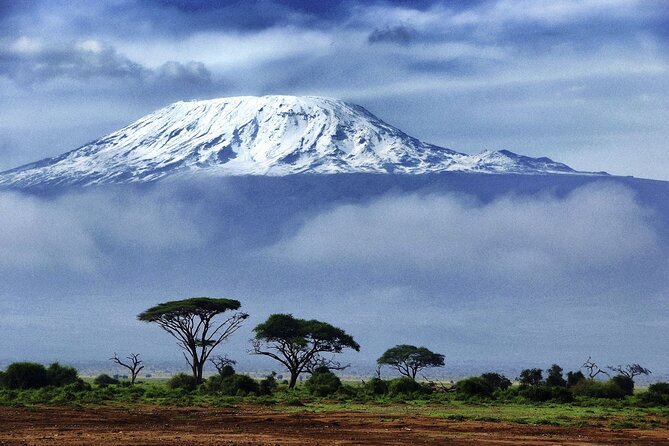
Kilimanjaro is not a technical climbing expedition in the usual sense, but it is a serious high-altitude trek. The mountain rises through several climate zones, and the challenge comes from thin air, long walking days, cold, sleep disruption, and the final push to the summit.
Lemosho is appealing because it starts away from the busiest eastern approaches. You begin in thick rainforest, then move into open heath and moorland before crossing the Shira Plateau. From there, the route joins the southern circuit and takes you through Lava Tower, Barranco, Karanga, and Barafu.
I like the route’s built-in climb-high, sleep-lower pattern on Day 3. You reach Lava Tower at about 4,640 meters, then descend to Barranco Camp at roughly 3,960 meters for the night. That short-term height gain gives your body a chance to adjust without forcing you to sleep at the highest point reached that day.
The tradeoff is that seven days is not the longest schedule available on Kilimanjaro. You get a strong route and good scenery, but not much spare time if altitude affects you or if weather slows the group. Your fitness, patience, and response to altitude will matter more than simply being able to walk for several hours.
More Lemosho Route climbs:
- 8-Day Small-group Lemosho Kilimanjaro Summit Trekking
★ 5.0 · 186 reviews - 8 Days Mountain Kilimanjaro Lemosho Route
★ 5.0 · 22 reviews - 7 Day Kilimanjaro Climb Lemosho Route & 2 Day Safari
★ 5.0 · 16 reviews
Day 1: Londorossi Gate to Mkubwa Camp
Your morning begins with pickup from your hotel and a drive to Londorossi Gate, at about 2,250 meters. The drive takes approximately two and a half hours. At the gate, you register with Kilimanjaro National Park before continuing by vehicle toward the rainforest drop-off point.
The first walk takes you through dense, relatively unspoiled forest. The trail is moderately steep, and the day covers about four hours of trekking before you reach Mkubwa Camp at roughly 2,800 meters.
This opening day is short by Kilimanjaro standards, which is useful. You are not thrown straight into a punishing climb, and the forest gives the route a calm beginning. The vegetation also makes this feel different from the exposed upper mountain days that follow.
An armed ranger accompanies the group during the first two days because wild animals may be present in this part of the mountain. That is an important practical detail, and it also reminds you that this is a national park, not simply a marked walking trail.
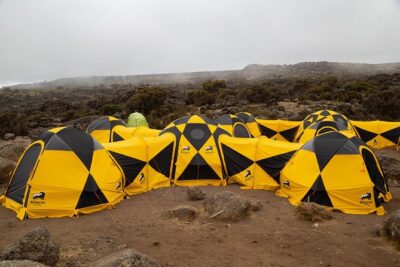
You should expect an early start, a long vehicle transfer, registration, and a first night at a basic mountain camp. The tour information does not specify tent arrangements or bathroom facilities, so ask the operator for those details before you go.
Day 2: Through the forest to Shira Camp 2
The second day begins on a small trail through the remaining rainforest. As you gain height, the trees thin and the plants change. Heath and moorland take over, with Erica, lobelia, and other high-altitude vegetation becoming more common.
You cross the Shira Ridge and reach Shira Camp 1 after about four to five hours. The plan includes lunch, a rest, and views toward Mount Meru and the Rift Valley. After that break, you continue upward, gaining another 400 meters before reaching Shira Camp 2 at about 3,900 meters.
The total walking time is listed as about seven hours. That makes this a longer day than Day 1, and the height gain will be noticeable. The route’s changing vegetation gives you plenty to look at, but the open terrain also means you may feel the sun, wind, and altitude more directly.
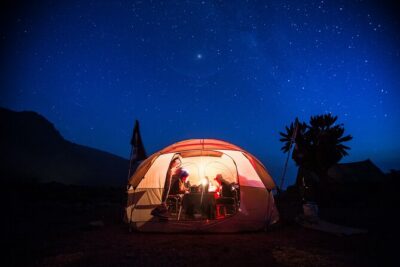
Shira Camp 2 is a major change from the forest. You are now on a broad, high plateau with wide views and fewer trees to shelter you. I would treat this as a day for steady pacing rather than speed. Keep your walking rhythm comfortable, drink regularly, and use the lunch stop to rest properly.
Day 3: Lava Tower and the Barranco Valley
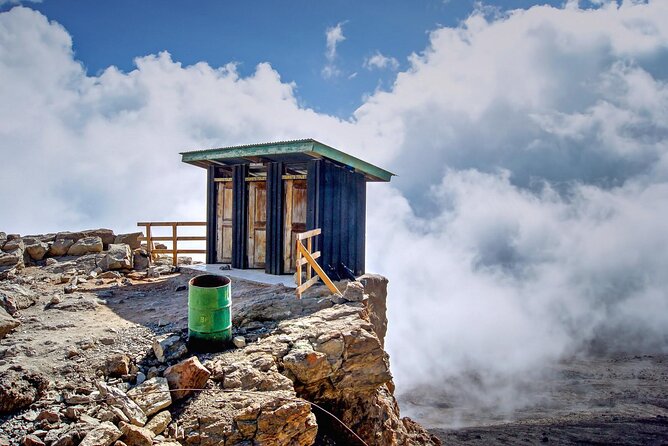
Day 3 is one of the most valuable parts of the route. You climb from Shira Camp 2 at around 3,900 meters toward Lava Tower at approximately 4,640 meters. You then descend to Barranco Camp at about 3,960 meters.
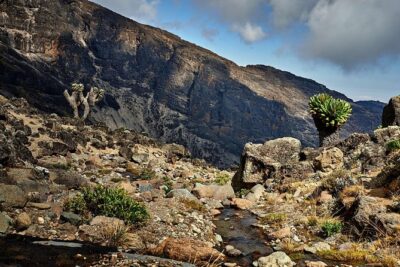
The walk takes roughly six to seven hours and passes above the Shira Plateau toward the Lava Tower area. After the high point, the trail enters the broad Barranco Valley, known for its lobelia and giant senecio plants. Barranco Camp is often considered one of the prettiest camping locations on Kilimanjaro, and the setting gives this day a real sense of arrival in the high mountain zone.
The value here is not just the scenery. Reaching a higher altitude during the day and sleeping lower at night is a useful acclimatization pattern. You will still feel the height, but you are not forced to spend the night at Lava Tower.
This is also the day when you learn how your body is responding. Headaches, nausea, unusual tiredness, or poor sleep should be reported to your guide. The operator lists professional guides and an assistant guide among the support crew, so use that support rather than trying to hide symptoms.
More treks in Arusha:
- Mountain Kilimanjaro Day Hike
★ 5.0 · 102 reviews - Private Full Day Hiking Experience to Marangu Route
★ 5.0 · 61 reviews - 4 Days Mount Meru Trekking
★ 5.0 · 55 reviews - 4 days Best experience Kilimanjaro Hike, Serengeti &Ngorongoro
★ 5.0 · 54 reviews
Day 4: The Barranco Wall to Karanga Camp
After breakfast, you leave Barranco Camp and tackle a steep ridge beside the Barranco Wall. The route continues toward Karanga Valley and then to Karanga Camp, which sits at about 4,035 meters.
The walking time is listed as three to four hours for the route to Karanga, although the daily itinerary also lists seven hours. That difference is worth clarifying with the operator before departure, since actual walking time may depend on the group’s pace, breaks, and route conditions.
The Barranco Wall is one of the route’s memorable features. It sounds intimidating, but the supplied details do not describe it as a technical rock-climbing section. You should still expect a steep, hands-on trail in places, and you will need to follow your guide’s instructions carefully.
Once at Karanga Camp, the afternoon is set aside for rest and stretching before summit night. Do not treat this as wasted time. A quiet afternoon can help you eat, hydrate, organize your clothing, and sleep before the midnight start that follows.
Day 5: Karanga to Barafu Camp
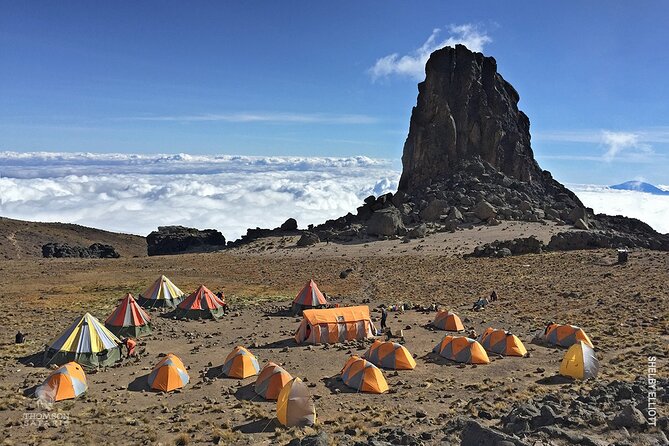
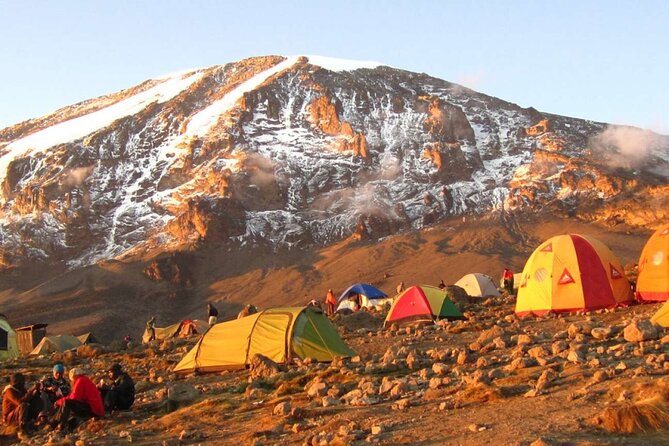
The trail continues from Karanga Camp at 4,035 meters to Barafu Camp at approximately 4,640 meters. At Barafu, you have completed the southern circuit, which gives you views of the summit from several angles.
The camp also offers views of Mawenzi and Kibo, two of Kilimanjaro’s major peaks. The setting is stark and high, with little shelter compared with the forest below. You are now close to the summit, but the hardest part is still ahead.
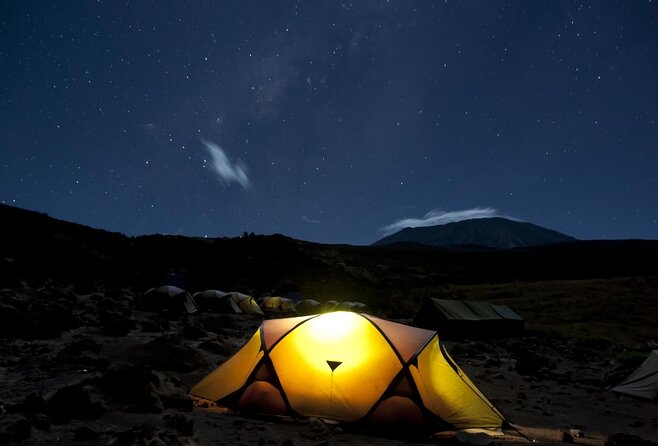
Barafu is your preparation point for summit night. Dinner is included, and you should use the evening to prepare clothing, headlamp or other personal items, water, and anything else you need for the early start. The supplied details do not list a specific equipment package, so you should ask what the operator provides and what you must bring yourself.
This day is not especially long on paper, but altitude makes every hour count. Walk slowly, avoid wasting energy, and try to rest even if sleep is difficult.
Day 6: Stella Point and Uhuru Peak
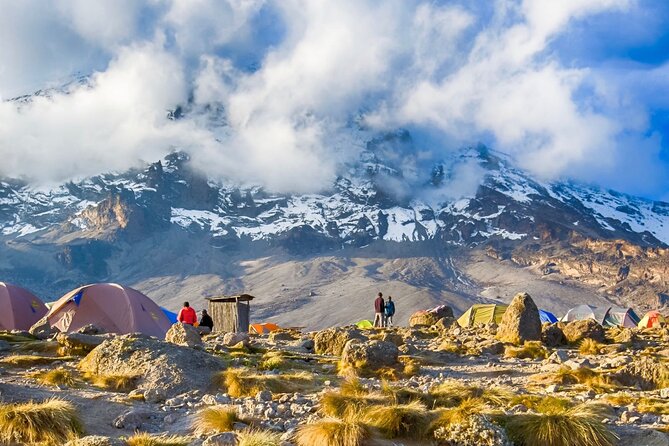
Summit day begins between midnight and 2 a.m. You climb in a northwestern direction through heavy scree, passing between the Rebmann and Ratzel glaciers on the way toward Stella Point.
This is the most physically and mentally demanding section of the trek. The ground is loose, the air is thin, and the darkness makes the climb feel longer. You may reach Stella Point at about 5,670 meters, listed here as 18,600 feet, where a short rest is planned.
If the weather cooperates, sunrise from Stella Point is the reward. From there, you continue for about an hour toward Uhuru Peak, the highest point on Kilimanjaro and the highest point in Africa. Snow may appear along this upper section.
The available itinerary text is cut off during the description of the summit day, so confirm the full Day 6 schedule before booking. In particular, ask where you sleep after reaching Uhuru Peak, how much descent is planned that day, and how the group handles anyone who turns back at Stella Point.
You should also understand that reaching Stella Point is not the same as reaching Uhuru Peak. The final hour can still feel hard, and there is no shame in making a careful decision with your guide if your health or energy is failing.
Day 7: Mweka Camp to the park gate
The final day takes you down from Mweka Camp at approximately 3,080 meters to Mweka Gate at about 1,630 meters. Breakfast comes before the descent, and the itinerary lists about seven hours for the day.
At the gate, the group gathers to celebrate, sign the guest book, and receive summit certificates. You then continue for about another hour to Mweka Village, where a vehicle takes you back to your hotel.
The descent is a relief, but it can be tough on tired knees and legs. Trekking poles, if you bring them, can be useful, though they are not listed as an included item. Take the downhill section at a controlled pace instead of racing toward the vehicle.
The certificate ceremony gives the trip a clear ending, while the drive back to your hotel marks the return to normal comforts. After six nights on the mountain, a shower and proper bed will feel like major attractions.
What the $2,630 price really covers
At $2,630 per person, this is not a cheap holiday, but the price includes many of the costs that make a Kilimanjaro climb possible. Park fees and taxes are included, as are transfers to the gate and pickup after the trek.
You also get professional guides, a dedicated support crew, a cook, and porters. Meals include seven breakfasts, seven lunches, and six dinners. That coverage makes the price more useful than a simple trek fee because major daily expenses are already built in.
You still need to budget for tips for the guide, assistant guide, cook, and porters. International flights, travel insurance, visa fees, and personal items are also excluded. Those extras can change your final cost, so do not compare the $2,630 figure with a bare trek price without checking what each operator includes.
The private format is another part of the value. Only your group participates, which can be a good fit if you want personal attention or need the company to respond to specific requests. The tradeoff is that private trips can be less social than larger groups, and the price may feel high for a solo climber.
Who will like this private seven-day climb
I would recommend this trip to a fit hiker who wants a scenic route and prefers a private group. The Lemosho approach gives you forest, open high country, the Shira Plateau, Barranco Valley, and several angles on the summit.
It also suits someone who values organized support. Transport, meals, porters, a cook, and professional guides are included, so you are not arranging each part separately. Communication before arrival was praised as quick and clear, and the company was willing to tailor the trek for a solo booking.
You should think twice if you want a slow, highly flexible altitude schedule. Seven days is workable, but it leaves limited room for delays or extra acclimatization. You also need to be comfortable with a midnight start, a long summit push, basic mountain camping, and a steep descent.
The experience is not suitable as a casual sightseeing add-on. You may be able to participate without technical climbing experience, but the itinerary involves repeated long days at altitude and a demanding summit night.
Booking details and practical cautions
Pickup is offered, but the meeting information lists Moshi as the start point while the general location is Arusha. Confirm your hotel pickup area and the exact meeting point before you pay.
The listed start time is 8:00 a.m. Confirmation is provided at booking, and the activity is private. The information says most people can participate, but you should still assess your fitness and medical situation before committing to a high-altitude trek.
Free cancellation is available if you cancel at least 24 hours before the local start time. Cancellations or changes made inside that window are not accepted for a refund. If poor weather forces cancellation, you are offered another date or a full refund.
Ask for the complete summit-day plan, equipment list, tent and toilet arrangements, porter baggage limits, and tipping guidance. These points are not fully detailed in the supplied information, but they can make a big difference to your preparation.
Should you book the Lemosho Route trek?
I would book this climb if you want Kilimanjaro’s western scenery, a private group, and a package that includes the major mountain costs. The route design is strong, especially the Lava Tower to Barranco acclimatization day and the gradual move from rainforest to the summit circuit.
I would not choose it without first confirming the missing summit-day details and the Moshi versus Arusha pickup information. Also, be honest about the seven-day schedule. If you want more time for altitude adjustment, a longer itinerary may suit you better.
For a prepared hiker who accepts the early summit start and the physical demands, this is a well-priced, well-supported way to attempt Africa’s highest peak. The promise of a fun, easy, and safe climb should be treated as a goal, not a guarantee, but the included support and personal communication make this a serious option.
FAQ
How long is the Kilimanjaro Lemosho Route tour?
The tour lasts approximately seven days, with about seven days of trekking and mountain transfers as described in the schedule.
How much does the tour cost?
The listed price is $2,630 per person.
Where does the tour start?
The meeting information lists Moshi, Tanzania, as the start point. Pickup is offered, and the general location is given as Arusha, so confirm the exact pickup details for your hotel.
What time does the tour start?
The listed start time is 8:00 a.m.
Is this a private tour?
Yes. Only your group participates in the hiking tour.
Are meals included?
Yes. The price includes seven breakfasts, seven lunches, and six dinners.
Are guides and porters included?
Yes. Professional guides, an assistant guide, a cook, and porters are included in the support crew.
What costs are not included?
International flights, tips for the guide, assistant guide, cook, and porters, personal items, travel insurance, and visa fees are not included.
Can I cancel for a refund?
You can cancel at least 24 hours before the local start time for a full refund. Cancellations or changes made less than 24 hours before the start time are not refunded. If poor weather causes cancellation, you are offered a different date or a full refund.
Just added in Arusha
- Safari “Kifaru” – 5 days in the most famous Parks in the world★ 5.0 · 4 reviews
- Saadani Day Trip★ 5.0 · 13 reviews
- 3 Days Tanzania Short and Spicy★ 5.0 · 6 reviews
- 5 Day Tanzania Safari Camping Adventure Private Tour★ 5.0 · 2 reviews
- Day Trip to Ngorongoro Crater from Arusha★ 5.0 · 1 review
- SERENGETI NATIONAL PARK Tour★ 4.5 · 5 reviews
- 3 Days Serengeti Park & Ngorongoro Crater Adventure Safari★ 5.0 · 8 reviews
- 6 Days Tanzania Bush Experience Safari★ 5.0 · 6 reviews
Lemosho Route Climbs, compared.
8-Day Small-group Lemosho Kilimanjaro Summit Trekking
Read our review →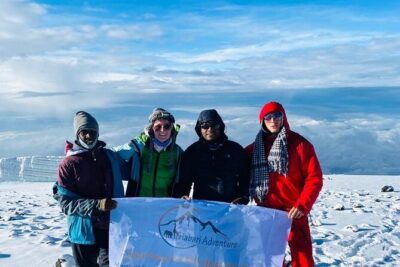
Climbing Kilimanjaro through 8 days Lemosho Route
Read our review →Browse the lists this tour appears in