
Reviewed · LEMOSHO ROUTE CLIMBS
8 Days Mountain Kilimanjaro Lemosho Route
Kilimanjaro rewards patience. This 8-day Lemosho Route gives you a gradual climb through rainforest, heath, moorland, volcanic rock, alpine desert, and Arctic-like summit conditions. I like the extra acclimatization time and the route’s changing scenery, especially the high Shira Plateau and the sunrise near Stella Point. I also like that clean water, meals, camping equipment, and a sleeping bag are included, which removes a fair amount of mountain logistics from your shoulders.
The main drawback is simple: this is a serious high-altitude trek, not a long sightseeing walk. You need moderate physical fitness, and summit day involves a midnight start, cold, wind, darkness, and a long descent. At $2,840 per person, the trip is not cheap, but the price covers the basic equipment, food, water, park fees, transport arrangements, and a private mountain crew.
The experience is provided by African Polecat Safaris, which has paid membership in the Kili Porter Assistance Program, or KPAP. That matters on a climb where porters carry much of the camp and food. The company’s guides, especially head guide John Danford, receive repeated praise for their calm pacing, mountain knowledge, and support during the summit push.
In This Review
- Key Details Before You Book
- Why the Lemosho Route Works Well
- Day 1: Londorossi Gate to Mti Mkubwa Camp
- Day 2: Mti Mkubwa to Shira 1 Camp
- Day 3: Shira Plateau and Lent Hills
- Day 4: Moir Hut, Lava Tower, and Barranco Camp
- Day 5: Climbing the Barranco Wall to Karanga
- Day 6: Karanga Camp to Barafu Camp
- Day 7: Barafu Camp to Uhuru Peak and Mweka Camp
- Day 8: Mweka Camp to the Gate
- What the $2,840 Price Covers
- Food, Water, Gear, and Camp Life
- Who Should Book This Trek?
- Should You Book the 8-Day Lemosho Route?
- FAQ
- How long is the Kilimanjaro Lemosho Route experience?
- What time does the experience start?
- Is pickup available?
- Is this a private tour?
- What is included in the price?
- What is not included?
- What fitness level is required?
Key Details Before You Book
- Eight days means better acclimatization: The route uses longer and shorter hiking days so your body can adjust before summit night.
- The scenery changes almost every day: You move from thick rainforest to tall grasses, heather, volcanic rock, alpine desert, and finally Arctic conditions.
- Shira Plateau adds a valuable rest-and-adjustment day: At one of the highest plateaus on earth, you can take gentler walks toward Shira 2 Camp and Lent Hills.
- Lava Tower is climbed before you sleep lower: Reaching about 15,190 feet and then descending to Barranco Camp gives you useful time at altitude.
- Summit day is the real test: You begin around midnight, reach Uhuru Peak at 19,341 feet, then descend all the way to Mweka Camp.
- The price includes the main mountain basics: Park fees, clean water, camping gear, sleeping bag, and seven breakfasts, lunches, and dinners are covered.
Why the Lemosho Route Works Well
Lemosho is a strong choice if you want time to adjust rather than race upward. The first two days are not extreme by Kilimanjaro standards, and the route then spends a full day on the Shira Plateau before taking you higher through Lava Tower and Barranco.
That rhythm matters. You gain height, sleep, walk at a manageable pace, and then gain more height. The itinerary also includes short days at Karanga and Barafu, giving you time to rest before the summit attempt.
The route begins on the western side of Kilimanjaro and later joins paths associated with the Machame, Shira, and Umbwe routes at Barranco Camp. You therefore get the quieter opening section of Lemosho, followed by some of the mountain’s best-known southern scenery.
This is a private activity, so only your group participates. That can be helpful when people in the group have different walking speeds, though the provided information does not specify the maximum group size or exact porter-to-climber ratio. Ask those questions before booking.
More Lemosho Route climbs:
- 8-Day Small-group Lemosho Kilimanjaro Summit Trekking
★ 5.0 · 186 reviews - 7 Day Kilimanjaro Climb Lemosho Route & 2 Day Safari
★ 5.0 · 16 reviews - Kilimanjaro Climb- Lemosho Route
★ 5.0 · 9 reviews
Day 1: Londorossi Gate to Mti Mkubwa Camp
After breakfast, a driver and guide pick you up at your accommodation and take you toward Lemosho Gate and Londorossi Gate. The route description allows time to stop at a nearby local village for lunch and last-minute supplies before meeting the mountain crew.
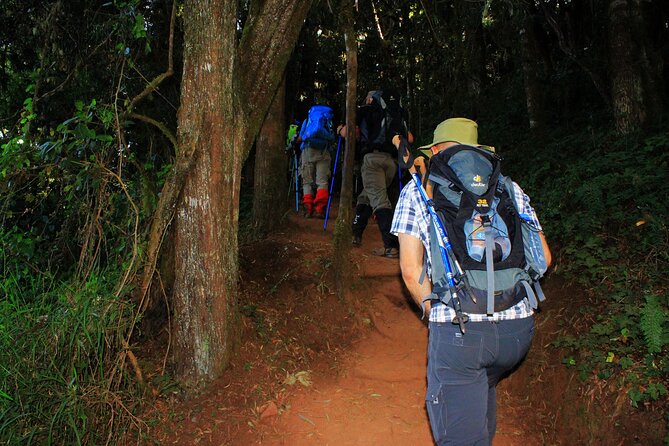
Your first walk takes about three to four hours through thick rainforest to Mti Mkubwa, also called Big Tree Camp. This is a gentle way to begin, with a chance of seeing colobus monkeys among the trees.
The day reaches roughly three hours of hiking in the shorter estimate, so it is not an exhausting opening. Still, the road transfer and park entry process add to the day. Keep your daypack organized, carry water, and use the stop for any last-minute items you genuinely need.
This lower section is valuable because it lets you settle into the walking rhythm. You are not thrown straight into bare rock and thin air. You begin among trees, humidity, and wildlife, then gradually leave the forest behind.
Day 2: Mti Mkubwa to Shira 1 Camp
The second day takes you from about 9,498 feet to 11,500 feet. The hike covers approximately 8 kilometers and takes five to six hours according to the itinerary, although the listed stop duration is about four hours.
The forest gives way to tall savannah grasses, heather, and volcanic rock covered with lichen. You cross streams and climb toward Shira Ridge before dropping gently to Shira 1 Camp.
This is the first day when the scale of Kilimanjaro begins to feel clear. Across the Shira Plateau, you get your first view of Kibo, the mountain’s main summit cone. The walking is not described as technical, but the altitude begins to matter. Go slowly, drink the supplied water, and do not treat the relatively open trail as a reason to hurry.
The changing plant life is one of Lemosho’s main rewards. In a single day, you leave the enclosed rainforest and enter a broad, open high-altitude zone with volcanic ground underfoot.
Day 3: Shira Plateau and Lent Hills
Day 3 is designed for acclimatization. You explore the Shira Plateau, walking gently across moorland meadows toward Shira 2 Camp before turning toward Moir Hut at the base of Lent Hills.
The route covers about 11 kilometers and rises from 11,500 feet to 13,800 feet. Hiking time is listed at five to seven hours. The altitude, rather than the distance alone, makes this a day to take seriously.
The itinerary allows several walks around Lent Hills, making the day more flexible than a simple camp-to-camp transfer. You can use the time to get used to the thinner air without immediately facing the steepest sections of the mountain.
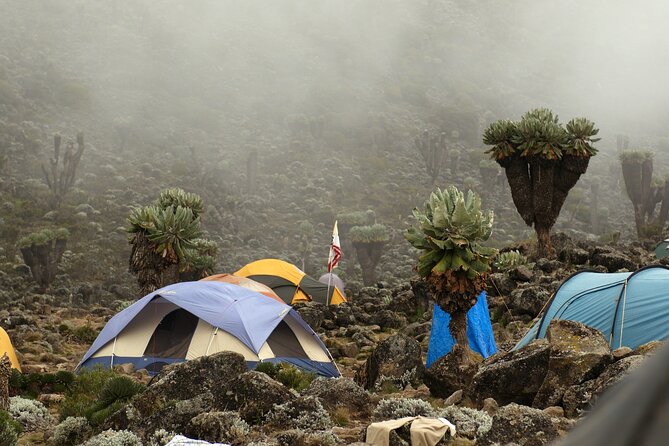
Shira Plateau is described as one of the highest plateaus on earth. That is the day’s special feature, but it is also a potential challenge. You are already high, and the open terrain can feel exposed. Keep warm during stops and follow the guide’s pace rather than comparing yourself with stronger walkers in the group.
I especially like this day in the overall plan. A rushed seven-day schedule may appeal to people watching their budget or calendar, but the eighth day gives you more room to adjust before the mountain becomes truly demanding.
A few more options to weigh up in Arusha
- Balloon Safari & Bush Breakfast in Serengeti – Miracle Experience
★ 5.0 · 1,646 reviews - Tanzania Classic – 7 Days
★ 5.0 · 1,151 reviews - 4 Days Group Camping Safari
★ 5.0 · 1,101 reviews - 5 Days Group Camping Safari
★ 5.0 · 730 reviews
Day 4: Moir Hut, Lava Tower, and Barranco Camp
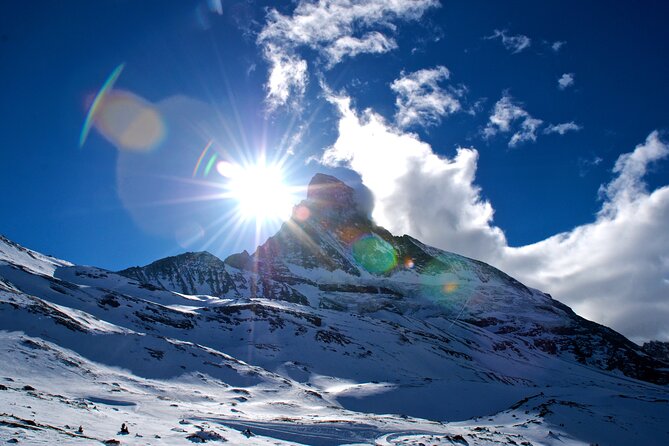
This is one of the most useful days on the route. You climb from Moir Hut at about 13,800 feet to Lava Tower at approximately 15,190 feet, then descend to Barranco Camp at about 13,044 feet.
The first section covers around 7 kilometers and takes three to four hours. Lava Tower is a roughly 300-foot volcanic rock formation, and it provides a clear high point for the day. You then descend another 3 kilometers to Barranco Camp, taking about one to two hours.
The key idea is climb high, sleep lower. You spend time at a greater altitude, then return to a lower camp for the night. That makes this more than a scenic walk. It is part of the route’s acclimatization strategy.
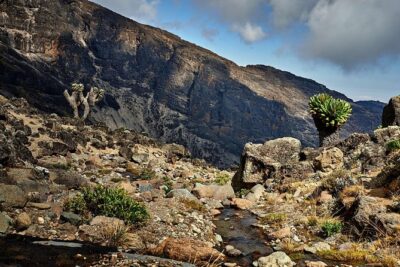
After Lava Tower, the trail passes through the Senecio Forest, a strange and memorable area of giant plants and volcanic surroundings. The day begins and ends at similar heights, but it is still a demanding six-hour outing.
You may feel tired by the time you reach Barranco. That is normal for this stage. Eat well, drink steadily, and save energy for the next morning, when the Barranco Wall becomes the main feature.
Day 5: Climbing the Barranco Wall to Karanga
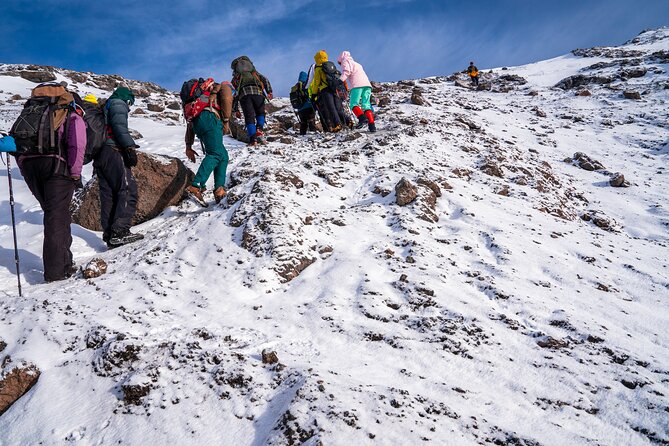
Day 5 is shorter, covering about 5 kilometers in two to three hours. That shorter schedule is welcome after the previous day and gives you another chance to adjust before going higher.
You descend into a ravine and reach the base of the Great Barranco Wall. The wall rises nearly 900 feet, but the route is described as non-technical. You do not need climbing equipment for this section, though it is steep and requires careful foot placement.
At the top, the path crosses hills and valleys before dropping into Karanga Valley. One final steep climb brings you to Karanga Camp at about 13,106 feet.
This is a good example of why the route should not be judged by distance alone. Five kilometers sounds easy at home. On Kilimanjaro, a steep wall, high altitude, uneven volcanic ground, and repeated climbs can make a short day plenty of work.
The practical advantage is that you should have time to rest at camp. Use it. The next day takes you to Barafu Camp, and the summit attempt follows soon after.
Day 6: Karanga Camp to Barafu Camp
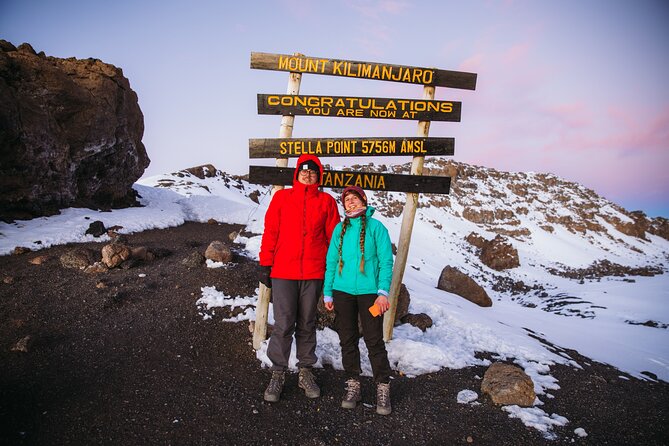
The walk from Karanga to Barafu is only about 4 kilometers and takes one to two hours. You climb from approximately 13,106 feet to 15,331 feet through alpine desert.
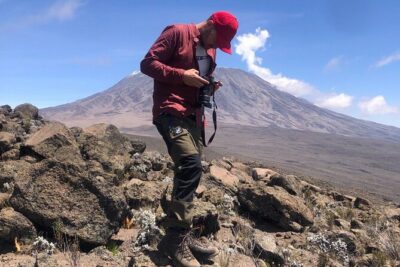
The trail reaches the junction with the Mweka Trail, then continues over rocky ground toward Barafu Hut. By this point, you have completed the Southern Circuit, which gives you views of Kibo and Mawenzi from several angles.
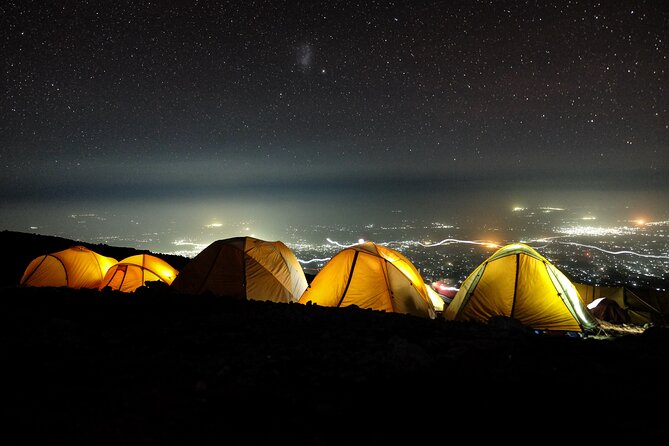
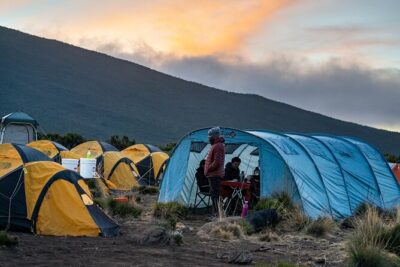
Barafu is the preparation camp for summit day. The itinerary calls for an early dinner and rest, and that is sensible. You will start walking around midnight, so this is not the evening for a long camp conversation or a heroic attempt to stay awake.
The short hiking time does not mean Day 6 is unimportant. You are sleeping high, and the cold, dry conditions can be uncomfortable. Keep the clothing you need for the summit close at hand, and listen carefully to the guide’s instructions about the overnight start.
Day 7: Barafu Camp to Uhuru Peak and Mweka Camp
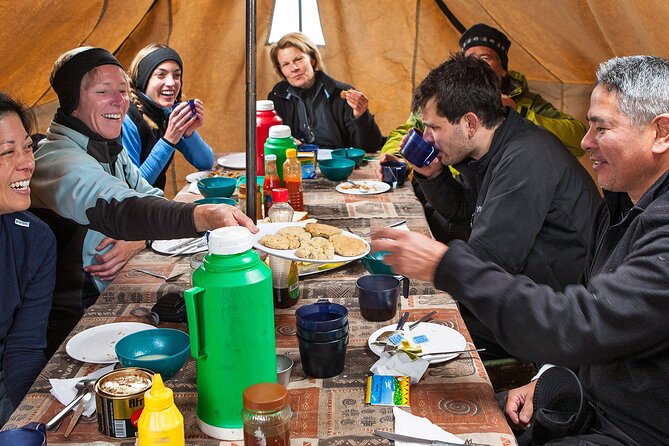
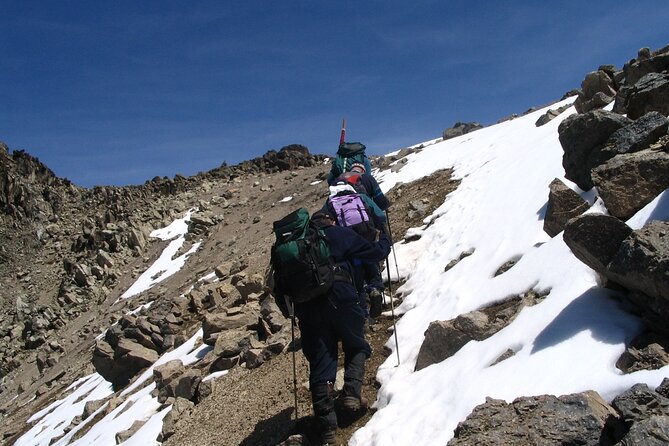
Summit day is the longest and hardest part of the trek. You leave around midnight and climb from Barafu Camp at 15,331 feet to Uhuru Peak at 19,341 feet. The ascent covers about 6 kilometers and takes six to eight hours.
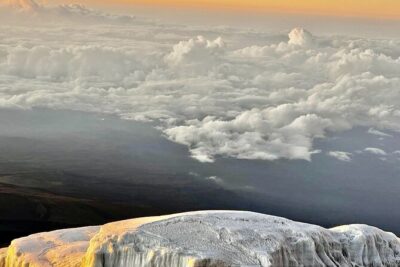
You walk in darkness for several hours, taking frequent short breaks. Wind and cold can be severe at this height, and the mental strain is as real as the physical effort. Near Stella Point, at about 18,900 feet, the sunrise over Mawenzi is the major reward before you continue toward Uhuru Peak.
Reaching the summit is only half the day. Afterward, you descend 12 kilometers to Mweka Camp at about 10,065 feet, taking another four to six hours. The route shifts from Arctic conditions near the top back to rainforest lower down.
That long descent is easy to underestimate. Your legs may be tired, and the loose volcanic surface can make every step awkward. Take care of your feet, eat when food is offered, and stay close to the group. The guide’s pacing is particularly important here.
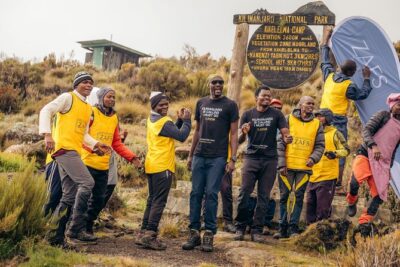
The provided reviews repeatedly praise John Danford, the chief head guide, for steady pacing and encouragement during the climb. Those comments line up with what matters most on summit night: a guide who monitors the group, understands the mountain, and keeps morale from collapsing when the trail feels endless.
Day 8: Mweka Camp to the Gate
The final walk takes you from Mweka Camp down to Mweka Gate. The distance is about 10 kilometers, with two to three hours of hiking through rainforest.
Lower sections can be wet and muddy, so your footwear and rain protection still matter on the last day. At Mweka Gate, you collect summit certificates, then continue for about another hour to Mweka Village, where a vehicle takes you back to your hotel in Moshi.
The return vehicle is a useful part of the plan. After seven days of walking, you will likely be ready for a proper shower, a bed, and a quiet meal rather than another long transfer on foot.
What the $2,840 Price Covers
The $2,840 per-person price includes all fees and taxes, clean water, camping gear, a sleeping bag, and seven breakfasts, seven lunches, and seven dinners. Pickup is offered, and the trip ends back at the meeting point after the return to the hotel area.
That package has good practical value because camping equipment and food are not small extras on a high mountain. You also avoid arranging park entry and the basic camp operation yourself.
The price does not include tips, travel insurance, visas, or flights. Those costs can change your final budget considerably, especially if you are flying from outside Tanzania. Set aside money for the crew tip separately, and do not treat insurance as optional for a high-altitude trek.
The company’s paid KPAP membership is another useful point to weigh. Ethical porter treatment affects the people who make the climb possible, and a formal porter-support program gives you a clearer standard to ask about before you go.
Food, Water, Gear, and Camp Life
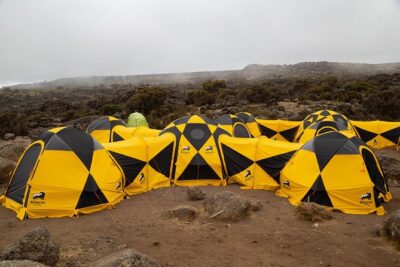
Clean water and all meals are included, so you do not need to build your own mountain food plan. The supplied information does not specify menus, tent style, toilet arrangements, or whether extra snacks are provided, so ask those questions before departure.
Camping gear and a sleeping bag are included. You should still confirm exactly what the gear package contains and bring personal clothing suitable for rainforest, cold high camp conditions, and summit night.
The five climate zones make packing more complicated than the moderate fitness label suggests. You need to prepare for wet forest, warmer lower sections, cold alpine desert, and severe cold near the summit.
Who Should Book This Trek?
I would recommend this route to you if you want a serious Kilimanjaro attempt with more acclimatization time and a changing route. It suits people who can handle several hours of walking on most days, plus one very long summit day.
The private format is useful for friends, couples, families with suitable fitness, or a small group that wants to move together. The reviews include strong praise from friends, university students, and people with limited high-altitude trekking experience who were encouraged to choose the longer route.
I would hesitate if you have only a short holiday window, dislike camping, or expect the price to cover every Tanzania travel expense. The trek is also not a casual first hike. Moderate fitness is required, and the company’s own advice to use the longer route for acclimatization should be taken seriously.
African Polecat Safaris has a listed rating of 5 out of 5 from 22 reviews, with 100 percent recommendation. The most consistent praise centers on guide John Danford, the crew’s teamwork, food, tents, and the company’s fast communication through James during trip planning.
Should You Book the 8-Day Lemosho Route?
Book it if your priority is giving yourself a sensible amount of time to adjust before summit night. The Shira Plateau, Lava Tower descent, Barranco Wall, and sunrise near Stella Point create a strong progression, and the included water, meals, gear, and sleeping bag make the $2,840 price easier to justify.
Before paying, confirm the exact pickup location, group size, equipment list, tipping expectations, porter arrangements, and what happens if someone cannot continue. Also arrange your own travel insurance, visa, flights, and personal mountain clothing.
You can cancel for a full refund if you do so at least 24 hours before the experience start time. Changes or cancellations within 24 hours are not accepted for a refund. If you want Kilimanjaro with a slower build and a private group, this is a sensible route to consider.
FAQ
How long is the Kilimanjaro Lemosho Route experience?
The trek lasts approximately eight days, including the final descent from Mweka Camp to Mweka Gate and onward transport to the hotel area in Moshi.
What time does the experience start?
The listed start time is 8:00 am. On summit day, however, the group begins the climb around midnight from Barafu Camp.
Is pickup available?
Yes. A driver and guide pick you up after breakfast at the start, and a vehicle meets the group at Mweka Village after the final descent.
Is this a private tour?
Yes. Only your group participates in the activity.
What is included in the price?
The price includes all fees and taxes, clean water, camping gear, a sleeping bag, and seven breakfasts, seven lunches, and seven dinners.
What is not included?
Tips, travel insurance, visas, and flights are not included.
What fitness level is required?
The activity states that participants should have a moderate physical fitness level. The summit day is the most demanding section, with a midnight start, a six to eight-hour climb to Uhuru Peak, and a further four to six-hour descent to Mweka Camp.
Just added in Arusha
- Safari “Kifaru” – 5 days in the most famous Parks in the world★ 5.0 · 4 reviews
- Saadani Day Trip★ 5.0 · 13 reviews
- 3 Days Tanzania Short and Spicy★ 5.0 · 6 reviews
- 5 Day Tanzania Safari Camping Adventure Private Tour★ 5.0 · 2 reviews
- Day Trip to Ngorongoro Crater from Arusha★ 5.0 · 1 review
- SERENGETI NATIONAL PARK Tour★ 4.5 · 5 reviews
- 3 Days Serengeti Park & Ngorongoro Crater Adventure Safari★ 5.0 · 8 reviews
- 6 Days Tanzania Bush Experience Safari★ 5.0 · 6 reviews
Lemosho Route Climbs, compared.
8-Day Small-group Lemosho Kilimanjaro Summit Trekking
Read our review →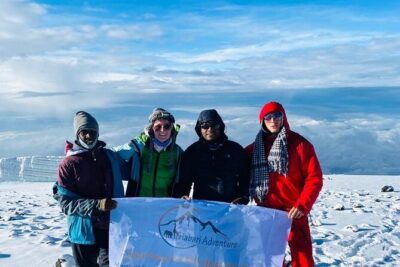
Climbing Kilimanjaro through 8 days Lemosho Route
Read our review →Browse the lists this tour appears in