
Reviewed · LEMOSHO ROUTE CLIMBS
Kilimanjaro Lemosho Route
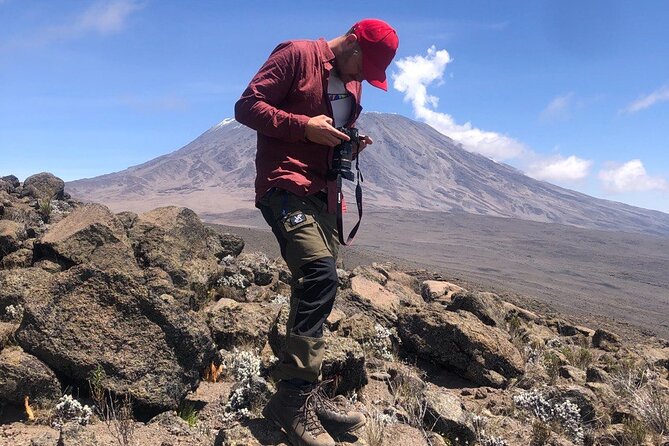
Kilimanjaro rewards patience. Zara Tanzania Adventures’ 8-day Lemosho trek gives you a gradual route through forest, moorland, high desert, and glacier country before the final push to Uhuru Peak. I like the steady acclimatization plan and the strong support from guides, porters, and cooks. I also like that this is a private trip for your own group of up to five, not a large mixed departure.
The main caution is simple: this is a serious climb, not a sightseeing walk. The summit day can last more than 15 hours, and the published schedule contains a small camp-label inconsistency around Shira Camp, so I would confirm the exact overnight stops before paying.
In This Review
- What makes this Kilimanjaro trek worth considering
- From Moshi to Mti Mkubwa Camp at 2,780 meters
- Shira’s open country and the first big views
- Shira Camp and a useful acclimatization pause
- Lava Tower at 4,630 meters, then down to Barranco
- Barranco Wall and the Karanga Valley
- Barafu Camp and preparing for the hardest night
- Summit night: Stella Point, Uhuru Peak, and Mweka
- Mweka Gate and a hot shower back in Moshi
- What the $2,890 price means for your group
- Food, camp life, and the human side of the trek
- Who should book this route?
- Booking details worth checking first
- Should you book Zara’s Lemosho trek?
- FAQ
- How long is the Kilimanjaro Lemosho trek?
- Where does the trek take place?
- How much does the experience cost?
- Is this a private tour?
- What level of fitness do I need?
- What time does the summit attempt begin?
- What is the highest point reached?
- Are meals provided during the trek?
- Can I cancel for a full refund?
What makes this Kilimanjaro trek worth considering
- The Lemosho approach starts in forest: You enter through the western side of Kilimanjaro, with a quieter opening section and a clear change in plant life as you climb.
- Eight days gives your body more time: The route rises gradually, then includes an acclimatization hike toward Barafu Camp before summit night.
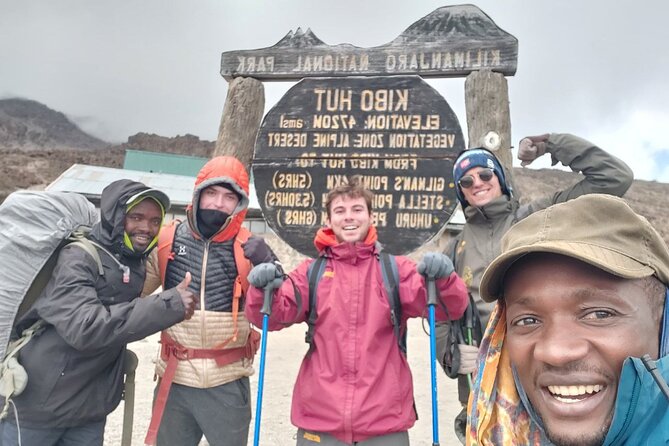
- The Lava Tower and Barranco descent do useful work: You climb high to 4,630 meters, then sleep lower at Barranco, a classic high-altitude adjustment.
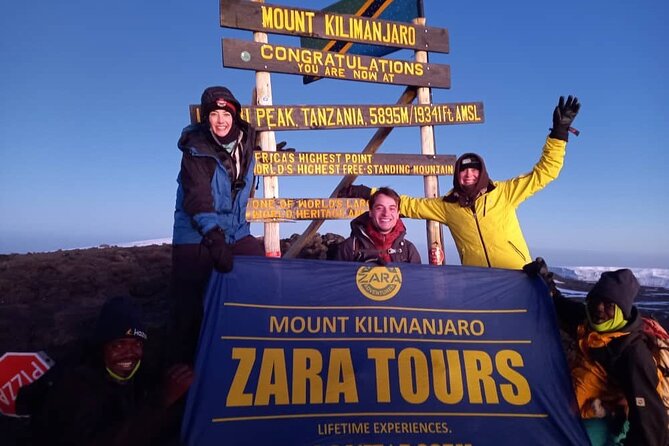
- The summit attempt is a true endurance day: You leave around 11:30 PM, reach Stella Point, continue to Uhuru Peak at 5,895 meters, then descend to Mweka Camp.
- Zara’s staff receive consistent praise: Guides including Festo, Nechi Teti, John, Said, Augustino, and Captain G are singled out for care, organization, and encouragement.
- The $2,890 group price can be good value: For up to five people, the per-person cost drops sharply, though you should confirm exactly what the price includes.
From Moshi to Mti Mkubwa Camp at 2,780 meters
Your first day begins with breakfast and a guide briefing at Springlands Hotel, followed by the drive toward Lemosho Park Gate. The transfer takes about 1.5 hours, and registration at Londorossi Gate comes before you begin walking.
The opening hike runs through forest to Mti Mkubwa Camp, at about 2,750 to 2,780 meters. The stated distance is 7 kilometers, with roughly five hours allowed for the day. The walking itself is not the hardest part. The change from road travel to mountain routine is the bigger adjustment.
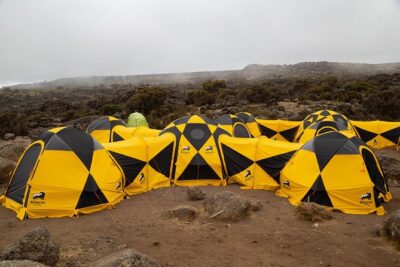
I like this first camp because it gives you a gentle start. Porters move ahead to set up the tents, and the chef prepares lunch. After eating, you have time to rest before dinner and an evening briefing.
That support matters. You carry a daypack, while the porters handle the camping equipment and other group supplies. Several people specifically praise the porters for setting up camp before arrival and keeping the trek moving. Still, remember that their work does not make the mountain easy. You remain responsible for your own pace, clothing, water, and health.
More Lemosho Route climbs:
- Kilimanjaro climb by Lemosho Route (7-day)
★ 5.0 · 651 reviews - Kilimanjaro Climbing Lemosho Route 8 Days.
★ 5.0 · 186 reviews - Kilimanjaro climb, Lemosho Route (8-day)
★ 5.0 · 148 reviews
Shira’s open country and the first big views
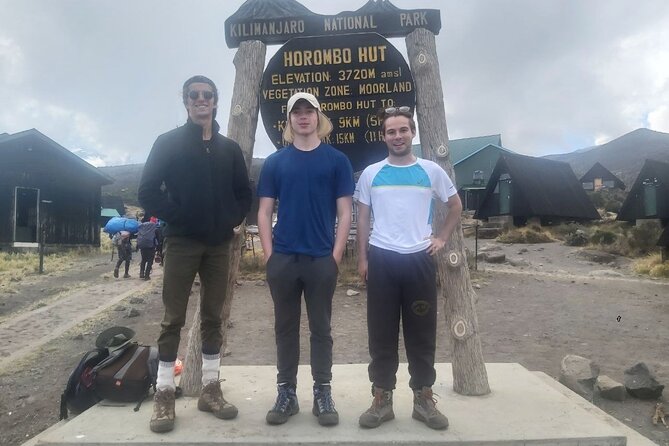
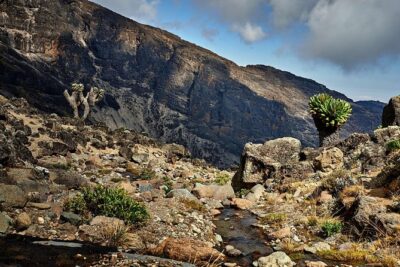
Day two takes you from Mti Mkubwa toward Shira Camp, climbing from about 2,780 to 3,840 meters. The route changes quickly from forest to moorland, with wider views toward Kibo, Kilimanjaro’s highest cone.
The published schedule describes a 12-kilometer day lasting six to seven hours. You are expected to stop at Shira Camp 1 for a hot lunch, then continue for another two or three hours to Shira Camp 2.
Here, the route becomes more exposed. You get better views, but you also feel the altitude more clearly. This is where a slow pace matters. Follow your guide’s rhythm rather than trying to prove your fitness.
There is a labeling issue in the schedule: the next day is also described as moving from Shira 1 to Shira 2, even though Day two already places you at Shira 2. That could be a simple editing mistake, but I would ask Zara to clarify the camp sequence. It is a small point, yet clear information is useful when you are planning clothing, batteries, and expectations for each night.
Shira Camp and a useful acclimatization pause
Day three is listed as a short hike of about 5 kilometers, with three to four hours of walking between elevations of roughly 3,500 and 3,840 meters. The description repeats the Shira 1 to Shira 2 move, so confirm the exact route with the company.
The important point is that this is a lighter day. You get time to eat lunch, rest at camp, and listen to a briefing about the next stage. On a high mountain, an easier day is not wasted time. It helps you arrive at the more demanding sections with some energy left.
The Shira area is also one of the best places to appreciate the route’s changing plant life and broad mountain views. One of the trek’s pleasures is the change in scenery from thick forest to open high country. The mountain does not offer the same view every day, and that variety helps keep the long walk interesting.
Lava Tower at 4,630 meters, then down to Barranco
Day four is the key acclimatization day. You climb from around 3,840 meters toward Lava Tower at 4,630 meters, crossing rocky, semi-desert terrain. The distance is about 11 kilometers, and the day is expected to take seven to eight hours.
The plan is deliberately demanding. You go high, eat lunch, then descend about 680 meters to Barranco Camp at approximately 3,960 meters. This is a useful mountain strategy because your body experiences the higher altitude before you sleep lower.
The approach to Lava Tower may test your endurance. The ground is rocky, the air is thinner, and the scenery is spare. Take the day slowly. If you develop symptoms of altitude illness, tell your guide at once rather than trying to hide them.
The descent to Barranco is one of the day’s rewards. The route offers views toward the Western Breach, and the evening light can be memorable. Barranco Camp is also where the mountain begins to feel more dramatic. You are no longer simply walking uphill through changing vegetation. You are now surrounded by high volcanic terrain.
A few more options to weigh up in Moshi
- Safari Serengeti And Ngorongoro
★ 5.0 · 288 reviews - Kilimanjaro climb, Machame Route (7-day)
★ 5.0 · 262 reviews - Climbing Kilimanjaro – Machame Route
★ 5.0 · 170 reviews - Climbing Kilimanjaro through 7 days Machame Route
★ 5.0 · 151 reviews
Barranco Wall and the Karanga Valley
Day five covers about 5 kilometers and takes around five hours. The main feature is the Barranco Wall, a steep section that can look intimidating from camp.
You do not need technical climbing equipment for the route described here, but the wall does require careful footwork and confidence. Your guide will set the pace. Keep your hands free where possible, and avoid rushing people ahead of you.
After the wall, you descend into the Karanga Valley before climbing again to Karanga Camp at about 4,035 meters. The route has more plant life than the high desert around Lava Tower, and the valley gives the day a welcome change of mood.
Zara’s plan includes an acclimatization hike toward Barafu Camp, climbing about 200 meters before returning to Karanga. That extra walk is valuable because it lets you reach higher ground without sleeping there yet. After dinner, your guide briefs you on the next day and the summit attempt.
Barafu Camp and preparing for the hardest night
Day six takes you from Karanga to Barafu Camp, rising from approximately 4,035 to 4,640 meters. The distance is around 5 kilometers, with about five hours of walking.
This is a shorter day on paper, but the altitude makes it feel harder than the distance suggests. The terrain is rocky, and the air is thin. Once at Barafu, the porters set up camp and the chef prepares lunch. You then rest until dinner and receive a detailed briefing about the summit route, safety, and timing.
The summit attempt begins late at night, so rest is the main task. Do not spend this afternoon treating Barafu like a photo stop. Organize your warm layers, headlamp, water, and snacks, then try to sleep.
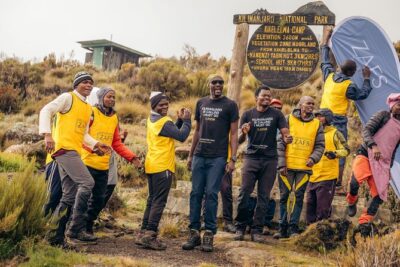
The support team is a major part of this experience. People who climbed with Zara repeatedly praise the guides and kitchen staff, with particular appreciation for Festo, Nechi Teti, John, Said, Augustino, and Captain G. Names and group assignments can change, but the pattern is clear: guide care and steady encouragement are central to the company’s appeal.
Summit night: Stella Point, Uhuru Peak, and Mweka
The final climb begins at about 11:30 PM with tea and biscuits. You walk northwest through scree toward Stella Point on the crater rim, at roughly 5,685 meters.
The climb to Stella Point takes about six hours and is often the toughest mental section. You move in darkness, the slope feels endless, and every step costs more than it did lower down. This is where a patient guide and a well-managed pace can make a real difference.
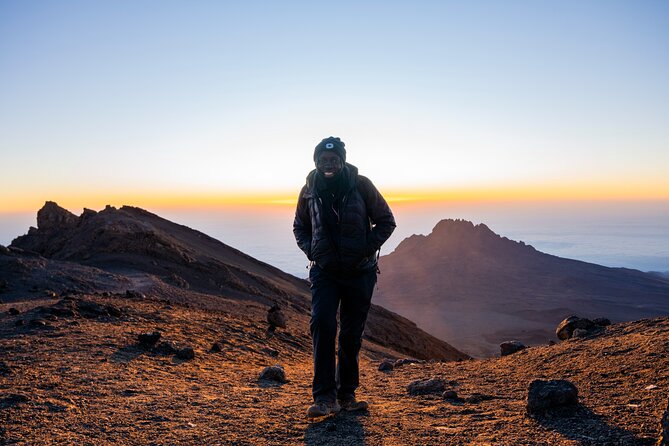
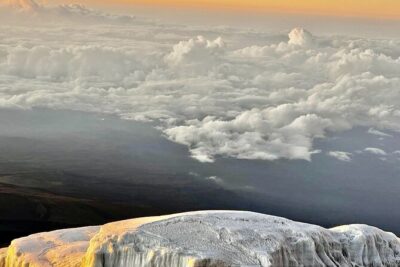
At Stella Point, you may see sunrise if the weather allows. From there, the route continues for about two hours across snow-covered ground to Uhuru Peak, at 5,895 meters. The summit is the emotional high point, but it is not a place to linger for a long time. Cold, fatigue, and altitude remain serious concerns.
The schedule gives a total walking distance of 17 kilometers and more than 15 hours for the climb and descent. After Uhuru Peak, you return to Barafu for a short rest, then continue down to Mweka Camp for dinner and sleep.
That final descent is easy to underestimate. Your legs have already worked hard, and loose ground can make downhill walking tiring. Save some energy for it.
Mweka Gate and a hot shower back in Moshi
On day eight, you descend from Mweka Camp at about 3,090 meters to Mweka Gate at approximately 1,650 meters. The distance is around 10 kilometers, with four to five hours of walking.
After the gate, you are driven back to Springlands Hotel. A hot lunch and shower are waiting there, which will feel less like a minor amenity and more like a small celebration.
The company also offers a safari briefing after you have rested. That may be useful if you plan to continue to Tanzania’s wildlife areas, but it is an optional extension rather than part of the 8-day mountain program.
What the $2,890 price means for your group
The listed price is $2,890 per group of up to five people. If five people share the booking, the headline cost works out to about $578 per person. For two people, it works out to about $1,445 each, and a solo booking would carry the full group price if the rate is applied exactly as stated.
That makes group size important. I would not judge the value from the total alone. Ask Zara to confirm what is included, especially park fees, transport, camping equipment, meals, guide services, porter support, hotel arrangements, and any required transfers. The supplied details confirm tents, porters, a chef, meals on the mountain, and transport back to Springlands, but they do not provide a complete inclusions list.
The price may be attractive for a private five-person group, particularly because the route lasts eight days and includes a structured acclimatization plan. If your group is smaller, compare the per-person cost with other Lemosho options before booking.
Food, camp life, and the human side of the trek
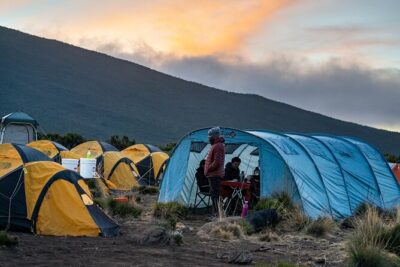
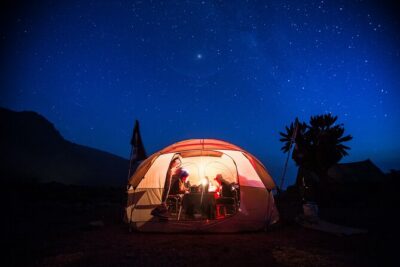
You should expect a practical camp routine: breakfast, walking, lunch prepared by the chef, rest, dinner, and an evening briefing. The kitchen team receives strong praise, especially for fresh food and meals that help climbers keep going.
Camp life is not luxurious. The information provided does not promise private tents, showers on the mountain, or a specific toilet arrangement, so ask about those details before departure. What it does promise is a functioning support system, with porters setting up camp and a chef preparing meals.
The human side matters just as much as the route. The strongest praise centers on kindness, organization, and safety. One important practical point is tipping. It is encouraged at the end, and special envelopes are available at the hotel. Budget for this separately and ask Zara for current guidance on fair amounts.
Kilimanjaro’s environmental pressure also deserves attention. One account raises concern about litter on the mountain. Carry your own waste, avoid disposable packaging when possible, and ask how Zara handles rubbish and porter welfare. A good trekking company should be willing to answer plainly.
Who should book this route?
I would consider this trip if you want a full Kilimanjaro experience with several days for acclimatization, strong camp support, and a private group format. It suits people with moderate physical fitness who can manage long walking days and a very demanding summit night.
I would not choose it if you want a relaxed holiday with only a little walking. The summit day alone can last more than 15 hours, and altitude can affect even fit people. You also need to be comfortable sleeping in tents and following a guide’s safety decisions.
The route is a good fit for a group of friends or family members who want to share the experience privately. It may also suit a special occasion. One climber reached Uhuru Peak on a 40th birthday and became engaged at the summit, though the mountain will not care about your calendar.
Booking details worth checking first
Pickup is offered, and the experience has a mobile ticket. The meeting information lists Kilimanjaro Airport and a start time of 12:00 AM, while the day-by-day plan begins with breakfast and a briefing at Springlands Hotel.
That difference deserves a direct question before you book. Confirm where you will actually meet, what time the first transfer leaves, and whether an airport pickup is included or simply listed as a meeting point.
Free cancellation is available if you cancel at least 24 hours before the local start time. Changes or cancellations inside that 24-hour window are not accepted for a refund.
Should you book Zara’s Lemosho trek?
I would book this trek if the eight-day schedule, private group price, and high level of staff support match what you want. The 4.9 rating from 71 reviews and 97 percent recommendation figure point to a consistently positive experience, especially around guides, porters, food, organization, and summit support.
Before booking, clarify the Shira Camp sequence, the airport and hotel meeting details, and the full list of inclusions. If Zara answers those points clearly, this looks like a well-supported way to approach Kilimanjaro, with enough route variety to make the climb feel like a real journey rather than a long staircase.
FAQ
How long is the Kilimanjaro Lemosho trek?
The experience lasts approximately eight days, including the approach, summit attempt, descent, and return to Springlands Hotel.
Where does the trek take place?
The trek takes place on Mount Kilimanjaro in Tanzania, beginning through the Lemosho area and ending at Mweka Gate.
How much does the experience cost?
The listed price is $2,890 per group of up to five people.
Is this a private tour?
Yes. Only your group participates, with a maximum group size of five stated in the tour details.
What level of fitness do I need?
A moderate level of physical fitness is required. The trek includes several long walking days and a summit day lasting more than 15 hours.
What time does the summit attempt begin?
The summit ascent begins around 11:30 PM from Barafu Camp.
What is the highest point reached?
The route reaches Uhuru Peak at 5,895 meters.
Are meals provided during the trek?
The itinerary describes meals prepared by an on-mountain chef, including lunch and dinner at camp and tea with biscuits before the summit ascent.
Can I cancel for a full refund?
Yes, if you cancel at least 24 hours before the experience start time. Cancellations or changes made less than 24 hours before the local start time are not refunded or accepted.
Just added in Moshi
- THE BEST 2 DAYS ON TREK – MARANGU ROUTE TOUR ADVENTURES★ 5.0 · 1 review
- Mount Kilimanjaro National Park Day Trip★ 5.0 · 7 reviews
- Mount Kilimanjaro Climbing in Tanzania Full-Day Trip★ 5.0 · 1 review
- Mount Kilimanjaro Day Hike – All-Inclusive, No Hidden Fees★ 4.0 · 7 reviews
- Mount Kilimanjaro Trekking Tour – Climb with Local Guides★ 5.0 · 1 review
- Mount Kilimanjaro: 7 Days Hike Lemosho Route★ 5.0 · 1 review
- Moshi:Chemka Hot Springs, Materuni Waterfalls & Coffee Tour★ 5.0 · 1 review
- Moshi/Arusha kikuletwa Hot Springs Tour★ 5.0 · 1 review
Lemosho Route Climbs, compared.
8-Day Small-group Lemosho Kilimanjaro Summit Trekking
Read our review →
Climbing Kilimanjaro through 8 days Lemosho Route
Read our review →
Browse the lists this tour appears in