
Reviewed · LEMOSHO ROUTE CLIMBS
8 Days Lemosho Route Kilimanjaro Trekking
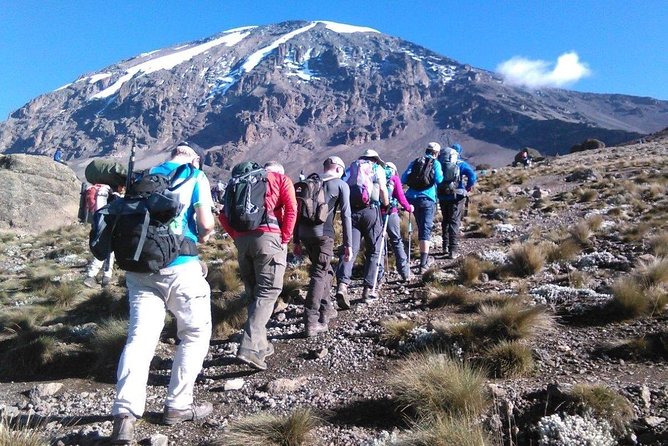
Kilimanjaro rewards patience, not speed. This 8-day Lemosho trek gives you a scenic approach through rainforest, moorland, high desert, and glacier country before the summit push. I especially like the quiet opening days and the carefully spaced acclimatization stops. The route also includes the famous Barranco Wall and a sunrise attempt on Uhuru Peak.
The price of $2,700.52 per person is strong value for a private climb that includes porters, a guide, camping equipment, park-related fees, rescue fees, tents, and meals. I also like that Mafie Adventures is a local Tanzanian company, with direct communication through owner Erastus and a crew that includes guides such as Oliver and John. The main drawback is the physical demand: summit day is long, cold, and tiring, while sleeping bags, climbing gear, tips, travel insurance, visas, and pre- and post-climb lodging cost extra.
In This Review
- Key things to know before choosing Lemosho
- Why the Lemosho Route earns its reputation
- Day 1: Arusha to the Lemosho rainforest
- Day 2: Heather and volcanic rock on Shira Ridge
- Day 3: Shira Plateau and Moir Hut
- Day 4: Lava Tower, Arrow Glacier junction, and Barranco
- Day 5: The Barranco Wall and Karanga Valley
- Day 6: Barafu Camp and the final rest
- Day 7: Stella Point, Uhuru Peak, and Mweka
- Day 8: Mweka Gate, certificates, and the return to Arusha
- What the $2,700.52 price covers
- Guides, crew, and communication
- Who should choose this climb?
- Should you book the Mafie Adventures Lemosho trek?
- FAQ
- Where does the Kilimanjaro trek begin?
- How long is the Lemosho trek?
- Is this a private group activity?
- What habitats do you cross?
- Is camping equipment included?
- Are meals included?
- Does the price include a guide and porters?
- Are flights and accommodation before or after the trek included?
Key things to know before choosing Lemosho
- Londorossi begins the quiet side of Kilimanjaro: The first walking days have fewer people before Lemosho joins the Machame route.
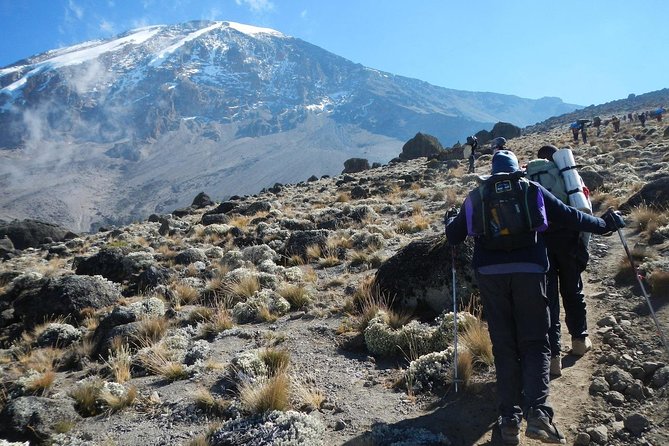
- The scenery changes almost every day: You move from rainforest to heather, the Shira Plateau, semi-desert, alpine desert, stone scree, and an ice-capped summit.
- The route uses altitude wisely: Shira 2, Moir Hut, Lava Tower, Barranco, Karanga, and Barafu create several useful acclimatization stages.
- Barranco Wall is easier than it looks for many hikers: It involves a Class 2 climb, but the route description notes that it is usually less intimidating once you begin.
- Summit day is the real test: You start around 23:30, reach Stella Point in about six hours, continue to Uhuru Peak, then descend all the way to Mweka.
- Your money supports a full mountain operation: Porters, cooking equipment, a mess tent, meals, rescue fees, taxes, and a professional guide are included.
Why the Lemosho Route earns its reputation
I like Lemosho because it does not rush you straight toward the summit. The route begins on Kilimanjaro’s western side, where the forest feels remote and the first camps are reached on foot through thick vegetation. After that, the route opens onto the Shira Plateau, one of the highest plateaus on earth.
The route later joins the southern circuit, sharing some of the viewpoints and camps associated with Machame. That gives you the best of both sides: a quieter start, then access to the dramatic southern approach. Crowds are generally lower early on, though you should expect more people once the routes merge.
Eight days is also a sensible length for a serious attempt at the summit. A shorter schedule may cost less or save time, but it gives your body less chance to adjust to altitude. Here, the route repeatedly climbs and descends, which can feel frustrating on tired legs but serves a useful purpose.
Mafie Adventures runs this as a private activity, so only your own group participates. That can make the walking pace and daily routine easier to manage than a large mixed group. Direct contact with Erastus, the owner and organizer, is another practical advantage. He handled arrangements by email and WhatsApp and helped adjust plans, including changes made close to departure.
More Lemosho Route climbs:
- 8-Day Small-group Lemosho Kilimanjaro Summit Trekking
★ 5.0 · 186 reviews - 8 Days Mountain Kilimanjaro Lemosho Route
★ 5.0 · 22 reviews - 7 Day Kilimanjaro Climb Lemosho Route & 2 Day Safari
★ 5.0 · 16 reviews
Day 1: Arusha to the Lemosho rainforest
Your day begins at 6:00 am in Arusha. After breakfast at your hotel, your guide briefs you before the roughly two-hour drive to Londorossi Park Gate. Arusha sits at about 1,400 meters, while the gate is around 2,100 meters, so you gain altitude before taking your first steps.
Entry formalities are completed in the village near the gate. You then continue by vehicle for about another hour to the Lemosho trailhead. This extra transfer is worth understanding before you book: the walking does not begin immediately after leaving Arusha.
After lunch at the trailhead, you enter undisturbed rainforest. The first walk covers about 6 kilometers and takes roughly three to four hours. The habitat is cool, green, and shaded, with the trail winding toward the first campsite.
This is a gentle start compared with the days ahead, but do not treat it as a casual stroll. You are carrying personal gear, and the early forest walk introduces the rhythm of the trek: breakfast, a steady hike, camp arrival, dinner, and rest.
Day 2: Heather and volcanic rock on Shira Ridge
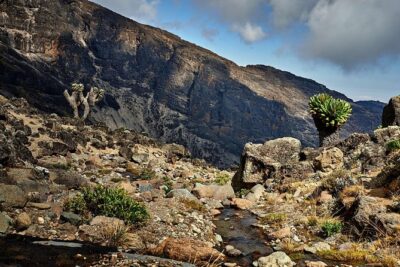
Day two covers about 8 kilometers in roughly five to five and a half hours. The forest gives way to moorland, with tall grasses, heather, volcanic rock, and lichen hanging from the vegetation.
I like this day because you can feel Kilimanjaro changing around you. The trail rises through rolling ground and crosses several streams before reaching Shira Ridge. From there, it drops gently to Shira 1 Camp.
The view toward Kibo, Kilimanjaro’s main volcanic cone, is one of the first major rewards of the route. You are no longer enclosed by trees. The mountain begins to feel larger and more present, even though the walking remains manageable.
The change in habitat also brings more exposure to sun, wind, and cold. Pack easy access to sun protection and warm layers, even if Arusha was hot when you left.
Day 3: Shira Plateau and Moir Hut
Day three is longer, with approximately 15 kilometers and five to seven hours of walking. You cross the Shira Plateau toward Shira 2 Camp, moving through moorland meadows beside a stream.
The day points east toward Kibo and the Northern Ice Fields. The views become wider, and the open plateau gives you a strong sense of the mountain’s scale. Shira is not simply a place to pass through. Its height makes this an important part of getting your body used to thinner air.
From Shira 2, the route continues to Moir Hut at the base of Lent Hills. This is a little-used camp, and the surrounding hills offer several possible walks. Those extra walks make Moir a useful acclimatization stop, though the 15-kilometer day can feel demanding for anyone still adjusting.
You should pay attention to how you feel here. Headaches, unusual tiredness, or a poor appetite deserve a quiet word with your guide. The point is not to prove toughness. It is to arrive at the summit attempt in the best condition possible.
More treks in Arusha:
- Mountain Kilimanjaro Day Hike
★ 5.0 · 102 reviews - Private Full Day Hiking Experience to Marangu Route
★ 5.0 · 61 reviews - 4 Days Mount Meru Trekking
★ 5.0 · 55 reviews - 4 days Best experience Kilimanjaro Hike, Serengeti &Ngorongoro
★ 5.0 · 54 reviews
Day 4: Lava Tower, Arrow Glacier junction, and Barranco
Day four is one of the most important days on the route. You hike about 7 kilometers for roughly seven hours, leaving moorland for semi-desert.
From Moir Hut, the trail climbs east along a ridge and passes a junction toward Kibo. It then turns southeast toward Lava Tower, also called the Shark’s Tooth. Shortly after the tower, another junction leads toward the Arrow Glacier at about 16,000 feet.
The route then drops to Barranco Hut at approximately 13,000 feet. You finish the day at roughly the same elevation where you began, but your body has spent hours climbing higher. That is the point. This climb-high, sleep-lower pattern gives you a valuable chance to adjust.
Lava Tower can be a tough section because the altitude is noticeable, even though the walking itself is not described as technical. The descent to Barranco may feel welcome, and the camp’s position gives you a dramatic setting beneath the mountain.
This is not the day to race. A slow, steady pace helps conserve energy and gives your guide a better chance to notice if you are struggling.
Day 5: The Barranco Wall and Karanga Valley
After breakfast, you tackle the Great Barranco Wall. The wall looks intimidating from below, but it is described as a Class 2 hike and is usually easier than first impressions suggest.
You should still expect hands-on scrambling and uneven ground. This is not a flat walking trail, but it is not presented as a technical climbing route requiring ropes. At the top, you get views of Heim Glacier and a striking position above the clouds.
The trail then rises and falls through the Karanga Valley before reaching Karanga Camp at about 3,950 meters. The day covers only about 5 kilometers and takes four to five hours, making it a shorter day by design.
That shorter schedule matters. Kilimanjaro is not won by covering the most ground every day. It is won by keeping enough energy for the summit. At Karanga, you have time to eat, wash, and rest before the final approach to Barafu.
Day 6: Barafu Camp and the final rest
Day six is short on paper: about 4 kilometers and three to four hours. The trail climbs toward Barafu Camp at approximately 4,550 meters, through alpine desert.
You pass the point where the route intersects with the Mweka Route, which you use for the final descent. Barafu is the last water stop for porters, and there is no accessible water at the camp itself. This detail matters, because the crew must carry supplies upward and you should be ready for a very basic, exposed camp.
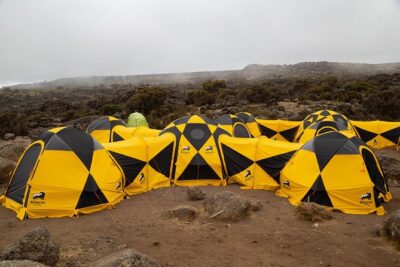
Barafu means ice in Swahili. The campsite sits on a rocky ridge and is exposed to wind and rocks. You need to know where your tent and belongings are before darkness arrives. An early dinner follows, then rest before the midnight wake-up.
This may be the hardest night for sleep. The camp is high, the setting is exposed, and the summit attempt begins around 23:30. Do not expect a normal night. The goal is to lie down, stay warm, and conserve whatever energy you can.
Day 7: Stella Point, Uhuru Peak, and Mweka
Summit day begins with tea and biscuits around 23:30. You start in darkness and climb northwest over stone scree. The ascent to Stella Point, at about 5,685 meters, takes roughly six hours.
This is usually the most mentally and physically difficult section. The ground is loose, the air is thin, and the hours before sunrise can feel very long. The slow pace used on Kilimanjaro matters here. You are not trying to finish quickly. You are trying to keep moving.
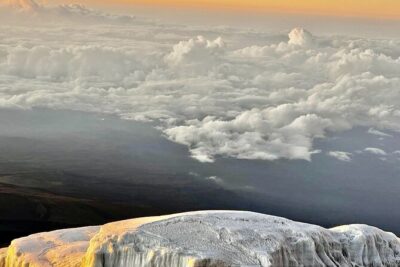
At Stella Point, you reach the crater rim and can watch the sunrise. From there, the route continues for about two hours over a snow-covered trail to Uhuru Peak, the summit at approximately 5,895 meters.
The ascent is listed at about 8 hours to Uhuru Peak, followed by a descent of seven to eight hours to Mweka. The full day includes approximately 7 kilometers upward and 23 kilometers downward. That is an enormous amount of walking, so the summit is only half the job.
The long descent is rough on tired knees and feet. Still, reaching the summit before turning down gives the day a clear purpose. You return to Mweka for the night, rather than trying to finish the mountain in one push.
Day 8: Mweka Gate, certificates, and the return to Arusha
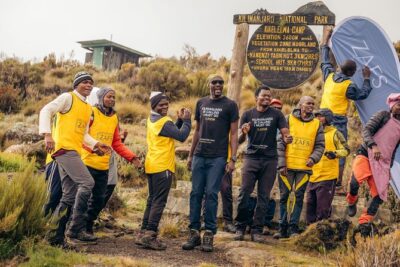
After breakfast, the crew holds a celebration with dancing and singing. This is also when you present tips to the guide, assistant guides, chef or chefs, and porters. Tips are not included in the price, so plan for this additional cost before you begin.
The walk to Mweka Gate takes about three hours through forest and covers approximately 15 kilometers. At the gate, you sign your name to receive a completion certificate.
You receive a green certificate for reaching Stella Point and a gold certificate for reaching Uhuru Peak. After the gate, the route continues down to Mweka village for about one hour and 3 kilometers.
The activity ends back at the meeting point in Arusha. Accommodation before and after the climb is not included, so you need to arrange those nights separately.
What the $2,700.52 price covers
For an eight-day private climb, the price includes a substantial mountain operation. You receive a professional guide, porterage, camping equipment, a mess tent, a mattress, cooking equipment, and all accommodation during the trek.
The package also includes park-related parking fees, rescue fees, all listed taxes and VAT, seven breakfasts, seven dinners, and eight lunches. Those inclusions reduce the number of costly extras you need to arrange on the mountain.
The value is strongest if you need a full-service climb. Hiring equipment, arranging porters, organizing food, and handling park and rescue costs separately would be complicated. The local company setup also means you communicate directly with Erastus rather than passing through a distant international office.
Still, keep a separate budget for climbing gear and a sleeping bag, both available for rent, plus bath towels, tips, travel insurance, visa fees, souvenirs, flights, and lodging before and after the trek. Government increases in taxes or park fees can also be passed on to you.
Guides, crew, and communication
The human side of this trip matters as much as the route. Erastus is the owner and organizer, and direct WhatsApp communication makes it easier to ask questions about timing, equipment, and changes.
Oliver is identified as the main guide on one of the strongest accounts of the climb, with John also praised as part of the crew. The praise focuses on friendly, capable support and smooth organization from the first contact through the mountain days.
You should still ask who will lead your specific departure, how many porters are assigned, and what equipment can be rented. The information confirms a professional guide and porterage, but it does not provide a full packing list or a detailed staff-to-climber ratio.
The private format gives you a more personal experience. It may also mean that your group needs to make decisions together, especially if one person feels unwell or wants to alter the pace.
Who should choose this climb?
I would choose this route if scenery and acclimatization matter more to you than the shortest possible climb. The route gives you rainforest, the Shira Plateau, Lava Tower, glaciers, Barranco Wall, and the summit approach in one continuous journey.
It suits people who can handle long days at altitude and who accept that the schedule is physically demanding. Most people can participate according to the supplied activity information, but you should not confuse that with an easy walk. The final two days are particularly strenuous.
This is less suitable if you need hotel comfort, dislike camping, or want a relaxed holiday schedule. Every night on the mountain is part of a basic camping routine, and Barafu is especially exposed.
The 6:00 am start from Arusha also suits an early riser. The midnight summit departure is the bigger adjustment. You should be comfortable functioning after very little sleep.
Should you book the Mafie Adventures Lemosho trek?
I would book it if you want a scenic, eight-day route with a quieter opening, careful altitude gains, and a private Tanzanian crew. The strongest reasons are the varied route, the useful acclimatization days, and the broad list of inclusions at $2,700.52.
Before paying, confirm the rental cost for a sleeping bag and climbing gear, your pre- and post-trek lodging, tipping expectations, and the exact summit-day plan. Also remember that the experience is non-refundable and cannot be changed after booking.
Choose Lemosho for the journey as well as the summit. If you only want to stand on Uhuru Peak as quickly as possible, another schedule may look appealing. If you want the mountain to unfold gradually, this route gives you the better story.
FAQ
Where does the Kilimanjaro trek begin?
The activity begins in Arusha, Tanzania, with pickup offered and a scheduled start time of 6:00 am.
How long is the Lemosho trek?
The trek lasts approximately eight days.
Is this a private group activity?
Yes. Only your own group participates in the activity.
What habitats do you cross?
The route passes through rainforest, moorland, semi-desert, alpine desert, stone scree, and the ice-capped summit zone.
Is camping equipment included?
Yes. Camping equipment includes a mess tent, mattress, and cooking equipment. A sleeping bag is not included but is available for rent.
Are meals included?
Yes. The package includes seven breakfasts, seven dinners, and eight lunches.
Does the price include a guide and porters?
Yes. A professional driver and guide, porterage, rescue fees, parking fees, taxes, and VAT are included.
Are flights and accommodation before or after the trek included?
No. International flights and accommodation before and at the end of the tour are not included.
Just added in Arusha
- Safari “Kifaru” – 5 days in the most famous Parks in the world★ 5.0 · 4 reviews
- 3 Days Tanzania Short and Spicy★ 5.0 · 6 reviews
- 5 Day Tanzania Safari Camping Adventure Private Tour★ 5.0 · 2 reviews
- Saadani Day Trip★ 5.0 · 13 reviews
- Day Trip to Ngorongoro Crater from Arusha★ 5.0 · 1 review
- SERENGETI NATIONAL PARK Tour★ 4.5 · 5 reviews
- 3 Days Serengeti Park & Ngorongoro Crater Adventure Safari★ 5.0 · 8 reviews
- 6 Days Tanzania Bush Experience Safari★ 5.0 · 6 reviews
Lemosho Route Climbs, compared.
8-Day Small-group Lemosho Kilimanjaro Summit Trekking
Read our review →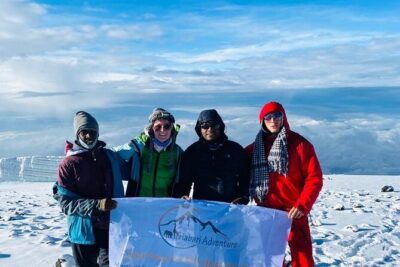
Climbing Kilimanjaro through 8 days Lemosho Route
Read our review →Browse the lists this tour appears in