
Reviewed · WALKING TOURS
Street Food and Community Walking Tour
The real Arusha begins south of downtown. This walking tour takes you into Sinoni, where you can taste everyday Tanzanian food, meet people involved in local trades, and hear about community life from guides who know the area well. I like the direct contact with local residents, and I like that 100% of the tour profit supports Jamii Imarika Foundation. The main consideration is simple: this is a community walk, not a polished sightseeing circuit, so expect ordinary streets and a flexible pace.
The tour lasts about two and a half hours and costs $25 per person. That is fair value when you count the food, the guide, and the community support, but you should be comfortable walking through a working neighborhood rather than visiting major monuments. Jackson and Given have been praised for being friendly, helpful, and generous with local insight, which gives the outing a personal touch.
In This Review
- Five good reasons to choose this Sinoni walking tour
- Starting at Kajo Art Gallery near the Maasai Market
- Walking into Sinoni with a local guide
- Urban farming and the practical side of food
- Recycling, maize milling, and local work
- Mud houses and churches along the route
- Sweet and salty food from vendors
- Why the community purpose matters
- Timing, group size, and what to expect
- Who will enjoy this tour most
- Practical booking advice for Arusha
- Should you book the Sinoni street-food walk?
- FAQ
- Where does the tour start?
- Where does the tour finish?
- How long does the experience last?
- How much does the tour cost?
- Is food included?
- Is transportation included?
- How many people can join?
- Can I cancel for a full refund?
- What happens if bad weather cancels the tour?
Five good reasons to choose this Sinoni walking tour
- Taste food from local vendors: You sample both sweet and salty Tanzanian foods as you walk, rather than sitting down for one fixed meal.
- See everyday work up close: Stops may include urban farming, recycling, maize milling, and carpentry.
- Meet the community through a local guide: Jackson and Given have been singled out for their friendly manner and useful explanations.
- Support Jamii Imarika Foundation: All profits go toward education, basic needs for disadvantaged children, women’s empowerment, and youth education.
- Keep the group small: A maximum of 10 people makes questions and conversation easier.
- Finish in Sinoni: The walk ends in the community, with help offered for returning to your hotel.
Starting at Kajo Art Gallery near the Maasai Market
Your meeting point is Kajo Art Gallery at the Maasai Market on Tanesco Road in Arusha. This gives you a clear starting place near a known city-center shopping area, though you should check the exact map point before setting out because the tour ends in a different part of town.
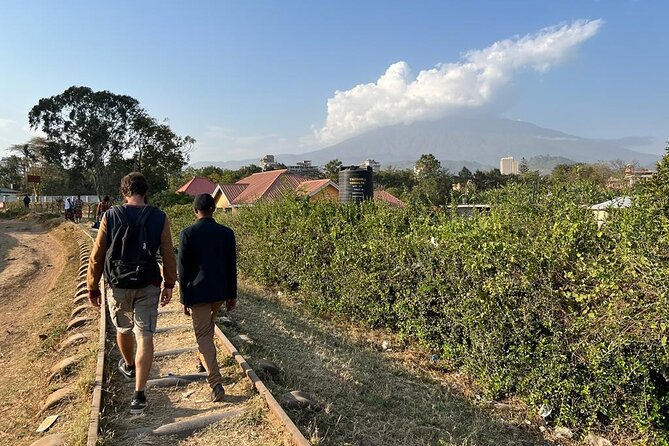
The guide then leads you toward Sinoni, a district just south of Arusha city center. The change in setting is part of the experience. Instead of staying among the shops, traffic, and tour offices around central Arusha, you move into a neighborhood where daily routines are the main attraction.
You receive a mobile ticket, and confirmation is provided when you book. Public transportation is nearby, but private transportation is not included. The tour does not arrange a private ride as part of the price, so plan your route to the meeting point and keep in mind that the walk finishes in Sinoni, not back at Kajo Art Gallery.
The provider says the guide helps visitors return to their hotels after the walk. That is useful, but it is still wise to ask at the start how this will work for your location. The stated end point is Sinoni, at map reference JM7M+65W in Arusha.
More Food Tours in Arusha
- Arusha: Traditional Tanzania Cooking Class & Food Market Tour
★ 5.0 · 34 reviews - Organic Coffee Tour and Local Food Experience in Arusha
★ 5.0 · 29 reviews - Arusha: Traditional Tanzania Cooking class& Food Market Tour
★ 4.9 · 12 reviews
Walking into Sinoni with a local guide
The value of this tour comes from the guide’s explanation of what you are seeing. Sinoni is not treated as a backdrop. Your guide talks about Tanzanian culture, everyday life in Arusha, and the people who live and work in the area.
I like this style of touring because it gives ordinary details a place in your understanding of Tanzania. A maize mill, a mud house, or a small workshop can tell you more about daily routines than a quick drive past a neighborhood. You also have time to ask questions and engage with local people, which makes the outing more conversational than a standard sightseeing tour.
Jackson and Given have received particular praise for being friendly, helpful, and willing to share information about the neighborhood. That matters on a community walk. A good guide helps you know when to ask questions, when to listen, and how to show respect in a place that is also someone’s home.
The group limit is 10 people. That is large enough to create a social outing but small enough for the guide to respond to individual questions. If the group fills, the experience may feel less private than a one-to-one walk, but it should remain more personal than a large bus tour.
Urban farming and the practical side of food
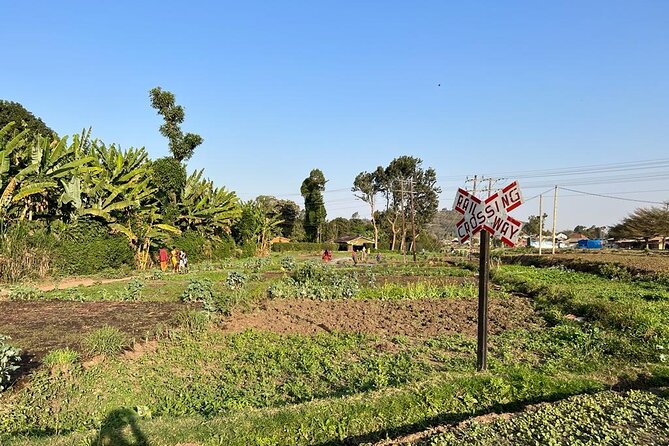
Urban farming is one of the planned points along the route. The stop connects well with the food tasting because you are not only eating local products, you are also seeing one way food can be produced within or near the city.
The available details do not specify the crops, farming methods, or length of this stop. You should treat it as an opportunity to ask questions rather than expect a formal farm visit. Ask what is grown, who works the plots, and how urban farming fits into local household life.
This is also a good example of the tour’s limits. You are walking through a community and stopping at working places, not attending a staged demonstration. The experience may vary depending on the day and the people available at each location.
Recycling, maize milling, and local work
The route may include a recycling stop and a maize mill. These places offer a look at practical work that often stays out of sight on ordinary sightseeing trips.
Recycling can show how materials are handled and reused within the community. The maize mill offers a direct connection to one of the staple foods behind many Tanzanian meals. Your guide can help explain what the mill does and why it matters, but the supplied details do not promise a particular machine, product, or demonstration.
Carpentry is another possible stop. Here, you may see a trade in progress and learn how a local skill supports households and the wider area. The point is not to collect a series of photo stops. It is to notice how people make, repair, process, and reuse things as part of normal life.
You should bring curiosity rather than a fixed checklist. The route includes several types of local work, but the exact order and depth of each stop may depend on the day.
More Walking Tours in Arusha
- Arusha Guided Walking City Tour, Culture, Lifestyle & History
★ 5.0 · 150 reviews - 4 Days lodge safari Tarangire , Ngorongoro crater & Walking
★ 5.0 · 39 reviews - Tanzania – Arusha NP – Private Guided 4×4 Safari – Game Drive & Walking
★ 5.0 · 30 reviews - Arusha: City Walking Tour Historic and Modern Highlights
★ 4.5 · 12 reviews
Mud houses and churches along the route
Mud houses provide another chance to learn about local building practices. The tour description does not give technical details about the materials or construction, so your guide is the best person to ask how these homes are made and maintained.
Churches are also included among the possible sights. They offer a chance to discuss the role of faith in the community, though this is not described as an interior church tour or a religious service visit. Be respectful of people using these spaces, and follow your guide’s lead on photography and entry.
These stops are valuable because they widen the tour beyond food. You see homes, places of worship, work areas, and public activity in the same neighborhood. The result is a more rounded picture of Sinoni, even though the tour remains short.
Sweet and salty food from vendors
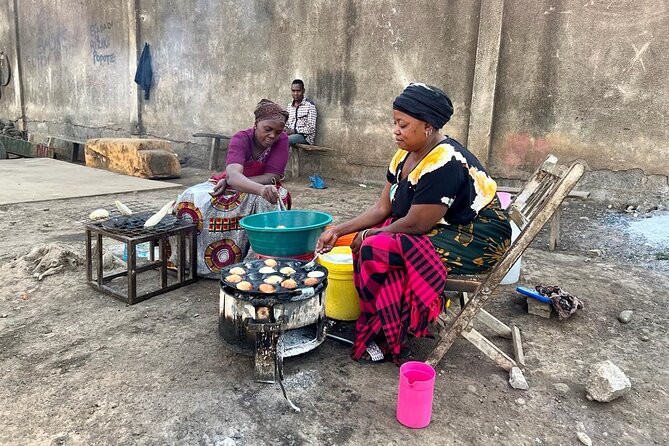
Food is the most immediate pleasure of the walk. You try sweet and salty items from different local vendors, with the guide explaining what you are eating and how it fits into Tanzanian food culture.
The exact dishes are not listed, so do not book this expecting a guaranteed menu. That uncertainty is part of the street-food format, but it also means you should tell the guide about dietary concerns before or at the beginning of the tour. The supplied information confirms food tastings, yet it does not state that vegetarian, vegan, allergy-free, or religious dietary needs can be accommodated.
I like the way the tasting is spread through the walk. You are not simply given a plate and a short explanation. Food becomes a reason to move through Sinoni, visit vendors, and connect what you eat with the people and places around you.
The price includes the sweet and salty food, all fees, and taxes. Tips for the guide are optional and not included. At $25, the cost is reasonable for a two to three-hour small-group outing with several tastings and a local guide, especially because the money supports a local nonprofit. It is less of a bargain if you want a large meal or a long list of named dishes, since neither is promised.
Why the community purpose matters
Jamii Imarika Foundation runs the tour, and its stated aim is to strengthen the community by helping disadvantaged children, empowering women, and educating young people. The organization also works to provide education and basic needs.
The claim that 100% of tour profits go to the organization gives the fee a second purpose. You are paying for a guided walk and food, but your booking also helps fund the foundation’s work. This does not remove the need to judge the tour on its own quality, yet it adds clear value for anyone who wants tourism spending to support local programs.
A community benefit should not replace good visitor behavior. Ask before taking photographs, listen to the guide’s instructions, and remember that Sinoni is a lived-in neighborhood rather than an attraction created for sightseeing. The best experience comes from being interested without treating local people as scenery.
Timing, group size, and what to expect
The walk takes about two to three hours, with the stated route time listed at roughly two hours and 30 minutes. Allow extra time around the tour if you have a flight, safari departure, or another fixed booking.
A maximum of 10 people keeps the outing manageable. You can ask questions without needing to speak over a crowd, and the guide has a better chance to include the group in conversations. The trade-off is that this is still a shared tour, so the pace and stops are not fully yours.
The activity requires good weather. If poor weather causes cancellation, you are offered another date or a full refund. The tour also requires a minimum number of participants. If that number is not reached, you are offered a different date or experience, or a full refund.
Most people can take part, and service animals are allowed. The description does not give a precise walking distance, surface conditions, or information about seating and rest breaks. If you have mobility concerns, ask the provider for current route details before booking rather than guessing.
Who will enjoy this tour most
I would recommend this walk to you if you want local conversation, modest food tastings, and a look at daily life beyond Arusha’s main visitor areas. It suits curious visitors who enjoy asking questions and seeing working neighborhoods at a human pace.
It is also a strong choice if you want your money to support a local organization. The foundation’s focus on children, women, and youth gives the tour a purpose beyond sightseeing.
You may want something else if you need a guaranteed food menu, a private vehicle, a major landmark route, or a highly structured schedule. The tour is also not the best fit for anyone who dislikes walking or feels uneasy entering ordinary residential areas.
Book ahead if your dates are fixed. The experience is booked, on average, 42 days before the tour date, so leaving it until the last minute may limit your options.
Practical booking advice for Arusha
The tour offers free cancellation if you cancel at least 24 hours before the local start time. Cancellations within 24 hours are not refunded, and changes made inside that period are not accepted.
Wear comfortable walking shoes and use sensible sun and rain protection, since the route is outdoors and weather can affect the departure. Carry your mobile ticket and bring questions for the guide. Asking about the food, local work, and community projects will help you get more from the time.
The start and end points differ, so do not assume you will finish near the Maasai Market. The provider says it helps with the return to your hotel, but confirm the plan early, particularly if your accommodation is outside central Arusha.
Should you book the Sinoni street-food walk?
Book it if you want a small-group introduction to Arusha that puts food, local work, and community life in the same two-and-a-half-hour outing. The combination of tastings, stops at places such as a maize mill and carpentry workshop, and support for Jamii Imarika Foundation gives the $25 price real weight.
Skip it if your priority is a fixed menu, private transport, or famous sights. For an authentic neighborhood visit with friendly guides such as Jackson and Given, optional conversation with local people, and a clear charitable purpose, this is one of the more meaningful short activities to add before or after a safari.
FAQ
Where does the tour start?
It starts at Kajo Art Gallery near the Maasai Market on Tanesco Road in Arusha, Tanzania.
Where does the tour finish?
The walk finishes in Sinoni at map reference JM7M+65W, Arusha, Tanzania.
How long does the experience last?
It lasts about two to three hours, with the route listed at approximately two hours and 30 minutes.
How much does the tour cost?
The price is $25 per person.
Is food included?
Yes. Sweet and salty food from different vendors, along with all fees and taxes, is included.
Is transportation included?
No. Private transportation is not included. The provider says it helps visitors return to their hotels after the walk.
How many people can join?
The tour has a maximum group size of 10 people.
Can I cancel for a full refund?
Yes, if you cancel at least 24 hours before the experience start time. Cancellations within 24 hours are not refunded.
What happens if bad weather cancels the tour?
You are offered a different date or a full refund if poor weather causes cancellation.
Just added in Arusha
- Safari “Kifaru” – 5 days in the most famous Parks in the world★ 5.0 · 4 reviews
- 5 Day Tanzania Safari Camping Adventure Private Tour★ 5.0 · 2 reviews
- Saadani Day Trip★ 5.0 · 13 reviews
- 3 Days Tanzania Short and Spicy★ 5.0 · 6 reviews
- Day Trip to Ngorongoro Crater from Arusha★ 5.0 · 1 review
- SERENGETI NATIONAL PARK Tour★ 4.5 · 5 reviews
- 3 Days Serengeti Park & Ngorongoro Crater Adventure Safari★ 5.0 · 8 reviews
- 6 Days Tanzania Bush Experience Safari★ 5.0 · 6 reviews
Walking Tours, compared.

3 Hours Private Stone Town walking Tour with Guide
Read our review →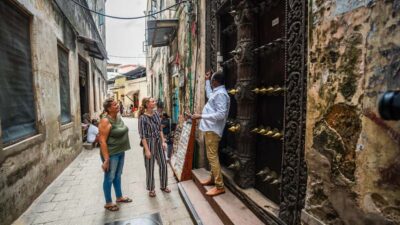
Stone Town Historical Cultural Walking Guided Tour
Read our review →

Arusha Guided Walking City Tour, Culture, Lifestyle & History
Read our review →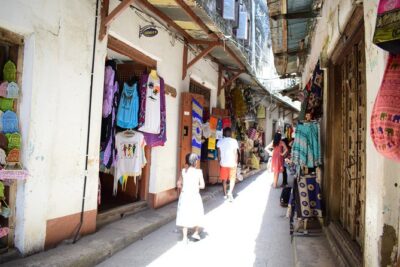
Browse the lists this tour appears in