
Reviewed · HISTORICAL TOURS
Bagamoyo: Explore Historic Slave Trade Route & Kaole Ruins
Old stones tell difficult stories here. Bagamoyo combines coastal trade, slavery, German rule, Christian missions, and village life in one long day from Dar es Salaam. I especially like the private vehicle and the chance to move at your own pace with an English-speaking guide. I also like the personal feel noted by Heidi from Austria, who described her two guides as friendly and easy to talk with. The main drawback is the packed schedule: eight hours gives you a useful introduction, but not much time to linger at every site.
The $250 per-person price is easier to justify for a private group than for a solo visitor, since it includes transport, admission fees, lunch, bottled water, and drinks. Still, you should know that airport drop-off costs another $30, breakfast is not included, and several stops involve walking over uneven historic ground.
In This Review
- Five details that shape the day
- Why Bagamoyo matters on the Tanzanian coast
- Old Town buildings: Nasser Virji House, Old Fort, and Old Boma
- The Holy Ghost Mission, where faith and trade meet
- The Holy Grotto and Bagamoyo’s sacred side
- Kaole Ruins and the crocodile stop
- Lunch, beach time, and the dhow harbor
- What $250 per person really buys
- The pace, comfort, and practical limits
- Who should book this Bagamoyo day trip?
- Should you book it?
- FAQ
- How long does the Bagamoyo and Kaole tour last?
- Where can pickup and drop-off take place?
- Is lunch included?
- Is the tour private?
- What sites are included?
- Is this tour suitable for wheelchair users or pregnant women?
Five details that shape the day
- Nasser Virji House: See Bagamoyo’s first shop, founded in 1888, and get a feel for its trading past.
- Old Fort: Learn how one building changed from an Arab marketplace to a slave-trade site, German garrison, and British prison.
- Holy Ghost Mission: Visit the first church in the area, the Catholic Museum, the mission cemetery, and the Holy Grotto.
- Kaole Ruins and Mamba Ranch: Pair old coastal ruins with a private crocodile breeding center.
- Indian Ocean finish: Take time for local food, beach rest, swimming, and a possible sunset at the old dhow harbor.
Why Bagamoyo matters on the Tanzanian coast
Bagamoyo is more than a pretty seaside stop. It was an important settlement and trading center, linked to the movement of ivory and enslaved people across the coast. Its buildings also record the arrival of Christian missionaries, German colonial administration, and British rule.
That mix gives the day unusual range. You can begin with old commercial buildings, confront the painful history of forced labor, then walk through a Catholic mission complex and end beside fishing boats. I find that combination more useful than a tour focused only on ruins or only on beaches.
The tour offers pickup from Julius Nyerere International Airport or the Azam Marine Kilimanjaro Fast Ferries area. That makes it practical if you are connecting through Dar es Salaam, though you should confirm the timing carefully if you have a flight the same day. An air-conditioned vehicle matters in coastal Tanzania, especially after several outdoor visits.
More History Tours in Dar es Salaam
- Dar es Salaam History and Architectural Tours
★ 5.0 · 36 reviews - Bagamoyo Historical Tour – Everyday
★ 5.0 · 13 reviews - Bagamoyo Historical Tour – Everyday
★ 4.4 · 8 reviews
Old Town buildings: Nasser Virji House, Old Fort, and Old Boma
The Nasser Virji House is a small but telling stop. It was established in 1888 as the first shop in the area. Rather than treating it as a grand monument, I would think of it as a clue to Bagamoyo’s commercial life. A shop tells you about daily exchange, customers, imported goods, and the town’s role in coastal trade.
The Old Fort carries a much heavier story. Arab traders used it as a marketplace in the early 1860s. By 1870, it was connected to illegal slave trading. Under German rule from 1896, it became a garrison, and after World War I the British used it as a prison.
That sequence is the reason a guide adds real value here. Without explanation, you may see thick walls and a simple old structure. With context, you can follow the building through several governments and uses, each leaving a mark on Bagamoyo. The planned visit lasts about an hour, making this one of the more substantial stops.
The Old Boma gives you another view of colonial power. Germans built it in 1895, and it served as the administrative headquarters of German East Africa until 1919. It later became the District Commissioner’s office, a role it kept until 1997.
Look for the old iron safe. It is a small object, but it helps turn an administrative building into a place with human traces. The Old Boma visit lasts about 30 minutes, so expect a focused stop rather than a long architectural tour.
The Holy Ghost Mission, where faith and trade meet
The Holy Ghost Mission sits about 2 kilometers north of Old Bagamoyo. Allow roughly an hour and a half here. This is the part of the day where the tour becomes more than a march from monument to monument.
The mission began in 1868 under Father Antoine Horner. Muslim leaders led by Sultan Majid gave land to the mission, an important detail that complicates any simple division between Christian and Muslim communities. The first Holy Ghost Church was built in 1872 and is described as the first church in the area and on mainland East Africa.
The original church includes Livingstone Tower, named for explorer David Livingstone. The tower connects the site to the wider story of exploration, missionary work, and the routes that brought Europeans into the interior of East Africa. I would listen closely here, because the importance of the building is not only in its coral construction. It is also in what the church represents about changing power and belief along the coast.
The Old Fathers’ House was built in 1873. It is a three-story pre-colonial mission residence, completed in three stages, with a broad balcony. That balcony gives the building some visual charm, but its larger value is practical: it shows how the mission developed over time rather than appearing all at once.
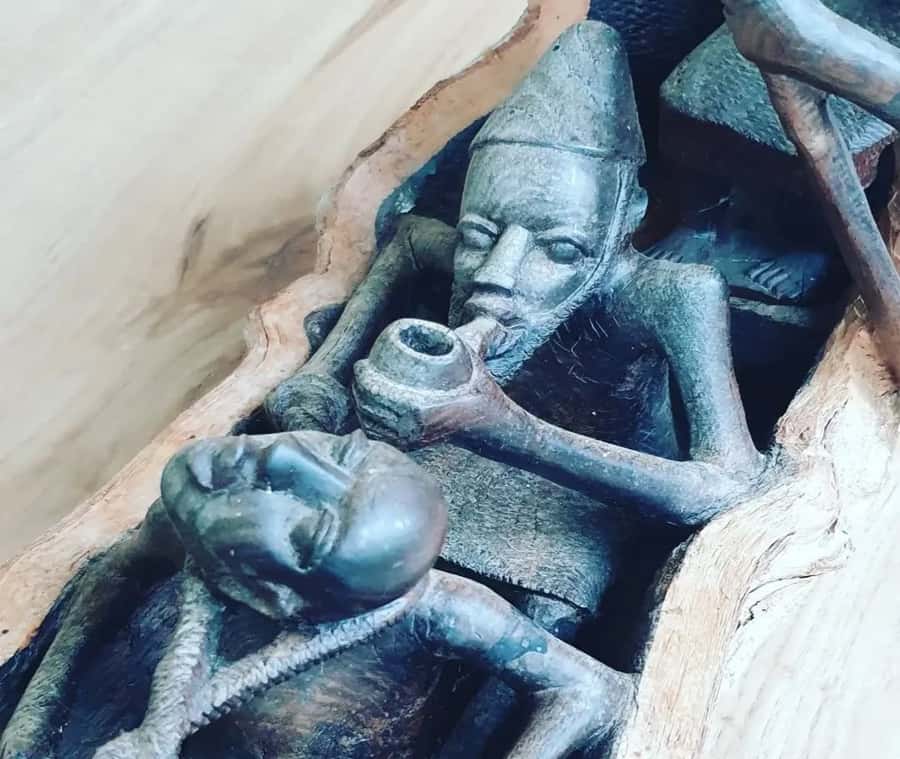
The Bagamoyo Catholic Museum occupies a building first constructed in 1876 as the Sisters’ House. Inside, you can expect photographs of enslaved people, missionary objects, old books, Indian and Arab door frames, and items connected with the transatlantic slave trade. Local wooden art adds another layer.
This is likely the most emotionally demanding part of the tour. The subject is difficult, and the museum’s photographs and objects ask you to slow down. I would not rush through it simply to reach the beach. The museum helps connect Bagamoyo’s buildings to the people who suffered, worked, worshiped, and passed through this coastal center.
The New Holy Ghost Church was built between 1910 and 1914 from coral stone blocks. Its construction followed a major land gift in 1892 from Sewa Haji, a wealthy Muslim trader and philanthropist, who gave the mission 49,000 acres. The larger church gives you another reminder that Bagamoyo’s past was shaped by cooperation, commerce, faith, and unequal power all at once.
The mission cemetery lies about 100 meters from the main buildings. It contains 27 graves of early Spiritan missionaries and 20 graves connected with the Daughters of Mary congregation. Sister M. Julienne was buried there on April 17, 1870. You may find the cemetery quieter and more reflective than the church buildings, so leave room for a slow walk.
The Holy Grotto and Bagamoyo’s sacred side
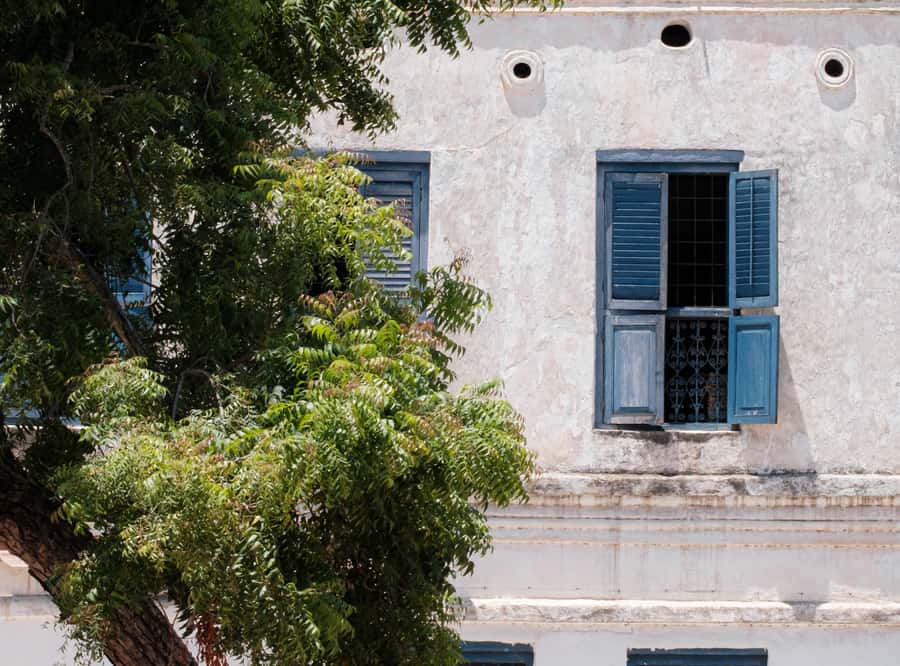
The Holy Grotto was built in 1876 by emancipated slaves and consecrated in 1879 by Pope Leo XIII. It remains a pilgrimage site for Tanzanian Catholics.
This stop deserves respectful behavior. It is not simply another old structure for photographs. The grotto carries personal and religious meaning, particularly because it was built by people who had experienced enslavement and then helped create a place of worship. That link between freedom, faith, and memory gives the site unusual weight.
You should dress and act appropriately around the mission and grotto. The tour rules prohibit nudity, alcohol, drugs, weapons, sharp objects, and oversized luggage. Baby strollers are also not allowed.
A different kind of day out entirely:
- Dar es Salaam: City Tour
★ 4.7 · 159 reviews - Dar es Salaam City Center: Walking Tour
★ 4.8 · 102 reviews - Dar es Salaam City Tour – Everyday
★ 5.0 · 64 reviews - MIKUMI NATIONAL PARK – 3 Days
★ 4.5 · 63 reviews
Kaole Ruins and the crocodile stop
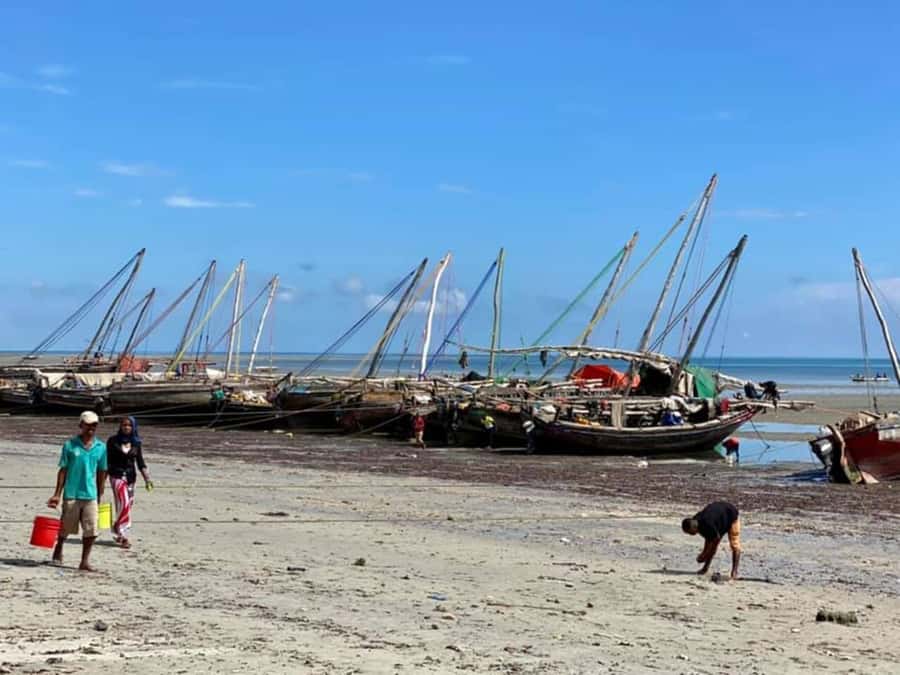
Kaole Ruins adds an older coastal layer to the day. The visit includes a guided tour and time for photographs. The supplied details do not specify the exact buildings or length of the stop, so you should expect the guide to provide the main interpretation on site.
I like the placement of Kaole in this tour because it prevents Bagamoyo’s story from becoming only a colonial and missionary story. The ruins point to earlier settlement and trade along the coast. Bring water, even though bottled water is included, and wear shoes suited to walking around old masonry and outdoor ground.
Kaole Mamba Ranch is a private crocodile zoo and breeding center. You spend about 30 minutes watching the animals in a controlled setting intended to resemble their natural habitat. It is a sharp change of mood after the mission cemetery and slave-trade sites.
The ranch may be especially appealing if you are traveling with children or simply need a lighter stop in the middle of a serious day. It is not a wild safari, though. Think of it as a compact crocodile facility, not a large national park excursion.
Lunch, beach time, and the dhow harbor
After the heritage visits, you get a local lunch and free time on Bagamoyo’s beaches. Regional food, water, and alcoholic or soft drinks are included. Breakfast is not, so eat before pickup or arrange something early.
The beach break is more important than it may sound. The morning and early afternoon deal with slavery, colonial rule, missionary work, and death. Time to sit, swim, and absorb the Indian Ocean setting gives the day a needed pause. You should not expect a resort-style beach program, but you can unwind, enjoy the sun, and take a swim if conditions allow.
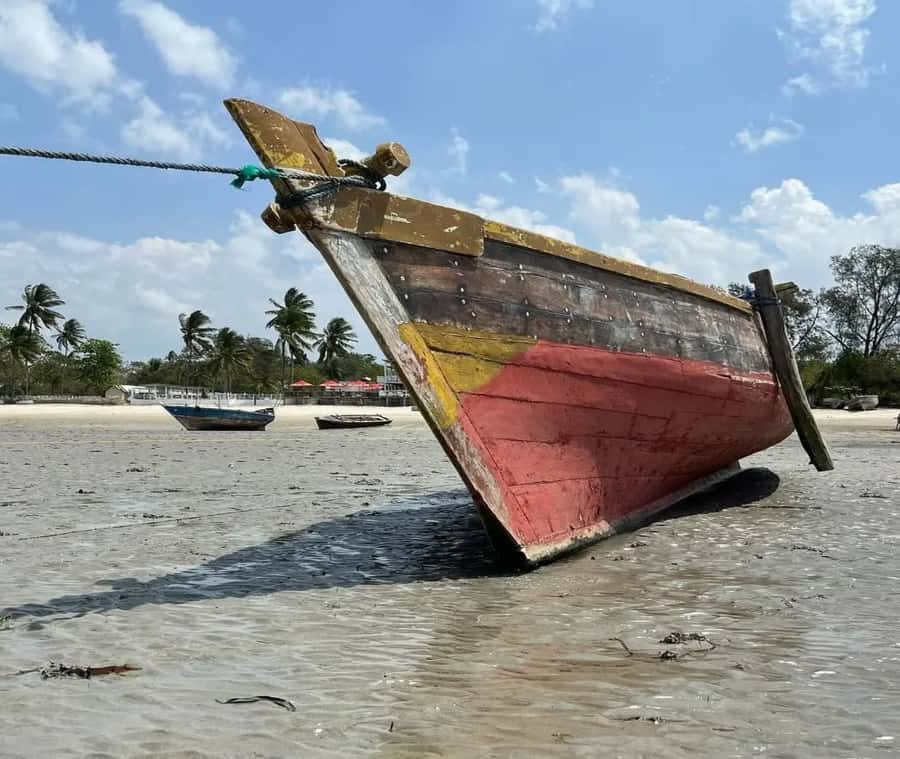
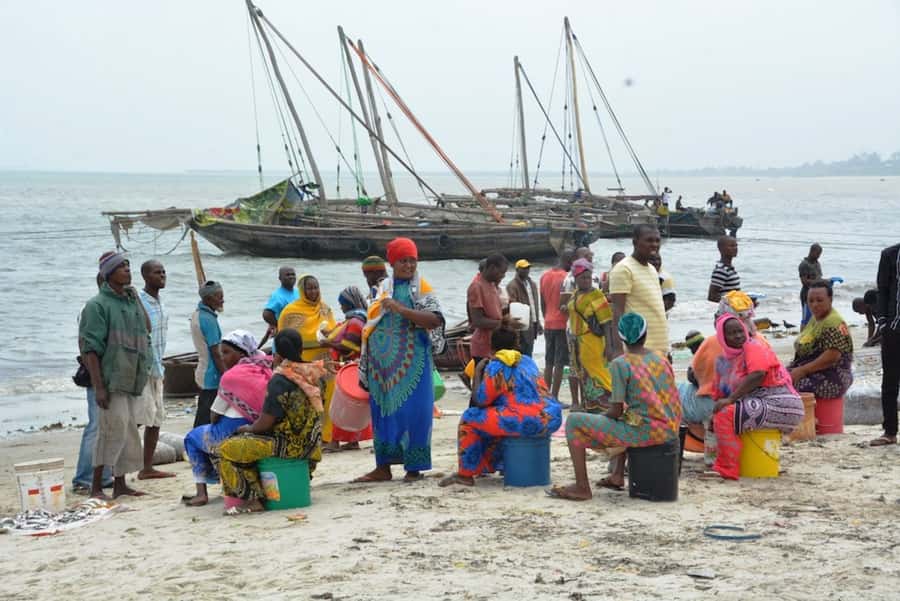
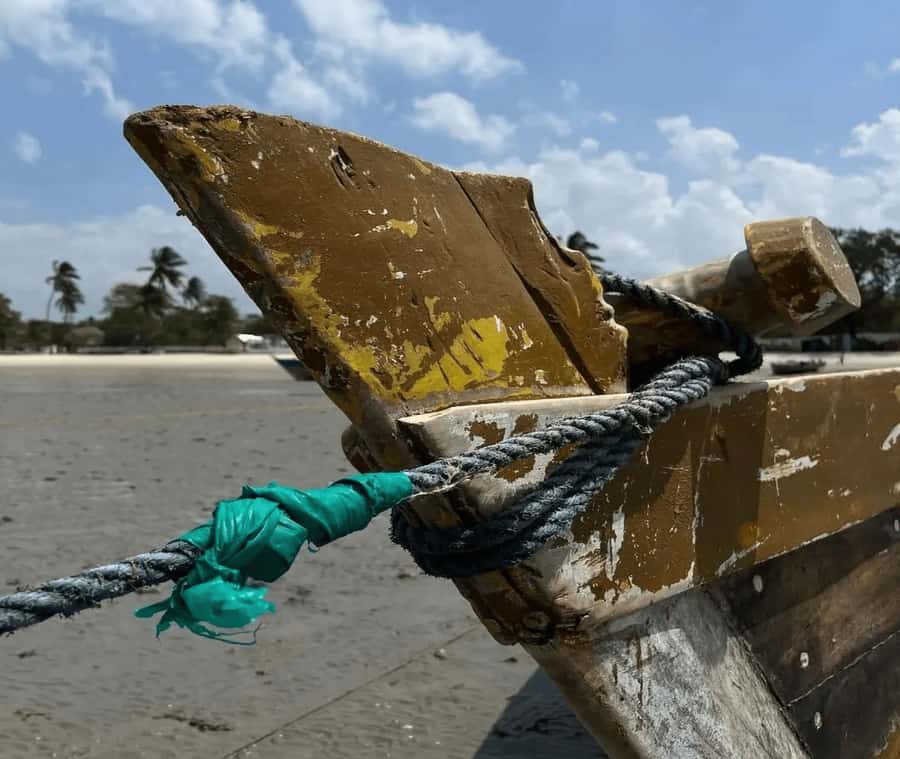
The Dhow Harbour was once used for ivory and slave trading in the 19th century. Today, fishing boats and tourist excursions use the port. A 30-minute stop lets you connect the old trade routes with Bagamoyo’s present-day coastal life.
If the timing works, this is also the place for sunrise or sunset views over the Indian Ocean. The schedule lists a sunset opportunity, but exact light and timing depend on the day’s route. I would ask the guide early if the harbor visit can be placed near sunset.
What $250 per person really buys
At $250 per person, this is not a budget day trip. The price makes more sense when two or more people share a private group, since the cost covers a dedicated air-conditioned vehicle, private transport, an English-speaking guide, lunch, bottled water, drinks, taxes, and entrance fees.
Admissions included are listed for Bagamoyo, Old Boma, Kaole Ruins, Bagamoyo Museum, and Kaole Mamba Ranch. That reduces the small extra charges that can make a full day harder to track.
I see three clear benefits in paying for the private format:
- You do not have to fit into a large group schedule.
- You can ask questions about sensitive subjects such as slavery and missionary work.
- You have one vehicle for airport or ferry-area pickup and return.
The value is weaker if you are alone and mainly want a quick look at Bagamoyo. In that case, $250 is a serious outlay for eight hours. The value improves if you want several entrance sites, lunch, transport, and a guide without arranging each piece yourself.
Airport drop-off is available for an additional $30. The standard drop-off options are Julius Nyerere International Airport and Azam Marine Kilimanjaro Fast Ferries. Confirm whether the airport fee applies to your exact pickup and drop-off plan before paying.
The pace, comfort, and practical limits
The tour lasts eight hours, but the schedule is full. You cover Old Town buildings, the mission, Kaole, the museum, the crocodile ranch, lunch, and the beach. You will see a lot, but you should not expect long, unhurried time at every site.
The private group format helps. You can ask for a little more time at the museum or a shorter photo stop elsewhere, though the available time still has limits. The two-guide arrangement described by Heidi from Austria is also worth noting: she praised the personal, pleasant tone and the chance to talk openly with the guides. Names are not provided, so I cannot identify them, but that warm style appears to be a key strength of the service.
This is not a suitable choice for wheelchair users or pregnant women, according to the supplied restrictions. The tour also does not accept baby strollers. Historic sites, outdoor ruins, and mission grounds may require walking, so comfortable footwear is sensible.
Free cancellation is allowed up to 24 hours before the tour for a full refund, and you can reserve now and pay later. Those terms help if your Dar es Salaam plans are still shifting, but they do not remove the need to check the start time against flights or ferry connections.
Who should book this Bagamoyo day trip?
I would choose this tour if you want one guided day that explains Bagamoyo from several angles. It suits you especially well if you care about East African history, religious sites, colonial architecture, coastal trade, and local food, but also want time at the beach.
Families may appreciate the crocodile ranch and the private vehicle, though the slavery-related material may require thoughtful discussion with younger children. History-minded visitors will get the most from Old Fort, the museum, the mission, and the Holy Grotto.
I would hesitate if you want a slow beach day, a wildlife safari, or a highly specialized archaeology tour. The schedule samples many sites rather than studying one in great depth. You should also think twice if long outdoor walks or uneven ground are difficult.
Should you book it?
Book this Bagamoyo tour if you value human stories over quick sightseeing and want transport, food, admissions, and a guide handled in one private day. The strongest parts are the layered Old Fort, the Holy Ghost Mission, the Catholic Museum, and the Holy Grotto built by emancipated slaves.
Skip it if $250 per person feels too high for a packed introductory tour or if your main goal is swimming and relaxing. For the right visitor, though, the combination is hard to duplicate: difficult history in the morning, crocodiles and local food later, then the Indian Ocean before returning to Dar es Salaam.
FAQ
How long does the Bagamoyo and Kaole tour last?
The tour lasts 8 hours, including guided sightseeing, historical visits, lunch, free time, and the return journey.
Where can pickup and drop-off take place?
Pickup and drop-off options are Julius Nyerere International Airport and Azam Marine Kilimanjaro Fast Ferries. Airport drop-off is available for an additional $30.
Is lunch included?
Yes. Local lunch, bottled water, and alcoholic or soft drinks are included. Breakfast is not included.
Is the tour private?
Yes. It is offered as a private group experience with an English-speaking live guide and private transportation.
What sites are included?
The day includes Bagamoyo’s Old Fort, Old Boma, the Holy Ghost Mission, the Catholic Museum, the Holy Grotto, Dhow Harbour, Kaole Ruins, Kaole Mamba Ranch, local lunch, and beach free time.
Is this tour suitable for wheelchair users or pregnant women?
No. The experience is listed as unsuitable for wheelchair users and pregnant women. Baby strollers are also not allowed.
Just added in Dar es Salaam
- Zanzibar: Spice farm Private tour with Lunch★ 5.0 · 1 review
- Mbudya island from Dar es salaam safari.★ 4.2 · 3 reviews
- Maasai, Mikumi NP & Chizua Falls 3 Days From Dar es salaam★ 5.0 · 4 reviews
- From Dar es Salaam: Mikumi National Park Day Trip★ 5.0 · 3 reviews
- From Dar Es Salaam: Mikumi National Park 2 Nights and 3 Days★ 5.0 · 2 reviews
- Explore Dar es Salaam: Full-Day Private City Tour★ 5.0 · 2 reviews
- Escape to Paradise A day of sun, sand and adventure Mbudya★ 5.0 · 1 review
- DAR ES SALAAM:BONGOYO ISLAND SNORKELING TOUR & BEACH ESCAPE★ 4.7 · 9 reviews
Historical Tours, compared.
Stone Town Historical Cultural Walking Guided Tour
Read our review →
Arusha Guided Walking City Tour, Culture, Lifestyle & History
Read our review →
Stone Town’s Hidden History: Private Guided Walking Tour
Read our review →
Browse the lists this tour appears in