
Reviewed · HISTORICAL TOURS
Bagamoyo Full-Day Tour: Historic Slave Trade Route & Kaole Ruins
History is never far from the shore. This private Bagamoyo day trip from Dar es Salaam connects the town’s slave trade route, Arab trading past, German colonial buildings, and early Christian mission sites in one long but worthwhile day. I especially like the way it brings Islamic and Christian heritage together, and I like that Kaole Ruins adds an older layer, reaching back to medieval coastal trade.
The main drawback is the pace. You spend roughly eight to ten hours on the road and moving between sites, with several stops lasting only 20 or 30 minutes. The $255 price per person is also a serious outlay, though private transport, lunch, water, snacks, alcoholic drinks for adults, entrance fees, and a dedicated guide help explain the cost.
In This Review
- Key things to know before booking
- Why Bagamoyo makes a powerful day trip from Dar es Salaam
- The Old Fort: one building, several chapters
- The Old Boma and German colonial rule
- Kaole Ruins: the oldest layer of the day
- The Holy Ghost Mission and a shared religious past
- Old Fathers’ House: slow construction, solid character
- The Catholic Mission Museum: a difficult but important visit
- Holy Ghost Church and the Holy Grotto
- The baobab and the old slave market
- Fish market and dhow harbor: Bagamoyo today
- Lunch, transport, and the true cost of $255
- Who should book this Bagamoyo tour?
- Should you book it?
- FAQ
- Where does the Bagamoyo tour begin?
- How long does the tour last?
- Is this a private tour?
- What is included in the price?
- Is breakfast included?
- What are the main historic sites visited?
- What is the cancellation policy?
Key things to know before booking
- Kaole Ruins reaches back to the eighth century, with two old mosques, tombs, and trade artifacts linked to China.
- Bagamoyo’s Old Fort changed roles many times, from Arab fortress to slave-trade center, German garrison, British prison, and police station.
- The Holy Ghost Mission ties Muslim generosity to Christian history, including land donated by Sultan Majid and Sewa Haji.
- The tour is private, so only your own group takes part, with pickup in Dar es Salaam at 8:30 am.
- The fish market and dhow harbor add present-day life to a day otherwise focused on difficult colonial and slave-trade history.
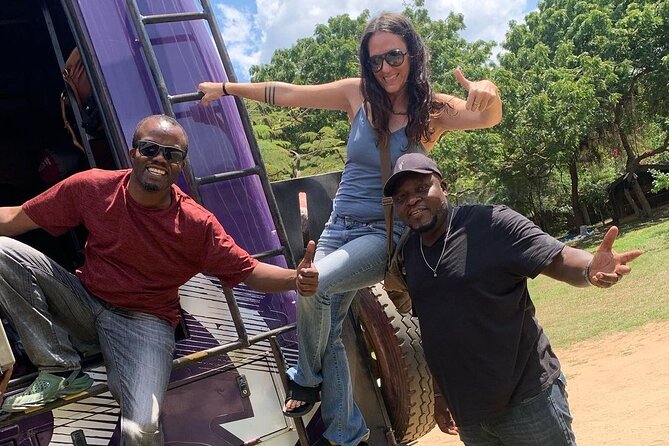
- Guide Erick received especially strong praise for his English, humor, ethics, and command of the subject, though there was a reported problem involving payment arrangements.
Why Bagamoyo makes a powerful day trip from Dar es Salaam
Bagamoyo is not simply a collection of old walls. Its importance comes from the way several forces met here: Swahili coastal culture, Arab trade, Islam, Christianity, German rule, British administration, and the export of enslaved people, ivory, gum, and spices.
The town was an important point on routes leading inland and across the Indian Ocean. Walking through its old quarter gives you a clearer sense of how trade shaped East Africa, and how religious and colonial buildings were built beside older local communities.
I appreciate that this tour does not reduce Bagamoyo to one theme. The slave trade route is central, but the day also includes mosques, mission buildings, a museum, a market, fishing boats, and the Indian Ocean shore. That wider view matters. It helps you see Bagamoyo as a living town, not only as a memorial to suffering.
The private format is useful here. You can ask your guide to slow down at a place that affects you, or spend less time at a building that interests you less. The schedule is full, but a private group gives you more control than a large coach tour.
More History Tours in Dar es Salaam
- Dar es Salaam History and Architectural Tours
★ 5.0 · 36 reviews - Bagamoyo Historical Tour – Everyday
★ 5.0 · 13 reviews - Bagamoyo Historical Tour – Everyday
★ 4.4 · 8 reviews
The Old Fort: one building, several chapters
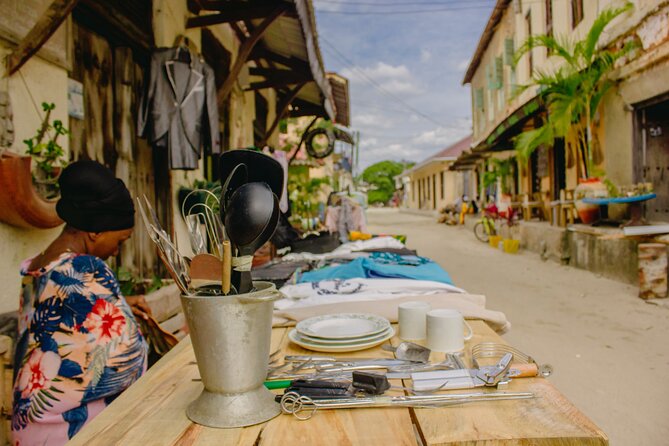
The first major stop is Bagamoyo’s Old Fort, built in the 1860s by the Arab trader Abdallah Suleiman Marhabi. Its early use was tied to coastal trade, and it later became connected with the slave trade.
The fort then changed hands and functions. German forces used it as a garrison in 1896. By 1919, British authorities had made it a prison. After independence, it served as a police station from 1974. Today, it is preserved as a heritage site.
I like this stop because the building’s changing roles make history easy to follow. You are not looking at a monument with one neat label. You are seeing how power shifted around the coast, and how the same walls were repeatedly put to new use.
Allow about an hour here. The fort can also set the emotional tone for the rest of the day. Some parts of the tour are reflective rather than light sightseeing, so give yourself room to take in what you are hearing.
The Old Boma and German colonial rule
The Old Boma was built by the Germans in 1895 and served as the administrative headquarters of German East Africa until 1919. Under British rule, it became the District Commissioner’s office.
The building was decommissioned in 1997 because of structural problems. One memorable detail remains: an old German iron safe is still inside, locked and holding its own small mystery.
This is a short 30-minute stop, but it helps explain how Bagamoyo moved from an Arab trading center into a European colonial administrative system. You will see the shift in political control through architecture rather than a long museum lecture.
The Old Boma is part of the old town conservation area. Since the visit is brief, listen closely to the guide’s explanation and use the time to notice the building’s age and changing purpose.
Kaole Ruins: the oldest layer of the day
About 4.8 kilometers from the Indian Ocean, Kaole Ruins reaches back much farther than the colonial buildings in town. The site began as a trading settlement in the eighth century. The Zaramo name Kaole means Go and See, which is fitting advice for a place that can be easy to underestimate from photographs.
The ruins include two historic mosques. One dates to the 13th century and is linked to the Sultan of Kilwa. It may be among the oldest mosques in Tanzania and East Africa. A second mosque dates from the 15th century and is surrounded by around 30 tombs, including some belonging to local rulers known as diwanis.
A small museum displays objects connected with the site, including evidence of ancient trade with China. This is one of the most valuable stops for anyone who wants more than a colonial-era story. It puts Bagamoyo into the much longer network of Indian Ocean commerce.
You have about an hour here, which is welcome. The site has enough historical detail to reward questions. The main limitation is that the ruins may mean more once your guide explains what you are seeing, so this is not a stop to rush through with only a few photographs.
A different kind of day out entirely:
- Dar es Salaam: City Tour
★ 4.7 · 159 reviews - Dar es Salaam City Center: Walking Tour
★ 4.8 · 102 reviews - Dar es Salaam City Tour – Everyday
★ 5.0 · 64 reviews - MIKUMI NATIONAL PARK – 3 Days
★ 4.5 · 63 reviews
The Holy Ghost Mission and a shared religious past
The Holy Ghost Mission is about 2 kilometers north of old Bagamoyo. Father Antoine Horner of the Holy Ghost Fathers arrived in 1868 to establish a mission, and local Muslims under Sultan Majid gave land for it.
That detail deserves attention. Bagamoyo’s religious history was not built from isolated communities with no contact. Muslim leaders helped make room for a Christian mission, and later Muslim trader and philanthropist Sewa Haji donated 49,000 acres to the mission in 1892.
The first Holy Ghost Church was built in 1872. It was the first church in the area and is described as the first on mainland East Africa. David Livingstone spent a night at the mission in 1874, and the Livingstone Tower, part of the original church, recalls that visit.
You get about 20 minutes at this stop, so the visit is more of an introduction than a full exploration. Still, the site gives useful context before you see the larger church and other mission buildings.
Old Fathers’ House: slow construction, solid character
The Old Fathers’ House was built for the Holy Ghost Fathers in three stages. The ground floor was completed in 1873, the first floor in 1877, and the second floor in 1903.
This three-story building reflects the long growth of the mission. It was not finished in one grand push. The broad balcony gives it a distinctive pre-colonial mission style and makes it one of the more attractive architectural stops.
The planned visit lasts around 20 minutes. I would treat this as a quick architectural pause rather than a major standalone attraction. It works best when your guide explains how the mission expanded over time.
The Catholic Mission Museum: a difficult but important visit
The Catholic Mission Museum began as the Sisters’ House in 1876. Its displays focus on Bagamoyo’s role in the slave trade, missionary work, religion, and local resistance.
You may see photographs of enslaved people, chains, whips, religious objects, Indian and Arab architectural pieces, and locally made wooden art. Rooms once used by missionaries help connect the objects to the people who worked and lived there.
This can be the most emotionally heavy stop. The objects are direct and uncomfortable, which is appropriate for a place dealing with forced movement and human suffering. I would not rush through it, even though the planned visit is only 20 minutes.
The museum also helps connect the history of trade and religion. Bagamoyo was not only a place where people were held and shipped onward. It was a center where missionaries, merchants, colonial officials, local communities, and enslaved people all crossed paths.
Holy Ghost Church and the Holy Grotto
The New Holy Ghost Church was built between 1910 and 1914 from coral stone blocks. It replaced the smaller original church and shows how the mission grew in size and importance.
Nearby, the Holy Grotto was built by emancipated slaves who lived at the mission. Construction began in 1876, and Pope Leo XIII consecrated it in 1879. The site remains important for Catholic pilgrims from across Tanzania.
I find this part of the tour valuable because it makes the story more personal. You are not only hearing about institutions and dates. You are seeing a sacred place shaped by people who had survived enslavement and built a new religious life.
The stop lasts about 30 minutes. Please remember that this is an active sacred site, not only a historic photo stop. A quiet and respectful approach is appropriate.
The baobab and the old slave market
The massive baobab tree in the churchyard comes with a memorable local story. A French nurse named Madam Chevalier is said to have tied her donkey to the tree with a small iron chain and forgotten to remove it. As the tree grew to about 7 meters in diameter, only a small piece of the chain remained.
In 2012, 34 additional chain rings were added to help preserve the story. The tale is lighter than the nearby mission history, but the tree also reminds you how local memory survives through objects, legends, and place.
At the Old Market, a small art gallery now occupies the former slave-market site. Enslaved people were reportedly held beneath trees before being taken toward Zanzibar. A tunnel was believed to lead to the beach, though its exact location has never been found.
The nearby customs house collected a bounty for every enslaved person exported through the port. That detail makes the site more than a market square. It shows how the trade was supported by formal systems and money.
Both stops are short, around 20 minutes each. Do not expect a large exhibition at the old market. Its value comes from the explanation and the location itself.
Fish market and dhow harbor: Bagamoyo today
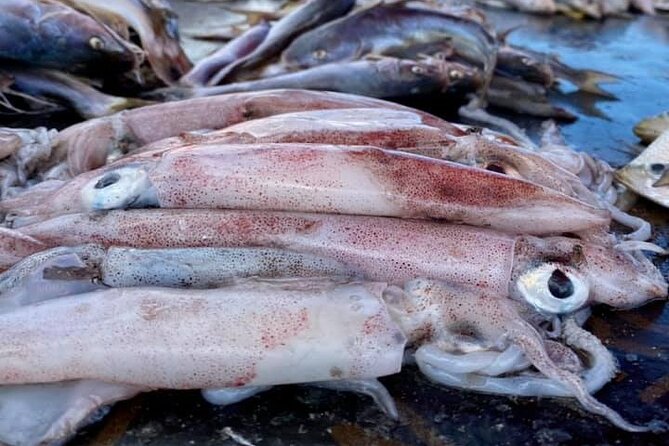
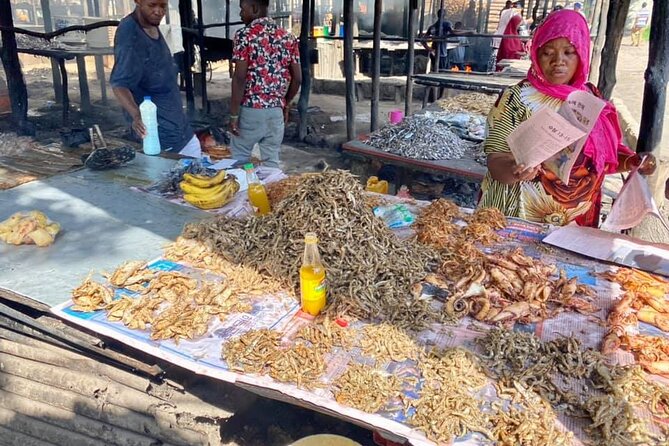
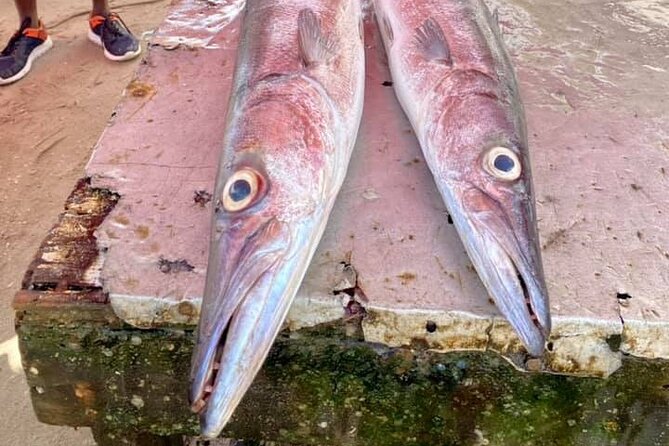
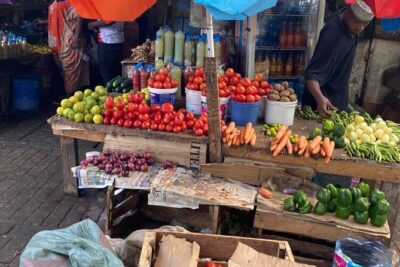
The Bagamoyo Fish Market brings the day into the present. Fishermen sell fish, crab, lobster, prawns, and octopus, with the morning being the busiest time as catches arrive.
The market also includes an old auction hall with links to the German colonial period. Depending on the timing, you may see seafood sold whole or in portions, and fish cleaned on site.
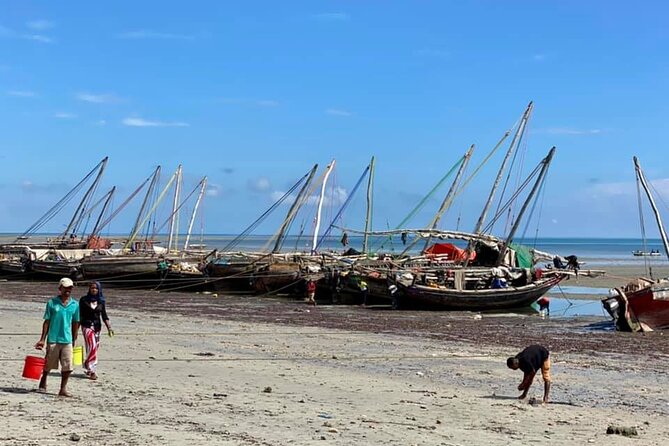
The nearby dhow harbor once supported ivory and slave trading in the 19th century. Today, fishing boats and tourist excursions use it. The harbor also provides views across the Indian Ocean, especially around sunrise and sunset.
This stop helps prevent the tour from becoming a series of silent ruins. Bagamoyo is still a working coastal town. You see fishing, trade, and local activity continuing around places with painful pasts.
Lunch, transport, and the true cost of $255
The tour costs $255 per person. That is expensive for a day trip, so I would judge it as a private experience rather than compare it only with the price of a shared bus excursion.
The fee includes private transportation in an air-conditioned vehicle, lunch, unlimited bottled water, snacks, all fees and taxes, and alcoholic drinks for participants aged 18 and over who choose them. Dietary restrictions are taken into account. Breakfast, dinner, and tips are not included.
Lunch has been described as taking place overlooking a beautiful beach, which makes a welcome break after the heavier historical stops. Since the day begins at 8:30 am and runs for eight to ten hours, the included meal and water are practical benefits, not small extras.
Travel time between sites accounts for the gaps in the schedule. You should expect a full day, not a quick coastal outing. Pickup is offered from Dar es Salaam, and only your group participates, which is especially helpful if you want to ask detailed questions about the slave trade route or religious history.
A useful caution comes from one account of a guide named Erick. He was praised for his English, humor, intelligence, ethics, and excellent command of the subject. The only problem involved difficulty getting money to pay for some items. I would confirm payment arrangements before departure so that the day stays simple.
Who should book this Bagamoyo tour?
I would recommend this tour to you if you care about history, religion, architecture, and the human stories behind old trading towns. It suits first-time visitors to Tanzania who want a strong introduction to the coast without arranging separate transport and site visits.
It is also a good match for private groups, families with older children, and anyone who prefers to ask questions without competing with a large group. The mix of sites gives you more than a single museum or fort.
I would be more cautious if you want a relaxed beach day. The schedule covers ten stops, and several visits last only 20 minutes. The subject matter is also serious. You should be ready for slavery, colonial rule, religious conversion, and difficult museum displays.
Wear practical walking shoes, carry sun protection, and keep water with you even though bottled water is supplied. The tour includes many short stops, so a small day bag is easier than heavy luggage.
Should you book it?
Book this Bagamoyo tour if you want a guided, private look at Tanzania’s coastal past and value convenience enough to justify $255 per person. The strongest parts are Kaole Ruins, the Old Fort, the Catholic Mission Museum, and the contrast between historic trade sites and the working fish market.
Skip it if your priority is low cost, a slow schedule, or a day spent mainly beside the sea. For history-minded visitors, though, this is one of the more meaningful things to do from Dar es Salaam. Free cancellation is available up to 24 hours before the 8:30 am start, giving you some flexibility when making the decision.
FAQ
Where does the Bagamoyo tour begin?
The tour begins in Dar es Salaam, Tanzania, with pickup offered. The stated start time is 8:30 am.
How long does the tour last?
The experience lasts approximately eight to ten hours, including travel time between the attractions.
Is this a private tour?
Yes. Only your own group participates in the activity.
What is included in the price?
The price includes private transportation, an air-conditioned vehicle, lunch, dietary accommodations, unlimited bottled water, snacks, alcoholic beverages for adults who choose them, and all fees and taxes.
Is breakfast included?
No. Breakfast and dinner are not included. Tips and gratuities are also excluded.
What are the main historic sites visited?
The tour includes the Old Fort, Old Boma, Kaole Ruins, Holy Ghost Mission, Old Fathers’ House, Catholic Mission Museum, Holy Ghost Church, Holy Grotto, the historical baobab tree, the former slave market area, the fish market, and dhow harbor.
What is the cancellation policy?
You can cancel up to 24 hours before the experience for a full refund. Cancellations or changes made less than 24 hours before the start time are not accepted for a refund.
Just added in Dar es Salaam
- Zanzibar: 3 Days to Mikumi and Chizua Waterfalls★ 3.5 · 5 reviews
- 3 Days and 2 Nights Mikumi Private Safari Adventure★ 5.0 · 2 reviews
- UDZUNGWA NATIONAL PARK AND WATERFALLS – 3 Days★ 4.5 · 2 reviews
- Explore Dar es Salaam: Full-Day Private City Tour★ 5.0 · 18 reviews
- Stone Town & Spice Tour★ 4.5 · 2 reviews
- Trip to the old City of Bagamoyo★ 5.0 · 1 review
- 2 Day Wildlife Experience and Masai Culture Mikumi Park★ 5.0 · 5 reviews
- Sunrise Beach Walk with Picnic Breakfast Activity★ 5.0 · 3 reviews
Historical Tours, compared.
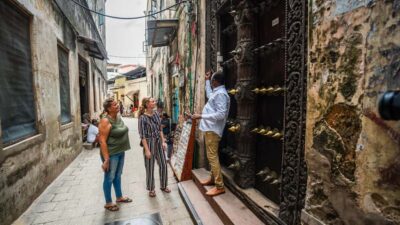
Stone Town Historical Cultural Walking Guided Tour
Read our review →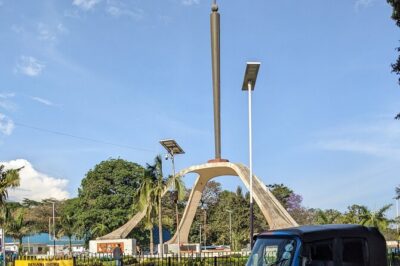
Arusha Guided Walking City Tour, Culture, Lifestyle & History
Read our review →
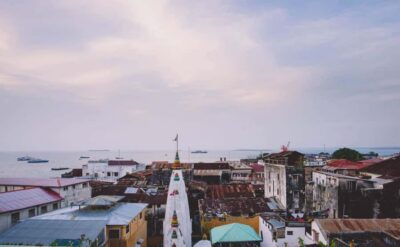
Stone Town’s Hidden History: Private Guided Walking Tour
Read our review →
Browse the lists this tour appears in