
Reviewed · CAMPING SAFARIS
Best Of Six Days Safari Camping safari
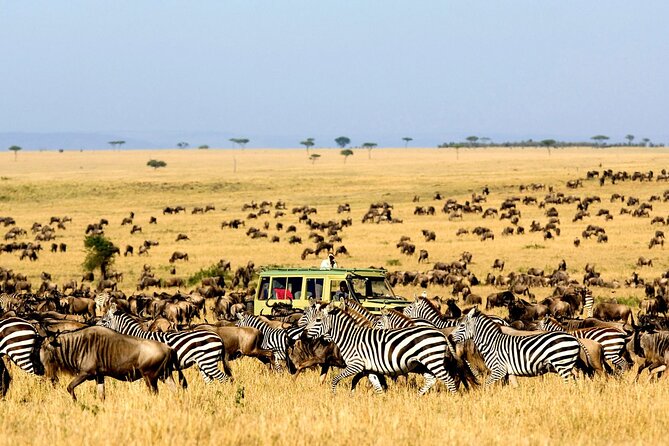
Calving season changes the whole safari. This six-day Tanzania trip follows the wildebeest toward the southern Serengeti and Lake Ndutu, then adds Tarangire, Ngorongoro Crater, and Lake Manyara. I especially like the migration-focused route and the small group limit of six, which should make wildlife viewing more manageable. I also like that park fees, meals, water, airport transfers, and four nights of dinner are included.
The main tradeoff is comfort. This is a budget camping safari, with long driving days and only one named lodge night at Jambo Lodge. The plan also covers a lot of ground in six days, so you should choose it for wildlife and value rather than a slow, polished lodge holiday.
In This Review
- Key details that shape this safari
- Why the $1,190 price can make sense
- Day 1 in Arusha: a practical arrival night
- Day 2 at Tarangire: elephants, baobabs, and a useful first game drive
- Day 3: crossing toward the Serengeti and the first migration search
- Day 4: the main Serengeti wildlife day
- Day 5 at Ngorongoro Crater: concentrated wildlife below the rim
- Day 6 at Lake Manyara: birds, forest, and the Rift Valley wall
- What the guide and group size mean in practice
- Camping, meals, and what to clarify
- Who should book this six-day safari?
- Should you book it?
- FAQ
- Where does the safari begin?
- How long does the safari last?
- Which national parks and wildlife areas are included?
- Is airport pickup included?
- How large can the group be?
- What meals are included?
- What is not included in the price?
- Can I cancel for a full refund?
Key details that shape this safari
- Calving-season focus: The route targets Lake Ndutu and the southern and central Serengeti, where wildebeest are usually concentrated during calving.
- Four major wildlife areas: You visit Tarangire, Serengeti National Park, Ngorongoro Crater, and Lake Manyara.
- Small shared group: The maximum is six people, a useful size for a safari vehicle and for sharing sightings without a crowd.
- Budget-friendly inclusions: Park fees, airport pickup and drop-off, unlimited drinking water, five breakfasts, five lunches, and four dinners are included.
- Strong communication: Raymond Ayo is repeatedly praised for quick replies, trip planning help, and assistance with arrangements such as an invitation letter.
- Six full days of driving: Most days are listed at seven or eight hours, so expect early starts, picnic lunches, and plenty of time on rough park roads.
Why the $1,190 price can make sense
At $1,190 per person, this safari sits in the value-minded part of the Tanzania market. The price covers the costly basics that can quickly inflate a self-planned safari: park entry fees, transport, a driver-guide, meals, drinking water, and airport transfers.
That matters most in the Serengeti and Ngorongoro areas. Entry and conservation costs are not minor extras, and the route includes several major parks. You are also paying for a vehicle and guide across six days, rather than simply buying separate day trips from Arusha.
The price makes more sense if you are comfortable with budget camping. Two Serengeti nights are listed as budget camping, while the Tarangire night is at Jambo Lodge. The information does not describe the tents, bedding, bathroom arrangements, or exact camp locations, so ask for those details before paying if comfort is important to you.
Meals are partly covered, but not every dinner. The package includes five breakfasts, five lunches, and four dinners. Alcohol is excluded, as are tips and a visa. Build those costs into your budget rather than treating $1,190 as the final amount.
A shared safari can also improve the value. The operator has a maximum of six people, and one trip was booked as a shared safari. If the vehicle fills, you split transport costs while still keeping the group fairly small. If you want a private vehicle, confirm that before booking, since the supplied information does not say that private departures are standard.
More Camping Safaris in Arusha:
- 4 Days Group Camping Safari
★ 5.0 · 1,101 reviews - 5 Days Group Camping Safari
★ 5.0 · 730 reviews - 3 Days Serengeti & Ngorongoro Group Camping Safari
★ 5.0 · 574 reviews
Day 1 in Arusha: a practical arrival night
The first day is less about wildlife and more about getting organized. A staff member from Serengeti Landmark Tours picks you up, takes you into Arusha, and gives you a briefing about the days ahead.
The day is listed as roughly eight hours, although the actual amount of driving will depend on where you arrive and where you are collected. Airport pickup and drop-off are included, which is helpful if you are flying into Tanzania and do not want to arrange a separate transfer.
A night in Arusha gives you a chance to rest before the parks begin. The supplied details do not name the accommodation for this first night, so confirm whether it is included and where it will be located.
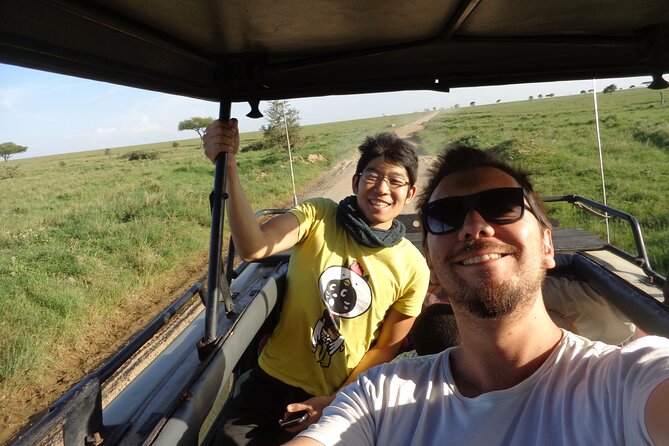
Raymond Ayo is worth noting as a contact person. Several travelers praised his quick replies and willingness to help with arrangements. One person needed an invitation letter for a visa application and received assistance, which suggests that pre-trip communication is one of the operator’s stronger points.
Day 2 at Tarangire: elephants, baobabs, and a useful first game drive
After breakfast, you drive to Tarangire National Park. The park is known for large elephant herds, baobab trees, tree-climbing lions, and the Tarangire River, which provides a key water source during the dry season.
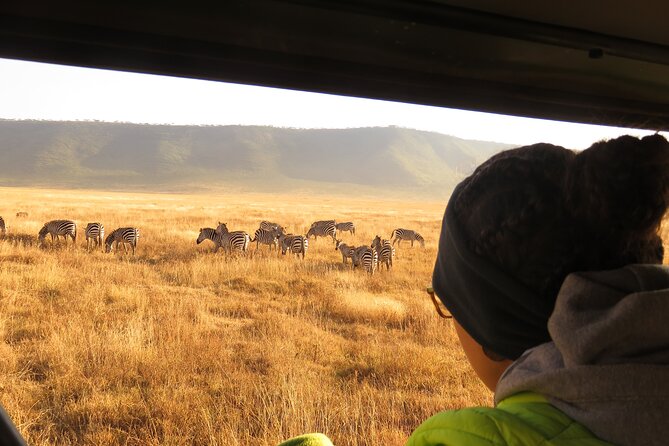
Tarangire is a good opening park because it offers a mix of large mammals and striking scenery before you reach the Serengeti. You may see elephants, zebras, giraffes, lions, and other wildlife. The description also refers to the Big Five, though sightings are never guaranteed in any park.
The baobabs give Tarangire a look you will not confuse with the open grasslands of the Serengeti. Their thick trunks and unusual shapes are part of the park’s character, while the river helps draw animals into certain areas.
The day is listed at about eight hours, including the transfer and safari time. That makes for a full first day, especially after breakfast and a pickup from Arusha. You spend the night at Jambo Lodge, giving you a break from camping before the longer Serengeti section.
Day 3: crossing toward the Serengeti and the first migration search
After breakfast, you set out toward Serengeti National Park with a picnic lunch. The plan includes a game drive along the way, a route through the Ngorongoro area, and a late game drive in the Serengeti.
This is where the trip begins to feel like a real safari expedition. The Serengeti is famous for its huge wildlife population and the annual movement of more than 1.5 million wildebeest, along with large numbers of zebra. The exact position of the herds changes with rainfall and grazing, so the value of a migration-focused trip depends heavily on timing and the guide’s ability to follow current animal movements.
For calving season, the stated focus is Lake Ndutu and the southern Serengeti. That is important because the best route for migration viewing is not the same all year. Ask the operator to confirm the expected calving area for your dates, especially if seeing newborn wildebeest is your main reason for booking.
The drive is listed at eight hours. A picnic lunch keeps the schedule moving, but you should expect a long day in the vehicle. The reward is the change in scenery as you leave the Arusha area and enter the wider Serengeti region.
You camp in the Serengeti that night. The details call it budget camping, without explaining whether the camp is permanent or mobile, or what facilities are available. Get clear answers if you need showers, electricity, or a private bathroom.
A few more options to weigh up in Arusha
- Balloon Safari & Bush Breakfast in Serengeti – Miracle Experience
★ 5.0 · 1,646 reviews - Tanzania Classic – 7 Days
★ 5.0 · 1,151 reviews - Materuni Waterfalls, coffee tour & Kikuletwa Hot Springs
★ 5.0 · 643 reviews - 7-Day Premium Luxury Tanzania Safari All-Inclusive
★ 5.0 · 426 reviews
Day 4: the main Serengeti wildlife day
Day four gives you another full day in the Serengeti, with breakfast, a picnic lunch, and game drives. The schedule again describes a route through the Ngorongoro area and a later drive in the Serengeti, although the wording is not fully clear about how much time is spent in each area.
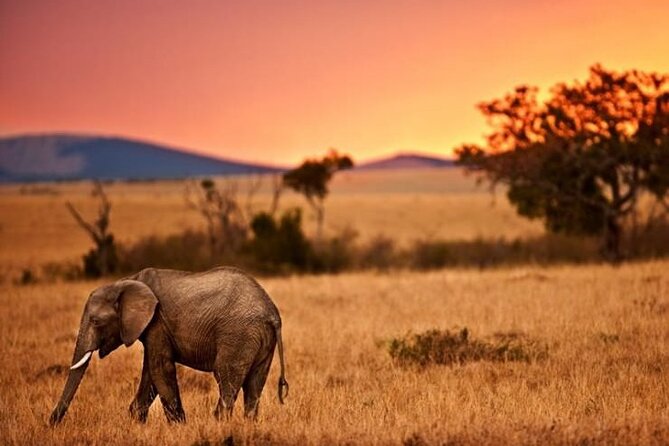
This is likely to be the most important day for wildlife. A second Serengeti day gives you more chances to find wildebeest, zebra, lions, cheetahs, elephants, giraffes, and other animals. It also reduces the risk that one slow wildlife day ruins the entire park experience.
The calving season is especially compelling because thousands of wildebeest calves may be born daily during the peak period. Newborn animals attract predators, so the drama is not limited to the migration itself. You may see territorial behavior, nursing calves, hunting attempts, or simply huge herds spread across the grasslands.
Still, do not book this expecting a guaranteed river crossing. The supplied route focuses on southern and central Serengeti calving areas, not the northern crossing season. The famous crocodile-filled river scenes belong to a different phase and region of the migration.
You spend another night in budget camping. Two nights in the park are useful because they place you closer to the animals than a daily return to Arusha would. The cost is less comfort and, potentially, less privacy.
Day 5 at Ngorongoro Crater: concentrated wildlife below the rim
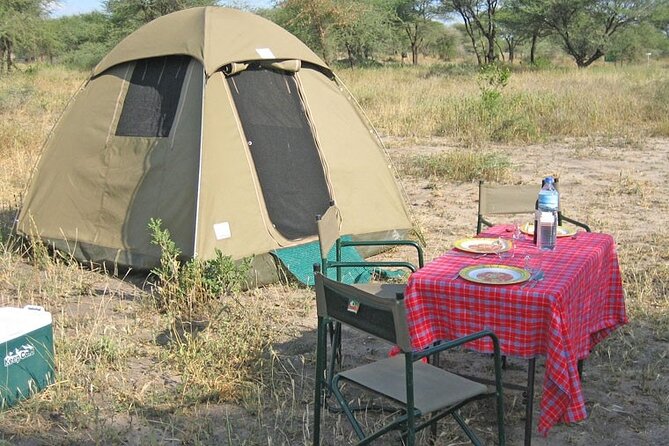
An early start takes you toward the Ngorongoro Crater for a game drive. The crater is a UNESCO World Heritage Site and the world’s largest caldera, with an unusually high concentration of wildlife inside its enclosed setting.
This is one of the easiest places on the route to look for several major species in a single day. The plan specifically says you may see all of the Big Five, meaning lion, leopard, elephant, buffalo, and rhinoceros. That is a hopeful target, not a promise, but the crater’s compact wildlife area gives you a strong chance to see a broad range of animals.
The crater’s appeal is different from the Serengeti’s. In the Serengeti, the attraction is space, movement, and the possibility of following the migration. In Ngorongoro, you get a dramatic volcanic setting and a more concentrated game-viewing experience.
The day is listed at seven hours and includes admission. It is still an early morning, and the route may feel tiring after two nights of camping and long drives. I would pack layers because the crater highlands can feel cooler than the lower park areas, although the supplied information does not specify temperatures or weather for your dates.
Day 6 at Lake Manyara: birds, forest, and the Rift Valley wall
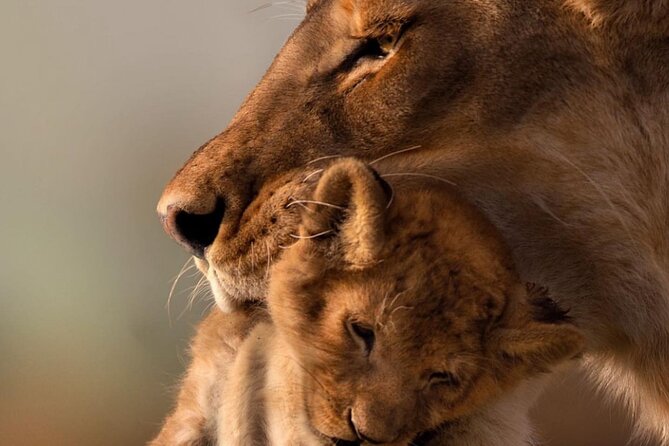
The final park is Lake Manyara National Park. After breakfast, you drive to a compact wildlife area built around a lake that covers about two-thirds of the park. The Great Rift Valley wall forms the backdrop.
Lake Manyara adds variety after the broad grasslands of the Serengeti and the open crater floor. The park is noted for more than 400 bird species, including large numbers of pink flamingos. If you enjoy birdlife, this may be one of the trip’s most rewarding stops.
The park is also associated with tree-climbing lions, though the description does not promise a sighting. Its smaller size can make for a focused game drive, but you should not expect the same scale of animal movement as in the Serengeti.
The final day is listed at about seven hours, followed by the drive back to town in the evening. That timing makes Lake Manyara a useful final stop, but it may feel rushed if your return flight leaves the same day. Confirm your drop-off time and do not schedule a tight international departure without allowing for traffic, park delays, and the long return drive.
What the guide and group size mean in practice
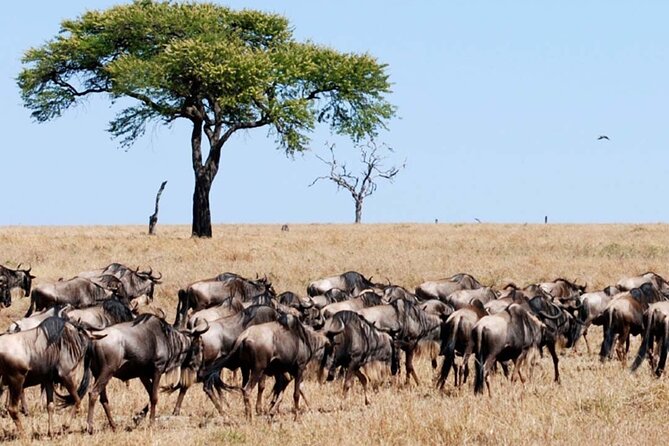
A safari guide can make a major difference because the animals are not arranged for easy viewing. The available feedback repeatedly praises the organization, responsiveness, and guide service. Names connected with the trips include Raymond Ayo, Mud… as listed in one account, and Rhinocent, who was praised for professionalism and finding good wildlife views.
The incomplete name should not be treated as a mistake, but it does show why you should confirm your assigned guide before departure if that matters to you. Ask about the guide’s experience with the calving grounds and how often the route is adjusted to follow the herds.
The maximum group size is six. That is small enough to keep the vehicle from feeling packed, though personal space still depends on the vehicle and how many people actually join. A shared safari also means you may need to compromise on stop lengths, seating, and daily pace.
The positive comments about quick replies are useful here. Safari plans can involve airport timing, visa questions, dietary needs, and changing park conditions. Having a responsive contact before arrival reduces stress, especially for a first visit to Tanzania.
Camping, meals, and what to clarify
The camping element is central to the price. You should expect a more basic experience than a lodge circuit, with nights close to the parks and a stronger connection to the setting. At the same time, the package does not provide enough detail to judge the exact comfort level.
Before booking, ask these practical questions:
- Are tents already set up, or do you help assemble them?
- Are beds, mattresses, bedding, and towels supplied?
- Are bathrooms private or shared?
- Is there electricity for charging phones and cameras?
- Where are the two Serengeti camps located?
- Are all meals served at camp or carried as picnic food?
The package includes unlimited drinking water, five breakfasts, five lunches, and four dinners. That covers most meals during the six days, but the missing dinner is worth clarifying. Alcohol is not included, and tips are also separate.
Food arrangements are especially important if you have dietary restrictions. The provided information does not state how special diets are handled, so raise that before departure rather than assuming the camp kitchen can accommodate you.
Who should book this six-day safari?
I would recommend this trip to you if your priorities are migration wildlife, major northern Tanzania parks, and a controlled budget. It suits people who are happy to spend long days in a safari vehicle and sleep in basic camps in exchange for access to the Serengeti and Ngorongoro.
It also fits first-time safari visitors who want airport transfers and a pre-safari briefing handled by one company. The small group limit and repeated praise for Raymond Ayo’s communication add welcome reassurance.
I would hesitate if you want luxury accommodation, short transfer days, or a highly detailed published schedule. The route is ambitious for six days, and the camping information is brief. You should also avoid assuming that the wildebeest will be in Lake Ndutu during every calving-season departure. Migration timing follows rain, grass, and animal movement, not a fixed calendar.
The tour has a listed rating of 4.9 from nine reviews, with especially strong praise for organization, guide service, airport pickup, and friendly communication. That is encouraging, but the small number of ratings means you should still ask direct questions about current camp standards and your exact travel dates.
Should you book it?
Book this safari if you want the best wildlife value from six days and can accept basic camping, long drives, and some uncertainty in the daily route. The mix of Tarangire, two Serengeti nights, Ngorongoro Crater, and Lake Manyara gives you a broad northern Tanzania experience, while the southern Serengeti focus targets the migration’s most famous calving period.
Before you pay, confirm the camp facilities, first-night accommodation, private or shared vehicle arrangements, the exact calving-season route, and the missing dinner. If those answers suit you, $1,190 is a reasonable price for a compact safari with major park fees and essential meals included.
FAQ
Where does the safari begin?
The safari begins in Arusha, Tanzania. A staff member from Serengeti Landmark Tours provides pickup and a briefing before the park visits begin.
How long does the safari last?
The experience lasts approximately six days.
Which national parks and wildlife areas are included?
The route includes Tarangire National Park, Serengeti National Park, the Ngorongoro Crater area, and Lake Manyara National Park. The overview also identifies Lake Ndutu and the southern and central Serengeti as migration-focused areas.
Is airport pickup included?
Yes. Airport pickup and drop-off are included in the price.
How large can the group be?
The maximum group size is six people.
What meals are included?
The package includes five breakfasts, five lunches, and four dinners. Drinking water is also included.
What is not included in the price?
Tips, alcoholic drinks, and a visa are not included.
Can I cancel for a full refund?
Yes, you can cancel at least 24 hours before the experience start time for a full refund. Cancellations or changes made less than 24 hours before the start time are not accepted for a refund.
Just added in Arusha
- Safari “Kifaru” – 5 days in the most famous Parks in the world★ 5.0 · 4 reviews
- Saadani Day Trip★ 5.0 · 13 reviews
- 3 Days Tanzania Short and Spicy★ 5.0 · 6 reviews
- 5 Day Tanzania Safari Camping Adventure Private Tour★ 5.0 · 2 reviews
- Day Trip to Ngorongoro Crater from Arusha★ 5.0 · 1 review
- SERENGETI NATIONAL PARK Tour★ 4.5 · 5 reviews
- 3 Days Serengeti Park & Ngorongoro Crater Adventure Safari★ 5.0 · 8 reviews
- 6 Days Tanzania Bush Experience Safari★ 5.0 · 6 reviews
Camping Safaris, compared.
3 Days Serengeti & Ngorongoro Group Camping Safari
Read our review →
2 Days Tarangire and Ngorongoro Group Camping Safari
Read our review →
3 Days Tarangire, Ngorongoro & Lake Manyara Group Camping Safari
Read our review →
5-Day private Camping Safari Tour in Tanzania
Read our review →
Browse the lists this tour appears in