
Reviewed · SERENGETI & NGORONGORO SAFARIS
Cycling from Kilimanjaro to Ngorongoro Crater
Six days, two great Tanzanian landmarks. This private cycling trip links Mount Kilimanjaro and Ngorongoro Crater by way of Chagga villages, Maasai country, elephant routes, Tarangire, Lake Manyara, and the Great Rift Valley. I like the close contact with daily life that comes from riding through villages, and I like the way the support vehicle, meals, lodging, and route planning take much of the strain out of a demanding journey.
The main consideration is the physical effort. This is not a casual bike ride between sightseeing stops. You will face dusty roads, long distances, rolling climbs, heat, and a tough final day up the Rift Valley escarpment. The route can be adapted to your group, but you should arrive with a moderate level of fitness and a willingness to work for the views.
The trip costs $2,820.52 per person and begins at 7:00 a.m. from One Bike Shop on Mailimoja Road in Moshi. It is a private tour, so only your group rides together. That matters here: the guides can adjust the pace and daily riding to match your abilities, a feature that helped make the trip manageable for groups ranging from first-time cycling tourists to fit riders over 55.
In This Review
- Key points to know before booking
- Why this route is more than a long bike ride
- Day 1: From Moshi through Kilimanjaro’s green foothills
- Day 2: Dusty Ngasurai plains and the road toward Arusha
- Day 3: The longest ride, mostly on rolling tarmac
- Day 4: Tarangire country, Maasai settlements, and the Rift Valley
- Day 5: The hard climb above Lake Manyara
- Day 6: Rest, departure, or an Ngorongoro game drive
- What the support team adds to the price
- The guides and the feel of the ride
- Meals, lodging, and daily comfort
- Who should book this six-day challenge?
- Should you book Cycling from Kilimanjaro to Ngorongoro?
- FAQ
- Where does the cycling tour start?
- How long does the experience last?
- Is this a private tour?
- What level of fitness do I need?
- Are meals included?
- Is a game drive at Ngorongoro included?
- What is the cancellation policy?
Key points to know before booking
- Kilimanjaro to Ngorongoro by bicycle: You travel across northern Tanzania rather than simply being driven between national parks.
- A changing route every day: Expect coffee and banana farms, dry Maasai plains, tarmac, gravel, villages, wildlife corridors, and Rift Valley views.
- The toughest finish: Day 5 includes the climb from Lake Manyara toward the top of the Great Rift Valley escarpment.
- A support vehicle is included: It provides practical backup during long or tiring sections and carries the trip’s logistical burden.
- Safari time is optional: A game drive at Ngorongoro can be arranged on Day 6, after the cycling portion ends.
- Check the insurance terms: The highlights say cycling insurance is provided, while the inclusions list insurance as not included. Confirm this point before paying.
Why this route is more than a long bike ride
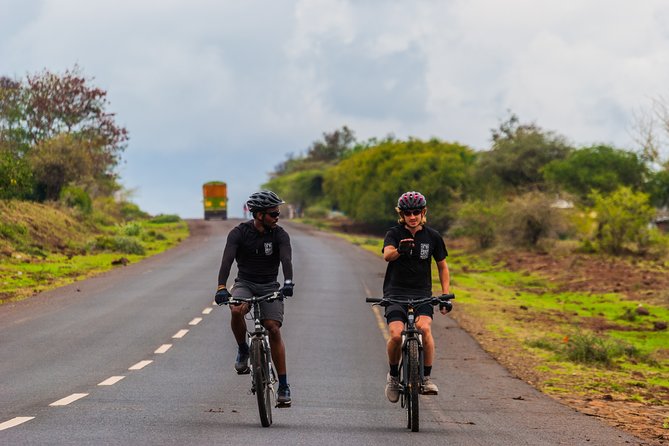
The appeal is not just reaching Ngorongoro under your own power. You spend six days watching Tanzania change around you, from the cultivated foothills of Kilimanjaro to dry open country and then the dramatic high ground above Lake Manyara.
Cycling gives you a slower view of the country. You pass through Chagga communities, coffee and banana plantations, Maasai settlements, and ordinary village roads. You have time to notice people, animals, roadside activity, and changes in vegetation that can vanish from a vehicle window.
The route also links several well-known parts of the northern circuit without making you repeat the same road. Kilimanjaro provides the opening backdrop. Tarangire country brings elephant habitat. Lake Manyara and the Rift Valley add scenery. Ngorongoro provides the grand finish.
There is a trade-off. The same slow pace that makes the ride rewarding also exposes you to dust, heat, traffic on tarmac sections, and long hours in the saddle. This is best seen as an active expedition with sightseeing woven into it, not a sightseeing holiday with a few easy rides.
More Serengeti and Ngorongoro safaris:
- Safari Serengeti And Ngorongoro
★ 5.0 · 288 reviews - 5 Days Camping Tarangire, Serengeti & Ngorongoro crater & Visiting Maasai
★ 5.0 · 58 reviews - 4 Days Group Joining Camping Safari to Tarangire Serengeti Ngorongoro Crater
★ 5.0 · 50 reviews
Day 1: From Moshi through Kilimanjaro’s green foothills
The first morning starts at One Bike Shop in Moshi. From there, you head toward the western side of Kilimanjaro, riding first on paved roads and then on dirty gravel.
The opening section passes through Chagga villages, banana farms, coffee plantations, and green forest. It gives you an immediate sense of how the lower slopes of Kilimanjaro support settled agricultural life. The route is not a straight, flat run. You will handle small climbs and descents as the vegetation gradually thins.
Farther west, the scenery turns more open and dry. You leave the cultivated foothills behind and enter Maasai country, where the setting and local culture feel markedly different. The route may also bring you near wildlife crossing areas, so your guide’s instructions matter.
You overnight in Ngabobo village. That makes Day 1 a useful introduction to the trip’s basic rhythm: ride for much of the day, watch the setting change, and finish somewhere connected to the route rather than returning to a large town.
The drawback is that the day combines several surfaces. If your cycling experience is mostly on smooth pavement, the gravel may take some adjustment. A bike that fits well and comfortable clothing will matter more than fancy equipment.
Day 2: Dusty Ngasurai plains and the road toward Arusha
Day 2 is long, but the route is described as having no major climbs. Much of the ride follows a dusty, dirty road through the Ngasurai open plains.
This is a particularly interesting section because the plains form a wildlife migration path. Elephants move through the area from Kenya’s Amboseli National Park. That does not mean you should expect a guaranteed animal sighting beside your bicycle, but it does mean you are riding through a functioning wildlife route rather than an ordinary rural road.
The surface is the main challenge. Dust and loose gravel can make a long day feel harder than a paved ride of the same distance. The reward is a broad, open setting and a strong contrast with the forest and farms of Day 1.
Once you reach the main tarmac road toward Arusha, the cycling becomes easier. You pass villages with Mount Meru visible in the distance, then spend the night at a lodge in Arusha.
This overnight stop breaks up the route at a sensible point. You get a proper base after the dustier day, while the mountain view gives you another geographic marker before the journey turns toward Tarangire and the Rift Valley.
Day 3: The longest ride, mostly on rolling tarmac
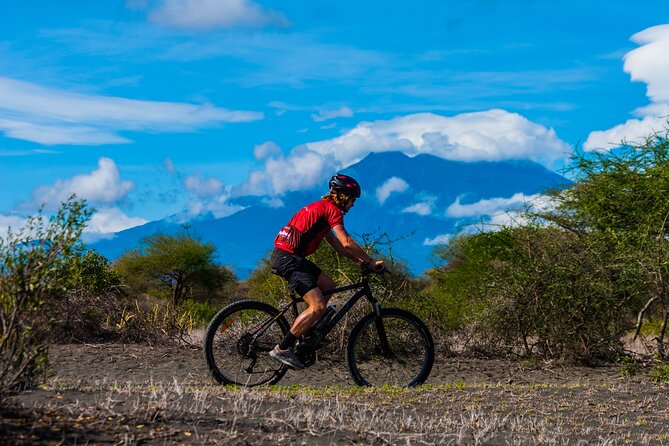
Day 3 is the longest riding day, but it is considered less demanding because much of the route follows an undulating paved road. Do not mistake less demanding for easy. The distance still requires stamina, and repeated small rises can wear on your legs.
This is the day when the human side of the trip comes forward. You ride through colorful Tanzanian villages and see everyday life at road level. The route offers the kind of contact that is difficult to get from a safari vehicle, where most of your attention stays on animals and scenery.
The day ends near the border of Tarangire National Park. Tarangire is known for having one of Tanzania’s largest concentrations of elephants, so the location sets up the wildlife focus of the next part of the journey.
You overnight at Roika Tented Lodge. The lodge provides a place to rest after the longest ride and gives you time to enjoy the setting near Tarangire.
For many people, Day 3 may be the mental test. The road is kinder than the gravel of Day 2, but the distance asks for steady pacing. Use the support vehicle when needed rather than treating a pickup as failure. The point is to reach Ngorongoro with enough energy to enjoy the final stages.
A few more options to weigh up in Moshi
- 1-Day Moshi Villages bike tour
★ 5.0 · 59 reviews - Chagga Villages in Mount Kilimanjaro Cycling Day Trip
★ 5.0 · 42 reviews - Moshi city bike day trip
★ 5.0 · 17 reviews - Kilimanjaro bike park safari
★ 5.0 · 16 reviews
Day 4: Tarangire country, Maasai settlements, and the Rift Valley
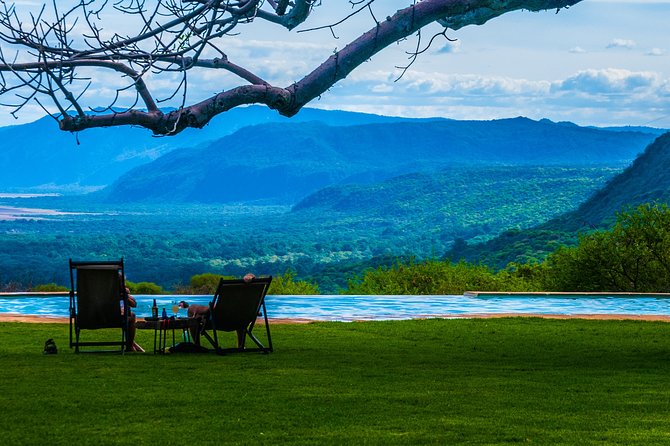
Day 4 brings some of the most scenic riding of the northern circuit. You pass through wildlife corridors between Tarangire National Park and Lake Manyara, then continue past Maasai traditional settlements.
This section gives the route a wider ecological context. The parks are not isolated islands. Animals move through connecting areas, and you can see how villages, grazing areas, and wildlife routes share the same broad region.
The road is mostly paved, with the final few kilometers turning to dirt on the way to Migombani Camp. That surface change is worth keeping in mind when planning your effort. You may find the paved section quick and comfortable, then need to slow down again on the final rougher approach.
The Great Rift Valley views are a major reward. From the road, you begin to understand the scale of the escarpment and the way it shapes the region. The setting is not simply pretty. It explains why the route changes so sharply from open plains to steep high ground.
Migombani Camp is your overnight stop. After several long days, this is a good moment to rest, check your bike, and prepare for the hardest climb of the trip.
Day 5: The hard climb above Lake Manyara
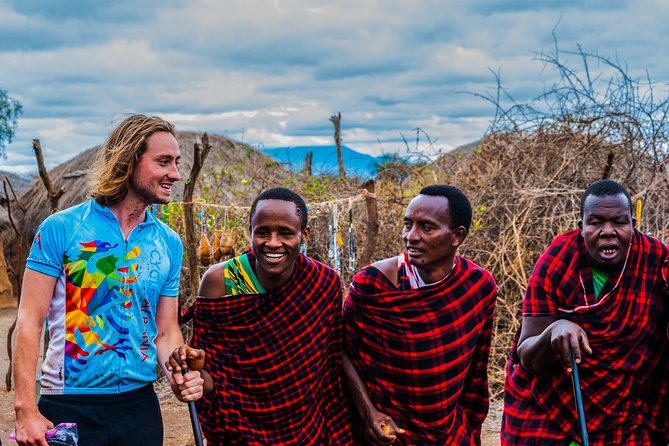
Day 5 is the toughest and, for many riders, the most satisfying day. The first major stop is the entrance to Lake Manyara National Park. From there, you climb toward the top of the steep Great Rift Valley escarpment.
The climb is the central physical challenge. Your reward comes in stages, including a stop for a broad view over Lake Manyara and the surrounding area. This is a good place to pause rather than rush. The view gives you a clear sense of the height you have gained.
After reaching the top, you continue through Karatu, a colorful town, and then ride toward the Ngorongoro Conservation Area gate. The finish is not at the bottom of a park road or a remote trail. You complete the cycling challenge at the conservation area entrance, then transfer to a lodge for rest and a celebration.
That transfer is important. The published route says the cycling ends at the Ngorongoro Conservation Area gate, while the tour information also says the activity ends back at the meeting point. Since the final overnight and return arrangements involve a vehicle, confirm exactly where you will be dropped after the tour.
Day 5 asks you to manage your energy carefully. The climb may be achievable, but it should not be treated lightly. If your group has mixed abilities, the private format and support vehicle are especially valuable here. The guides can adjust the day rather than forcing every rider to maintain one rigid pace.
Day 6: Rest, departure, or an Ngorongoro game drive
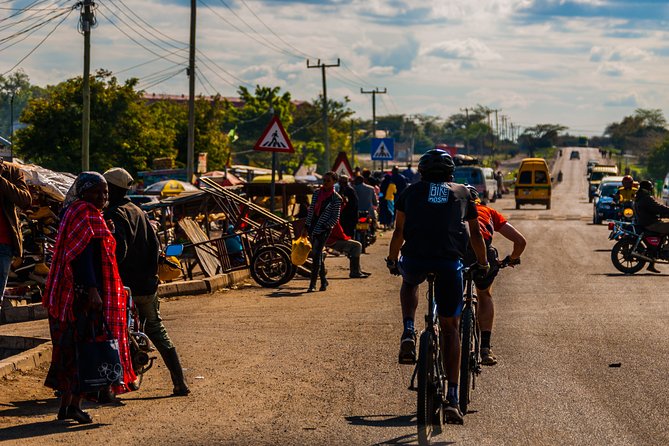
The final day is deliberately lighter. You relax at the lodge while waiting for a transfer to Kilimanjaro Airport or another departure point.
You can also arrange a game drive in Ngorongoro on this day. That option changes the value of the trip for people who want both cycling and a classic safari. After arriving by bicycle, seeing the crater by vehicle gives you access to a different kind of wildlife experience and lets you enjoy the area without worrying about the next ride.
The game drive is not included as a listed part of the standard cycling package, so arrange it in advance and confirm the additional cost and timing. If you have a flight or onward connection, leave enough time for the transfer.
What the support team adds to the price
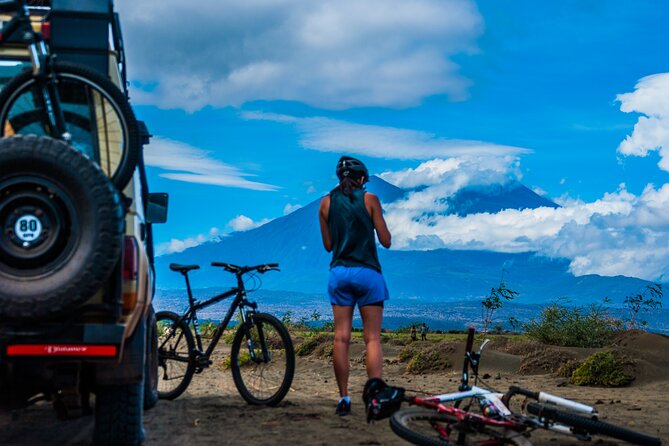
At $2,820.52 per person, this is not a budget cycling holiday. The price includes transportation, accommodation, meals, and a supporting vehicle. Dinner is included for six nights, breakfast for five mornings, and lunch for all six days.
That package can represent fair value if you were already planning to pay separately for lodging, food, transfers, route support, and bike backup. The trip covers a large area, and the support vehicle reduces the risk of being stranded after a mechanical issue or a difficult section.
The private format also helps explain the cost. You are not placed into a large mixed group with a fixed pace. The guides can tailor the days to your group’s requests and abilities. That flexibility proved useful for a group of four riders over 55 and for someone taking a first cycling trip.
Tips are not included. Insurance needs clarification because the tour description says cycling insurance is provided, while the inclusions specifically list insurance as excluded. Ask for the exact coverage in writing, including medical care, evacuation, bike-related incidents, and cancellation.
The guides and the feel of the ride
The guiding team has received strong praise for safety, organization, local culture, and wildlife awareness. Hilary, Goodluck, and Joseph are names associated with the guiding and support team, and the group format allows them to work closely with riders.
You should expect more than navigation. The guides help set a workable pace, explain the places you pass, and respond to changing ability levels. That matters on a route where one day is dusty and flat, another is long and paved, and the next ends with a major climb.
The strongest feature is the combination of care and challenge. The ride is not presented as effortless, but it can be adjusted. That balance is why the trip can suit both experienced cyclists and people trying a multi-day cycling tour for the first time.
Still, adaptability is not the same as removing the physical demands. You should be comfortable riding for long periods and handling both paved and unpaved roads. Ask about bike type, spare parts, luggage handling, and daily distances before you arrive, since those details are not specified here.
Meals, lodging, and daily comfort
Meals are included throughout the six-day schedule, which simplifies a route through rural areas. Breakfast, lunch, and dinner are covered according to the stated package, though the exact menus and meal arrangements are not provided.
Accommodation changes with the route. You stay in a village on the first night, at a lodge in Arusha on Day 2, at Roika Tented Lodge near Tarangire on Day 3, and at Migombani Camp on Day 4. The final night is at a lodge near the Ngorongoro area.
This mix gives the journey variety, but you should not book it expecting one uniform hotel standard. A village overnight, a tented lodge, and a camp each offer a different level and style of comfort. Ask for the specific properties and room arrangements if that affects your decision.
Who should book this six-day challenge?
I would recommend this trip to you if you want to see northern Tanzania actively and prefer a route with real variety. It suits riders who value village contact, changing scenery, and a sense of achievement more than a polished, relaxed holiday.
It is also a good fit for a private group of friends or a couple. The ability to adjust the pace is useful when riders have different strengths. It can work for a first cycling tour if you are reasonably fit and open about your limits.
I would be cautious if you dislike dust, long rides, rough roads, or uncertain daily comfort. You may prefer a vehicle-based safari with shorter optional bike rides. This route rewards effort, but it asks you to accept some discomfort as part of the deal.
Booking requires a little practical care. Confirmation is provided at booking, pickup is offered, and the starting time is 7:00 a.m. Free cancellation is available up to 24 hours before the start, but poor weather or insufficient numbers can also cause a date change or cancellation. Since it is a private activity, confirm the minimum group requirement and the final transfer plan before you commit.
Should you book Cycling from Kilimanjaro to Ngorongoro?
Book it if you want Tanzania to unfold at bicycle speed. You will see farms, villages, Maasai country, wildlife routes, Tarangire country, Lake Manyara, the Rift Valley, and Ngorongoro in one demanding but well-supported journey.
The strongest reasons to choose it are the private format, the support vehicle, the adaptable guides, and the route’s remarkable variety. The main reasons to hesitate are the price, the long riding days, the rough surfaces, and the steep final climb.
For a fit rider who wants a personal challenge rather than a standard safari, this is a memorable way to connect Kilimanjaro and Ngorongoro. Before booking, get clear answers about insurance, bike equipment, daily distances, lodging, and the Day 6 game drive. If those details suit you, the route offers a rare chance to earn your safari views one pedal stroke at a time.
FAQ
Where does the cycling tour start?
The tour starts at One Bike Shop on Moshi Mailimoja Road in Tanzania. The scheduled start time is 7:00 a.m.
How long does the experience last?
The cycling journey lasts approximately six days. Day 6 is mainly for resting at the lodge and arranging onward transportation.
Is this a private tour?
Yes. Only your group participates in the activity.
What level of fitness do I need?
A moderate level of physical fitness is recommended. The route includes long rides, gravel and dusty roads, undulating tarmac, and a difficult climb up the Great Rift Valley escarpment.
Are meals included?
Yes. The package includes six dinners, five breakfasts, and six lunches.
Is a game drive at Ngorongoro included?
A game drive can be arranged on Day 6, but it is presented as an optional arrangement rather than a standard included feature. Confirm the details and cost when booking.
What is the cancellation policy?
You can cancel at least 24 hours before the local start time for a full refund. Cancellations or changes made less than 24 hours before the start are not accepted for a refund. If poor weather or insufficient numbers cause cancellation, you will be offered another date or experience, or a full refund.
Just added in Moshi
- Zanzibar: Stone Town tour and Nakupenda beach with Lunch★ 5.0 · 1 review
- machame route★ 5.0 · 16 reviews
- day trip lake manyara★ 5.0 · 2 reviews
- Mt Kilimanjaro 6 days Marangu route hike★ 5.0 · 3 reviews
- Private Cycle to Kilimanjaro Bike Park Safari★ 5.0 · 6 reviews
- West Kilimanjaro cycling Adventures★ 4.5 · 8 reviews
- Wildlife Extravaganza: Manyara, Tarangire & Ngorongoro in 3 Days★ 5.0 · 3 reviews
- 3 Days Private E-Bike Tour in West Kilimanjaro★ 5.0 · 3 reviews
Serengeti & Ngorongoro Safaris, compared.
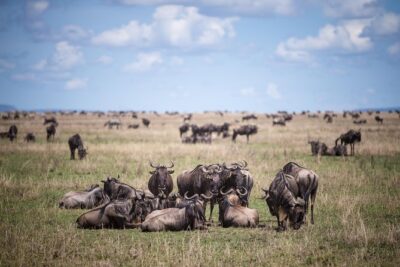
Serengeti Balloon Safari and authentic bush breakfast
Read our review →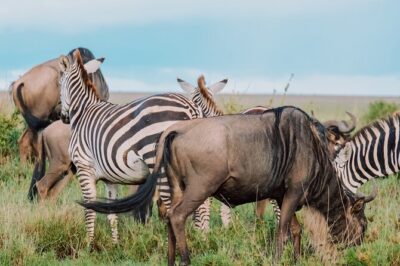
Balloon Safari & Bush Breakfast in Serengeti – Miracle Experience
Read our review →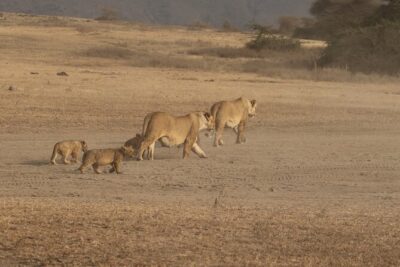
3 Days Serengeti & Ngorongoro Group Camping Safari
Read our review →
5-Day Highlights mid-Range Crater, Serengeti, Tarangire
Read our review →
Private 6-Day Tarangire Manyara Crater and Serengeti with Mid-Range Lodges
Read our review →
5 Days Camping Tarangire, Serengeti & Ngorongoro crater & Visiting Maasai
Read our review →Browse the lists this tour appears in