
Reviewed · CAMPING SAFARIS
Embark on a 5-day camping safari adventure.
Wildlife takes center stage here. This five-day camping safari links Tarangire, Serengeti, and Ngorongoro, giving you three of northern Tanzania’s big names without the price of a lodge-based trip. I like the small maximum of six people and the chance to sleep in tented camps rather than pass through the parks in a rush. I also like that park fees, meals, bottled water, bed linen, and a private driver-guide are included. The tradeoff is a busy schedule with long road days, early departures, and four nights under canvas.
This is a good fit if you want a classic northern circuit safari and prefer spending your money on time in the parks rather than polished rooms. Guides such as Wilson, Bernard, and Emmanuel have been praised for their driving, wildlife spotting, patience, and friendly manner. Still, you should be comfortable with camping, picnic lunches, and plans shaped by park roads, animal sightings, and government fee changes.
In This Review
- Key points to know before booking
- Why this northern Tanzania route works
- Day 1: Tarangire’s elephants and Migombani’s pool
- Day 2: The long road into the Serengeti
- Day 3: A full day in the Seronera Valley
- Day 4: Leaving the plains for Ngorongoro
- Day 5: Down into the Ngorongoro Crater
- Camping, meals, and daily comfort
- The guide can shape the whole safari
- Is $1,250 per person good value?
- Who should book this safari?
- Practical details before you go
- Should you book the five-day camping safari?
- FAQ
- Where does the safari start and finish?
- How many people can join the tour?
- Which national parks and conservation areas are included?
- Are park and conservation fees included?
- What meals are provided?
- Is vegetarian food available?
- Can I cancel for a full refund?
Key points to know before booking
- Three famous wildlife areas in five days: Tarangire, Serengeti, and the Ngorongoro Conservation Area all make the route.
- A small private group: The vehicle and activity are limited to your own group, with a maximum of six people.
- Camping with a welcome comfort stop: Migombani Campsite offers an infinity pool and views toward Lake Manyara.
- Four breakfasts and dinners, five lunches: Most daytime meals are picnic lunches, keeping the safari moving.
- The Serengeti gets two full days: That gives you more than a quick crossing through the park.
- The price includes major park costs: At $1,250 per person, taxes, park and conservation fees, tented lodging, meals, bottled water, and a driver-guide are covered.
Why this northern Tanzania route works
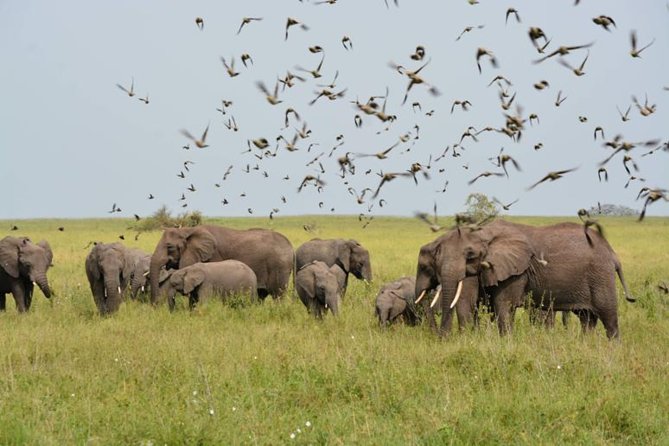
The route is built around variety. Tarangire gives you a first taste of game viewing close to Arusha. The Serengeti then supplies two days of open plains and the chance to search for large herds and predators. Ngorongoro finishes the journey with one of Africa’s most concentrated wildlife settings.
I like this order because it starts with a manageable park day before moving into the grandest section of the route. It also saves the crater for the final morning, when the descent into the caldera feels like a fitting last act.
The schedule is not lazy. Day 1 takes about eight hours, and Day 5 is listed at roughly six hours. Day 2 includes the transfer from Tarangire toward the Serengeti, with game viewing along the way. You will spend plenty of time in the safari vehicle, but that travel is part of the northern circuit experience.
The tour begins at 8:00 a.m. from AIM Mall in Mbauda, Arusha, and returns to the same meeting point. Pickup is offered, but you should confirm the exact arrangement when booking.
More Camping Safaris in Arusha:
- 4 Days Group Camping Safari
★ 5.0 · 1,101 reviews - 5 Days Group Camping Safari
★ 5.0 · 730 reviews - 3 Days Serengeti & Ngorongoro Group Camping Safari
★ 5.0 · 574 reviews
Day 1: Tarangire’s elephants and Migombani’s pool
The first morning takes you from Arusha to Tarangire National Park. After entering the park, you spend the rest of the day on game drives with a picnic lunch.
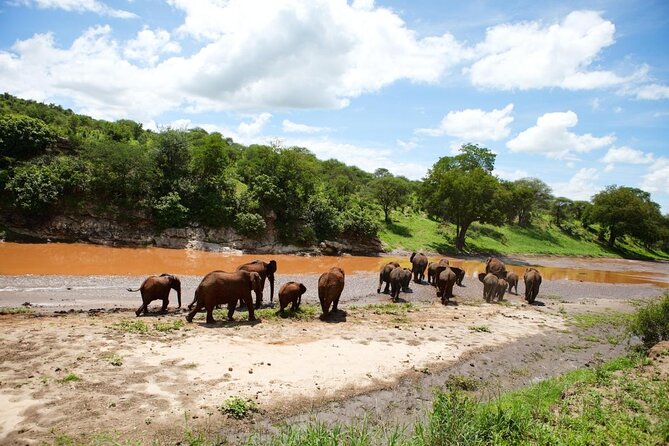
Tarangire is a strong opening stop because it provides a proper wildlife day without asking you to reach the distant Serengeti immediately. The park is especially associated with elephants, and its mix of open areas and trees gives you a different setting from the grasslands farther west.
The schedule allows game viewing through the afternoon before heading to Migombani Campsite for dinner and the night. This is where the trip adds a useful touch of comfort. You can relax by an infinity pool with views toward Lake Manyara, a pleasant change after hours on rough park roads.
I would treat the pool as a bonus, not the reason to book the safari. The real value of the first day is getting into the parks quickly and beginning with wildlife instead of spending the whole day on a transfer.
The eight-hour estimate is important. It includes departure from Arusha, time in Tarangire, and the journey to camp. Bring patience, sun protection, and something small for the road, since snacks and personal items are not included.
Day 2: The long road into the Serengeti
After breakfast, you set off for the Serengeti with a picnic lunch. Game viewing continues as you cross toward the Seronera Valley, where dinner and your overnight camp await.
This is likely to be one of the longest-feeling days of the five. You are not simply driving to a camp and waiting for the next morning. The route uses the park itself as the day’s viewing area, so the transfer becomes part of the safari.
The Serengeti name comes from the Maasai word siringit, meaning endless plains. That description makes sense once the road opens into broad grasslands. The wider Serengeti ecosystem covers about 35,000 square kilometers and extends into Kenya’s Maasai Mara, supporting the annual wildebeest migration.
You should not judge this day only by the number of animals seen. The appeal is the change in scale, from Tarangire’s more enclosed feel to a huge open country where distance, sky, and movement matter. Your guide’s judgment becomes valuable here, especially when deciding how long to watch an animal or when to keep moving toward Seronera.
The campsite is in the Seronera Valley, a central position for the next day’s exploration. You will appreciate that location on Day 3, when there is no major cross-country transfer taking time away from game viewing.
Day 3: A full day in the Seronera Valley
Day 3 is the schedule’s wildlife gift. You spend a full day exploring the Serengeti, with a picnic lunch and another night at camp in Seronera.
The Serengeti is about 14,763 square kilometers within the larger ecosystem. It is not one uniform stretch of grass. The southern plains are broad and open, the Lobo area to the north has rolling hills, and the east includes more remote wooded river valleys around Kirawira and Grumeti.
That variety gives your guide room to adjust the day’s route. Animal movements, recent sightings, and road conditions will shape where you go. The supplied information does not promise a particular animal or a migration crossing, and that is worth keeping in mind. Wildlife is wild, and even famous parks require luck.
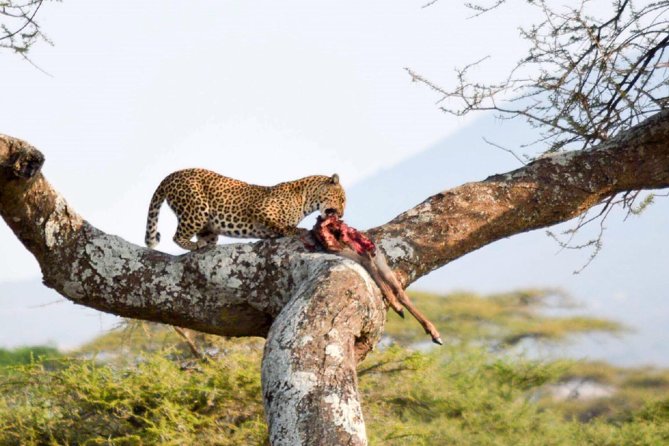
Past visitors singled out guides including Wilson and Bernard, with praise for careful driving, good wildlife spotting, and a warm presence. One particularly memorable sighting involved three servals, which gives you an idea of the kind of rare moment a sharp-eyed guide can help find. Bernard was also praised for his talent with cats.
A full Serengeti day makes this safari better value than a route that only crosses the park on the way to Ngorongoro. You still have to accept the realities of a mobile camping trip: picnic meals, a long day outside, and a camp that is functional rather than luxurious.
A few more options to weigh up in Arusha
- Balloon Safari & Bush Breakfast in Serengeti – Miracle Experience
★ 5.0 · 1,646 reviews - Tanzania Classic – 7 Days
★ 5.0 · 1,151 reviews - Materuni Waterfalls, coffee tour & Kikuletwa Hot Springs
★ 5.0 · 643 reviews - 7-Day Premium Luxury Tanzania Safari All-Inclusive
★ 5.0 · 426 reviews
Day 4: Leaving the plains for Ngorongoro
The fourth morning begins with an early departure from the Serengeti. You continue game viewing with a picnic lunch while making your way toward the Ngorongoro Highlands and Simba Campsite on the crater rim.
This is another transfer-heavy day, but it brings a dramatic change in scenery. The open Serengeti gives way to the highlands, and the campsite’s position near the rim sets up the following morning’s crater visit.
Ngorongoro Conservation Area covers about 8,300 square kilometers around the crater and surrounding highlands. It is not only a wildlife zone. The area was designated as a conservation area in 1956 after sustained pressure from the Maasai community, who had been dispossessed of land when the national park was created.
That background matters. Ngorongoro is managed differently from a national park, and the area carries both environmental and community significance. It is also developing as a trekking destination, although this five-day plan focuses on game viewing rather than a trek.
The overnight at Simba Campsite is well placed for the final morning. You are already on the crater rim instead of approaching from farther away, which makes the early descent practical. The schedule remains demanding, though. After a full day coming out of the Serengeti, you will want to be ready for another early start.
Day 5: Down into the Ngorongoro Crater
The final morning begins with a descent down the crater walls for a full day of game viewing. You have a picnic lunch inside the crater, then leave for Arusha and arrive in the middle to late afternoon.
The crater covers about 210 square kilometers and contains several types of habitat within its natural amphitheater. That compact setting is a major reason it is such a powerful final stop. You can see a broad cross-section of Tanzanian wildlife without covering the huge distances required in the Serengeti.
The crater is often described in grand terms, and the language can sound excessive. In this case, the enclosed setting really does make the wildlife feel unusually accessible. It is one of the most convenient places on the northern circuit to spend a day looking for a range of animals.
The drawback is timing. A morning descent, a full game-viewing day, picnic lunch, and the return to Arusha make this a long finish. If you have an evening flight, do not assume the mid to late afternoon arrival leaves plenty of margin. The official schedule ends back at AIM Mall, so plan your onward arrangements with care.
Camping, meals, and daily comfort
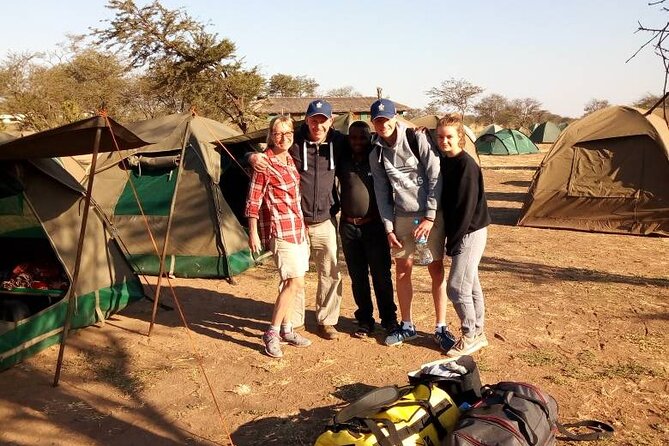
This is a camping safari, but the package includes tented accommodation and bed linen. You receive four breakfasts, five lunches, and four dinners, with the lunches generally served as picnics during park days.
That meal pattern makes sense. Stopping at a lodge restaurant each afternoon would cut into game-viewing time and add cost. Picnic lunches let you stay out where the animals are, though they are less comfortable than a long restaurant break.
Bottled water is included. Snacks are not, so bring your own supply if you like to eat between meals. You should also advise the company about dietary needs when booking. Vegetarian food is available if requested in advance.
The information provided does not spell out every campsite facility, so you should ask specific questions before paying if showers, toilets, electricity, or charging points matter to you. Do not assume that a campsite with an infinity pool means every night has lodge-style amenities. Migombani’s pool is the clearly stated comfort feature, while the other nights are described simply as tented camping.
The guide can shape the whole safari
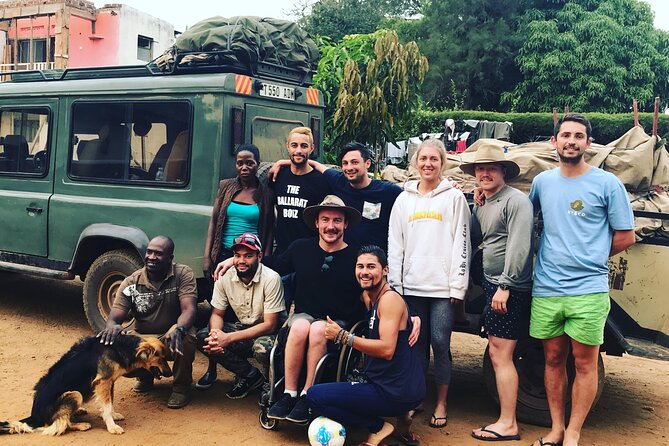
A safari vehicle is only part of the equation. Your guide controls the pace, reads the road, explains what you are seeing, and helps turn a long transfer into a day worth remembering.
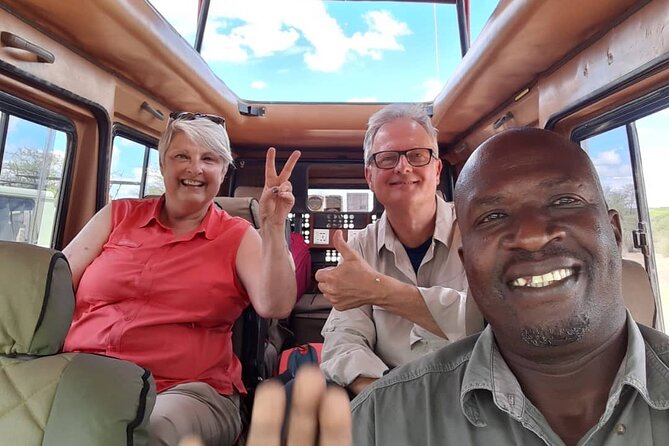
Wilson received praise for guiding and driving on a five-day safari. Bernard was repeatedly described as an excellent guide, with a special feel for spotting cats. Emmanuel was praised for efficiency, kindness, and care on a longer family safari. The company may also use a multilingual guide.
The tour is private, which means only your group participates, even though the vehicle can hold up to six people. That arrangement gives you more say over photo stops, viewing time, and the general rhythm of the day than a large shared departure.
I would still confirm the guide’s name, language, and group size before departure. A private tour can be excellent for two people, but the price per person may feel easier to justify when shared among a small group.
Is $1,250 per person good value?
At $1,250 per person, the price is not a budget bus ride, but it is a reasonable package for five days covering three major protected areas. The listed inclusions remove several large costs: park and conservation fees, taxes, handling charges, tented accommodation, bed linen, meals, bottled water, and a private driver-guide.
Park fees alone can make northern Tanzania expensive. Including them in the quoted price makes budgeting easier, although the company warns that government tax or park-fee increases may be passed on. Ask if the price is fixed for your dates and how any increase would be handled.
The value is strongest if you want a private arrangement and are happy with camping. It is weaker if you mainly want a soft bed, long evenings at a lodge, or a slow schedule. A five-day trip has to cover a lot of ground, and the price pays for access to famous parks as much as for comfort.
Tips, snacks, and personal purchases are extra. Those costs are easy to overlook, so allow room in your budget.
Who should book this safari?
I would recommend this route to you if you want:
- A first safari in Tanzania with the northern circuit’s main parks
- Two substantial days in the Serengeti
- A private group rather than a large shared departure
- Camping and picnic lunches in exchange for a lower cost than many lodge trips
- A guide-led experience with room for wildlife watching
- A trip that begins and ends in Arusha
I would think twice if you dislike early starts, rough roads, long transfers, or sleeping in tents. The route is also not ideal for a relaxed holiday with plenty of downtime. Even the pleasant pool stop at Migombani is surrounded by a demanding first day.
The schedule can suit couples, families, and small groups, provided everyone accepts the same active rhythm. Most people can participate, and dietary requests can be arranged when given at booking.
Practical details before you go
The tour starts at 8:00 a.m. at AIM Mall in Mbauda, Arusha, Tanzania. Pickup is offered, and the activity ends back at the same meeting point.
You receive booking confirmation at the time of purchase. The activity is available to a maximum of six people and may use a multilingual guide. Since the tour is private, only your own group takes part.
Free cancellation is available when you cancel at least 24 hours before the local start time. Cancellations made inside that window are not refunded, and late changes are not accepted.
Should you book the five-day camping safari?
Book it if you want a well-priced route through Tarangire, the Serengeti, and Ngorongoro, and you care more about time in the parks than luxury at camp. The two Serengeti days, included park fees, private group format, and strong guide record give the package real substance.
Before you commit, confirm the exact campsite facilities, guide language, pickup details, and final price after any government fee changes. If you can accept long days and simple camping, this is a sensible way to see Tanzania’s northern circuit in five days. If comfort and a slow pace matter most, add nights or choose a lodge-based plan instead.
FAQ
Where does the safari start and finish?
It starts at 8:00 a.m. at AIM Mall in Mbauda, Arusha, Tanzania. The activity ends back at the same meeting point.
How many people can join the tour?
The tour has a maximum of six travelers, and it is a private activity for your own group.
Which national parks and conservation areas are included?
The route includes Tarangire National Park, Serengeti National Park, Ngorongoro Crater, and the wider Ngorongoro Conservation Area.
Are park and conservation fees included?
Yes. Taxes, park fees, conservation fees, and handling charges are included. Government-mandated increases in taxes or park fees may be added.
What meals are provided?
The package includes five lunches, four dinners, and four breakfasts. Lunch is generally a picnic meal during game-viewing days.
Is vegetarian food available?
Yes. Vegetarian food is available, but you should request it when booking. You should also provide details of any other dietary requirements in advance.
Can I cancel for a full refund?
Yes, if you cancel at least 24 hours before the experience’s start time. Cancellations made less than 24 hours before the start are not refunded.
Just added in Arusha
- Safari “Kifaru” – 5 days in the most famous Parks in the world★ 5.0 · 4 reviews
- Saadani Day Trip★ 5.0 · 13 reviews
- 3 Days Tanzania Short and Spicy★ 5.0 · 6 reviews
- 5 Day Tanzania Safari Camping Adventure Private Tour★ 5.0 · 2 reviews
- Day Trip to Ngorongoro Crater from Arusha★ 5.0 · 1 review
- SERENGETI NATIONAL PARK Tour★ 4.5 · 5 reviews
- 3 Days Serengeti Park & Ngorongoro Crater Adventure Safari★ 5.0 · 8 reviews
- 6 Days Tanzania Bush Experience Safari★ 5.0 · 6 reviews
Camping Safaris, compared.
3 Days Serengeti & Ngorongoro Group Camping Safari
Read our review →
2 Days Tarangire and Ngorongoro Group Camping Safari
Read our review →
3 Days Tarangire, Ngorongoro & Lake Manyara Group Camping Safari
Read our review →
5-Day private Camping Safari Tour in Tanzania
Read our review →
Browse the lists this tour appears in