
Reviewed · MARANGU ROUTE CLIMBS
Kilimanjaro Marangu Route 6 Days. (Oldest, easiest & well established)
A classic route to Africa’s highest summit. The six-day Marangu Route gives you a clear path up Kilimanjaro, simple mountain huts, and a built-in acclimatization day. I like the well-established trail and the fact that you sleep in huts rather than tents. I also like the steady change in scenery, from coffee farms and rainforest to bleak high moorland and volcanic rock.
The main catch is the schedule. Summit day is long, cold, and demanding, and the route gains altitude quickly. Marangu is often called the easiest Kilimanjaro route, but that does not mean easy in ordinary hiking terms. You need moderate fitness, patience, and a serious attitude toward altitude.
The experience begins in Arusha at 8:00 a.m. and costs $2,000 per person. Pickup is offered, the group can include up to 15 people, and meals are included each day. African Polecat Safaris provides the guides, porters, and cook, while tips, visas, flights, insurance, laundry, and personal items remain your responsibility.
In This Review
- Key Things to Know Before You Book
- Starting in Arusha and Reaching Marangu Gate
- Mandara Hut and the First Night on the Mountain
- Day Two: From Rainforest to Horombo at 3,720 Meters
- Day Three: A Useful Acclimatization Day at Horombo
- Day Four: Crossing the Saddle to Kibo Hut
- Day Five: The Midnight Summit Push
- Day Six: Descending Through the Forest to Arusha
- What the $2,000 Price Really Covers
- Guides, Group Size, and the Human Side of the Climb
- Who Should Choose the Marangu Route?
- Booking Details and Cancellation Terms
- Should You Book This Six-Day Climb?
- FAQ
- Where does the Kilimanjaro Marangu Route tour start?
- How long is the tour?
- How much does the tour cost?
- What is the maximum group size?
- Is the Marangu Route suitable for first-time climbers?
- Where do you sleep during the trek?
- Is there an acclimatization day?
- What meals are included?
- What is not included in the price?
Key Things to Know Before You Book
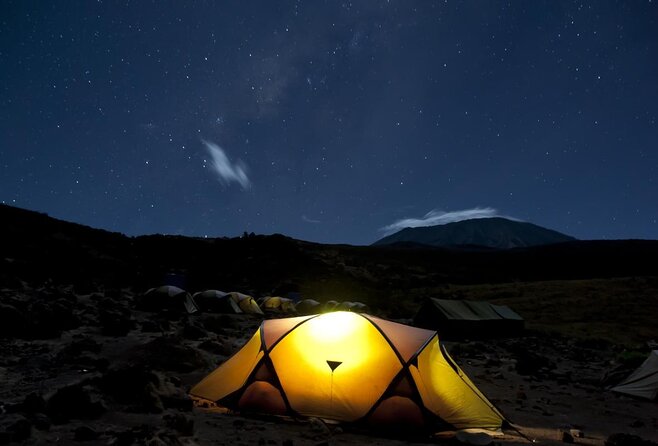
- You sleep in mountain huts: Mandara, Horombo, and Kibo provide basic shelter, so you do not need a tent-based trek.
- Day three is for acclimatization: The extra day at Horombo gives your body time to adjust before the higher camps and summit attempt.
- The scenery changes every day: Expect coffee plantations, rainforest, alpine meadow, giant heather, moorland, tundra, and volcanic scree.
- Summit night begins after midnight: You climb in darkness and extreme cold before reaching the crater rim around dawn.
- The price covers the main trek services: Park fees, meals, guides, porters, and cooking support are included, but tips and personal expenses are not.
- A group of up to 15 is possible: Ask about the expected group size if you prefer a quieter or more personal climb.
Starting in Arusha and Reaching Marangu Gate
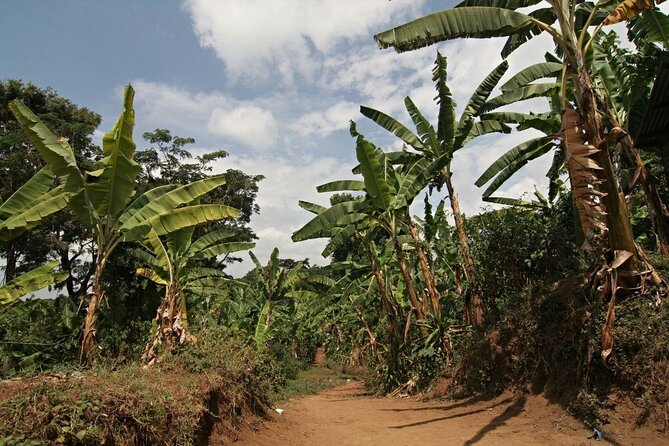
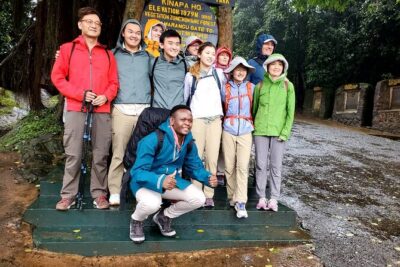
Your first morning begins with a drive of about two hours from Arusha through the foothills of Kilimanjaro. On a clear day, you may see the snow-covered upper peak before reaching Marangu, a town on the mountain’s southeastern side at about 1,372 meters.
The start feels more settled than the summit days ahead. You pass coffee plantations, meet your guides and porters, collect last-minute supplies, and complete registration at Mount Kilimanjaro National Park. This part matters because it gives you a chance to check that your personal gear is ready before the trail becomes remote.
From Marangu Gate, the first walk to Mandara Hut takes about four to five hours, with roughly six hours allowed for the day. The trail passes through coffee-growing areas and dense rainforest. Bright birds, colobus monkeys, other monkeys, mosses, lichens, flowers, and orchids make this one of the most pleasant sections of the climb.
The drawback is that the first day still includes a meaningful ascent. The forest can make the trail feel gentle, but you should not treat this as a casual nature walk. Keep your pace slow from the start. Going too fast on day one will not help you later.
More Marangu Route climbs:
- Private Full Day Hiking Experience to Marangu Route
★ 5.0 · 61 reviews - From Arusha/Moshi: Kilimanjaro Hike Marangu Route Day Trip
★ 4.5 · 54 reviews - Mount Kilimanjaro Day Hike Through Marangu Route to Mandara Hut
★ 5.0 · 37 reviews
Mandara Hut and the First Night on the Mountain
Mandara Hut is the first overnight stop. The hut system is one of Marangu’s main selling points, especially if you do not want to sleep in a tent. It also gives this route a straightforward rhythm: walk during the day, eat, rest, and prepare for the next stage.
Accommodation is basic. The information provided does not specify room arrangements or bedding details, so you should ask the operator what you need to bring for sleeping. The tour includes dinner, but personal snacks and other items of a personal nature are not included.
The forest begins to thin as you continue higher on day two. This is where Kilimanjaro starts to feel less like a forest hike and more like a high mountain journey.
Day Two: From Rainforest to Horombo at 3,720 Meters
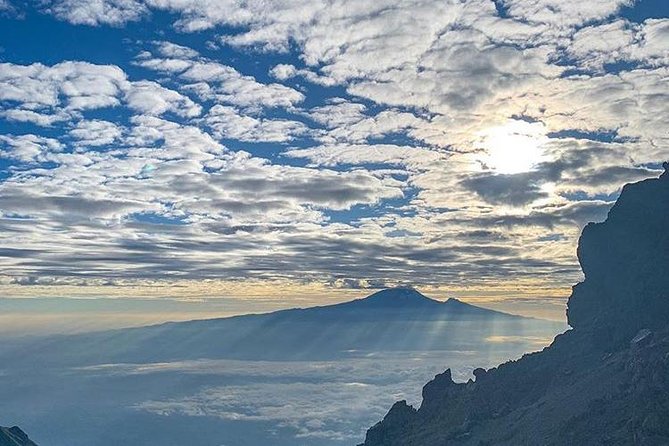
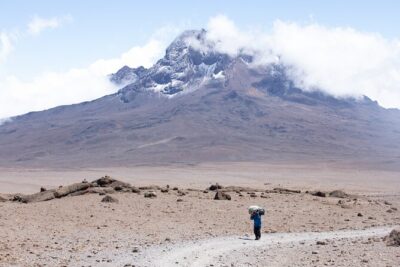
The second day begins with a steep climb through the final belt of rainforest. Soon, the trees give way to alpine meadow and giant heather. Once the canopy disappears, you get direct views of Kibo, the snow-covered main summit, and Mawenzi, the more rugged eastern peak.
The route then passes through open heath with short vegetation before reaching bleak moorland. This change is gradual but dramatic. You can watch the mountain strip away familiar plant life as the air gets thinner and the surroundings become more open.
The walk takes about five to seven hours, and you gain roughly 1,000 meters. Horombo Huts sit at about 3,720 meters and provide another basic mountain shelter. This is a more serious day than the first, not because the trail is technical, but because altitude begins to affect your pace and energy.
I would treat Horombo as an important checkpoint. Eat properly, drink enough, and tell your guide if you feel unwell. A moderate fitness level is required, but fitness alone does not prevent altitude problems. The sensible approach is to move slowly and listen to the guide’s instructions.
Day Three: A Useful Acclimatization Day at Horombo
Day three is the reason the six-day version is more appealing than a rushed schedule. You spend another night at Horombo and use the day for gradual acclimatization. The program describes this as a major help to your chances of reaching the summit, and the logic is simple: you gain height during the day, then return to sleep at the same hut.
The suggested outing is a four to five hour round trip toward the base of Mawenzi Peak. It reaches about 4,600 meters before returning to Horombo. That gives you a controlled taste of higher altitude without forcing you to sleep there.
This day is not a rest day in the usual sense. You still walk, climb, and spend time above 4,000 meters. Yet it is less punishing than moving camp, and it gives your body more time to adjust.
The benefits are clear, but there is a trade-off. You have only six days, so the schedule remains tight. The acclimatization day improves the plan, but it cannot guarantee that you will summit. Altitude affects people differently, and the guide’s judgment should take priority over a fixed personal goal.
A few more options to weigh up in Arusha
- Balloon Safari & Bush Breakfast in Serengeti – Miracle Experience
★ 5.0 · 1,646 reviews - Tanzania Classic – 7 Days
★ 5.0 · 1,151 reviews - 4 Days Group Camping Safari
★ 5.0 · 1,101 reviews - 5 Days Group Camping Safari
★ 5.0 · 730 reviews
Day Four: Crossing the Saddle to Kibo Hut
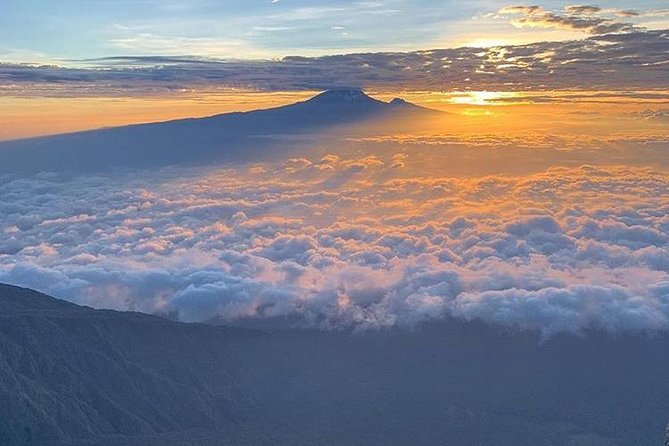
Day four leaves the softer plants behind. Giant groundsels and lobelias appear in the sparse moorland, while the trail becomes rockier and more exposed. The walk to Kibo Hut takes about five to seven hours.
You skirt Mawenzi Peak, pass Last Water, and cross the Saddle, a broad area of tundra between Mawenzi and Kibo. This is one of the route’s most memorable sections because the two great summits frame the day. Kibo’s upper slopes begin to look close, but the distance and altitude can be deceptive.
Kibo Hut sits at about 4,705 meters. It is a dry-stone-walled hut with dormitories and limited facilities. Do not expect comfort here. You arrive, eat, prepare your summit pack, and try to rest before the hardest part of the climb.
The practical advice is to leave nonessential items with the porters before summit night. Carrying less makes a real difference on steep scree. You should keep only what you need for the cold, darkness, water, food, and the summit push.
Day Five: The Midnight Summit Push
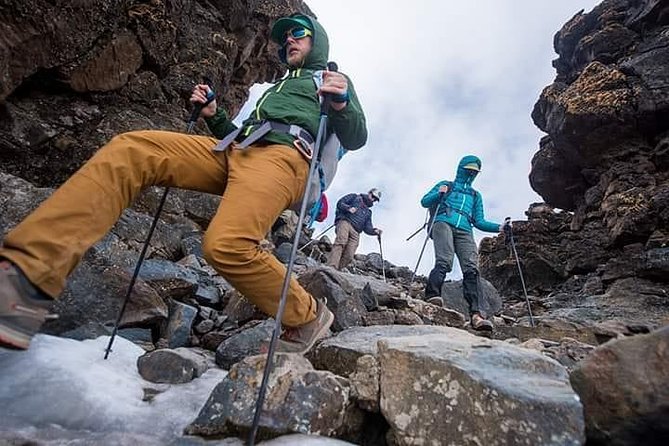
Day five is the heart of the trip and the toughest day by far. The guides wake you soon after midnight, and you begin in darkness with a torch. The cold is extreme, and the trail rises through loose scree in long zigzags.
The frozen scree can be easier to walk on than loose daytime scree. After about two hours, you reach Hans Meyer’s Cave, named for the German geologist linked with the first successful ascent in 1889. The route then becomes steeper. About three hours beyond the cave, you reach the hardest stretch before the crater rim at Johanne’s Notch.
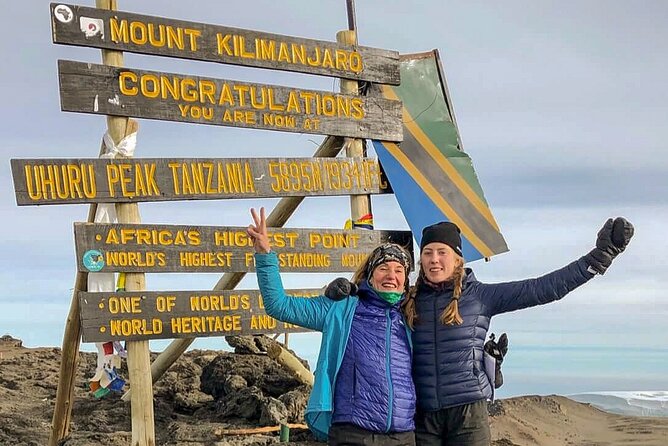
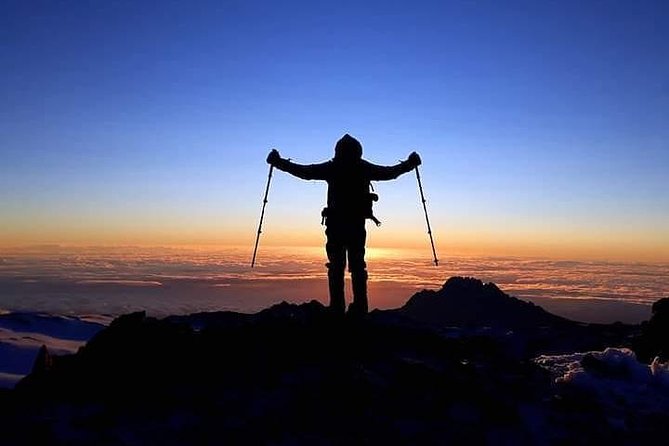
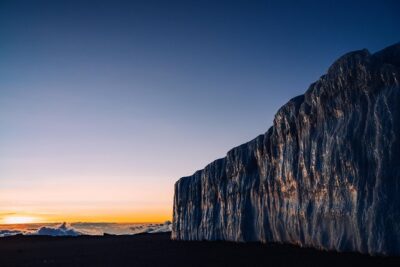
From there, it is a short scramble to Gillman’s Point at 5,685 meters. Reaching the rim around dawn gives you the reward that makes the night effort worthwhile: sunrise over the ice fields and jagged volcanic peaks of Mount Kilimanjaro.
The supplied experience description continues into the summit section, and one past participant specifically described reaching Uhuru Peak for sunrise. That is the highest point of Kilimanjaro and the highest point on the African continent. You should understand, though, that reaching Uhuru is an attempt, not a promise. Some people reach Gillman’s Point but cannot continue because of altitude, exhaustion, or weather.
This is also the day when the six-day schedule reveals its cost. After the summit effort, you descend, and your body has already spent hours climbing in the cold. Expect a very long day. The reward is enormous, but you should book this only if you accept that the summit day will test you.
Day Six: Descending Through the Forest to Arusha
The final day is much faster in feel because you are going downhill. You cross the alpine meadow, pass Mandara Hut, and continue through the rainforest to Marangu Gate. From the gate, a vehicle takes you back to Arusha.
Breakfast and lunch are included on this day. Dinner is also listed among the six included dinners, although the day’s description specifically calls out breakfast and lunch. If the meal schedule matters to you, confirm the final dinner arrangement with African Polecat Safaris before departure.
The descent is easier on your breathing, but it can be hard on tired knees and legs. Do not race simply because the route points downhill. A steady pace helps you finish comfortably and reduces the chance of a fall.
What the $2,000 Price Really Covers
At $2,000 per person, this is not a budget walk, but the price includes the basic services needed for a guided Kilimanjaro climb. Park fees and other taxes are covered, along with breakfast, lunch, and dinner for six days.
The program also includes the mountain team, including guides, porters, and a cook. That support is central to the experience. You are not carrying every supply, planning every meal, or finding the route alone.
You still need to budget for:
- Tips and gratuities for the guide, porters, and cook
- A visa
- International flights
- Travel insurance
- Laundry
- Personal items
Tips deserve special attention because the mountain crew is a major part of your climb. The amount is not stated, so ask the operator for current guidance before you go. Travel insurance is also not included, and it is particularly important for a high-altitude trek with a costly international journey attached.
The value is strongest for a first-time climber who wants a familiar route, hut accommodation, meals, and organized support. The value is weaker if you want a quiet wilderness experience, a private group, or a slower acclimatization schedule.
Guides, Group Size, and the Human Side of the Climb
The operator is African Polecat Safaris. One detailed account praised a team connected with James, who recommended the Marangu Route, and John Sanford, described as the head guide. Another account praised a crew connected with Gladys African Polecat Safaris.
Those names give you useful points to clarify before booking. Ask who will lead your particular group, how many people are expected, and how the guide team handles altitude concerns. The maximum group size is 15, which is manageable but not especially intimate.
A group of 15 can bring energy and encouragement on the trail. It can also mean different walking speeds and less personal space in the huts. If you prefer close attention from the guide, ask if a smaller group or private departure is available.
The strongest praise connected to this experience focuses on the crew, encouragement, and the emotional reward of finally reaching the summit after years of planning. One account described a ten-year dream becoming real after discussing the climb with James. That is a useful reminder that the best part of a guided climb is not only the path. It is also the support when the path gets hard.
Who Should Choose the Marangu Route?
I would recommend this route to a first-time Kilimanjaro climber who values a clear trail, established huts, and a simple daily structure. It also suits someone who prefers not to camp and wants meals and porter support organized in advance.
It is a good match if you have moderate physical fitness and can handle long walking days. You should be comfortable with an early start, cold conditions, basic accommodation, and a strenuous summit day.
I would be more cautious about recommending it to you if you want the gentlest possible acclimatization plan. Six days is workable, and day three helps, but a longer program would generally offer more time on the mountain. The provided details do not give a longer option, so ask the operator before paying if acclimatization is your main concern.
This route also may not suit you if you expect luxury. Horombo and Kibo have limited facilities, and the mountain huts are practical rather than comfortable. The reward is access and simplicity, not pampering.
Booking Details and Cancellation Terms
The start time is 8:00 a.m., and the activity ends back at the meeting point after the return to Arusha. Pickup is offered, and you receive a mobile ticket. Confirmation is provided at the time of booking.
Free cancellation is available if you cancel at least 24 hours before the local start time. Cancellations within 24 hours are not refunded, and changes within that period are not accepted.
The experience has a rating of 5 from two published ratings, with especially positive comments about the summit achievement and the African Polecat Safaris crew. That is encouraging, but the sample is small. I would use the praise as a sign to ask about the guiding team, not as a substitute for checking the practical details.
Should You Book This Six-Day Climb?
Book it if you want the classic hut-based Kilimanjaro route, a built-in acclimatization day, organized meals, and a team that has earned strong personal praise for encouragement. The changing scenery and sunrise summit attempt make this a memorable choice for a first climb.
Think twice if you want a slow altitude schedule, private service, or a soft landing after summit night. The six days are tightly packed, Kibo Hut is basic, and reaching Uhuru Peak is never guaranteed.
For the right person, the Marangu Route offers a direct and well-supported way to attempt Kilimanjaro. Go in prepared, walk slowly, respect the altitude, and confirm the guide team and tip expectations before departure.
FAQ
Where does the Kilimanjaro Marangu Route tour start?
The tour starts in Arusha, Tanzania, at 8:00 a.m. Pickup is offered, and the first mountain transfer takes about two hours to Marangu Gate.
How long is the tour?
The trek lasts approximately six days.
How much does the tour cost?
The listed price is $2,000 per person.
What is the maximum group size?
The group can include a maximum of 15 people.
Is the Marangu Route suitable for first-time climbers?
The route is described as a good choice for first-time climbers. You still need a moderate level of physical fitness because the trek includes long walking days and a demanding summit attempt.
Where do you sleep during the trek?
You stay in basic mountain huts at Mandara Hut, Horombo Huts, and Kibo Hut. Kibo Hut has dormitories and limited facilities.
Is there an acclimatization day?
Yes. Day three is spent at Horombo Huts, with an optional walk toward the base of Mawenzi Peak reaching about 4,600 meters before returning to the hut.
What meals are included?
Breakfast, lunch, and dinner are listed as included for six days.
What is not included in the price?
Tips and gratuities for the mountain guide, porters, and cook are not included. Visas, international flights, laundry, travel insurance, and personal items are also excluded.
Just added in Arusha
- Safari “Kifaru” – 5 days in the most famous Parks in the world★ 5.0 · 4 reviews
- Saadani Day Trip★ 5.0 · 13 reviews
- 3 Days Tanzania Short and Spicy★ 5.0 · 6 reviews
- 5 Day Tanzania Safari Camping Adventure Private Tour★ 5.0 · 2 reviews
- Day Trip to Ngorongoro Crater from Arusha★ 5.0 · 1 review
- SERENGETI NATIONAL PARK Tour★ 4.5 · 5 reviews
- 3 Days Serengeti Park & Ngorongoro Crater Adventure Safari★ 5.0 · 8 reviews
- 6 Days Tanzania Bush Experience Safari★ 5.0 · 6 reviews
Marangu Route Climbs, compared.
Private Full Day Hiking Experience to Marangu Route
Read our review →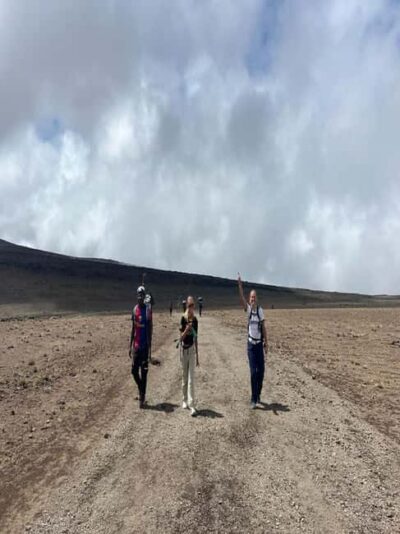
From Arusha/Moshi: Kilimanjaro Hike Marangu Route Day Trip
Read our review →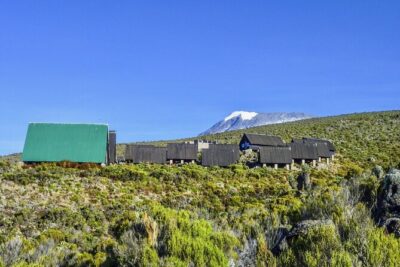
Mount Kilimanjaro Day Hike Through Marangu Route to Mandara Hut
Read our review →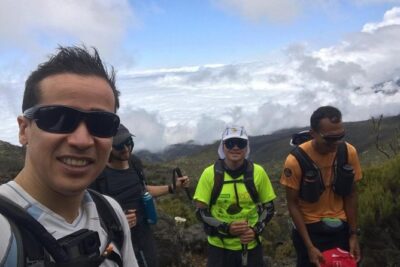
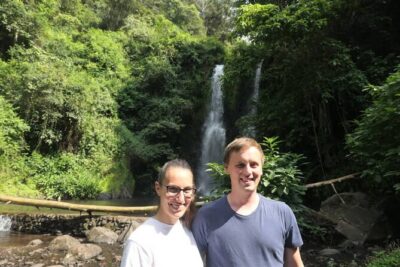
Marangu waterfall & Coffee making Cultural Tour | BURIGI CHATO SAFARIS CO LTD
Read our review →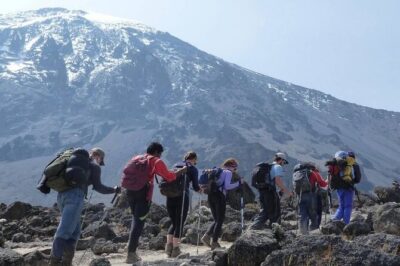
Climb Kilimanjaro – Marangu Route 8 Day Program
Read our review →Browse the lists this tour appears in