
Reviewed · CAMPING SAFARIS
Multi-Day Camping Safari Experience in Arusha
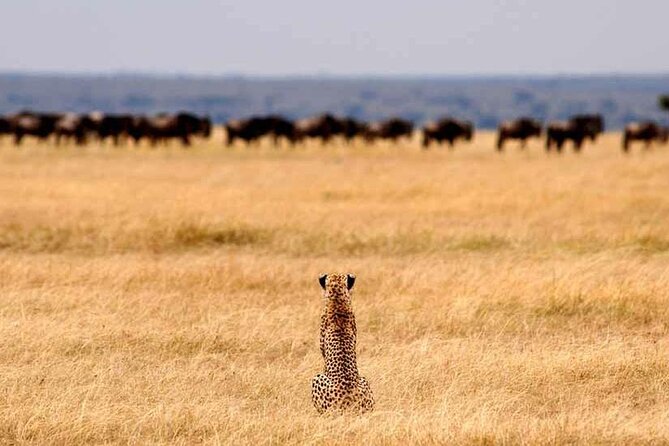
Calving season turns the Serengeti into a nursery. This six-day safari links Tarangire, Ndutu, Serengeti, Ngorongoro Crater, and Lake Manyara in one busy northern Tanzania route, with a small group of no more than six people. I like the strong focus on the wildebeest migration from December to April, and I like that the price includes the safari vehicle, meals, drinking water, park fees, and camping arrangements. The main drawback is the pace: long drives, early starts, and several full game-drive days make this better for active safari fans than for anyone wanting a slow holiday.
The plan also mentions a biking adventure in Mto wa Mbu, but the six-day schedule does not clearly assign time to it. I would confirm that detail before paying. Past guests have praised the food, organization, and guides, with Robert, Swalehe, and Raymond Ayo receiving specific mention.
In This Review
- The safari at a glance
- Why Ndutu makes this safari special
- Day 1: Tarangire’s elephants and baobabs
- Day 2: Reaching Ndutu for the first game drive
- Day 3: A full day among herds, swamps, and predators
- Day 4: Sunrise in the Serengeti and a move toward Ngorongoro
- Day 5: Down into the Ngorongoro Crater
- Day 6: Lake Manyara’s Rift Valley setting
- Camping, meals, and the safari vehicle
- Guides, service, and organization
- Is $1,496 good value?
- Who should choose this six-day route?
- FAQ
- How long is the safari?
- Which months target the wildebeest calving migration?
- How many people can join the safari?
- Are meals included?
- Is drinking water provided?
- Is the Mto wa Mbu biking adventure included in the daily schedule?
- What is not included in the price?
- Should you book it?
The safari at a glance
- Ndutu is the main event: From December through April, the southern Serengeti area usually holds large numbers of wildebeest on short-grass plains.
- Predator action can be excellent: Calves offer easy targets, so lion, cheetah, hyena, and leopard sightings are a major reason to choose this season.
- Five major wildlife areas are included: Tarangire, Ndutu, Serengeti, Ngorongoro, and Lake Manyara each offer a different setting.
- Small groups matter: The safari has a maximum of six people, which should make the pop-up roof vehicle easier to share.
- Camping keeps the price practical: You receive six breakfasts, six lunches, five dinners, water, fees, and transport for $1,496 per person.
- You need stamina: The days range from about five to nine hours, with a 5:45 a.m. start on Day 4.
Why Ndutu makes this safari special
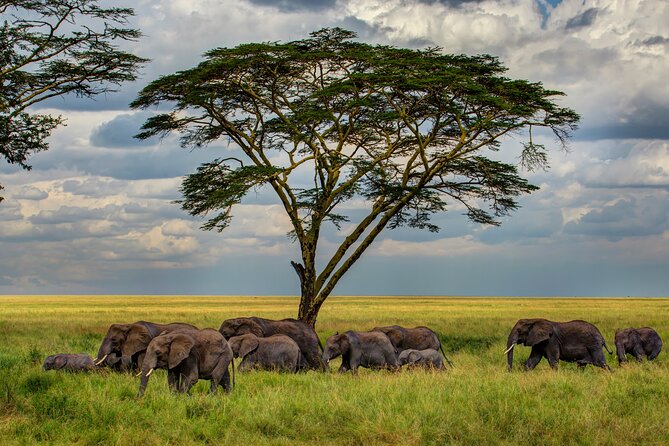
The calving season is the heart of this trip. The southern Serengeti and Lake Ndutu area are known for short grass, open views, and large concentrations of wildebeest between December and April.
The most intense period is usually around February, when many calves are born over roughly three weeks. A newborn wildebeest can run within minutes, and after about three days it is generally strong enough to stay with the herd. That quick recovery makes the scene thrilling, but it also explains why predator activity can be so high.
You may see lions, cheetahs, hyenas, and leopards working the edges of the herds. The open grass gives you good viewing range, yet it gives young animals little cover. A kill is never guaranteed, and responsible wildlife viewing means accepting that nature does not follow a schedule. Still, this is one of the more focused safari plans for people who care about the migration rather than simply collecting Big Five sightings.
Ndutu is not only open grass. The route includes swamps, woodland, soda lakes, and the short-grass plains. That mix gives you a better chance to see resident wildlife and birds during the hours when migration herds are not close by.
More Camping Safaris in Arusha:
- 4 Days Group Camping Safari
★ 5.0 · 1,101 reviews - 5 Days Group Camping Safari
★ 5.0 · 730 reviews - 3 Days Serengeti & Ngorongoro Group Camping Safari
★ 5.0 · 574 reviews
Day 1: Tarangire’s elephants and baobabs
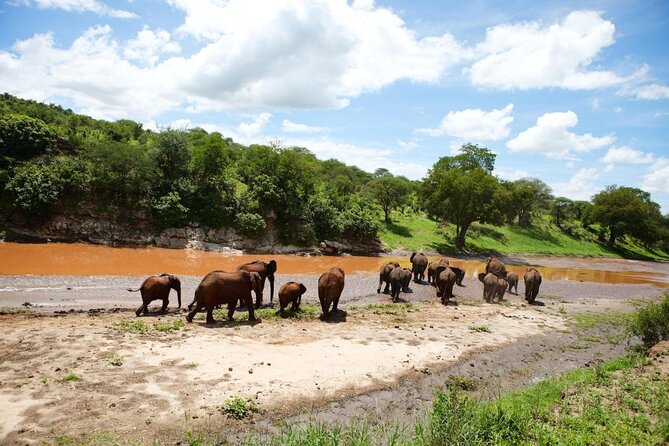
After breakfast in town, pickup takes you toward Tarangire National Park for a day of about eight hours. Tarangire is known for large elephant herds, baobab trees, tree-climbing lions, and the Tarangire River, which flows throughout the year.
The river is important because it provides a dependable water source for wildlife, especially during dry periods. That can draw animals into a smaller area and make game viewing rewarding. The baobabs add a strong sense of place, with their thick trunks and unusual shapes giving the park a look unlike Ndutu or the Serengeti plains.
I would treat Tarangire as more than a warm-up day. It introduces you to Tanzania’s dry-country wildlife and gives the safari an immediate change of scenery from Arusha. Elephants are the main attraction, while tree-climbing lions are a less predictable bonus.
The day is long, so comfortable clothing and patience matter. You are beginning a route that covers a lot of ground, not settling into one camp for several nights.
Day 2: Reaching Ndutu for the first game drive
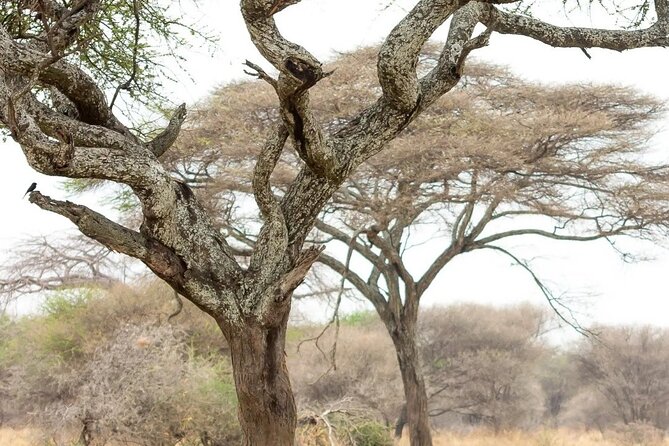
After breakfast, you set off for the Ndutu area in the southern Serengeti ecosystem. The listed game-drive portion is about five hours, with an afternoon drive around Lake Ndutu and the nearby plains.
Lake Ndutu is alkaline, like many Rift Valley lakes, but its water still supports a wide range of wildlife. Elephants, birds, and resident animals share the area with the seasonal wildebeest herds. The first afternoon is useful because it lets you begin reading the area before the full-day search on Day 3.
This is also where timing becomes important. Migration locations shift, and even during calving season, herds may not be right beside your camp or on the nearest track. Your guide’s ability to follow current animal movement matters more than a promise of a particular sighting.
The trip description calls this area part of Serengeti National Park, while Ndutu is also described as being within the Ngorongoro Conservation Area. Those boundaries can be confusing on a map, so ask your operator which permits and camping area apply to your exact route.
Day 3: A full day among herds, swamps, and predators
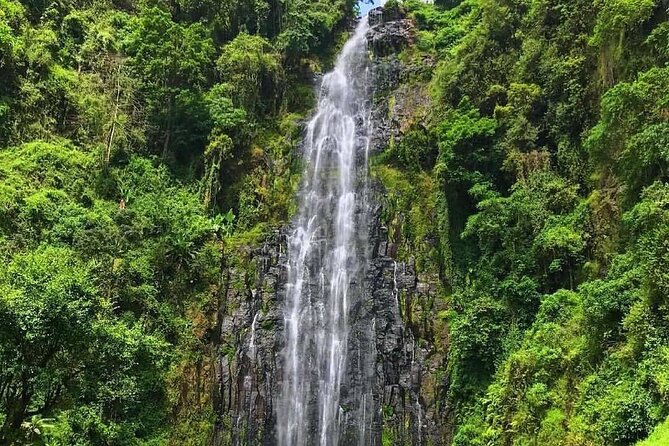
Day 3 gives you about nine hours in the Ndutu area. This is the most focused migration day, with time to explore several habitats rather than rushing through a single viewpoint.
You can expect a broad search across swamps, woodland, soda lakes, and short-grass plains. Wildebeest and zebra are the headline animals, especially around the February calving period. The open plains can make distant herds easy to see, though close encounters depend on animal movement and vehicle positioning.
This is also the day when the safari’s wildlife drama may be strongest. Young calves, hyenas, lions, cheetahs, and other predators can create tense scenes. The wording around adrenaline-packed kills should be understood as a possibility, not a promise. Wildlife can be spectacularly quiet for long periods, followed by a sudden burst of action.
A nine-hour game drive can be tiring. I would bring sun protection, water-friendly layers, and a camera battery plan. Unlimited drinking water is included, which is useful, but personal snacks and other comfort items may still be worth packing.
A few more options to weigh up in Arusha
- Balloon Safari & Bush Breakfast in Serengeti – Miracle Experience
★ 5.0 · 1,646 reviews - Tanzania Classic – 7 Days
★ 5.0 · 1,151 reviews - Materuni Waterfalls, coffee tour & Kikuletwa Hot Springs
★ 5.0 · 643 reviews - 7-Day Premium Luxury Tanzania Safari All-Inclusive
★ 5.0 · 426 reviews
Day 4: Sunrise in the Serengeti and a move toward Ngorongoro
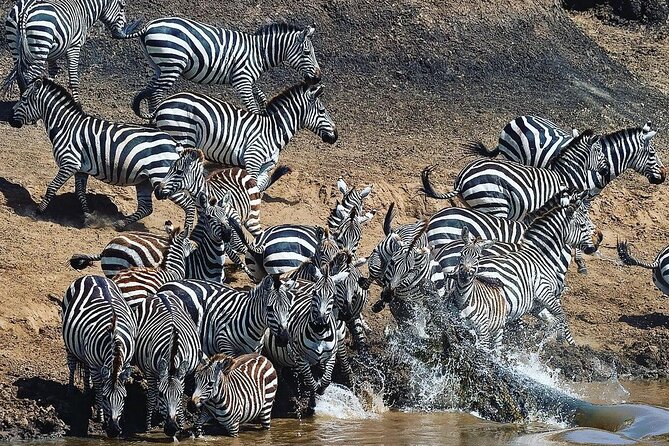
The fourth day starts early, with breakfast at 5:45 a.m. You take an early morning game drive until about 11:30 a.m., return to camp for a hot lunch, pack your belongings into the vehicle, and continue with an afternoon game drive toward Ngorongoro.
Early morning is often a good time to be outside because the light is attractive and animals may be active. The schedule gives you a chance to see sunrise in the Serengeti before the heat builds.
This is also a practical transition day. You are not spending the entire day in one part of the park, so expect the rhythm to feel more like wildlife viewing combined with a road journey. Dinner and overnight accommodation are listed at Simba Campsite near Ngorongoro.
The packed lunch and camp departure make this day less relaxed than Day 3. On the other hand, the route avoids wasting a separate day on the transfer to Ngorongoro.
Day 5: Down into the Ngorongoro Crater
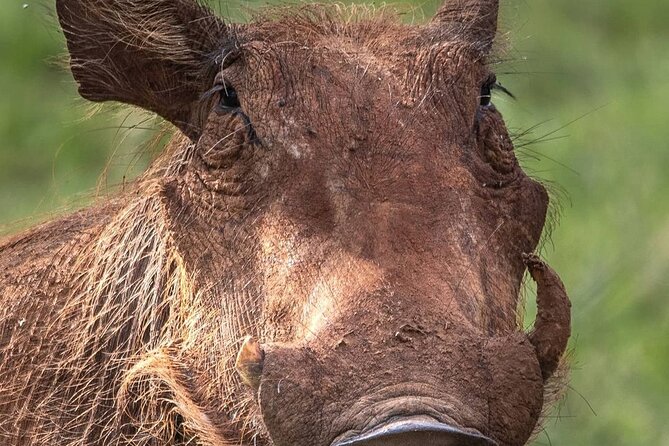
After an early breakfast, you head into the Ngorongoro Conservation Area and descend about 600 meters into the famous crater. The crater has year-round water and grazing, which supports wildebeest, zebra, buffalo, eland, warthog, hippo, and elephants.
Predators are a major draw here. Lions, hyenas, jackals, cheetahs, and leopards may be seen, though a leopard still requires patience and a sharp eye. Lake Magadi, a shallow alkaline lake in the crater, can attract flamingos, hippos, and other water birds.
The crater packs a great deal of wildlife into one dramatic setting. That makes it a strong contrast with the open, shifting herds of Ndutu. You trade the migration’s seasonal spectacle for a compact area with many different species.
Crowding can be a consideration in a place this famous, though no crowd level is provided for this particular departure. The crater is also not a quick photo stop. The listed day lasts about eight hours, and the descent, game viewing, and climb out all add to the day’s length.
Day 6: Lake Manyara’s Rift Valley setting
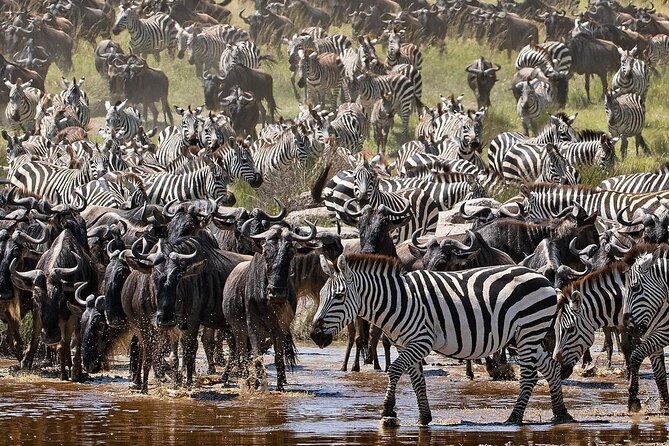
The final day takes you to Lake Manyara National Park after breakfast. The park is known for a scenic lake, the wall of the Great Rift Valley, and a compact game-viewing circuit.
Lake Manyara covers about two-thirds of the park. The remaining area supports a range of wildlife habitats, while more than 400 bird species have been recorded there. Thousands of pink-hued flamingos may be seen, depending on conditions.
Manyara gives the trip a different final note. Tarangire is known for elephants and baobabs, Ndutu for calving herds, the Serengeti for broad plains, and Ngorongoro for its crater wildlife. Manyara adds birds, water, and Rift Valley scenery.
The listed duration is about nine hours, so this is not simply a short stop before heading home. The schedule does not state the final drop-off location or exact departure time. Confirm those details, especially if you have a flight or onward connection.
Camping, meals, and the safari vehicle
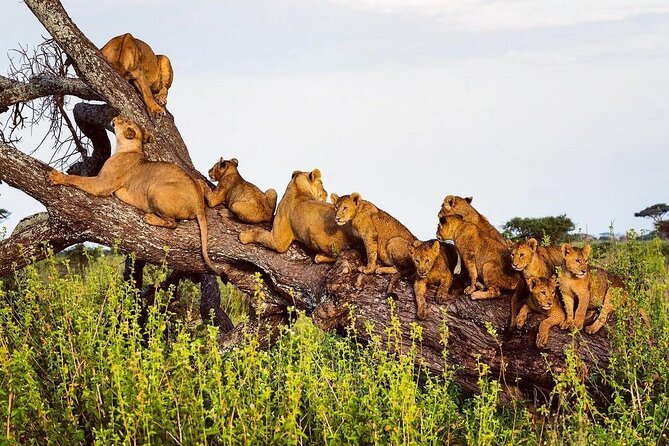
This is a camping safari, so you should choose it for access to the parks and the outdoor setting, not for hotel-style comfort. The available details say sleeping is acceptable, while food has earned especially strong praise. One past guest described the meals as far better than expected, and several comments praise the cook.
Six breakfasts, six lunches, and five dinners are included. Unlimited drinking water is also provided. Alcohol is not included, and neither are personal items, so budget for anything beyond the supplied meals and water.
The pop-up roof safari jeep is an important feature. It allows you to view animals from a raised position while staying in the vehicle. With a maximum of six people, the group size is manageable, though all passengers will still share the same vehicle and viewing time.
WiFi on board is included. I would see that as a convenience rather than the reason to book. The main value is the combination of transport, park access, meals, water, and a guide-led route through several major wildlife areas.
Guides, service, and organization
The strongest service comments focus on communication, timing, food, and helpful guides. Robert is praised for his understanding of animals, scenery, and local culture. Swalehe is specifically credited with working hard to help a group spot the Big Five, while Raymond Ayo is praised for arranging logistics and providing attentive service.
Those comments point to the human side of a safari. A good guide does more than identify animals. You need someone who can explain behavior, adjust the day when sightings change, and keep the long drives organized.
The praise is consistently warm, but it is also general. You should ask in advance who your guide will be, what camping equipment is supplied, and how the operator handles changes caused by weather, park conditions, or animal movement.
Is $1,496 good value?
At $1,496 per person, this is not a budget day trip, but six days in Tanzania’s major northern parks can make the price reasonable. The package includes all fees and taxes, the pop-up roof vehicle, WiFi, water, and 17 listed meals.
The value is strongest if you want the migration and would otherwise need to arrange several park visits yourself. Tarangire, Ndutu, Serengeti, Ngorongoro, and Manyara would be difficult to connect independently without transport and permits.
You still need to pay for tips, visa costs, flights, personal items, and alcoholic drinks. Those extras can affect your final budget. I would also ask whether any camping equipment, transfers beyond the stated pickup, or the Mto wa Mbu biking activity carries an extra charge.
Who should choose this six-day route?
I would recommend it to you if:
- You want to target wildebeest calving season from December to April.
- You enjoy long game drives and early starts.
- You prefer a small group over a large safari vehicle.
- You want several major parks in one trip.
- You are comfortable with camping and simple sleeping arrangements.
- You value included meals and transport more than luxury lodging.
I would hesitate if you want a leisurely schedule, hotel comfort, or guaranteed time for every advertised activity. The route is packed, and the biking adventure in Mto wa Mbu needs confirmation because it is not clearly placed in the daily plan.
Booking confirmation is provided at the time of reservation, and pickup is offered. Free cancellation is available up to 24 hours before the local start time, but changes or cancellations inside that window are not accepted for a refund.
FAQ
How long is the safari?
The safari lasts approximately six days. Individual days are listed at about five to nine hours.
Which months target the wildebeest calving migration?
The safari is designed for December through April, with much calving activity usually concentrated around February for about three weeks.
How many people can join the safari?
The maximum group size is six travelers.
Are meals included?
Yes. The package includes six breakfasts, six lunches, and five dinners.
Is drinking water provided?
Yes. Unlimited drinking water is included.
Is the Mto wa Mbu biking adventure included in the daily schedule?
The experience description mentions a biking adventure in Mto wa Mbu, but the six-day schedule does not specify when it takes place. Confirm this with the provider before booking.
What is not included in the price?
Tips, visas, air tickets, personal-use items, and alcoholic drinks are not included.
Should you book it?
Book this safari if Ndutu during calving season is your priority and you want a practical route through Tanzania’s best-known northern parks. The mix of migration herds, predator possibilities, crater wildlife, elephants, baobabs, flamingos, and Rift Valley scenery gives you a lot in six days.
Before booking, confirm the camping arrangements, final drop-off, exact guide, and Mto wa Mbu biking plans. If you are happy with long days and basic sleeping conditions, $1,496 offers a solid package for a small-group safari. If comfort and a slow pace matter more, choose a longer or more hotel-based plan.
Just added in Arusha
- Safari “Kifaru” – 5 days in the most famous Parks in the world★ 5.0 · 4 reviews
- Saadani Day Trip★ 5.0 · 13 reviews
- 3 Days Tanzania Short and Spicy★ 5.0 · 6 reviews
- 5 Day Tanzania Safari Camping Adventure Private Tour★ 5.0 · 2 reviews
- SERENGETI NATIONAL PARK Tour★ 4.5 · 5 reviews
- Day Trip to Ngorongoro Crater from Arusha★ 5.0 · 1 review
- 3 Days Serengeti Park & Ngorongoro Crater Adventure Safari★ 5.0 · 8 reviews
- 6 Days Tanzania Bush Experience Safari★ 5.0 · 6 reviews
Camping Safaris, compared.
3 Days Serengeti & Ngorongoro Group Camping Safari
Read our review →
2 Days Tarangire and Ngorongoro Group Camping Safari
Read our review →
3 Days Tarangire, Ngorongoro & Lake Manyara Group Camping Safari
Read our review →
5-Day private Camping Safari Tour in Tanzania
Read our review →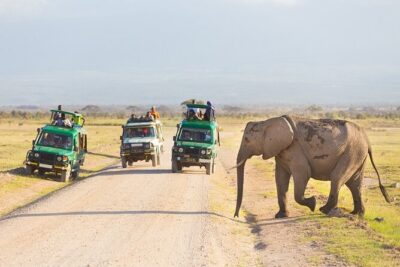
Browse the lists this tour appears in