
Reviewed · 7-DAY EXPERIENCES
Private 7 Days Classic Safari Tour in Tanzania
Africa rewards patience. This private seven-day safari links Tanzania’s finest northern parks with a rare cultural visit to Lake Eyasi, giving you wildlife, scenery, and local encounters in one carefully packed trip. I especially like the private 4×4 vehicle, which keeps the pace in your hands, and the chance to meet Hadzabe and Datoga communities rather than spending every day behind the same park gate. The main drawback is the amount of time on rough roads, especially on the long transfers between parks.
The advertised price is $2,720 per person, including accommodation, meals, park costs, water, and a professional guide. That is a serious sum, but it covers the expensive parts of a Tanzanian safari. I would still ask for the exact lodges, vehicle arrangements, and daily driving plan before paying, since accommodation is described as the listed property or a similar alternative.
In This Review
- Five things to know before booking
- Starting beneath Mount Meru in Arusha
- Tarangire: baobabs, elephants, and an easy first safari day
- Serengeti: two days in the heart of big-cat country
- Ngorongoro Crater: dense wildlife in a natural enclosure
- Lake Eyasi: a cultural day beyond the game drive
- Meals, vehicles, and the real value of $2,720
- Comfort, pace, and who will enjoy it most
- Booking details worth checking before departure
- Should you book this Tanzania safari?
- FAQ
- Where does the safari start?
- Where does the safari end?
- How long is the safari?
- Is this a private tour?
- Which national parks and areas are included?
- Are meals included?
- Is drinking water provided?
- What is not included in the price?
Five things to know before booking
- A private safari vehicle: Your group travels in a private, air-conditioned 4×4 with a guide, rather than sharing the vehicle with strangers.
- Four very different stops: Tarangire brings baobabs and elephants, Serengeti brings wide grass plains and predators, Ngorongoro brings dense animal sightings, and Lake Eyasi adds cultural depth.
- Two Serengeti days: You get a full day in central Serengeti, useful for searching for lions, leopards, cheetahs, and their prey.
- A real cultural change of pace: The Hadzabe visit offers contact with one of Tanzania’s last hunter-gatherer communities, with Datoga culture also included in the tour summary.
- Strong guide praise: Guides named Oscar, Eric, Elisha, and Baraka are praised for animal knowledge, driving, language skills, care, and good humor.
- Meals and water are covered: Seven lunches, six dinners, six breakfasts, and drinking water are included, which helps control costs during a remote trip.
Starting beneath Mount Meru in Arusha
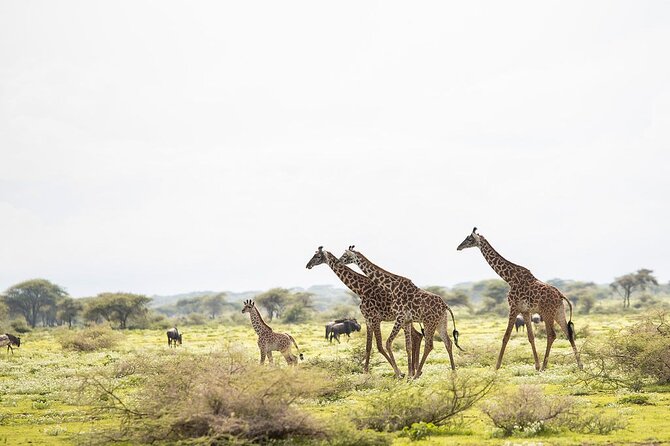
Your safari begins in Arusha, the practical gateway to Tanzania’s northern parks. If you arrive at Kilimanjaro International Airport, a member of the safari team meets you and drives you to your accommodation for dinner and the night. The transfer is listed at about 45 minutes.
Arusha sits beneath Mount Meru, with Mount Kilimanjaro also part of the wider setting. You may arrive tired from a long international flight, so this first evening is less about sightseeing and more about getting settled, eating well, and preparing for early starts.
The private pickup is useful here. You do not have to work out a taxi after landing, and the tour provides a direct connection between the airport and your accommodation. The airport transfer is not a full sightseeing outing, so keep your expectations simple.
The final night returns you to Arusha after the safari. After breakfast, you are driven by private car to Kilimanjaro International Airport or Arusha Airport. The schedule allows about 45 minutes for this transfer, but you should confirm the departure timing against your flight. A small surprise is promised before you leave, though its nature is not specified.
A few more options to weigh up in Arusha
- Balloon Safari & Bush Breakfast in Serengeti – Miracle Experience
★ 5.0 · 1,646 reviews - Tanzania Classic – 7 Days
★ 5.0 · 1,151 reviews - 4 Days Group Camping Safari
★ 5.0 · 1,101 reviews
Tarangire: baobabs, elephants, and an easy first safari day
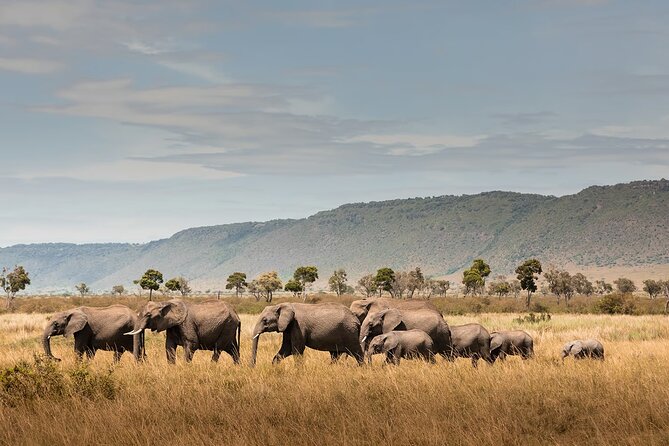
Tarangire National Park is a fine opening act because it looks and feels different from the Serengeti. Woodland, open areas, and swamps create a varied setting, while huge baobab trees give the park its unmistakable shape.
The park is famous for elephants, and you can expect to look for large herds among the trees. Zebra, impala, gazelle, big cats, oryx, gerenuk, and possibly wild dogs are also part of the animal list. Tree-climbing lions are another possibility, though no safari can promise a particular sighting.
The day is planned around morning and late-afternoon game drives, with a rest at the lodge in between. I like this rhythm. A full day in a vehicle can be tiring, especially on uneven roads, and a midday pause gives you time to eat, shower, or simply sit quietly.
The listed time in Tarangire is about seven hours. That does not mean seven nonstop hours of driving. It includes the park visit and the two game-drive periods, but your exact timing can change with animal sightings, park procedures, and the group’s energy.
Tarangire can be a particularly good choice if elephants are high on your list. It also gives you an early lesson in safari patience. Sometimes the best moment is not a dramatic predator scene, but an elephant family moving slowly between baobabs.
Serengeti: two days in the heart of big-cat country
From Tarangire, the trip moves toward Serengeti National Park. The journey takes you into Tanzania’s most famous wildlife area, known for open grass plains, large herds, and the annual movement of wildebeest and zebra.
The tour gives you one full day for the journey and park experience, followed by a second day exploring central Serengeti. The first day is listed at about eight hours, as is the second. In practice, you should expect long periods in the vehicle, but the reward is access to one of Africa’s great wildlife regions.
The Serengeti is associated with the Wildebeest Migration, which involves more than a million wildebeest and zebra moving through the ecosystem. Timing matters, and this seven-day route does not promise that you will be at a river crossing or a particular migration point. The park remains worthwhile outside the most famous migration scenes because resident animals and predators are present across the year.
The central Serengeti day focuses on big cats and their prey. Your guide’s skill matters here. Several guide names appear in the tour’s guest feedback, including Oscar, Eric, Elisha, and Baraka. Elisha is praised for speaking excellent Spanish, teaching Swahili, driving well, and explaining the parks and animals. Eric receives repeated praise as a careful driver on rough tracks.
Those details matter more than a polished vehicle alone. A guide who knows how to read animal behavior can help you understand why a pride is watching one direction, why antelope suddenly become alert, or why several vehicles have stopped in one area. The vehicle’s private setup also means you can discuss the pace and focus with your own guide.
The tradeoff is road time. Serengeti is enormous, and reaching it from the other parks takes effort. If you want a short, gentle holiday with little time in transit, this is not the right format. If you accept long drives as part of the safari, the two Serengeti days give you a much better chance to see the park properly than a quick pass through.
Ngorongoro Crater: dense wildlife in a natural enclosure
Day five heads early to the Ngorongoro Crater for a full-day game drive. The crater is the world’s largest intact volcanic caldera, and its enclosed shape has created a compact ecosystem with a high concentration of large mammals.
This is one of the strongest wildlife days in the program. The crater is known for dependable sightings of elephant, buffalo, rhino, lion, and leopard, often called the Big Five. No guide can guarantee all five, but Ngorongoro gives you one of the better settings for trying.
The schedule allows about ten hours, making this the longest listed day. An early departure helps you spend meaningful time on the crater floor, but it also means you should be ready for a demanding day. You will be in the vehicle for extended periods, with wildlife watching, driving, and meal breaks shaping the rhythm.
The crater’s enclosed geography is both its strength and its limitation. Animals are easier to find because they are concentrated within a defined area. At the same time, this can bring more vehicles into the same general zones. The experience is less about feeling completely alone and more about the remarkable chance to see many species in a relatively compact setting.
I would place Ngorongoro high on your priority list if this is your first safari. It offers dramatic scenery, a strong chance of large mammals, and a clear sense of how geography can shape wildlife. It also rewards a guide who can position the vehicle well without rushing from one sighting to the next.
A different kind of day out entirely:
- 5 Days Group Camping Safari
★ 5.0 · 730 reviews - Materuni Waterfalls, coffee tour & Kikuletwa Hot Springs
★ 5.0 · 643 reviews - 3 Days Serengeti & Ngorongoro Group Camping Safari
★ 5.0 · 574 reviews - 7-Day Premium Luxury Tanzania Safari All-Inclusive
★ 5.0 · 426 reviews
Lake Eyasi: a cultural day beyond the game drive
Lake Eyasi changes the tone of the trip. Instead of spending the day looking for animals, you visit the Hadzabe, a nomadic hunter-gatherer community living in rural Tanzania around the lake in the Great Rift Valley. The tour summary also includes contact with the Datoga.
The Hadzabe depend on foraging and hunting small game, including squirrels. Their culture remains highly traditional, and the visit offers a rare chance to see a way of life shaped by local resources rather than by tourism infrastructure.
This part of the trip is valuable because it adds people and place to the wildlife story. Tanzania is not only a collection of national parks. A visit to Lake Eyasi helps you see how communities live outside the safari circuit and why cultural contact should be approached with humility.
The visit is listed at about six hours, with admission included. You should listen carefully to the guide’s instructions and remain respectful about photographs, personal space, and demonstrations. The experience is described as an authentic cultural encounter, but the supplied details do not specify every activity or the exact arrangement with the communities, so ask for a clear explanation before departure.
Lake Eyasi may be the most memorable day for you if you want more than animal sightings. It also breaks up the park routine at just the right point, after several long days on the road.
Meals, vehicles, and the real value of $2,720
At $2,720 per person, this is not a budget outing. It is a private seven-day safari with accommodation, park fees, a 4×4 vehicle, guide service, meals, drinking water, taxes, and airport transfers included. International flights, visas, insurance, souvenirs, medical repatriation, unlisted services, and tips are extra.
The value depends heavily on the accommodation and group size. Since the tour includes the listed accommodation or similar alternatives, ask which properties will be used for your dates. A similar alternative can mean a different setting, room standard, or location, so you should not treat the lodging as a minor detail.
The private vehicle is a major part of the price. You are paying for flexibility and privacy, not just a seat in a park vehicle. That can be worth it for couples, families, or friends who want to stop for a particular animal, take breaks when needed, or avoid negotiating space with strangers.
Food appears to be another strong point. The package includes seven lunches, six dinners, and six breakfasts. Several people praised the food, especially picnic lunches, and noted cold water and juice on board. Drinking water is included on all days, which is practical in a hot, dusty region.
Tips are not included. You should budget separately for guide and driver gratuities, along with personal purchases. The strongest praise centers on attentive staff, clean accommodation, good food, careful driving, and detailed park explanations. Those are exactly the areas that determine whether a safari feels worth its price.
Comfort, pace, and who will enjoy it most
The trip uses an air-conditioned vehicle with WiFi on board, along with a private 4×4 safari car and professional guide. That combination gives you basic comfort, but it does not remove the physical demands of safari travel. Roads can be rough, days can begin early, and the longest drives require patience.
Most people can participate, and the activity is near public transportation at its start and end. Still, you should be honest about your stamina. The ten-hour Ngorongoro day and eight-hour Serengeti days may feel long if you dislike sitting in a vehicle.
This tour suits you best if you want:
- A private trip for your own group
- A first safari covering the main northern parks
- Strong chances for elephants, lions, buffalo, rhino, and other large mammals
- Two days in the Serengeti rather than a brief visit
- A cultural experience alongside wildlife
- Meals and water arranged in advance
- A guide who can explain animals, parks, driving routes, and local life
It may suit you less if you want a slow beach holiday, luxury lodge time, or a trip with minimal road transfers. It is also not ideal if your main goal is a guaranteed migration crossing, since seasonal wildlife movements cannot be fixed to one itinerary.
The tour has a 4.8 rating from 19 reviews, with 95 percent recommending it. The praise is consistent in the areas that matter most: the organization, clean accommodation, meals, safari vehicle, animal knowledge, and personal care. The repeated mentions of Oscar, Eric, Elisha, and Baraka suggest that the human side of the trip can be a real strength, although your assigned guide may differ.
Booking details worth checking before departure
Confirmation is received at booking, pickup is offered, and the activity is private, so only your group participates. The operating period shown runs from December 30, 2023 through June 17, 2026, Monday through Sunday, with hours listed from midnight to 11:00 p.m.
The tour is often booked about 155 days ahead. That is a useful planning clue. If you want particular dates, accommodation, or airport arrangements, booking early gives you more time to confirm the details rather than accepting a substitute.
Free cancellation is available until 24 hours before the local start time. Inside that window, the payment is not refunded and changes are not accepted. Travel insurance and medical repatriation are not included, so those are your responsibility.
Ask these practical questions before you commit:
- Which lodges or camps are planned for each night?
- How many people will be in the private group?
- Who is likely to guide and drive the trip?
- Which airport transfer is included for your arrival and departure?
- What exactly is planned during the Hadzabe and Datoga visit?
- How much time will be spent driving between parks?
Should you book this Tanzania safari?
I would recommend this tour if you want a compact but serious introduction to northern Tanzania. It combines the elephant country of Tarangire, two useful days in the Serengeti, the wildlife density of Ngorongoro, and the cultural perspective of Lake Eyasi.
The price makes sense when you value a private vehicle, included meals, park costs, accommodation, and airport transfers. Before booking, confirm the lodging and driving schedule. If those details suit your budget and energy level, this is a strong choice for a first safari, a family trip, or a special anniversary.
If your priority is complete solitude, short travel days, or one specific migration event, choose a slower and more narrowly focused plan. For a broad northern circuit with strong guide service and a meaningful cultural stop, this seven-day route gives you a lot in one week.
FAQ
Where does the safari start?
The safari starts in Arusha, Tanzania. Pickup is offered, including a road transfer from Kilimanjaro International Airport to your accommodation.
Where does the safari end?
The activity ends back at the meeting point in Arusha. On the final day, a private car transfers you to Kilimanjaro International Airport or Arusha Airport.
How long is the safari?
The safari lasts approximately seven days.
Is this a private tour?
Yes. It is a private tour and only your group participates.
Which national parks and areas are included?
The route includes Tarangire National Park, Serengeti National Park, the Ngorongoro Conservation Area, Lake Eyasi, and Arusha for arrival and departure.
Are meals included?
Yes. The package includes seven lunches, six dinners, and six breakfasts.
Is drinking water provided?
Yes. Drinking water is included on all days, and the vehicle also has WiFi on board.
What is not included in the price?
International flights, personal items, souvenirs, travel insurance, visa fees, medical repatriation, services not listed in the program, and tips for guides are not included.
Just added in Arusha
- Safari “Kifaru” – 5 days in the most famous Parks in the world★ 5.0 · 4 reviews
- Saadani Day Trip★ 5.0 · 13 reviews
- 3 Days Tanzania Short and Spicy★ 5.0 · 6 reviews
- 5 Day Tanzania Safari Camping Adventure Private Tour★ 5.0 · 2 reviews
- Day Trip to Ngorongoro Crater from Arusha★ 5.0 · 1 review
- SERENGETI NATIONAL PARK Tour★ 4.5 · 5 reviews
- 3 Days Serengeti Park & Ngorongoro Crater Adventure Safari★ 5.0 · 8 reviews
- 6 Days Tanzania Bush Experience Safari★ 5.0 · 6 reviews
7-Day Experiences, compared.
7-Day Premium Luxury Tanzania Safari All-Inclusive
Read our review →
Group Safari 7 Days in Tanzania’s Main Parks
Read our review →
Climbing Kilimanjaro through 7 days Machame Route
Read our review →
7-Day Machame Kilimanjaro Summit Tour from Arusha
Read our review →Browse the lists this tour appears in