
Reviewed · STONE TOWN TOURS
Zanzibar: Stone Town Tour with Slave Market Ticket
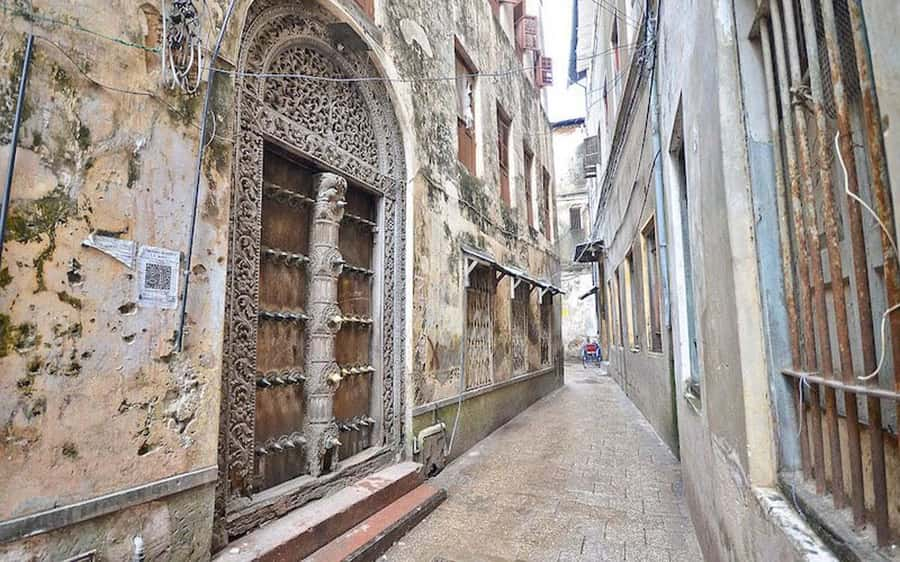
Stone Town keeps its secrets in plain sight. This three-hour walking tour takes you through Zanzibar’s old capital, where Swahili, Arab, Indian, Portuguese, and European influences meet in carved doors, busy markets, old forts, and narrow lanes. I like the tour’s clear historical focus, especially the former slave market and the Anglican Cathedral, and I also like the chance to see several major sights without arranging each stop yourself. The included bottled water is a small but useful touch in Zanzibar’s heat.
The main concern is uneven tour quality. Guides named Mbwana, or Nbwana in one listing, have earned strong praise for answering questions and adding helpful restaurant and shopping advice. But one delayed start and one very short tour were also reported, along with a complaint about paying the slave-market admission twice. Confirm the starting time, guide, and included ticket before setting off.
In This Review
- Key things to know before you book
- Why Stone Town works best on foot
- Beginning at the former slave market
- Darajani Market and the working city
- Coffee and the narrow lanes
- The Sultan’s Palace and royal Zanzibar
- Forodhani Gardens and Zanzibar street food
- House of Wonders and the Old Fort
- Freddie Mercury’s Stone Town connection
- Notre Dame, the Anglican Cathedral, and the final shops
- Is $29 good value for three hours?
- Who will get the most from this tour?
- My call: book it with two checks
- FAQ
- How long is the Stone Town tour?
- What is included in the $29 price?
- Is Freddie Mercury Museum admission included?
- Does the tour include hotel pickup?
- Which languages are available?
- What sights are included on the route?
- Is the former slave-market entry ticket included?
- Can I cancel the booking for a refund?
Key things to know before you book
- The former slave market is the emotional center: Your admission is included, and the site gives the tour serious historical weight.
- The tour is a three-hour walk: Expect narrow streets, market crowds, shopping stops, and plenty of time on your feet.
- Darajani Market brings daily Zanzibar into view: Fruit, vegetables, fish, meat, spices, and local snacks fill this practical city market.
- The route links major Stone Town landmarks: You visit the Sultan’s Palace, House of Wonders, Old Fort, Forodhani Gardens, churches, and Tip Tip House.
- Freddie Mercury’s museum costs extra: The tour passes his childhood home, but museum entry is about $8 per person.
- Guide quality matters: Mbwana, also written Nbwana, has been praised for strong history explanations and useful local suggestions.
Why Stone Town works best on foot
Stone Town is not a city you understand from a vehicle window. Its lanes are narrow, and much of the pleasure comes from turning a corner and finding a carved Zanzibar door, a shaded balcony, a small shop, or a weathered wall with several centuries of use behind it.
The route presents Stone Town as a meeting point of cultures. Swahili traditions form the base, while Arabian, Indian, Portuguese, and European influences appear in the buildings, religious sites, trade connections, and palace history. The result is not a tidy museum district. It is a working town, with people shopping, selling food, running businesses, and moving through the same streets you are exploring.
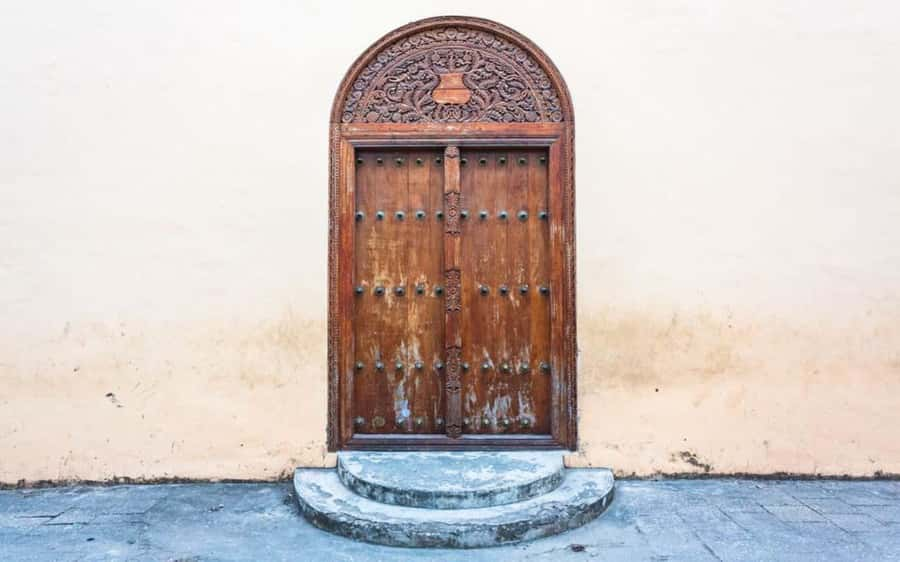
Stone Town received UNESCO World Heritage status in 2000. That label matters, but you do not need to be an architecture expert to appreciate the place. Look for the carved wooden doors, broad balconies, old stone walls, and building details that reveal who once lived, traded, worshipped, or ruled here.
A guide adds value because the streets can blur together. A good guide gives the buildings a reason to matter. You may also find the route easier with help, since the lanes are designed more for walking than for clear navigation.
More Stone Town walking tours:
- Zanzibar: Stone Town, Spice Tour, Prison Island with Lunch
★ 4.4 · 1,219 reviews - Zanzibar: Prison Island, Stone Town, & Spice Farm Tour
★ 4.5 · 579 reviews - Zanzibar: Stone Town, Spice tour & Prison Island with Lunch
★ 4.6 · 453 reviews
Beginning at the former slave market
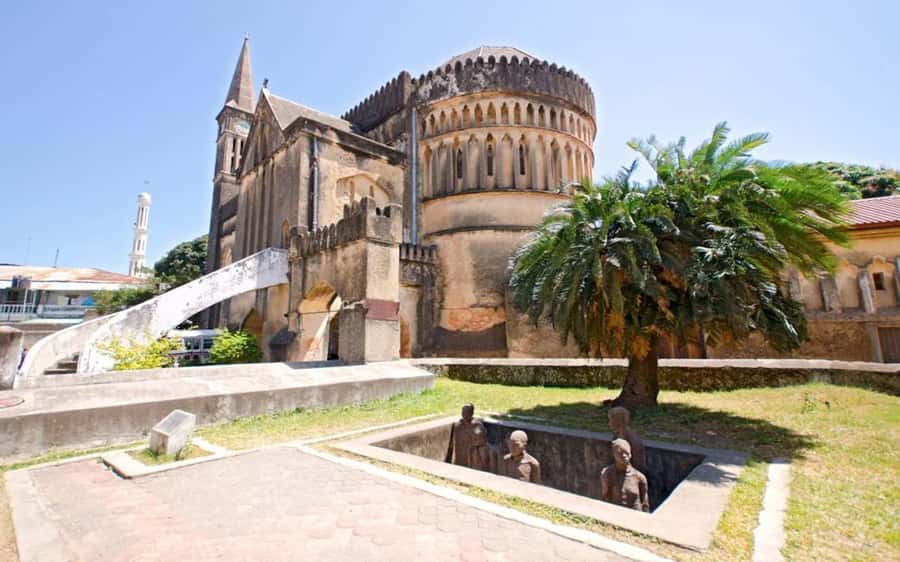
Starting at the former East Africa Slave Market gives the tour its most serious subject. The site is now connected with the Anglican Cathedral, and the visit explains Zanzibar’s role in the East African slave trade and the routes that carried enslaved people through the region.
This is not a light sightseeing stop. Give it your full attention. The cathedral and former market occupy a place where religious change, missionary work, commerce, and human suffering are tied together. The tour also discusses Dr. David Livingstone and other missionaries, including their role in opposition to the slave trade and in the wider exploration of East Africa.
The admission ticket is supposed to be included in the $29 price. One practical warning deserves attention: a booking problem resulted in a visitor paying the stated $5 entry fee again. I would ask the guide to confirm the ticket at the meeting point before paying anything. Keep your booking details available on your phone.
The site can shape your understanding of the rest of Stone Town. Later, when you see the palaces, market, harbor-side food stalls, and old trade buildings, you will have a better sense of the wealth and power that moved through Zanzibar, and of the painful cost behind part of that wealth.
Darajani Market and the working city
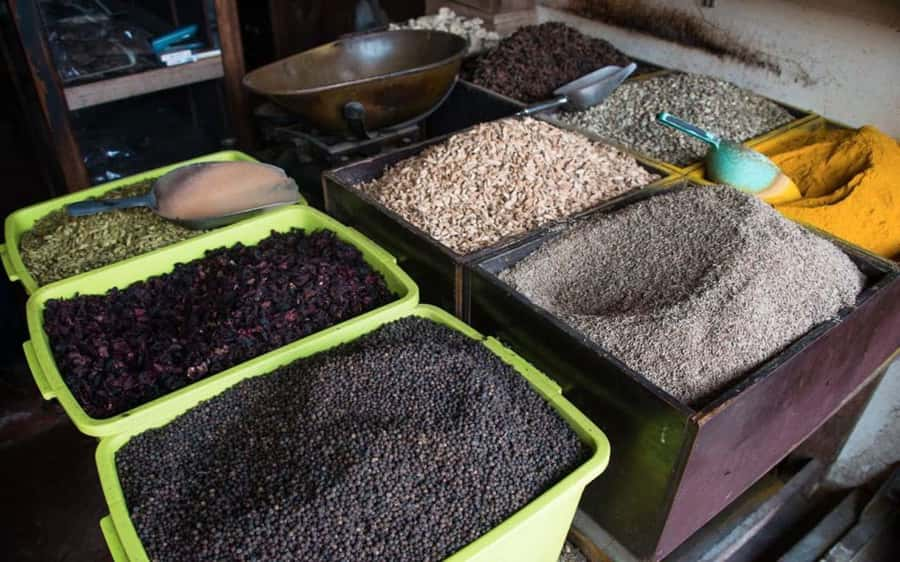
From the former slave market, the tour continues to Darajani Market, established in 1904. This is one of the best parts of the route for seeing everyday Stone Town rather than only grand landmarks.
You can expect stalls with fresh fruit, vegetables, meat, fish, and spices. The market gives your senses plenty to process: food displays, strong aromas, close aisles, and the quick rhythm of buying and selling. It is also a useful place for photographs, though I would ask before photographing people and remain aware of your belongings in crowded sections.
The guide may point out local foods or help you understand what you are seeing. You may have time to sample a local delicacy or shop, but the precise amount of time can depend on the group and the guide. I would not arrive expecting a formal food tour. This is a market visit within a wider city walk.
Darajani also helps explain Zanzibar’s place in Indian Ocean trade. Spices and food are not just colorful subjects for photographs. They connect the city to long-running commercial links across East Africa, Arabia, India, and beyond.
Coffee and the narrow lanes
The walk through Stone Town leads to Zanzibar Coffee House, where you can pause for a cup of local coffee. This break is welcome during a three-hour walk, particularly if the day is hot and the streets feel close.
I like this stop because it slows the pace. Stone Town can be busy and visually crowded, so sitting briefly gives you time to sort out what you have seen. It also places coffee within the broader story of Zanzibar’s trading culture rather than treating the city as a string of disconnected photo stops.
Do not expect a long café visit unless the guide says otherwise. The itinerary includes many locations, so this is best viewed as a short pause, not a full meal break. Bottled water is included, but carrying additional water may still be sensible for a walking tour in warm weather.
The narrow streets are a major part of the experience. They can make orientation difficult, which is one reason a local guide is useful. They also offer the most atmospheric moments, with old facades, balconies, carved doors, and small shops appearing close together.
More market walks in Zanzibar:
- Stone Town Guided Tour: Culture, Slave Market & Spice Market
★ 4.8 · 44 reviews - Stone Town Private Tour with Slave Market Tickets
★ 5.0 · 13 reviews - Zanzibar:Stone town Street food market walking tour,transfer
★ 4.5 · 9 reviews - Zanzibar: Stone Town Heritage & Slave Market Tour
★ 4.4 · 7 reviews
The Sultan’s Palace and royal Zanzibar
The Sultan’s Palace offers a window into Zanzibar’s sultanate period. The stop is less about wandering through a huge complex and more about placing the island’s rulers, ceremonies, and political power into the city’s physical setting.
This part of the route balances the earlier visit to the slave market. Stone Town was a center of suffering and resistance, but it was also a royal capital with court life, trade wealth, and formal power. The contrast is important. A tour that only shows handsome buildings can feel shallow, while a tour that only focuses on tragedy misses how the city functioned.
I would listen for details about how the sultanate shaped Zanzibar and how the palace related to the port and commercial district. The exact presentation depends heavily on the guide. Mbwana, also spelled Nbwana in the available guide details, received praise for explaining Stone Town’s past and responding well to questions. If you have a particular interest in royal history, ask directly rather than waiting for the guide to cover every angle.
Forodhani Gardens and Zanzibar street food
Forodhani Gardens is known as an evening gathering place and a popular location for local food. The route introduces you to the setting and the foods associated with it, including seafood, grilled items, sugarcane juice, and Zanzibar pizza.
Zanzibar pizza is one of the island’s best-known street foods. The name can be misleading if you expect an Italian-style pie. It is a local filled, cooked snack, and the tour gives you a chance to learn about it and possibly sample local treats.
Timing matters here. Forodhani is especially associated with the evening, while this tour lasts three hours and may not reach the gardens during the busiest food period. Ask about the start time if tasting the evening food scene is a priority. The itinerary promises a visit to the gardens, but it does not promise a full meal or a set number of tastings.
This is also a good place to ask your guide for restaurant suggestions. Mbwana was specifically praised for offering useful advice about places to eat and activities for the rest of a Zanzibar visit. That kind of practical local help can add more value than another quick photograph.
House of Wonders and the Old Fort
House of Wonders, or Beit el-Ajaib, is described as the tallest building in East Africa and is tied to Zanzibar’s ceremonial past. Its name alone hints at the building’s importance and the stories attached to it.
The building is one of Stone Town’s most recognizable landmarks, but look beyond its size. The point of the stop is to understand how the city presented power, ceremony, and modern ambition during the sultanate era. Because the route includes several major buildings, you may spend more time hearing context from outside than touring every interior.
The Old Fort provides a different kind of history. It once served as a battleground and later had other uses, including a primitive railway station. Its thick walls and central position make it a useful reminder that Stone Town was not only a palace city. It was also a defended port with changing practical needs.
I like these two stops together because they show different sides of the old capital: ceremonial authority at the House of Wonders, and military and civic use at the fort. The Old Fort is also a natural point from which to continue toward the town’s shops and lanes.
Freddie Mercury’s Stone Town connection
The tour passes the childhood home of Freddie Mercury, the famous frontman of Queen. This is a quick cultural link between Stone Town and one of the most recognizable musicians of the twentieth century.
You can take photographs near the home and hear about his connection to Zanzibar. The Freddie Mercury Museum is not included, however. Entry costs approximately $8 per person, so budget for that separately if you want to go inside.
This distinction is important. The tour includes the exterior stop, not museum admission. If music history is your main reason for visiting, ask how much time is available and decide if the extra ticket suits your plans. If you are mainly interested in Stone Town’s older history, the outside visit may be enough.
The stop adds variety to an itinerary otherwise focused on trade, religion, architecture, and the sultanate. It also shows how Stone Town’s story continues into modern popular culture.
Notre Dame, the Anglican Cathedral, and the final shops
The French Catholic Cathedral, Notre Dame of Zanzibar, is another reminder of the city’s mix of faiths and outside influences. Its sculpted design gives the walk a visual change after the market, fort, palace, and older stone buildings.
The route also includes the Anglican Cathedral, which is closely tied to the former slave-market site. Seeing both churches helps you understand that Stone Town’s religious history is not represented by one tradition alone. The churches also connect to the missionary work discussed at the beginning.
The tour ends with a walk through narrow streets, souvenir shops, and boutiques before returning to the pickup point or hotel. This is a useful finish if you want to buy a small item, but shopping can stretch the schedule. If you have a fixed lunch booking or another activity afterward, tell the guide at the start.
Tip Tip House is included among the landmarks covered on the route. Since the exact length of each stop is not fixed, I would treat it as a viewed landmark rather than assume a long interior visit.
Is $29 good value for three hours?
At $29 per person, the tour offers solid value if you want a guided introduction to Stone Town and plan to visit several major sights in one morning or afternoon. The included former slave-market admission, guide, and bottled water cover the basics.
The value depends on the tour actually lasting close to three hours and on the guide providing clear explanations. A short or poorly organized walk changes the calculation quickly. One reported experience lasted only about an hour, and another began roughly 40 minutes late after the original guide failed to appear. Those are not minor details when your day in Zanzibar is tightly planned.
You should also set aside money for personal purchases, food, and the Freddie Mercury Museum, which costs about $8. Hotel transfers are not generally included, though pickup is included from a Stone Town hotel and a hotel transfer can be requested.
The free-cancellation rule allows cancellation up to 24 hours in advance for a full refund. You can also reserve now and pay later, which helps if your Zanzibar schedule is still shifting.
Who will get the most from this tour?
I would recommend it most strongly to a first-time Stone Town visitor who wants historical context, a walkable overview, and help finding the city’s major landmarks. It suits someone who prefers a guide to independent navigation and wants the slave-market site included from the start.
It is also a good fit if you enjoy combining serious history with food, shopping, architecture, and modern culture. The route moves from the former slave market to Darajani Market, coffee, the palace, gardens, fort, Freddie Mercury’s home, churches, and shops. That range keeps the three hours varied.
You may want a different plan if you need a guaranteed fast start, a tightly timed private itinerary, or a deep museum visit at every stop. The tour includes many places, so some stops are likely to be brief. Guide quality is the deciding factor, and I would confirm the guide’s name and language before the walk if possible.
English, French, German, and Italian are offered. Ask questions as you go. The strongest guide experience came from asking about history, purchases, restaurants, and later activities, not simply following the route in silence.
My call: book it with two checks
I would book this tour if I wanted an affordable introduction to Stone Town and a meaningful visit to the former slave market. The best parts are the range of landmarks, the market visit, the cultural mix, and the chance to have a guide explain details that are easy to miss alone.
Before booking, I would confirm two things: that the slave-market admission is included and that the tour is expected to run for the full three hours. If you receive Mbwana or Nbwana as your guide, you may get the thoughtful history and practical advice that make this walk worthwhile. If your schedule is tight, allow extra time in case the start is delayed.
FAQ
How long is the Stone Town tour?
The tour duration is three hours and involves walking through Stone Town’s narrow streets and shopping areas.
What is included in the $29 price?
The price includes guided tour services, bottled water, and admission to the former East Africa Slave Market.
Is Freddie Mercury Museum admission included?
No. Admission to the Freddie Mercury Museum is not included and costs approximately $8 per person.
Does the tour include hotel pickup?
Pickup is included from a Stone Town hotel. Hotel transfer can be requested, but it is not generally included.
Which languages are available?
Live guides are offered in English, French, German, and Italian.
What sights are included on the route?
The route includes the former Slave Market, Anglican Cathedral, Darajani Market, Zanzibar Coffee House, Sultan’s Palace, Forodhani Gardens, House of Wonders, Old Fort, Freddie Mercury’s childhood home, Notre Dame of Zanzibar, Tip Tip House, and Stone Town’s shops and narrow streets.
Is the former slave-market entry ticket included?
Yes, admission to the Former East Africa Slave Market is included in the stated tour price. Confirm this with the guide before paying any separate entry fee.
Can I cancel the booking for a refund?
Yes. You can cancel up to 24 hours in advance for a full refund. The reserve-now, pay-later option is also available.
More Shopping Tours in Zanzibar
- Stone Town walking tour, shopping, history and culture
★ 5.0 · 6 reviews - Zanzibar: Stone town visit, Shopping tour &Night food Market
★ 4.4 · 2 reviews - Spice Farm, Prison Island, Stonetown Tour+Slave market visit
★ 5.0 · 1 review - Arusha: Traditional Tanzania Cooking Class & Food Market Tour
★ 5.0 · 34 reviews
Just added in Zanzibar
- Zanzibar:Ngoma local culture workshop,The Knowledge of Ngoma★ 5.0 · 1 review
- ZANZIBAR:Mnemba island, Spice farm and Jozani Forest★ 5.0 · 1 review
- Zanzibar: Zipline Adventure At Masingini Forest★ 4.6 · 2 reviews
- Zanzibar Walking Tour: Unveiling the Secrets of Stonetown★ 4.8 · 11 reviews
- Zanzibar: Walking Tour★ 4.0 · 1 review
- Zanzibar: Walking Spice Farm with Local Cooking Class★ 4.4 · 9 reviews
- Zanzibar: Uzi Island Mangrove Kayak Tour with Guide★ 5.0 · 1 review
- Zanzibar: Unique Guided Mangrove Tour by SUP or Kayak★ 5.0 · 1 review
Stone Town Tours, compared.

Stone Town, Spice Tour, Prison Island with Lunch
Read our review →

Stone Town, Spice tour & Prison Island with Lunch
Read our review →
3 Hours Private Stone Town walking Tour with Guide
Read our review →
Full-Day Private Stone Town +Spice Farm and Prison Island Tour
Read our review →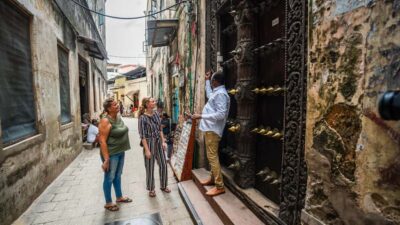
Stone Town Historical Cultural Walking Guided Tour
Read our review →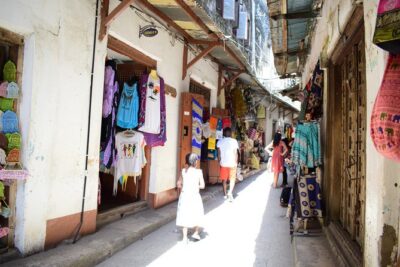
Browse the lists this tour appears in