
Reviewed · MARANGU ROUTE CLIMBS
5 Days Kilimanjaro Trekking – Marangu Route
Africa’s highest summit demands patience, not bravado. This five-day Marangu Route trek gives you a direct route up Kilimanjaro, with hut accommodation, airport or hotel pickup, a private group, and a full summit attempt at Uhuru Peak. You move from rainforest to open moorland, semi-desert terrain, and the high volcanic slopes of Kibo.
I like the steady acclimatization day at Horombo and the reported care of the guides, who kept the pace comfortable and checked on the group often. The food also earns strong praise, with several accounts describing it as better than expected, while the guides, cook, and porters worked as a well-coordinated team. The main caution is the schedule: five days is short for a climb to 5,895 meters, and the summit night can be extremely demanding.
In This Review
- Key points to know before booking
- Why Marangu is called the Coca Cola Route
- Day one: Marangu Gate to Mandara Hut
- Day two: The open moorland and Horombo Huts
- Day three: The acclimatization walk to Zebra Rocks
- Day four: The midnight push to Uhuru Peak
- Day five: Descending through forest to Moshi
- The guides, food, and support team
- What the $1,460 price really covers
- Who will enjoy this five-day climb
- Practical preparation for Marangu
- Should you book Afrishare’s Marangu Route?
- FAQ
- Where does the Kilimanjaro trek begin?
- How long is the tour?
- What is the highest point reached?
- Is the Marangu Route suitable for beginners?
- Where do you sleep during the trek?
- Is the Horombo acclimatization day compulsory?
- What meals are included?
- Is vegetarian food available?
- Are airport transfers included?
- Can the tour be canceled for a full refund?
Key points to know before booking
- Marangu is Kilimanjaro’s hut route: You sleep in huts rather than tents, which makes this route appealing in wet conditions.
- Horombo includes an optional acclimatization trek: The extra day toward Zebra Rocks or Mawenzi Tarn can improve your summit chances.
- Summit night begins around midnight to 2 a.m.: Expect a long climb to Gilman’s Point, then Uhuru Peak, followed by a major descent.
- The route changes scenery quickly: You pass through rainforest, moorland, semi-desert terrain, and the upper slopes of Kibo.
- This is a private tour: Only your own group takes part, which allows some flexibility in pace and support.
- The price is $1,460 per person: It includes four nights, meals listed in the package, fees, guides, transfers, and a private climb.
Why Marangu is called the Coca Cola Route
Marangu is often called the Coca Cola Route because it is considered one of the more straightforward ways up Kilimanjaro. That nickname can be misleading. The path may be less technical than some alternatives, but the mountain remains high, cold, and physically serious.
You do not need technical climbing skills for the route described here. You do need a moderate level of fitness, patience, and the ability to walk for long hours at altitude. The final ascent is not a casual hike, even if the lower sections feel manageable.
The route begins at Marangu Gate, on the southeastern side of the mountain. From there, the path moves through thick rainforest before opening into moorland around Horombo. Higher up, vegetation becomes sparse, and the summit approach turns into steep scree or snow.
The route’s biggest advantage is its hut system. You are not camping in a tent each night, although you should not expect hotel-style comfort. The huts provide a roof and basic sleeping accommodation, but the mountain environment remains simple and demanding.
More Marangu Route climbs:
- Kilimanjaro climb, Marangu route (6-day)
★ 5.0 · 72 reviews - Climbing Kilimanjaro – Marangu Route
★ 5.0 · 65 reviews - Kilimanjaro Climbing 5 days Marangu route
★ 5.0 · 22 reviews
Day one: Marangu Gate to Mandara Hut
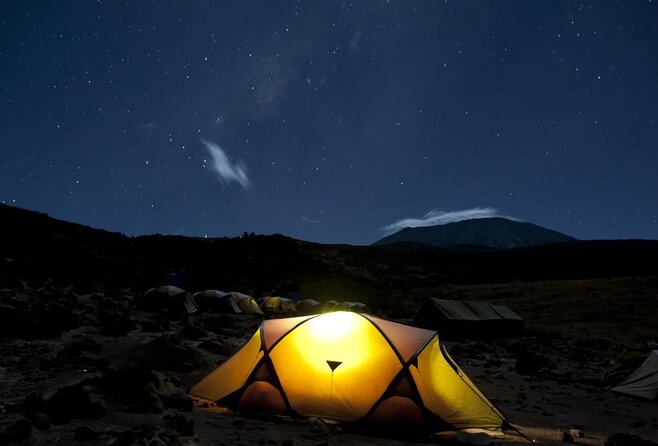
The experience begins with an early pickup from the airport or your accommodation. You then drive to the Marangu starting gate, where the climb begins after the park entry process.
The first section leads through Kilimanjaro’s rainforest. This is one of the most enjoyable parts of the lower route because the air feels cooler and the vegetation is thick. The path is generally more welcoming here than higher on the mountain, but rain can make it wet and slippery.
Mandara Hut is the first overnight stop. The supplied schedule identifies this as the opening stage of the climb, followed by the trek to Horombo on the next day. Exact walking times for the first day are not provided, so you should confirm the day’s distance and expected arrival time with Afrishare before setting out.
This first day is less about speed than rhythm. I would use it to learn how your boots feel, adjust your daypack, and notice how your guide sets the pace. A slow, steady walking style will serve you much better than a strong start followed by fatigue.
Day two: The open moorland and Horombo Huts
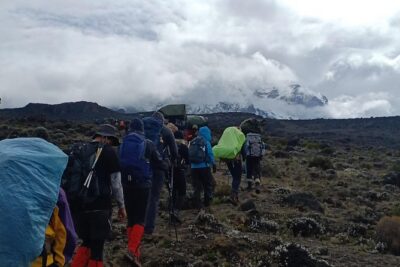
From Mandara, you continue toward Horombo Hut at about 3,700 meters. The walk is listed at roughly three to four hours, and after about 15 minutes you leave the rainforest behind for open moorland.
This change is memorable. The trees thin out, the views open, and you begin to see Mawenzi and the summit cone of Kibo. Giant senecio and lobelias add a distinctly Kilimanjaro feel to the route. These plants make the moorland look almost prehistoric, especially after the dense forest below.
Horombo is where altitude may begin to affect you. You might notice a headache, shortness of breath, reduced appetite, or unusual tiredness. Tell your guide early if you feel unwell. The point is not to prove toughness. The point is to recognize symptoms before they become serious.
The hut stay is a practical advantage, especially if rain or cold weather arrives. Still, you should keep warm layers close, since conditions at 3,700 meters can change quickly.
Day three: The acclimatization walk to Zebra Rocks
The third day starts and ends at Horombo, making it an optional rest or acclimatization day. I would treat it as an important part of the climb rather than a spare day to skip.
You can rest around camp, or walk toward Zebra Rocks at about 4,200 meters and Mawenzi Tarn Hut at about 4,300 meters before returning to Horombo. This follows the useful high-walk, low-sleep principle: you gain some experience at a higher altitude but spend the night lower than your highest point.
This day can help you judge how your body is responding. It also gives you a chance to spend more time around the unusual high-altitude plants and open volcanic terrain without the pressure of summit night.
The tradeoff is clear. A five-day climb already compresses the schedule, so using the acclimatization day well matters. If you are feeling strong, the walk may improve your preparation. If you are struggling, resting may be the wiser choice. Your guide should help you make that call.
More treks in Moshi:
- Private Kilimanjaro Hike 7 Day Lemosho Route
★ 5.0 · 60 reviews - Best Kilimanjaro hiking day trip tour with Kilinge Adventures
★ 4.5 · 54 reviews - #1. Best Kilimanjaro Day hike Tour-Machame Route-ISMANI
★ 4.2 · 47 reviews - Best Kilimanjaro Adventure 7 days Machame route Trekking
★ 5.0 · 42 reviews
Day four: The midnight push to Uhuru Peak
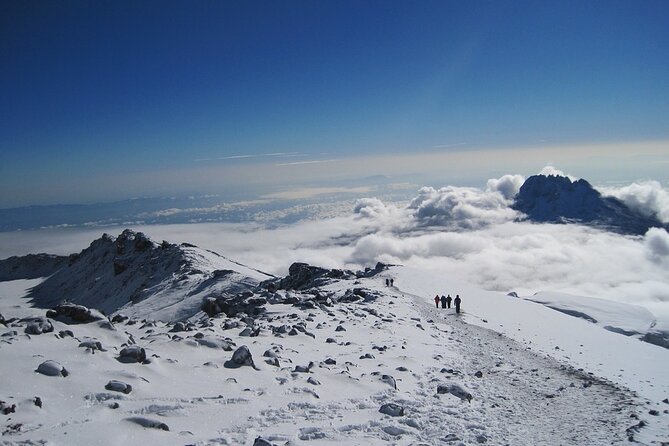
Summit day is the heart of the trip and the toughest section by far. You begin very early, usually between midnight and 2 a.m., climbing over steep, heavy scree or snow toward Gilman’s Point on the crater rim.
The climb to Gilman’s Point is listed at four to five hours. From there, you continue for another one to two hours toward Uhuru Peak, the highest point in Africa at 5,895 meters. The supplied details also list Gilman’s Point at 5,861 meters and 18,640 feet.
At this height, simple tasks become harder. The cold, darkness, steep slope, and thin air all add pressure. Your guide’s pace matters greatly here. The strongest accounts of this trip describe patient guides who slowed down when needed and regularly checked how the group was doing.
Reaching Uhuru Peak is followed by photographs and time to take in the views. Keep your summit stop sensible. At this altitude, lingering too long can drain energy needed for the descent.
The return is substantial. You descend to Kibo for lunch and rest, then continue down to Horombo for dinner and overnight. The listed descent from Kibo to Horombo takes another three to four hours. In practical terms, this is a very long day, and you should prepare for fatigue even if the climb itself goes well.
One encouraging detail from the trip accounts is that a full group of four reached Uhuru Peak together. Another account describes two climbers completing the five-day Marangu route with guides named Alex and Godfrey. Those details point to the value of a supportive crew, but they should not be read as a promise that every group will summit. Altitude affects people differently.
Day five: Descending through forest to Moshi
After breakfast at Horombo, you descend through the moorland to Mandara Hut at about 2,700 meters. From there, the path continues through rainforest to Marangu Gate at roughly 1,830 meters.
The lower section may be wet and muddy. Gaiters and trekking poles are specifically useful here, and I would keep rain gear handy even if the morning starts dry. Once you lose altitude, shorts and a T-shirt may be comfortable, but do not pack away your warmer clothing too soon.
A vehicle waits at the gate for the drive back to Moshi or Arusha. The schedule includes a hot lunch before the transfer. If you are flying out the same day, airport drop-off may be arranged, but you should confirm the timing carefully. After a summit attempt and a long descent, a generous buffer is wise.
The guides, food, and support team
The human side of a Kilimanjaro climb matters as much as the route. The strongest praise here goes to the guides, cook, and porters. The accounts describe patient guides, a comfortable pace, good service, and food that exceeded expectations.
That is important because meals become a major part of your daily energy at altitude. Vegetarian food is available if requested in advance, and you should provide any other dietary requirements when booking. Alcoholic drinks are not included, though they can be purchased.
Afrishare’s director, Ibra, is also described as helping coordinate a wider Tanzania trip involving Kilimanjaro, Arusha National Park, and a month-long landscape restoration course. That suggests the company may be useful if you want to combine trekking with other local activities.
The support team is part of the cost, not an optional extra. A private group can also make communication easier, since you are not sharing the schedule with a large mixed party. Still, clarify the exact porter arrangements, group size, sleeping setup, and tipping expectations before you pay.
What the $1,460 price really covers
At $1,460 per person, the package includes four nights of accommodation, all fees and taxes, lunch, a professional guide, hotel pickup and drop-off, and a private tour.
That is a meaningful bundle for a Kilimanjaro climb. Park-related costs, mountain accommodation, guiding, food, and transport can add up quickly, so the price should be judged against what is included rather than against a basic day-hike rate.
You should look closely at the wording around meals. Lunch is explicitly included, while the daily schedule also refers to dinner and breakfast at the huts. Ask Afrishare to confirm the full meal plan, as well as what happens on airport-transfer days.
Souvenir photos and alcoholic drinks are not included. Those are easy to ignore when planning, but the more useful questions concern equipment, porter support, emergency procedures, and gratuities. The listing does not provide those details, so request them in writing.
Who will enjoy this five-day climb
This trek suits you if you want a private Kilimanjaro experience, prefer huts to tents, and like a route with clear scenery changes. It also fits people who want pickup and drop-off arranged from an airport or hotel.
You should have moderate physical fitness. That does not mean you need to be an elite athlete, but you should be comfortable walking for several hours and handling a very long summit day.
The five-day schedule may suit an experienced hiker with limited time. For a first high-altitude climb, however, the short itinerary deserves careful thought. The extra acclimatization day is a real benefit, but the summit attempt still comes soon.
I would be cautious about booking this version if you strongly dislike early starts, cold conditions, basic huts, mud, or uncertain weather. The mountain operates in all weather conditions, so proper clothing is not optional.
Practical preparation for Marangu
Bring layers that you can adjust throughout the day. Rain gear, warmer clothing, gaiters, and trekking poles are specifically useful on this route. Keep a warm layer accessible on summit night and during the early morning sections.
Use the first days to settle into a slow pace. If you feel altitude symptoms at Horombo, report them rather than hiding them. The acclimatization day is there for a reason.
Also, make sure your booking details are complete. Confirmation is provided at booking, children must be accompanied by an adult, and the child rate applies only when sharing with two paying adults. The tour operates in all weather, and you can cancel for a full refund up to 24 hours before the start time. A minimum group requirement may apply, and a cancellation for that reason should result in another date, another experience, or a full refund.
Should you book Afrishare’s Marangu Route?
I would consider this trek a good value for someone who wants a private, hut-based Kilimanjaro climb with transfers and a well-praised support crew. The food, patient pacing, and care from the guides are the package’s strongest points.
The deciding issue is the five-day length. You should book if your fitness is solid, your schedule is tight, and you understand that Marangu is easier in route design, not easy in effort. If you want more time for altitude adjustment, ask Afrishare if a longer itinerary is available before committing.
This is a serious mountain wrapped in a relatively simple package. Go prepared, listen to the guides, use the Horombo acclimatization day wisely, and the route offers a memorable climb from rainforest to Africa’s highest summit.
FAQ
Where does the Kilimanjaro trek begin?
The trek begins at the Marangu starting gate. Pickup is offered from the airport or your accommodation before the drive to the gate.
How long is the tour?
The experience lasts approximately five days and includes four nights of accommodation.
What is the highest point reached?
The summit attempt reaches Uhuru Peak at 5,895 meters, the highest point in Africa.
Is the Marangu Route suitable for beginners?
The tour requires a moderate physical fitness level. The route is considered an easier Kilimanjaro option, but the five-day schedule and summit altitude remain physically demanding.
Where do you sleep during the trek?
The route uses huts, including Mandara Hut and Horombo Huts. The supplied details do not provide further information about hut room arrangements.
Is the Horombo acclimatization day compulsory?
The day is described as optional, but it is important for acclimatization. You can rest at Horombo or take a day trek toward Zebra Rocks and Mawenzi Tarn Hut before returning to Horombo.
What meals are included?
Lunch is included in the package. The daily schedule also refers to breakfast and dinner at the mountain huts, so confirm the complete meal plan with the provider before booking.
Is vegetarian food available?
Yes. A vegetarian option is available, but you should request it when booking.
Are airport transfers included?
Hotel pickup and drop-off are included, and pickup can be arranged from the airport. Airport drop-off after the trek may also be possible if you are flying out the same day, but confirm the timing in advance.
Can the tour be canceled for a full refund?
Yes. You can cancel at least 24 hours before the experience start time for a full refund. Changes or cancellations made less than 24 hours before the start time are not accepted for a refund.
Just added in Moshi
- Zanzibar: Stone Town tour and Nakupenda beach with Lunch★ 5.0 · 1 review
- day trip lake manyara★ 5.0 · 2 reviews
- Mt Kilimanjaro 6 days Marangu route hike★ 5.0 · 3 reviews
- machame route★ 5.0 · 16 reviews
- Private Cycle to Kilimanjaro Bike Park Safari★ 5.0 · 6 reviews
- West Kilimanjaro cycling Adventures★ 4.5 · 8 reviews
- Wildlife Extravaganza: Manyara, Tarangire & Ngorongoro in 3 Days★ 5.0 · 3 reviews
- 3 Days Private E-Bike Tour in West Kilimanjaro★ 5.0 · 3 reviews
Marangu Route Climbs, compared.
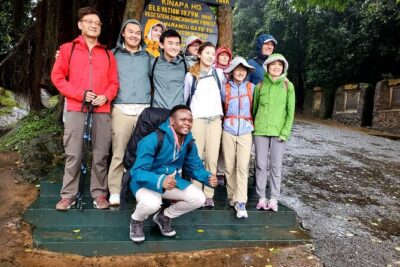
Private Full Day Hiking Experience to Marangu Route
Read our review →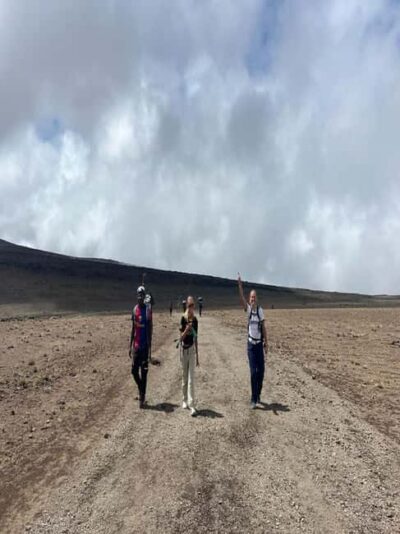
From Arusha/Moshi: Kilimanjaro Hike Marangu Route Day Trip
Read our review →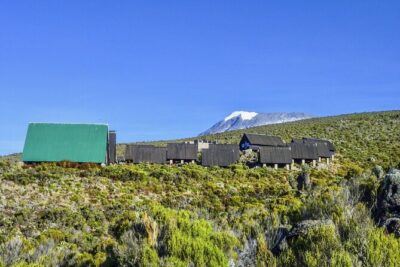
Mount Kilimanjaro Day Hike Through Marangu Route to Mandara Hut
Read our review →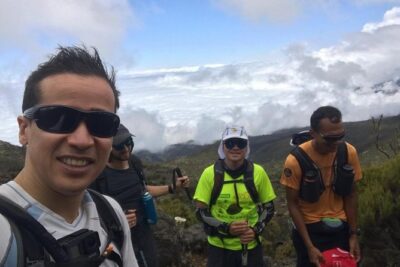
Best Kilimanjaro Adventures 6 Days Marangu Route Experience
Read our review →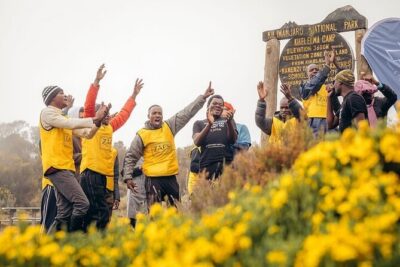
Kilimanjaro Private Climbing in 6 Days Marangu Route
Read our review →Browse the lists this tour appears in