
Reviewed · WILDEBEEST MIGRATION SAFARIS
6 Day Serengeti wildebeest migration Camping Safari
Wild animals set the schedule. This six-day camping safari packs Tarangire, Serengeti, and Ngorongoro into one hard-working northern Tanzania circuit, with elephants, big cats, crater wildlife, and possible wildebeest migration viewing. I like the small maximum group of six and the practical all-in setup, including a 4×4 vehicle, safari cook, tents, meals, water, camping gear, and park fees. I also like the chance to see four very different habitats in one trip, from baobab-dotted Tarangire to the open Serengeti plains.
The main caution is the $15,000 per-person price, which is very high for a six-day camping trip and should be checked carefully before booking. The day-two description also needs clarification: it is labeled Lake Manyara, but the detailed plan describes Mto wa Mbu, Ngare Sero, Lake Natron views, and a Maasai-guided waterfall walk rather than a standard Lake Manyara game drive.
In This Review
- Key points to know before booking
- What the $15,000 price really needs to cover
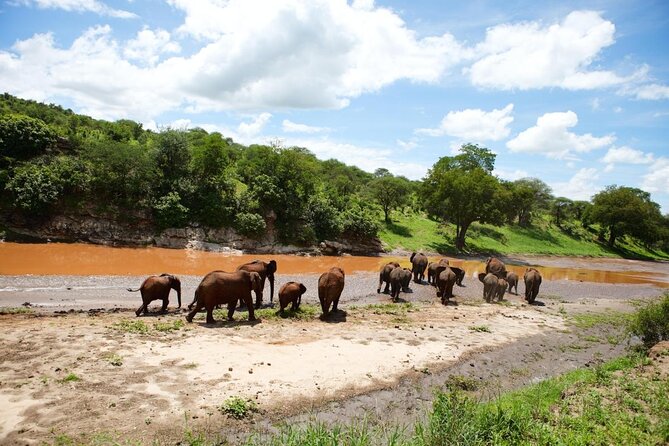
- Day 1: Tarangire’s elephants and baobab country
- Day 2: A Rift Valley change of pace
- Day 3: First views of the endless Serengeti
- Day 4: A full Serengeti game drive
- Day 5: More Serengeti, then the Ngorongoro rim
- Day 6: Wildlife in Ngorongoro Crater
- Camping, food, and the practical side of the trip
- The guides can make or break the six days
- Who should book this safari?
- FAQ
- How long is the safari?
- What parks and conservation areas are included?
- Is the wildebeest migration guaranteed?
- What type of accommodation is provided?
- Are meals included?
- How many people can join the safari?
- What is not included in the price?
- Should you book it?
Key points to know before booking
- Maximum of six people: A small group should make game-viewing stops and vehicle time more comfortable.
- Four major northern Tanzania areas: The route includes Tarangire, the Serengeti, the Ngorongoro Conservation Area, and a day associated with Lake Manyara.
- Migration timing matters: Herd locations change with rainfall, so a six-day trip cannot guarantee a river crossing or a particular wildlife scene.
- Camping is fully equipped: Safari tents, sleeping mats, chairs, tables, a cook, meals, and mineral water are included.
- Strong guide praise: Godfrey, also called Gody, David, Monika, and Calvin are named positively for guiding, wildlife spotting, teaching, and care.
- Crater-edge overnight: Sleeping beside Ngorongoro Crater gives you an early start for the next morning’s game drive.
A safari like this is less about checking off four park names and more about seeing how Tanzania changes from one day to the next. Tarangire is dry-country elephant country. The Serengeti is built for long views and predator encounters. Ngorongoro concentrates wildlife inside a giant volcanic caldera.
You also get a taste of the Rift Valley and Maasai country. That variety is the strongest reason to consider the trip. The weak point is the amount of driving, especially on rough roads, so you should choose this only if you are comfortable spending long stretches in a safari vehicle.
What the $15,000 price really needs to cover
The advertised cost is $15,000 per person, a serious sum even for a private or small-group African safari. The supplied details include a good number of major costs: transport in a 4×4 safari vehicle, an English-speaking guide, an English-speaking safari cook, safari tents, sleeping mats, tables, chairs, meals, mineral water, activities, and national park fees.
That list has real value. Park fees alone can add a large amount to a Tanzania safari, and the vehicle, staff, food, camping equipment, and multiple protected areas require careful planning. Still, the price is high enough that I would ask for a written breakdown before paying.
Confirm whether the $15,000 is for a private departure or a seat in a six-person group. Ask whether airport transfers, hotel nights in Arusha, and any internal flights are included. Flights, visas, optional activities, tips, and personal purchases are specifically excluded, so you need to budget for those separately.
The small group helps explain some of the cost. A vehicle shared by no more than six people gives you more room than a crowded van and makes it easier to see around fellow passengers when animals appear. It does not, by itself, prove that the price is good value. Get the exact vehicle standard, camping arrangement, and payment terms in writing.
More Serengeti and Ngorongoro safaris:
- Balloon Safari & Bush Breakfast in Serengeti – Miracle Experience
★ 5.0 · 1,646 reviews - 3 Days Serengeti & Ngorongoro Group Camping Safari
★ 5.0 · 574 reviews - 5-Day Highlights mid-Range Crater, Serengeti, Tarangire
★ 5.0 · 296 reviews
Day 1: Tarangire’s elephants and baobab country
The safari begins with a morning briefing before heading toward Tarangire National Park. This is an excellent first park because it offers a strong chance of seeing large elephant herds and gives you a quick introduction to northern Tanzania’s dry savannah.
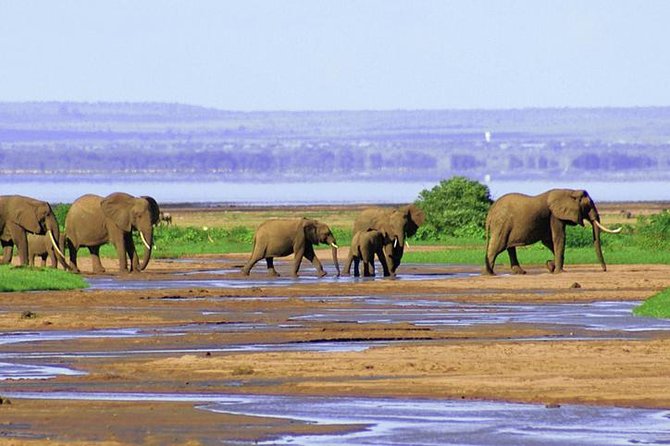
Tarangire is shaped by its river, seasonal swamps, lagoons, and striking baobab trees. Animals gather around water, which can make game viewing feel concentrated and rewarding. You might see giraffes, bushbucks, hartebeests, gerenuks, fringe-eared oryx, buffaloes, zebras, wildebeests, and lions.
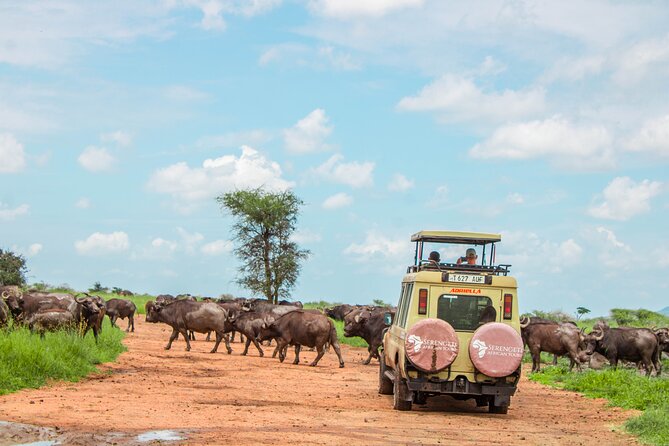
The open roof of the safari vehicle is important here. It lets you take in the broad views and gives you a better angle for photography than a closed vehicle. A guide such as Godfrey or Gody can add real value by explaining what you are seeing and allowing enough time at good sightings. One strong point in the feedback is the sense that Gody gave people time to visit different areas rather than rushing from one sighting to the next.
Leopards are possible but not common, and cheetahs are rarely seen in Tarangire. That is useful to know before you arrive. This is not the place to measure success only by big-cat sightings. The elephants, unusual antelope, baobabs, and river setting are the main draw.
Day 2: A Rift Valley change of pace
Day two is the least clear part of the program on paper. It is headed Lake Manyara, but the detailed description sends you from Tarangire through Mto wa Mbu toward the Rift Valley Escarpment, with a destination near Ngare Sero and views toward Lake Natron.
That distinction matters. Lake Manyara National Park is known as a game-viewing destination, while the described day focuses on a village, a rough gravel road, Maasai culture, a waterfall walk, and views of flamingos around Lake Natron. Ask the operator exactly where you will go and whether a Lake Manyara game drive is included.
The road along the escarpment is described as spectacular and very bumpy. You should take that seriously. The route may offer fine views of the Rift Valley, but comfort will be limited. Ol Doinyo Lengai, known as the holy mountain of the Maasai, appears in the distance, and the alkaline waters of Lake Natron may show a pink glow from large numbers of flamingos.
The walk with a Maasai guide to a nearby waterfall adds a human and physical element to the trip. It is a welcome change from sitting in the vehicle, though you should be prepared for a hot, dusty setting and uneven walking conditions. You return to camp for the night, with breakfast, lunch, and dinner included.
This day may appeal most if you want more than a standard wildlife circuit. If your main goal is to spend every possible hour on a game drive, clarify the plan first.
Day 3: First views of the endless Serengeti
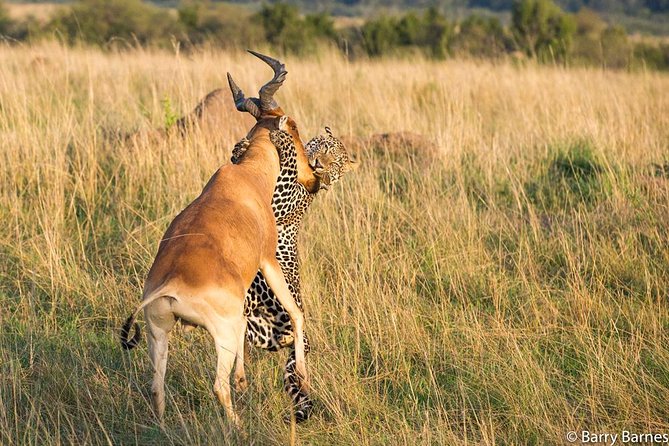
Day three starts early, with dirt tracks leading up from the Rift Valley toward the Serengeti. The route is described as adventurous, and the reward is the sudden arrival of open grassland stretching toward the horizon.
The Maasai word Serengeti means endless plains, and the name makes sense once the trees thin out and the views open. You should reach the grassy plains around midday, followed by game viewing and an overnight stay at a campsite in the northern or central part of the park.
This is a long transfer day, so do not expect a full day of wildlife watching. Its value is the transition itself. You see the country change from escarpment and dry valley to huge open savannah, and you begin to understand why migration sightings depend so much on rain and grass.
The exact campsite location is important. Northern and central Serengeti are not interchangeable, especially during migration season. Ask which area is planned for your dates, while accepting that the location may change to follow the herds.
More migration safaris:
- 8 Days Great Wildebeest Calving Migration Safari from Arusha
★ 5.0 · 254 reviews - 10-Day Serengeti Wildebeest Migration Safari from Arusha
★ 5.0 · 218 reviews - 8 Day Spectacular Migration Serengeti mid -Range Tanzania Safari
★ 5.0 · 161 reviews - 9-Day Serengeti Migration Footsteps Tanzania Safari
★ 5.0 · 96 reviews
Day 4: A full Serengeti game drive
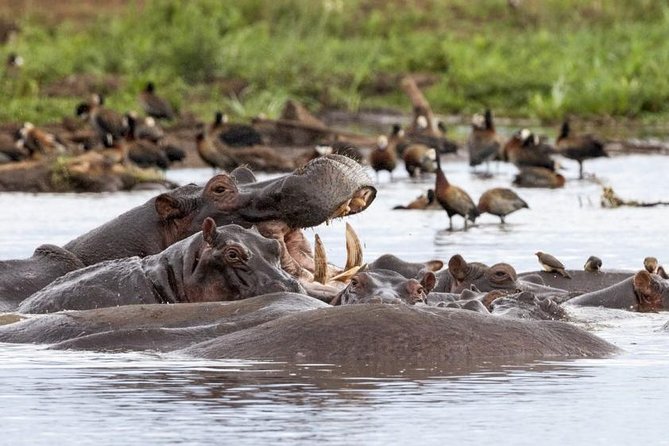
Day four gives you the safari’s best chance for a full day in the Serengeti. The route depends on where the migrating wildebeest and zebras are found, and predators often follow those herds.
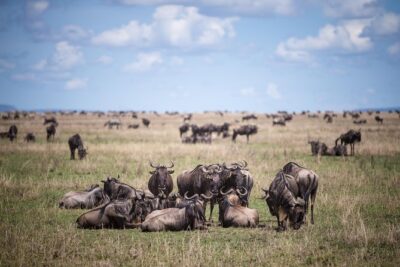
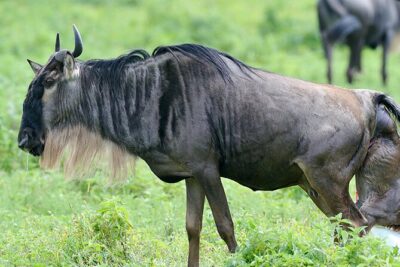
The migration does not run on a fixed timetable. During the shorter rains in November and December, herds may move from northern hills toward the southern plains. During the longer rainy period from April to June, they may head north again. Rainfall varies from year to year, so no responsible operator can promise a specific location, crossing, or spectacle.
Your guide’s local judgment matters here. The best guide is not simply the person who names animals. You want someone who can read the conditions, search intelligently, explain animal behavior, and avoid wasting the whole day on a single unlikely target. Calvin receives especially warm praise for teaching about birds and providing books to help identify species. That is useful in the Serengeti, where the smaller sightings can fill quiet stretches between major animals.
Wildebeests and zebras are the main migration stars, but lions, leopards, and cheetahs may be found nearby. The park is also home to the Big Five: lion, elephant, buffalo, rhino, and leopard. Seeing all five is possible but never guaranteed, and the trip is better judged by the quality of the day than by a checklist.
You spend a second night in the Seronera area. This central Serengeti location is presented as a base for the full-day drive and gives the schedule a sensible rhythm: travel in, spend a full day searching, then continue toward the crater.
Day 5: More Serengeti, then the Ngorongoro rim
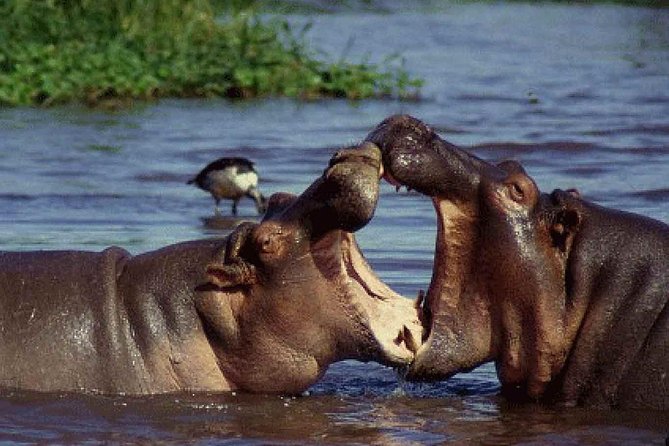
The morning begins with another Serengeti game drive. This is a useful final chance to look for animals missed earlier, and an early start can bring different sightings from those found later in the day.
After lunch at a picnic site, you drive toward Ngorongoro Crater. The change is dramatic. The open plains give way to the crater rim, where the caldera opens below you and more than 25,000 animals live inside an area roughly 20 kilometers wide.
The overnight campsite on the crater edge is one of the most appealing features of the trip. The view over the caldera gives you a powerful sense of place, and sleeping there puts you in a good position for the next morning’s descent. The details do not specify the exact camp facilities beyond the included safari tents and camping equipment, so ask about washing facilities and tent arrangements if comfort matters to you.
This is also a day when fatigue can catch up with you. Several hours of game driving, a picnic lunch, and a transfer to the crater rim make for a full schedule. The reward is that you do not need to approach the crater from Arusha on the final morning.
Day 6: Wildlife in Ngorongoro Crater
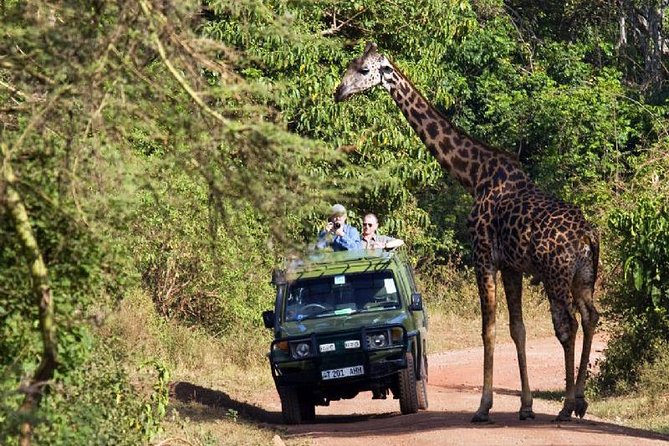
The final morning starts at daybreak, with breakfast before descending into Ngorongoro Crater. This early timing makes sense. You get a full game drive before leaving the caldera in the afternoon.
The crater offers a dense mix of habitats and animals. You might see black rhinos, Grant’s and Thomson’s gazelles, lions, leopards, elephants, and mountain reedbucks in the forests on the slopes. Buffaloes, spotted hyenas, rare wild dogs, and more than 500 bird species are also possible.
Ngorongoro is not simply another Serengeti. Its enclosed volcanic setting can make wildlife feel concentrated, but the road conditions, other vehicles, and animal movements still determine what you see. You should expect a busy, intensive game-viewing day rather than a quiet wilderness drive.
After a picnic lunch, you leave the crater in the afternoon and return to Arusha in the early evening. That arrival time is important if you are connecting to a flight or a separate hotel booking. Since flights are not included, leave plenty of space before any onward departure.
Camping, food, and the practical side of the trip
Camping is part of the experience, not just a way to lower the price. You sleep in safari tents and use the supplied mats, chairs, tables, and other equipment. An English-speaking safari cook prepares the included meals, and mineral water is provided.
Five breakfasts, five lunches, and four dinners are listed. The dinner count matches the four nights away from Arusha, while lunch and breakfast are included through the final day. Ask about the first morning meal if your pickup begins very early, since the listed start time of 12:00 am is unclear and may be a booking-system notation rather than a normal meeting hour.
The main comfort issue is repetition and road time. Six days of camping, rough tracks, early starts, and long drives suit people who would rather spend money on park access and guiding than on lodge rooms. If you need a proper bed and private bathroom each night, this is not the right format.
The vehicle is a 4×4 safari vehicle, and pickup is offered. The tour has mobile ticketing and booking confirmation is provided at the time of reservation. Most people can participate, and the group maximum is six, but the supplied information does not give detailed mobility guidance. Ask directly if you have walking or physical limitations, especially because day two includes a waterfall walk and rough road travel.
The guides can make or break the six days
The most praised part of the service is the guiding. Godfrey, also called Gody, is singled out for making the safari special, finding desired animals, and giving enough time at different areas. David and Monika are also praised for helping create memorable wildlife encounters.
Calvin receives special credit for bird knowledge and for using books to help identify species. That detail matters because a safari can become repetitive if every sighting is reduced to lion, elephant, or zebra. A guide who points out birds and explains what you are seeing gives the quieter moments more purpose.
Inviolata is mentioned for communication around the safari, including contact before and after the trip. Reliable planning is especially valuable when the route covers several parks and the migration location can change.
You cannot assume a particular guide will be assigned, so request your preferred guide names when booking rather than treating them as guaranteed. Also ask how the company handles changes in herd location, campsite placement, and weather.
Who should book this safari?
I would recommend this trip to you if you want a compact introduction to Tanzania’s northern parks, prefer a small group, and are happy to trade lodge comfort for more time in the parks. It suits photographers, first-time safari visitors, bird lovers, and anyone who wants both wildlife and a taste of Maasai-guided outdoor activity.
It is less suitable if you want a slow holiday, dislike rough roads, or expect a guaranteed wildebeest crossing. The word migration can make a trip sound predictable, but the herds follow rainfall, not a brochure.
The price requires the most careful judgment. The included park fees, staff, food, equipment, and small group are meaningful, but $15,000 per person demands clear confirmation of what else is covered. I would book only after receiving a detailed cost breakdown and clarification of the Lake Manyara versus Lake Natron and Ngare Sero route.
Cancellation is flexible if you act early: cancel at least 24 hours before the local start time for a full refund. Inside that window, the payment is not refunded and changes are not accepted.
FAQ
How long is the safari?
The safari lasts approximately six days and returns to Arusha in the early evening of day six.
What parks and conservation areas are included?
The program includes Tarangire National Park, Serengeti National Park, the Ngorongoro Conservation Area, and a day associated with Lake Manyara. The detailed day-two description focuses on Ngare Sero and views toward Lake Natron, so confirm the exact route before booking.
Is the wildebeest migration guaranteed?
No. The herds move according to rainfall, and their location changes from year to year. The guide adjusts game-drive areas based on where the animals are found.
What type of accommodation is provided?
You stay overnight in safari tents at campsites. Camping equipment includes tents, sleeping mats, chairs, tables, and related items.
Are meals included?
Yes. The package includes meals according to the schedule, including five breakfasts, five lunches, and four dinners, plus mineral water.
How many people can join the safari?
The maximum group size is six travelers.
What is not included in the price?
Flights, visa fees, optional activities, tips, and personal spending for items such as souvenirs are excluded.
Should you book it?
Book this safari if you want a small-group camping trip with strong wildlife variety, a full Serengeti game-drive day, a crater-edge overnight, and guides such as Gody, David, Monika, or Calvin if available. The route gives you elephants, big cats, open plains, flamingo country, Maasai culture, and Ngorongoro wildlife in six busy days.
Before paying $15,000, get two things settled: the exact day-two destination and a complete explanation of the price. If those answers are clear and you enjoy basic camping and long drives, this can be a powerful northern Tanzania safari. If you want certainty, luxury, or a guaranteed migration event, choose a slower and more clearly itemized trip.
More Camping Safaris in Arusha
- 4 Days Group Camping Safari
★ 5.0 · 1,101 reviews - 5 Days Group Camping Safari
★ 5.0 · 730 reviews - 2 Days Tarangire and Ngorongoro Group Camping Safari
★ 5.0 · 146 reviews - 6 Days Tanzania Budget Camping Safari
★ 5.0 · 145 reviews
Just added in Arusha
- Safari “Kifaru” – 5 days in the most famous Parks in the world★ 5.0 · 4 reviews
- Saadani Day Trip★ 5.0 · 13 reviews
- 3 Days Tanzania Short and Spicy★ 5.0 · 6 reviews
- 5 Day Tanzania Safari Camping Adventure Private Tour★ 5.0 · 2 reviews
- Day Trip to Ngorongoro Crater from Arusha★ 5.0 · 1 review
- SERENGETI NATIONAL PARK Tour★ 4.5 · 5 reviews
- 3 Days Serengeti Park & Ngorongoro Crater Adventure Safari★ 5.0 · 8 reviews
- 6 Days Tanzania Bush Experience Safari★ 5.0 · 6 reviews
Wildebeest Migration Safaris, compared.
8 Days Great Wildebeest Calving Migration Safari from Arusha
Read our review →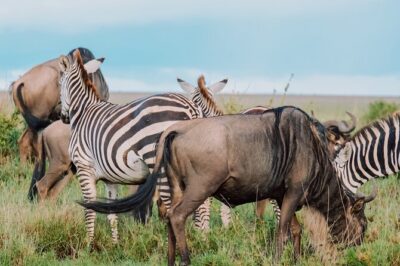
10-Day Serengeti Wildebeest Migration Safari from Arusha
Read our review →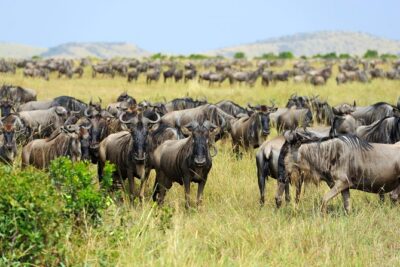
8 Day Spectacular Migration Serengeti mid -Range Tanzania Safari
Read our review →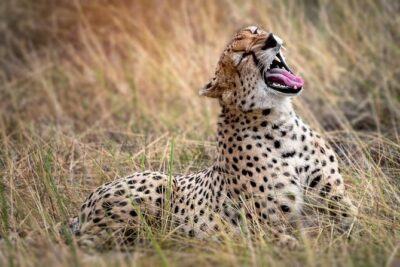
9-Day Serengeti Migration Footsteps Tanzania Safari
Read our review →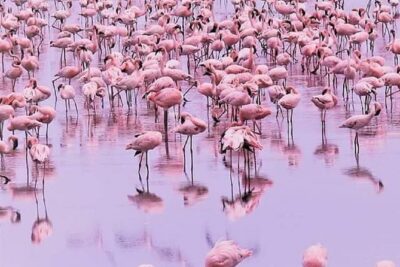
Private 6-Day Great Migration Ndutu Serengeti Safari Tour
Read our review →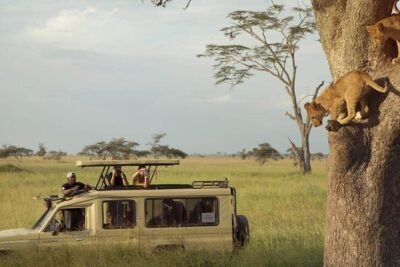
4 Day Great Migration Safari Serengeti & Ngorongoro Crater
Read our review →Browse the lists this tour appears in