
Reviewed · LEMOSHO ROUTE CLIMBS
6 Days Kilimanjaro Lemosho route Climbing and Hiking Tour
The mountain makes you earn every view. This six-day Kilimanjaro climb follows the scenic Lemosho Route, beginning in western Kilimanjaro forests and crossing the Shira Plateau before the hard push to Uhuru Peak. I like the strong acclimatization day at Lava Tower and Barranco, and I like that park fees, meals, transfers, and a portable toilet are included. The main concern is the short schedule, especially for anyone new to high-altitude trekking.
At $930 per person, this is a competitively priced climb for a major African summit. You will need to budget separately for flights, visas, insurance, personal gear, and crew tips. The route is beautiful, but the summit day can last about 14 hours, and the move from Barranco to Barafu leaves little room for a slow pace.
In This Review
- Key details before you book
- Why the Lemosho Route is a good six-day choice
- Day three uses the climb-high, sleep-lower method
- Barranco to Barafu is short on paper, hard in practice
- Summit night brings Stella Point and Uhuru Peak
- The Mweka descent ends at the park gate
- What the $930 price really covers
- Crew support and the small amount of public feedback
- Who will enjoy this climb most
- Should you book the six-day Lemosho climb?
- FAQ
- How long is the Kilimanjaro tour?
- Which Kilimanjaro route does the tour use?
- What time does the tour start?
- Is airport transfer included?
- Are meals included?
- Is hotel accommodation included?
- Is personal hiking gear included?
- What is the cancellation policy?
Key details before you book
- Lemosho starts in the western forests: Your first hours pass through the Lemosho Glades before you reach Big Tree Camp.
- Shira Plateau brings wide mountain views: Day two crosses grassy moorland and heather, with possible views toward Kibo and the Northern Ice Fields.
- Lava Tower is the key acclimatization test: You climb to about 15,190 feet, then descend to Barranco Camp at roughly 13,044 feet.
- The summit night is long and demanding: You start around midnight, reach Stella Point near sunrise, continue to Uhuru Peak, then descend to Millennium Camp.
- Meals and core park costs are covered: Six lunches, five dinners, five breakfasts, taxes, fees, and airport transfer are included.
- The tour has only three published ratings: The comments praise the crew and the help with acclimatization, but the small sample means you should ask detailed questions before paying.
Why the Lemosho Route is a good six-day choice
Lemosho is a smart route for the first part of the climb because it gives you a gradual start through forest. You are picked up in Moshi around 8:00 a.m. for the drive to Lemosho Gate on the western side of Kilimanjaro. After registration, you begin walking through the Lemosho Glades toward Big Tree Camp.
That opening matters. You are not thrown straight onto bare rock or a steep ridge. The forest gives you a cooler, greener start, though you still need to treat the first day as serious exercise. The planned walking time is about four hours, making it the easiest day on paper.
Big Tree Camp is your first overnight stop. The description does not provide its exact elevation, so you should not use this day to judge how your body will react higher up. Instead, use it to settle into the pace, eat well, drink regularly, and check that your boots, layers, and daypack are working.
The route then opens onto the Shira Plateau. This change of scenery is one of the best reasons to choose Lemosho. Forest gives way to grassy moorland and heather, with volcanic rock formations scattered across the plateau. Kibo Peak may appear through the clouds, and the Northern Ice Fields can come into view from the western side.
Day two is listed at about 11 hours, which makes it a surprisingly demanding day so early in the climb. Some sections toward Shira 1 are steep. You then continue toward Shira 2, with broad views that help you understand the size and shape of the mountain.
The plateau is not just a pretty walk. The steady gain in height gives your body time to begin adjusting. Still, six days is a compressed program compared with longer Kilimanjaro schedules, so the guide’s pace and your own response to altitude will matter greatly.
More Lemosho Route climbs:
- Kilimanjaro climb by Lemosho Route (7-day)
★ 5.0 · 651 reviews - Kilimanjaro Climbing Lemosho Route 8 Days.
★ 5.0 · 186 reviews - Kilimanjaro climb, Lemosho Route (8-day)
★ 5.0 · 148 reviews
Day three uses the climb-high, sleep-lower method
Day three is the route’s most useful acclimatization day. You leave Shira 2 at about 12,500 feet and climb toward Lava Tower at 15,190 feet. The distance to the tower is about 7 kilometers, with four to five hours of walking through alpine desert.
Lava Tower is also called the Shark’s Tooth. The name fits the sharp volcanic form, but the important point for you is the altitude. You climb high enough to test your body, then descend to Barranco Camp at about 13,044 feet.
The descent covers only about 3 kilometers and takes another two to three hours. The full day is listed at around nine hours. You finish close to the elevation where you began, but the higher climb gives your body a useful chance to adjust.
This day may feel strange. You work hard to climb toward Lava Tower, only to lose height later. That is exactly why it helps. A past climber praised the guide’s insistence on eating more fruit and allowing enough time for acclimatization. You should take that advice seriously: food, fluids, and a patient pace are practical tools, not minor comforts.
Barranco Camp is an important overnight stop before the mountain becomes more barren. You have dinner, rest, and prepare for the next day. The schedule gives you a useful recovery point, but the route is still moving quickly.
Barranco to Barafu is short on paper, hard in practice
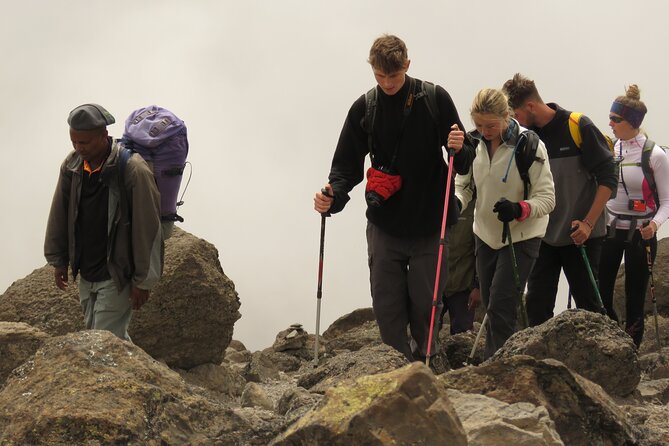
The fourth day is listed as only about three hours, but that number should not make you relax. You walk toward Barafu Camp at 4,640 meters, roughly 15,223 feet, through slopes with little or no vegetation. The terrain is steep, and the thin air makes every step feel more expensive.
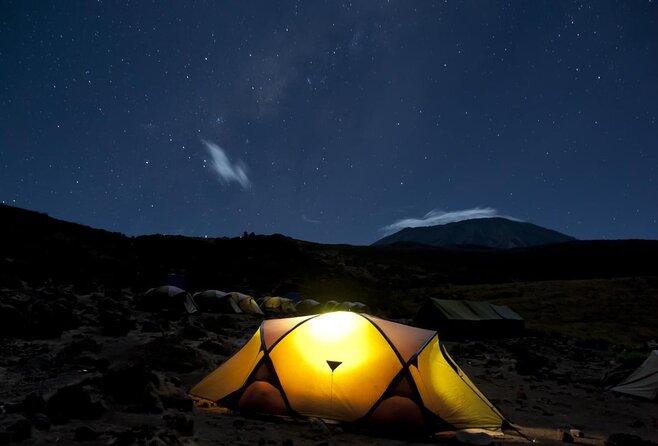
Barafu is the launch point for the summit attempt. You eat, rest, stay warm, and drink as much as you can manage. Dinner comes early, followed by an attempt at sleep before waking around 11:00 p.m. or midnight.
This is one of the tour’s biggest practical challenges. You have already completed long days, and now your body must rest at high altitude before a night climb. You should be comfortable with the idea that sleep may be brief or poor. The schedule depends on saving energy during the afternoon and keeping your clothing and equipment organized before bed.
The description does not give the exact route between Barranco and Barafu, nor does it list a separate Karanga Camp stop. That makes it especially important to ask the operator how the day is run, where you will eat, and how the group handles different walking speeds.
Summit night brings Stella Point and Uhuru Peak
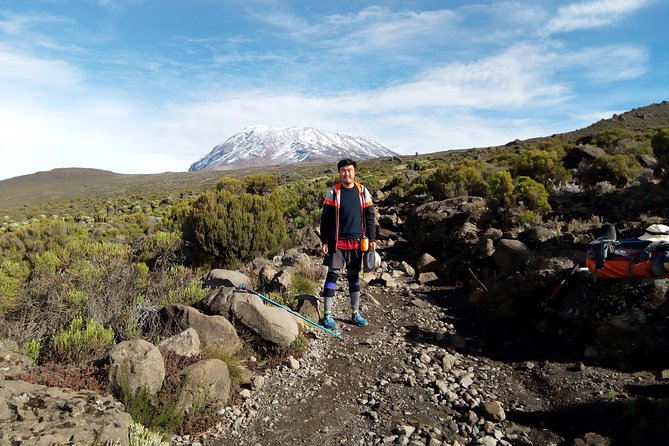
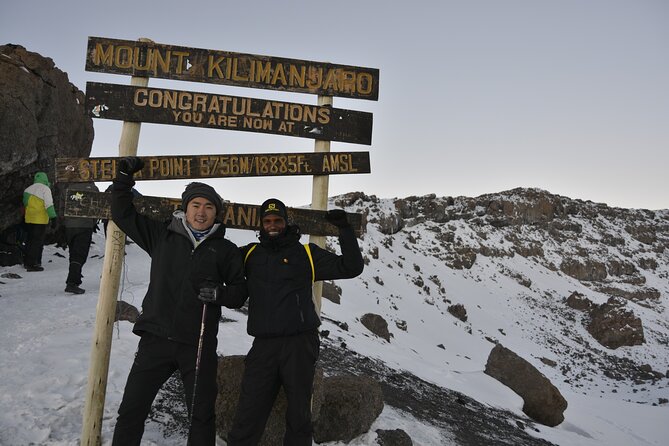
The summit attempt begins around midnight. You climb through the upper glaciers and steep slopes for about four to five hours before reaching the crater rim at Stella Point, listed at 5,739 meters.
The timing is designed to bring you to the rim around sunrise. That gives you a chance to see the crater cliffs, Mawenzi Peak, and the surrounding high mountain views in early light. The final walk from Stella Point to Uhuru Peak takes about another hour, bringing you to 5,895 meters, the highest point in Africa.
The final hour can feel harder than the distance suggests. You are already tired, cold, and high above the lower camps. I would judge success here by steady progress, not speed. Stay close to your guide, keep eating small amounts if you can, and follow instructions about pace and rest.
The descent begins by returning to Stella Point, then continuing down to Barafu Camp for breakfast. After that, you continue to Millennium Camp for a longer break. The entire day is listed at about 14 hours, so this is not a casual summit walk. It is the point where fitness, preparation, altitude response, and crew support all come together.
The summit views are a major reward, but you should also appreciate the route’s changing habitats. In a few days, you move from forest to moorland, alpine desert, and glacial high ground. The contrast gives the climb much more variety than a simple uphill march.
More treks in Moshi:
- Private Kilimanjaro Hike 7 Day Lemosho Route
★ 5.0 · 60 reviews - Best Kilimanjaro hiking day trip tour with Kilinge Adventures
★ 4.5 · 54 reviews - #1. Best Kilimanjaro Day hike Tour-Machame Route-ISMANI
★ 4.2 · 47 reviews - Best Kilimanjaro Adventure 7 days Machame route Trekking
★ 5.0 · 42 reviews
The Mweka descent ends at the park gate
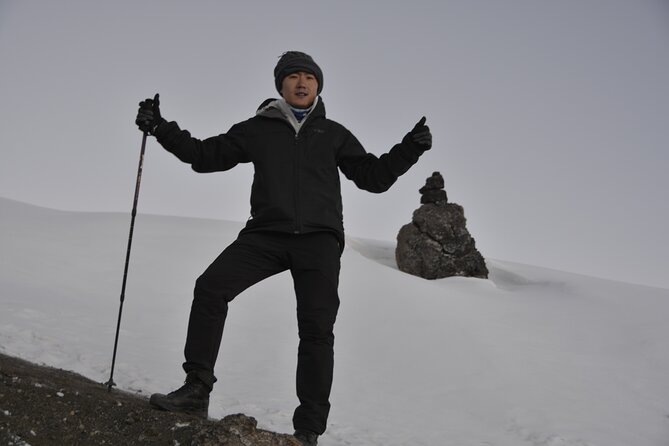
Day six is a gentle descent through rainforest toward Mweka Gate. The supplied timing says six minutes, which is clearly not a useful estimate for the full walk, so you should ask the operator for the expected hiking time. The important sequence is clear: you walk down to the gate, complete park formalities, receive a certificate, and return by vehicle to your Moshi hotel.
That final transfer is included, as is the airport transfer. Hotel accommodation before and after the climb can be arranged by you or by the company. Because the accommodation wording allows either option, confirm exactly what is included in your quoted price before booking.
The certificate is a pleasant finish, but the real advantage of the Mweka descent is the return to lower altitude and the rainforest. After the exposed upper mountain, the vegetation feels like a welcome change.
What the $930 price really covers
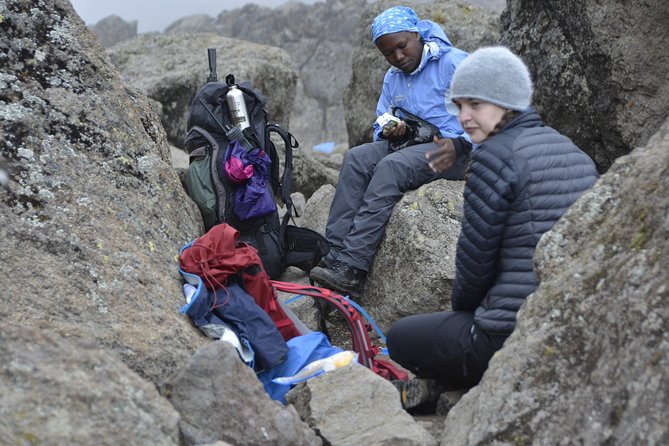
At $930 per person, the price is attractive for a six-day Kilimanjaro climb. You receive all fees and taxes, meals during the climb, airport transfer, and a portable toilet. Six lunches, five dinners, and five breakfasts are listed, matching the six-day structure and five nights of food service.
The portable toilet may sound like a small detail, but it can make camp life more comfortable. It is especially useful when a large group is sharing limited facilities.
You still need to pay for several important items:
- International and local flights
- Visa costs
- Medical and travel insurance
- Personal hiking equipment
- Tips for the crew
The tip is not an optional detail to ignore. Guides, cooks, and porters make a climb like this possible, and you should ask the operator for current tipping guidance before departure. The price also does not spell out the exact hotel, airport transfer terms, or equipment available for hire.
The tour allows group discounts, which could improve the value for friends or family traveling together. The listed maximum is 500 people, an unusually high number for a mountain experience. That does not mean your group will contain 500 people, but you should ask for the normal group size, guide-to-climber ratio, and how slower walkers are supported.
Crew support and the small amount of public feedback
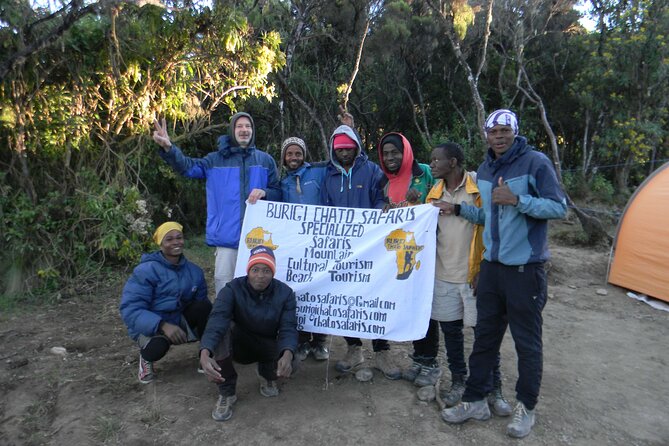
The published comments give the crew the strongest praise. Geoff is called out with a friendly nickname, and Godfree and Godson are also mentioned positively. The wording suggests a warm, social atmosphere, with some groups enjoying time together before returning for more outdoor activity.
You should not book solely on three short comments. They do give useful clues, though. The strongest practical lesson is the value of a guide who pays attention to food and acclimatization. One climber completing Kilimanjaro for a second time credited fruit, enough adjustment time, and the guide’s advice with helping make the summit possible.
Ask these questions before you commit:
- How many people will be in my group?
- Which guides and support staff will lead the climb?
- What is the exact route from Barranco to Barafu?
- What is the real walking time on the final descent?
- Are airport transfers available on arrival and departure days?
- Can I rent sleeping bags or other gear?
- What tipping amount is expected?
- What happens if I need to stop before the summit?
These questions do not take away from the adventure. They help you know what the $930 includes and how the company manages the hard parts.
Who will enjoy this climb most
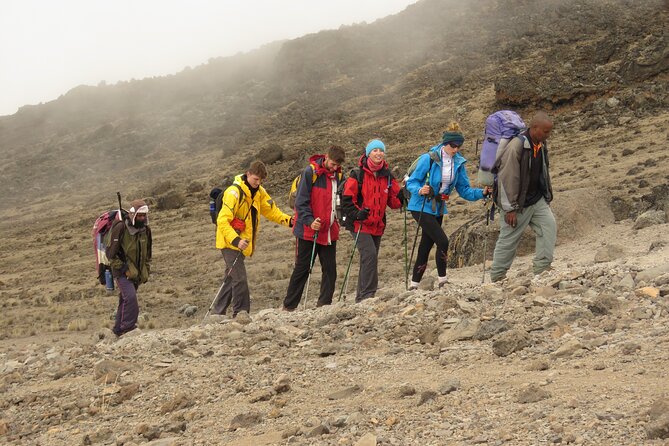
This tour suits a fit hiker who wants to reach Kilimanjaro’s summit in six days and prefers a route with forest, open plateau, high desert, and glacier views. It is also a good match for someone who values included meals, transfers, park costs, and a portable toilet rather than arranging every piece independently.
I would be more cautious if this is your first serious high-altitude climb. The six-day plan has useful acclimatization built in, especially on the Lava Tower to Barranco day, but it remains fast. You need to be ready for an 11-hour day on day two and a 14-hour summit day on day five.
The itinerary says most people can participate, but that should not replace personal medical advice. The tour excludes medical and travel insurance, so you need suitable coverage before setting out. Personal hiking gear is also your responsibility.
The meeting point is on Mkwawa Street in Shanty Town, Moshi, with an advertised start time of 8:30 a.m. The pickup information says around 8:00 a.m., so confirm the exact collection time with the operator. The activity returns to the same meeting point area after the descent and transfer.
Free cancellation is available if you cancel at least 24 hours before the start time. Cancellations inside 24 hours are not refunded, and poor weather may lead to a new date or a full refund.
Should you book the six-day Lemosho climb?
I would consider booking this tour if you want a reasonably priced Kilimanjaro attempt with a scenic western approach and a clear acclimatization day at Lava Tower. The inclusion of meals, park fees, airport transfer, and a portable toilet gives the price real value.
I would pause before booking if you need a slow altitude schedule, dislike long summit days, or want a small, tightly managed group without first confirming the group size. Ask about the Barranco to Barafu route, the unusual six-minute descent listing, gear hire, insurance expectations, and crew tipping.
For a fit hiker who prepares carefully, this route offers a lot in six days. Just remember that the bargain price does not remove the mountain’s demands.
FAQ
How long is the Kilimanjaro tour?
The experience lasts approximately six days, from pickup in Moshi through the descent to Mweka Gate and the return transfer.
Which Kilimanjaro route does the tour use?
The tour follows the Lemosho Route, beginning at Lemosho Gate on the western side of Mount Kilimanjaro.
What time does the tour start?
The meeting point lists an 8:30 a.m. start time, while the pickup description says around 8:00 a.m. Confirm the exact pickup time with the operator.
Is airport transfer included?
Yes. Airport transfer is included in the listed package.
Are meals included?
Yes. The package includes six lunches, five dinners, and five breakfasts.
Is hotel accommodation included?
Hotel accommodation before and after the climb can be arranged by you or by the company. Confirm the accommodation details and price before booking.
Is personal hiking gear included?
No. Personal hiking gear is not included, so you must provide it or ask the operator if rental equipment is available.
What is the cancellation policy?
You receive a full refund if you cancel at least 24 hours before the experience starts. Cancellations or changes made within 24 hours are not refunded or accepted. If poor weather causes the activity to be canceled, you will be offered another date or a full refund.
Just added in Moshi
- Zanzibar: Stone Town tour and Nakupenda beach with Lunch★ 5.0 · 1 review
- day trip lake manyara★ 5.0 · 2 reviews
- Mt Kilimanjaro 6 days Marangu route hike★ 5.0 · 3 reviews
- machame route★ 5.0 · 16 reviews
- Private Cycle to Kilimanjaro Bike Park Safari★ 5.0 · 6 reviews
- West Kilimanjaro cycling Adventures★ 4.5 · 8 reviews
- Wildlife Extravaganza: Manyara, Tarangire & Ngorongoro in 3 Days★ 5.0 · 3 reviews
- 3 Days Private E-Bike Tour in West Kilimanjaro★ 5.0 · 3 reviews
Lemosho Route Climbs, compared.


8-Day Small-group Lemosho Kilimanjaro Summit Trekking
Read our review →



Climbing Kilimanjaro through 8 days Lemosho Route
Read our review →Browse the lists this tour appears in