
Reviewed · MACHAME ROUTE CLIMBS
6 Days Machame Route Kilimanjaro Climbing
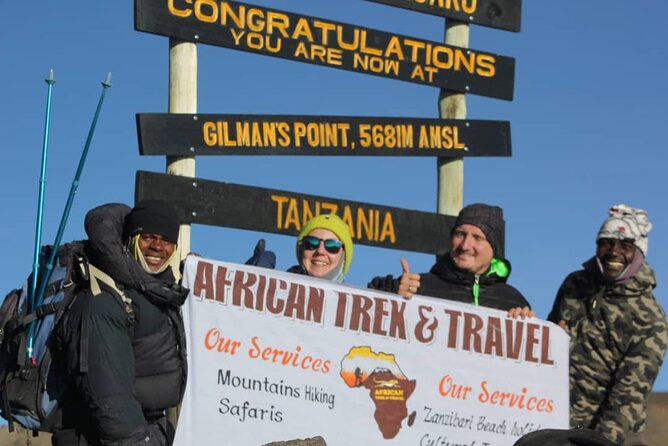
Kilimanjaro rewards patience more than speed. This six-day Machame Route climb takes you from Moshi through rainforest, moorland, high desert, and steep summit terrain before descending through Mweka. I like the route’s changing scenery and the strong focus on guide support, especially the careful leadership associated with Sebastian and African Trek & Travel. I also like that the trip is capped at 10 people, which should make daily pacing and safety checks more personal. The main concern is that six days is a demanding schedule at high altitude, with limited time for your body to adjust.
This is not a sightseeing walk with a mountain in the background. You will hike for several hours each day, sleep at camps, rise around midnight for the summit attempt, and manage cold, fatigue, and thin air. The $2,600 price per group of up to one person can offer good value if it covers the listed park fees, meals, water, guides, camp support, and transport back to Moshi, but you should confirm exactly what is included before paying.
In This Review
- Key points to know before you book
- From Moshi to Machame Gate and the first camp
- Shira Plateau and the first serious altitude gain
- Lava Tower, high desert, and Barranco Camp
- Barranco Wall, Karanga Valley, and Barafu Camp
- Midnight start for Stella Point and Uhuru Peak
- The Mweka descent and return to Moshi
- Meals, water, camp support, and comfort
- What the $2,600 price means
- Who will enjoy this climb most?
- Booking details and useful questions
- Should you book the six-day Machame Route?
- FAQ
- Where does the Kilimanjaro climb begin?
- How long is the Machame Route experience?
- What group size can join the climb?
- What is the summit schedule?
- Is food and water included?
- Is tipping included in the price?
Key points to know before you book
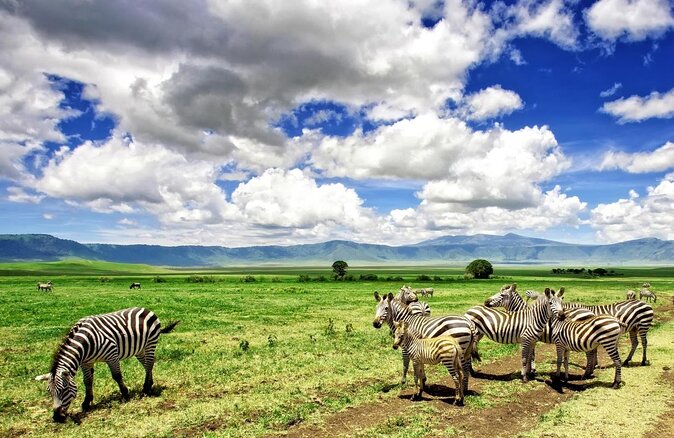
- The Machame Route changes scenery daily: You begin in thick rainforest, cross moorland and high desert, and finish among rock, scree, snow, and glaciers near the summit.
- The summit day begins at midnight: Expect a steep, tiring ascent toward Stella Point and Uhuru Peak, with the goal of arriving around sunrise.
- Barranco Wall is a real feature of the route: Day four includes a steep climb over the wall before continuing toward Karanga and Barafu Camp.
- Guide support receives the strongest praise: Sebastian is repeatedly described as organized, professional, encouraging, and focused on safety.
- The group limit is useful: A maximum of 10 people can make communication and pacing easier than on a very large expedition.
- Bring realistic expectations: There is no onboard restroom, tipping is extra, and the listed meal quantities should be confirmed because they are presented inconsistently.
From Moshi to Machame Gate and the first camp
The meeting point is in Moshi, Tanzania, at M89C+XGR. Pickup is offered, which is useful if you are staying in Moshi and do not want to arrange a separate transfer to the trailhead. The transport description includes comfortable seating, climate control, large windows, storage space, safety features, and experienced drivers.
The onboard Wi-Fi and audio system sound pleasant for the drive, though they matter less once you begin walking. There is no restroom onboard, so use facilities before setting out and keep your personal essentials easy to reach. For a mountain trip, small practical details like this can make the start calmer.
Day one begins at Machame Gate, where you register with park authorities. The hike then enters the rainforest, one of the most enjoyable sections of the route for many people. Giant ferns, vines, and varied plant life create a strong first impression, and the forest gives you shade while you settle into the slow rhythm needed for Kilimanjaro.
The walk is listed at about five hours, with a relatively gentle gain compared with the days ahead. You finish at Machame Camp. This first day is important because it sets the pace. Walk too fast and you may spend the evening tired before the harder sections begin. Your guide’s role here is not simply to point out the trail. Good pacing, regular checks, and clear advice about gear can shape the whole climb.
More Kilimanjaro climbs:
- Kilimanjaro climb by Lemosho Route (7-day)
★ 5.0 · 651 reviews - Kilimanjaro climb, Machame Route (7-day)
★ 5.0 · 262 reviews - Kilimanjaro Climbing Lemosho Route 8 Days.
★ 5.0 · 186 reviews
Shira Plateau and the first serious altitude gain
Day two leads toward Shira Cave Camp and takes about three hours according to the schedule. The shorter walking time does not mean an easy day. The trail becomes steeper, you gain considerable height, and the rainforest gives way to moorland.
This change in vegetation is one of the route’s strengths. You leave behind dense trees and begin walking through more open country, with broad views and a sense that the mountain is becoming more exposed. The Shira Plateau gives the climb a bigger scale, but it also offers less shelter from wind and weather.
You should treat this day as a chance to observe how your body responds to altitude. Headache, poor sleep, unusual breathlessness, or nausea should be reported to your guide. A serious mountain operator will prefer a slower, safer decision over a forced schedule. The supplied experience information stresses safety and professional support, and the strongest praise for the team centers on this kind of care.
Shira Cave Camp is listed as the overnight stop. You will need warm layers, a reliable sleeping setup, and easy access to water. Three liters of bottled water per person are included, which is a helpful daily provision, although you should clarify how water is supplied on each day and whether you need additional personal treatment or storage equipment.
Lava Tower, high desert, and Barranco Camp
Day three is one of the most useful parts of the route for altitude adjustment. You cross the high desert plateau and pass Lava Tower at 4,600 meters. After gaining height, you descend to Barranco Camp, located below the Barranco Wall.
This climb high and sleep lower pattern is valuable because it lets you spend time at a greater altitude before dropping to camp. The day is listed at about five hours, but the terrain and altitude can make it feel longer. The high desert is stark compared with the forest below. Plant life becomes less dense, the air feels thinner, and the mountain begins to look less forgiving.
Lava Tower is a good place to pay attention to your breathing and energy. You may feel fine, or you may notice the altitude immediately. The correct response is to tell the guide rather than hide symptoms in an effort to appear strong. The trip is not improved by pretending you are comfortable.
Barranco Camp has a memorable setting beneath the wall. You can see the next major obstacle and understand why the fourth day is often regarded as one of the route’s defining stages. The camp stop also gives you a chance to rest before the steep climb ahead.
Barranco Wall, Karanga Valley, and Barafu Camp
Day four covers about six hours and starts with the Barranco Wall at roughly 4,250 meters. The route then passes through Karanga Valley at about 4,050 meters before joining the junction connected to the Mweka Trail. From there, you continue up to Barafu Camp.
The Barranco Wall is steep, but the schedule describes it as a ridge ascent rather than a technical climbing section. You should still expect uneven ground, careful foot placement, and a slower pace. This is where a calm guide matters. Sebastian is praised for being energetic, supportive, and attentive to safety, qualities that are especially useful when the route becomes physically and mentally tiring.
Karanga Valley gives the day some variation after the wall. You continue along the southern circuit, which provides views of the summit from different angles. That variety is one reason the Machame Route feels more rewarding than a simple up-and-down walk. You keep seeing the mountain change as you move around it.
Barafu Camp is the key staging point for the summit attempt. The camp has views toward the summit, but do not expect a long evening of sightseeing. You need to prepare clothing, water, and personal gear, eat, and rest before the midnight start. The schedule’s six-day format leaves little spare time here. That can work for fit hikers who handle altitude well, but it offers less recovery time than longer Kilimanjaro itineraries.
More Machame Route climbs:
- Climbing Kilimanjaro – Machame Route
★ 5.0 · 170 reviews - Climbing Kilimanjaro through 7 days Machame Route
★ 5.0 · 151 reviews - 7 Days Kilimanjaro via Machame route affordable price
★ 5.0 · 110 reviews - #1. Best Kilimanjaro Day hike Tour-Machame Route-ISMANI
★ 4.2 · 47 reviews
Midnight start for Stella Point and Uhuru Peak
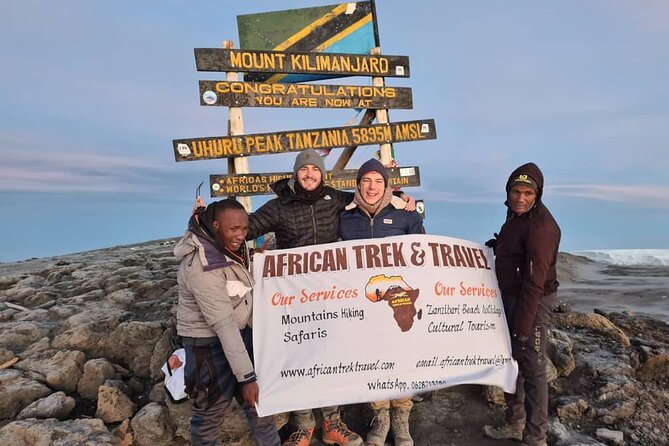
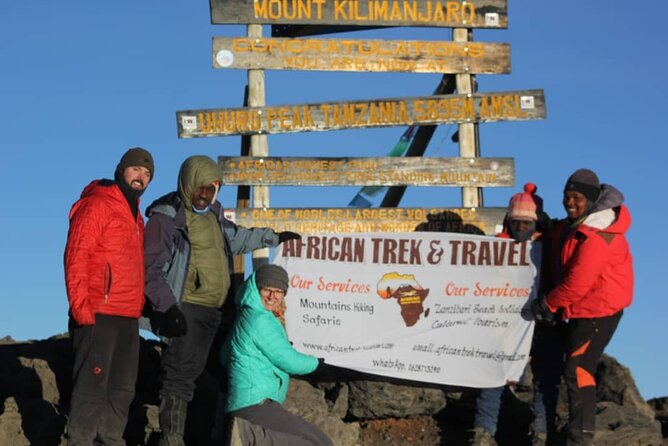
Day five is the hardest part of the experience. You wake around midnight, have a light breakfast, and begin the ascent before dawn. The aim is to reach Stella Point on the crater rim between roughly 4 and 5 AM, at an elevation of 5,861 meters, or about 18,640 feet.
The trail consists of steep switchbacks over scree, with possible snow. At this hour, the cold and darkness can make the climb feel serious even before altitude becomes the main problem. Your pace will likely be slow. This is a day for steady steps, quiet determination, and following your guide’s instructions.
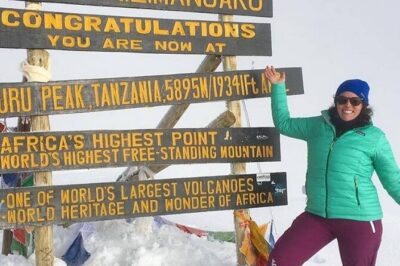
Stella Point gives you views toward the crater and glaciers. From there, the schedule allows about one more hour along the crater rim to Uhuru Peak, Kilimanjaro’s true summit. Time at the top depends on how you feel. That is an important detail. You may want photographs, but the summit is not the place to stay longer than your body allows.
The supplied information does not give the exact camp or finish point after summit activities, so confirm the day five descent plan with the operator. That detail matters because summit day can involve a long descent after the ascent, and you should know where you will sleep and what support is available.
The experience receives especially strong praise for guide encouragement and organization. Several accounts describe the team as focused on getting climbers safely toward their goal, not simply pushing everyone upward. One group of eight reportedly reached the summit, but you should not treat any past success as a promise for your own climb. Altitude affects each person differently.
The Mweka descent and return to Moshi
Day six takes you from the mountain to Mweka Gate. After breakfast, you walk down through the lower rainforest for about three to four hours, covering around 9 kilometers, or 5.5 miles. The listed elevation at the gate is 1,640 meters.
The descent is shorter than most of the upward days, but tired legs can make downhill walking surprisingly demanding. Trekking poles, careful steps, and patience help. The return through rainforest also gives you a pleasing visual change after the bare upper slopes.
If you reach Stella Point, you receive a green certificate. If you reach Uhuru Peak, you receive a gold certificate. After the gate, the customary process is to tip the trekking crew before transport back to your Moshi hotel. Tipping is not included, so plan for it separately and ask the company for current guidance on how the amount should be shared among guides, cooks, and porters.
Meals, water, camp support, and comfort
The package includes bottled water, park fees and taxes, breakfast, lunch, and dinner. The meal section lists nine dinners and nine lunches in one place, then separately lists lunch for six days, dinner for five days, and breakfast for five days. That inconsistency should be cleared up before departure.
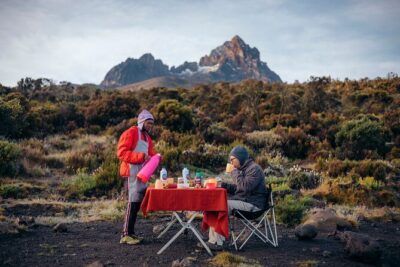
The practical question is not only how many meals are included, but also how they are served during the summit schedule. Day five begins with a light midnight breakfast, and your energy needs will be different from those on a normal walking day. Past praise for the food includes positive comments about tasty dinners and meals that were more than sufficient, but you should still tell the company about dietary needs before arrival.
The information also describes spacious vehicles, panoramic windows, climate control, storage, safety features, experienced drivers, audio, and Wi-Fi. These features apply to the transport portions, not the mountain camps. On the trail, comfort means a well-organized camp, dry clothing, enough water, and a sleeping arrangement that lets you recover.
What the $2,600 price means
The advertised cost is $2,600 per group of up to one person, while the maximum group size is stated as 10. That wording is unusual, so ask whether the quoted figure is for a private solo booking, a group booking, or a starting price that changes with group size.
At first glance, the price can be reasonable for a six-day Kilimanjaro climb if it includes park fees, meals, water, transport, guides, porters, cooks, and camp operations. The listed inclusions cover several major costs, and the support team is repeatedly praised for organization and care. A lower price is not automatically better if it means weaker safety support or poor treatment of the crew.
Ask for a written breakdown before booking. Confirm airport transfers, hotel nights, equipment rental, emergency procedures, crew tips, and the precise meal plan. None of those details should be left to guesswork. The price has value when you know exactly what it buys.
Who will enjoy this climb most?
This route suits you if you have moderate physical fitness, accept basic mountain camping, and want a varied route with a strong summit focus. It is also a good fit if you prefer a smaller group and value close guide contact.
The six-day schedule is less suitable if you want a relaxed pace or extra acclimatization time. You should also think carefully if you dislike cold nights, early starts, steep descents, or uncertain weather. The phrase moderate physical fitness should not be mistaken for easy. Six days on Kilimanjaro includes long walking days and one very demanding summit push.
The experience is also a good choice for people who want to support a local Tanzanian company. The praise for African Trek & Travel often points to its small-business character, professional organization, and local staff. Sebastian is a name to ask for if guide selection is available, since his planning, communication, and leadership receive repeated approval.
Booking details and useful questions
Confirmation is provided when you book. Service animals are allowed, and the meeting point is near public transportation, although the mountain setting means you should still rely on the arranged pickup details rather than assume public transport will reach the trailhead.
Free cancellation is available if you cancel at least 24 hours before the local start time. Cancellations or changes made inside that period are not accepted for a refund.
Before committing, ask these practical questions:
- Is the $2,600 price for a solo private climb or a per-person rate?
- Which meals are included on each of the six days?
- Where do you sleep after the summit attempt on day five?
- Are airport transfers and hotel nights included?
- What equipment can be rented?
- How are tips divided among the mountain crew?
- What happens if a climber must turn around because of altitude illness?
Clear answers will tell you as much about the operator as the headline price.
Should you book the six-day Machame Route?
I would recommend this climb to a fit, prepared hiker who wants a classic Kilimanjaro route, varied scenery, and close guide support. The strongest reasons to choose it are the Machame route itself, the small group limit, the included core services, and the repeated praise for Sebastian and the wider African Trek & Travel team.
I would hesitate if you want the gentlest possible acclimatization plan, a private luxury setup, or a fully transparent price description without follow-up questions. Confirm the group pricing, meal counts, summit-day descent, and extra costs first.
If those points are clear and you are ready for a serious six-day effort, this looks like a well-supported way to attempt Uhuru Peak while backing a local Moshi operator.
FAQ
Where does the Kilimanjaro climb begin?
The meeting point is in Moshi, Tanzania, at M89C+XGR. Pickup is offered.
How long is the Machame Route experience?
The experience lasts approximately six days.
What group size can join the climb?
The activity has a maximum of 10 participants. The listed price is shown per group of up to one person, so confirm how the price applies to your booking.
What is the summit schedule?
You wake around midnight on day five for a light breakfast and begin the summit ascent before dawn. The goal is to reach Stella Point between about 4 and 5 AM, then continue for roughly one hour along the crater rim to Uhuru Peak.
Is food and water included?
Bottled water is included, listed as three liters per person. Breakfast, lunch, and dinner are also listed as included, but the meal quantities appear inconsistent, so confirm the exact coverage before booking.
Is tipping included in the price?
No. Tipping the trekking team is not included. The schedule says it is customary to tip the crew before returning to your hotel in Moshi.
Just added in Moshi
- THE BEST 2 DAYS ON TREK – MARANGU ROUTE TOUR ADVENTURES★ 5.0 · 1 review
- Mount Kilimanjaro National Park Day Trip★ 5.0 · 7 reviews
- Mount Kilimanjaro Climbing in Tanzania Full-Day Trip★ 5.0 · 1 review
- Mount Kilimanjaro Day Hike – All-Inclusive, No Hidden Fees★ 4.0 · 7 reviews
- Mount Kilimanjaro Trekking Tour – Climb with Local Guides★ 5.0 · 1 review
- Mount Kilimanjaro: 7 Days Hike Lemosho Route★ 5.0 · 1 review
- Moshi:Chemka Hot Springs, Materuni Waterfalls & Coffee Tour★ 5.0 · 1 review
- Moshi Town: Walking Tour: Theme Urban lifestyle★ 3.1 · 4 reviews
Machame Route Climbs, compared.
Climbing Kilimanjaro through 7 days Machame Route
Read our review →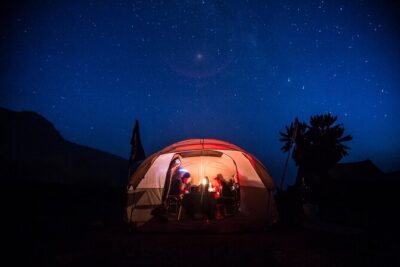
7-Day Machame Kilimanjaro Summit Tour from Arusha
Read our review →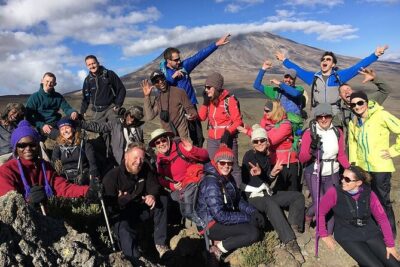
7 Days Kilimanjaro via Machame route affordable price
Read our review →
#1. Best Kilimanjaro Day hike Tour-Machame Route-ISMANI
Read our review →
The Best of Machame Route in 6 Days: Your World’s Summit Guide
Read our review →Browse the lists this tour appears in