
Reviewed · LEMOSHO ROUTE CLIMBS
8 Days Kilimanjaro Hike via Lemosho Route
Kilimanjaro saves its best for the long way around. This 8-day Lemosho trek approaches Africa’s highest mountain from the west, crosses rainforest and high moorland, and gives you extra time to adjust before the summit attempt. I like the route’s scenery and its steady pace, and I also like the care built into the trip, from daily health checks to emergency oxygen and a first-aid kit.
The main drawback is simple: this is a demanding climb, not a sightseeing walk. Summit day lasts about 13 hours, and the early start, cold, thin air, and long descent can test even fit hikers. You also need to check exactly what gear you must bring or rent, since the package provides major camping items but does not list every piece of personal equipment.
In This Review
- What makes this Kilimanjaro climb appealing
- Why Lemosho is a smart eight-day choice
- Day 1: Londorossi Gate to Big Tree Camp
- Day 2: The Shira Plateau and Shira 1 Camp
- Day 3: Shira 2 and a useful acclimatization walk
- Day 4: Lava Tower, 4,640 meters, then Barranco
- Day 5: Barranco Wall and Karanga Valley
- Day 6: Barafu Camp and an early night
- Day 7: Stella Point, Uhuru Peak, and the long descent
- Day 8: Millennium Camp to Mweka Gate
- What the $2,350 price includes
- Who should choose this trek
- Should you book the Nafika Lemosho route?
- FAQ
- How long is the Kilimanjaro Lemosho trek?
- What is the price per person?
- Where does the climb begin?
- Where is the meeting point?
- Is hotel pickup available?
- What camping equipment is included?
- Are meals included?
- Is drinking water provided?
- What is the highest point reached?
- Is a visa included?
- How large can the group be?
- What fitness level is required?
- Is emergency oxygen available?
- Can I cancel for a full refund?
What makes this Kilimanjaro climb appealing
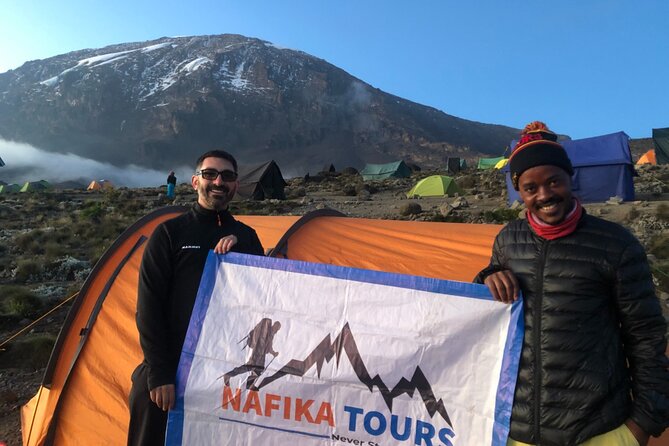
- A scenic western approach: You begin at Londorossi Gate and cross rainforest, grassy moorland, volcanic rock, alpine desert, and glacier country.
- A useful acclimatization pattern: The route climbs high to Lava Tower at 4,640 meters, then drops to Barranco Camp before continuing upward.
- Regular health checks: Guides monitor climbers during the trek and are prepared to respond to altitude sickness.
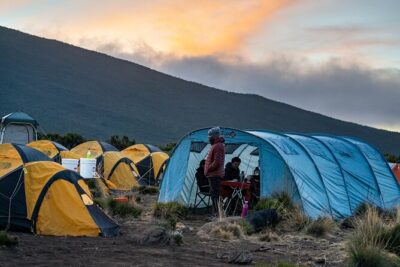
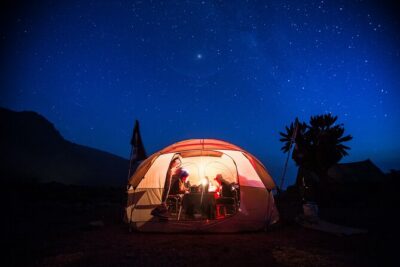
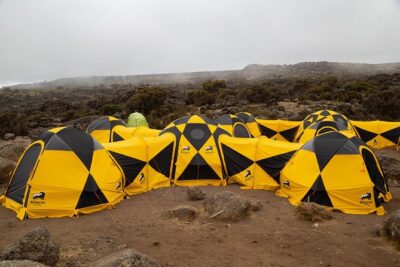
- Comfortable camp service: Tents, sleeping pads, sleeping bags, tables, chairs, treated water, and cooked meals are included.
- A serious summit day: You reach Stella Point at 5,756 meters, continue to Uhuru Peak at 5,895 meters, then descend to camp.
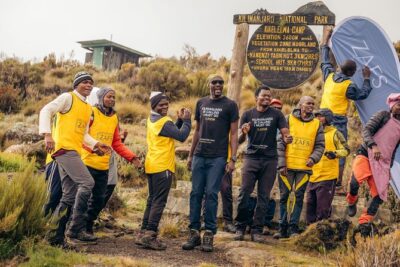
- Strong guide support: The company team includes guides such as Eli, Meshakii, Inocent, Musa, Abdala, Alyce, and Diklan, with repeated praise for their pacing, care, and attention.
Why Lemosho is a smart eight-day choice
Kilimanjaro has several established routes, but Lemosho is a good fit if you want scenery and a slower build-up rather than the shortest possible climb. You start at 2,360 meters, on the western side of the mountain, then curve south around Kibo. That gradual change gives you a chance to settle into mountain life before the hard upper sections.
The route is also known for broad views. You see Kibo from different angles, look toward Mawenzi, and pass below glaciers and the Western Breach area. The scenery changes often enough that the walking never feels like one repeated view.
The extra day matters. You spend several nights gaining height in stages, including an acclimatization walk at Shira 2 and another optional walk near Karanga. That does not guarantee a summit, but it gives your body more time than a rushed schedule would.
Nafika Tours limits the group to a maximum of 20 people. That is not a tiny private party, but it is manageable if the group is well organized. The company’s strongest praise centers on the guides. Climbers have singled out Eli, Meshakii, and team leader Abdala, along with Inocent and Musa, for calm pacing, regular checks, and help on difficult sections.
More Lemosho Route climbs:
- Kilimanjaro climb by Lemosho Route (7-day)
★ 5.0 · 651 reviews - Kilimanjaro Climbing Lemosho Route 8 Days.
★ 5.0 · 186 reviews - Kilimanjaro climb, Lemosho Route (8-day)
★ 5.0 · 148 reviews
Day 1: Londorossi Gate to Big Tree Camp
Your pickup is scheduled around 8:00 am after breakfast. Private transportation takes you to Londorossi Gate, where the pre-hike paperwork is handled before you begin walking.
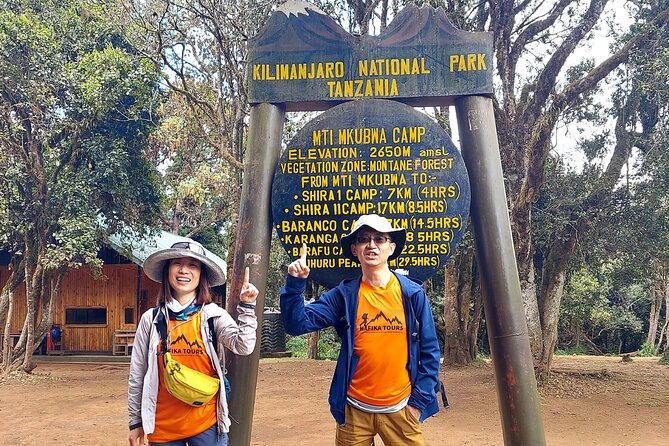
The first section passes through the forest of the Lemosho glades. This is a gentle introduction compared with the upper mountain, with about four hours of hiking before you reach Big Tree Camp.
The forest is one of the route’s special features. Lemosho begins in a moister, greener zone, and the change in plant life becomes part of the story of the climb. The published description also notes that this area is home to unusual wildlife, though wildlife sightings are not promised.
Big Tree Camp is your first night on the mountain. You sleep in the camping equipment supplied by the company. Since your body is still adjusting to the change in altitude and routine, this first evening is a good time to organize your daypack, water, warm layers, and headlamp.
Day 2: The Shira Plateau and Shira 1 Camp
Day two takes you out of the forest and onto grassy moorland and heather. Volcanic rock formations break up the open ground, and Kibo begins to feel much closer.
The walk to Shira 1 Camp covers about 8.5 kilometers and takes roughly five hours. Some sections are steep, but the day is not described as technically difficult. The bigger issue is the altitude gain. Walk slowly, drink regularly, and do not use an easy morning as an excuse to race ahead.
From camp, Kibo Peak appears to float above the clouds. This is one of those views that makes the slower Lemosho schedule worthwhile. You are no longer simply walking through forest. You are moving across a high plateau with the summit in view.
Day 3: Shira 2 and a useful acclimatization walk
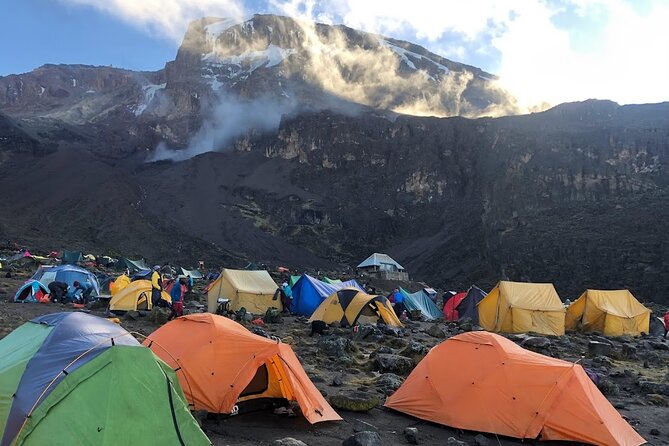
The third day continues across the Shira Plateau for about eight kilometers and four hours. The route gives you views toward the Northern Ice fields from the western side, along with less familiar angles of Kibo.
This is a steady day, but it is not a throwaway day. The gradual climb helps your body adjust, and the guides add a short acclimatization walk after you reach Shira 2 Camp. You go up, spend a little time at higher altitude, then return to camp for dinner and sleep.
That pattern is valuable because altitude problems can appear even when a person feels strong at lower elevations. Nafika’s guides are expected to conduct regular health checks, which is one of the most reassuring parts of the package. You should answer those checks honestly. Hiding a headache or unusual fatigue helps nobody.
The camp setting is exposed and high, so expect a colder, more basic night than at the hotel in Moshi. The company provides sleeping tents, sleeping pads, sleeping bags, tables, and chairs. One useful detail from the strong feedback is that tea breaks may include a table and sometimes chairs, rather than only a thermos in the dirt.
More treks in Moshi:
- Private Kilimanjaro Hike 7 Day Lemosho Route
★ 5.0 · 60 reviews - Best Kilimanjaro hiking day trip tour with Kilinge Adventures
★ 4.5 · 54 reviews - #1. Best Kilimanjaro Day hike Tour-Machame Route-ISMANI
★ 4.2 · 47 reviews - Best Kilimanjaro Adventure 7 days Machame route Trekking
★ 5.0 · 42 reviews
Day 4: Lava Tower, 4,640 meters, then Barranco
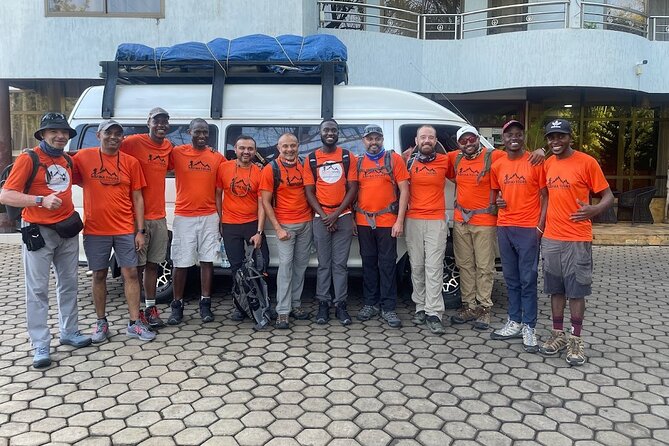
Day four is the route’s great acclimatization test. You climb to Lava Tower at 4,640 meters, have lunch there, and then descend to Barranco Camp at about 3,960 meters.
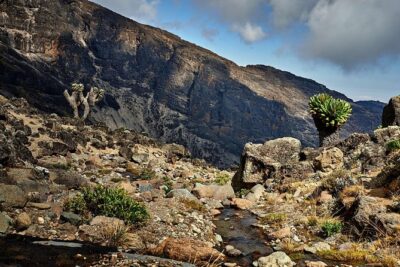
The walk is around 10 kilometers and takes roughly seven hours. You pass through upland desert and follow lava ridges beneath the glaciers near the Western Breach. The views open dramatically, with the plains far below and the mountain’s ice above.
Lava Tower is the highest point you reach that day, but it is not the summit. That distinction matters. You gain height, let your body experience the thinner air, then sleep lower at Barranco. This climb-high, sleep-lower pattern is one of the route’s most sensible features.
The descent to Barranco can feel welcome, though your legs may notice the day’s total effort. Barranco Camp sits below tall cliffs with wide views outward. Take photographs, but keep your camera protected from dust and cold. The most memorable part of the evening may simply be watching the light change across the mountain.
Day 5: Barranco Wall and Karanga Valley
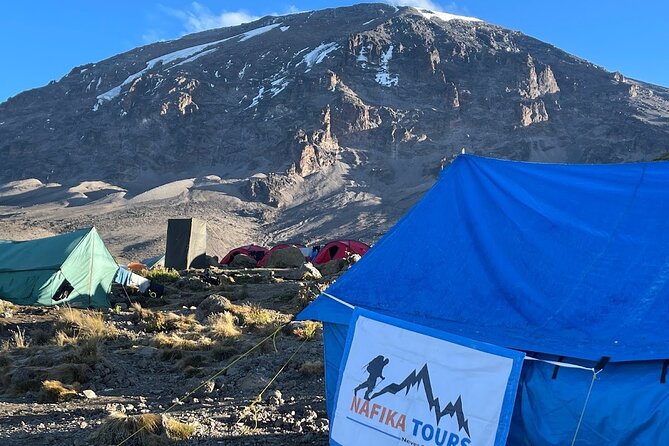
After breakfast, you tackle the Barranco Wall. It looks imposing from camp, but the route is described as easier than its appearance suggests. You climb a steep ridge and pass below the Heim and Kersten glaciers before descending toward Karanga Valley.
The day covers about five hours, making it shorter than the previous one. That is intentional. Your summit attempt begins soon, so the afternoon is set aside for rest. A nap is not a luxury here. It is useful preparation.
If you feel strong, the guides may take you on an optional acclimatization walk to around 4,200 meters before returning to camp. You should treat this as optional. The goal is to arrive at summit night rested, not to collect extra altitude for its own sake.
From Karanga Camp, you can look east toward the jagged peaks of Mawenzi. The combination of Kibo glaciers and Mawenzi views gives this section a fine sense of scale. Lunch is served hot in camp, another small comfort that matters after a cold morning on the trail.
Day 6: Barafu Camp and an early night
Day six is a shorter hiking day, about four kilometers and four hours, but the altitude makes it serious. You climb to Barafu Camp at 4,640 meters through alpine desert, with views of both Kibo and Mawenzi.
Once you arrive, lunch is provided and the afternoon is deliberately quiet. Go to your tent and sleep if you can. Dinner comes early, and the plan is to rest again before alarms sound around midnight.
Barafu is not a place for a long social evening. Pack your summit clothing and headlamp before dinner. Keep water, gloves, warm layers, and any personal essentials close by. The less you have to think about at midnight, the better.
This is also a good point to speak clearly with your guide about how you feel. Nafika emphasizes safety, and the daily checks are most important now. The summit push is optional in the practical sense that your guide may advise against continuing if your health is poor.
Day 7: Stella Point, Uhuru Peak, and the long descent
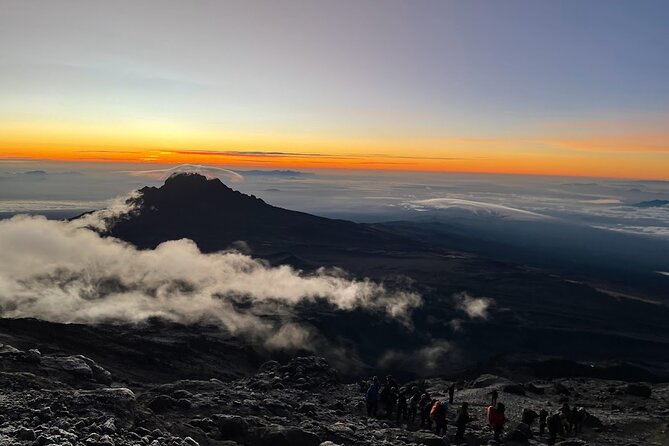
Summit day begins around midnight with light tea and breakfast. You then climb for about four to five hours toward Stella Point, gaining a great deal of height over a short distance.
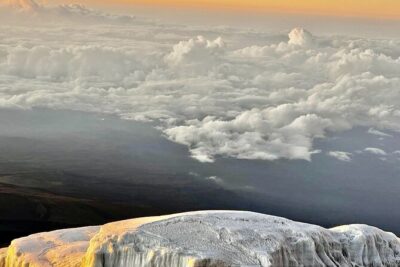
The route reaches the crater rim at Stella Point, 5,756 meters, around sunrise. The sunrise views can be spectacular, but the cold and thin air may take priority over photography. Keep moving at the pace set by your guide and use your clothing layers carefully.
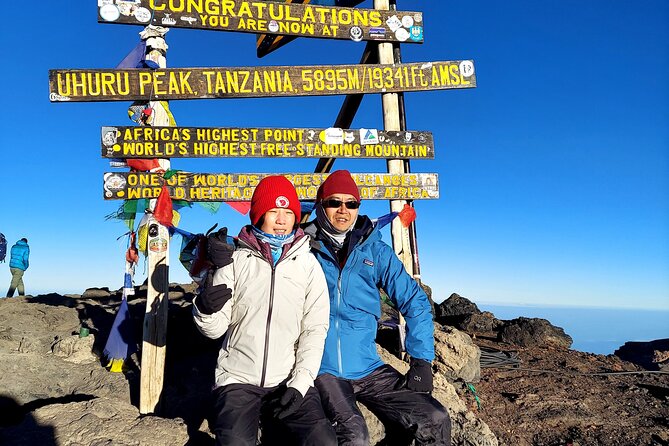
From Stella Point, Uhuru Peak is about one hour farther. At 5,895 meters, Uhuru is the highest point in Africa. You have time for photographs and a brief celebration, but do not linger too long. The air is thin, and the return journey is still substantial.
You descend to Barafu Camp for lunch and a rest. The day is not finished after reaching the summit. The full schedule lasts about 13 hours, and fatigue is likely to be the greatest challenge. This is where a patient guide team matters. Several climbers have praised the way Nafika guides adjust the pace and help people through fear, exhaustion, or difficult sections.
The summit is never guaranteed. A strong record of successful climbs is encouraging, but your health, weather, and response to altitude decide what happens on the mountain.
Day 8: Millennium Camp to Mweka Gate
After breakfast, you begin the final descent. The walk from Millennium Campsite to Mweka Gate covers about 14 kilometers and takes around five hours.
The habitat changes back toward montane forest, which feels almost luxurious after the alpine desert and summit cold. Your knees may complain more than your lungs now, so trekking poles can be useful if you already use them.
At Mweka Gate, you collect your certificates and finish the mountain portion of the trip. A private car takes you back to your hotel, where a warm shower and a cold drink should feel well earned.
The package includes two hotel nights in Moshi, although the supplied schedule does not specify precisely where each night falls. Confirm the hotel dates with Nafika before booking flights or onward plans.
What the $2,350 price includes
At $2,350 per person, this is not a bare-bones mountain permit and tent arrangement. The price includes private transportation, parking fees, two hotel nights in Moshi, camping equipment, treated water, and three daily meals on the mountain.
The camping equipment listed includes Mountain Hardware sleeping tents, sleeping pads, sleeping bags, tables, and chairs. Food coverage is listed as eight breakfasts, eight lunches, and seven dinners. That is a substantial part of the cost on a remote trek, where food, water, porters, and camp support all have to move up the mountain.
The package also includes professional guides, porters and mountain crew wages, emergency oxygen, and a first-aid kit. The good feedback focuses heavily on the team’s organization, food, equipment checks, and personal care. One group noted that the chef added small surprises to meals, while another appreciated the attention given to tea breaks and camp comfort.
A $50 visa is not included. You should also clarify any equipment rental needs, airport timing, and hotel details before you pay. Free cancellation is available up to 24 hours before the experience start time. Inside that window, the payment is not refunded, and changes are not accepted.
Who should choose this trek
I would point active adults with a moderate fitness level toward this route, especially if they want the scenery of Lemosho and prefer eight days over a compressed schedule. It can also suit families or mixed-age groups if everyone understands that summit day is demanding. The team has supported climbers ranging from 20 to 58, and one family successfully celebrated a parent’s 69th birthday at the summit.
You need patience more than speed. The best approach is pole pole, slowly and steadily, even though that Swahili phrase is not formally listed in the package. You should be comfortable sleeping in tents, walking for several hours a day, and managing a midnight start followed by a very long day.
This is not the right pick if you want hotel comfort every night, a guaranteed summit, or a short mountain holiday. It is also not ideal if you have not prepared for sustained walking and altitude. Speak with a medical professional before committing if you have health concerns.
Should you book the Nafika Lemosho route?
I would consider booking this trek if your priorities are scenery, acclimatization time, and attentive mountain support. The strongest parts are the route itself, the careful climb-high and sleep-lower pattern, the included camping setup, and the repeated focus on health checks and pacing.
Before booking, ask Nafika to confirm the exact hotel nights, personal gear requirements, group composition, and how summit-day decisions are handled. If those details are clear, the $2,350 price offers solid value for an eight-day climb with meals, transport, equipment, porters, guides, water, and safety supplies.
Choose Lemosho if you want to earn the summit over a full week rather than chase it in the shortest possible time. The mountain will still be hard, but this schedule gives you a fairer chance to enjoy the route along the way.
FAQ
How long is the Kilimanjaro Lemosho trek?
The experience lasts approximately eight days, including the mountain trek and the scheduled return to the hotel.
What is the price per person?
The listed price is $2,350 per person.
Where does the climb begin?
The climb begins at Londorossi Gate on the western side of Kilimanjaro, at approximately 2,360 meters.
Where is the meeting point?
The meeting point is Kilimanjaro International Airport on Kilimanjaro Airport Road, Tanzania.
Is hotel pickup available?
Pickup is offered, and the first day schedule says you will be collected from your hotel around 8:00 am after breakfast.
What camping equipment is included?
The package includes Mountain Hardware sleeping tents, sleeping pads, sleeping bags, tables, and chairs.
Are meals included?
Yes. The package lists eight breakfasts, eight lunches, and seven dinners.
Is drinking water provided?
Yes. Treated water is provided during the trek.
What is the highest point reached?
Uhuru Peak is the highest point, at 5,895 meters. Stella Point is at 5,756 meters, and Lava Tower reaches 4,640 meters.
Is a visa included?
No. The visa is listed separately at $50.
How large can the group be?
The maximum group size is 20 people.
What fitness level is required?
A moderate level of physical fitness is required.
Is emergency oxygen available?
Yes. Emergency oxygen and a first-aid kit are included.
Can I cancel for a full refund?
You can cancel at least 24 hours before the experience start time for a full refund. Cancellations within 24 hours are not refunded.
Just added in Moshi
- THE BEST 2 DAYS ON TREK – MARANGU ROUTE TOUR ADVENTURES★ 5.0 · 1 review
- Mount Kilimanjaro National Park Day Trip★ 5.0 · 7 reviews
- Mount Kilimanjaro Climbing in Tanzania Full-Day Trip★ 5.0 · 1 review
- Mount Kilimanjaro Day Hike – All-Inclusive, No Hidden Fees★ 4.0 · 7 reviews
- Mount Kilimanjaro Trekking Tour – Climb with Local Guides★ 5.0 · 1 review
- Mount Kilimanjaro: 7 Days Hike Lemosho Route★ 5.0 · 1 review
- Moshi:Chemka Hot Springs, Materuni Waterfalls & Coffee Tour★ 5.0 · 1 review
- Moshi Town: Walking Tour: Theme Urban lifestyle★ 3.1 · 4 reviews
Lemosho Route Climbs, compared.
8-Day Small-group Lemosho Kilimanjaro Summit Trekking
Read our review →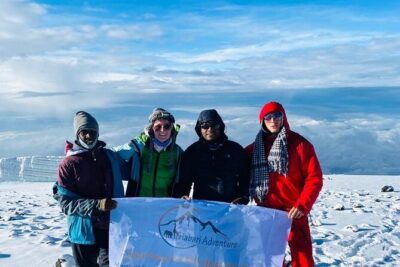
Climbing Kilimanjaro through 8 days Lemosho Route
Read our review →Browse the lists this tour appears in