
Reviewed · 6-DAY EXPERIENCES
6Days _Hiking _Machame _Route _Kimanajaro _Mountain
The mountain reveals itself one day at a time. Climbing Kilimanjaro by the Machame Route gives you changing scenery, a quieter trail than Marangu, and a useful high-and-low acclimatization pattern. I especially like the rainforest start and the chance to pass Lava Tower, Barranco Wall, glaciers, and the Shira Plateau in one well-planned climb. The main drawback is simple: this is a hard trek, with a 12 to 15-hour summit day and rough, steep walking at high altitude.
I also like the practical setup from Three Peaks Tanzania Safari Ltd. Pickup is offered, the first day includes a guide briefing and gear check, and missing equipment can be rented before you leave Moshi. The price is $1,988 per person, which covers park and rescue fees, mountain meals, guides, water, tents, and transport connected with the climb, but you still need to budget for tips, drinks, and international flights.
In This Review
- Key points before you book
- What the $1,988 price really covers
- Day 1 in Moshi: gear checks before the forest
- Day 2: Machame Gate and the first rainforest climb
- Day 3: Shira Plateau and the first big views
- Day 4: Lava Tower and the value of sleeping lower
- Day 5: Barranco Wall, glaciers, and Karanga Camp
- Day 6: Barafu Camp and a short but steep climb
- Day 7: Stella Point, Uhuru Peak, and the longest day
- Day 8: Rainforest descent and the welcome back in Moshi
- Day 9: A useful buffer before your flight
- Food, water, tents, and group size
- Who should choose this Machame climb?
- Booking, cancellation, and final decision
- Should you book this climb?
- FAQ
- How long does the full Kilimanjaro experience last?
- How many days are spent climbing the Machame Route?
- What is the highest point reached?
- What is the longest day?
- Is airport pickup included?
- Are meals included?
- Is drinking water provided?
- Is equipment rental available?
- What is the cancellation policy?
Key points before you book
- Seven mountain days within a nine-day trip: You spend the first day arriving and preparing, then climb from Machame Gate and return to Moshi on Day 8.
- A scenic route with real variety: Expect rainforest, moorland, high volcanic terrain, glaciers, ravines, scree, and summit ice.
- High-and-low acclimatization: The route reaches about 4,600 meters before you sleep lower, a useful pattern for adjusting to altitude.
- The summit day is demanding: You walk for roughly 13.4 kilometers and may be on the move for 12 to 15 hours.
- Small-group format: The maximum group size is 15 people, which keeps the operation personal without making it a private climb.
- Two excellent planning details: You receive an equipment check before starting, and purified drinking water is provided on the mountain.
What the $1,988 price really covers
At $1,988, this is not a cheap walk in the park. Kilimanjaro requires permits, park fees, rescue coverage, a support crew, food, camping equipment, and several days of transport. The price includes all park fees, rescue fees, professional mountain guides, meals on the mountain, purified drinking water, mess tents with tables and chairs, and transfer services connected with the climb.
That package gives you useful value because the costs that can catch first-time climbers by surprise are largely built in. You are not simply paying for a guide to point toward the summit. You are paying for a staffed mountain operation with camp equipment, food preparation, water, and park access.
The description also promises large portions of fresh, healthy food. That matters more than it sounds. You will be walking for hours each day, and the summit push requires steady energy. The dining tent with tables and chairs should also make camp life less spartan than eating beside your sleeping bag.
You still need to pay for tips, alcoholic drinks, and your international flight. The price also does not remove the need to bring suitable clothing and personal equipment. The Day 1 gear inspection helps, and rental equipment is available for anything missing, but you should not treat rental availability as a reason to arrive unprepared.
A few more options to weigh up in Arusha
- Balloon Safari & Bush Breakfast in Serengeti – Miracle Experience
★ 5.0 · 1,646 reviews - Tanzania Classic – 7 Days
★ 5.0 · 1,151 reviews - 4 Days Group Camping Safari
★ 5.0 · 1,101 reviews
Day 1 in Moshi: gear checks before the forest
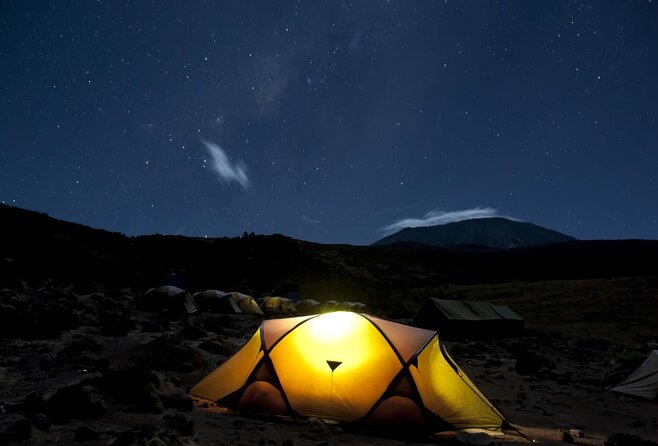
Your experience begins with pickup from Kilimanjaro International Airport and transfer to your hotel in Moshi. This first day is more than a hotel night. You meet your guide, receive a briefing, and check your mountain equipment.
I like this arrangement because it gives you a chance to correct problems before the trek starts. If a jacket, sleeping item, or other necessary mountain gear is missing, you can rent it that day. Use the time wisely. A gear check is most useful when you are honest about what you have and what you still need.
The scheduled start time is 6:00 a.m., so keep your arrival plans in mind. You also need to allow time after landing for transfer, hotel check-in, and preparation. The exact hotel is not specified, so confirm that detail when booking.
Day 2: Machame Gate and the first rainforest climb
The drive from Moshi to the Machame route gate takes about an hour. At the gate, you complete park formalities, meet the porter crew, and begin walking.
The first section rises steadily through dense rainforest. This is a fine opening because Kilimanjaro does not reveal its upper slopes all at once. You start beneath thick vegetation, with the path gradually turning into a mountain trail.
The route can be overgrown in places and wet or muddy underfoot. That is the tradeoff for using a less heavily walked route. You should expect dirty boots and slower progress rather than a smooth park path. Good footwear and patience matter here.
The Machame Route is often called the Whiskey Route, a nickname that hints at its tougher character compared with Marangu, sometimes known as the easier, more gradual option. You do not need technical climbing skills for the route described, but you do need a moderate level of physical fitness and the ability to keep walking on steep or uneven ground.
Day 3: Shira Plateau and the first big views
The trail continues upward through the forest before climbing steeply toward the Shira Plateau. The change in scenery is one of the route’s rewards. The thick forest gives way to high moorland, and views of Kilimanjaro become more open.
You may also look back toward Mount Meru, rising above Arusha town in the distance. That view gives you a sense of the wider northern Tanzania setting, rather than keeping your attention fixed only on the summit.
This day covers about 5.4 kilometers in roughly five hours. That is a fairly manageable walking day, though the steep ascent onto the plateau can still feel demanding. Breakfast, lunch, and dinner are included.
The shorter distance is useful for acclimatization. You are gaining height, but you are not being pushed through a marathon-length day. That measured pace is one of the better features of the program.
A different kind of day out entirely:
- 5 Days Group Camping Safari
★ 5.0 · 730 reviews - Materuni Waterfalls, coffee tour & Kikuletwa Hot Springs
★ 5.0 · 643 reviews - 3 Days Serengeti & Ngorongoro Group Camping Safari
★ 5.0 · 574 reviews - 7-Day Premium Luxury Tanzania Safari All-Inclusive
★ 5.0 · 426 reviews
Day 4: Lava Tower and the value of sleeping lower
Day 4 moves across high moorland on the southwest side of Kilimanjaro. You pass beneath Lava Tower and the last section of the Western Breach before reaching camp.
The day covers around 10.8 kilometers and takes about eight hours. You may reach an altitude of approximately 4,600 meters during the walk, yet you do not sleep at that height. Instead, the route uses the mountaineering principle of walking high and sleeping low.
This is an important part of the plan. You spend time at altitude to encourage adjustment, then descend to camp rather than staying at the day’s highest point. No route can guarantee that you will avoid altitude sickness, but this pattern is generally more helpful than racing upward and sleeping high every night.
The walk is long, and the high volcanic ground can feel exposed and tiring. You should keep your pace steady and drink regularly. Breakfast, lunch, and dinner are included, which means you can refuel at camp after a demanding day.
Day 5: Barranco Wall, glaciers, and Karanga Camp
This is one of the most memorable days on the route. You begin by descending into the Great Barranco, a huge ravine, then climb the Barranco Wall.
The wall involves steep rock walking, but it is not described as a technical climb. You use your hands and feet over a long, tiring section, while the guide manages the pace. If you dislike heights or awkward rock steps, this may be the part that tests your confidence most.
After the wall, you pass beneath the Heim and Kersten glaciers and continue toward Karanga Valley. The final climb to Karanga Camp reaches about 3,963 meters. The walking distance is only about 5.5 kilometers, with an estimated time of five hours, but the short distance should not fool you. Steep rock and altitude make this a substantial day.
If you are feeling strong, the schedule allows for an afternoon acclimatization walk to around 4,200 meters, followed by a descent to camp. That optional effort supports the high-and-low approach, but you should not treat it as a test of bravery. If you feel unwell, rest is the smarter choice.
Day 6: Barafu Camp and a short but steep climb
The path from Karanga to Barafu Camp covers only about 3 kilometers and takes around three hours. It is one of the shortest days, but also one of the steepest and most demanding for its altitude.
You cross bare scree slopes with no vegetation. By the time you reach Barafu Camp at approximately 4,640 meters, the surroundings feel stark and volcanic. This is not a sightseeing afternoon. You eat, stay warm, drink water, and rest for the summit attempt.
The group has an early dinner and tries to sleep before waking between 11:00 p.m. and midnight. That early start is standard for the summit schedule described here, but sleeping at that hour is not always easy. Pack your warm layers and headlamp where you can reach them without unpacking everything.
The short walking time does not mean you have a relaxed day. The goal is to save energy for the long climb to Uhuru Peak.
Day 7: Stella Point, Uhuru Peak, and the longest day
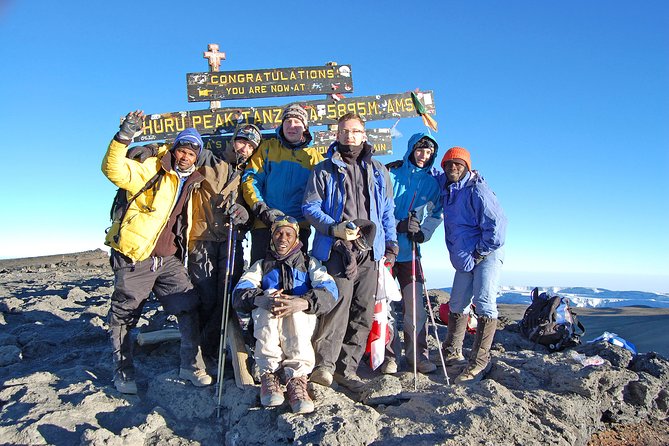
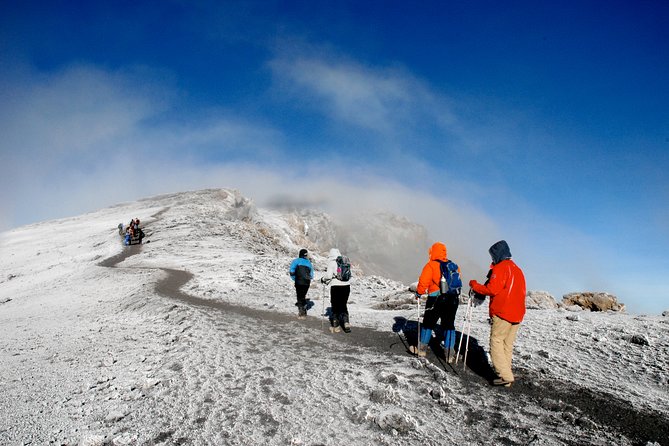
Summit day begins around midnight. You climb steeply toward the glaciers, moving over scree for four to five hours. The route gains a great deal of height over a relatively short distance, so this is where your fitness, pacing, preparation, and response to altitude all matter.
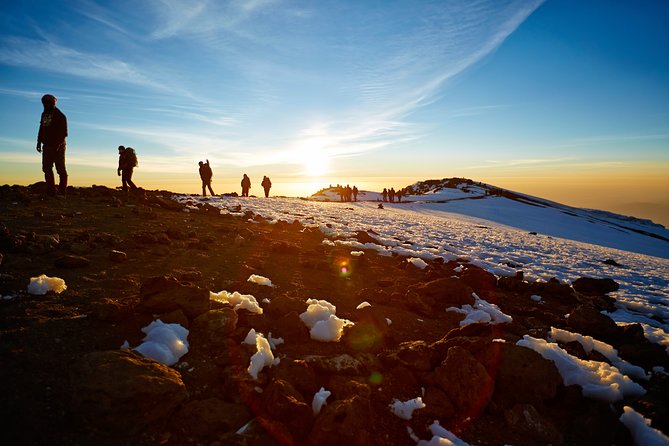
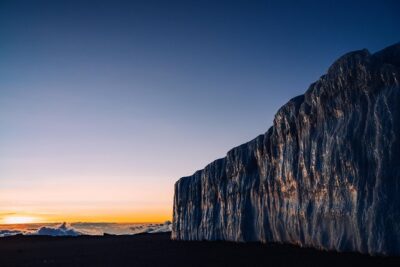
The aim is to reach Stella Point on the crater rim at 5,739 meters as the first light appears. From there, you can see ice cliffs inside the crater and Mawenzi Peak beyond. The final hour to Uhuru Peak reaches 5,895 meters.
The summit is only half the work. You return to Stella Point, descend the scree to Barafu Camp for breakfast, then continue down to Millennium Camp. The full day covers about 13.4 kilometers and takes approximately 12 to 15 hours.
That schedule is the central challenge of the entire experience. You should expect fatigue, cold, limited sleep, and a long descent after reaching the top. The reward is not only the summit photograph. It is the changing view at dawn, the crater ice, and the knowledge that you managed the mountain’s hardest day without rushing.
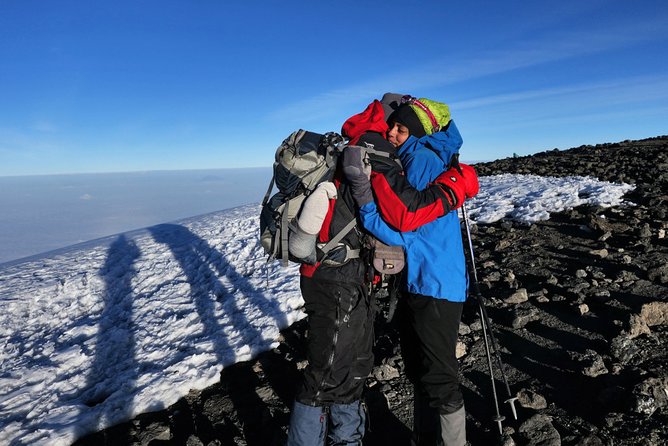
One personal detail from the supplied feedback deserves attention: a climber named Markly, aged 56, described owner Rafael staying beside him during summit night and helping meet his needs throughout the climb. That suggests a hands-on style from the company owner, though you should confirm in advance who will personally guide your group.
Day 8: Rainforest descent and the welcome back in Moshi
After Millennium Camp, you make a gentler descent through rainforest to Mweka Gate. The walk covers about 12.1 kilometers and takes roughly six hours.
At the gate, you complete park formalities and receive summit certificates. Vehicles then return you to your hotel in Moshi. After the cold, dusty, exhausting upper mountain, a shower and a cold drink will feel well earned. Alcohol is not included, so budget separately if you want a celebratory beer.
The descent can be hard on tired knees, even though the altitude is dropping. Trekking poles can be especially useful here, though the supplied information does not confirm whether they are provided or available for rent. Ask during the equipment check.
Day 9: A useful buffer before your flight
The final day is left open for recovery before your flight home. Depending on your departure time, you can explore Moshi and buy souvenirs before heading to the airport.
This extra day is valuable. It gives you a cushion after the summit push instead of forcing you to travel internationally immediately after returning from the mountain. Confirm the airport transfer and timing for your own flight, since the exact departure arrangements are not specified.
Food, water, tents, and group size
Meals listed for the mountain days include breakfast, lunch, and dinner on Days 3 through 7, with breakfast and lunch on the descent day. The included package also states that all meals while on the mountain are covered. Since the wording around meals is slightly inconsistent, ask the operator to confirm exactly what is served on Day 2 and at the Moshi hotel.
Purified drinking water is provided on the mountain. That is an important inclusion, since hydration is a daily priority at altitude. You should still bring a suitable personal bottle or hydration system, with the exact equipment confirmed before departure.
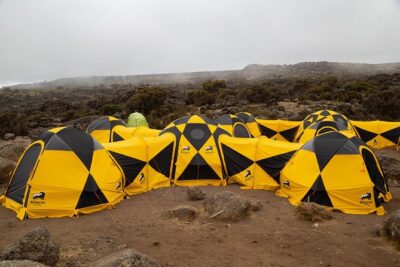
The camp dining setup uses quality mess tents with tables and chairs. The group maximum is 15 people. That size can provide companionship and shared motivation, while still being small enough for guides to keep an eye on the group. It is not a private climb, so ask about the expected group size if you want a quieter experience.
Who should choose this Machame climb?
I would recommend this route to you if you want Kilimanjaro’s most varied scenery and are ready for a serious physical challenge. It suits someone who prefers a gradual ascent over a very direct route and values a quieter trail than Marangu.
It is also a good fit if you appreciate built-in preparation. Airport pickup, a hotel night, a briefing, an equipment check, mountain meals, purified water, and organized camp support make the experience easier to manage.
I would be cautious if you are looking for a casual holiday or dislike long days on rough ground. The program requires moderate physical fitness, and the summit day can last up to 15 hours. The Barranco Wall, high camps, cold night start, and steep scree descent are all genuine demands.
The high-and-low profile improves the route’s acclimatization logic, but it cannot promise a successful summit. Listen to your guide, move slowly, and take any altitude symptoms seriously.
Booking, cancellation, and final decision
Three Peaks Tanzania Safari Ltd offers free cancellation if you cancel at least 24 hours before the local start time. Changes made within 24 hours are not accepted, and a weather cancellation should result in either another date or a full refund.
The company has received two five-star ratings in the supplied information. The strongest praise focuses on Rafael’s availability before the trip through WhatsApp and email, his quick replies, and his personal support on summit night. Those details matter because preparation and communication can make a big difference before a high-altitude climb.
Should you book this climb?
Book it if you want a scenic, carefully paced Kilimanjaro route and accept that the mountain will demand real effort. The $1,988 price is reasonable for the listed park fees, rescue coverage, guides, food, water, tents, and transfers, but confirm meal details, rental gear, hotel arrangements, and guide assignments before paying.
Choose Machame for the rainforest, Shira Plateau, Lava Tower, Barranco Wall, glaciers, and the chance to walk high before sleeping lower. Skip it if your idea of a holiday does not include muddy trails, a midnight start, and a 12 to 15-hour summit day.
FAQ
How long does the full Kilimanjaro experience last?
The full program lasts approximately nine days. Day 1 covers airport pickup, the Moshi hotel, briefing, and gear check. Mountain walking runs from Day 2 through Day 8, with Day 9 left free before your flight.
How many days are spent climbing the Machame Route?
The supplied schedule includes seven mountain days, from the start at Machame Gate through the descent to Mweka Gate. An extra acclimatization day at Shira or Karanga is recommended, but it is not included in the listed schedule.
What is the highest point reached?
Uhuru Peak is the highest point, at 5,895 meters. Stella Point on the crater rim is listed at 5,739 meters.
What is the longest day?
Summit day is the longest. It covers about 13.4 kilometers and takes approximately 12 to 15 hours, beginning around midnight.
Is airport pickup included?
Pickup is offered, and the first day specifies pickup from Kilimanjaro International Airport followed by transfer to a hotel in Moshi.
Are meals included?
Breakfast, lunch, and dinner are listed on most mountain days. Breakfast and lunch are listed for the final descent day, and the package states that mountain meals are included. Ask the provider to confirm the exact meal arrangements for every day.
Is drinking water provided?
Yes. Clean, purified drinking water is included on the mountain.
Is equipment rental available?
Yes. The Day 1 equipment check identifies missing mountain gear, and gear can be rented that day.
What is the cancellation policy?
You can cancel at least 24 hours before the experience start time for a full refund. Cancellations or changes made less than 24 hours before the start time are not accepted, and poor-weather cancellations should lead to a different date or a full refund.
Just added in Arusha
- Safari “Kifaru” – 5 days in the most famous Parks in the world★ 5.0 · 4 reviews
- 5 Day Tanzania Safari Camping Adventure Private Tour★ 5.0 · 2 reviews
- Saadani Day Trip★ 5.0 · 13 reviews
- 3 Days Tanzania Short and Spicy★ 5.0 · 6 reviews
- Day Trip to Ngorongoro Crater from Arusha★ 5.0 · 1 review
- SERENGETI NATIONAL PARK Tour★ 4.5 · 5 reviews
- 3 Days Serengeti Park & Ngorongoro Crater Adventure Safari★ 5.0 · 8 reviews
- 6 Days Tanzania Bush Experience Safari★ 5.0 · 6 reviews
6-Day Experiences, compared.
Private 6-Day Tarangire Manyara Crater and Serengeti with Mid-Range Lodges
Read our review →
Browse the lists this tour appears in