
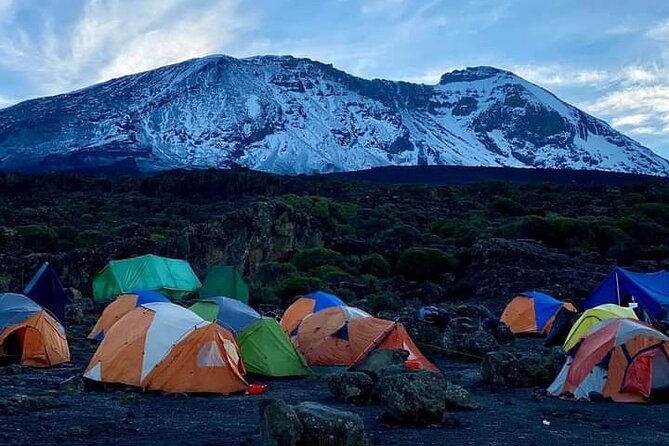
Reviewed · MACHAME ROUTE CLIMBS
7-Day Kilimanjaro Climb Machame Route
Africa’s highest point takes patience, not bravado. This 7-day Machame Route climb gives you Kilimanjaro’s changing habitats, strong mountain views, and a careful acclimatization schedule with Unique Planet Safaris. I like the route’s scenic variety, from wet forest to high alpine desert, and I like that the plan includes park fees, tents, meals, and transfers. The main catch is simple: Machame is the tougher Whiskey Route, with steeper trails, longer days, and camping instead of huts.
I also like the way the itinerary includes a climb-high, sleep-lower day near Lava Tower and Barranco. That is exactly the sort of pacing you want at altitude. Still, summit night is demanding, and the published day-six details are abbreviated, so you should confirm the exact overnight arrangements and descent plan before paying.
In This Review
- Key points to know before you book
- Why Machame feels different from Marangu
- Day one: Moshi to Machame Camp through rain forest
- Day two: Heather and moorland at Shira Camp
- Day three: Lava Tower and the key acclimatization test
- Day four: The Barranco Wall and a short acclimatization day
- Day five: Barafu Camp and the final preparation
- Day six: Stella Point, sunrise, and Uhuru Peak
- Day seven: A long descent through wet forest
- What the $2,280 price really covers
- Food, camping, and group size
- The support that matters on summit morning
- Who should choose this seven-day climb
- Should you book the Machame Route with Unique Planet Safaris?
- FAQ
- Where does the Kilimanjaro climb begin?
- How long is the Machame Route experience?
- Does this climb use tents or huts?
- What meals are included?
- Are park fees included in the price?
- Is airport transportation included?
- What is not included?
Key points to know before you book
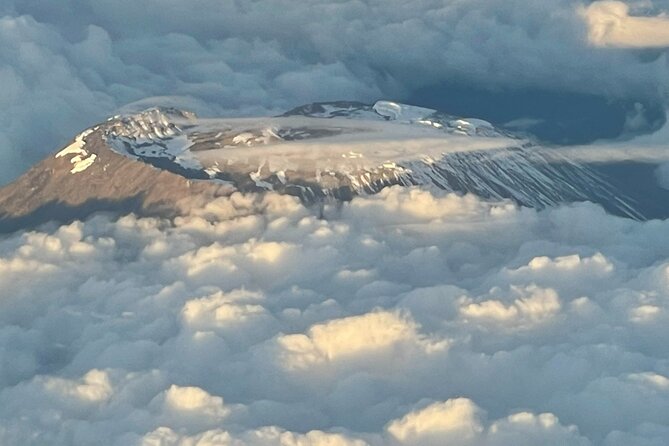
- Machame is Kilimanjaro’s popular scenic route: About half of climbers choose it, partly for its views and changing habitats.
- The route uses tents, not mountain huts: You will trade Marangu’s simpler hut setup for a more rugged camping trip.
- Acclimatization is built into the schedule: Day three climbs toward Lava Tower before dropping to Barranco Camp.
- Summit day is the hardest test: The route reaches Stella Point at 18,600 feet before continuing to Uhuru Peak.
- The $2,280 price covers major trip costs: Park fees, accommodation, meals, airport transfers, and the climb itself are included.
- You need your own protection and equipment budget: Gear rentals, visa costs, international flights, and mountaineering insurance are extra.
Why Machame feels different from Marangu
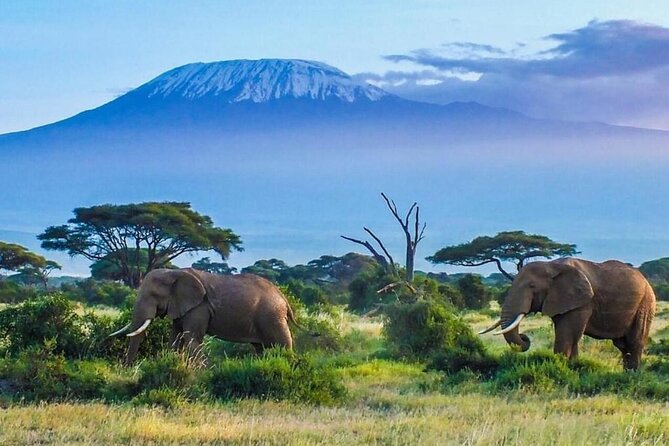
The Machame Route is often called the Whiskey Route, a playful reference to its tougher character. Marangu is known as the Coca-Cola Route, with a more gradual trail and hut accommodation. Machame gives you tents, steeper paths, and longer walking days.
I would choose Machame if scenery matters as much to you as the summit. The route crosses several distinct habitats, so the mountain keeps changing around you. You begin in thick rain forest, move through moorland and semi-desert, then finish in the stark alpine desert near the summit.
The route is popular for good reason, but popularity brings a practical concern. Some sections may feel busy, particularly on a route used by roughly half of Kilimanjaro’s climbers. A maximum group size of 20 is not enormous, but it is not a private climb either.
You should also understand the title 7-day climb. This is seven days on the mountain schedule, including the approach, summit attempt, and descent. It is not a gentle sightseeing holiday. You need a moderate level of physical fitness, and the altitude can affect you even if you are strong at sea level.
More Kilimanjaro climbs:
- Kilimanjaro climb by Lemosho Route (7-day)
★ 5.0 · 651 reviews - Kilimanjaro climb, Machame Route (7-day)
★ 5.0 · 262 reviews - Kilimanjaro Climbing Lemosho Route 8 Days.
★ 5.0 · 186 reviews
Day one: Moshi to Machame Camp through rain forest
The climb begins with a drive of about 50 minutes from Moshi to Mount Kilimanjaro National Park Gate. The road passes through Machame village on the lower slopes, giving you a useful sense of how quickly daily life gives way to forest and mountain trail.
From the gate, you walk along a winding path through rain forest and up a ridge. The route covers about 11 kilometers and takes five to seven hours. You gain roughly 4,000 feet, moving from 5,400 feet to 9,400 feet at Machame Camp.
This is a full first day, not a quick warm-up. Lower sections can be muddy and slippery, so I would put gaiters and trekking poles near the top of your packing list. The forest itself is the reward. You get shade, damp earth, thick vegetation, and a gradual introduction to the rhythm of walking uphill.
The drawback is that wet ground can make the first day tiring. Keep rain gear easy to reach, even if the morning begins dry. Your accommodation here is camping, and dinner is included.
Day two: Heather and moorland at Shira Camp
After breakfast, the forest thins out as you climb toward the moorland zone. The path crosses a small valley and follows a steep, rocky ridge covered with heather. Once the ridge ends, the route turns west toward a river gorge.
This is a shorter day, about five kilometers and four to six hours, but the elevation gain is significant. You rise from 9,400 feet to 12,500 feet at Shira Camp. Do not let the distance fool you. At this height, a short uphill walk can feel like a serious effort.
I like this section because the mountain begins to feel open and exposed after the enclosed forest. You will have more expansive views, and the change in plant life makes the climb feel like a journey through several worlds rather than one long staircase.
You spend the night at the Shira campsite after dinner. Take the evening seriously. Eat, drink, and rest instead of treating camp as social hour. Your body is already adjusting to thinner air.
Day three: Lava Tower and the key acclimatization test
Day three is one of the most useful parts of the schedule. From the Shira Plateau, you head east along a ridge, passing the junction toward Kibo, Kilimanjaro’s main summit cone. The route then turns southeast toward Lava Tower, also called the Shark’s Tooth.
You climb as high as about 16,000 feet near the Arrow Glacier junction before descending to Barranco Camp at approximately 13,000 feet. The day covers 10 kilometers and takes six to eight hours. You begin at 12,500 feet and finish at about 13,000 feet, so the net gain looks small. The important work happens in the climb and descent.
This is the classic high-day, lower-night pattern. You expose your body to greater altitude, then sleep lower than your highest point. That can help prepare you for the summit push, though no itinerary can guarantee that you will avoid altitude problems.
The habitat here is semi-desert, with a much harsher feel than the forest below. The Lava Tower section can be mentally demanding because the air is thin and the terrain is increasingly bare. The descent to Barranco gives you a welcome change of pace.
More Machame Route climbs:
- Climbing Kilimanjaro – Machame Route
★ 5.0 · 170 reviews - Climbing Kilimanjaro through 7 days Machame Route
★ 5.0 · 151 reviews - 7 Days Kilimanjaro via Machame route affordable price
★ 5.0 · 110 reviews - #1. Best Kilimanjaro Day hike Tour-Machame Route-ISMANI
★ 4.2 · 47 reviews
Day four: The Barranco Wall and a short acclimatization day
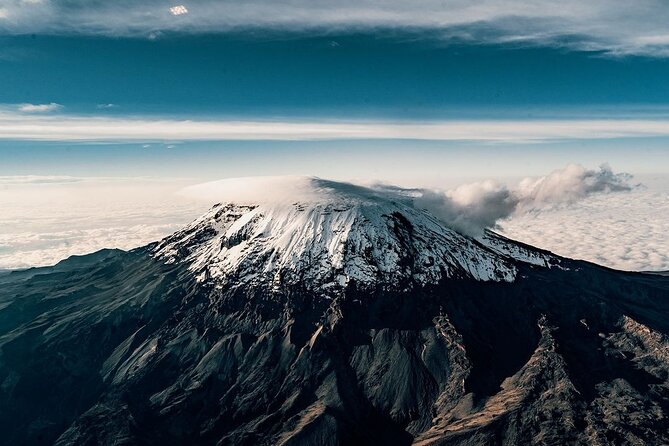
After breakfast, you leave Barranco and tackle the steep ridge beside the Barranco Wall. You continue to Karanga Valley campsite, covering about five kilometers in four to five hours. The elevation changes only slightly, from 13,000 to 13,100 feet.
This short day is valuable. It gives you time to keep moving without adding another major elevation gain. You still have a physical challenge in the Barranco Wall, but the schedule allows more time for rest, food, and preparation.
The route enters alpine desert, where conditions feel dry, sparse, and exposed. I would not mistake the short distance for an easy stroll. At more than 13,000 feet, your pace will likely be slow, and careful foot placement matters.
The Barranco Wall is one of the day’s defining features. You should expect a steep section rather than a flat walk around the mountain. The information provided does not describe technical climbing, so you should ask the operator what level of scrambling or hand use is expected.
Day five: Barafu Camp and the final preparation
The walk from Karanga to Barafu Hut is only four kilometers and takes four to five hours, but it climbs from 13,100 to 15,300 feet. You pass the junction with the Mweka Trail and continue toward Barafu.
At this point, you have completed the South Circuit, which gives you views of the summit from several angles. Mawenzi and Kibo are visible from the camp, a useful reminder that the hard part is close.
Barafu is the staging point for the summit attempt. You make camp, eat dinner, rest, and prepare for the early start. This is where organization matters. Keep your summit clothing, headlamp, water, snacks, and warm layers ready before sleeping.
The camp is in alpine desert, and the altitude is serious. Do not spend the afternoon wandering around simply because the distance was short. I would treat this as a quiet day focused on hydration, food, and conserving energy.
Day six: Stella Point, sunrise, and Uhuru Peak
Day six is the physical and mental center of the climb. You start very early and ascend between the Rebmann and Ratzel glaciers, heading northwest through heavy scree toward Stella Point on the crater rim.
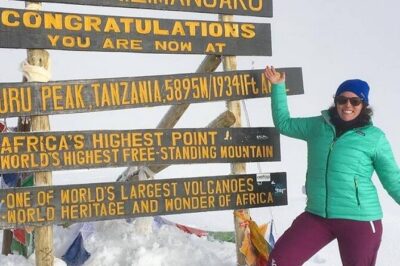
The route reaches Stella Point at 18,600 feet. If the weather cooperates, you pause for the sunrise. From there, you may encounter snow during the roughly one-hour ascent to Uhuru Peak, the highest point on Mount Kilimanjaro and the highest point in Africa.
This section is difficult because of the steep scree, cold conditions, darkness at the start, and altitude. Your speed is less important than steady progress. The encouraging reports about supportive guides and summit motivation are relevant here, since this is the point when many people need calm direction and encouragement.
The scheduled hiking time is about eight hours, though exact timing depends on your pace and conditions. The supplied day-six description is cut short, so I would ask where you sleep after the summit attempt, how much descent is included that day, and what meals are served during the summit push.
Do not assume reaching Stella Point guarantees Uhuru Peak. You still have about an hour of uphill walking, and weather or altitude can change the plan. The summit is a goal, not a promise, and a responsible guide should put your health first.
Day seven: A long descent through wet forest
After breakfast, you descend toward Mweka Park Gate. The stated walking distance is 10 kilometers, with three to four hours of hiking, dropping from about 10,000 feet to 5,400 feet.
The terrain changes again as you return to rain forest. Lower sections can be wet and muddy, so keep gaiters and trekking poles available. You may find shorts and a T-shirt comfortable at this elevation, but keep rain gear and warmer clothing within reach because mountain weather can shift.
At Mweka Park Gate, you receive your summit certificates. You then walk for about another hour to Mweka Village, where a vehicle takes you back to your hotel in Moshi.
That final village transfer is a useful detail. You are not expected to arrange your own transport from the mountain after a tiring descent. Still, confirm whether your Moshi hotel is included in the package, since the information lists accommodation but does not specify the hotel or the number of nights.
What the $2,280 price really covers
At $2,280 per person, this is not a budget day trip, but Kilimanjaro involves major permit, staffing, food, and transport costs. The price includes all park fees, accommodation, airport transfers, and the seven-day mountain program.
Meals are listed as six dinners, seven lunches, and six breakfasts. That covers the core food plan, though you should ask how summit-day meals are handled and whether drinks or snacks are included. The package also includes admission to the national park where specified in the schedule.
The value is strongest if you would otherwise have to arrange park access, mountain transport, camping, meals, and support separately. A cheaper-looking climb may not include the same permits or food, so compare the inclusions line by line.
You should budget separately for:
- Personal gear rentals
- A Tanzanian visa
- International flights
- Mountaineering insurance
The insurance point matters most. Ordinary travel insurance may not cover high-altitude trekking or evacuation. The supplied details only say mountaineering insurance is not included, so confirm the required coverage directly with the operator.
Food, camping, and group size
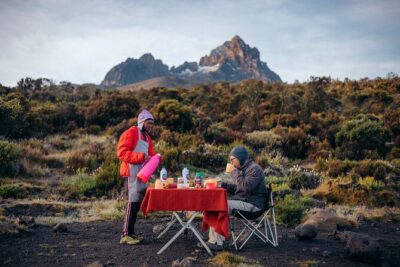
You sleep in tents along the Machame Route rather than in permanent huts. That makes the trip more basic and more exposed to weather, but it also fits the character of the route.
Food is a major part of a successful climb. Several comments praise the meals and organization, while the strongest personal praise goes to the support from the staff and guides. That matters because eating enough becomes harder when you are tired or affected by altitude.
The maximum group size is 20. You get the social energy of a shared climb, and there may be someone at a similar pace, but a group of this size can spread out on steep sections. Before booking, ask how many guides and support staff are assigned to the group. The supplied information confirms a maximum group size, but not the staff-to-climber ratio.
The support that matters on summit morning
The strongest pattern in the feedback is praise for professional, supportive guidance and solid organization. One account specifically credits the team’s motivation during summit night with helping the group reach the top. Another praises the hospitality and guidance as a major part of completing the climb.
That does not remove the need for preparation. A guide can encourage you, monitor the group, and help manage the pace, but you still need to arrive with suitable clothing, personal gear, and a realistic attitude toward altitude.
The operator is Unique Planet Safaris. The available comments repeatedly describe the staff as caring, organized, and capable, with several people saying the climb became one of their best memories. The sample is small, and some comments are duplicated or incomplete, so I would treat the 4.9 rating from 11 reviews and 100 percent recommendation as encouraging, not as a guarantee.
Who should choose this seven-day climb
I would recommend this route to you if you want:
- A scenic Kilimanjaro route with several habitat zones
- A seven-day schedule with built-in acclimatization
- Camping rather than hut accommodation
- A group climb with professional guide support
- A package that includes park fees, meals, accommodation, and transfers
I would be more cautious if you want short, easy walking days or private accommodation. Machame is tougher than Marangu, and summit day demands both physical stamina and mental patience.
You should also think carefully about the seven-day length. It includes a useful acclimatization day, but a longer schedule can sometimes provide even more time for adjustment. This package is fixed at seven days, so ask the operator how they handle altitude symptoms, delays, and an unsuccessful summit attempt.
The activity operates daily from 8:00 AM to 5:30 PM during the stated booking period, from December 11, 2023, through June 17, 2026. Pickup is offered, and the activity ends back at the meeting point. Confirmation arrives when you book, and the listed cancellation terms allow a full refund if you cancel at least 24 hours before the start time. Inside that window, the payment is not refunded.
Should you book the Machame Route with Unique Planet Safaris?
I would book this climb if you want Kilimanjaro’s most scenic popular route and value a package that handles the major practical pieces. The included park fees, meals, camping, accommodation, and transfers make the $2,280 price easier to justify, while the acclimatization pattern is sensible.
Before committing, ask three direct questions: What exactly happens after Uhuru Peak on day six? What gear can you rent, and at what cost? How many guides and support staff will accompany a group of up to 20?
If the answers are clear and your insurance covers mountaineering, this looks like a strong fit for a prepared climber with moderate fitness. If you want a softer introduction to Kilimanjaro, a hut-based route or a longer itinerary may suit you better.
FAQ
Where does the Kilimanjaro climb begin?
The climb begins with a drive from Moshi to Mount Kilimanjaro National Park Gate, which takes about 50 minutes. The route passes through Machame village before entering the mountain area.
How long is the Machame Route experience?
The experience lasts approximately seven days. The listed hiking times range from three to eight hours per day, depending on the section of the route.
Does this climb use tents or huts?
The Machame Route uses tents. It does not provide the hut accommodation associated with the Marangu Route.
What meals are included?
The package includes six dinners, seven lunches, and six breakfasts. You should confirm how food is handled during the early summit attempt.
Are park fees included in the price?
Yes. All park fees are included in the stated price of $2,280 per person.
Is airport transportation included?
Yes. Transfers to and from the airport are included, and pickup is offered. The information does not specify the airport or the exact transfer schedule.
What is not included?
Personal gear rentals, a Tanzanian visa, international flights, and mountaineering insurance are not included. You need to arrange and pay for these separately.
Just added in Moshi
- Zanzibar: Stone Town tour and Nakupenda beach with Lunch★ 5.0 · 1 review
- day trip lake manyara★ 5.0 · 2 reviews
- Mt Kilimanjaro 6 days Marangu route hike★ 5.0 · 3 reviews
- machame route★ 5.0 · 16 reviews
- Wildlife Extravaganza: Manyara, Tarangire & Ngorongoro in 3 Days★ 5.0 · 3 reviews
- Private Cycle to Kilimanjaro Bike Park Safari★ 5.0 · 6 reviews
- West Kilimanjaro cycling Adventures★ 4.5 · 8 reviews
- 3 Days Private E-Bike Tour in West Kilimanjaro★ 5.0 · 3 reviews
Machame Route Climbs, compared.

Climbing Kilimanjaro through 7 days Machame Route
Read our review →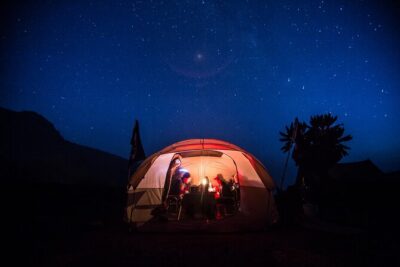
7-Day Machame Kilimanjaro Summit Tour from Arusha
Read our review →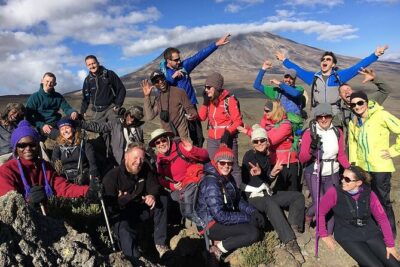
7 Days Kilimanjaro via Machame route affordable price
Read our review →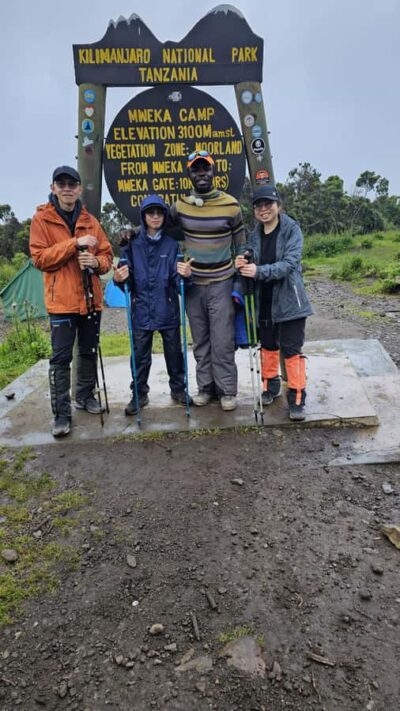
#1. Best Kilimanjaro Day hike Tour-Machame Route-ISMANI
Read our review →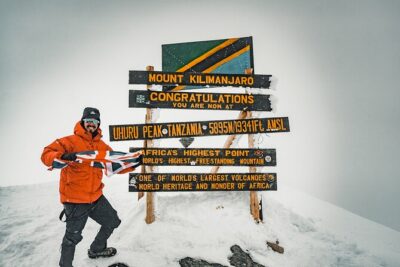
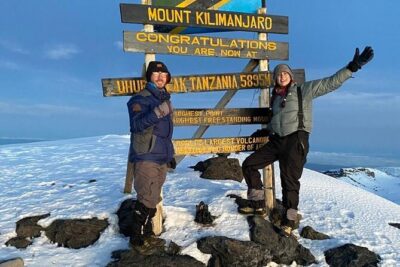
The Best of Machame Route in 6 Days: Your World’s Summit Guide
Read our review →Browse the lists this tour appears in