
Reviewed · MACHAME ROUTE CLIMBS
7-Day Kilimanjaro Trekking Tour via Machame Route
Kilimanjaro rewards patience more than speed. This seven-day Machame Route trek combines striking campsites, careful acclimatization, and a demanding summit push on Africa’s highest mountain. I especially like the Shira Plateau sunsets and the careful high-altitude route through Lava Tower and Barranco, which gives you time to adjust before the final climb. I also like that the trip is private, with a dedicated mountain crew rather than a large mixed departure.
The main catch is simple: this is not an easy walk. The Machame Route has steeper climbs, descents, and uneven sections, including the Barranco Wall. You need a moderate level of fitness, patience, and a willingness to spend long hours outside in changing conditions.
In This Review
- Key points at a glance
- Starting in Moshi with a useful first night
- Day 1: Briefing and preparation in Moshi
- Day 2: Rainforest walking to Machame Camp
- Day 3: From rainforest to Shira Plateau
- Day 4: Lava Tower, Barranco Valley, and a smart sleep lower down
- Day 5: The Barranco Wall and Barafu Camp
- Day 6: Stella Point, Uhuru Peak, and the hardest hours
- Day 7: Farewell ceremony and the walk out
- What the $2,850 price means in practice
- The human side of Kilimanjaro Heroes Adventures
- Who should book this trek?
- FAQ
- Where does the Kilimanjaro trek begin?
- How long does the experience last?
- What is the price?
- Is this a private tour?
- What fitness level is required?
- What happens on summit day?
- Can I cancel for a refund?
- Should you book the 7-day Machame Route?
Key points at a glance
- Shira Camp brings the best evening views: The plateau gives you broad mountain views, with Kibo’s glacier catching the last light.
- Lava Tower helps with acclimatization: You climb to about 4,640 meters before sleeping lower at Barranco Camp.
- The Barranco Wall is hands-on: You use both hands and feet in places, but the route includes safety support when needed.
- Summit day begins around midnight: Expect 5 to 7 hours to Stella Point, followed by another 1 to 2 hours to Uhuru Peak.
- The crew receives the highest praise: Guides, cooks, and porters are repeatedly described as kind, attentive, funny, and safety-focused. Mwinyi’s team, including Gloria, Kelvin, David, James, Maulid, Ombeni, Prosper, and Amiri, receives special mention.
- The $2,850 price buys a full mountain operation: You receive airport pickup, hotel nights at Keys Hotel, park access, guiding, porters, meals, camping support, a certificate, and a private trip structure, based on the supplied details.
Starting in Moshi with a useful first night
The experience begins with a meet-and-greet at Kilimanjaro International Airport. A driver takes you to Keys Hotel in Moshi, where you spend the first night and receive a briefing before heading into the park.
That first night matters more than it may seem. You can meet the team, check your equipment, ask questions, and settle into the rhythm of the trip before the early mountain starts. Since the airport pickup is offered, you do not have to arrange your own transfer into Moshi after a long flight.
The supplied schedule gives an 8:00 am start time, although the first day is described as airport arrival, transfer, briefing, and overnight accommodation. Confirm your exact arrival and pickup details before departure, especially if your flight lands later in the day.
The trip has a mobile ticket and confirmation is provided at booking. It is also a private activity, so only your own group participates. That setup can be valuable if you want the pace, breaks, and encouragement shaped around your party rather than a fixed public group.
More Machame Route climbs:
- Kilimanjaro climb, Machame Route (7-day)
★ 5.0 · 262 reviews - Climbing Kilimanjaro – Machame Route
★ 5.0 · 170 reviews - Climbing Kilimanjaro through 7 days Machame Route
★ 5.0 · 151 reviews
Day 1: Briefing and preparation in Moshi
Day 1 is not a mountain day, but it sets the tone. At Keys Hotel, you receive an introduction to the climb and prepare for the morning transfer to Kilimanjaro National Park.
A briefing is the right place to settle practical questions. Ask about the day’s walking times, what belongs in your daypack, how the porters handle larger gear, and what to expect during the summit night. The more clearly you understand the plan, the less mental energy you waste later.
The crew arrangement receives unusually strong praise. Several accounts describe a large support team, with guides, cooks, and porters working closely together. One party of 19 hikers was supported by Mwinyi, Kelvin, Gloria, David, James, Maulid, Ombeni, Prosper, and Amiri, along with the rest of the mountain crew.
You should still remember that a helpful crew does not make the mountain easy. The support system carries much of the food and most larger gear, but you remain responsible for walking, managing your personal daypack, and coping with altitude.
Day 2: Rainforest walking to Machame Camp
After breakfast, the drive from Keys Hotel to the Kilimanjaro National Park gate takes about one hour. The guide handles entrance forms while you watch the mountain teams load food and equipment for the climb.
That loading area gives you a useful first glimpse of how much work happens behind a seven-day ascent. Porters organize supplies, tents, and food before the walking even begins. It is a busy practical scene, and it helps explain why a well-run mountain trip requires more than simply hiring one guide.
From the gate, the trail climbs through rainforest toward Machame Camp. The walk takes about 5 to 6 hours, with ancient trees and thick greenery providing the day’s main setting.
This is a pleasant opening, but it is still a real climb. Do not burn energy trying to walk quickly at the start. The strongest approach is slow and steady, with enough water and short pauses when needed. The forest can feel welcoming, yet the route is already gaining height.
Your first night at Machame Camp marks the end of the easiest-looking part of the route. From here, the trees begin to thin and the mountain feels more exposed.
Day 3: From rainforest to Shira Plateau
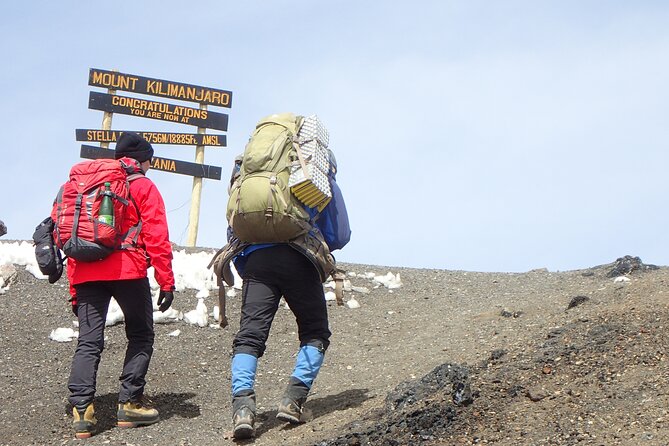
The second mountain day changes the scenery quickly. You leave the rainforest and enter moor and heath land, with the green canopy giving way to more open ground and wider views.
The walk takes about six hours and ends at Shira Camp on the Shira Plateau. The schedule calls this a shorter stretch than the previous day, but you still start early. Reaching camp around mid-afternoon gives you time to rest and take in the surroundings.
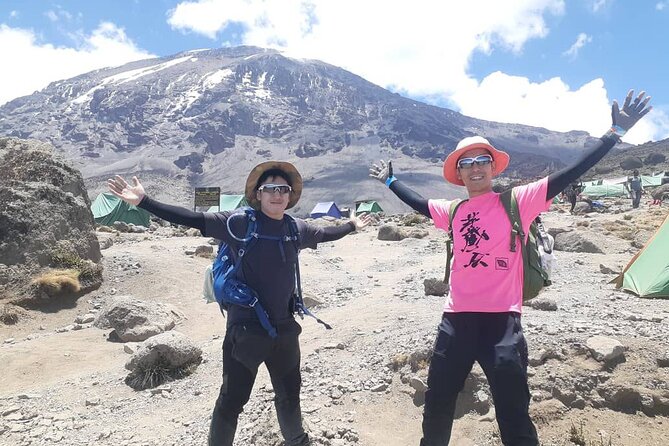
Shira is one of the strongest reasons to choose this route. The campsite offers broad views toward the mountain range, and the evening light reaches Kibo’s glacier. Sunset here is not a small extra. After several hours of walking, the open view and changing light give you a memorable reward without requiring another hard excursion.
This is also a good place to notice how the mountain affects your body. You might feel fine at this altitude, or you might notice a headache, tiredness, or reduced appetite. Tell your guide about any symptoms rather than trying to hide them. The whole point of the slower seven-day plan is to give your body more time to adjust.
More treks in Moshi:
- Private Kilimanjaro Hike 7 Day Lemosho Route
★ 5.0 · 60 reviews - Best Kilimanjaro hiking day trip tour with Kilinge Adventures
★ 4.5 · 54 reviews - #1. Best Kilimanjaro Day hike Tour-Machame Route-ISMANI
★ 4.2 · 47 reviews - Best Kilimanjaro Adventure 7 days Machame route Trekking
★ 5.0 · 42 reviews
Day 4: Lava Tower, Barranco Valley, and a smart sleep lower down
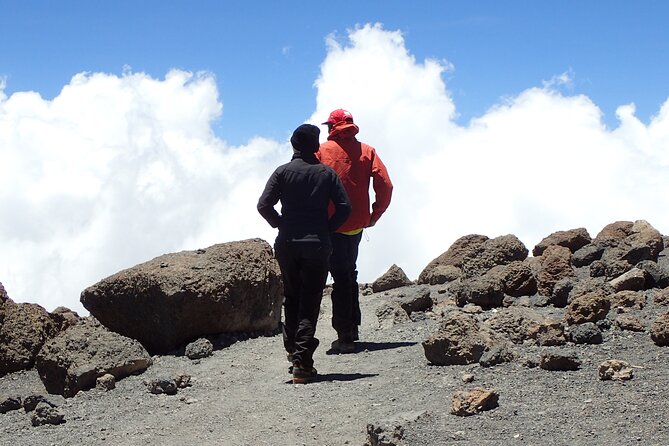
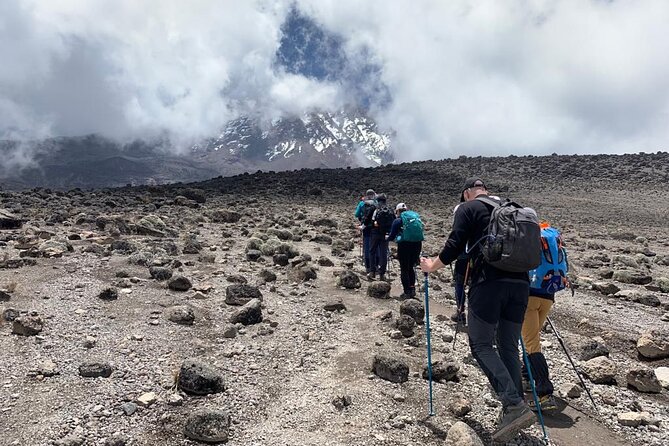
Day 4 is the cleverest part of the route plan. You climb from Shira to Lava Tower at about 4,640 meters, then descend to sleep at Barranco Camp, which is only slightly higher than the previous night’s camp.
The day involves roughly 700 meters of climbing and takes about 6 to 7 hours. It passes through alpine desert and the Barranco Valley, where giant Senecio plants and small lobelia plants add unusual detail to the otherwise spare surroundings.
This climb high and sleep lower pattern gives you an important acclimatization opportunity. You experience a higher elevation during the day, then rest at a lower level. It may feel counterintuitive when your legs are tired, but the route is designed to prepare you for the summit days ahead.
Barranco Camp is another highlight. Its setting is known for evening stargazing, and the valley gives the campsite a dramatic character. The clear air can make the night sky memorable, though cold and fatigue may send you to your tent sooner than planned.
You will have dinner before resting for Day 5. Eat as well as you can, drink regularly, and do not treat a poor appetite as a minor issue. Food and fluids become important tools as the altitude rises.
Day 5: The Barranco Wall and Barafu Camp
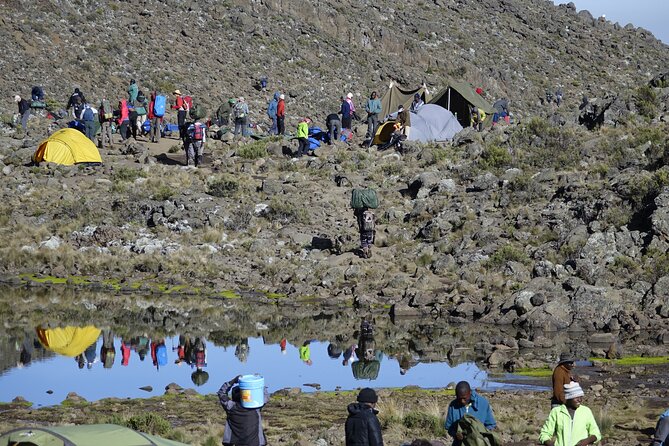
The day starts with the Barranco Wall, the section that makes many people wonder if they chose the right route. You use your hands and feet in places, and the wall looks more intimidating than it feels according to the supplied route description.
The guide team puts safety first and can secure you if needed. Still, this is not a polished walkway. You should expect rock, close attention to foot placement, and a slower pace while moving upward.
Beyond the wall, the trail rises and drops repeatedly. You cross streams, wind through the route, and stop for lunch in Karanga Valley. The repeated ups and downs can be more tiring than one steady climb, especially after several days on foot.
After lunch, allow another 2 to 3 hours to reach Barafu Camp at about 4,640 meters. This is the launch point for the summit attempt, and the atmosphere changes here. You are no longer simply moving from one scenic campsite to another. You are preparing for a midnight start and a long night above the clouds.
The practical advice is direct: drink plenty, try to eat, and go to bed early. You may not sleep deeply, but resting quietly still helps. Keep your warm summit clothing, headlight, and daypack organized before you lie down. Midnight is a poor time to search for gloves.
Day 6: Stella Point, Uhuru Peak, and the hardest hours
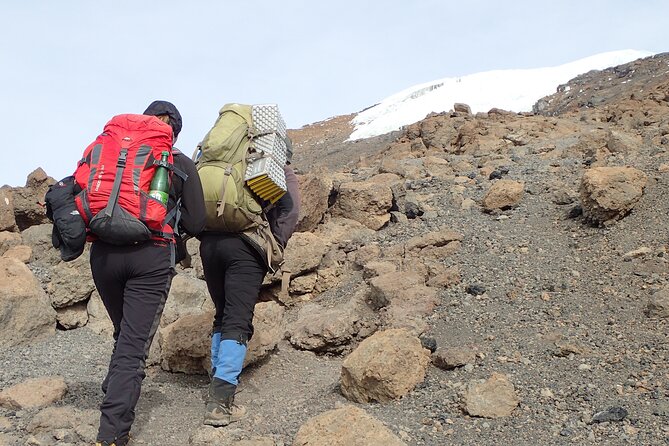
Summit day begins in the midnight hours with tea and a biscuit. You set off in darkness wearing warm clothing and carrying a headlight and daypack.
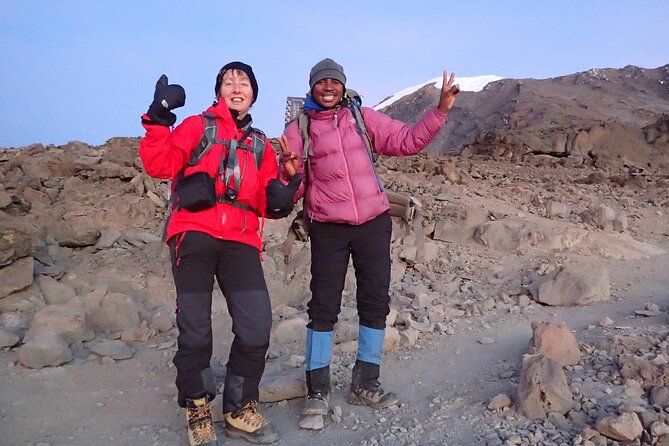
The climb to Stella Point takes about 5 to 7 hours at a very slow pace, known locally as pole pole. This is the most demanding part of the trip. The darkness hides the full scale of the slope, but it also narrows your attention to the next step, the next breath, and the person in front of you.
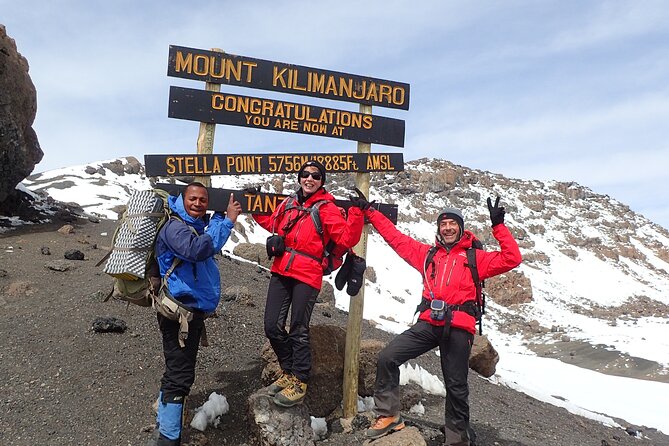
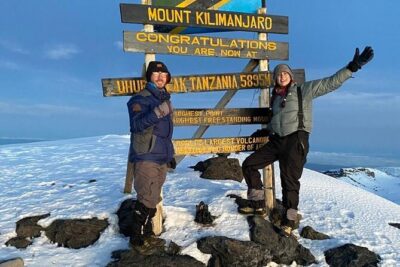
At Stella Point, you reach the crater rim. From there, expect another 1 to 2 hours along the rim to Uhuru Peak at 5,895 meters. The early morning light over the surrounding country can make the final approach deeply moving. Reaching the Roof of Africa is the clear high point of the trip, but it is also important to keep expectations realistic. The altitude can make every step slow, and not everyone feels strong at the top.
The descent is easier in terms of direction, but it can be dusty because the volcanic ash has thawed. You return along the same route to Barafu Camp. The schedule gives about 10 hours for the summit day, so this is not an afternoon activity added to an ordinary hike. It is a full physical and mental test.
The guide team matters most here. The strongest praise for Kilimanjaro Heroes Adventures centers on guides who remain attentive, encouraging, and safety-focused throughout the ascent. Mwinyi and assistant guide Gloria receive repeated personal thanks, while cook Salum is praised for helping keep the group well fed.
You should still listen to your own body. A certificate is nice, but safe decision-making is more important than forcing a summit at any cost.
Day 7: Farewell ceremony and the walk out
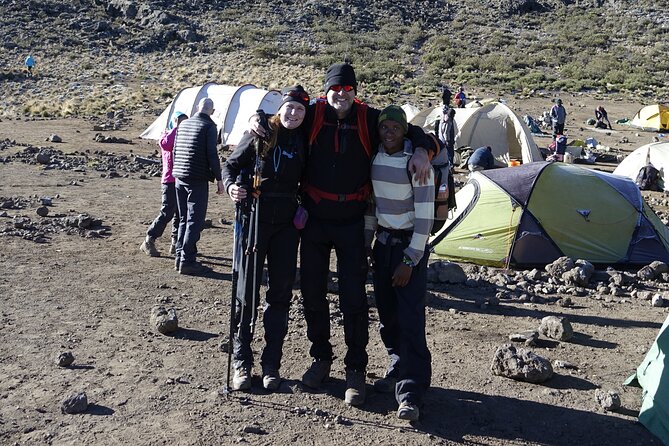
After breakfast, the mountain crew holds a traditional farewell ceremony. This gives you a chance to thank the people who carried supplies, cooked meals, organized camp, and guided you through the route.
The final walk takes about 2 to 3 hours through rainforest to Mweka Gate, where the driver meets you. You then return to Keys Hotel for a shower, a cold drink, a debrief, and a certificate of achievement.
That hotel return is a welcome touch. After the summit effort and dusty descent, a proper shower and a quiet place to reflect can feel as valuable as any scenic viewpoint. The rest of the day is free for rest.
The itinerary describes the final mountain day as about four hours, including the walk and transfer back to the hotel. Exact timing can vary, so do not plan a tight onward connection without checking the schedule.
What the $2,850 price means in practice
At $2,850 per person, this is a serious purchase. The value comes from the length of the route and the support required to keep a private group moving for seven days, not just from the summit itself.
The supplied details include airport pickup, Keys Hotel accommodation at the beginning and end, park admission, guiding, porters, camping support, meals, transport to and from the mountain, and a certificate. The descriptions also indicate a separate dining tent with a table and chairs, plus large, multi-course meals. Confirm the full list of inclusions before paying, since the supplied information does not spell out every item.
The food receives especially warm praise. One account describes generous portions and several courses, while another says the meals were surprisingly high quality and plentiful. That matters because appetite often becomes difficult at altitude. A cook who can provide regular, filling meals is not a luxury on a climb like this.
The price also buys time. A seven-day Machame itinerary allows a more gradual ascent than a shorter version of the route. Since altitude is one of the central challenges on Kilimanjaro, the extra day can make the schedule feel less rushed.
You should also ask about tipping, personal equipment, travel insurance, drinks, and any medical arrangements before departure. Those costs are not specified here, and they can affect the real total.
The human side of Kilimanjaro Heroes Adventures
The most consistent strength is the crew. The guides are described as experienced, attentive, funny, kind, brave, and responsible. That combination matters because you spend many hours walking slowly with the same people, often when tired and uncomfortable.
The company is described as a 100 percent local operation. That can give the trip a more direct connection to the people who live and work around Kilimanjaro. It also makes the porter and cook team central to the experience rather than background support.
A private trip can work well for couples, families, or a group of friends. One couple completed the seven-day route in February 2025 and praised the support from initial WhatsApp contact through the summit. A larger group of 19 also used the company, so the operator has experience handling both private parties and substantial group operations.
The published rating is 5 from 12 reviews, with 100 percent recommending the experience. The repeated praise is not mainly about fancy extras. It focuses on organization, food, safety, good humor, and the human effort behind the climb.
Who should book this trek?
I would recommend this trip to a fit first-time Kilimanjaro climber who wants a private schedule and a classic route with varied scenery. It also suits a couple or established group that values personal attention and a strong support crew.
The Machame Route is a poor choice if you want a relaxed nature walk, dislike steep ground, or expect to sleep comfortably every night. The Barranco Wall, high camps, cold summit start, and ten-hour summit day demand preparation.
Choose it if you want the rainforest, Shira sunsets, Barranco stars, Karanga views, and a real sense of effort before Uhuru Peak. Consider another plan if your priority is the shortest or least demanding way up the mountain.
Cancellation is free with at least 24 hours’ notice before the local start time. Cancellations or changes made within 24 hours are not refunded or accepted.
FAQ
Where does the Kilimanjaro trek begin?
The experience begins with pickup at Kilimanjaro International Airport, followed by transfer to Keys Hotel in Moshi. The listed start time is 8:00 am.
How long does the experience last?
The tour lasts approximately seven days. The mountain walking days range from about four to ten hours, depending on the stage of the route.
What is the price?
The listed price is $2,850 per person.
Is this a private tour?
Yes. Only your own group participates in the activity.
What fitness level is required?
A moderate level of physical fitness is required. The route includes steep ascents and descents, the Barranco Wall, high camps, and a long summit day.
What happens on summit day?
You leave Barafu Camp around midnight with tea, a biscuit, warm clothing, a headlight, and a daypack. The climb to Stella Point takes about 5 to 7 hours, followed by another 1 to 2 hours to Uhuru Peak at 5,895 meters.
Can I cancel for a refund?
Yes, if you cancel at least 24 hours before the experience begins, you can receive a full refund. Cancellations made less than 24 hours before the start time are not refunded.
Should you book the 7-day Machame Route?
Book this trek if you want a challenging but carefully paced route, strong mountain support, and some of Kilimanjaro’s best campsites. The $2,850 cost is substantial, but the private format, hotel transfers, porters, cooks, meals, park access, and seven-day schedule give it real practical value.
I would choose it for the crew as much as for the mountain. The repeated praise for Mwinyi, Gloria, Salum, and the wider team points to an organized, warm operation that understands how much morale matters at altitude. Just arrive prepared for long days, cold nights, and a summit attempt that tests you from the first dark step to Uhuru Peak.
Just added in Moshi
- Zanzibar: Stone Town tour and Nakupenda beach with Lunch★ 5.0 · 1 review
- day trip lake manyara★ 5.0 · 2 reviews
- Mt Kilimanjaro 6 days Marangu route hike★ 5.0 · 3 reviews
- machame route★ 5.0 · 16 reviews
- Private Cycle to Kilimanjaro Bike Park Safari★ 5.0 · 6 reviews
- West Kilimanjaro cycling Adventures★ 4.5 · 8 reviews
- Wildlife Extravaganza: Manyara, Tarangire & Ngorongoro in 3 Days★ 5.0 · 3 reviews
- 3 Days Private E-Bike Tour in West Kilimanjaro★ 5.0 · 3 reviews
Machame Route Climbs, compared.



Climbing Kilimanjaro through 7 days Machame Route
Read our review →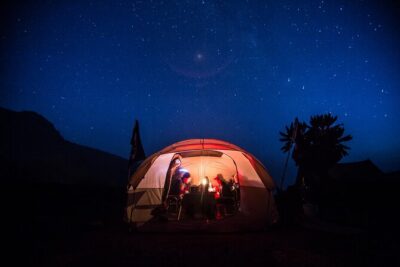
7-Day Machame Kilimanjaro Summit Tour from Arusha
Read our review →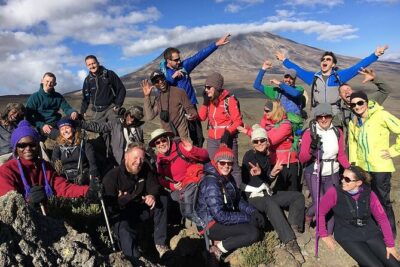
7 Days Kilimanjaro via Machame route affordable price
Read our review →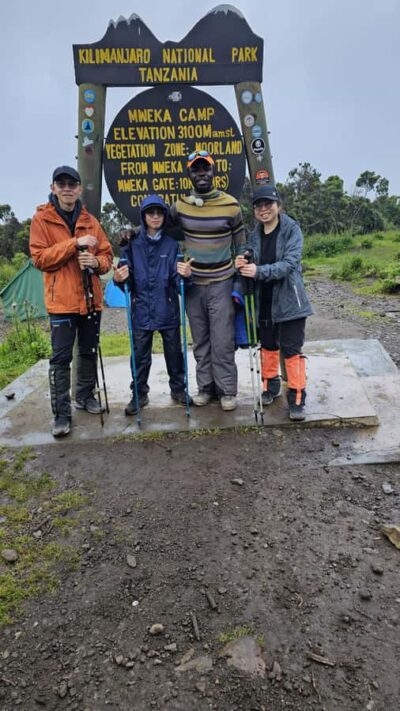
#1. Best Kilimanjaro Day hike Tour-Machame Route-ISMANI
Read our review →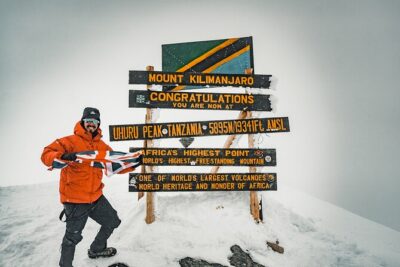
The Best of Machame Route in 6 Days: Your World’s Summit Guide
Read our review →Browse the lists this tour appears in