
Reviewed · MACHAME ROUTE CLIMBS
7 Day Trek To The Roof Of Africa Kilimanjaro via Machame Route
Africa’s highest summit demands respect. Soraka Tours’ Machame Route trek gives you seven mountain days, varied scenery, two hotel nights, camping support, and a careful acclimatization plan on the way to Uhuru Peak. The route moves from rainforest to moorland, alpine desert, glaciers, and snow near the summit.
I like the strong safety setup, with Wilderness First Responder guides, emergency oxygen, a medical kit, and two daily health checks. I also like the good acclimatization schedule, especially the climb to Lava Tower before sleeping lower at Barranco Camp. The main drawback is the price: at $3,190 per person, this is a serious investment before airfare, insurance, visa costs, tips, and personal gear.
In This Review
- Five things to know before booking
- Why the Machame Route is worth your time
- Day 1: Airport pickup and a night in Moshi
- Day 2: Machame Gate to Machame Camp
- Day 3: Machame Camp to Shira Camp
- Day 4: Shira Camp, Lava Tower, and Barranco Camp
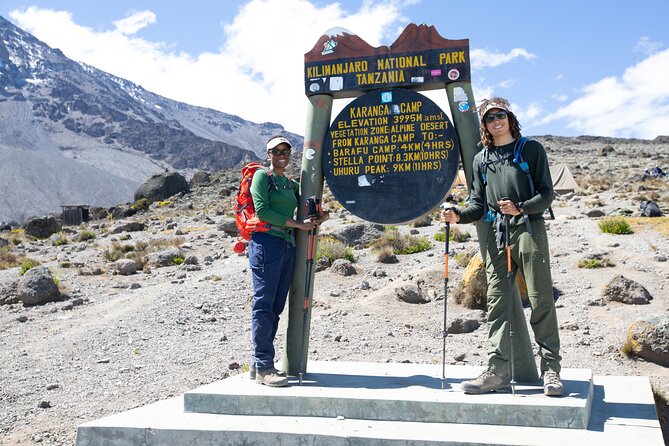
- Day 5: The Barranco Wall to Karanga Camp
- Day 6: Karanga Camp to Barafu Camp
- Day 7: Barafu Camp to Uhuru Peak and Mweka Camp
- Day 8: Mweka Camp to the gate and back to the hotel
- Day 9: Airport transfer or more time in Tanzania
- What the $3,190 price really covers
- Meals, safety, and the human side of the climb
- Who should book this Kilimanjaro trek?
- Should you book it?
- FAQ
- How long is the Kilimanjaro experience?
- What is the highest point reached?
- Where does the tour start?
- What accommodation is provided?
- Are meals included?
- Can dietary requirements be accommodated?
- What is not included in the $3,190 price?
Five things to know before booking
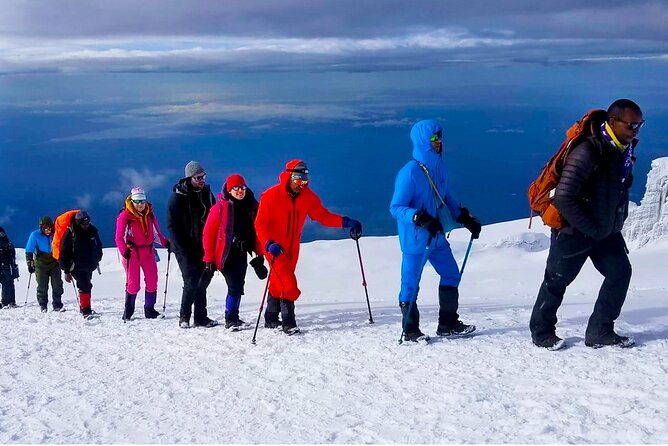
- The trek reaches 19,341 feet at Uhuru Peak, Africa’s highest point, after a midnight-style summit attempt from Barafu Camp.
- Lava Tower acclimatization matters: you climb to 15,190 feet on Day 4, then sleep at roughly 12,960 feet at Barranco Camp.
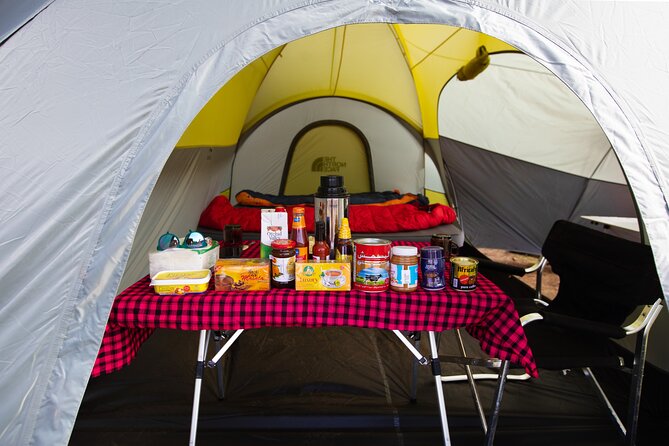
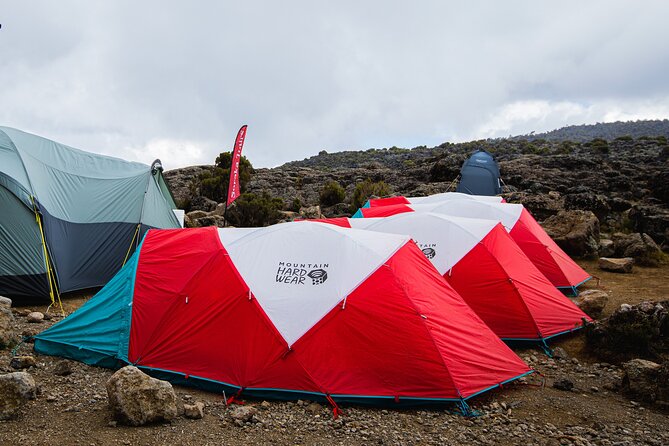
- Camping is organized for comfort: two people share a four-season Mountain Hardware tent, with a dining tent, chairs, tables, cutlery, and warm sleeping mats.
- The support system is substantial: park fees, rescue fees, camping fees, airport transfers, meals, hotel nights, and mountain transport are included.
- The group limit is 15 people, making this a shared expedition rather than a private climb, though single tent accommodation is available for an extra charge.
Why the Machame Route is worth your time
The Machame Route is often chosen for its changing scenery and gradual approach to altitude. You begin among thick rainforest, then move through heather and moorland before reaching the stark high alpine desert around Barafu Camp.
That variety makes the route feel like several hikes joined together. You are not simply walking uphill for a week. Each day brings a different setting, different footing, and a new test of your stamina.
The route also allows an important acclimatization pattern. On Day 4, you climb to Lava Tower at 15,190 feet, then descend to Barranco Camp at 12,960 feet to sleep. That high-climb, lower-sleep approach gives your body useful time at altitude without making you spend the night at the highest point reached that day.
You still need a moderate level of physical fitness. This is not a gentle nature walk with a summit photo at the end. The final ascent from Barafu Camp to Uhuru Peak is especially demanding, and the descent to Mweka Camp adds several more hours after your summit success.
More Machame Route climbs:
- Kilimanjaro climb, Machame Route (7-day)
★ 5.0 · 262 reviews - Climbing Kilimanjaro – Machame Route
★ 5.0 · 170 reviews - Climbing Kilimanjaro through 7 days Machame Route
★ 5.0 · 151 reviews
Day 1: Airport pickup and a night in Moshi
Your experience begins with pickup at Kilimanjaro International Airport. Ground transportation is included, along with two nights at Kili Wonders Hotel in Moshi or a similar hotel, with breakfast provided.
This first night is useful for more than sleep. It gives you time to arrive, settle in, and prepare for the mountain before walking begins. Lunch and dinner at the hotel are not included, so budget separately for those meals.
The hotel night after the climb is equally practical. After several days in a tent and the long summit push, a shower, proper bed, and breakfast are welcome comforts. The package includes two hotel nights, but not alcoholic drinks or hotel lunch and dinner.
Day 2: Machame Gate to Machame Camp
The mountain portion starts at Machame Gate, at about 5,905 feet. From there, you climb through Kilimanjaro’s rainforest to Machame Camp at roughly 9,875 feet.
This opening day introduces the rhythm of the expedition. You gain nearly 4,000 feet, but the forest setting keeps the first stage visually engaging. Expect a gradual ascent rather than a sudden wall of rock.
The rainforest can feel damp and demanding underfoot. Your boots, rain protection, and daypack matter here, even though personal climbing equipment is not supplied. Sleeping bags, hiking boots, and similar items are your responsibility.
At camp, the support crew handles the larger camp operation. Your accommodation is in a four-season Mountain Hardware tent shared by two people. Dining tents, tables, chairs, cutlery, and warm sleeping mats are included, which means you do not have to eat every meal hunched inside your sleeping tent.
Day 3: Machame Camp to Shira Camp
Day 3 takes you from Machame Camp to Shira Camp, rising from about 9,875 feet to 12,600 feet. The rainforest gives way to heather and moorland, with more open views and a cooler, less enclosed feel.
This is a meaningful change in scenery. The vegetation becomes shorter and sparser, and the route begins to feel like a high mountain trek rather than a forest hike.
The altitude gain is significant, so your guide’s pace and your own patience are important. You should not treat an early strong feeling as proof that the full climb will be easy. The plan works best when you conserve energy from the first morning.
Three freshly prepared meals are provided each day on the mountain. The kitchen can accommodate vegetarian, gluten-free, halal, and kosher meal plans. You should make your dietary needs clear at booking so the crew can plan properly.
More treks in Moshi:
- Private Kilimanjaro Hike 7 Day Lemosho Route
★ 5.0 · 60 reviews - Best Kilimanjaro hiking day trip tour with Kilinge Adventures
★ 4.5 · 54 reviews - #1. Best Kilimanjaro Day hike Tour-Machame Route-ISMANI
★ 4.2 · 47 reviews - Best Kilimanjaro Adventure 7 days Machame route Trekking
★ 5.0 · 42 reviews
Day 4: Shira Camp, Lava Tower, and Barranco Camp
This is one of the most useful days in the itinerary. You leave Shira Camp at 12,600 feet, climb to Lava Tower at 15,190 feet, then continue to Barranco Camp at about 12,960 feet.
The aim is not simply to collect another viewpoint. The climb gives your body time at a higher altitude, while the lower camp provides a better sleeping point than Lava Tower would. That is a smart feature of the route, but it does not remove the risk of altitude sickness.
From this area, you can see the Western Breach and Southern Glacier. The surroundings become much barer, with the mountain’s upper zones beginning to dominate the view. The walk can be tiring because of the altitude, even though the daily elevation gain from camp to camp is modest once you descend.
Two daily health checks use an oximeter and specific questions about your condition. This is one of the strongest practical features of the trip. A guide cannot promise that altitude problems will not occur, but regular checks create a clear chance to spot trouble early.
Day 5: The Barranco Wall to Karanga Camp
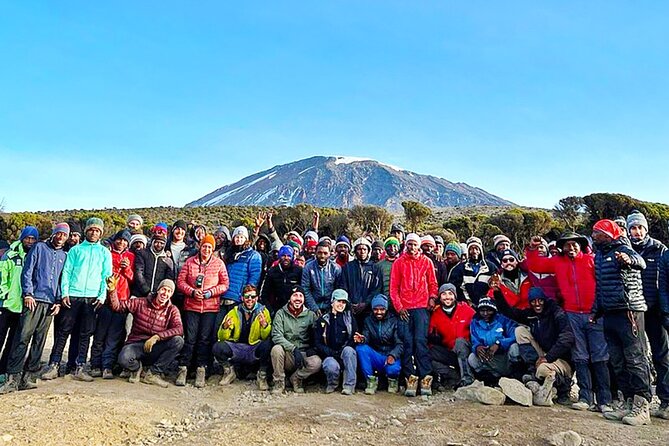
The Barranco Wall is the day’s signature feature. You climb from Barranco Camp at 12,960 feet to Karanga Camp at 13,270 feet, passing over the wall and gaining views from above.
The height change between camps is small, but do not mistake that for an easy day. The Barranco Wall involves rocky, uneven terrain and requires careful movement. You may need to use your hands at points, depending on the route and conditions.
This is a good example of why Kilimanjaro is more than a test of aerobic fitness. You need balance, patience, and confidence on rough ground. Your guide and crew provide support, but you still need to manage your own footing and energy.
Karanga Camp is the final camp before Barafu. The short elevation gain helps preserve strength for the high alpine stages, though the altitude itself can make even a moderate walk feel strenuous.
Day 6: Karanga Camp to Barafu Camp
The route now enters the high alpine desert. You climb from Karanga Camp at 13,270 feet to Barafu Camp at 15,190 feet, the launch point for your summit attempt.
There is little vegetation here, and the setting feels more exposed. Barafu is not a place for a relaxed evening around camp. You eat, rest, organize your summit clothing and equipment, and try to sleep before the early start.
The final ascent requires careful preparation. Your sleeping bag, boots, warm layers, headlamp, water, gloves, and other personal gear are not included in the tour price. The supplied warm sleeping mat helps, but you remain responsible for bringing suitable clothing and equipment.
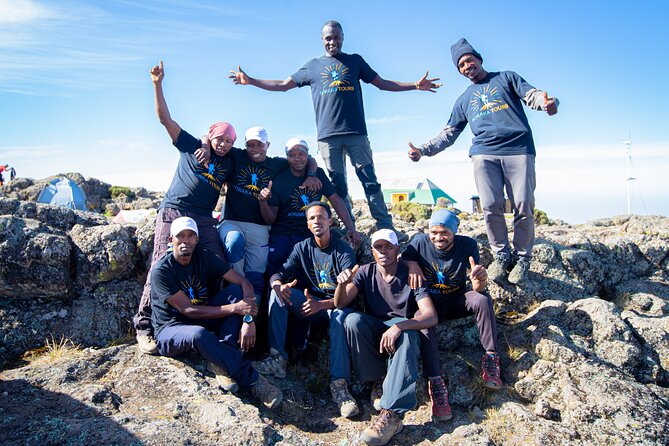
This is also the point where the value of the crew becomes clear. Guides with more than 10 years of climbing experience each, porters, cooks, and camp staff support the climb. The company states that its mountain crew receives fair wages according to KINPA standards, an important consideration when comparing operators.
Day 7: Barafu Camp to Uhuru Peak and Mweka Camp
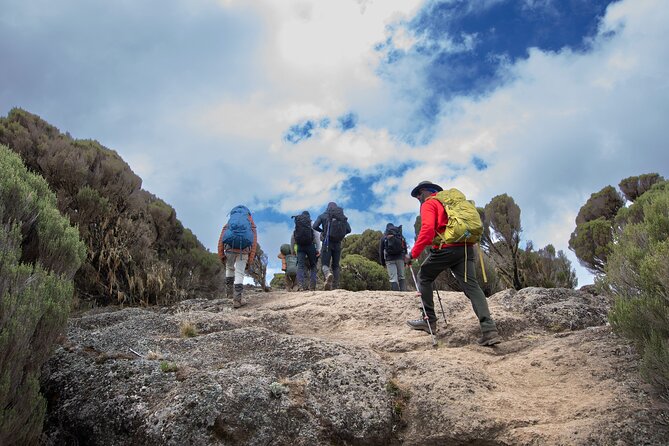
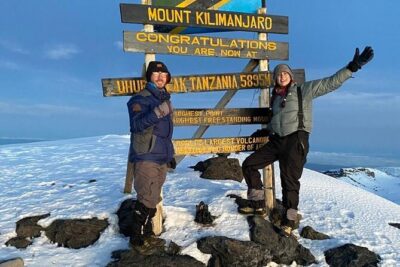
Summit day is the hardest part of the trip. You climb from Barafu Camp at 15,190 feet to Uhuru Peak at 19,341 feet, then descend all the way to Mweka Camp at 10,170 feet.
The summit portion is physically and mentally demanding. You gain more than 4,000 feet before reaching the top, then lose more than 9,000 feet during the descent. The day combines cold, thin air, steep ground, limited sleep, and a long return to camp.
The reward is the sunrise view from near the summit, with glaciers and the surrounding mountain world below you. The achievement is real, but you should understand that the summit is only half of this day. The descent can punish tired knees and feet.
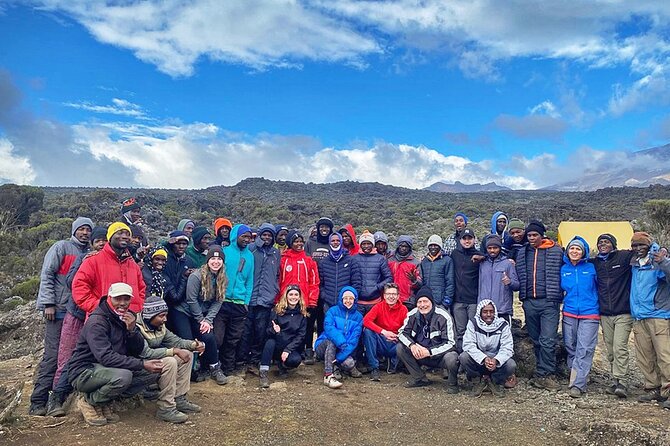
Past climbing groups have specifically praised guides named Baltasari and Baraka for friendliness, encouragement, and steady assistance. One account described the crew helping with logistics from wake-up through the evening, including carrying some luggage on summit day. That support can make a major difference when your own energy is running low.
Not every summit attempt ends at Uhuru Peak. One climber reached Stella Point, which is still a major achievement. A responsible guide team should focus on your health rather than pressuring you toward a dangerous final push.
Day 8: Mweka Camp to the gate and back to the hotel
You descend from Mweka Camp at 10,170 feet to Mweka Gate at about 5,380 feet. The walk returns you to lower elevation and marks the end of the mountain section.
The change in air can feel welcome, but the descent is not effortless. After summit day, your legs may be sore and your feet tender. Take your time, keep drinking, and use trekking poles if you have them.
From the gate, ground transportation takes you back to the hotel. This is when the second hotel night earns its place in the package. A proper bed and breakfast provide a useful recovery period before departure or a safari extension.
Day 9: Airport transfer or more time in Tanzania
The final day includes transfer to the airport or onward travel for safari adventures. Airfare is not included, so arrange your flight separately and allow enough time for the post-trek transfer.
The tour provider also offers airport pickup and drop-off, which simplifies the arrival and departure plan. The meeting point is Kilimanjaro International Airport, and the operating hours listed for the experience cover every day of the week.
What the $3,190 price really covers
At $3,190 per person, this is not a bargain trek. It is also not simply a fee for a guide and a campsite. The price includes Kilimanjaro National Park charges, rescue and camping fees, airport transfers, ground transportation, two hotel nights, mountain tents, dining equipment, warm sleeping mats, three daily mountain meals, guides, porters, emergency oxygen, and a medical kit.
Those included costs add up quickly on Kilimanjaro. A lower advertised rate may exclude several of these items, so compare the full package rather than the headline price alone.
You still need to budget for airfare, a visa, travel insurance, tips for the mountain staff, hotel lunch and dinner, alcoholic drinks, and personal equipment. A sleeping bag and proper hiking boots are specifically excluded, as are other personal climbing items.
Single tent accommodation is available for an extra charge. The standard arrangement is two people per tent, which keeps the cost lower but gives you less privacy.
Meals, safety, and the human side of the climb
The food plan is stronger than a basic camping setup. Meals are freshly prepared each day, and the kitchen can handle vegetarian, gluten-free, halal, and kosher diets.
The safety plan also deserves serious weight in your decision. Certified Wilderness First Responder guides, emergency oxygen, a medical kit, and two daily oximeter checks show an organized approach to altitude and illness.
The crew is part of the experience, not background labor. Guides and porters handle the camp system, assist with logistics, and help keep the expedition moving. Tips are not included, so plan for them as a normal part of the total cost.
With a maximum group size of 15, you get the shared energy of a group climb without the scale of a large procession. If you want complete privacy, request single accommodation and confirm the extra charge before booking.
Who should book this Kilimanjaro trek?
I would choose this route if you want changing scenery, a real acclimatization day, organized camping, and strong medical preparation. It suits a fit novice who is ready to train and follow the guide’s pace just as well as an experienced hiker.
You should think twice if you dislike camping, struggle with long uphill days, or expect a summit to come easily because you exercise regularly. Altitude affects people differently, and no operator can guarantee that you will reach Uhuru Peak.
The group format also matters. You will share the experience with up to 14 other people, and group pace can shape each day. That can be encouraging, but it may feel less flexible than a private climb.
The cancellation terms are fairly forgiving: you can receive a full refund if you cancel at least 24 hours before the start time. Changes or cancellations inside that window are not accepted for a refund.
Should you book it?
I would book this trek if you value safety, clear logistics, prepared meals, and a route that gives you time to adjust to altitude. The inclusion of park and rescue fees, airport transfers, hotel nights, tents, medical equipment, and experienced guides makes the $3,190 cost easier to justify.
Before paying, price your flights, visa, insurance, tips, sleeping bag, boots, and other personal gear. If that full budget works for you, Soraka Tours offers a well-supported way to attempt Kilimanjaro without having to arrange every mountain detail yourself.
FAQ
How long is the Kilimanjaro experience?
The full program lasts approximately nine days. It includes arrival and airport pickup, seven mountain days on the Machame Route, a hotel return, and an airport transfer or onward safari option.
What is the highest point reached?
The summit goal is Uhuru Peak at 19,341 feet. The itinerary also includes an acclimatization climb to Lava Tower at 15,190 feet.
Where does the tour start?
The meeting point is Kilimanjaro International Airport in Tanzania. Airport pickup and drop-off are included.
What accommodation is provided?
You receive two hotel nights at Kili Wonders Hotel in Moshi or a similar hotel, with breakfast included. On the mountain, two people share a four-season Mountain Hardware tent. Single tent accommodation costs extra.
Are meals included?
Three freshly prepared meals per day are included on the mountain. Hotel breakfast is included, but hotel lunch and dinner are not.
Can dietary requirements be accommodated?
Yes. Vegetarian, gluten-free, halal, and kosher meal plans can be arranged.
What is not included in the $3,190 price?
Airfare, visa fees, travel insurance, tips for mountain staff, alcoholic drinks, hotel lunch and dinner, and personal climbing equipment such as sleeping bags and hiking boots are not included.
Just added in Moshi
- Zanzibar: Stone Town tour and Nakupenda beach with Lunch★ 5.0 · 1 review
- Mt Kilimanjaro 6 days Marangu route hike★ 5.0 · 3 reviews
- machame route★ 5.0 · 16 reviews
- day trip lake manyara★ 5.0 · 2 reviews
- Private Cycle to Kilimanjaro Bike Park Safari★ 5.0 · 6 reviews
- West Kilimanjaro cycling Adventures★ 4.5 · 8 reviews
- Wildlife Extravaganza: Manyara, Tarangire & Ngorongoro in 3 Days★ 5.0 · 3 reviews
- 3 Days Private E-Bike Tour in West Kilimanjaro★ 5.0 · 3 reviews
Machame Route Climbs, compared.



Climbing Kilimanjaro through 7 days Machame Route
Read our review →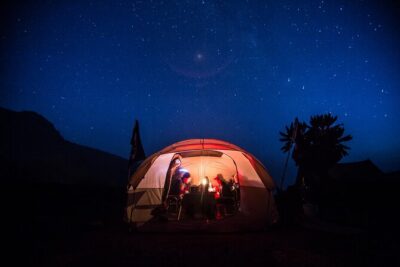
7-Day Machame Kilimanjaro Summit Tour from Arusha
Read our review →
7 Days Kilimanjaro via Machame route affordable price
Read our review →
#1. Best Kilimanjaro Day hike Tour-Machame Route-ISMANI
Read our review →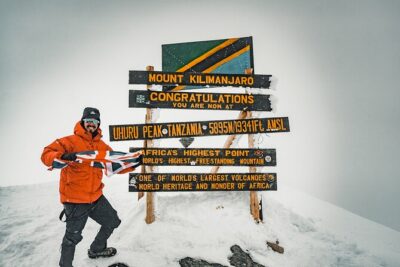
The Best of Machame Route in 6 Days: Your World’s Summit Guide
Read our review →Browse the lists this tour appears in