
Reviewed · MACHAME ROUTE CLIMBS
9 Days Mount Kilimanjaro Climb Machame Route
The mountain saves its biggest test for midnight. This Machame Route climb gives you seven days on Kilimanjaro, plus airport transfers, Moshi lodging, meals, a guide team, cook, porters, and a small group capped at six people. It is a serious high-altitude trip, but the steady climb, repeated acclimatization hikes, and varied scenery make the route a strong choice for a first Kilimanjaro attempt.
I like the way the plan uses altitude carefully, especially the climb to Lava Tower before sleeping lower at Barranco. I also like the practical support: tents and sleeping bags are prepared for you, treated drinking water is supplied, and the team includes mountain guides, a cook, and porters. The main drawback is the price, $3,250 per person, and the final summit day is long, cold, and physically demanding even for fit climbers.
In This Review
- Key Points Before You Book
- What the $3,250 Price Covers
- Day 1: A Quiet Start at Stella Maris Lodge
- Day 2: Machame Gate to Machame Camp
- Day 3: Shira Camp and the First Acclimatization Hike
- Day 4: Lava Tower to Barranco Camp
- Day 5: Barranco Wall and Karanga Camp
- Day 6: Barafu Camp and Preparation for Summit Night
- Day 7: Uhuru Peak and a Long Descent
- Day 8: Mweka Gate and the End of the Climb
- Day 9: Airport Transfer and Departure Timing
- Meals, Camps, and Daily Comfort
- Who Will Like This Machame Route?
- What the Six Published Ratings Tell You
- Should You Book It?
- FAQ
- How long is the Mount Kilimanjaro Machame Route experience?
- Where does the experience start and finish?
- How much does the climb cost?
- What is the maximum group size?
- What meals are included?
- Is drinking water provided?
- What level of fitness is required?
- Are tips included in the price?
Key Points Before You Book
- Seven mountain days within a nine-day trip: The climb runs from Machame Gate through summit night and down to Mweka Gate, with Moshi lodging and airport transfers at the beginning and end.
- A route built for acclimatization: You climb high toward Lava Tower, Kosovo Camp, and Barafu, then sleep lower or use short practice hikes to help your body adjust.
- Small groups of up to six: A smaller party can make pacing and guide attention easier, especially during the summit push.
- The summit day lasts 7 to 12 hours: You climb from Barafu Camp at 4,673 meters to Uhuru Peak at 5,895 meters, then descend to Millennium Camp.
- The support team is central to the experience: Professional guides, porters, a cook, meals, drinking water, sleeping mattresses, tables, and chairs are included.
- The descent deserves respect: Loose footing and tired legs can make the way down harder than expected, so sturdy boots and careful steps matter.
What the $3,250 Price Covers
At $3,250, this is not a budget walk in the park. The fee pays for a supported expedition on Africa’s highest mountain, with a guide crew, camp setup, meals, airport transport, treated water, and the logistics tied to a national park climb.
I see value in the service level if you want to focus on walking rather than carrying a tent, arranging meals, or managing camp furniture. Your crew handles the camp setup, and you receive a sleeping mattress, tables, and chairs. Those small comforts become very welcome after several hours above 4,000 meters.
The package includes breakfast for nine days, lunch for seven days, and dinner for six days. Vegetarian and non-vegetarian meals are available. Tips are not included, so you need to plan for that extra cost separately.
The price should still prompt a few questions before you pay. Ask the operator to confirm exactly which park charges, equipment items, transfers, and lodging details are covered in your booking. The supplied plan clearly includes the airport transfers and the listed mountain services, but it does not give a full equipment-rental list.
The activity is non-refundable and cannot be changed after booking. That makes travel insurance and firm flight planning especially sensible, though any policy you buy should specifically address trekking at high altitude.
More Kilimanjaro climbs:
- Kilimanjaro climb by Lemosho Route (7-day)
★ 5.0 · 651 reviews - Kilimanjaro climb, Machame Route (7-day)
★ 5.0 · 262 reviews - Kilimanjaro Climbing Lemosho Route 8 Days.
★ 5.0 · 186 reviews
Day 1: A Quiet Start at Stella Maris Lodge
Your airport pickup begins the trip. The drive from Kilimanjaro Airport to Stella Maris Lodge takes about 30 to 40 minutes, and the lodge is located before Moshi town.
The lodge has views of Mount Kilimanjaro, comfortable beds, and hot showers. That matters because the following morning starts the mountain portion of the trip. I would treat this first evening as a rest stop, not a sightseeing opportunity.
Try to arrive with enough time to organize your daypack, check rainwear, charge devices, and sleep early. A calm first night can make the next morning feel much easier.
Day 2: Machame Gate to Machame Camp
A guide and support crew meet you at the hotel for a briefing before you drive to Machame Gate, at about 1,800 meters. The team handles the climbing permits and registration with the search and rescue service before you begin walking.
The first section leads through rainforest toward Machame Camp at 3,010 meters. This is a classic Kilimanjaro opening: thick vegetation, damp paths, and a steady rise rather than a sudden wall of rock.
Rain is highly possible in the forest. Pack rain protection where you can reach it quickly, and bring spare clothes in a waterproof bag. Wet socks at the start of a long climb are a small problem that can become a very large one.
The route description lists about two hours for this stage, though the overall walking day can feel longer depending on the group pace and gate formalities. Your first night at altitude is a good time to notice how your body reacts. Move slowly, drink the supplied water, and tell your guide about headaches, nausea, unusual tiredness, or breathing trouble.
Day 3: Shira Camp and the First Acclimatization Hike
After breakfast, you climb from Machame Camp to Shira Camp at 3,845 meters. You leave the rainforest behind and gain broad views across the Shira Plateau.
The walking is described as physically manageable, but the altitude begins to matter more than the trail itself. This is where a slow pace becomes useful. You are not trying to prove how fast you can walk. You are trying to arrive strong enough for summit night.
After lunch and rest at Shira, the group takes an acclimatization hike toward Lava Tower Camp, gaining about 300 meters before returning to Shira for a hot dinner. This climb high, sleep lower pattern is one of the best features of the schedule.
The extra hike adds work to the day, but it gives you useful time at higher altitude without making you sleep there. If you feel fine at Shira, do not assume the mountain will remain easy. Altitude can change quickly from one day to the next.
More Machame Route climbs:
- Climbing Kilimanjaro – Machame Route
★ 5.0 · 170 reviews - Climbing Kilimanjaro through 7 days Machame Route
★ 5.0 · 151 reviews - 7 Days Kilimanjaro via Machame route affordable price
★ 5.0 · 110 reviews - #1. Best Kilimanjaro Day hike Tour-Machame Route-ISMANI
★ 4.2 · 47 reviews
Day 4: Lava Tower to Barranco Camp
This is one of the most important days for acclimatization. You climb from Shira Camp at 3,845 meters to Lava Tower at 4,630 meters, then descend to Barranco Camp at 3,960 meters.
That rise and fall may feel strange. You spend part of the day higher than your sleeping altitude, which gives your body valuable exposure to thin air. The lunch stop at Lava Tower also gives you time at altitude before the descent.
Barranco Camp is known for its dramatic wall, a steep-looking rock face that you tackle the next morning. The view can make the next day look more alarming than it really is. The route up is described as straightforward, but you still need hands-free movement and careful footing.
This is often the point where a climber learns that Kilimanjaro is not only about leg strength. Sleep, hydration, appetite, and patience matter just as much.
Day 5: Barranco Wall and Karanga Camp
An early start helps you avoid crowds on Barranco Wall. The climb usually takes about an hour, and its appearance is more intimidating than the actual trail.
At the top, you get a strong photo position with Kibo Peak behind you. After that, the day turns into a series of ups and downs before lunch at Karanga Camp.
The route from Barranco to Karanga is relatively short by Kilimanjaro standards, about 5 kilometers, with altitude rising from 3,960 to 4,035 meters. After lunch, you make another acclimatization climb toward Barafu, reaching about 4,270 meters before returning to Karanga for the night.
This repeated practice above camp is useful, but it also makes the day busier than the distance suggests. Save energy on the climbs, follow the guide’s pace, and do not waste effort racing over short sections.
The team’s role can make a real difference here. Past climbers have singled out guides including Kim, Oscar, Moses, and Pius, along with the wider porters and cooking staff. Nicholas is praised for the food, while Julius is remembered for bringing hot tea in the morning. Those details tell you what the support system is meant to feel like: practical help, regular meals, and small acts of care when you are tired.
Day 6: Barafu Camp and Preparation for Summit Night
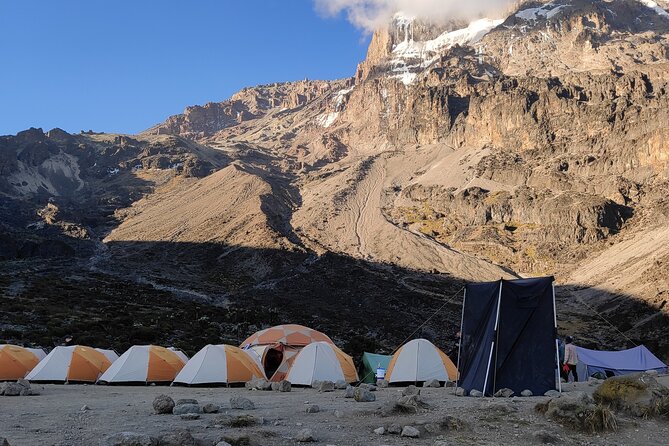
You leave Karanga after breakfast and climb to Barafu Summit Camp at 4,673 meters. The listed distance is 6 kilometers, taking about four to five hours.
The crew prepares the camp, including tents and sleeping bags, before you arrive. Once you have eaten and recovered, you make an acclimatization climb toward Kosovo Summit Camp, reaching about 4,800 meters, then return to Barafu.
The Kosovo section covers about 2 kilometers and takes one to two hours. It is another example of the schedule asking you to go high, then return to sleep lower.
The rest of the day is for food, water, and sleep. That sounds simple, but sleeping at 4,673 meters can be difficult. Keep your evening routine organized, pack the small items you need for the midnight start, and avoid filling your bag with anything unnecessary.
Day 7: Uhuru Peak and a Long Descent
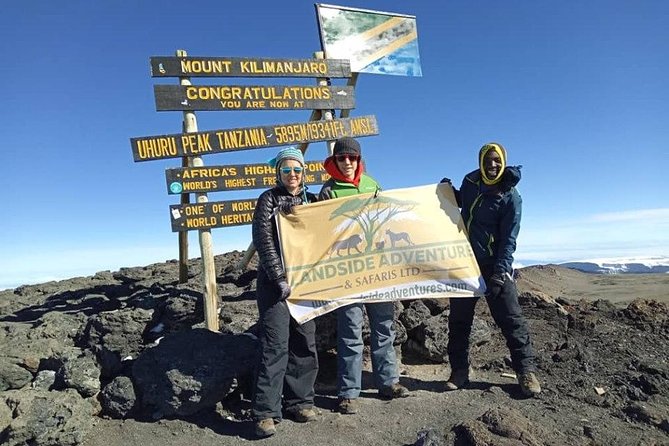
Summit night begins around midnight. You climb from Barafu Camp at 4,673 meters to Uhuru Peak at 5,895 meters, the highest point on Kilimanjaro.
The distance and timing listed for the full day are 15.5 kilometers and 7 to 12 hours. The ascent itself may feel mechanically simple, but thin air makes every step count. The plan assigns one guide to monitor every two climbers above the high camps, an important safety feature during the most demanding part of the climb.
The summit area may allow time to walk near a glacier. Conditions can affect exactly what you see and how long you can stay, so treat the summit stop as a brief celebration rather than a long visit.
After about two hours of rest at Barafu, you descend to Millennium Camp at 3,820 meters. Do not underestimate this part. Tired legs, loose ground, and steep footing can cause falls, and the itinerary specifically warns that the descent leads to many accidents.
Your feet deserve attention. Trim toenails before the trip, use boots that are already comfortable, and take short, controlled steps on the way down. A summit photo is wonderful. A damaged toenail is a poor souvenir.
Day 8: Mweka Gate and the End of the Climb
The lower position of Millennium Camp, near the forest line, should make for a more comfortable night than Barafu. After breakfast, you descend to Mweka Gate at about 1,640 meters.
The walk covers about 13.5 kilometers and takes five to six hours. The descent may feel easier because the air is thicker and the summit is behind you, but your knees and feet will still be working hard.
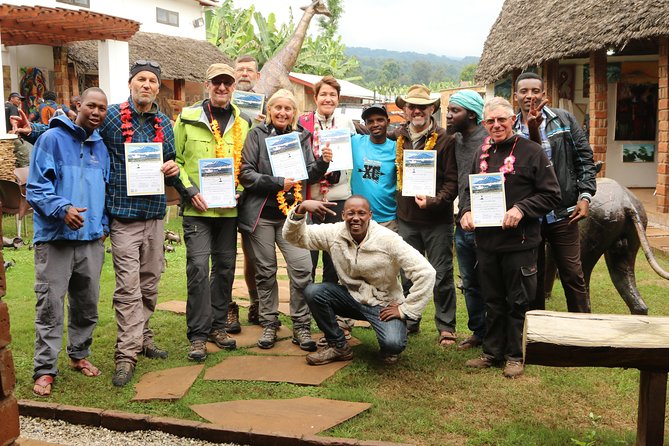
At Mweka Gate, the group celebrates with the climb crew. You then return to the operator’s offices, receive climb certificates, and drive back to your lodge.
This final day gives the trip a clear ending. You do not simply walk away from the mountain and find your own transport. The team stays with you through the gate, certificates, and return drive.
Day 9: Airport Transfer and Departure Timing
The final day is for your hotel-to-airport transfer. Standard checkout is at 11:00 AM.
Late checkout may be available for a later flight, but an extra fee can apply. Confirm the timing of your transfer and checkout before departure day so you are not left managing bags and fatigue at the last minute.
Meals, Camps, and Daily Comfort
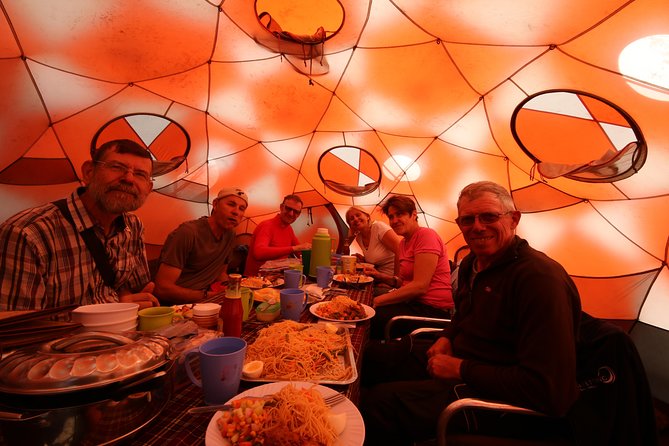
The included food covers breakfast for all nine days, lunch on seven days, and dinner on six days. You can request vegetarian or non-vegetarian meals.
Hot meals matter more than fancy menus on this route. Eating enough becomes harder as altitude and fatigue build, so regular breakfast, lunch, and dinner provide structure. The positive comments about Nicholas’s cooking and Julius’s morning tea suggest that food and service are a real strength of this operation.
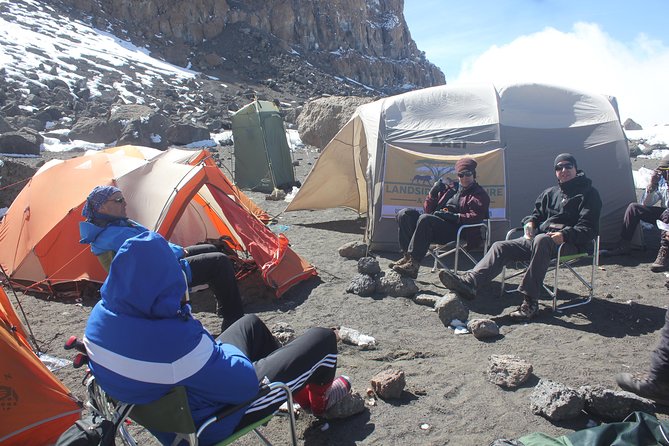
The package also includes treated drinking water, a sleeping mattress, tables, and chairs. Tents and sleeping bags are set up for you at Barafu, and the wider plan is built around a support crew of guides, a cook, and porters.
You should still clarify what personal clothing and technical gear you need to bring. The supplied information does not list boots, rainwear, warm layers, trekking poles, headlamps, or duffel bags as included.
Who Will Like This Machame Route?
This trip suits you if you want a structured Kilimanjaro climb with a small group, a full support crew, and several acclimatization hikes. You need a moderate level of physical fitness, but the larger challenge is coping calmly with altitude and long days.
It is a good match if you value scenery that changes from rainforest to high plateau, volcanic rock, dramatic walls, and summit terrain. It also suits climbers who prefer a set itinerary rather than arranging every camp, meal, transfer, and permit detail themselves.
It may not suit you if you want a casual holiday, dislike early starts, or need flexible cancellation terms. The trip is non-refundable, and the summit day can last up to 12 hours.
The listed maximum is six people. That is small enough to make guide attention and group pacing more manageable, though the exact party size should be confirmed when you book.
What the Six Published Ratings Tell You
The experience carries a listed rating of 5 from six reviews. The strongest praise focuses on the staff rather than on luxury.
The team receives credit for handling poor weather, answering preparation questions efficiently, and helping climbers reach the summit. Maxon is repeatedly described as responsive and helpful before and during the climb, while Kim, Oscar, Moses, and Pius receive praise for guiding.
The support staff also receives warm comments. Porters are described as making the climb easier, and the cooking and morning tea service receive specific praise. One group successfully combined Mount Meru with a Kilimanjaro climb, while another completed an all-women Lemosho trip with Keddy and Joshua, showing that the company also handles other mountain programs.
These are encouraging signs, but they do not remove the need to ask practical questions. Confirm your guide-to-climber ratio, the full equipment list, the exact lodge nights, and the final transport schedule before payment.
Should You Book It?
Book this climb if you want a well-supported Machame Route schedule with repeated acclimatization, Moshi transfers, and a group limited to six. The strongest reasons are the attentive guide culture, useful high-altitude practice walks, and the fact that camp, meals, water, and porter support are arranged for you.
Think twice if $3,250 stretches your budget or if you need to change dates later. The non-refundable terms and demanding summit day require a firm commitment.
For a prepared climber who understands that Uhuru Peak is earned slowly, this is a practical and appealing way to approach Kilimanjaro. Just arrive ready for rain, cold, thin air, long descents, and an early midnight start.
FAQ
How long is the Mount Kilimanjaro Machame Route experience?
The full experience lasts approximately nine days. The mountain climb runs from Day 2 through Day 8, with airport transfers and Moshi lodging at the beginning and end.
Where does the experience start and finish?
The trip starts with pickup at Kilimanjaro Airport and ends with the return airport transfer on Day 9. The mountain section begins at Machame Gate and finishes at Mweka Gate.
How much does the climb cost?
The listed price is $3,250 per person.
What is the maximum group size?
The activity has a maximum of six climbers.
What meals are included?
Breakfast is included for nine days, lunch for seven days, and dinner for six days. Vegetarian and non-vegetarian meals are available.
Is drinking water provided?
Yes. Treated drinking water is included.
What level of fitness is required?
You should have a moderate level of physical fitness. The route includes high-altitude walking, a summit ascent to 5,895 meters, and long descent days.
Are tips included in the price?
No. Tips are not included.
Just added in Moshi
- Zanzibar: Stone Town tour and Nakupenda beach with Lunch★ 5.0 · 1 review
- day trip lake manyara★ 5.0 · 2 reviews
- Mt Kilimanjaro 6 days Marangu route hike★ 5.0 · 3 reviews
- machame route★ 5.0 · 16 reviews
- Private Cycle to Kilimanjaro Bike Park Safari★ 5.0 · 6 reviews
- West Kilimanjaro cycling Adventures★ 4.5 · 8 reviews
- Wildlife Extravaganza: Manyara, Tarangire & Ngorongoro in 3 Days★ 5.0 · 3 reviews
- 3 Days Private E-Bike Tour in West Kilimanjaro★ 5.0 · 3 reviews
Machame Route Climbs, compared.

Climbing Kilimanjaro through 7 days Machame Route
Read our review →
7-Day Machame Kilimanjaro Summit Tour from Arusha
Read our review →
7 Days Kilimanjaro via Machame route affordable price
Read our review →
#1. Best Kilimanjaro Day hike Tour-Machame Route-ISMANI
Read our review →
The Best of Machame Route in 6 Days: Your World’s Summit Guide
Read our review →Browse the lists this tour appears in