
Reviewed · MACHAME ROUTE CLIMBS
Climb Kilimanjaro Machame Route 7 Days
The mountain saves its hardest test for sunrise. This seven-day climb gives you time to adjust to altitude while crossing rainforest, moorland, high desert, and snow near Uhuru Peak. I especially like the careful acclimatization plan and the short Karanga day before the final camp. I also like that the $2,200 price includes park fees, mountain staff, food, camping equipment, hotel nights, and transfers.
The main consideration is that this is a serious physical challenge, not a casual holiday walk. Summit day begins around midnight and includes a long ascent followed by a long descent. You need strong fitness, suitable personal gear, and a willingness to spend several nights in mountain camps.
In This Review
- Key points to know before booking
- Why the seven-day Machame schedule makes sense
- Arrival in Moshi and the airport transfer
- Day 1: Machame Gate to Machame Camp
- Day 2: Machame Camp to Shira Camp
- Day 3: Shira Camp, Lava Tower, and Barranco Camp
- Day 4: Barranco Wall to Karanga Camp
- Day 5: Karanga Camp to Barafu Camp
- Day 6: Barafu Camp to Uhuru Peak and Mweka Camp
- Day 7: Mweka Camp to Moshi
- What the $2,200 price really covers
- Food, staff, and the human side of the climb
- Safety, fitness, and practical preparation
- Who should choose this climb?
- Should you book the seven-day Machame climb?
- FAQ
- How long is the Machame Route climb?
- Where does the experience start?
- Is transport included?
- Are park fees included?
- Are food and camping equipment included?
- Who is part of the mountain team?
- What is not included in the price?
Key points to know before booking
- Seven days gives your body more time to adjust: The Barranco to Barafu section is split into two stages, creating a shorter day before the summit attempt.
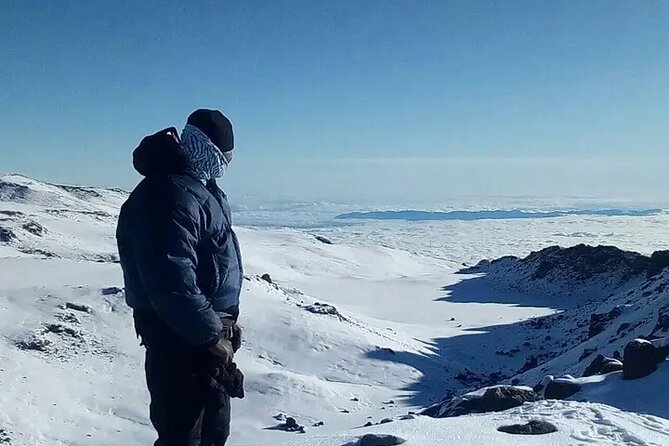
- The route crosses five mountain zones: You walk from rainforest to moorland, semi-desert, alpine desert, and the arctic summit zone.
- The hardest day is extremely long: Summit day includes about 5 kilometers uphill, 12 kilometers downhill, and up to 14 hours of walking.
- The price covers the main mountain costs: Park entry, camping equipment, food, guide, cook, porters, staff wages, two hotel nights, and transfers are included.
- Mussa and Frankie receive repeated praise: Personal care, encouragement, strong organization, and help with planning are recurring themes in the supplied feedback.
- This is a private activity: Only your own group takes part, which can make pacing and support more personal.
Why the seven-day Machame schedule makes sense
Machame is often called the scenic route because it changes character almost every day. You begin beneath Kilimanjaro in thick forest, then climb through open heather and high moorland before reaching the stark upper slopes. The views also improve as the trees fall away.
The seven-day version is important because it does not rush the approach to the summit. Instead of forcing the Barranco to Barafu section into one punishing day, you stop at Karanga first. That creates a shorter climb before summit night, when you need to leave camp between midnight and 2 a.m.
I consider this one of the best features of the program. No acclimatization schedule can remove altitude sickness, but a slower plan gives your body more time to respond. It also gives you a quieter day to eat, rest, check your clothing, and prepare mentally.
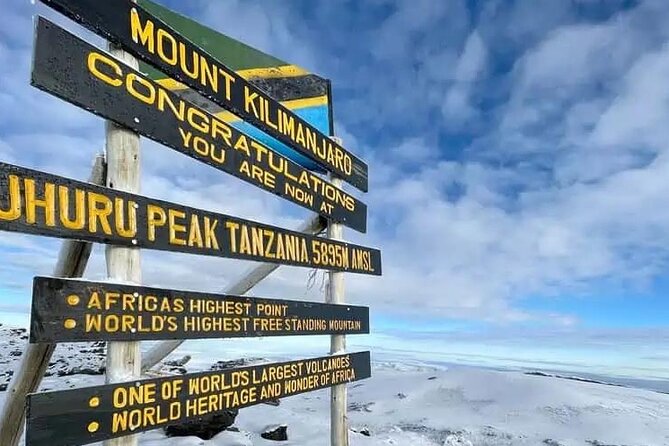
The route is still demanding. You reach 15,300 feet at Barafu Camp, then climb to 19,345 feet at Uhuru Peak. The higher you go, the more important it becomes to follow your guide’s pace and instructions.
More Kilimanjaro climbs:
- Kilimanjaro climb by Lemosho Route (7-day)
★ 5.0 · 651 reviews - Kilimanjaro climb, Machame Route (7-day)
★ 5.0 · 262 reviews - Kilimanjaro Climbing Lemosho Route 8 Days.
★ 5.0 · 186 reviews
Arrival in Moshi and the airport transfer
The arrangement begins with an airport pickup. A company representative meets you at the arrival point holding a company sign, introduces himself, gives you a short briefing, and drives you to your hotel in Moshi.
The stated meeting point is Honey Badger Lodge in Moshi, at M92P+CP, Kiboriloni 1258, Tanzania. Two hotel nights in Moshi or Arusha are included, although you should confirm the exact hotel arrangement before arrival.
This first briefing matters more than it may seem. Use it to check the start time, review your equipment, ask about the route, and make sure you understand what the company supplies. The included air-conditioned vehicle is useful for the airport transfer and the drives to and from the mountain.
One practical note: the description refers to a 4×4 safari vehicle. That is helpful for rough approach roads, but this is a mountain climb, not a safari. The vehicle takes you to the trailhead and back. Your feet handle the main event.
Day 1: Machame Gate to Machame Camp
The drive from Moshi to Mount Kilimanjaro National Park’s Machame Gate takes about 50 minutes. The road passes through Machame village on the lower slopes, giving you a quick look at the settled area below the park.
After registration and the park formalities, you start through rainforest. The trail winds uphill along a ridge, with the forest gradually giving way to camp at about 9,400 feet.
The numbers are manageable on paper: around 11 kilometers and 5 to 7 hours of walking. The ground can be muddy and slippery, especially lower down. Gaiters and trekking poles are specifically useful here, and I would keep rain gear close rather than buried in your bag.
This is a full first day, not a gentle stroll. You may still be adjusting to the heat, humidity, and weight of your pack. The good news is that the forest provides shade and the route gains altitude at a steady rate.
Day 2: Machame Camp to Shira Camp
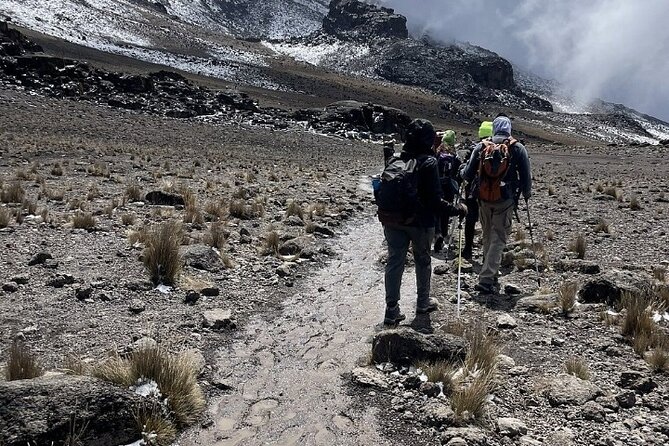
The forest thins after breakfast, replaced by heather and moorland. You climb across a small valley and follow a steep, rocky ridge until the trail turns west toward a river gorge.
This stage covers about 5 kilometers and usually takes 4 to 6 hours. The shorter distance does not make it effortless. The altitude rises from about 9,400 feet to 12,500 feet, and the trail keeps ascending.
Shira Camp gives you your first real sense that Kilimanjaro is a high mountain rather than simply a tall forested hill. The open ground allows wider views, but it also means more exposure to wind and changing weather.
I like the way this day balances distance and altitude gain. You have time to settle into the mountain routine: walk, eat, rest, drink, and repeat. Dinner and overnight camping take place at Shira.
More Machame Route climbs:
- Climbing Kilimanjaro – Machame Route
★ 5.0 · 170 reviews - Climbing Kilimanjaro through 7 days Machame Route
★ 5.0 · 151 reviews - 7 Days Kilimanjaro via Machame route affordable price
★ 5.0 · 110 reviews - #1. Best Kilimanjaro Day hike Tour-Machame Route-ISMANI
★ 4.2 · 47 reviews
Day 3: Shira Camp, Lava Tower, and Barranco Camp
This is one of the most useful days on the route. You leave the Shira Plateau and climb toward Lava Tower, also known as the Shark’s Tooth, reaching about 13,000 feet before descending to Barranco Camp at roughly the same elevation where the day began.
The walking distance is about 10 kilometers, with 6 to 8 hours on the trail. The route passes a junction toward Kibo, then turns southeast toward Lava Tower. A second junction leads toward Arrow Glacier at about 16,000 feet, although the planned overnight stop is Barranco.
The key lesson is climb high, sleep lower. You gain height during the day, then descend to Barranco. That helps your body experience altitude without forcing you to sleep at the highest point reached.
The semi-desert setting is stark and memorable. Vegetation becomes sparse, and the mountain feels more exposed. This is also where altitude may begin to affect your appetite, sleep, or energy. Tell your guide how you feel. Do not treat a headache or unusual fatigue as something to hide.
Barranco Camp is a good place to recover before the route becomes steeper. You eat dinner, sleep at camp, and prepare for the famous Barranco Wall the next morning.
Day 4: Barranco Wall to Karanga Camp
The fourth day covers only about 5 kilometers and takes roughly 4 to 5 hours. That short schedule is deliberate.
You leave Barranco and climb along a steep ridge beside the Barranco Wall before continuing into the Karanga Valley. The terrain is now alpine desert, with little shelter and a much stronger sense of altitude.
For me, this is where the seven-day schedule earns its keep. You are not trying to rush from Barranco all the way to Barafu. Instead, you have time to handle the steep section, settle into camp, eat properly, and rest before the next climb.
Do not confuse a short day with an easy one. The Barranco Wall can feel demanding, particularly if you dislike exposed or steep ground. Your guide and the porters are there to support the group, but you still need balance, steady footing, and patience.
Day 5: Karanga Camp to Barafu Camp
The climb from Karanga to Barafu is only about 4 kilometers, but it takes 4 to 5 hours and rises from roughly 13,100 feet to 15,300 feet. The trail joins the Mweka route and continues upward through alpine desert.
At Barafu, you have completed the Southern Circuit, with views toward both Mawenzi and Kibo. This is the final camp before the summit attempt, so the main work is not sightseeing. It is preparation.
You should eat, drink, organize your clothing, check your headlamp, and rest as much as possible. Dinner comes before an early bedtime, although sleeping well at this altitude and with a midnight departure ahead is not guaranteed.
This is another reason I favor seven days over a compressed schedule. You reach Barafu after a short stage rather than arriving exhausted from a long traverse. The summit will still be hard, but you start with a better chance of being rested.
Day 6: Barafu Camp to Uhuru Peak and Mweka Camp
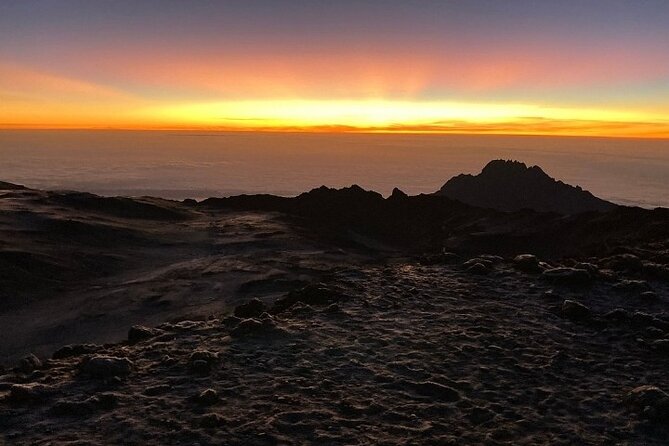
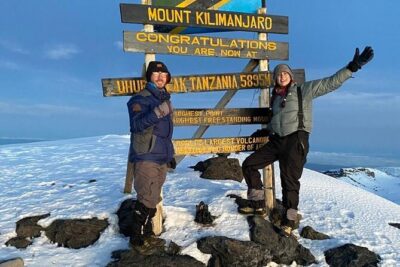
This is the day that tests your legs and your patience. Departure is usually between midnight and 2 a.m. You climb through heavy scree toward Stella Point on the crater rim, between the Rebmann and Ratzel glaciers.
The ascent is about 5 kilometers and takes 7 to 8 hours. At Stella Point, approximately 18,600 feet, you can pause briefly and, if the weather cooperates, watch sunrise over the mountain. From there, you continue for about an hour toward Uhuru Peak at 19,345 feet.
Some climbers reach the summit in time for sunrise. Faster walkers may see the sun come up from Uhuru Peak, while others enjoy it at Stella Point. Both are worthwhile. Weather and your own pace matter more than forcing a particular photograph.
This section is described as the most mentally and physically difficult part of the climb, and that is easy to understand. You are walking in darkness, at extreme altitude, after little sleep. Your guide’s pacing and encouragement are especially important here. The positive feedback about Mussa and Frankie repeatedly centers on support, kindness, and helping climbers reach their own goals.
After the summit, you descend to Mweka Camp, stopping at Barafu for lunch. The descent covers about 12 kilometers and takes another 4 to 6 hours. Loose gravel makes trekking poles and gaiters useful, and tired legs can make downhill walking surprisingly awkward.
Mweka Camp sits in the upper forest at about 10,000 feet. Mist or rain may arrive later in the afternoon. You have a final mountain dinner and, if your body allows it, a well-earned sleep.
Day 7: Mweka Camp to Moshi
The last walking stage descends about 10 kilometers through rainforest to Mweka Park Gate. It takes roughly 3 to 4 hours.
The lower trail can be wet and muddy. Shorts and a T-shirt may be comfortable in the lower section, but keep rain gear and warmer clothing handy because mountain weather can change before you reach the gate.
At Mweka Gate, you receive your summit certificate. That moment gives the long climb a formal finish, but you still have a final walk to Mweka Village, about another hour. A vehicle meets you there and returns you to your hotel in Moshi.
The final drive is part of the recovery process. You are no longer sleeping on the mountain, but you may still feel the effects of summit night. Plan a quiet evening rather than a packed schedule.
What the $2,200 price really covers
At $2,200 per person, the cost is not just a guiding fee. It includes the major expenses that make a supported Kilimanjaro climb possible:
- Camping equipment
- National park entry fees
- Mountain guide, cook, and porters
- Team salaries
- Food on the mountain
- Two hotel nights in Moshi or Arusha
- Airport transfers
- An oxygen tank
- Air-conditioned transport
That is a solid package for a seven-day climb. Park fees alone form a large part of any Kilimanjaro budget, and the cost of paying a full mountain team, providing food, camping equipment, transfers, and hotel nights adds up quickly.
The included oxygen tank is reassuring, but you should not read it as a guarantee that altitude problems can be solved. Oxygen is an emergency support measure, not a substitute for slow pacing, honest communication, and good judgment.
You still need to budget for visa costs, flights, drinks, tips, and personal climbing items. The last category is important. Confirm exactly what personal gear you must bring, especially footwear, warm layers, head protection, gloves, sleeping equipment, and rain protection.
Food, staff, and the human side of the climb
The strongest praise attached to this operation concerns care and organization. Mussa is repeatedly named as a guide and organizer, and Frankie is also praised for helping climbers reach the summit. Several accounts describe the team as attentive, supportive, and willing to help with planning beyond the climb.
That wider planning help can be useful if you are also arranging transport from Nairobi to Moshi, considering a safari, or planning activities after the mountain. It is worth asking for this assistance before arrival, rather than trying to solve every transfer at the airport.
Food receives especially warm praise. The package includes meals on the mountain, and the available feedback describes the cooking and service as a strong part of the experience. At altitude, a reliable hot meal is not a minor luxury. It helps you maintain energy when your appetite may be poor.
Porters are part of the support system, too. Ask the company how luggage is handled, what weight limits apply, and what you are expected to carry yourself. Those details affect both your comfort and the workload placed on the mountain team.
Safety, fitness, and practical preparation
The operator puts safety first and provides professional guides, quality equipment, and an oxygen tank. Those are useful assurances, but your own preparation still matters.
You are expected to have a strong level of physical fitness. The challenge comes from repeated uphill walking, steep ground, cold conditions, little sleep, and the long summit descent. Training should focus on sustained walking and climbing rather than only short bursts of speed.
A few practical items deserve special attention:
- Gaiters help with mud in the rainforest and loose gravel on the descent.
- Trekking poles are useful on slippery lower trails, steep ridges, and scree.
- Warm clothing and rain gear should remain easy to reach.
- Personal climbing equipment is not included, so clarify the supplied gear list.
- Keep your pace controlled from the first day. Saving energy matters more than racing ahead.
- Tell your guide promptly if you feel unwell at altitude.
The private format is useful here. Only your own group participates, so the day’s pace and rest stops can be handled around your group’s needs. It does not remove the physical demands, but it may make communication easier.
Who should choose this climb?
I would recommend this route to someone who wants a scenic Kilimanjaro climb and values a slower approach to the summit. It suits people who prefer a private group, want airport and hotel arrangements included, and appreciate support from a guide team that can also help with wider Tanzania plans.
It is a good match for climbers who understand that seven days on the mountain means early mornings, basic camping, changing weather, and a demanding summit night. It is less suitable if you want a relaxed walking holiday, dislike shared mountain facilities, or are not prepared to bring and pay for personal climbing gear.
The positive feedback is broad, with repeated praise for Mussa, Frankie, the food, the care from the team, and successful summit support. Some of the available comments concern other Kilimanjaro routes or Mount Meru, so I would judge them as useful evidence of the company’s wider service rather than proof of every detail on this exact Machame departure.
Should you book the seven-day Machame climb?
I would book this climb if you want the Machame route with a sensible seven-day schedule and a substantial list of inclusions. The short Karanga stage before Barafu is the main reason to choose this version. It gives you a better chance of reaching summit night rested, though no schedule can make Uhuru Peak easy.
Before paying, confirm the hotel location, airport pickup details, personal gear requirements, group size, porter arrangements, and the exact inclusions for your departure. If you are fit, prepared for altitude, and comfortable with a midnight summit start, this offers strong value at $2,200.
Free cancellation is available if you cancel at least 24 hours before the local start time. Changes or cancellations inside that window are not accepted for a refund.
FAQ
How long is the Machame Route climb?
The climb is scheduled over seven days, with the mountain stages running from Machame Gate to Mweka Gate and transport back to Moshi on the final day.
Where does the experience start?
The stated meeting point is Honey Badger Lodge in Moshi, Tanzania. Airport pickup is also offered, with a company representative meeting you at the arrival point.
Is transport included?
Yes. Airport transfers and transport between the mountain area and Moshi are included. The package also lists an air-conditioned vehicle.
Are park fees included?
Yes. Entry fees are included in the price.
Are food and camping equipment included?
Yes. Food on the mountain and camping equipment are included.
Who is part of the mountain team?
The package includes a guide, cook, porters, and the wider Kilimanjaro team. Team salaries are also included.
What is not included in the price?
Flights, visas, beverages, tips, and personal climbing items are not included.
Just added in Moshi
- Zanzibar: Stone Town tour and Nakupenda beach with Lunch★ 5.0 · 1 review
- machame route★ 5.0 · 16 reviews
- day trip lake manyara★ 5.0 · 2 reviews
- Mt Kilimanjaro 6 days Marangu route hike★ 5.0 · 3 reviews
- Private Cycle to Kilimanjaro Bike Park Safari★ 5.0 · 6 reviews
- West Kilimanjaro cycling Adventures★ 4.5 · 8 reviews
- Wildlife Extravaganza: Manyara, Tarangire & Ngorongoro in 3 Days★ 5.0 · 3 reviews
- 3 Days Private E-Bike Tour in West Kilimanjaro★ 5.0 · 3 reviews
Machame Route Climbs, compared.



Climbing Kilimanjaro through 7 days Machame Route
Read our review →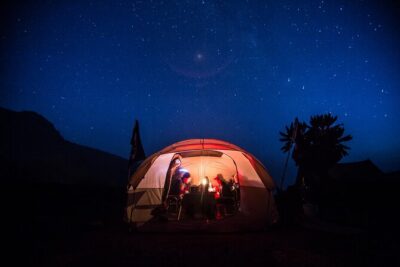
7-Day Machame Kilimanjaro Summit Tour from Arusha
Read our review →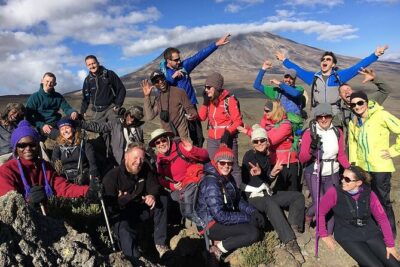
7 Days Kilimanjaro via Machame route affordable price
Read our review →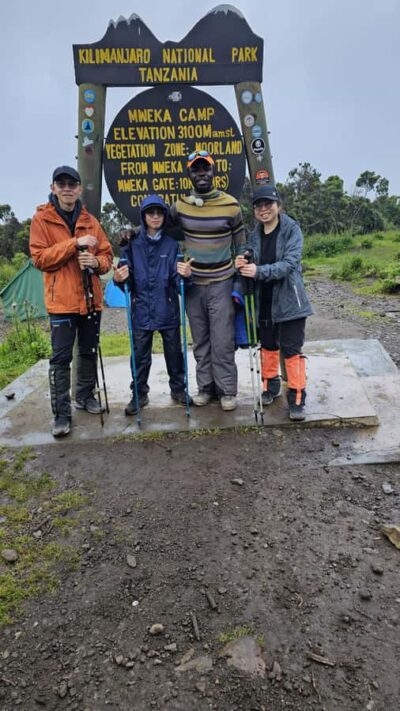
#1. Best Kilimanjaro Day hike Tour-Machame Route-ISMANI
Read our review →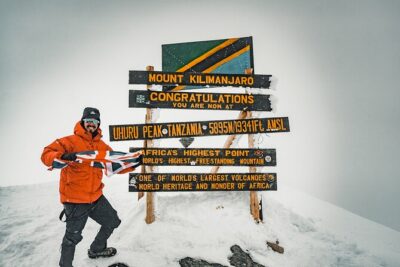
The Best of Machame Route in 6 Days: Your World’s Summit Guide
Read our review →Browse the lists this tour appears in