
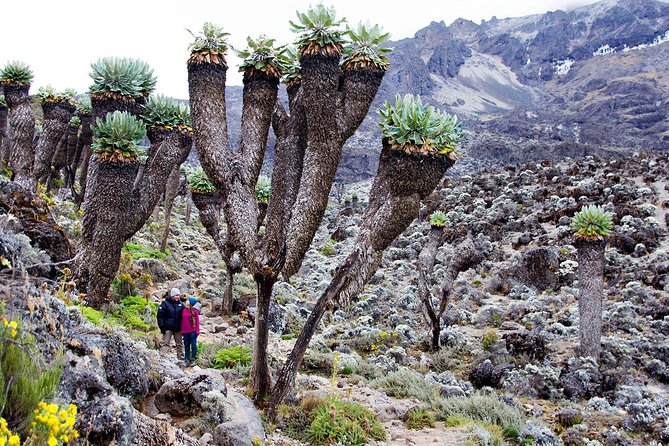
Reviewed · MACHAME ROUTE CLIMBS
Climb Mount Kilimanjaro: 7 Days Machame Route
Kilimanjaro demands more than a camera. This seven-day Machame Route climb gives you a serious high-altitude challenge with a guide, cook, porters, modern tents, warm sleeping pads, meals, transfers, and a planned path to Uhuru Peak. I like the gradual acclimatization plan, especially the high point at 4,600 meters before sleeping lower. I also like the practical comforts, including two-inch sleeping pads, oxygen systems, pulse oximeters, and an optional portable flush toilet.
The main drawback is the price structure. At $3,034, the package covers a great deal, but personal gear rental, insurance, some hotel meals, and crew tips are extra. You should also read the tipping details carefully, since separate daily amounts are listed for the guide, cook, and porters.
In This Review
- Key points to know before booking
- Why the Machame Route takes seven days
- Starting at Machame Gate through the rainforest
- Shira Camp and the first wide views
- Day three: high altitude, then a lower night
- The Barranco Wall and Karanga Camp
- Barafu Camp and preparation for the summit
- Summit night, Stella Point, and Uhuru Peak
- Mweka Gate and the end of the climb
- What the $3,034 price includes
- Meals, tents, and support on the mountain
- Airport transfers and private group format
- Who should choose this climb
- Should you book the Machame Route?
- FAQ
- How long is the Kilimanjaro Machame Route experience?
- Where does the climb begin?
- Where does the climb finish?
- Is airport pickup included?
- Are park permits and rescue fees included?
- What sleeping arrangements are provided?
- Are meals included during the trek?
- Can I request vegetarian meals?
- What happens if I cancel?
Key points to know before booking
- Machame Gate to Mweka Gate: You enter through rainforest and finish with a descent through the forest on a point-to-point route.
- High-altitude acclimatization: Day three reaches about 4,600 meters, then returns you to a similar sleeping elevation.
- A demanding summit night: The push from Barafu Camp begins around midnight to 2 a.m. and can last about 13 hours.
- A full mountain support team: Your trip includes a professional guide, cook, and porters, with each climber’s porter carrying up to 15 kilograms.
- Useful camping comforts: Modern tents, warm sleeping pads, a dining tent, group cookware, bottled water, tea, coffee, and oxygen systems are included.
- Private touring format: Only your own group takes part, with airport pickup and hotel transfers arranged.
Why the Machame Route takes seven days
The Machame Route is not a quick walk to a viewpoint. It moves through several mountain zones, from rainforest to moorland, high rocky ground, and the summit slopes of Kibo. The seven-day schedule gives you time to gain altitude in stages, though the summit day remains extremely hard.
I see the route’s greatest strength in its acclimatization pattern. On day three, you climb as high as 4,600 meters and then sleep at nearly the same elevation where you began. That climb high, sleep lower approach gives your body a useful adjustment period before the summit push.
This is still a demanding trip. You should have a moderate level of physical fitness, and the itinerary includes long walking days, steep ground, cold conditions, and a very early summit start. The final summit day is listed at about 13 hours, so you need patience as much as strength.
More Kilimanjaro climbs:
- Kilimanjaro climb by Lemosho Route (7-day)
★ 5.0 · 651 reviews - Kilimanjaro climb, Machame Route (7-day)
★ 5.0 · 262 reviews - Kilimanjaro Climbing Lemosho Route 8 Days.
★ 5.0 · 186 reviews
Starting at Machame Gate through the rainforest
Your first trekking morning normally begins with a drive of about one hour from Moshi to Machame Gate. The gate is where you meet the mountain crew, including your guide, cook, and porters, while park formalities and gear organization take place.
Expect some bustle at the start as the porters assemble loads and the team prepares for departure. This is a useful moment to check your personal items, water, clothing, and anything you need to keep close rather than place in a porter’s load.
The first walk takes about six hours and rises through dense rainforest. The forest gives this opening stage a strong sense of arrival, but it also makes the route feel like a real trek rather than a simple climb. You gain altitude steadily, so do not rush the first day.
Your sleeping arrangements begin here. During the climb, you share a tent with one or two other climbers. Modern tents and warm, two-inch sleeping pads are included, which matters after several hours on your feet. You also eat meals prepared by the camp cook, with breakfast, lunch, and dinner provided during the mountain portion.
Shira Camp and the first wide views
Day two takes about five hours and feels steeper as you leave the rainforest behind. The setting changes to low alpine moorland and grassland, with more open views and less shelter from the elements.
Shira Camp 2 sits on a plateau. From here, you get your first views of Kibo, Kilimanjaro’s main summit cone, to the northwest, as well as Mount Meru to the east. This is an important visual shift. The mountain stops feeling hidden behind trees, and the scale of the climb becomes easier to understand.
The shorter walking time is welcome, but do not mistake it for an easy day. The route is described as relatively steep, and the change in altitude can begin to affect your pace. I would use this day to settle into slow, regular walking and to pay attention to how your body responds.
Day three: high altitude, then a lower night
Day three is one of the most useful parts of the plan. You spend about six hours walking across high moorland and reach roughly 4,600 meters before finishing at nearly the same elevation where you started from Shira Camp.
The scenery changes again as the route enters higher, more exposed ground. The point of this day is not simply to cover distance. You gain height during the walk, then avoid sleeping at the highest point reached. That gives you valuable time to adjust before the steeper sections ahead.
For you, the practical lesson is simple: go slowly and conserve energy. This day can feel strange because the walking is important for acclimatization, yet you do not gain much sleeping height by the end. That is a feature, not wasted effort.
More Machame Route climbs:
- Climbing Kilimanjaro – Machame Route
★ 5.0 · 170 reviews - Climbing Kilimanjaro through 7 days Machame Route
★ 5.0 · 151 reviews - 7 Days Kilimanjaro via Machame route affordable price
★ 5.0 · 110 reviews - #1. Best Kilimanjaro Day hike Tour-Machame Route-ISMANI
★ 4.2 · 47 reviews
The Barranco Wall and Karanga Camp
On day four, the route descends into the beginning of the Great Barranco, then climbs the Barranco Wall. The day lasts about four hours, but the shorter duration does not mean it is gentle.
The Barranco Wall is a long climb over rock. It is not described as technical climbing, but it is steep, tiring, and likely to demand careful footwork. You then continue upward from Karanga Valley to Karanga Camp at about 3,963 meters.
This is one of the route’s memorable sections because the trail changes from broad high moorland to a more rugged passage around a major ravine. You will want to keep your hands free and your daypack organized. The support team carries the main equipment, but you still need to manage your own essential clothing, water, and personal items.
The four-hour estimate may also vary with group pace, breaks, and conditions. The itinerary gives you a useful outline, not a guarantee that every stage will feel the same for every person.
Barafu Camp and preparation for the summit
Day five takes about four hours and brings you to Barafu Camp. By this point, you have completed the South Circuit, which gives you views of the summit from several angles.
Barafu is the place to rest, eat dinner, and prepare for the hardest part of the climb. The early start means you will need to organize your clothing and personal equipment before trying to sleep. The package includes a dining tent, table, chairs, crockery, and group camping equipment, so meals take place with more structure than a basic tent-only trip.
You should also use this stop to ask the guide about the next morning’s plan. The summit departure is normally between midnight and 2 a.m., and the mountain crew provides oxygen systems and pulse oximeters. Those items are useful safety equipment, but they do not make the summit walk easy or remove the effects of altitude.
Summit night, Stella Point, and Uhuru Peak
Day six is the great test. You leave Barafu Camp in the middle of the night and climb between the Rebmann and Ratzel glaciers toward Stella Point on the crater rim.
The route heads northwest over heavy scree. This is described as the most physically and mentally difficult part of the trek, and the 13-hour schedule includes both the summit effort and the long descent. The loose ground can make progress feel slow, especially in darkness and cold.
At Stella Point, you get a short rest and, if timing and conditions cooperate, a sunrise view over the mountain. Faster climbers may see sunrise from the summit itself, but the itinerary does not promise that timing. The sensible goal is to keep moving steadily rather than chase a particular sunrise position.
From Stella Point, the final hour to Uhuru Peak may include snow. Reaching Uhuru Peak means standing at the highest point on Kilimanjaro and in Africa. You then begin the descent, continuing toward Mweka.
The descent is not an afterthought. After the summit, fatigue can be intense, and you still have substantial ground to cover. The support of the guide and porters matters most here, when your judgment and energy may be less reliable than they were at the start.
Mweka Gate and the end of the climb
Day seven is a gentler four-hour walk down through rainforest to Mweka Gate. This final section brings you back into a warmer, greener setting and marks the end of the Machame Route.
At the gate, park formalities are completed and successful climbers receive international certificates. You then return to the arranged hotel, with breakfast included in the pre-climb and post-climb accommodation.
The final day is shorter, but tired legs can make even a gentle descent uncomfortable. Plan to keep your pace controlled and use trekking poles or other personal equipment if you normally rely on them. Personal gear is not included, so this is something you need to arrange before departure.
What the $3,034 price includes
The $3,034 cost is substantial, but it covers the expensive parts of a Kilimanjaro climb. Included items are Kilimanjaro National Park permits, rescue fees, camping or hut fees, airport pickup, hotel transfers, transport to the trailhead, and the return transfer to Kilimanjaro Airport.
You also receive accommodation before and after the climb in a shared twin room, with breakfast included. On the mountain, you share a tent with one or two other climbers.
Food and drink during the trek include six breakfasts, six lunches, six dinners, bottled water, coffee, and tea. Modern tents, warm sleeping pads, a dining tent, tables, chairs, crockery, a first aid kit, oxygen systems, and pulse oximeters are also part of the package.
The porter arrangement is helpful, but note the limit: each climber is provided porters carrying up to 15 kilograms. Your own day-to-day essentials remain your responsibility, and personal gear rental is not included.
Several costs remain outside the package:
- Personal gear rental
- International flights and travel insurance
- Hotel lunches, dinners, and drinks in Moshi
- Laundry and toiletries
- A visa charge listed as $100 for US nationals and $50 for other nationalities
- Crew tips, listed separately at $15 to $20 per day for the guide, $10 to $15 per day for the cook, and $8 to $10 per day for each porter
Because the crew is central to the experience, I would budget for tips before you arrive. It is also wise to confirm how the porter count and tipping arrangement apply to your particular group.
Meals, tents, and support on the mountain
The camping setup is more comfortable than a bare-bones mountain trip. A dining tent with tables, chairs, and crockery gives you a proper place to eat and organize yourself. Warm sleeping pads are another meaningful benefit, since recovery at night becomes increasingly important as the climb continues.
The cook prepares six breakfasts, six lunches, and six dinners during the trek. Vegetarian food is available if you request it when booking. Bottled water, coffee, and tea are included, but drinks and meals at the Moshi hotel before and after the climb are not.
A portable flush toilet can be provided at no charge if you request it. That is a practical detail worth arranging early, especially if you prefer not to rely only on the standard campsite facilities.
The crew is described as professional, with more than six years of climbing experience. The supplied customer response praised the team for being helpful, friendly, and supportive throughout a physically difficult trip. That is the right quality to value here. On Kilimanjaro, encouragement and sensible pacing can make a real difference.
Airport transfers and private group format
Pickup is offered from Kilimanjaro International Airport, followed by transport to the arranged hotel. A return airport transfer is also included, along with transport to Machame Gate.
The listed start time is 8 a.m., though the first trekking day begins after the drive and park formalities at Machame Gate. Confirmation is provided at booking, and the experience is private, meaning only your own group participates.
A private format can be useful if you want your walking pace and daily rhythm handled within your group. It does not turn the climb into a private stroll. The route, altitude, weather, and summit schedule remain demanding for everyone.
Free cancellation is available if you cancel at least 24 hours before the local start time. Changes or cancellations within that final 24-hour period are not accepted for a refund.
Who should choose this climb
I would recommend this trip to you if you want a full Kilimanjaro experience with a structured seven-day route and a strong support system. It suits people who can handle long walking days, steep sections, shared tents, basic mountain living, and a midnight summit departure.
The route may appeal most if you value scenery that changes each day. You begin in rainforest, reach moorland and grassland, cross higher open ground, negotiate the Barranco Wall, and finish on the summit slopes and crater rim.
I would hesitate if you want a relaxed holiday, private sleeping space, or a short summit excursion. The 13-hour summit day is the clearest warning. You also need to be comfortable paying extra for personal equipment, insurance, hotel meals, and tips.
Should you book the Machame Route?
Book this climb if you want a serious seven-day attempt at Uhuru Peak and prefer having permits, meals, transfers, camping equipment, and a mountain crew organized in one package. The acclimatization day, modern sleeping pads, oxygen systems, and private group format add real value to the $3,034 price.
Before paying, confirm the exact hotel arrangements, porter allocation, tipping expectations, personal gear options, and visa requirements for your nationality. If you prepare for the long summit night and accept the shared camping setup, All Weather Adventures offers a well-supported way to take on Kilimanjaro. If you are looking for ease rather than challenge, choose a different kind of Tanzania trip.
FAQ
How long is the Kilimanjaro Machame Route experience?
The climb takes approximately seven days, including the trekking days from Machame Gate to Mweka Gate and accommodation before and after the climb.
Where does the climb begin?
The trek begins at Machame Gate, which is normally about a one-hour drive from Moshi.
Where does the climb finish?
The route finishes at Mweka Gate after a final descent through the rainforest.
Is airport pickup included?
Yes. Pickup from Kilimanjaro International Airport, transport to the arranged hotel, and a return transfer to Kilimanjaro Airport are included.
Are park permits and rescue fees included?
Yes. Kilimanjaro National Park permits and Kilimanjaro National Park rescue fees are included.
What sleeping arrangements are provided?
Before and after the climb, accommodation includes breakfast in a shared twin room. During the climb, you share a tent with one or two other climbers.
Are meals included during the trek?
Yes. Six breakfasts, six lunches, and six dinners are included during the climb, along with bottled water, coffee, and tea.
Can I request vegetarian meals?
Yes. A vegetarian option is available, but you should advise the provider when booking.
What happens if I cancel?
You can receive a full refund if you cancel at least 24 hours before the experience start time. Cancellations or changes made within 24 hours are not accepted for a refund.
Just added in Moshi
- Zanzibar: Stone Town tour and Nakupenda beach with Lunch★ 5.0 · 1 review
- day trip lake manyara★ 5.0 · 2 reviews
- Mt Kilimanjaro 6 days Marangu route hike★ 5.0 · 3 reviews
- machame route★ 5.0 · 16 reviews
- Private Cycle to Kilimanjaro Bike Park Safari★ 5.0 · 6 reviews
- West Kilimanjaro cycling Adventures★ 4.5 · 8 reviews
- Wildlife Extravaganza: Manyara, Tarangire & Ngorongoro in 3 Days★ 5.0 · 3 reviews
- 3 Days Private E-Bike Tour in West Kilimanjaro★ 5.0 · 3 reviews
Machame Route Climbs, compared.



Climbing Kilimanjaro through 7 days Machame Route
Read our review →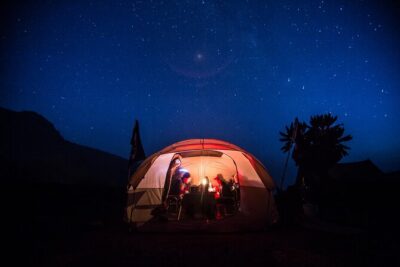
7-Day Machame Kilimanjaro Summit Tour from Arusha
Read our review →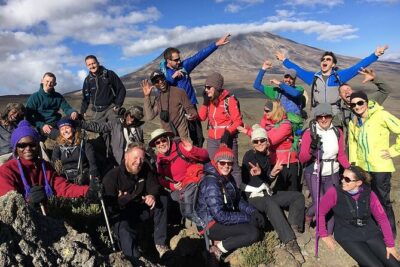
7 Days Kilimanjaro via Machame route affordable price
Read our review →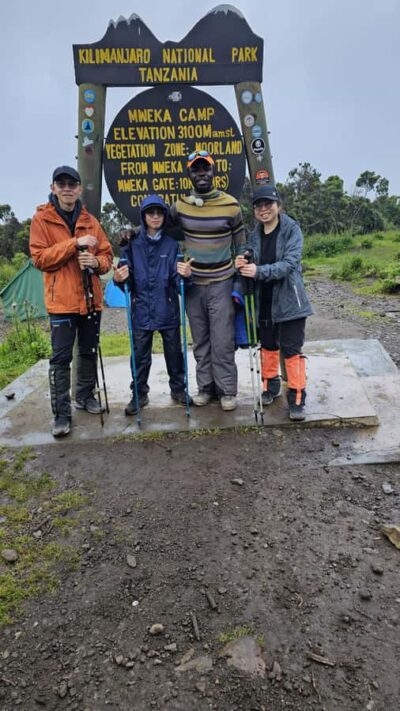
#1. Best Kilimanjaro Day hike Tour-Machame Route-ISMANI
Read our review →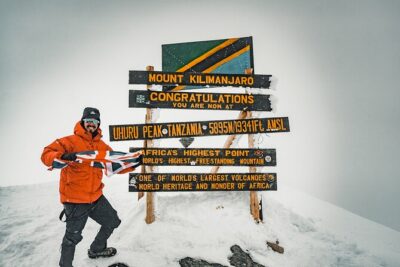
The Best of Machame Route in 6 Days: Your World’s Summit Guide
Read our review →Browse the lists this tour appears in