
Reviewed · MOSHI TOURS
Explore the 360° of Kilimanjaro
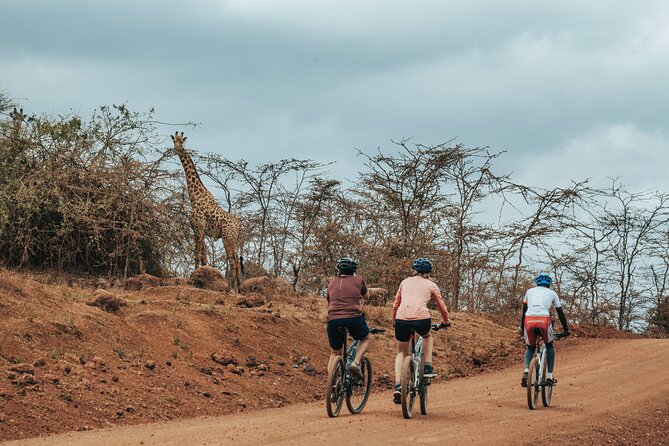
Kilimanjaro is best seen from below. This seven-day adventure circles Africa’s highest mountain by bicycle, linking coffee farms, banana fields, Maasai country, acacia plains, forest tracks, crater-lake water, and Chagga villages. I like the way the route gives you far more than mountain photographs: you get changing scenery and real contact with communities around Kilimanjaro. I also like that a support vehicle, cook, mechanic, and guide team travel with you. The main caution is fitness. Six cycling days and about 370 kilometers can be demanding, with dusty tracks, rocky sections, long days, and steep climbs.
This is not a polished road-bike holiday. Much of the route is off-road, with some paved stretches, loose surfaces, and changing elevation around the mountain. I would choose it for the mix of Maasai culture and wildlife country, but I would not book it expecting a relaxed sightseeing tour with a few casual pedal strokes.
The tour costs $2,100 per person and includes accommodation before and after the ride, meals, camping equipment, water, support, and a full operating crew. That makes the price easier to understand, although you should confirm the bicycle arrangements, since the supplied details mention bike fitting but do not clearly list the bicycle itself as an included item.
In This Review
- Six details that shape the ride
- What the 360-degree route really offers
- Day 1: Airport pickup, Moshi, and the bike fitting
- Day 2: From coffee farms to Maasai country
- Day 3: Elephants and open country in Enduimet
- Day 4: Farmland, Rongai, and the Kenyan border
- Day 5: A downhill reward at Lake Chala
- Day 6: Marangu, Ndoro Waterfall, and Chagga traditions
- Day 7: The final descent into Moshi
- Meals, camping, and the support crew
- Who will get the most from this trip?
- Is $2,100 good value?
- Should you book the Kilimanjaro 360 cycling tour?
- FAQ
- Where does the cycling tour begin?
- How long does the tour last?
- How far do I cycle?
- What type of roads does the route use?
- Is pickup available?
- What time does the tour start?
- Is this a private tour?
- Are meals included?
- Is camping equipment provided?
- Is travel insurance included?
Six details that shape the ride
- 370 kilometers around Kilimanjaro: Six days of cycling cover a wide ring of farms, forest, plains, and villages below the summit.
- One night with the Maasai: Olpopongi offers cultural activities, local food, songs, and a closer look at Maasai customs.
- Wildlife territory without a standard safari: Enduimet Wildlife Management Area borders Amboseli National Park and is used by migrating elephants.
- Lake Chala camping: The crater lake sits on the Tanzania-Kenya border, with turquoise and green water fed by underground springs from Kilimanjaro.
- A serious support setup: A guide, bike mechanic, driver, cook, support vehicle, camping gear, meals, snacks, fruit, and three liters of water per cyclist are included.
- Family potential, with a fitness warning: A previous trip worked for children aged 10 and 11, but the route still includes long days and steep sections.
What the 360-degree route really offers
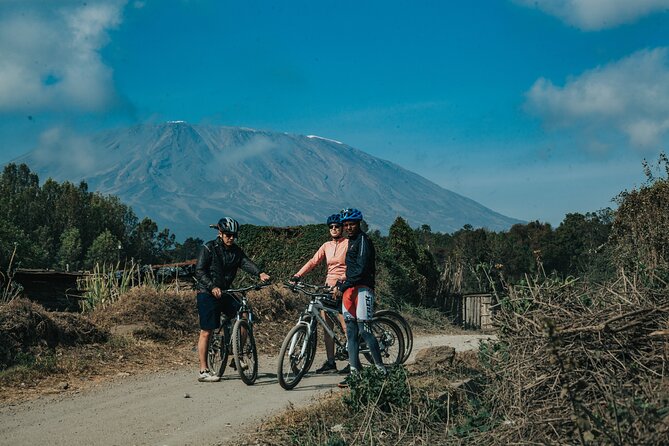
The clever idea here is not simply cycling toward Mount Kilimanjaro. You circle its lower slopes and see how the mountain affects different communities and habitats. The southern side is greener and more heavily farmed, while the west opens into dry plains and acacia woodland. Farther north, the route reaches forest and high farmland before dropping toward Lake Chala and returning through Chagga villages.
The summit remains the visual anchor, but clouds may cover it. That is part of the deal. You are not buying a guaranteed postcard view of Kibo and Mawenzi. You are buying a moving view of the mountain’s foothills, changing weather, working farms, and broad country below it.
The route uses both off-road and paved roads. Dust and rocks are part of the ride, not an occasional surprise. A mountain bike or suitable touring bike should be confirmed before arrival, along with what repair supplies the mechanic carries and how the support vehicle is used on especially hard sections.
A few more options to weigh up in Moshi
- Kilimanjaro climb by Lemosho Route (7-day)
★ 5.0 · 651 reviews - Safari Serengeti And Ngorongoro
★ 5.0 · 288 reviews - Kilimanjaro climb, Machame Route (7-day)
★ 5.0 · 262 reviews
Day 1: Airport pickup, Moshi, and the bike fitting
Your arrival day begins with pickup at Kilimanjaro International Airport, followed by a transfer to Keys Hotel near Moshi. The hotel serves as the starting and finishing point, which keeps the trip simple and gives you a fixed base at both ends.
You meet the guide, receive a briefing, and complete the bike fitting. This is an important step, not a formality. A poor saddle position or badly adjusted handlebars can turn six days of riding into a long complaint from your knees, back, or hands.
If your flight arrives in the morning or afternoon, there is time for a short test ride through a nearby coffee plantation and surrounding villages. I would use this ride to check gears, brakes, saddle comfort, water storage, and how the bike handles rough ground.
The first day is listed as about five hours, but it is mainly an arrival and preparation day rather than a full-distance stage. Accommodation before and after the trip is included, along with meals as specified by the operator.
Day 2: From coffee farms to Maasai country
The first major ride crosses from the greener southern side of Kilimanjaro toward the drier west. You begin among coffee and banana plantations, where the land is fertile and carefully cultivated. As the route heads west, the vegetation thins into open plains and acacia woodland.
This change happens gradually, making it easy to see how the mountain supports different types of life below its slopes. The ride also gives you some of the best chances for wide views of Kilimanjaro, though cloud cover is always possible.
The western plains are Maasai country. Maasai communities live alongside wildlife here, and the route spends the night at Olpopongi Maasai Cultural Village and Museum. This is more than a place to sleep. The program is designed to introduce you to customs, songs, dishes, and daily traditions.
I would approach this evening with curiosity and respect. Cultural visits are most worthwhile when you listen and avoid treating the community as a stage show. The supplied details do not specify how much time is spent in each activity, so ask the operator what the evening program includes before you go.
The day is listed at about seven hours. On a dusty or rocky route, that can feel like a full day even if the distance looks manageable. Snacks, fruit, lunch, water, and the support vehicle help, but you should still pace yourself and drink steadily.
Day 3: Elephants and open country in Enduimet
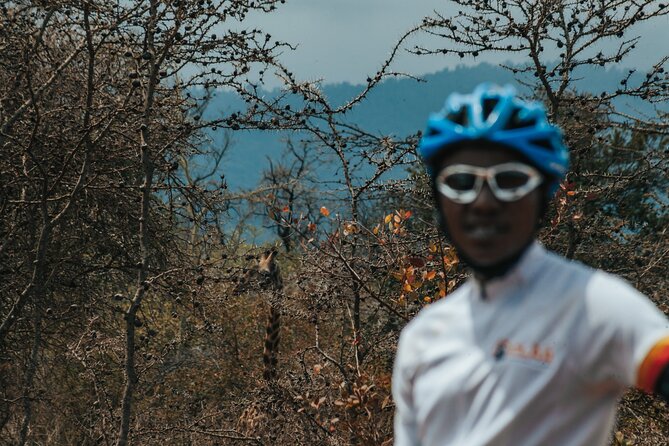
Day three enters the Enduimet Wildlife Management Area, a less formal wildlife setting than a major national park. It borders Amboseli National Park and forms part of an important migration route for African elephants.
That does not mean you should expect a guaranteed wildlife show. You are cycling through a working area shared by people, livestock, and wild animals. Sightings are possible, but the ride is not presented as a dedicated game drive. Keep your attention on the guide and the road, especially in open areas where conditions can change.
The day begins on broad plains dotted with acacia trees. As you approach the lower slopes of Kilimanjaro, the surroundings become greener and more cultivated. The area is home mainly to Maasai people, with Chagga, Meru, and Pare communities also present.
The ride finishes at Simba Farm, above large wheat and barley fields overlooking the west Kilimanjaro plains. This is a useful contrast to the Maasai village. Instead of acacia woodland and semi-arid country, you see large-scale agricultural land and a different side of life around the mountain.
At about four hours, this is one of the shorter cycling days. That may give you time to recover after the previous stage, though the surface and heat can matter as much as the clock. I would not assume a short time means an easy ride.
A different kind of day out entirely:
- Kilimanjaro Climbing Lemosho Route 8 Days.
★ 5.0 · 186 reviews - Climbing Kilimanjaro – Machame Route
★ 5.0 · 170 reviews - Climbing Kilimanjaro through 7 days Machame Route
★ 5.0 · 151 reviews - Kilimanjaro climb, Lemosho Route (8-day)
★ 5.0 · 148 reviews
Day 4: Farmland, Rongai, and the Kenyan border
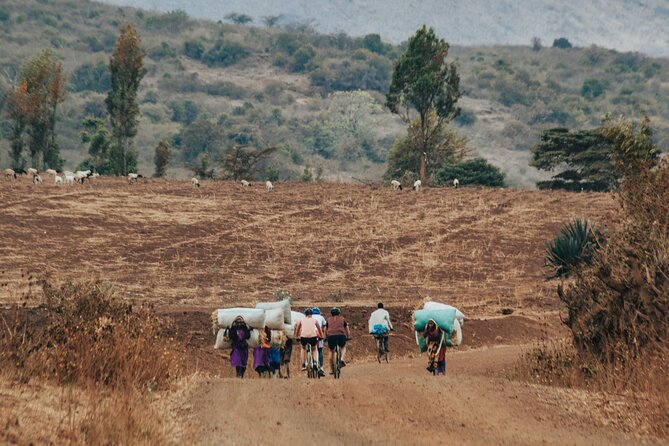
Day four is the longest listed stage, at about eight hours. The route heads northeast toward Nalemoru village near the Kenyan border. Nalemoru is the starting point for the Rongai route up Kilimanjaro, so this day brings you close to one of the mountain’s well-known climbing approaches without taking you high onto the summit trail.
You cycle through open farmland with views back toward the west Kilimanjaro plains. The road passes through several towns before climbing toward the Rongai forest. This is a day of changing human scenery as much as natural scenery: farms, settlements, roads, and the transition into forest.
The ride ends at Snowcap Cottages on the edge of the Rongai forest. On a clear day, you may see both Kibo and Mawenzi, Kilimanjaro’s two major peaks. Those views are weather-dependent, so it is best to regard them as a reward rather than a promise.
I would pay close attention to the schedule here. Eight hours on a bike, especially with climbs and mixed surfaces, requires an early start, regular food, and a willingness to use the support vehicle if needed. The listed meeting time is 7:00 a.m., which suits this kind of day.
Day 5: A downhill reward at Lake Chala
After the effort of Rongai, day five offers a downward ride toward Lake Chala. The lake lies directly on the Tanzania-Kenya border and occupies a volcanic caldera. Its blue-green water is supplied by underground springs from Mount Kilimanjaro.
The setting changes again. Plants, trees, wildlife, and the volcanic walls around the water create a quieter finish to the riding day. Your camp sits beside the lake, giving you time to rest and take in the setting rather than rush straight on to another transfer.
This is one of the strongest parts of the route for people who want a scenic overnight stop. It also gives you a break from the constant movement of a point-to-point cycling trip. The listed cycling time is about six hours, so you should have more breathing room than on day four.
The phrase downward hill ride should not be read as a completely effortless day. Any downhill route can include rough surfaces, bends, and earlier or later climbs. Ask about the exact road conditions and how the group handles the descent if you are not comfortable on loose tracks.
Day 6: Marangu, Ndoro Waterfall, and Chagga traditions
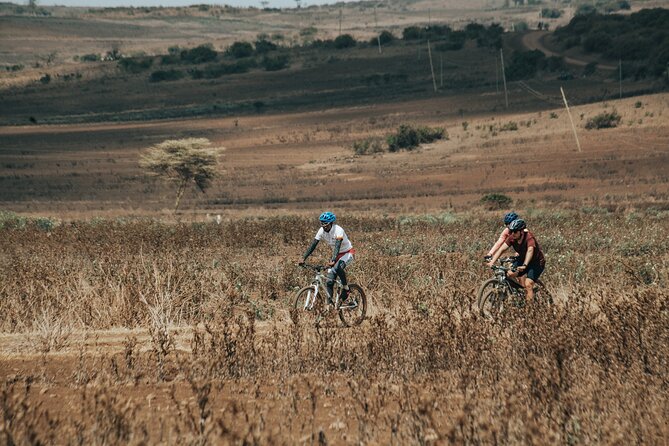
The next ride is shorter in distance but described as challenging because it climbs toward Marangu village in the foothills of Kilimanjaro. You pass banana and coffee plantations and ride through Chagga communities.
The Chagga are closely associated with the cultivated southern and eastern foothills of the mountain. Their farms make this section feel very different from the Maasai plains. You may hear people greeting cyclists with Jambo as you pass through the villages.
A detour leads to Ndoro Waterfall. You leave the bikes for a walk down to the base, where a local Chagga guide explains the area, Chagga Cave, local customs, and the legend connected with the falls. This walk adds cultural context to what could otherwise be just another scenic stop.
The day is listed at about seven hours, even though the riding is described as short. That tells you the waterfall visit and walking time are part of the day. Wear footwear suitable for both cycling and a walk to the waterfall, and expect the route to include uphill work before camp.
Day 7: The final descent into Moshi
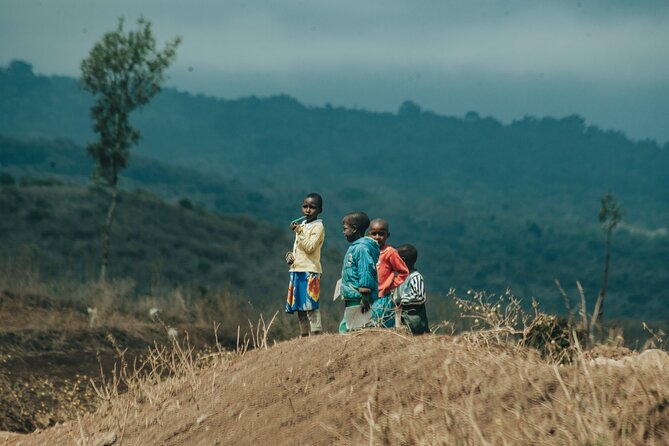
The last cycling day crosses villages and plantations on Kilimanjaro’s slopes. The first half includes several steep ascents and descents, followed by a gradual downhill run toward Moshi.
You use back roads through the suburbs and outskirts of town before returning to Keys Hotel. This finish lets you see the transition from rural foothills to the town where the journey began. It is less dramatic than a final mountain viewpoint, but it gives the route a satisfying full circle.
The final stage lasts about seven hours. A celebratory dinner and sparkling wine are planned at the end, marking the completion of the six-day ride around the mountain.
Meals, camping, and the support crew
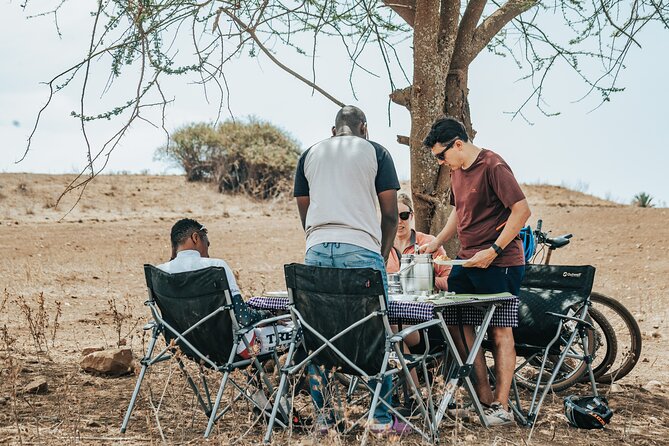
The $2,100 price includes breakfast, lunch, and dinner, plus snacks and fruit. Three liters of mineral water per cyclist are included each day, which is useful in warm and dusty conditions, though you should still ask how water is distributed and whether extra water can be purchased if needed.
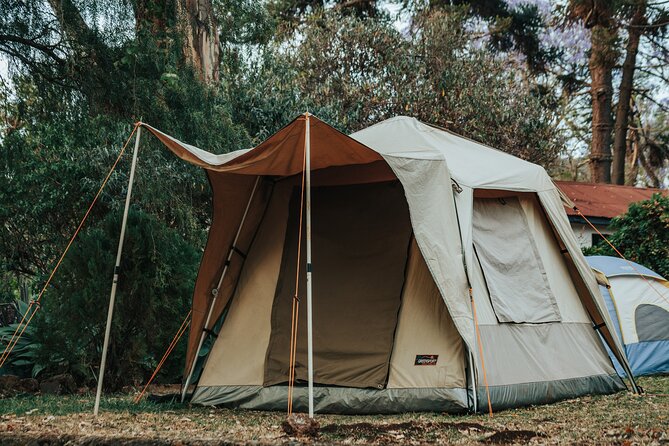
Camping equipment includes tents, sleeping mats, chairs, and tables. A sleeping bag is not included, but you can rent one in Moshi. Accommodation before and after the trip is included, and the route also uses lodges or cottages on some nights.
The team includes guides, a bike mechanic, driver, and cook. This matters on a long route with rough roads. A mechanic can deal with ordinary bike problems, the driver can provide support, and the cook keeps the group fed without requiring you to find meals after a tiring ride.
The guide carries a pulse oximeter for blood-oxygen readings and a first-aid kit for emergencies. These are useful safety measures, but they do not replace travel insurance, medical insurance, personal medicines, or sensible preparation. Health requirements and visas are your responsibility.
Who will get the most from this trip?
I would recommend this ride to a reasonably fit cyclist who wants culture, scenery, and variety more than speed. It suits someone comfortable spending long hours on mixed surfaces and accepting that dust, rocks, heat, and rough roads are part of the story.
The family example is encouraging: a group with children aged 10 and 11 completed a cycling trip with this team. Still, the route is not automatically child-friendly for every family. Fitness, cycling confidence, and the ability to handle long days matter more than age alone.
I would be less likely to recommend it if you want a soft adventure with guaranteed wildlife sightings, paved roads, or a fixed view of a snow-capped summit. I would also ask detailed questions if you are an experienced road cyclist who dislikes off-road riding.
The operation is private, so only your own group participates. That can make pacing and communication easier than joining a large mixed group, though the exact group size is not given. Ask how the daily schedule changes for a small party, a family, or a group with different cycling abilities.
Is $2,100 good value?
For seven days and six cycling days, the price is reasonable if you use the included services. Meals, pre- and post-tour accommodation, camping equipment, support transport, water, snacks, a cook, driver, guide, mechanic, and park or activity fees are bundled together.
You are also paying for logistics across a large circuit, not just for guiding on a local bike ride. The support vehicle and mechanic are especially valuable when roads are rough and the route moves far from Moshi.
There are extra costs. Tips for the guide, mechanic, driver, and cook are compulsory according to the supplied terms. You also pay for a sleeping bag rental if needed, visa costs, personal items, medicines, and insurance.
Before booking, confirm the bicycle itself, because it is not clearly named in the inclusions. Also check the accommodation plan for each night, the luggage limit, and what happens if weather, fatigue, or a mechanical problem interrupts a stage.
Should you book the Kilimanjaro 360 cycling tour?
Book it if you want a demanding but varied way to see the communities and habitats around Kilimanjaro. The best reasons are the switch from coffee and banana farms to Maasai plains, the Enduimet wildlife corridor, the Lake Chala camp, and the Chagga visit at Ndoro Waterfall.
The strongest practical advantage is the team. Octavian is praised for careful attention, while George and Rashid are noted for reliable support, kindness, and strong handling of a longer combined cycling and safari trip. Those details suggest a personal operation where the people around you can make a major difference.
I would book after confirming the bike, daily distances, camping arrangements, and tipping expectations. If you are fit, open to rough roads, and want Kilimanjaro as a living region rather than a single summit photograph, this is a distinctive and worthwhile choice.
FAQ
Where does the cycling tour begin?
The tour begins with pickup at Kilimanjaro International Airport, followed by transfer to Keys Hotel near Moshi.
How long does the tour last?
The full program takes about seven days. The cycling portion covers six days.
How far do I cycle?
The total cycling distance is approximately 370 kilometers.
What type of roads does the route use?
The route uses off-road tracks and paved roads. The tracks are mainly dusty and can also be rocky.
Is pickup available?
Yes. Pickup is offered from Kilimanjaro International Airport.
What time does the tour start?
The listed start time is 7:00 a.m.
Is this a private tour?
Yes. Only your own group participates in the activity.
Are meals included?
Yes. Breakfast, lunch, and dinner are included, along with snacks and fruit.
Is camping equipment provided?
Yes. Tents, sleeping mats, chairs, and tables are provided. Sleeping bags are not included, but rental is available in Moshi.
Is travel insurance included?
No. Personal travel and medical insurance are not included, though they are strongly recommended. Visa costs, personal medicine, and health requirements are also your responsibility.
Just added in Moshi
- Zanzibar: Stone Town tour and Nakupenda beach with Lunch★ 5.0 · 1 review
- day trip lake manyara★ 5.0 · 2 reviews
- Mt Kilimanjaro 6 days Marangu route hike★ 5.0 · 3 reviews
- machame route★ 5.0 · 16 reviews
- Private Cycle to Kilimanjaro Bike Park Safari★ 5.0 · 6 reviews
- West Kilimanjaro cycling Adventures★ 4.5 · 8 reviews
- Wildlife Extravaganza: Manyara, Tarangire & Ngorongoro in 3 Days★ 5.0 · 3 reviews
- 3 Days Private E-Bike Tour in West Kilimanjaro★ 5.0 · 3 reviews
Moshi Tours, compared.






Climbing Kilimanjaro through 7 days Machame Route
Read our review →
