
Reviewed · MOSHI TOURS
Kilimanjaro 360° 9 days Tour
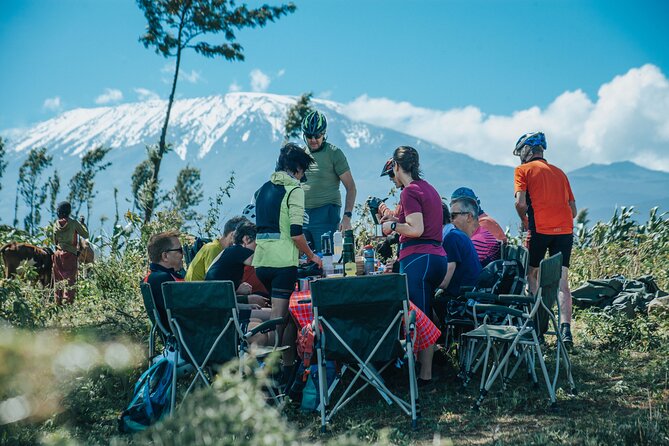
Kilimanjaro rewards slow travel. This nine-day mountain-bike circuit from Moshi gives you a rare way to see Mount Kilimanjaro, Kenya, Maasai country, Chagga villages, forests, farms, and wildlife corridors without sitting in a tour vehicle all day. I especially like the off-road route and the chance to sleep in a traditional Maasai village, two details that make this feel more like a cultural journey than a standard sightseeing trip.
I also like the thoughtful mix of hard riding and easier days. You get a serious climb to 3,700 meters on the Shira Plateau, then a downhill ride to Lake Chala and a final return to Moshi by tarmac. The main caution is simple: this is not a casual bike holiday. Strong fitness is required, and rocky roads, mud, long climbs, and altitude will test you.
In This Review
- Five details that define the ride
- Why this Kilimanjaro bike tour feels different
- Day 1: Arrival, Moshi, and a useful briefing
- Day 2: From Machame Gate to Maasai country
- Day 3: Open plains and a wildlife corridor
- Day 4: The hard climb to Shira Plateau
- Day 5: Villages, farms, and the Rongai side
- Day 6: A welcome downhill ride to Lake Chala
- Day 7: Forest roads and muddy climbs
- Day 8: Mweka Gate and the final return to Moshi
- Day 9: A quiet departure morning
- What the $2,499 price really covers
- Who should book this cycling challenge?
- Practical details before you go
- Should you book the Kilimanjaro 360° tour?
- FAQ
- Where does the Kilimanjaro 360° tour start?
- How long does the tour last?
- Is the tour suitable for beginners?
- What equipment is included?
- Are flights and insurance included?
- What happens if bad weather cancels the tour?
Five details that define the ride
- A true circuit around Kilimanjaro: The route links the Machame, Shira, Rongai, and Mweka sides of the mountain rather than repeating one short trail.
- Local life is part of the route: You pass Chagga homes, banana and coffee plantations, Maasai settlements, villages, farms, and conservation areas.
- The Shira Plateau climb reaches 3,700 meters: This is the hardest day, with a rough uphill road and a major altitude gain.
- A support vehicle follows the cycling program: This adds practical help on a demanding route and is especially useful on long climbs or rough surfaces.
- Seven nights of dinner and eight breakfasts are listed: Lunch is listed for all nine days, while accommodation details should be confirmed before booking.
- The route includes Kenya-facing views: On clear days, you may see Mount Meru, Mount Ol Doinyo Lengai, Mount Kilimanjaro, and the broad Maasai lands near the border.
Why this Kilimanjaro bike tour feels different
Most people come to Kilimanjaro to walk toward the summit. This tour takes another approach. You circle the mountain by mountain bike, moving through several ecological zones and communities instead of spending every day on one climbing trail.
That change of pace matters. You are not simply looking at Kilimanjaro from a road or hotel terrace. You are riding through coffee and banana country, open plains, acacia woodland, forest, farmland, and muddy back roads. The mountain remains a constant reference point, but the human setting changes from one day to the next.
The route also gives you a useful view of northern Tanzania’s cultural variety. The Chagga people live around the fertile lower slopes, while Maasai communities occupy the drier open country farther west. Spending the night at Olpopongi Maasai village gives the trip a cultural center rather than making local communities something you only pass through.
One Bike Tanzania also has a clear connection with cycling beyond this single tour. The company has been associated with bike hire in Moshi, recycling awareness, and bike donations to the local community. That does not remove the need to assess the route and price carefully, but it adds purpose to a tour built around low-impact transport.
A few more options to weigh up in Moshi
- Kilimanjaro climb by Lemosho Route (7-day)
★ 5.0 · 651 reviews - Safari Serengeti And Ngorongoro
★ 5.0 · 288 reviews - Kilimanjaro climb, Machame Route (7-day)
★ 5.0 · 262 reviews
Day 1: Arrival, Moshi, and a useful briefing
Your first day begins with pickup at Kilimanjaro Airport or another arrival point. A One Bike guide transfers you to your hotel, gives you the information needed for the ride, and helps with preparations.
This is a sensible use of the arrival day. You can rest after your flight, check the bike and helmet, and ask practical questions before heading into remote areas. If you have energy, Moshi offers time for a little exploring, but I would not plan a packed sightseeing schedule. The next day starts with a transfer to Machame Gate and a full day on the bike.
The meeting point is One Bike Shop on Mailimoja Road in Moshi. The activity begins and ends there, although pickup is offered. The listed operating hours are 9 a.m. to 6 p.m., Monday through Sunday.
Day 2: From Machame Gate to Maasai country
After breakfast, you transfer to Machame Gate, the starting point for the cycling circuit. The early route follows dirt and gravel roads through rain forest, banana plantations, coffee farms, and Chagga homes.
This opening section shows why a mountain bike is useful here. The surface is not built for a smooth road-bike ride, and the scenery changes as you gain ground toward drier country. You leave the cultivated lower slopes and move toward open plains and acacia woodland.
The cultural shift is just as important as the change in plants. You pass Ngabobo and Tinga Tinga villages before reaching roads along the National Park border and paths used by local communities and animals. The day ends at Olpopongi Maasai village, where you spend the night in a traditional Maasai hut.
That overnight stay is one of the strongest parts of the tour. It gives you a chance to experience a Maasai setting directly rather than only photographing it from a vehicle. Comfort will be basic compared with a Moshi hotel, so you should welcome the cultural value and accept that this is not a luxury stop.
Day 3: Open plains and a wildlife corridor
The third day takes you through the Sinya and Ngasurai open plains. These areas form a wildlife corridor between Kenya’s Amboseli National Park and Tanzania’s Enduimet Wildlife Management Area.
The route is fully off the beaten path, with no tarmac. That sounds appealing, and it is, but it also tells you to expect uneven surfaces and a slower pace. Cycling here is part scenery, part physical effort, and part attention to the road immediately ahead.
Clear weather can bring views of Mount Kilimanjaro, Mount Meru, and Mount Ol Doinyo Lengai. Those are three very different volcanic landmarks, and seeing them from open Maasai country should be a memorable visual moment.
You spend the night at Simba Farm campsite. The campsite location makes sense for the route, but you should confirm the exact sleeping arrangements and facilities before departure. The supplied details name the overnight stops, yet accommodation is not included in the stated list of inclusions.
A different kind of day out entirely:
- Kilimanjaro Climbing Lemosho Route 8 Days.
★ 5.0 · 186 reviews - Climbing Kilimanjaro – Machame Route
★ 5.0 · 170 reviews - Climbing Kilimanjaro through 7 days Machame Route
★ 5.0 · 151 reviews - Kilimanjaro climb, Lemosho Route (8-day)
★ 5.0 · 148 reviews
Day 4: The hard climb to Shira Plateau
This is the day that separates a serious cycling challenge from an ordinary bike excursion. You ride uphill on a dirty, rocky road toward the Shira Plateau, one of Kilimanjaro’s three main peaks or volcanic zones, reaching a helipad at about 3,700 meters.
The payoff is exceptional. From the high point, you can look toward Kibo, Kilimanjaro’s snow-covered summit area, while the other side opens toward Maasai country. The view connects the mountain’s upper slopes with the dry plains below.
The physical cost is real. A rough climb at this altitude can feel much harder than the same distance at sea level. Take the day slowly, listen to your guide, drink regularly, and treat the support vehicle as a practical safety feature rather than a sign of failure. If you need help with a difficult section, the point is to complete the experience safely.
After a rest, you ride back down to Simba Farm campsite. The downhill section should feel easier, but rocky roads still require concentration. A mountain bike helps, yet it does not make a steep, rough descent risk-free.
Day 5: Villages, farms, and the Rongai side
The route now turns toward Kilimanjaro’s northeastern side, close to Kenya. You pass through villages and farmland before finishing near the entrance to the Rongai trekking route at Nalemoru village.
This section offers a different view of the mountain. The western approach emphasizes open plains and Maasai country, while the northeastern side brings more cultivated land and forest edges. You also reach the Rongai forest conservation center, an area associated with many tree species.
The overnight stop is Snow Cap Cottages in Rongai Village. After the previous day’s high climb, this is a useful change of rhythm. You are still riding through a remote area, but the village setting gives you a more settled night than the Maasai hut or campsite.
Day 6: A welcome downhill ride to Lake Chala
After several demanding days, Day 6 is designed to feel easier. You ride downhill toward Lake Chala, a caldera lake fed by underground springs from Mount Kilimanjaro.
The lake is not just a photo stop. You have time to appreciate its plant life, forest, and birdlife. The setting offers a pause from the constant effort of climbing and rough-road riding, and it gives you one of the tour’s strongest nature stops.
You spend the night beside the lake. The downhill approach will please tired legs, but remember that an easier day does not mean a rest day with no cycling. The full program remains active, and the next day returns to dirt roads and repeated climbs.
Day 7: Forest roads and muddy climbs
Day 7 returns to demanding riding. The road is dirt and can be muddy, with plenty of uphill and downhill sections as you head into dense forest.
This is likely to be one of the more tiring days because the effort keeps changing. Climbs use your legs, descents require control, and mud can make both more complicated. You will need patience rather than speed.
The forest brings a different reward. After the open plains and broad views, you get closer to the vegetation and wildlife of the mountain’s lower zones. The ride ends at Kahawa Shambani campsite in Uru village, where you spend the night.
The name suggests a coffee-growing setting, and the itinerary places you back among village and agricultural areas. Still, do not assume a coffee tour or tasting is included. The confirmed experience is the cycling route and overnight campsite.
Day 8: Mweka Gate and the final return to Moshi
The final cycling day begins with another uphill route toward Mweka Gate. By this point, you will have ridden around much of Kilimanjaro, so this last climb may feel as much mental as physical.
The reward comes after Mweka Gate, when the route turns onto tarmac for an easier ride back to Moshi. That smoother surface is welcome after days of gravel, rocks, mud, and dirt roads. It also gives you a clear sense of the distance you have covered.
Back in town, dinner and an evening in Moshi are planned. You can rest at the hotel or experience some of the city’s nightlife. I would keep your plans flexible. After eight days of cycling, a quiet meal and early sleep may be more attractive than a late night.
Day 9: A quiet departure morning
The final day is intentionally simple. You sleep and rest at the hotel, then transfer to the airport or another departure point from Moshi.
That extra morning is useful. A nine-day cycling route should not end with a rushed breakfast and immediate airport transfer, especially if your flight is later in the day. Confirm your departure time and transfer arrangements in advance, since the package information says the transfer will be organized but does not provide a fixed schedule.
What the $2,499 price really covers
At $2,499 per person, this is a substantial purchase. The value depends on how much you want a supported, multi-day route around Kilimanjaro rather than a short bike ride near Moshi.
The listed inclusions are:
- Mountain bike and helmet
- Water and snacks
- Supporting vehicle
- Lunch for nine days
- Breakfast for eight days
- Dinner for seven days
The support vehicle is important here. This is not a flat cycle path with easy access to shops or hotels. A vehicle adds logistical support on rough roads and long climbs, and it helped make shorter or modified versions of the route possible for riders with different goals.
There is an important detail to check before paying: accommodation is described throughout the program, but it is not listed under the included services. Ask exactly which nights, room types, campsite services, and hotel stays are covered by the $2,499 price.
Flights, insurance, and airport or departure tax are not included. You should also confirm what happens if you bring your own cycling equipment, since the standard package supplies a mountain bike and helmet.
Who should book this cycling challenge?
I would recommend it to a fit cyclist who wants more than a standard Kilimanjaro viewpoint. You should be comfortable with long rides, rough roads, repeated climbs, downhill control, and changing surfaces. The listed guidance calls for a strong physical fitness level, and that advice should be taken seriously.
This tour suits you if you value:
- Remote dirt roads over smooth sightseeing routes
- Cultural contact in villages and Maasai country
- Multi-day outdoor travel
- Big mountain views from several sides
- A support vehicle and guide assistance
- A lower-impact way to move through the region
It is less suitable if you want a gentle holiday, predictable road conditions, or a soft bed every night. The Maasai hut and campsites are meaningful parts of the route, but they also mean simpler facilities.
One Bike has shown flexibility with custom plans. Shorter versions have included a five-day circuit, and the company has also adapted ambitious two-day rides for strong cyclists. That flexibility is useful, but it should not tempt you into choosing a schedule beyond your ability. The nine-day format gives you more time to handle the mountain at a sensible pace.
Practical details before you go
Pickup is available from Kilimanjaro Airport or another arrival point, and the tour is private, meaning only your group participates. That is a major advantage if you want to set a comfortable pace or ask for adjustments.
The experience is offered with a mobile ticket, and confirmation is provided at booking. The tour requires good weather. If poor weather causes cancellation, you can choose another date or receive a full refund.
The cancellation terms are straightforward: cancel at least 24 hours before the start time for a full refund. Changes or cancellations made less than 24 hours before the start time are not accepted, and the local time cutoff applies.
Bring realistic expectations about comfort and effort. You are buying a supported adventure, not a resort package. Confirm accommodation, daily distances, bike sizing, luggage handling, and the exact pickup plan before you arrive.
Should you book the Kilimanjaro 360° tour?
Book it if you want to see Kilimanjaro from many angles and are excited by the idea of earning the views through real riding. The strongest features are the remote route, the Maasai village overnight, the Shira Plateau climb, Lake Chala, and the support vehicle that makes a demanding journey more manageable.
Think twice if your idea of cycling is mainly paved roads or relaxed half-day rides. This circuit includes altitude, rocky climbs, muddy forest roads, and long days in the saddle. At $2,499, it offers strong value for a private, supported nine-day route if accommodation is included as expected, but you should verify that point before booking.
For a fit rider who wants culture, nature, and a genuine physical challenge, this is one of the more memorable ways to experience the Kilimanjaro region.
FAQ
Where does the Kilimanjaro 360° tour start?
The meeting point is One Bike Shop on Mailimoja Road in Moshi, Tanzania. Pickup is also offered from Kilimanjaro Airport or another arrival point.
How long does the tour last?
The experience lasts approximately nine days. Cycling begins on Day 2 and finishes on Day 8, with arrival and departure days included.
Is the tour suitable for beginners?
The tour requires a strong physical fitness level. It includes rocky roads, dirt tracks, muddy sections, repeated uphill and downhill riding, and a climb to about 3,700 meters.
What equipment is included?
A mountain bike and helmet are included. Water, snacks, a supporting vehicle, and meals are also listed.
Are flights and insurance included?
No. Flight tickets, insurance, and airport or departure tax are not included.
What happens if bad weather cancels the tour?
If the experience is canceled because of poor weather, you can select a different date or receive a full refund. Free cancellation is available when you cancel at least 24 hours before the start time.
Just added in Moshi
- Zanzibar: Stone Town tour and Nakupenda beach with Lunch★ 5.0 · 1 review
- machame route★ 5.0 · 16 reviews
- day trip lake manyara★ 5.0 · 2 reviews
- Mt Kilimanjaro 6 days Marangu route hike★ 5.0 · 3 reviews
- Private Cycle to Kilimanjaro Bike Park Safari★ 5.0 · 6 reviews
- West Kilimanjaro cycling Adventures★ 4.5 · 8 reviews
- Wildlife Extravaganza: Manyara, Tarangire & Ngorongoro in 3 Days★ 5.0 · 3 reviews
- 3 Days Private E-Bike Tour in West Kilimanjaro★ 5.0 · 3 reviews
Moshi Tours, compared.




Climbing Kilimanjaro through 7 days Machame Route
Read our review →
