
Reviewed · MACHAME ROUTE CLIMBS
Kilimanjaro Climb by Machame Route 6 days
The mountain saves its best views for the patient. This six-day Machame Route climb takes you from Moshi through rainforest, moorland, high desert, and volcanic slopes before reaching Uhuru Peak at 5,895 meters. I like the route’s changing scenery and the careful stop at Lava Tower for altitude practice. I also like that the price includes park fees, crew, meals, airport transfers, hotel nights, oxygen, and group camping equipment.
The main drawback is the pace. Summit night lasts about 15 hours, and the route includes long hiking days before that push. The description also contains a repeated day heading around Barranco, Karanga, and Barafu, so you should confirm the final schedule with Hilbas Tours before departure. This is a serious mountain trip, not a casual walk with a nice view at the end.
In This Review
- Key points to know before booking
- Why the Machame Route earns its reputation
- Day 1: Arriving at Kilimanjaro International Airport
- Day 2: Machame Gate to Machame Camp
- Day 3: Machame Camp to Shira Camp
- Day 4: Shira Camp, Lava Tower, and Barranco Camp
- Day 5: Barranco Wall, Karanga, and Barafu
- Day 6: Barafu to Stella Point and Uhuru Peak
- Day 7: Descent through the rainforest
- Day 8: Hotel to Kilimanjaro Airport
- What the $2,083 price really covers
- Guides, safety, and group size
- Who should book this climb?
- Final verdict: Is the Machame Route worth booking?
- FAQ
- Where does the Kilimanjaro climb begin?
- How long does the full experience take?
- How high is Uhuru Peak?
- What time does summit night begin?
- How difficult is the Machame Route?
- Are meals included?
- Is airport transportation included?
- Are hotel nights included?
- Is camping equipment included?
- What is the cancellation policy?
Key points to know before booking
- Machame is the scenic southern approach: You walk through rainforest, moorland, alpine desert, and barren volcanic slopes, with views toward Mount Meru, Shira Ridge, Kibo Peak, and the glaciers.
- Lava Tower is an important altitude stop: You climb to about 4,600 meters, eat lunch, then descend to Barranco Camp. That climb-high, sleep-lower pattern helps your body prepare for the summit.
- Summit night starts around 11:00 pm: You hike by a slow, steady pace toward Stella Point, then continue to Uhuru Peak for photographs.
- The package covers a lot: Airport and hotel transfers, two hotel nights, park and rescue fees, guides, porters, cooks, tents, meals, drinks, oxygen, and medical kits are included.
- The mountain crew is central to the experience: English-speaking guides hold Wilderness First Aid certifications, and the support team includes assistant guides, camp staff, porters, and cooks.
- The total trip takes about eight days: Six days are spent on the mountain, with one hotel night before the climb and one after it.
Why the Machame Route earns its reputation
Machame is often called the Whiskey Route, a nickname that hints at its tougher, more direct character compared with easier trekking routes. It approaches Kilimanjaro from the south, beginning near Machame Gate and later joining the Southern Circuit toward Lava Tower, Barranco, Karanga, and Barafu.
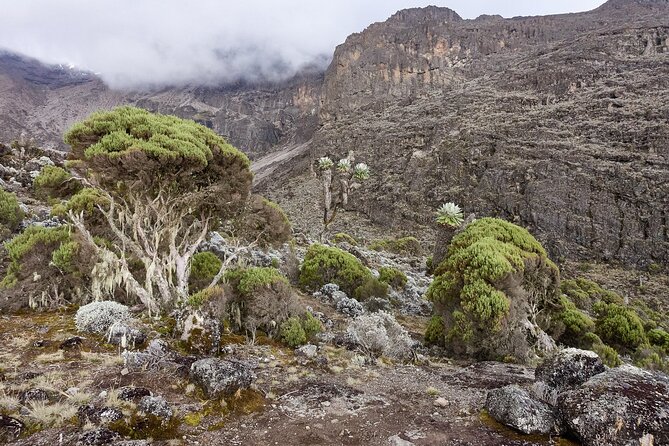
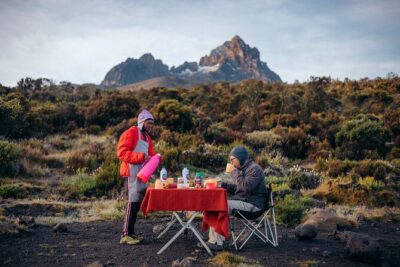
I like this route because the scenery keeps changing. The rainforest is green and shaded at the start. Higher up, the trees give way to open moorland, then to bare alpine desert and loose volcanic rock. You do not simply walk toward a summit through one unchanging zone. The mountain reveals itself in stages.
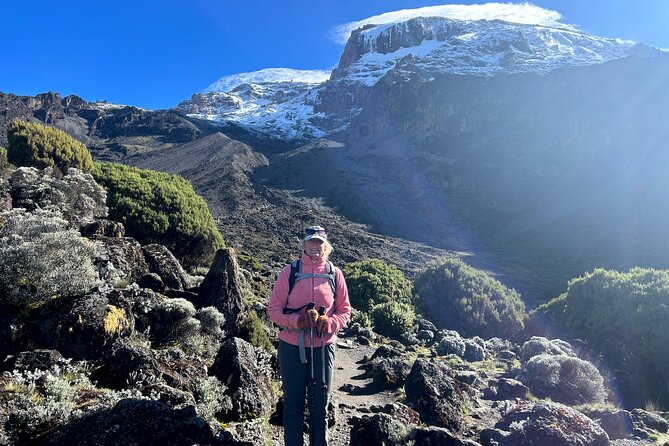
You also get several strong viewpoints. Depending on weather and cloud cover, you may see Mount Meru, Shira Ridge, Kibo Peak, the Shira Plateau, and Heim Glacier. The views are not guaranteed, of course. Kilimanjaro makes its own schedule, and clouds can cover a famous peak one minute and reveal it the next.
The route is recommended for six or seven days, with seven days preferable for acclimatization. This package uses six mountain days, so it offers a shorter schedule but less time for your body to adjust than a seven-day version. If you are choosing between the two, ask Hilbas Tours whether a seven-day plan is available and how much it changes the price.
More Kilimanjaro climbs:
- Kilimanjaro climb by Lemosho Route (7-day)
★ 5.0 · 651 reviews - Kilimanjaro climb, Machame Route (7-day)
★ 5.0 · 262 reviews - Kilimanjaro Climbing Lemosho Route 8 Days.
★ 5.0 · 186 reviews
Day 1: Arriving at Kilimanjaro International Airport
Your trip begins at Kilimanjaro International Airport, known by its code JRO. A Hilbas representative meets you there and takes you to the hotel in Moshi.
This first night has a practical purpose. You get a hot shower, a proper bed, a briefing, and a gear check before the mountain begins. The company can also arrange rental equipment for items you still need.
Do not treat this arrival day as wasted time. A gear check can catch trouble before you are several hours up a muddy trail. Use it to make sure your boots, warm layers, rain protection, sleeping bag, and daypack are ready. Personal gear is not included, so this is also the moment to sort out rentals and last-minute purchases.
Day 2: Machame Gate to Machame Camp
The morning drive from your hotel to Machame Gate takes about 45 minutes. The road passes villages on Kilimanjaro’s lower slopes before you begin walking.
This first hiking day covers about 11 kilometers in roughly six hours. The elevation rises from 1,800 meters to 2,900 meters, and the route stays in the rainforest zone.
The forest gives you shade, tall trees, flowers, and the first sense that you have left ordinary roads behind. Conditions can be wet, and the path may feel more demanding than the distance suggests. Take the guide’s slow pace seriously from the beginning. A strong first day is not the goal. Saving energy is.
You sleep at Machame Camp. Meals are included, with breakfast, lunch, and dinner served on the mountain. Drinks such as coffee, tea, Milo tea, and water are also provided.
Day 3: Machame Camp to Shira Camp
The route climbs from about 2,900 meters to 3,750 meters, covering only 5 kilometers. The hiking time is listed as about six hours, which tells you that the trail is steep and the pace is deliberately measured.
You leave the rainforest behind and enter moorland. The trail follows a steep rocky ridge, with wider views opening across the Shira Plateau. On a clear day, you may see Kibo Peak and Mount Meru floating above the clouds.
This is the shortest distance day, but do not confuse short with easy. The altitude begins to matter here. Walk slowly, drink regularly, and tell your guide if you feel unwell. The included oximeters and medical kits add useful safety support, though they do not replace honest communication about symptoms.
More Machame Route climbs:
- Climbing Kilimanjaro – Machame Route
★ 5.0 · 170 reviews - Climbing Kilimanjaro through 7 days Machame Route
★ 5.0 · 151 reviews - 7 Days Kilimanjaro via Machame route affordable price
★ 5.0 · 110 reviews - #1. Best Kilimanjaro Day hike Tour-Machame Route-ISMANI
★ 4.2 · 47 reviews
Day 4: Shira Camp, Lava Tower, and Barranco Camp
This is one of the most useful days on the route. You cross the Shira Plateau toward Kibo, then turn southeast toward Lava Tower. The route climbs to about 4,600 meters, with the approach taking three to four hours.
Lunch is served at Lava Tower, either packed or hot. The important part is not just the meal. You climb high, spend time at altitude, then descend to Barranco Camp at about 3,900 meters. The descent takes around two hours.
That pattern is valuable preparation for summit day. You get a taste of thin air without sleeping at the highest point reached that day. It is also a long day, listed at about 10 kilometers and seven hours, so the descent to Barranco will feel welcome.
Barranco Camp sits in the alpine desert zone. Vegetation is sparse, the air is thinner, and the mountain feels more severe than it did in the forest. Dinner and an overnight stay follow the long crossing.
Day 5: Barranco Wall, Karanga, and Barafu
This is the route’s big visual day before the summit. You begin near the Great Barranco, a huge ravine, then climb the steep Barranco Wall.
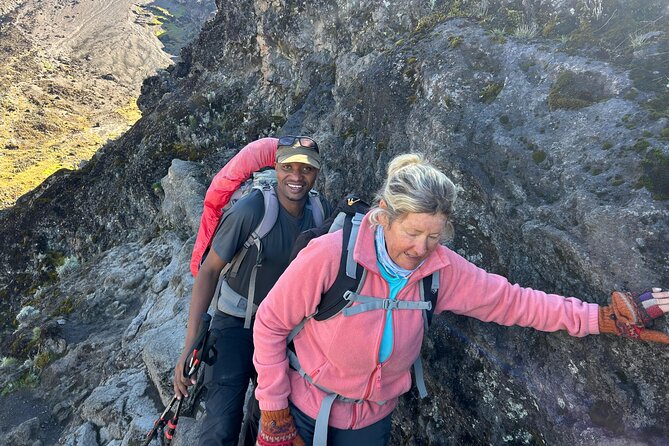
The wall may look intimidating from below, but the route is a climb rather than a technical rock ascent. You should expect a steep, hands-on section where careful footwork matters. At the top, you may see Heim Glacier, Kilimanjaro’s upper slopes, and clouds below you.
The path then rises and falls through the Karanga Valley. After lunch at camp, you continue toward Barafu Camp across bare scree slopes. The vegetation has nearly disappeared, and the route feels exposed and stark. Barafu sits at about 4,670 meters.
This day covers about 10 kilometers and takes around eight hours. The schedule is demanding because you need to reach Barafu, eat, rest, and prepare for the summit night. Keep your evening simple. Organize warm clothes, headlamp, water, snacks, and camera before trying to sleep.
The published itinerary repeats the Barranco to Karanga to Barafu heading for this day and the next. The summit details make clear that Day 6 is intended to be the summit day, but confirm the exact camp sequence and timing with the operator.
Day 6: Barafu to Stella Point and Uhuru Peak
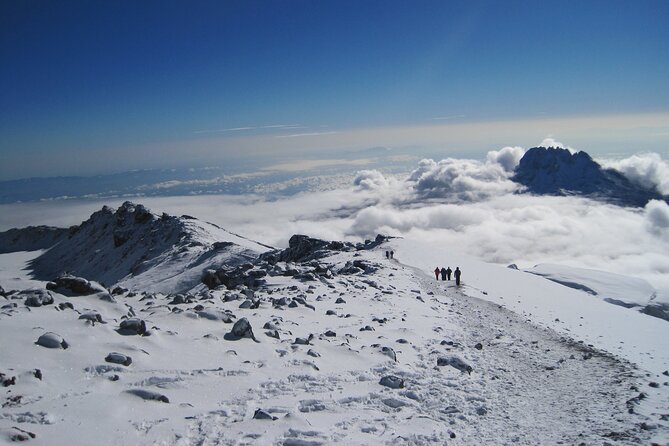
Summit day begins around 11:00 pm with tea and biscuits. You start in darkness, climbing over loose volcanic scree by a series of switchbacks.
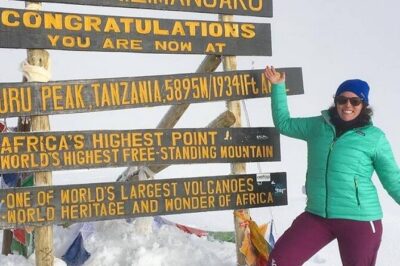
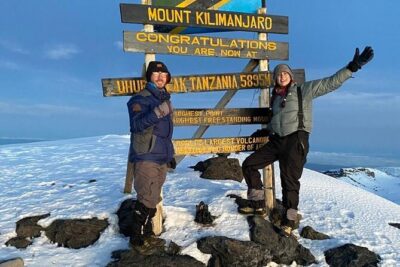
The hike to Stella Point on the crater rim takes about five to six hours. Stella Point sits at roughly 5,696 meters. After a short rest, you continue for about one hour to Uhuru Peak, the highest point on Mount Kilimanjaro, at 5,895 meters.
The summit section is not about speed. The stated plan calls for a slow and steady pace, and that is exactly how you should approach it. Cold, darkness, altitude, and fatigue all compound as the hours pass. Your guide and support crew are there to help manage the effort, but you still need to judge how your body feels.
At Uhuru Peak, you have a short time for photographs. Do not expect a long picnic at the top. The cold and altitude make a brief summit stop sensible. Afterward, the route descends, although the supplied schedule does not provide the complete descent details for this day.
The total hiking time is listed as about 15 hours, making this the hardest day by far. You should be comfortable with long mountain days and should not book this climb based only on the summit photograph.
Day 7: Descent through the rainforest
The descent moves from about 3,100 meters to 1,700 meters, covering around 10 kilometers in about four hours. The route returns to rainforest, with birds, tall trees, flowers, and a much warmer feel.
The description refers to Mweka Camp and also says the route ends at Mweka Gate, where hikers sign out and receive completion certificates. That wording is not fully clear about the overnight point, so confirm whether the listed Mweka Camp is a stop before the gate or part of an alternate schedule.
At Mweka Gate, a Hilbas driver takes you back to the hotel. The drive passes coffee and banana farms around Mweka village, giving you a small look at the farming communities on the mountain’s lower slopes.
The staff are also described as singing and dancing on the descent. That celebration can be a welcome lift after the summit push, and it gives the return a more human feel than simply walking to a vehicle and leaving.
Day 8: Hotel to Kilimanjaro Airport
After an early breakfast, you transfer to Kilimanjaro Airport for your departure flight. Airport pickup and drop-off are included, which removes one of the more annoying pieces of planning after a physically tiring climb.
The package includes two hotel nights, one before and one after the mountain. Rooms are shared by two people, except on solo climbs. On the mountain, two hikers share a tent, also except on solo climbs.
What the $2,083 price really covers
At $2,083 per person, this is not a low-cost walk. But the price includes many costs that can add up quickly when arranged separately.
You receive transportation from JRO, hotel transfers, two hotel nights, park entry, camping fees, vehicle fees, rescue fees, and mountain entry charges. The package also pays for the guides, porters, cooks, camp staff, and their accommodation and salaries.
That crew support matters on Kilimanjaro. You are not carrying the full camp setup yourself. A dining tent, tables, chairs, dishes, and shared camping equipment are supplied. Three meals a day are included, along with coffee, tea, Milo tea, water, and other listed drinks.
Food needs can also be discussed in advance. Vegetarian, vegan, lactose-free, gluten-free, halal, and other meal plans are available. Five lunches, five dinners, and seven breakfasts are listed, although the day-by-day details are not perfectly aligned, so confirm the meal count before booking.
You still need to budget for hotel lunches and dinners, listed at about $15 to $20 per person per meal. You also pay for your visa, travel insurance, personal clothing, footwear, sleeping bag, laundry, telephone use, personal drinks, souvenirs, and crew tips.
Tips are described as optional and based on satisfaction, but they are an important part of planning for a supported mountain climb. Ask Hilbas Tours for current guidance on customary amounts.
Guides, safety, and group size
The mountain guides are English-speaking and licensed by Kilimanjaro National Park. The company says all guides hold Wilderness First Aid certifications. Oxygen cylinders, oximeters, and medical kits are included.
Those details are reassuring, especially on the summit day. Still, safety equipment is only useful when you tell the crew how you feel. Altitude problems can worsen quickly, so do not hide a headache, nausea, dizziness, or unusual weakness to protect your summit hopes.
The group limit is 15 people. That is large enough to bring a social atmosphere but small enough for guides to keep track of the group more easily than they could with a large commercial departure.
The strongest personal praise attached to this experience centers on a guide named Hillary, also spelled Hilary in one account. He was credited with making a lasting impression and maintaining contact after a September 2019 climb. Another account specifically praised Hillary and the wider team for professionalism, attention to detail, safety, and comfort. Those comments point to a crew that treats the human side of the climb as seriously as the route itself.
Who should book this climb?
I would consider this route a good fit if you want Kilimanjaro’s most varied scenery and prefer a supported climb with transport, food, equipment, and crew included in one price.
You should have a moderate level of physical fitness, but the bigger issue is endurance. The route includes six mountain days, an eight-hour approach to Barafu, and a 15-hour summit day. You need to accept slow walking, basic camping, shared tents, cold conditions, and limited sleep around the summit.
This is not the best choice if you want a relaxed holiday with a few short walks. It may also be worth comparing the six-day schedule with a seven-day Machame option, since the extra acclimatization day can make a meaningful difference.
The mobile ticket and airport pickup make arrival simple. The cancellation terms are also fairly clear: cancel at least six full days before the start for a full refund, cancel two to six full days before for a 50 percent refund, and cancel less than two full days before with no refund. Changes inside those cutoffs are not accepted.
Final verdict: Is the Machame Route worth booking?
I like this climb for its scenery, strong support package, and clear mountain progression from forest to summit. The inclusion of park and rescue fees, crew, meals, hotel nights, transport, oxygen, and camping equipment gives the $2,083 price solid value for a fully supported Kilimanjaro trip.
I would book it if you are fit, prepared for a hard summit night, and set on the Machame Route. Before paying, ask Hilbas Tours to clarify the repeated Day 5 and Day 6 headings, the Mweka Camp and Mweka Gate sequence, the complete summit-day descent, and whether a seven-day version is available. Those answers will help you decide if the shorter schedule suits you.
FAQ
Where does the Kilimanjaro climb begin?
The experience begins with pickup at Kilimanjaro International Airport, followed by a transfer to a hotel in Moshi. The mountain hike starts at Machame Gate after a drive of about 45 minutes from the hotel.
How long does the full experience take?
The full trip lasts about eight days. Six days are spent on the mountain, with a hotel night before the climb and another hotel night after it.
How high is Uhuru Peak?
Uhuru Peak is at 5,895 meters. The summit route first reaches Stella Point at about 5,696 meters before continuing for roughly one hour to Uhuru Peak.
What time does summit night begin?
The guide is scheduled to wake you at about 11:00 pm for tea and biscuits. The summit hike then begins through loose volcanic scree toward Stella Point.
How difficult is the Machame Route?
The activity requires a moderate level of physical fitness. It includes hiking days of up to eight hours and a summit day listed at about 15 hours.
Are meals included?
Yes. Three standard meals a day are provided on the mountain, including breakfast, lunch, and dinner. Vegetarian, vegan, lactose-free, gluten-free, halal, and other meal plans are available.
Is airport transportation included?
Yes. Pickup and drop-off transportation from Kilimanjaro International Airport are included.
Are hotel nights included?
Yes. Two hotel nights are included, one before and one after the climb. Rooms are shared by two people except on solo climbs.
Is camping equipment included?
Shared group equipment is included, including a dining tent, camping tables and chairs, crockery, and two-person mountain tents. Personal gear such as clothing, footwear, and sleeping bags is not included.
What is the cancellation policy?
You receive a full refund if you cancel at least six full days before the start time. Cancellation two to six full days before the start time receives a 50 percent refund. Cancellation less than two full days before the start time is not refundable.
Just added in Moshi
- Zanzibar: Stone Town tour and Nakupenda beach with Lunch★ 5.0 · 1 review
- day trip lake manyara★ 5.0 · 2 reviews
- Mt Kilimanjaro 6 days Marangu route hike★ 5.0 · 3 reviews
- machame route★ 5.0 · 16 reviews
- Private Cycle to Kilimanjaro Bike Park Safari★ 5.0 · 6 reviews
- West Kilimanjaro cycling Adventures★ 4.5 · 8 reviews
- Wildlife Extravaganza: Manyara, Tarangire & Ngorongoro in 3 Days★ 5.0 · 3 reviews
- 3 Days Private E-Bike Tour in West Kilimanjaro★ 5.0 · 3 reviews
Machame Route Climbs, compared.

Climbing Kilimanjaro through 7 days Machame Route
Read our review →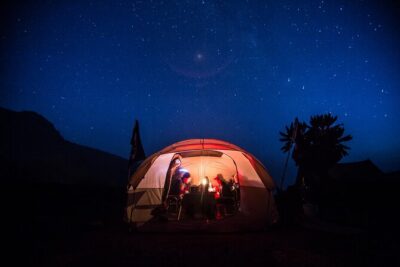
7-Day Machame Kilimanjaro Summit Tour from Arusha
Read our review →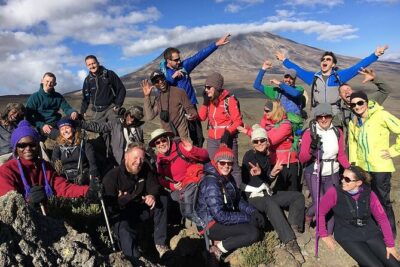
7 Days Kilimanjaro via Machame route affordable price
Read our review →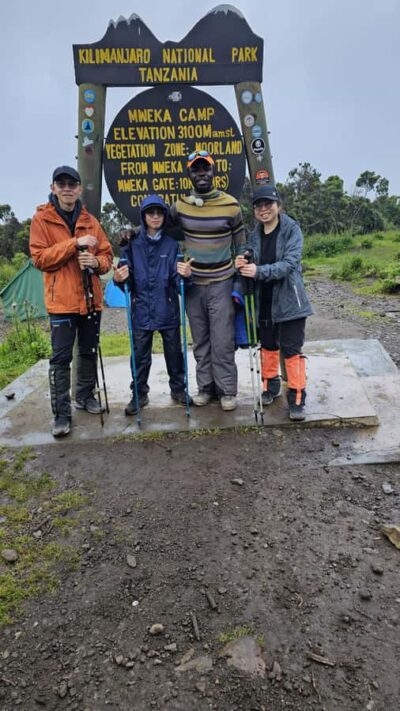
#1. Best Kilimanjaro Day hike Tour-Machame Route-ISMANI
Read our review →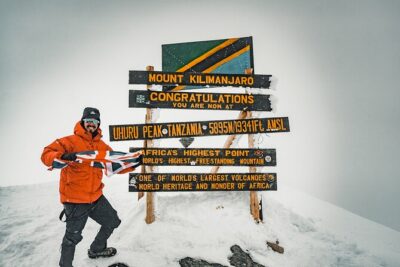
The Best of Machame Route in 6 Days: Your World’s Summit Guide
Read our review →Browse the lists this tour appears in