
Reviewed · MACHAME ROUTE CLIMBS
Kilimanjaro Climb • Machame Route ~ 10 Day
Reach Africa’s highest point one careful step at a time. This 10-day Machame Route climb combines slow altitude gain with a full day for preparation in Moshi, while a large support crew carries equipment and builds camp. I like the medically trained High Altitude First Responders and the thoughtful summit timing, which begins before sunrise but aims to reach the steepest section in daylight. The main drawback is cost: at $5,628 per person, this is a premium climb, and clothing and gear rental are extra.
I also like the two-night Moshi setup, which gives you time for a gear check, orientation, and a proper introduction to the guides instead of sending you straight uphill. Past climbers praised the care of Tusker’s crews, with names including Kombe, Guadance, Nemis, and Ureo. Still, Kilimanjaro is hard work. Thin air, cold camps, long walking days, and a demanding summit push will test you even with excellent support.
In This Review
- Key Points Before You Book
- Two Nights in Moshi Before the Mountain
- Machame Gate and the First Rainforest Climb
- Shira Plateau and the First Signs of Altitude
- Lava Tower, Barranco, and a Useful High-to-Low Day
- The Barranco Wall and the Mawenzi View
- Barafu Camp and the Cold Before Summit Day
- Uhuru Peak at 19,341 Feet
- The Long Descent to Millennium Camp
- Mweka Camp, Rainforest, and the Final Celebration
- Food, Crew Support, and What the Price Buys
- Who Should Choose This Machame Climb?
- Should You Book It?
- FAQ
- Where does the Kilimanjaro climb begin?
- How long does the experience last?
- Which Kilimanjaro route does the climb use?
- How high is Uhuru Peak?
- How many nights do you spend preparing in Moshi?
- Is transportation provided?
- Are meals included?
- Is climbing equipment included?
- Is the experience private?
- What is the cancellation policy?
Key Points Before You Book
- A full 10-day schedule: Two nights in Moshi allow preparation before six main mountain days and a final descent.
- Machame’s varied scenery: You move from mossy rainforest to heather, lobelia, giant Senecio, lava formations, glaciers, and high rocky camps.
- Strong altitude strategy: The route climbs high to Lava Tower, then drops to Barranco, helping you spend more time adjusting to elevation.
- Daylight summit approach: The climb begins a couple of hours before sunrise, with the steepest section covered in daylight.
- Full camp support: The crew carries equipment, prepares meals, and sets up camp while you focus on walking and resting.
- Premium pricing: The $5,628 price includes meals and the guided climb, but not climbing clothing or gear rental.
Two Nights in Moshi Before the Mountain
The climb begins in Moshi, Tanzania, where you check into a family-owned hotel and settle in before the serious walking starts. That first day is deliberately gentle. You can rest, organize your bags, and get used to the warm local setting before heading into the national park.
The second Moshi day matters more than it may seem. You receive a detailed climb orientation and complete a gear check with the guides. This is where you can find out if your clothing, footwear, and other equipment are suitable before the route becomes remote and cold.
I like this two-night start. Many mountain trips feel rushed, but this schedule gives you room to prepare and meet the crew. It also makes the midnight meeting time less confusing. The published start time is 12:00 am, but the actual first-day hotel arrival and preparation take place across the opening two days, so you should confirm the exact pickup and arrival arrangements before departure.
Pickup is offered, and the experience uses a mobile ticket. Those details are useful, but the real benefit is having the climb organized from your arrival in Moshi through your return to the hotel after the mountain.
More Kilimanjaro climbs:
- Kilimanjaro climb by Lemosho Route (7-day)
★ 5.0 · 651 reviews - Kilimanjaro climb, Machame Route (7-day)
★ 5.0 · 262 reviews - Kilimanjaro Climbing Lemosho Route 8 Days.
★ 5.0 · 186 reviews
Machame Gate and the First Rainforest Climb
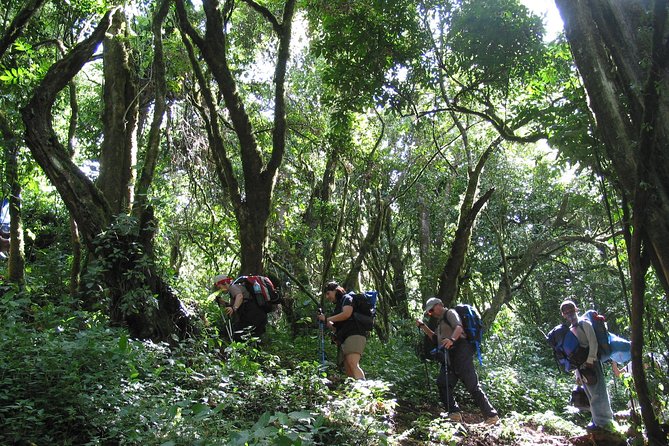
After breakfast on the third day, you drive to Machame Gate. Your guide handles national park registration, then you begin the uphill walk through tropical rainforest toward Machame Camp.
This first hiking day takes about seven hours. The path begins in thick forest, with moss, unusual plants, and the possibility of seeing colobus monkeys moving through the canopy. The route is not just a warm-up stroll. It climbs steadily, and the changing surface can make the first day feel longer than the mileage suggests.
The camp crew sets up your tent before you arrive. That service changes the rhythm of the day. Instead of carrying a full camping load and then pitching your own shelter after several hours of uphill walking, you can arrive, settle in, eat, and rest.
The trade-off is that you depend on a busy mountain operation, not an independent hiking trip. If you want solitude and complete control over your schedule, this arrangement may feel structured. If you want to concentrate on the climb rather than camp chores, it is a major advantage.
Shira Plateau and the First Signs of Altitude
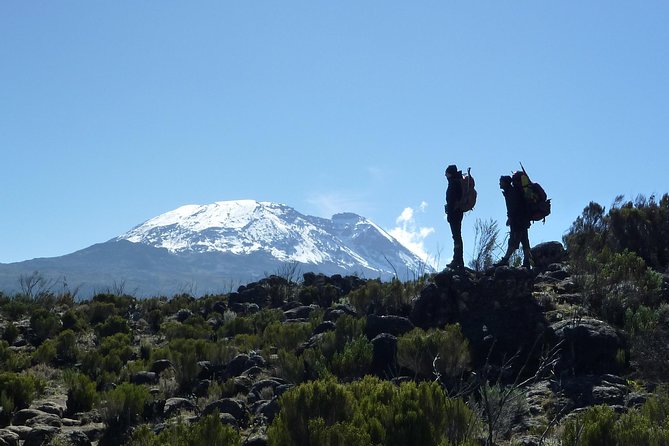
Day four leaves the last rainforest glades behind. The vegetation becomes lower and more open, with heather and views toward Kibo Peak, the main summit cone, from roughly 12 kilometers away on a clear day.
You walk for about seven to eight hours toward Shira Camp. Above 9,000 feet, the plants become distinctive and almost otherworldly, including lobelia, protea, and giant Senecio. The route gives you your first real sense that Kilimanjaro is not one simple mountain trail. Its plant zones change sharply as you gain height.
This is also when you may begin to feel the altitude. The schedule calls for a slow pace, and that is exactly the right approach. You should not treat a slow pace as a sign of weakness. On Kilimanjaro, conserving energy and allowing your body time to adjust are central parts of the climb.
The Shira Plateau is one of Kilimanjaro’s original three calderas, or collapsed volcanic areas. You do not need a geology lesson to appreciate it. The broad high terrain and views toward Kibo make this one of the route’s memorable transitions.
Lava Tower, Barranco, and a Useful High-to-Low Day
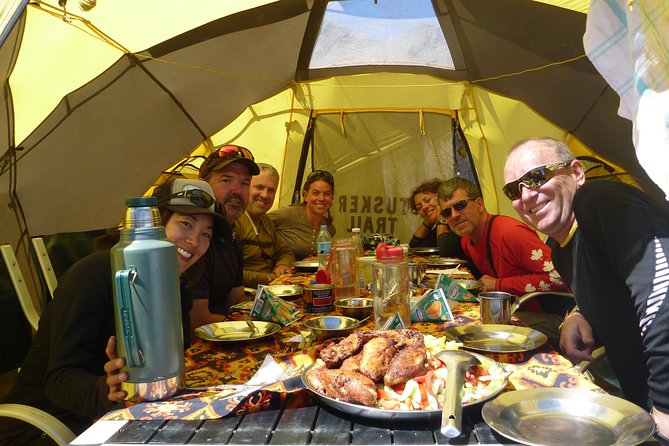
Day five is one of the most useful parts of the route for altitude adjustment. You hike uphill toward Lava Tower, then descend toward Barranco Camp, passing giant Senecio and moving around the southern side of Kibo.
The day takes about eight hours. It can feel strange to work hard climbing toward Lava Tower, only to lose height later, but that pattern is intentional and practical. You spend time at a higher elevation, then sleep lower at Barranco. The information provided does not promise that this will prevent altitude problems, and it cannot guarantee a summit, but the route’s up-and-down shape gives your body more time to adapt than a simple straight ascent.
The views also become more dramatic here. Kibo’s south-facing glaciers appear above the route, while the vegetation thins and the volcanic terrain becomes more exposed. Barranco Camp places you beneath a striking section of the mountain, setting up the next morning’s climb.
You should expect a demanding day even though part of it is downhill. Descending after an uphill section uses different muscles and can be tiring in its own way. Keep your pace controlled and save energy for the days ahead.
More Machame Route climbs:
- Climbing Kilimanjaro – Machame Route
★ 5.0 · 170 reviews - Climbing Kilimanjaro through 7 days Machame Route
★ 5.0 · 151 reviews - 7 Days Kilimanjaro via Machame route affordable price
★ 5.0 · 110 reviews - #1. Best Kilimanjaro Day hike Tour-Machame Route-ISMANI
★ 4.2 · 47 reviews
The Barranco Wall and the Mawenzi View
Day six begins with the Barranco Wall, one of the most memorable sections of the Machame Route. The path climbs up the wall before continuing through a series of valleys, with Kibo Peak over your left shoulder and Mawenzi Peak ahead to your right.
This is a shorter day, listed at about five hours, but do not confuse shorter with easy. The route rises and falls, and the Barranco Wall can feel exposed or awkward if you are not used to steep mountain paths. The information provided does not describe technical climbing, but you should be ready to use your hands for balance and move carefully.
The payoff is excellent mountain scenery. You are surrounded by volcanic forms rather than forest, and the two main peaks give you a clear sense of Kilimanjaro’s scale. The shorter schedule also gives you more time to eat, rest, and prepare for the high camps.
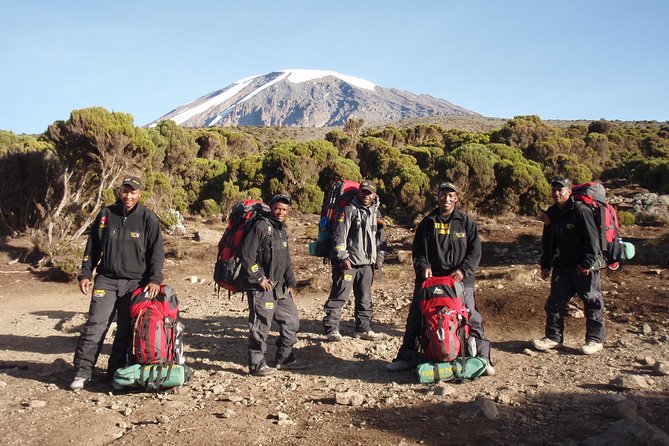
Tusker’s support is a central part of the experience here. Past climbers repeatedly praised attentive guides, careful medical checks, food, tents, and the way the crew looked after solo climbers and family groups. That kind of care is especially valuable when the route becomes physically tiring and small problems can grow quickly.
Barafu Camp and the Cold Before Summit Day
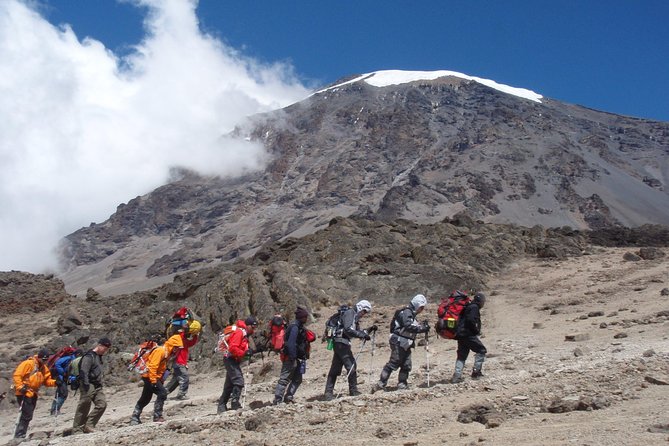
On day seven, you climb toward Barafu Camp. The hike takes about four hours, but the short duration reflects the altitude rather than an easy trail. The air is thin, breathing is harder, and the route reaches rocky, rough slopes where temperatures can be very cold.
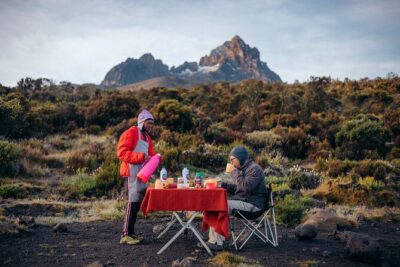
Barafu means ice in Swahili, an appropriate name for a camp at this height. The summit is close in distance but still a serious undertaking. Clouds may move around Mawenzi Peak, offering brief views of its eroded rock rising above the plains.
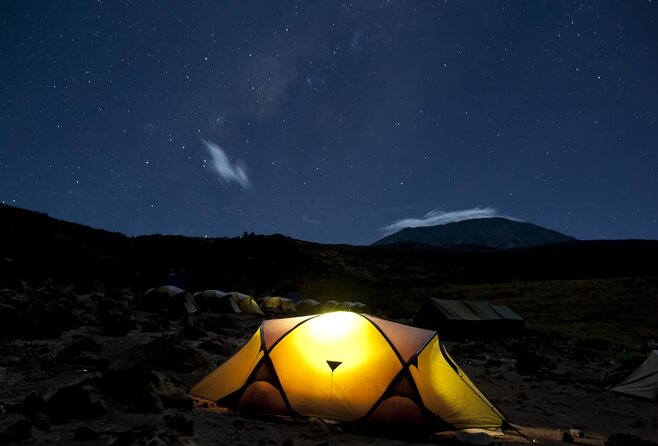
This is a good point to be realistic about comfort. The crew handles tents, equipment, and meals, but no camp at this altitude will feel luxurious in the ordinary sense. You should expect cold, limited energy, and a strong focus on resting before the summit attempt.
The schedule creates a tense but useful pause here. You arrive after a shorter hike, then prepare for the hardest day. The crew’s medical training is important at this stage. Tusker describes its lead support as medically trained High Altitude First Responders, and careful daily evaluation was one of the most praised parts of the operation.
Uhuru Peak at 19,341 Feet
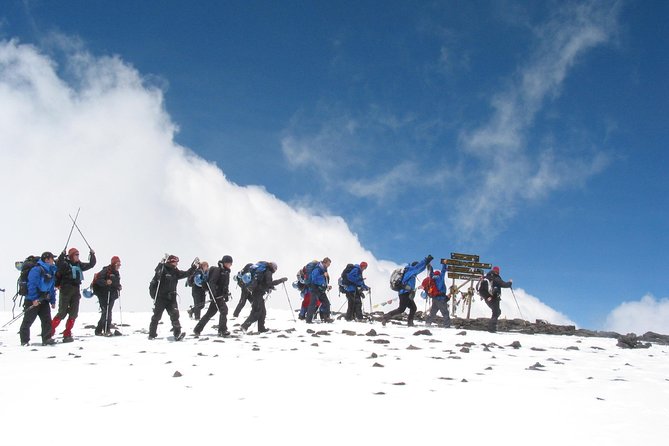
Summit day is split into two major sections. From Barafu, you climb about 2.75 miles, or 4.5 kilometers, to the summit area. The stated walking time is seven to nine hours.
The climb begins a couple of hours before sunrise. That timing gives you a chance to reach the steepest upper section in daylight, rather than tackling the entire demanding approach in darkness. You aim to reach the crater rim after lunch, then continue for roughly one to two hours to Uhuru Peak.
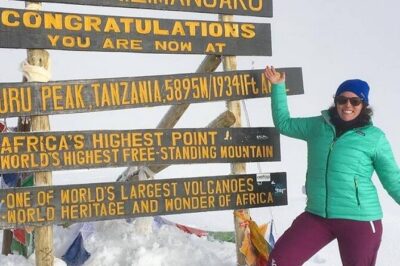
At 19,341 feet, or 5,895 meters, Uhuru Peak is the highest point in Africa. The attraction is not only the number. It is the sense of reaching a summit after several days of gradually changing terrain, thinner air, colder camps, and increasingly slow steps.
The upper views include Mawenzi Peak, the dark saddle between the peaks, and the crater’s ice walls. The mountain can reveal these sights in changing conditions, so you should go for the achievement and the experience rather than expecting perfect visibility.
The summit section is physically serious. The route description allows most of the day for the ascent, and that should tell you what to expect. The guides’ job is not simply to push you onward. The strongest part of this program is the combination of pacing, medical attention, and encouragement. Past climbers credited the team with helping them reach the summit, including a solo female climber who felt safe throughout the trip.
The Long Descent to Millennium Camp
After Uhuru Peak, you descend to Barafu Camp for a rest, then continue to Millennium Camp. This section is listed at about 6.3 miles, or 10.1 kilometers, and takes another five to six hours.
Reaching the summit is only half of summit day. The descent can feel invigorating at first, but fatigue builds quickly after the long climb upward. The return to Barafu gives you a necessary pause before the second downhill section.
Millennium Camp is at about 12,590 feet, or 3,837 meters, and serves as your final mountain night. It is a major drop from the summit zone, though you are still at high altitude. You should treat this as a recovery night, not a victory lap. Eat, drink what is offered, and rest.
The total effort on this day is the biggest physical demand of the trip. Anyone considering the climb should be comfortable with the idea of walking for many hours at altitude, then descending again after reaching the summit.
Mweka Camp, Rainforest, and the Final Celebration
After breakfast on day nine, you hike about two hours to Mweka Camp. From there, a further four-hour descent through rainforest takes you to the park gate.
The return to forest is a welcome change after the cold, open upper mountain. It also signals that the hardest altitude work is behind you. At the gate, you enjoy a final lunch and celebrate with your guides and porters before driving back to the Moshi hotel.
The hotel shower is more than a small comfort after several nights in camp. It marks the shift from expedition mode back to ordinary travel. Day ten is left for departing Tanzania or continuing on safari in the country’s wildlife reserves.
That final option gives the climb a practical travel shape. You can treat Kilimanjaro as the centerpiece of a Tanzania trip rather than trying to fit a safari into an already crowded mountain schedule.
Food, Crew Support, and What the Price Buys
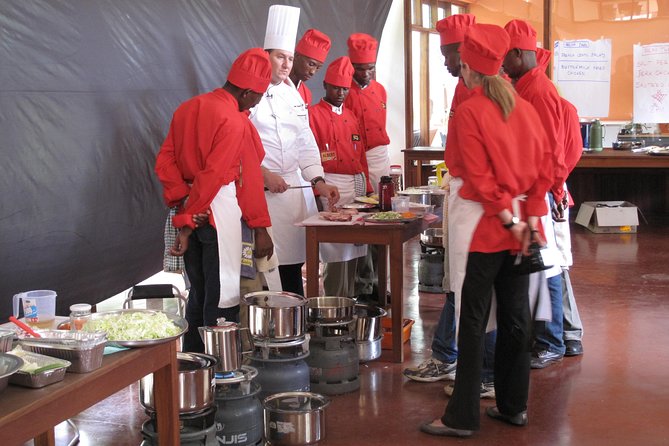
The $5,628 price is high, but it covers more than a simple guide and a park walk. Dinner is included on eight days, lunch on ten days, and breakfast on nine days. The camp crew carries equipment, sets up camp, and prepares energizing meals with local touches.
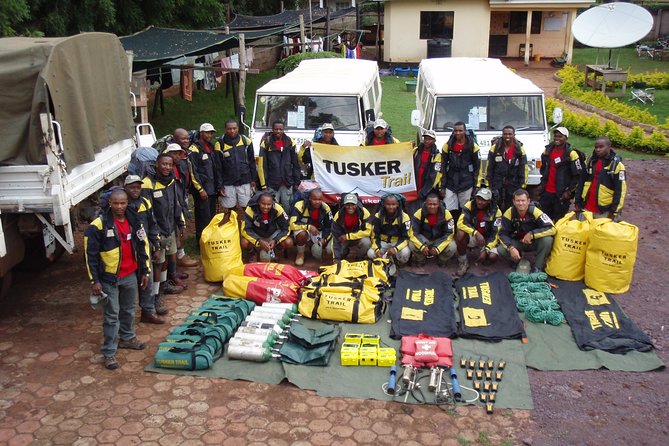
The details suggest a support-heavy climb. Past groups praised the tents, food, servers, specialty crew members, and daily medical checks. One large family group described a support team of 46 people, though that number should not be treated as the standard for every departure. It does show the scale of support Tusker has provided for some groups.
You pay for planning, staffing, safety attention, meals, transportation connected to the climb, and the chance to focus on walking. You do not pay for climbing gear and clothing rental, so budget separately if you do not own suitable equipment.
The value depends on your priorities. If you want the least complicated way to attempt Kilimanjaro, the cost may be justified. If you already own equipment and prefer a smaller, simpler operation, the price may feel steep.
Who Should Choose This Machame Climb?
I would consider this route for someone who wants a thorough Kilimanjaro experience rather than the shortest possible schedule. The two Moshi preparation days and the 10-day structure provide more time than a rushed ascent, while the route’s high-to-low sections offer a sensible approach to altitude.
It suits families with older teenagers and adults, as past groups included children aged 14, 15, 18, 20, and 21. That does not mean the climb is easy for young people. Every member needs to be prepared for cold, long days, thin air, and a difficult summit push.
It also suits solo climbers who want the reassurance of a professional crew and a private group arrangement. The activity is private, meaning only your group participates. The supplied information does not give a fixed group size, so ask how many people will be in your departure.
I would not choose it if you want a casual scenic hike, guaranteed summit views, or a low-cost camping trip. Kilimanjaro is a major physical challenge, and premium support cannot remove the altitude or the cold.
Should You Book It?
Book this climb if you value careful preparation, strong crew support, medically trained high-altitude staff, and a generous 10-day schedule. Tusker Trail Kilimanjaro Adventures appears especially suited to families, solo climbers, and first-time high-altitude hikers who want a structured operation around them.
Before paying, confirm the exact gear requirements, rental costs, pickup details, group size, and daily medical procedures. You can cancel for a full refund up to 24 hours before the local start time, but changes or cancellations inside that window are not accepted.
The best reason to choose this trip is not simply reaching Africa’s highest summit. It is having a well-supported path from Moshi, through rainforest and volcanic high country, to Uhuru Peak and back again. If the price fits your budget and you are ready for the physical work, this is a serious, carefully organized way to take on Kilimanjaro.
FAQ
Where does the Kilimanjaro climb begin?
The experience begins in Moshi, Tanzania, where you check into a family-owned hotel and prepare for the climb.
How long does the experience last?
The program lasts approximately 10 days, including preparation in Moshi, the mountain climb, the descent, and departure or onward travel.
Which Kilimanjaro route does the climb use?
The climb follows the Machame Route.
How high is Uhuru Peak?
Uhuru Peak is listed at 19,341 feet, or 5,895 meters, above sea level.
How many nights do you spend preparing in Moshi?
You spend two nights in Moshi before starting the mountain hike.
Is transportation provided?
Pickup is offered, and transportation is provided between Moshi, the mountain access points, and the hotel after the descent.
Are meals included?
Yes. The package includes dinner on eight days, lunch on ten days, and breakfast on nine days.
Is climbing equipment included?
No. Climbing gear and clothing rental are not included in the price.
Is the experience private?
Yes. It is a private activity, so only your group participates.
What is the cancellation policy?
You can cancel at least 24 hours before the local start time for a full refund. Cancellations or changes made less than 24 hours before the start time are not accepted.
Just added in Moshi
- Zanzibar: Stone Town tour and Nakupenda beach with Lunch★ 5.0 · 1 review
- day trip lake manyara★ 5.0 · 2 reviews
- Mt Kilimanjaro 6 days Marangu route hike★ 5.0 · 3 reviews
- machame route★ 5.0 · 16 reviews
- Private Cycle to Kilimanjaro Bike Park Safari★ 5.0 · 6 reviews
- West Kilimanjaro cycling Adventures★ 4.5 · 8 reviews
- Wildlife Extravaganza: Manyara, Tarangire & Ngorongoro in 3 Days★ 5.0 · 3 reviews
- 3 Days Private E-Bike Tour in West Kilimanjaro★ 5.0 · 3 reviews
Machame Route Climbs, compared.

Climbing Kilimanjaro through 7 days Machame Route
Read our review →
7-Day Machame Kilimanjaro Summit Tour from Arusha
Read our review →
7 Days Kilimanjaro via Machame route affordable price
Read our review →
#1. Best Kilimanjaro Day hike Tour-Machame Route-ISMANI
Read our review →
The Best of Machame Route in 6 Days: Your World’s Summit Guide
Read our review →Browse the lists this tour appears in