
Reviewed · MACHAME ROUTE CLIMBS
Mt Kilimanjaro Climb – 7 days Machame
The mountain changes every day. This seven-day Machame Route climb gives you a full Kilimanjaro experience, from rainforest and giant senecio plants to the cold, moonlike slopes above Barafu Camp. I especially like the careful climb high, sleep low plan and the fact that meals, tents, porters, guides, transport, and safety equipment are built into the price. The main drawback is the summit day: midnight starts, freezing conditions, and up to nine hours of effort make this a serious physical challenge, not a gentle walking holiday.
I also like the personal support from Nyange Adventures. Guides named in past trips include Amnaay, Antipas, Robert, Mo, Musa, and Satorine, with Satorine praised for more than 20 years of mountain experience. You should still plan carefully for equipment, insurance, visa costs, tips, and any airport transfer outside the stated gate transport.
In This Review
- Key things to know before climbing Kilimanjaro
- Why the seven-day Machame Route works well
- Day 1: From Kilimanjaro Airport to Machame Camp
- Day 2: Heath and moorland on the way to Shira Plateau
- Day 3: Lava Tower and the Barranco Valley
- Day 4: The Barranco Wall and ridge walking
- Day 5: Barafu Camp and the last rest
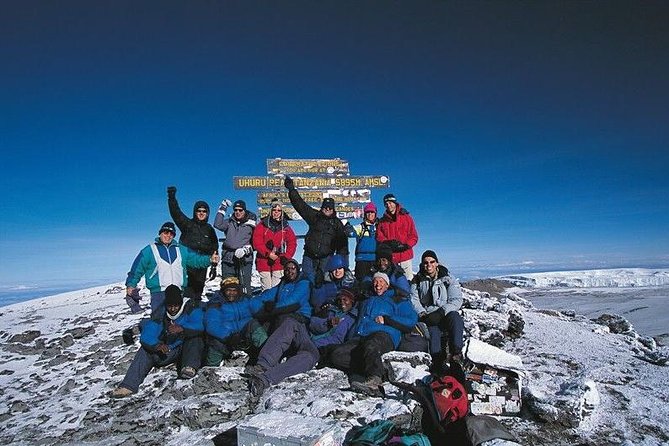
- Day 6: Midnight to Uhuru Peak
- Day 7: Rainforest descent and a proper goodbye
- What the $2,543.59 price actually covers
- Food, camping, and daily comfort
- Safety, fitness, and personal gear
- Who should book this climb
- Should you book the seven-day Machame climb?
- FAQ
- How long is the Kilimanjaro climb?
- Which route does the climb use?
- Is transport included?
- Are meals included?
- Is camping equipment included?
- What happens on summit day?
- Are tips included in the price?
Key things to know before climbing Kilimanjaro
- Seven days gives you a sensible acclimatization pattern: The route rises to Lava Tower at about 4,640 meters, then drops to Barranco Camp for the night.
- The Machame Route changes scenery fast: You walk through rainforest, heath and moorland, alpine desert, and the high summit zone.
- Summit night begins around midnight: Tea and biscuits come first, followed by five to seven hours to Stella Point and another one to two hours to Uhuru Peak.
- Your support team is a major part of the value: A professional guide, assistant guide, cook, and porters handle the mountain work around you.
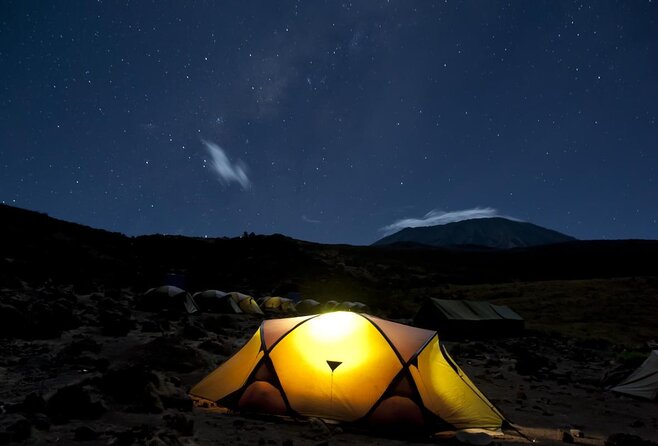
- Camping is included for all six nights: The package provides tents, mattresses, a mess tent, meals, drinking water, and hot drinks.
- The quoted price is $2,543.59 per person: That is a substantial sum, but it covers many costs that would be expensive and difficult to arrange alone.
Why the seven-day Machame Route works well
The Machame Route is often called the Whisky Route, and it earns that nickname through its tougher, more direct character. It is not a technical climbing route, but you will walk for several hours each day at high altitude, sleep in tents, and face a very demanding summit push.
The seven-day format is important. You gain height in stages instead of rushing straight upward. On Day 3, you climb to Lava Tower at roughly 4,640 meters and then descend to Barranco Camp, which sits only somewhat higher than the previous night. That pattern gives your body time to adjust.
I like this plan because it makes the mountain feel more manageable. It does not remove the risk of altitude sickness, and it does not guarantee a summit, but it gives you a better rhythm than a very short climb. You should still walk slowly, drink regularly, eat even when your appetite fades, and tell your guide immediately if you feel unwell.
This is a private activity for your own group. That matters because your guide can respond to the group’s pace and condition instead of moving with a large mixed party. Group discounts are available, so the final value may improve if you are traveling with friends or family.
More Kilimanjaro climbs:
- Kilimanjaro climb by Lemosho Route (7-day)
★ 5.0 · 651 reviews - Kilimanjaro climb, Machame Route (7-day)
★ 5.0 · 262 reviews - Kilimanjaro Climbing Lemosho Route 8 Days.
★ 5.0 · 186 reviews
Day 1: From Kilimanjaro Airport to Machame Camp
The first day begins with pickup after breakfast and transport toward the Kilimanjaro National Park gate. The timing needs clarification before you pay, since the package includes hotel pickup and drop-off and transport to and from the gate, while pre and post accommodation and airport transfers are listed separately as available on request.
At the park gate, your guide handles entrance forms while the mountain crew prepares the equipment. This is one of the more interesting parts of the start. You see tents, food, cooking supplies, and personal bags being organized before the group walks into the forest.
The route to Machame Camp takes about five to six hours. The first scenery is thick rainforest, with old trees, ferns, lianas, and lichen. It is a beautiful opening to the climb, but the trail can feel long if you arrive tired from an international flight.
I recommend arriving in Tanzania with enough time to sleep before the trek if your schedule allows. The supplied information does not include pre-climb accommodation, so arrange that separately if needed. A calm first morning is worth more than squeezing the climb immediately after a flight.
Day 2: Heath and moorland on the way to Shira Plateau
Day 2 is shorter in distance but still starts early and takes about seven hours. The forest gives way to heath and moorland, so the views open up as the trees thin out.
The destination is the Shira Plateau, where the campsite gives you a clear view of the mountain range. At sunset, the glacier on Kibo can catch the last light. This is one of the first moments when Kilimanjaro feels truly high and remote.
The change in scenery is a useful reminder that you are moving through several climate zones. You are not simply walking uphill for a week. The plants, air, views, and ground underfoot change from day to day.
The drawback is that altitude may begin to affect your sleep or appetite here. You may feel fine, or you might notice a headache and unusual tiredness. Keep your pace slow and let your guide know how you are feeling.
Day 3: Lava Tower and the Barranco Valley
Day 3 is one of the best-designed days on the route. From Shira Plateau, you climb about 700 meters toward Lava Tower, which reaches roughly 4,640 meters. After a rest, you descend through the Barranco Valley to Barranco Camp.
The walking time is about six to seven hours. The high point of the day is not your campsite, but the chance to spend time at a higher elevation before sleeping lower. That is the practical value of the route’s acclimatization plan.
The scenery shifts into alpine desert, with sparse vegetation and broad open views. In Barranco Valley, small lobelia plants and giant senecios add strange, almost prehistoric shapes to the high mountain world.
This day can be tiring because the trail goes up and down rather than simply climbing at one steady angle. Still, I would rather have this controlled exposure to altitude than a rushed ascent. Dinner and sleep at Barranco Camp prepare you for a more physical morning.
More Machame Route climbs:
- Climbing Kilimanjaro – Machame Route
★ 5.0 · 170 reviews - Climbing Kilimanjaro through 7 days Machame Route
★ 5.0 · 151 reviews - 7 Days Kilimanjaro via Machame route affordable price
★ 5.0 · 110 reviews - #1. Best Kilimanjaro Day hike Tour-Machame Route-ISMANI
★ 4.2 · 47 reviews
Day 4: The Barranco Wall and ridge walking
After breakfast, you tackle the famous Barranco Wall. This section may require you to use your hands for balance and grip, but it has no technical climbing passages. You should listen closely to your guide and follow the safest line.
The day includes repeated ascents and descents before a walk along the mountain ridge. Total walking time is given as about three to four hours in one part of the schedule and seven hours in another, so ask Nyange Adventures to confirm the expected duration for your departure.
The Kibo summit remains on your left, and the glacier comes into view along the ridge. The reward is visual, but the route can still be tiring because of the constant changes in height.
This is a good point to judge your footwear and clothing. If your boots rub, your socks stay damp, or your jacket is hard to reach, fix the problem now. Waiting until summit night is a poor plan.
Day 5: Barafu Camp and the last rest
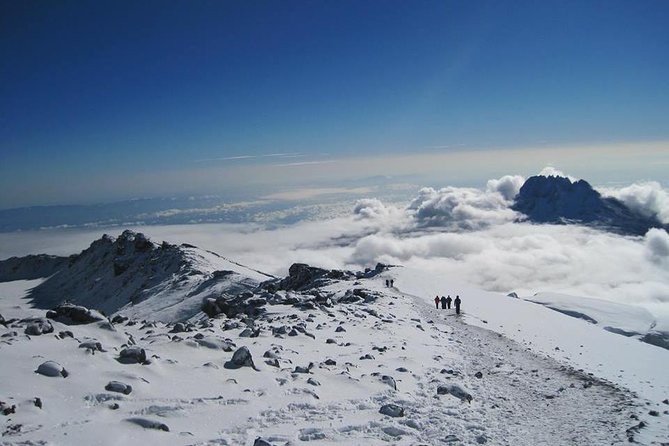
The walk to Barafu Camp takes about three to four hours through high alpine desert. The ground and surroundings feel stark and almost moonlike, with little shelter from the weather.
Barafu is the launch point for the summit attempt. After dinner, you go to bed early because the climb begins around midnight. The short walking time can sound easy, but the altitude and the anticipation of the summit make this a demanding day in its own way.
Use the afternoon to prepare rather than wander around camp. Organize warm layers, gloves, water, headlamp, snacks, and any medication you normally use. The supplied package covers tents, mattresses, meals, and a mess tent, but your personal mountain clothing and equipment are not included.
Nyange Adventures provides an oxygen cylinder and an oximeter. These are useful safety tools, but they are not substitutes for good pacing, medical judgment, or travel insurance.
Day 6: Midnight to Uhuru Peak
Summit day is the hardest part of the climb. You are woken shortly before midnight for tea and biscuits, then begin the slow ascent toward Stella Point.
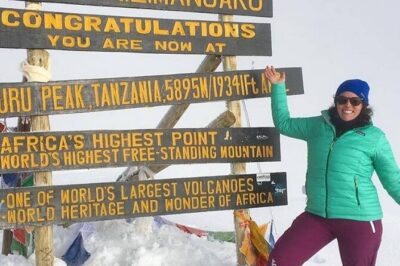
The climb to the crater rim takes about five to seven hours. From Stella Point, you continue for another one to two hours to Uhuru Peak at 5,895 meters, the highest point in Africa. Reaching the summit around sunrise gives you the best chance of seeing the high mountain in early light, though conditions can change quickly.
This is cold, dark, slow work. You may take short steps, stop often, and focus on the next section rather than the whole climb. A patient guide matters here. Several past groups singled out guides such as Amnaay, Antipas, Robert, Mo, Musa, and Satorine for steady support, encouragement, and careful pacing.
After the summit, you descend by the same route to Barafu Camp, usually in one to two hours according to the schedule. The descent can be rough on tired knees, and you still have to eat, drink, and rest when you return.
The wording for Day 6 gives a total of seven hours, but the individual summit stages alone can take longer. Treat the timing as an estimate, not a promise. Weather, pace, altitude symptoms, and trail conditions all affect the day.
Day 7: Rainforest descent and a proper goodbye
After breakfast, you have a farewell ceremony with the mountain crew. This is more than a quick send-off. Your guide, assistant guide, cook, and porters have carried and organized the support system that makes the climb possible.
The final walk takes about two to three hours through rainforest to Mweka Gate. A driver then takes you back to your hotel for a shower, a cold drink, a debrief, and your achievement certificate.
The finish is practical and welcome. You will likely be tired, dusty, and ready for a bed that does not move in the wind. Allow yourself an easy afternoon rather than planning a busy activity immediately afterward.
What the $2,543.59 price actually covers
The price is not cheap, but it includes the costly structure behind a guided Kilimanjaro climb. You receive six nights of camping, three meals each day, drinking water, coffee or tea, tents, mattresses, a mess tent, park and government taxes, gate transport, hotel pickup and drop-off, a professional guide, oxygen, and an oximeter.
It also includes a crew paid under fair and ethical salary guidelines connected with KPAP. That matters because porters and cooks do much of the work that you do not see. A lower price may not offer the same level of crew support or fair-pay standards.
You still need to budget for tips. The stated guidance is $20 per day for the head guide, $12 per day for the cook, $12 to $15 per day for an assistant guide, and $5 to $8 per day for each porter, with the amount divided among everyone in the group.
You also pay for personal climbing gear, alcoholic and soft drinks, travel insurance, visa costs, and pre or post accommodation. The package lists bottled water as well as drinking water, plus lunch, dinner, and breakfast for the stated six nights and seven days.
For me, the value is strongest if you want a managed climb and do not want to arrange a guide team, food system, tents, permits, and transport yourself. Ask for a current packing list and a clear breakdown of airport transfers before booking.
Food, camping, and daily comfort
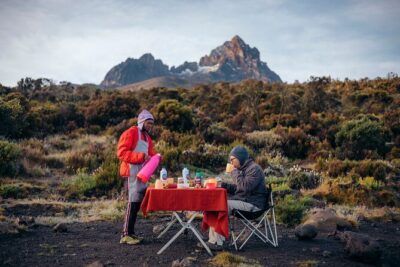
Three meals a day remove one major concern from a high-altitude trip. You do not need to carry a week of food, and a cook is part of the crew. Vegetarian meals are available, but you must request that option when booking.
Camping facilities include a tent, mattress, and mess tent. That provides a basic but organized base at each camp. Do not expect hotel comfort. The point is to keep you fed, sheltered, and moving safely through the mountain zones.
The included hot drinks are useful in the cold. Tea and biscuits before the summit are a small meal, so carry permitted personal snacks if you need more energy. The supplied details do not specify a full summit breakfast, so ask your operator what food will be available during the midnight push.
Safety, fitness, and personal gear
The tour requires a moderate level of physical fitness. That phrase should not be brushed aside. You need to walk for several hours on consecutive days, handle steep sections such as the Barranco Wall, sleep at altitude, and complete a midnight summit attempt.
Professional guides lead the climb, and an assistant guide, cook, and porters support the group. The safety kit includes an oxygen cylinder and oximeter. These are reassuring inclusions, but you still need travel insurance that covers mountain activities and emergency evacuation if required.
Bring all personal mountain gear yourself or arrange rentals in advance. One climber used a hired sleeping bag to avoid carrying one from the United Kingdom, so ask about rental options if you are trying to keep luggage down. The provided details do not confirm a full rental service, so get the answer in writing.
A visa is required and can be obtained at the border or airport according to the supplied information. Check current entry rules before departure because visa procedures can change.
Who should book this climb
I would choose this trip if you want a structured, private climb with a full support crew and a route that gives you several days to adjust to altitude. It also suits people who value ethical crew treatment and want meals, camping, transport, and safety supplies arranged in one package.
It is less suitable if you dislike camping, need a flexible sleep schedule, or want a relaxed hiking holiday. The summit day alone can test your patience and stamina, and the total cost rises once you add tips, gear, insurance, visa expenses, and any extra accommodation.
The strongest reason to choose Nyange Adventures is the repeated praise for communication and guide support. Amina, Kelvin Kihara, and company owner Praise Nyange were specifically credited with answering questions and organizing trips. Guide quality is crucial on Kilimanjaro, and named guides such as Satorine, Amnaay, Antipas, Musa, Mo, and Robert appear repeatedly in positive accounts of successful climbs.
The overall rating is five out of five from 26 supplied ratings, with 100 percent recommending the experience. That is an excellent record, though you should still ask direct questions about your group size, exact pickup arrangements, equipment rentals, and the tipping process.
Should you book the seven-day Machame climb?
Yes, if you want a serious but well-supported route with varied scenery and a sensible acclimatization pattern. The seven days give you a better chance to adjust than a rushed climb, and the price covers the main practical pieces from food to porters.
Book it only after confirming the details that affect your comfort: airport versus hotel pickup, pre and post trip accommodation, the personal gear list, summit-day food, and the expected walking times. If you are physically prepared and comfortable with basic camping, this is a strong choice for reaching Uhuru Peak with an experienced mountain team around you.
FAQ
How long is the Kilimanjaro climb?
The experience lasts approximately seven days and includes six nights of accommodation in camping facilities.
Which route does the climb use?
The climb follows the Machame Route, also known as the Whisky Route.
Is transport included?
Hotel pickup and drop-off and transport to and from the park gate are included. Pre and post accommodation and airport transfers are listed separately as available on request, so confirm the exact arrangement before booking.
Are meals included?
Yes. Breakfast, lunch, and dinner are included for the stated seven-day schedule. Coffee and tea are also included, and a vegetarian option is available if requested at booking.
Is camping equipment included?
The package includes camping facilities, including a tent, mattresses, and a mess tent. Personal mountain climbing gear and equipment are not included.
What happens on summit day?
The summit attempt begins around midnight. You receive tea and biscuits before climbing for about five to seven hours to Stella Point, then continue for another one to two hours to Uhuru Peak at 5,895 meters.
Are tips included in the price?
No. Tips for the head guide, assistant guide, cook, and porters are separate. Recommended daily amounts are provided for each role and are divided among the climbing group.
Just added in Moshi
- THE BEST 2 DAYS ON TREK – MARANGU ROUTE TOUR ADVENTURES★ 5.0 · 1 review
- Mount Kilimanjaro National Park Day Trip★ 5.0 · 7 reviews
- Mount Kilimanjaro Climbing in Tanzania Full-Day Trip★ 5.0 · 1 review
- Mount Kilimanjaro Day Hike – All-Inclusive, No Hidden Fees★ 4.0 · 7 reviews
- Mount Kilimanjaro Trekking Tour – Climb with Local Guides★ 5.0 · 1 review
- Mount Kilimanjaro: 7 Days Hike Lemosho Route★ 5.0 · 1 review
- Moshi:Chemka Hot Springs, Materuni Waterfalls & Coffee Tour★ 5.0 · 1 review
- Moshi/Arusha kikuletwa Hot Springs Tour★ 5.0 · 1 review
Machame Route Climbs, compared.
Climbing Kilimanjaro through 7 days Machame Route
Read our review →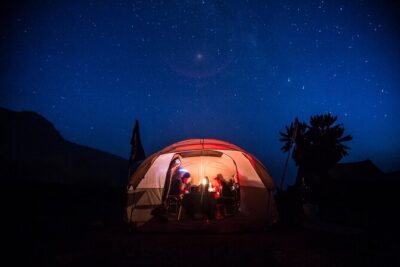
7-Day Machame Kilimanjaro Summit Tour from Arusha
Read our review →
7 Days Kilimanjaro via Machame route affordable price
Read our review →
#1. Best Kilimanjaro Day hike Tour-Machame Route-ISMANI
Read our review →
The Best of Machame Route in 6 Days: Your World’s Summit Guide
Read our review →Browse the lists this tour appears in