
Reviewed · KILIMANJARO CLIMBS
Private 8 day Northern Circuit Kilimanjaro Climb
Reach Africa’s rooftop the long way. Duma Explorer’s private 8-day Northern Circuit climb gives you a broad tour of Kilimanjaro, beginning on the western side, circling the quiet northern slopes, and reaching Uhuru Peak from the east. I like the extra acclimatization time and the chance to see several different sides of the mountain. I also like that it is a private trip, so your group can move at its own pace.
The main trade-off is simple: this is a demanding trek, not a scenic stroll. The summit night can last about 15 hours, and several days involve steep climbs followed by descents. You need strong fitness, patience, and a willingness to walk slowly when the mountain tells you to.
In This Review
- Key things to know before you book
- Why the Northern Circuit earns eight days
- Day 1: Forest from Londorossi Gate to Big Tree Camp
- Day 2: The Shira Plateau and your first look at Kibo
- Day 3: Moir Hut, lava, and an optional acclimatization climb
- Day 4: Around Kibo to Second Pofu Camp
- Day 5: Third Cave Camp and views toward Mawenzi
- Day 6: School Hut and the wait for summit night
- Day 7: Gilman’s Point, Uhuru Peak, and the long descent
- Day 8: Mweka Trail and the return to Arusha
- Food, crew, and the private format
- Is $2,999 a fair price?
- Who should choose this climb?
- Should you book the Northern Circuit climb?
- FAQ
- Where does the Northern Circuit climb begin?
- How high is Uhuru Peak?
- How long is the summit day?
- Are meals included?
- Is this a private group climb?
- What fitness level do I need?
Key things to know before you book
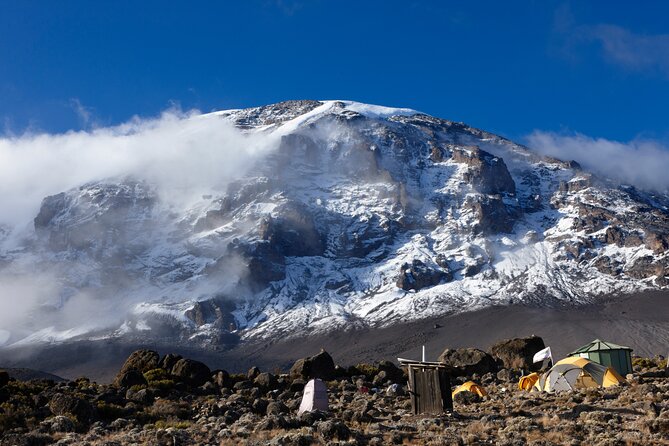
- The route circles Kilimanjaro: You begin near Lemosho, cross the Shira Plateau, pass around the northern slopes, and descend through Mweka.
- Eight days help with altitude: The itinerary gains height in stages, including a night at School Hut before the summit attempt.
- The summit night is the hardest test: You leave around midnight, climb through Hans Meyer Cave and Gilman’s Point, then continue to Uhuru Peak at 5,895 meters.
- This is a private climb: Only your group takes part, with pickup offered and a listed start time of 9:00 a.m.
- Meals are included: The package lists eight lunches, seven breakfasts, and seven dinners.
- Duma has a strong record for crew support: Past climbs have praised guides such as Emmanuel, Imran, Humphrey, and Colman, along with porter support from Dickson and Mariam.
Why the Northern Circuit earns eight days
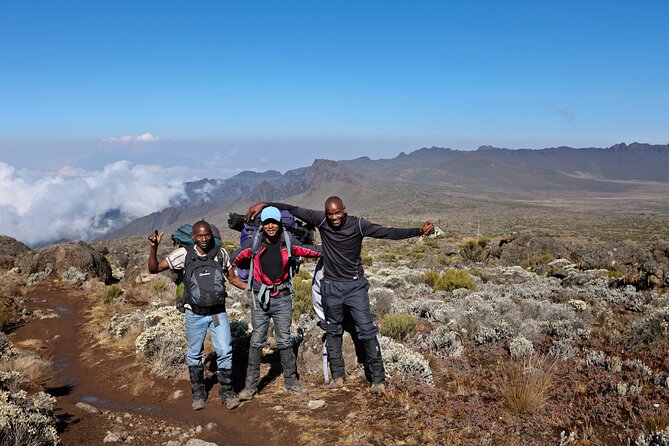
Kilimanjaro has several established routes, and the Northern Circuit is the quietest of the main choices. It starts in the west near Londorossi Gate, follows the early Lemosho section, then swings north around Kibo before joining the eastern approach toward the summit.
That route choice matters. You are not simply walking up and down one corridor. You get forest, moorland, open plateau, lava, high desert, northern valleys, and broad views toward both Kibo and Mawenzi. You also cross or connect with sections associated with Lemosho, Rongai, Marangu, and Mweka.
The eight-day schedule is especially useful because it avoids cramming the climb into a shorter timetable. You spend more nights gaining height gradually, with several opportunities to walk high and sleep lower. That rhythm can give your body more time to adjust, though no itinerary can remove the risk of altitude sickness.
You should still take headaches seriously. The program specifically advises walking pole pole, meaning slowly, and drinking plenty of water. If you feel unwell, tell your guide early rather than trying to prove something to the mountain.
More Kilimanjaro climbs:
- Mount Kilimanjaro Day Hike Through Marangu Route to Mandara Hut
★ 5.0 · 37 reviews - Mount Kilimanjaro Day Hike
★ 4.5 · 23 reviews - 7 Day Kilimanjaro Climb Lemosho Route & 2 Day Safari
★ 5.0 · 16 reviews
Day 1: Forest from Londorossi Gate to Big Tree Camp
The first morning begins with a drive to Londorossi Gate, where registration formalities take place. From there, a rougher 12-kilometer vehicle journey continues to the trailhead. That final drive can take from 45 minutes to an hour and a half, depending on road conditions, so do not expect a precise arrival time.
The hike itself is a gentle introduction by Kilimanjaro standards. You walk about 5 kilometers, rising from roughly 2,389 meters to 2,785 meters at Mti Mkubwa, also called Big Tree Camp. The gain is just under 400 meters, and the walking time is about four hours.
This is one of the prettiest sections of the climb. The route passes through thick forest, with the first day focused more on getting used to the walking rhythm than on testing your legs. It is a good start for a private trip because your guide can set a calm pace from the beginning.
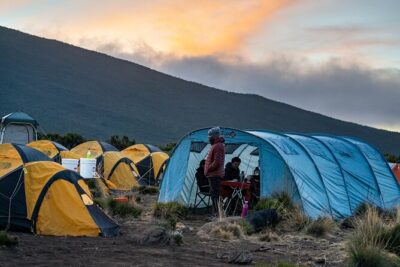
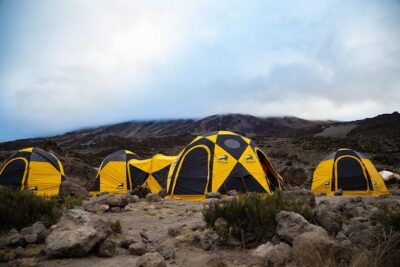
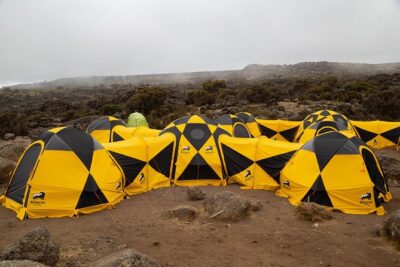
Your tent should already be standing when you arrive, and a snack is provided at camp. You spend the night at Mti Mkubwa. The practical catch is that the first day includes a long transfer before you even begin walking, so keep your morning organized and your daypack ready.
Day 2: The Shira Plateau and your first look at Kibo
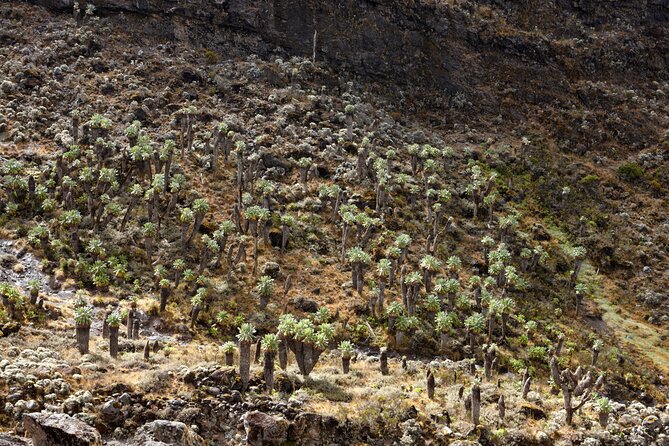
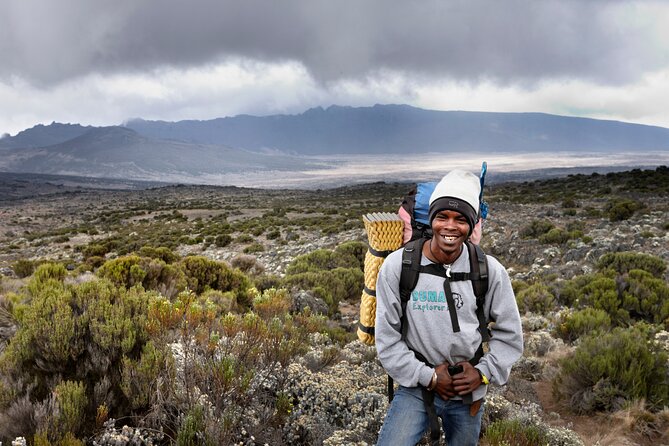
Day two is more varied. You begin in the forest, then climb into the heather and moorland zone, where the trees give way to grasses, wildflowers, and wider views.
The route skirts the northern slopes of Shira Ridge, sometimes described as Kilimanjaro’s third summit. You then descend slightly toward Shira One Camp at 3,504 meters. From camp, you can look across the Shira Plateau toward Kibo, the snow-capped summit that remains your goal several days ahead.
This is a longer day, around seven hours, and mild headaches are possible as you gain altitude. That is not a reason to panic, but it is a reason to speak up. Eat what you can, drink regularly, and avoid racing ahead simply because the trail looks easy.
Shira One is a memorable camp because the setting opens up after the forest. You are high enough to feel the mountain’s scale, but you are not yet dealing with the exposed summit zone. The combination of scenery and gradual height gain is one of the strongest reasons to choose this route.
Day 3: Moir Hut, lava, and an optional acclimatization climb
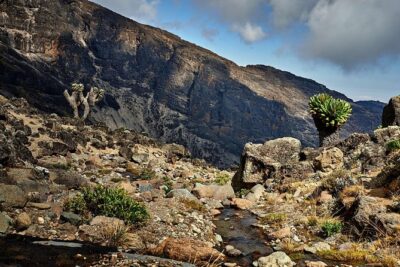
Leaving Shira One, you soon pass Simba Camp and a junction with a four-wheel-drive emergency track. The trail then moves through boulders, petrified lava flows, and grassy patches.
After roughly 9.7 kilometers and a total gain of about 657 meters, you reach Moir Hut at 4,161 meters. The walking portion takes about six hours. The name suggests a building, but this section of the climb functions as a high mountain campsite rather than a comfortable hotel stop.
You can also take a sunset acclimatization walk to a ridgeline at about 4,300 meters. That extra outing adds around 1.9 kilometers and 139 meters of ascent. It is a useful feature of the schedule, but you should not treat it as compulsory exercise. If your head hurts or your legs feel drained, rest may be the smarter choice.
Moir Hut is where the Northern Circuit begins to feel properly remote. The scenery becomes more severe, with rock and open ground replacing the softer colors of the lower mountain. You gain a lot today, but the program gives you time to pause before the route turns around the northern face.
A few more options to weigh up in Arusha
- Balloon Safari & Bush Breakfast in Serengeti – Miracle Experience
★ 5.0 · 1,646 reviews - Tanzania Classic – 7 Days
★ 5.0 · 1,151 reviews - 4 Days Group Camping Safari
★ 5.0 · 1,101 reviews - 5 Days Group Camping Safari
★ 5.0 · 730 reviews
Day 4: Around Kibo to Second Pofu Camp
Day four reaches about 4,402 meters before dropping to Second Pofu Camp at approximately 4,033 meters. That gain and loss is a useful part of the altitude plan, but it can also be tiring. You work uphill, descend into valleys, then climb out again.
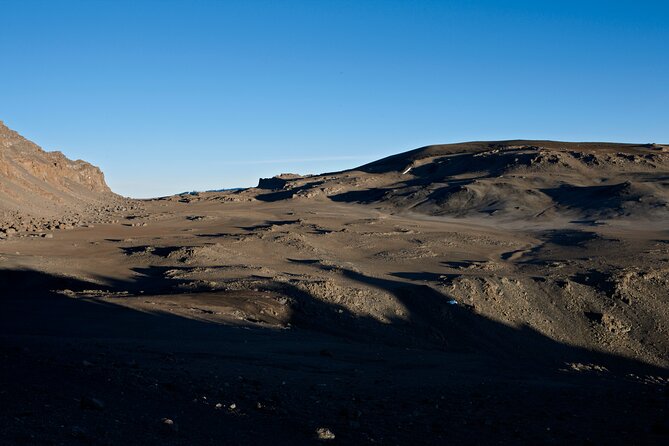
The opening climb is one of the day’s steepest sections, a long push up a barren slope to 4,300 meters. From there, the trail traces Kibo’s northern face, passing through several valleys and over rough, boulder-filled ground.
The route is quiet here. That solitude is a major attraction if you want a less crowded mountain experience, but it also means fewer distractions when the walking gets hard. The day takes about six hours, and the altitude can bring headaches or shortness of breath.
Your best strategy is unglamorous and effective: walk slowly, keep drinking, and let the guide decide when to stop. On a private climb, you have more room to adjust the pace, which is a real advantage on a day with so much up and down.
Day 5: Third Cave Camp and views toward Mawenzi
The next stage covers about 6.8 kilometers and continues around the northern slopes. The gradients are less severe than the previous day, but the trail still rises and falls repeatedly.
Kibo remains to your right, while Mawenzi gradually grows larger ahead. Mawenzi is Kilimanjaro’s jagged second peak, and its sharp form gives this section a different character from the broad, rounded slopes of Kibo.
The listed walking time is about four hours, but do not confuse a short distance with an easy day. Repeated climbs and descents can leave you more tired than one steady uphill walk. You finish at Third Cave Campsite, where you can rest before the next major height gain.
This is a good example of why the route needs patience. The mileage looks modest, yet altitude and uneven ground change the effort. Keep your energy for the following day, when you climb to School Hut.
Day 6: School Hut and the wait for summit night
Day six takes you from Third Cave Campsite at 3,936 meters to School Hut at 4,717 meters. The distance is only about 4.9 kilometers, but the climb gains 781 meters.
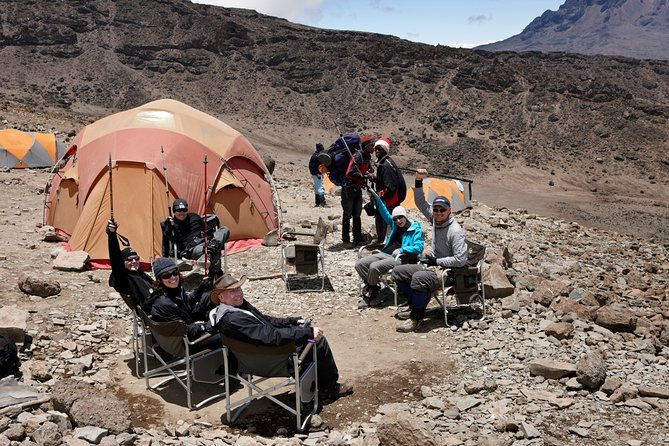
You should reach camp by early or mid-afternoon. That early arrival is important because the summit attempt begins around 11 p.m. or midnight. Your job is to eat, organize warm clothing, and sleep as soon as possible.
The climb to School Hut is short enough to seem manageable, but it is not a free day. You are now high, and the next night will demand your best effort. The crew wakes you for meals and the start of the ascent, so you do not need to worry about setting an alarm while trying to rest.
Expect an unusual evening. You may not feel hungry, but eating is still important because the summit push will last through the night and into the next day. Pack the clothing you need where you can reach it quickly. At this altitude, fiddling with bags becomes a surprisingly serious task.
Day 7: Gilman’s Point, Uhuru Peak, and the long descent
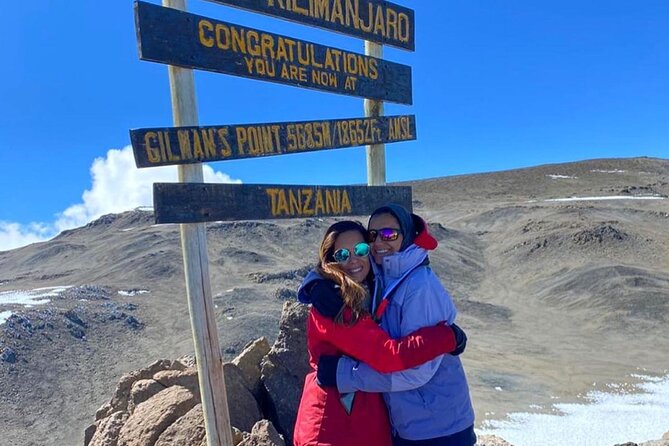
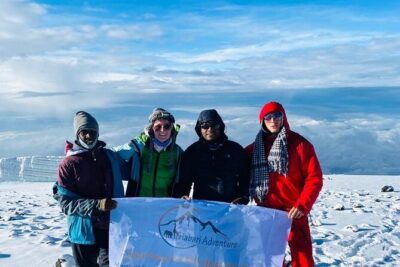
The summit assault starts around midnight from School Hut. You climb toward Hans Meyer Cave at 5,259 meters, then continue to Gilman’s Point on the crater rim at about 5,719 meters. From there, the route reaches Uhuru Peak at 5,895 meters.
The final 550 meters are especially tough. Progress can feel slow, and the cold, darkness, altitude, and fatigue all arrive together. Your guide will decide how long you can safely remain at the summit based on your condition, the weather, and the time.
Uhuru Peak is the high point of the climb and the roof of Africa. Gilman’s Point also carries significance: reaching it means you have made it to the crater rim, and a certificate is provided for that achievement. You can also collect a certificate for reaching the summit.
After a short rest at the top, you descend about 4.86 kilometers to Barafu Camp. Going down is quicker than going up, but it is not effortless. You stop at Barafu for breakfast and about an hour of rest, then continue another 6.6 kilometers down the mountain.
This is the day to respect the timetable. The listed duration is about 15 hours, so even successful climbers may finish exhausted. Your private group setting helps here, but the mountain still controls the pace. Do not plan a busy evening after this stage.
Day 8: Mweka Trail and the return to Arusha
The final day begins after breakfast with a descent to Mweka Gate at about 1,633 meters. The Mweka Trail provides a different finish from the northern approach, leading you down through the southern side of the mountain.
At the gate, you complete the formalities and collect certificates for reaching Uhuru Peak or Gilman’s Point. A vehicle then takes you back to your hotel and onward to Arusha.
The walk is listed at about four hours, though the day includes the gate process and the drive. After the summit night, even a downhill trail can be hard on your knees, so use your poles if you have them and keep your pace controlled.
The contrast is striking. Within a day, you go from cold, thin air and high rock to a warm shower and a proper bed. That change is part of the pleasure, though you may be too tired at first to appreciate it fully.
Food, crew, and the private format
The package includes eight lunches, seven breakfasts, and seven dinners. That covers the mountain schedule as described, with meals provided across the trek. The information does not specify menus, so you should confirm dietary needs before booking.
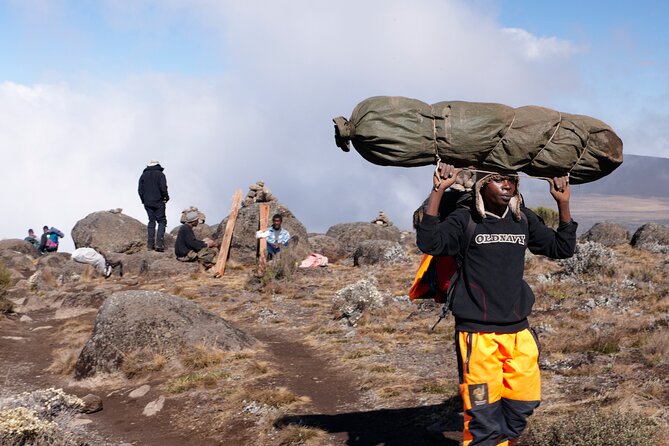
Past Duma climbs have received especially warm praise for food, safety, and crew support, including vegetarian meals and a birthday cake. Guides named in Duma’s climb accounts include Emmanuel, Imran, Humphrey, and Colman. Porter support has included Dickson and Mariam, including a female porter on one climb.
Crew assignments can change, so treat these names as examples rather than a promise that they will lead your group. Still, the repeated emphasis on careful planning, health checks, friendly staff, and summit safety is encouraging.
The private format is valuable for more than comfort. Your group does not have to match the pace of a large public departure. You can ask more questions, discuss how you feel, and take breaks that suit your condition. At altitude, that flexibility is worth real money.
Is $2,999 a fair price?
At $2,999 per person, this is not a budget mountain walk. You are paying for an eight-day private climb, park access arrangements, mountain crew services, meals listed in the package, and transport support including pickup.
The value comes mainly from the route length and private organization. A longer schedule usually gives you more time to adjust to altitude than a compressed climb, and the Northern Circuit covers more of Kilimanjaro than a simple out-and-back route. You also avoid sharing the climb with a large mixed group.
Before paying, confirm exactly what the price covers beyond the listed meals. The supplied details do not spell out hotel nights, airport transfers, equipment rental, tips, travel insurance, or flights. Those costs can affect the final budget.
Free cancellation is available if you cancel at least 24 hours before the experience start time. Changes or cancellations made inside that window are not accepted for a refund.
Who should choose this climb?
I would point this trip toward a fit hiker who values time, quiet trails, and a full mountain circuit. It suits you if the idea of spending eight days outdoors sounds better than rushing toward the summit in five or six.
It is also a good match for couples, families, and friends who want a private group. One past climb combined a family group with another family, while other bookings involved only two people. That range suggests the format can work for different group sizes, provided everyone has the required fitness.
I would hesitate to recommend it if you dislike long summit nights, rough trails, or uncertain mountain conditions. You should also reconsider if you want a relaxed sightseeing holiday with a little hiking added. This is a serious physical challenge, and the summit success rate may be strong, but success is never guaranteed.
Should you book the Northern Circuit climb?
Book it if you want to see Kilimanjaro from several sides and prefer a slower, private approach to the summit. The route’s quiet northern section, extra acclimatization days, experienced support team, and varied scenery give it a strong case at $2,999.
Before confirming, ask Duma Explorer for the exact crew, hotel arrangements, transfer details, gear options, and full list of inclusions. If you arrive fit, prepared, and ready to walk pole pole, this is one of the better route choices for giving yourself time on the mountain rather than simply chasing the summit.
FAQ
Where does the Northern Circuit climb begin?
The climb begins with a drive from Arusha to Londorossi Gate, where you complete registration. You then travel about 12 kilometers farther by vehicle to the Lemosho starting point at roughly 2,389 meters.
How high is Uhuru Peak?
Uhuru Peak is 5,895 meters above sea level. It is the summit of Kilimanjaro and the highest point reached on this itinerary.
How long is the summit day?
The summit stage begins around midnight from School Hut and is listed at about 15 hours. It includes the climb to Gilman’s Point and Uhuru Peak, a descent to Barafu Camp, breakfast and rest, then further descent.
Are meals included?
Yes. The package includes eight lunches, seven breakfasts, and seven dinners.
Is this a private group climb?
Yes. Only your group participates in the activity. Pickup is offered, and the listed start time is 9:00 a.m.
What fitness level do I need?
The activity requires a strong physical fitness level. The route includes substantial elevation gain, rough mountain paths, repeated ascents and descents, and a long summit night.
Just added in Arusha
- Safari “Kifaru” – 5 days in the most famous Parks in the world★ 5.0 · 4 reviews
- Saadani Day Trip★ 5.0 · 13 reviews
- 3 Days Tanzania Short and Spicy★ 5.0 · 6 reviews
- 5 Day Tanzania Safari Camping Adventure Private Tour★ 5.0 · 2 reviews
- Day Trip to Ngorongoro Crater from Arusha★ 5.0 · 1 review
- SERENGETI NATIONAL PARK Tour★ 4.5 · 5 reviews
- 3 Days Serengeti Park & Ngorongoro Crater Adventure Safari★ 5.0 · 8 reviews
- 6 Days Tanzania Bush Experience Safari★ 5.0 · 6 reviews
Kilimanjaro Climbs, compared.
Chagga Villages in Mount Kilimanjaro Cycling Day Trip
Read our review →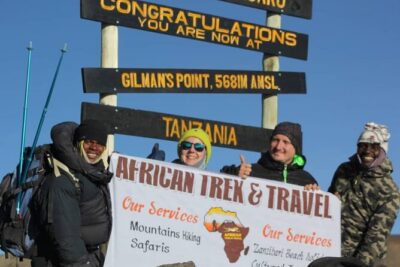
Browse the lists this tour appears in