
Reviewed · LEMOSHO ROUTE CLIMBS
Small-group 7-day Lemosho Route Kilimanjaro Climb from Arusha
Kilimanjaro rewards patience, not speed. This seven-day Lemosho climb gives you a scenic route across rainforest, moorland, high desert, and glacier country, with a small group capped at six people. I like the route’s gradual approach to altitude and the strong acclimatization day around Lava Tower. I also like that the price includes guides, porters, camping gear, meals, transfers, and hotel stays.
The main drawback is the physical demand. Lemosho is harder than the Marangu and Rongai routes, and the summit day can last about 12 hours. The trail has muddy forest sections, steep passages, cold nights, scree near the summit, and a tricky Barranco Wall. You need to prepare seriously, not simply turn up with hiking shoes and optimism.
In This Review
- Five things to know before you book
- Why Lemosho is worth the extra effort
- What the $2,400 price covers
- Day one: rainforest from 2,389 to 2,785 meters
- Day two: leaving the forest for Shira Plateau
- Day three: Lava Tower and the key acclimatization test
- Day four: Barranco Wall and Karanga Valley
- Day five: Barafu Camp and the final preparation
- Day six: Stella Point, Uhuru Peak, and the long descent
- Day seven: Mweka descent and the return to Moshi
- Food, tents, transfers, and group size
- Who this climb suits best
- Should you book this Lemosho climb?
- FAQ
- Where does the climb begin?
- How long is the experience?
- What time does the tour start?
- How large is the group?
- Is camping included?
- Are meals and drinking water included?
- Are flights and visa fees included?
- Can I cancel for a full refund?
Five things to know before you book
- Small groups of up to six: A compact group makes it easier for the guides to set a steady pace and keep an eye on everyone.
- A scenic western approach: The route begins in thick rainforest, crosses the Shira Plateau, then joins the Machame route on day three.
- Strong altitude planning: Day three climbs to Lava Tower at about 4,650 meters before descending to Barranco Camp.
- Camping with practical support: Mountain tents, sleeping mats, tables, chairs, meals, drinking water, a cook, and porters are included.
- A demanding summit night: You leave Barafu Camp in the darkness, reach Stella Point, then continue to Uhuru Peak through scree and possible snow.
- Good safety detail: The crew carries oxygen and uses pulse oximeters, according to the information provided for this operator.
Why Lemosho is worth the extra effort
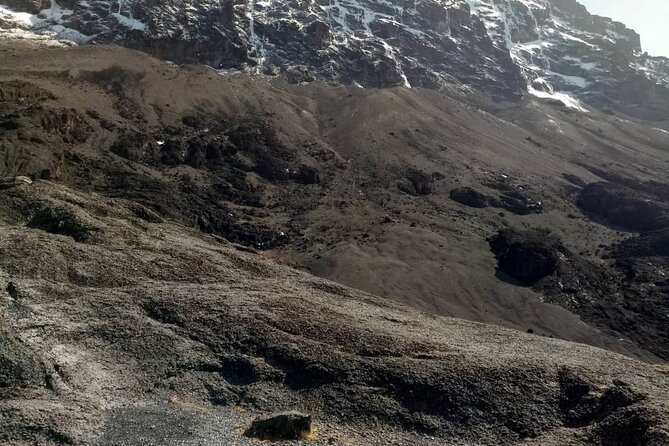
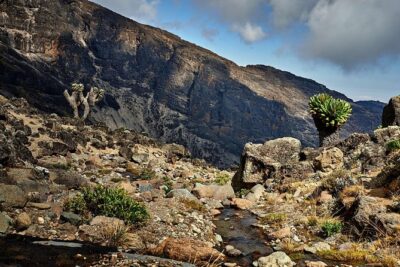
Lemosho begins on Kilimanjaro’s western side, away from the more direct approach of the Marangu route. The first two days pass through rainforest before the vegetation changes to heath and moorland. Ferns, ericas, changing temperatures, and widening views make the climb feel like a journey through several climates rather than one long uphill walk.
I like this variety. The early forest offers shade and birdlife, while the upper sections open into broad views across the Shira Plateau. The route also gives you a better chance to adjust to the altitude than a shorter climb would. Seven days is still demanding, but the schedule includes a useful high point followed by a lower overnight camp.
There is a tradeoff. Lemosho includes narrow trails and some very steep sections. On day two, you gain about 1,110 meters in roughly eight hours, a serious day even before altitude becomes the main concern. This is not a gentle sightseeing walk with a mountain in the background.
More Kilimanjaro climbs:
- Mount Kilimanjaro Day Hike Through Marangu Route to Mandara Hut
★ 5.0 · 37 reviews - Mount Kilimanjaro Day Hike
★ 4.5 · 23 reviews - 7 Day Kilimanjaro Climb Lemosho Route & 2 Day Safari
★ 5.0 · 16 reviews
What the $2,400 price covers
At $2,400 per person, this climb costs more than a basic short route, but the package includes many of the expenses that can catch you by surprise on Kilimanjaro. You receive a professional English-speaking guide, cook, porters, mountain tents, sleeping mats, tables, chairs, meals, transfers, hotel accommodation, park fees, and taxes.
That matters because a supported mountain climb involves far more than your own walking gear. The crew handles food, camp equipment, and much of the daily camp work. You still need to carry personal items, but you are not expected to transport the complete camping system on your back.
The food receives particularly strong praise in the supplied feedback, as do the guides and porters. One account specifically notes that safety equipment, including oxygen and pulse oximeters, was present and used properly. That is a useful sign for anyone comparing a direct local booking with a more expensive operator based overseas.
Alcohol and soft drinks are not included. Neither are flights, visa fees, tips, or personal purchases. Set aside money for gratuities, since the crew’s work is a central part of the experience and tips are listed as your responsibility.
Day one: rainforest from 2,389 to 2,785 meters
The day begins with an approximately 45-minute drive from Moshi to the Kilimanjaro National Park Gate. The start time is 8:30 a.m., and the gate can be busy while permits are processed and different crews prepare for the trail.
That waiting period is part of the practical reality of Kilimanjaro. You may spend time watching porters organize loads and guides complete the required arrangements. Once walking begins, the trail enters rainforest, with a four-hour route to the first camp.
The elevation gain is modest, about 396 meters, but the surface can be muddy and slippery. The description specifically recommends gaiters and trekking poles, and I would take that advice seriously. Gaiters help keep wet soil out of your boots, while poles provide balance on slick ground.
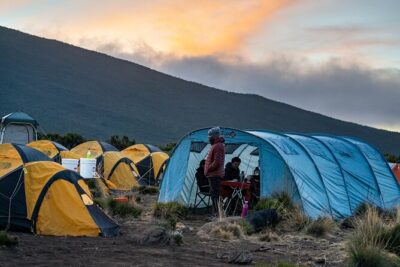
Your guide explains local plants, wildlife, and the forest environment along the way. This is a good introduction to the climb because the rainforest feels warm and enclosed, while the upper mountain will soon become colder and more open. You stay overnight in a mountain tent rather than a hut, so confirm that you are comfortable camping before booking.
Day two: leaving the forest for Shira Plateau
Day two is one of the hardest ordinary walking days. You climb from 2,785 to 3,895 meters, gaining about 1,110 meters over approximately eight hours.
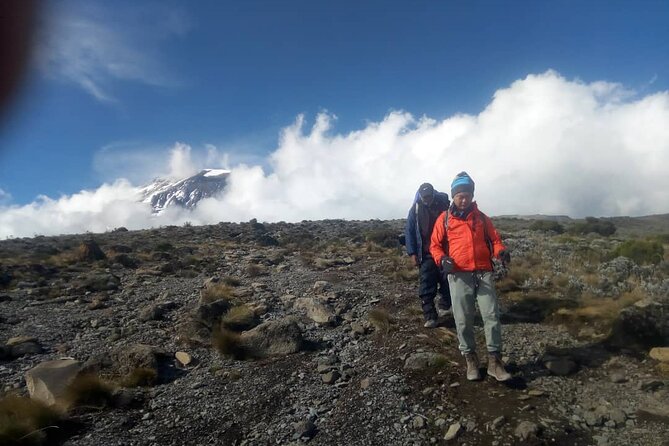
The forest thins and gives way to heath and moorland. The trail continues upward, and the views grow wider as you approach the rim of the Shira Plateau. Temperatures drop, so you need easy access to warm layers, gloves, and a hat rather than burying them at the bottom of your bag.
The scenery changes quickly, but the altitude gain is the important point. Walk slowly, drink the supplied water regularly, and follow your guide’s pace. A strong hiker can still feel the effects of altitude, and fitness alone does not guarantee an easy adjustment.
This day also shows why Lemosho is considered more challenging than Marangu and Rongai. You are not simply covering distance. You are gaining height over a long period while sleeping at increasingly high camps.
More Lemosho Route climbs:
- 8-Day Small-group Lemosho Kilimanjaro Summit Trekking
★ 5.0 · 186 reviews - 8 Days Mountain Kilimanjaro Lemosho Route
★ 5.0 · 22 reviews - Kilimanjaro Climb- Lemosho Route
★ 5.0 · 9 reviews - Lemosho Route 7 Days Trekking at Mount Kilimanjaro
★ 5.0 · 7 reviews
Day three: Lava Tower and the key acclimatization test
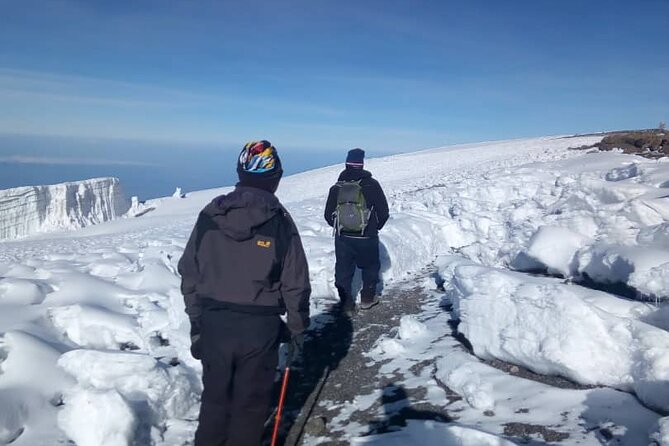
Day three is the clever part of the route. You start at about 3,895 meters and finish near 3,986 meters, so the final overnight elevation is only about 91 meters higher. Yet you climb toward Lava Tower, also called the Shark’s Tooth, at approximately 4,650 meters before descending to Barranco Camp.
That high point followed by a lower night gives your body useful exposure to altitude without forcing you to sleep at the highest point reached during the day. It is a long seven-hour walk, but the elevation profile is more thoughtful than a simple climb straight upward.
The route travels east across the Shira Plateau, passes a junction toward Kibo Peak, then continues southeast toward Lava Tower. After the tower, another junction leads toward Arrow Glacier before the trail descends to Barranco.
You may feel tired, headachy, or short of breath at this stage. Tell the guide exactly how you feel. This is not the day to prove toughness. It is the day to help your body adjust and to learn how you respond before summit night.
Day four: Barranco Wall and Karanga Valley
After breakfast, you climb the Barranco Wall and continue toward Karanga Camp. The day covers about five hours, with the overnight elevation rising only from 3,986 to 4,034 meters.
The small elevation gain can make the day look easy on paper. The Barranco Wall changes that calculation. It is a steep, adventurous section that requires careful foot placement and use of your hands in places. The crew is described as moving over it with impressive strength and agility, but you should not assume that the wall will feel simple for you.
A guide should help you choose a safe line and keep the group moving at a sensible pace. If you dislike exposed or steep trail sections, this is worth considering before booking. The route is not technical climbing in the information provided, but it is more demanding than a broad, smooth path.
Karanga Camp connects with the Mweka Trail, and the day offers a welcome pause before the next major climb. I like the way this schedule breaks up the altitude gain. You are still working hard, but you are not forced into one continuous ascent.
Day five: Barafu Camp and the final preparation
The trail continues from Karanga Camp to Barafu Camp, rising from about 4,034 to 4,662 meters. The walk takes approximately five hours.
Reaching Barafu completes the South Circuit, giving you views of the summit from several angles. The surroundings are high, cold, and exposed, so this is less about comfort than preparation. You need to organize your headlamp, warm layers, water, snacks, gloves, and other summit-night items before trying to rest.
Dinner is served early, followed by an attempt to sleep before the night ascent. The early meal is practical, but do not expect a normal evening. Your body is already working at high altitude, and the next start comes well before dawn.
This is also a good point to be honest with yourself. If you have persistent altitude symptoms or feel unwell, tell the guide. The supplied safety information indicates that oxygen and pulse oximeters are carried and used, but equipment is not a substitute for clear communication and sensible decisions.
Day six: Stella Point, Uhuru Peak, and the long descent
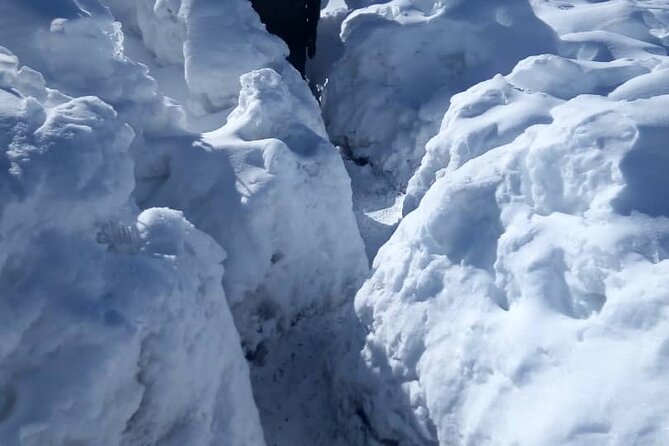
Summit day is the toughest part of the climb. The route heads between the Rebmann and Ratzel glaciers, then climbs in switchbacks through heavy scree toward Stella Point on the crater rim.
The schedule allows about 12 hours, which includes the summit attempt and the descent. The exact experience varies with pace, weather, and altitude, but you should prepare for a long, cold day with little margin for comfort.
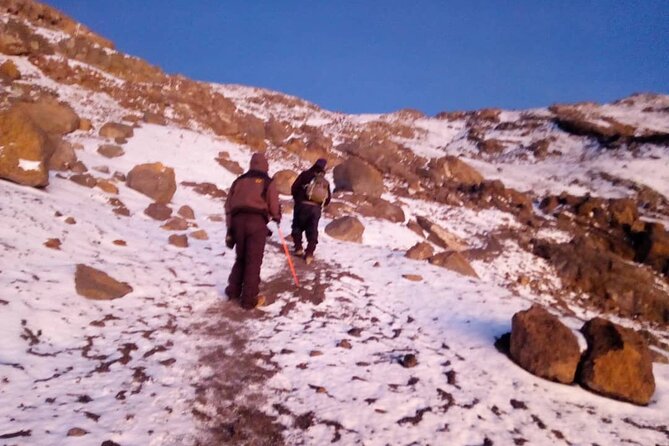
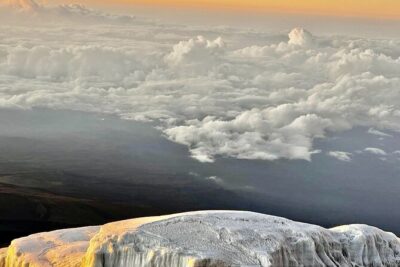
At Stella Point, you may see the sunrise during a short rest. Faster hikers might reach Uhuru Peak in time for sunrise, while others will see it from the crater rim. From Stella Point, the final ascent takes about one hour, and snow may cover the trail.
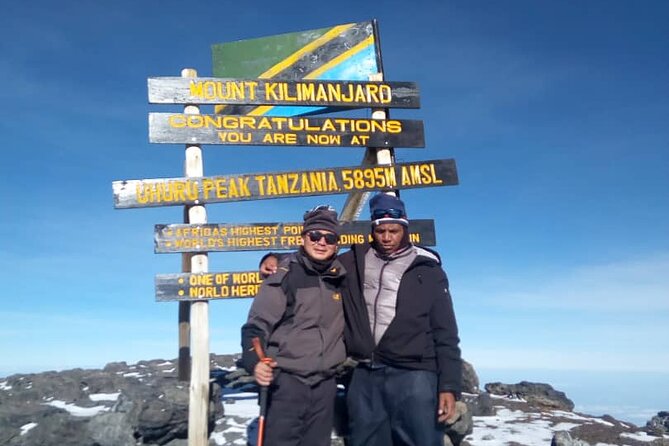
Uhuru Peak is at the summit of Kilimanjaro. After photographs and a brief celebration, you descend. The biggest mistake here is treating the summit as the finish. Your legs still have a long way to go, and the descent can be rough on tired knees.
Use your poles, protect your hands from the cold, and keep drinking. Your guide’s job is especially important on this day, since fatigue and altitude can make small problems feel much larger.
Day seven: Mweka descent and the return to Moshi
The final day descends from approximately 3,106 meters to 1,633 meters, losing about 1,473 meters over four hours. Before leaving, you take part in a ceremony of appreciation and team bonding with the crew.
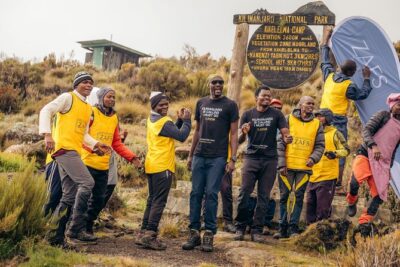
That farewell is more than a nice extra. A Kilimanjaro climb depends on the guide, cook, and porters who keep camp functioning, carry supplies, prepare meals, and help maintain a safe pace. The human side of the trip is one of its strongest features.
The descent to Mweka Park Gate can be wet, muddy, and steep as the weather becomes warmer. Gaiters and trekking poles are recommended again. At the gate, you receive summit certificates, then a vehicle meets you at Mweka village for the approximately 30-minute drive back to your Moshi hotel.
A hot shower, dinner, and a proper bed will feel well earned. Hotel accommodation is included in the package, but the supplied details do not specify the hotel name or the exact nights included, so ask the operator for those details before paying.
Food, tents, transfers, and group size
Meals are included according to the route plan, along with clean drinking water, bottled water, coffee, and tea. The package lists breakfast, lunch, and dinner, with the meal counts shown as eight breakfasts, eight lunches, and seven dinners. Because the displayed counts are not perfectly intuitive for a seven-day climb, confirm the exact meal schedule with the company.
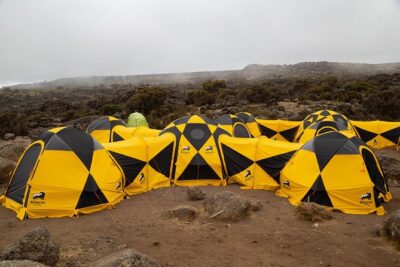
Camping equipment includes tents, sleeping mats, chairs, and tables. That makes this a supported camping trip rather than a hut-to-hut walk. You should still ask what personal sleeping bag or other individual equipment you must bring, since those items are not listed among the inclusions.
Pickup is offered, and transfers mentioned in the package are included. The climb begins from the Arusha area, while the first transfer description refers to departure from Moshi and the return to a hotel in Moshi. Clarify your pickup location and post-climb accommodation if you are staying in Arusha rather than Moshi.
A maximum of six people is a sensible group size. It is small enough for closer communication, but still large enough to have different walking speeds and energy levels. Ask how the operator handles anyone who needs to slow down or stop.
Who this climb suits best
I would choose this route if you want a scenic, serious Kilimanjaro climb with strong mountain support and a better acclimatization pattern than a very short itinerary. It suits hikers who are comfortable with long days, camping, cold conditions, steep trail, and a demanding summit night.
You do not need to be an elite athlete based on the information provided, and most people can participate. Still, you should train for sustained uphill walking and long descents. Pay special attention to muddy trail, steep sections, and the Barranco Wall.
This may not suit you if you want a relaxed holiday, dislike tents, need a predictable indoor bed each night, or prefer a route described as easier. Lemosho offers excellent scenery, but it asks for patience and effort in return.
The operator has received a five-out-of-five overall rating from four published ratings. The strongest praise centers on the guides, porters, food, organization, route choice, and safety equipment. Kenedy and Julius are specifically named in one account, while another describes the Meru Slopes crew as outstanding. Those details suggest a warm, capable team, but you should request the names of your assigned guide and support staff before departure.
Should you book this Lemosho climb?
Book it if you want a small-group climb with varied scenery, included support, and a route that takes altitude seriously. The $2,400 price looks reasonable for a package covering park fees, crew, camping gear, meals, transfers, and hotel stays, especially when compared with overseas operators that may charge much more for similar support.
Do not book it casually. The 12-hour summit day, high camps, muddy trail, steep Barranco Wall, and cold conditions require preparation. Bring gaiters and trekking poles, confirm what personal gear is excluded, and ask for clear details about hotel nights, pickup from Arusha or Moshi, and meal timing.
For a prepared hiker who values good crew support and a changing route, this is a strong Kilimanjaro option. For someone seeking the easiest possible ascent, choose a different route or a longer itinerary.
FAQ
Where does the climb begin?
The experience is based in Arusha, with pickup offered. The first day describes a drive from Moshi to the Kilimanjaro National Park Gate, so confirm your exact pickup point with the operator.
How long is the experience?
The climb lasts approximately seven days.
What time does the tour start?
The listed start time is 8:30 a.m.
How large is the group?
The group has a maximum of six participants.
Is camping included?
Yes. Overnight stays include mountain tents, and camping equipment such as tents, sleeping mats, chairs, and tables is included.
Are meals and drinking water included?
Yes. Meals according to the route plan, clean drinking water, bottled water, coffee, and tea are included.
Are flights and visa fees included?
No. Flights and visa fees are not included. Alcohol, soft drinks, tips, and personal spending money are also excluded.
Can I cancel for a full refund?
You can cancel at least 24 hours before the experience start time for a full refund. Cancellations or changes made less than 24 hours in advance are not accepted for a refund. If poor weather causes the operator to cancel, you will be offered another date or a full refund.
Just added in Arusha
- Safari “Kifaru” – 5 days in the most famous Parks in the world★ 5.0 · 4 reviews
- Saadani Day Trip★ 5.0 · 13 reviews
- 3 Days Tanzania Short and Spicy★ 5.0 · 6 reviews
- 5 Day Tanzania Safari Camping Adventure Private Tour★ 5.0 · 2 reviews
- Day Trip to Ngorongoro Crater from Arusha★ 5.0 · 1 review
- SERENGETI NATIONAL PARK Tour★ 4.5 · 5 reviews
- 3 Days Serengeti Park & Ngorongoro Crater Adventure Safari★ 5.0 · 8 reviews
- 6 Days Tanzania Bush Experience Safari★ 5.0 · 6 reviews
Lemosho Route Climbs, compared.
8-Day Small-group Lemosho Kilimanjaro Summit Trekking
Read our review →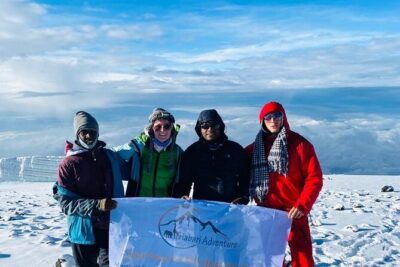
Climbing Kilimanjaro through 8 days Lemosho Route
Read our review →Browse the lists this tour appears in