
Reviewed · LEMOSHO ROUTE CLIMBS
Unforgettable 8 Days Lemosho Route Trekking on Kilimanjaro
Africa’s highest summit demands patience. This eight-day Lemosho climb approaches Kilimanjaro from the quieter western side, crosses the Shira Plateau, and gives you more time to adjust before the hard summit push. I especially like the scenery, which changes from rainforest to moorland, volcanic rock, and snow, and the route’s generally low crowds before it joins the Machame trail. I also like the strong guiding and food service praised by past clients, with special mention of guide Nalisis and chef Jackson.
The main caution is that this is still a serious high-altitude climb, not simply a long walk. The itinerary includes some very demanding days, the summit attempt begins around midnight, and the published schedule contains a few timing details that you should confirm before paying. At $1,500 per person, the trip offers a fair package for an eight-day climb, but tips, visas, flights, non-climbing accommodation, and private transport are extra.
In This Review
- Key points to know before booking
- Why Lemosho is a smart eight-day route
- Day 1: Moshi to Mti Mkubwa through rainforest
- Day 2: Crossing Shira Ridge to Shira One
- Day 3: A moderate acclimatization walk across Shira Plateau
- Day 4: Lava Tower and the descent to Barranco
- Day 5: The hard approach to Barafu Camp
- Day 6 and 7: Barafu, Stella Point, and Uhuru Peak
- Day 8: Mweka Gate, certificates, and the return to Moshi
- Food, guiding, and camp support
- What the $1,500 price really covers
- Who should book this climb?
- Should you book the Lemosho trek?
- FAQ
- Where does the Kilimanjaro trek begin?
- How long is the Lemosho trek?
- How much does the experience cost?
- Is pickup available?
- What meals are included?
- Are park fees and taxes included?
- Are flights and visas included?
- Is private transportation included?
- What happens if bad weather cancels the climb?
Key points to know before booking
- Lemosho begins on Kilimanjaro’s western side: You travel from Moshi to Londorossi Gate, then continue toward the Lemosho Glades before walking through forest.
- The Shira Plateau is the route’s scenic heart: Days two and three cross open moorland with wide mountain views and useful acclimatization time.
- The route uses the climb-high, sleep-lower pattern: You reach Lava Tower at 4,630 meters, then descend to Barranco Camp at 3,950 meters.
- Summit night starts around 11:30 p.m.: Expect several hours over scree to Stella Point, followed by the final ridge walk toward Uhuru Peak.
- The final descent uses Mweka Gate: You collect your summit certificate there, then continue to Mweka Village for a hot lunch and the drive back to Moshi.
- Guide and kitchen service matter here: Nalisis received especially warm praise for guiding, while Jackson was singled out for his work as chef.
Why Lemosho is a smart eight-day route
Kilimanjaro has several routes, but Lemosho makes a good case for taking your time. The western approach starts far from the busier sections of the mountain. You spend the early days moving through forest and across the Shira Plateau before meeting the Machame route near Lava Tower.
That extra distance helps in two ways. First, you get a gradual change in scenery. Second, the schedule gives your body more time to respond to altitude before summit night. No route can guarantee that you will reach Uhuru Peak, but an eight-day plan is generally more forgiving than a rushed itinerary.
The route is also attractive because it does not repeat the same view every day. You begin among trees, pass through giant heather and moorland, cross open plateau, and then walk through high, dry volcanic country. By the time you reach Barafu, vegetation has almost disappeared.
The quiet early section comes with a price. The drive from Moshi to Londorossi Gate takes about two and a half hours, followed by a further 45-minute 4WD ride toward the Lemosho Glades. You spend more time getting to the trailhead than you would on some other routes, but the reward is a less crowded beginning.
More Lemosho Route climbs:
- Kilimanjaro climb by Lemosho Route (7-day)
★ 5.0 · 651 reviews - Kilimanjaro Climbing Lemosho Route 8 Days.
★ 5.0 · 186 reviews - Kilimanjaro climb, Lemosho Route (8-day)
★ 5.0 · 148 reviews
Day 1: Moshi to Mti Mkubwa through rainforest
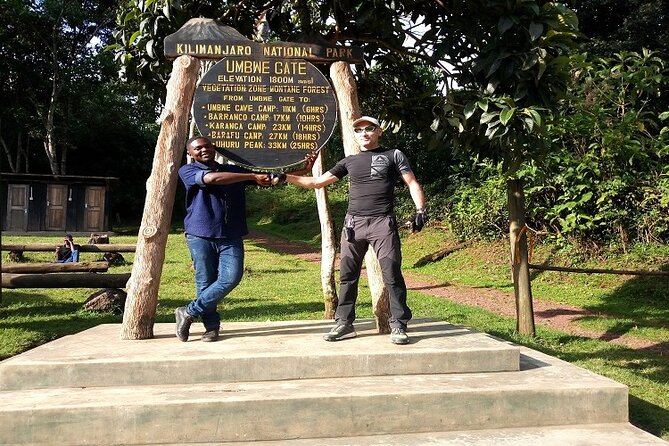
Your morning begins with breakfast and a briefing at the hotel from the chief guide. From there, the road leads to Londorossi Park Gate at 2,250 meters, where park rules and formalities are handled.
The route then continues by 4WD vehicle toward Lemosho Glades at about 2,390 meters. This extra vehicle section is useful because it avoids turning the first day into a long road approach on foot. Once walking begins, you follow forest trails to Mti Mkubwa Camp.
The first walking day takes about four hours. It is a sensible introduction, especially after the drive from Moshi. The forest setting also gives you a gentle start before the trail becomes steeper and more exposed.
You spend the night at Mti Mkubwa Camp, with dinner included. At this point, the climb may feel easy. Do not use that as a reason to push the pace. The better strategy is to walk steadily, drink regularly, and save your legs for the upper mountain.
Day 2: Crossing Shira Ridge to Shira One
Day two brings a sharp change in scenery. The trail becomes steeper as it leaves the rainforest and enters the moorland zone. You cross several streams, gain Shira Ridge at roughly 3,600 meters, and then descend gently to Shira One Camp on the plateau.
The listed walking time is about 11 hours, making this one of the longest days in the program. That duration deserves careful attention. The distance may not look extreme on paper, but the combination of altitude, uneven ground, and a long day can be tiring.
Shira One is located near streams, and dinner and camping follow on arrival. The plateau offers a broad sense of space that you do not get in the forest. You may also begin noticing the altitude here, even though the trail itself is not yet at summit height.
Your guide’s pacing will matter. This is not the day to race ahead for photographs or treat the first serious climb like a fitness test. A slow, even rhythm is far more useful.
Day 3: A moderate acclimatization walk across Shira Plateau
Day three is described as a moderate seven-hour walk from Shira One to Shira Two. The route crosses moorland meadows beside a stream, with several possible walking variations across the plateau.
I like this day because it is not only about reaching the next camp. It gives you time at altitude without the steep effort of the previous day. That is important preparation for Lava Tower and the higher camps ahead.
The plateau is one of the most appealing parts of Lemosho. The walking is relatively open and less hemmed in than the forest trail. The mountain’s upper mass becomes more visible, and the changing light can make the views feel different from one hour to the next.
Keep your expectations practical. Camping on the plateau means simple mountain living, not a lodge stay. The package includes breakfast, lunch, and dinner, but it does not include non-climbing accommodation before or after the trek. Plan your hotel nights in Moshi separately.
More treks in Moshi:
- Private Kilimanjaro Hike 7 Day Lemosho Route
★ 5.0 · 60 reviews - Best Kilimanjaro hiking day trip tour with Kilinge Adventures
★ 4.5 · 54 reviews - #1. Best Kilimanjaro Day hike Tour-Machame Route-ISMANI
★ 4.2 · 47 reviews - Best Kilimanjaro Adventure 7 days Machame route Trekking
★ 5.0 · 42 reviews
Day 4: Lava Tower and the descent to Barranco
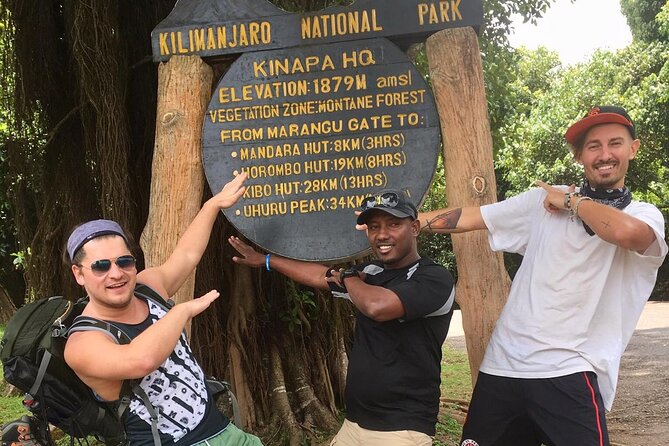
This is one of the most valuable days for altitude adjustment. You hike east toward Lava Tower, climbing above the vegetation into a rocky zone. After several hours, you reach the Lava Tower area at 4,630 meters.
The tower is a large remnant of Kilimanjaro’s earlier volcanic activity. The trail passes below it, and the itinerary notes that strong, sure-footed climbers may scramble to the top. Treat that as optional, not necessary. At this altitude, the main goal is to walk well and conserve energy.
After lunch near Lava Tower, you descend for about two hours toward Barranco Camp at 3,950 meters. This high point followed by a lower sleeping camp is exactly the sort of altitude pattern that makes the day useful, even when you feel the climb in your legs.
The day is listed at about five hours, though the exact duration will depend on pace and conditions. Barranco provides photo opportunities below the Western Breach and Breach Wall. The rocky surroundings feel much more severe than the lower parts of the route, and you are now clearly in the upper mountain environment.
Day 5: The hard approach to Barafu Camp
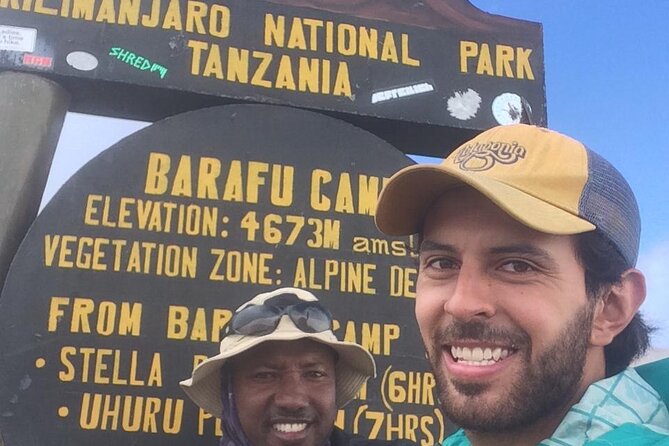
After breakfast, the route heads toward Barafu Camp at about 4,640 meters. The trail crosses steep, bare scree slopes with virtually no vegetation. This is a short day on the schedule, listed at about three hours, but short does not mean easy.
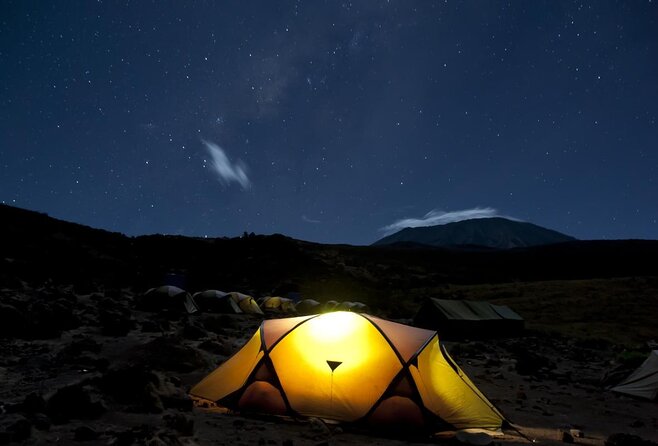
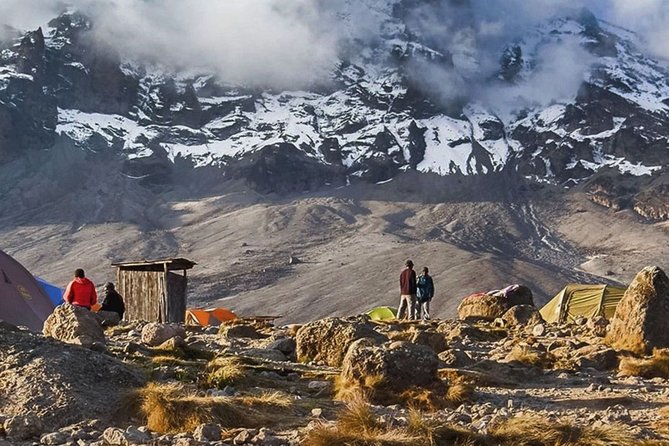
Altitude makes every steep step feel larger. When you arrive at Barafu, you eat and spend the afternoon resting. The camp is exposed, narrow, stony, and wind-swept, so you should familiarize yourself with the ground before dark.
Water planning becomes important here. The itinerary notes that Karanga Valley is the last water point and that there is no water at Barafu Camp. You should confirm exactly how water is carried and supplied by the crew, then keep enough available for the summit attempt.
Dinner comes early, followed by an attempt to sleep before the midnight wake-up. This is often easier said than done. Pack your summit clothing and headlamp before lying down, so you do not waste precious energy searching through your kit in the cold.
Day 6 and 7: Barafu, Stella Point, and Uhuru Peak
The summit section is the physical and emotional center of the climb. You are scheduled to rise around 11:30 p.m., drink hot tea, eat biscuits, and begin walking in darkness.
The route climbs northwest through heavy scree between the Rebmann and Ratzel glaciers toward Stella Point at 5,685 meters. The climb to the crater rim takes about six hours and is described as the toughest part for most climbers.
Scree is loose, tiring ground. Your feet may slide back as you step forward, and the lack of sleep adds to the difficulty. This is where a patient guide and sensible pace can make a major difference. Nalisis received particularly strong praise for guiding, so if he is assigned to your group, his role will be central to the experience.
At Stella Point, you pause briefly for the sunrise and join the upper section of the Marangu route. The view at dawn can be memorable, but the cold and exhaustion are real. The schedule advises you not to linger too long because restarting after a long pause can be difficult.
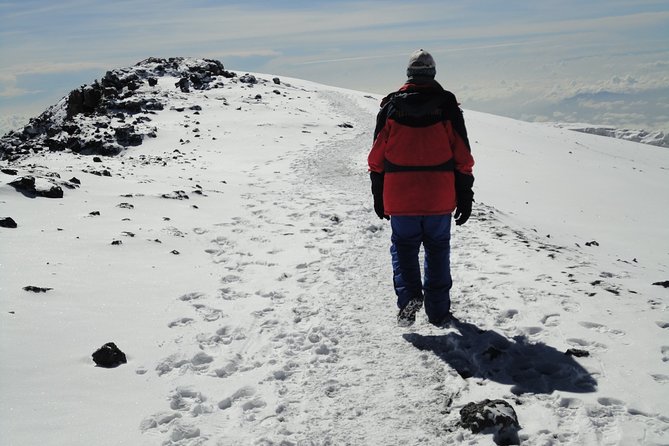
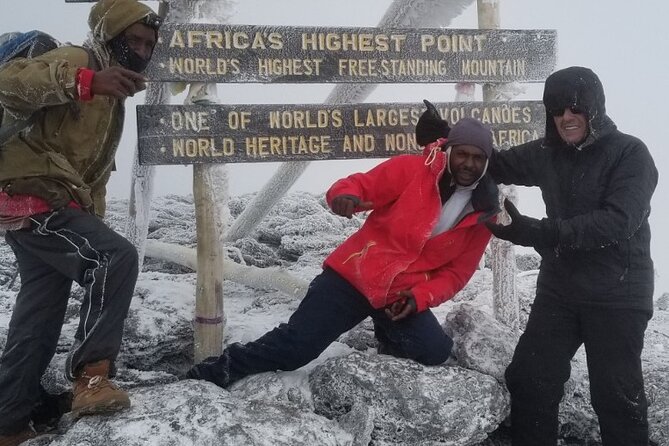
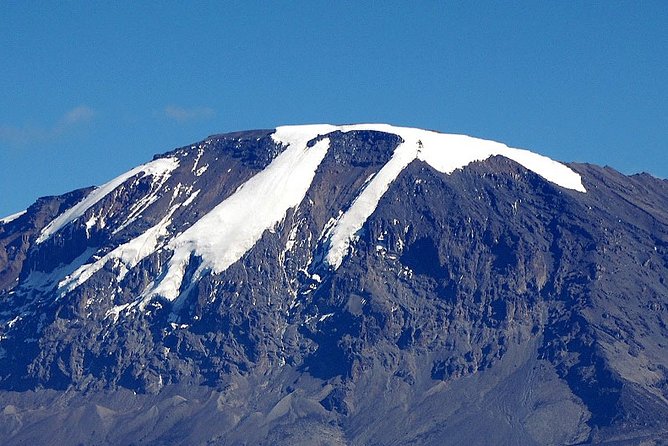
From Stella Point, the route continues along the crater rim toward Uhuru Peak. Snow may appear depending on the season and current storms. The listed summit portion is only one hour, but the total summit day is shown as about 13 hours in the itinerary. That is a better indication of what you should prepare for: a long, exhausting day followed by descent and a return to camp.
The supplied schedule places the Barafu preparation and summit details across days six and seven, with some descriptions truncated or overlapping. Ask the operator to provide the final day-by-day schedule in writing. The important point is clear: the summit attempt begins around midnight and combines a long ascent with a substantial descent.
Day 8: Mweka Gate, certificates, and the return to Moshi
After breakfast, you make a scenic three-hour walk toward Mweka Gate. The itinerary gives the entire day about seven hours because the route continues to Mweka Village, where lunch is served before the drive to Moshi.
At Mweka Gate, you sign the park register and receive your summit certificate if you reached the required point. Climbers who reach Stella Point receive green certificates, while those who reach Uhuru Peak receive gold certificates. That small ceremony gives the final morning a clear sense of closure.
The instructions also stress that tips should be given only after the full crew and all equipment reach the gate safely. This is practical advice. Keep your crew gratuity separate and ready, but wait until the trek is formally complete.
A hot lunch at Mweka Village is a welcome finish after several days of camp food and high-altitude exertion. The drive back to Moshi then ends the experience at the original meeting point.
Food, guiding, and camp support
The package includes eight breakfasts, eight lunches, and seven dinners. That covers the mountain schedule, though it is worth checking exactly how meals are served and what happens on the summit day, when the timing is unusual.
Food service received some of the warmest praise, especially Jackson’s work as chef. On an eight-day climb, meals are not a minor detail. You need regular food that you can actually eat when tired and cold, so the kitchen crew can have a direct effect on your energy and mood.
Guide service also earned strong praise, with Nalisis named as a top part of one successful climb. You should confirm who your lead guide will be, how many climbers each guide supports, and how the company handles a split in pace or an early descent.
The tour allows a maximum of 100 people, which is a large possible group size. That does not mean every departure will have 100 climbers, but you should ask whether your booking is joining a shared group or arranged privately. The description refers to shared and private climbing, while private transportation is listed as an extra, so clarify both points before booking.
What the $1,500 price really covers
At $1,500 per person, the price includes park fees and taxes, meals on the mountain, and the organized climb. For eight days on Kilimanjaro, that can be reasonable value if the route is operated as described and the support crew is properly provided.
The price does not include flights, visas, tips, additional park fees, non-climbing accommodation, private transportation, or hiking support materials. These extras can change your total budget considerably.
The pickup feature is useful, but the meeting point is listed on Shanty Town Road in Tanzania, and the activity ends back there. Ask exactly where hotel pickup applies and whether the drive from Moshi to the gate is included in your booking.
A good value comparison is not just the headline price. You are paying for an eight-day route with more time for altitude adjustment, meals, park access, camp support, and a quieter western approach. You should also budget for warm clothing, trekking equipment, hotel nights, visas, and a fair crew tip.
Who should book this climb?
I would choose this route if you want Kilimanjaro’s broadest range of scenery and prefer a longer schedule over a quick ascent. It suits fit walkers who are comfortable with camping, long days, steep ground, and a midnight summit start.
It is also a good match if acclimatization matters to you. The Shira Plateau crossing and the Lava Tower descent give the itinerary useful time at different elevations.
I would hesitate if you want a relaxed holiday with a little mountain walking added. The 11-hour Shira day, exposed Barafu Camp, long summit push, and high altitude demand real preparation.
The high praise for Nalisis, Jackson, and the wider food and porter team is encouraging. Still, ask for current guide assignments, group size, water arrangements at Barafu, the exact summit-day schedule, and what private transport means in practice.
Cancellation is flexible up to 24 hours before the start for a full refund. Changes made within 24 hours are not accepted, and poor weather may lead to a new date or full refund.
Should you book the Lemosho trek?
You should book this eight-day Lemosho climb if you want a scenic, gradual route and are ready for a demanding high-altitude effort. The route’s best features are its quiet western approach, Shira Plateau views, useful acclimatization pattern, and strong reports about guiding and meals.
Book with clear questions about the schedule and extra costs. If you can handle the long days, plan for the summit night, and accept basic mountain camping, $1,500 offers a solid starting price for one of Kilimanjaro’s most attractive routes. If you need comfort, short walking days, or guaranteed summit success, choose a different kind of holiday.
FAQ
Where does the Kilimanjaro trek begin?
The listed meeting point is on Shanty Town Road in Tanzania. The activity ends back at the meeting point after the drive from Mweka Village.
How long is the Lemosho trek?
The climb lasts approximately eight days.
How much does the experience cost?
The listed price is $1,500 per person.
Is pickup available?
Yes. Pickup is offered, though you should confirm the exact pickup location and transport details before departure.
What meals are included?
The package includes eight breakfasts, eight lunches, and seven dinners.
Are park fees and taxes included?
Yes. All fees and taxes are included in the stated package.
Are flights and visas included?
No. Flights and visas are not included.
Is private transportation included?
No. Private transportation is listed among the exclusions.
What happens if bad weather cancels the climb?
If poor weather causes cancellation, you will be offered another date or a full refund. You can also cancel at least 24 hours before the start time for a full refund.
Just added in Moshi
- Zanzibar: Stone Town tour and Nakupenda beach with Lunch★ 5.0 · 1 review
- day trip lake manyara★ 5.0 · 2 reviews
- Mt Kilimanjaro 6 days Marangu route hike★ 5.0 · 3 reviews
- machame route★ 5.0 · 16 reviews
- Private Cycle to Kilimanjaro Bike Park Safari★ 5.0 · 6 reviews
- West Kilimanjaro cycling Adventures★ 4.5 · 8 reviews
- Wildlife Extravaganza: Manyara, Tarangire & Ngorongoro in 3 Days★ 5.0 · 3 reviews
- 3 Days Private E-Bike Tour in West Kilimanjaro★ 5.0 · 3 reviews
Lemosho Route Climbs, compared.


8-Day Small-group Lemosho Kilimanjaro Summit Trekking
Read our review →



Climbing Kilimanjaro through 8 days Lemosho Route
Read our review →Browse the lists this tour appears in