
Reviewed · MARANGU ROUTE CLIMBS
5 days Marangu Route
The mountain saves its hardest test for midnight. This five-day Marangu Route climb gives you Africa’s highest summit, hut accommodation, airport transfers, meals, and a full support crew for $2,150 per person. I like the route’s varied scenery, from rainforest to high desert, and I like the practical comfort of sleeping in mountain huts rather than tents. The catch is clear: five days is a quick ascent, so you get less time to adjust to altitude than on longer routes.
I also like that this is a private trip, with only your group taking part, and that the staff includes guides, assistant guides, porters, and a cook. The main consideration is stamina. Summit day can last 12 to 15 hours, and the rapid schedule makes this a demanding choice even though the trail itself is well maintained.
In This Review
- Key points to know before you book
- What the $2,150 price really covers
- Day 1: Marangu Gate to Mandara Hut
- Day 2: Mandara to Horombo through changing vegetation
- Day 3: Across the Saddle to Kibo Hut
- Day 4: A 22-kilometer summit day
- Day 5: The long walk back to Marangu Gate
- Why the Marangu Route appeals to many climbers
- The people behind the climb
- Who should choose this five-day climb?
- Practical details to settle before departure
- Should you book the Marangu Route?
- FAQ
- Where does the Kilimanjaro climb start?
- How long does the experience last?
- What route does the climb use?
- Where do you sleep on the mountain?
- How high is Uhuru Peak?
- How long is the summit day?
- Is emergency oxygen included?
- Are meals included?
- Is transportation included?
- Is this a private tour?
Key points to know before you book
- Five days is Kilimanjaro’s quick route: The schedule reaches Uhuru Peak with limited acclimatization time.
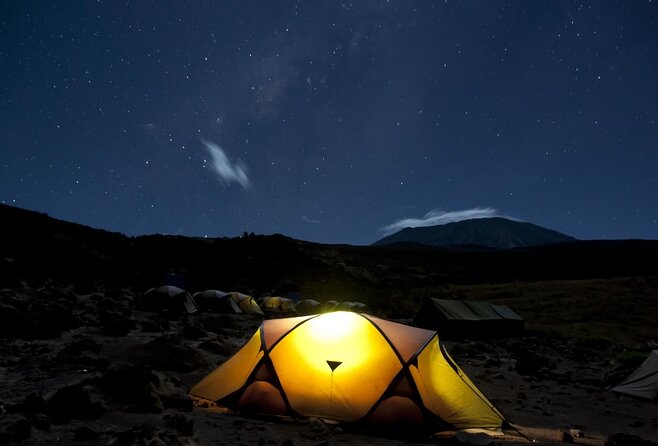
- Huts replace tent camping: You sleep at Mandara, Horombo, and Kibo huts, though camping equipment is also listed among the inclusions.
- The summit day begins around midnight: Expect a 22-kilometer day lasting roughly 12 to 15 hours.
- The support team is a major strength: Guides, assistant guides, porters, and a cook accompany your group.
- The route changes dramatically: You walk through rainforest, heath, moorland, and the bare Saddle high above the trees.
- The $2,150 price covers a lot: Transfers, two hotel nights, meals, park costs, staff wages, water, and emergency oxygen are included.
What the $2,150 price really covers
At first glance, $2,150 is a serious price for five days. Kilimanjaro is not a simple walk-up mountain, though. This fee includes the mountain fees and taxes, airport transfers between Kilimanjaro International Airport and Moshi, one hotel night before the climb, and one night afterward. Dinner and breakfast are included at the hotel.
On the mountain, your price also covers a qualified guide, assistant guides, porters, and a cook. Their wages are included, which matters because a supported climb needs a sizable working team. Fresh drinking water and hot water for washing are provided each day, along with five lunches, four dinners, and four breakfasts.
The package also lists tents, camp chairs, tables, and sleeping mattresses. The day-by-day plan, however, places you in mountain huts at Mandara, Horombo, and Kibo. I would ask the operator to clarify this point before paying. The huts are the stated overnight arrangement, while the camping equipment may be backup equipment or a standard package description.
The price does not cover flights, visas, travel insurance, health insurance, personal trekking gear, snacks, personal medicine, water-purifying tablets, or meals and drinks not listed. A portable toilet is optional but strongly recommended. That last item may sound minor, but comfort becomes a real concern during a long mountain climb.
More Marangu Route climbs:
- Kilimanjaro climb, Marangu route (6-day)
★ 5.0 · 72 reviews - Climbing Kilimanjaro – Marangu Route
★ 5.0 · 65 reviews - Kilimanjaro Climbing 5 days Marangu route
★ 5.0 · 22 reviews
Day 1: Marangu Gate to Mandara Hut
Your day begins with breakfast and pickup from your Moshi lodge. The transfer takes you to Marangu Gate, where the required paperwork is completed before you enter the national park.
The first 8.3 kilometers take about five hours. This is a friendly introduction by Kilimanjaro standards, with a trail through dense rainforest and plenty of plant life. You might also spot primates among the trees, giving the opening hours a little more interest than a simple uphill march.
Mandara Hut sits at about 2,700 meters. After arriving, resting is wise, but you can also ask your guide to lead you to Maundi Crater. From there, you get views toward the Kenyan interior. It is a worthwhile extra walk because it gives you an early sense of the mountain’s broad setting without adding another full day to the schedule.
The first night should also help you judge how your body is responding. Do not treat an easy first day as proof that the summit will be easy. Kilimanjaro becomes much more demanding as the air thins.
Day 2: Mandara to Horombo through changing vegetation
Day two covers about 12.5 kilometers. The schedule describes roughly six to nine hours, so use the longer figure when planning your energy. You leave Mandara after breakfast and soon pass out of the forest.
The trail enters the heath and moor zone, where the dense greenery gives way to more open ground and unusual high-altitude plants. This change is one of the Marangu Route’s pleasures. You can feel the mountain opening up around you, and the views become less enclosed than on day one.
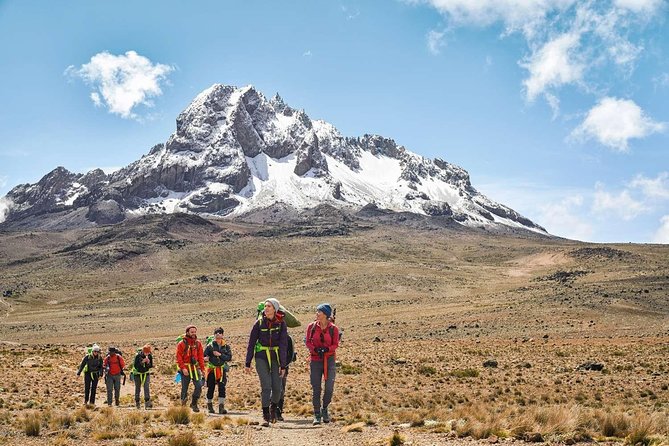
Horombo Hut is at approximately 3,700 meters. From here, the views reach toward Mawenzi, Kibo, and the broad Masai steppe. Mawenzi’s sharp profile and Kibo’s large summit area give you a useful visual map of the days ahead.
This is also where the five-day schedule begins to show its weakness. You gain a substantial amount of altitude in a short time. The itinerary does not include a separate acclimatization day at Horombo, so you need to listen carefully to your guide and take symptoms seriously.
Day 3: Across the Saddle to Kibo Hut
Day three is 9.5 kilometers and takes about seven hours. It may look shorter on paper, but the altitude and open terrain make it a serious day.
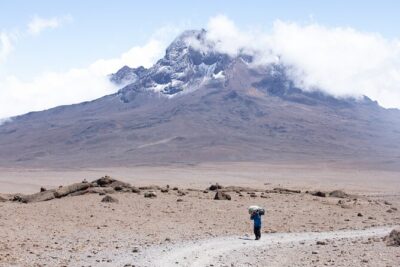
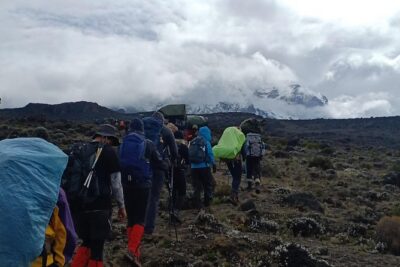
After leaving the heath and moor zone, you pass the Last Water point. From there, the route crosses the Saddle, a broad, nearly vegetation-free plateau linking Kibo and Mawenzi. This is the mountain’s high-altitude desert section. It can feel stark and exposed compared with the rainforest below.
Kibo Hut is your destination, at roughly 4,700 meters. The hut is usually reached after six to seven hours. You eat an early evening meal and go to bed early because the summit attempt begins around midnight.
The timing is not comfortable, but it is practical. You need to get several hours of climbing done before the sun rises. Try to keep this evening quiet and focused. Organizing clothing, water, and personal gear before lying down can save precious time during the midnight start.
A few more options to weigh up in Moshi
- Kilimanjaro climb by Lemosho Route (7-day)
★ 5.0 · 651 reviews - Safari Serengeti And Ngorongoro
★ 5.0 · 288 reviews - Kilimanjaro climb, Machame Route (7-day)
★ 5.0 · 262 reviews - Kilimanjaro Climbing Lemosho Route 8 Days.
★ 5.0 · 186 reviews
Day 4: A 22-kilometer summit day
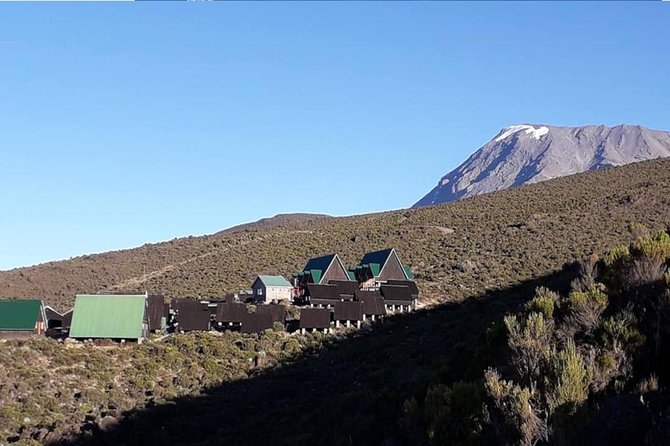
This is the day that determines the character of the whole trip. You begin the final ascent around midnight, climbing slowly through the cold darkness toward the crater rim.
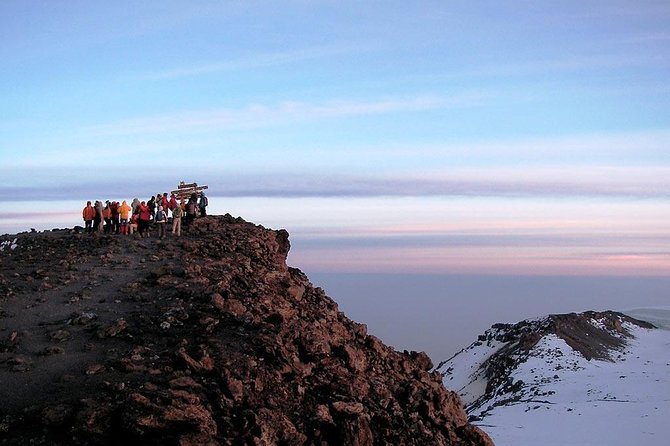
The trail passes Hans Meyer Cave at about 5,220 meters. From there, the route continues upward toward Gillman’s Point at 5,681 meters. Reaching Gillman’s Point means you have gained the crater rim, but you are not yet at Africa’s highest point.
Sunrise should arrive around this stage. The light begins to warm the mountain, and you can see the crater area more clearly. After another one to two hours, you reach Uhuru Peak at 5,895 meters, the highest point in Africa.
The total distance is about 22 kilometers, and the day lasts roughly 12 to 15 hours. After descending to Kibo Hut, you get a warm meal and a one to two-hour rest. Then you continue down to Horombo Hut. This is an exhausting design, with the summit climb and a major descent packed into one day.
Emergency oxygen is provided, but it is intended for emergencies only, not as a way to make the summit easier. That distinction matters. Oxygen is safety equipment, not a shortcut around altitude.
Your guide team is especially important here. The company identifies senior guides including Msafiri, Rama, and Allan, with junior guides also supporting the climb. The personal accounts associated with this trip repeatedly praise the guides, porters, and cooks for being friendly and attentive. That kind of steady support matters most on a day when motivation can disappear somewhere above the Saddle.
Day 5: The long walk back to Marangu Gate
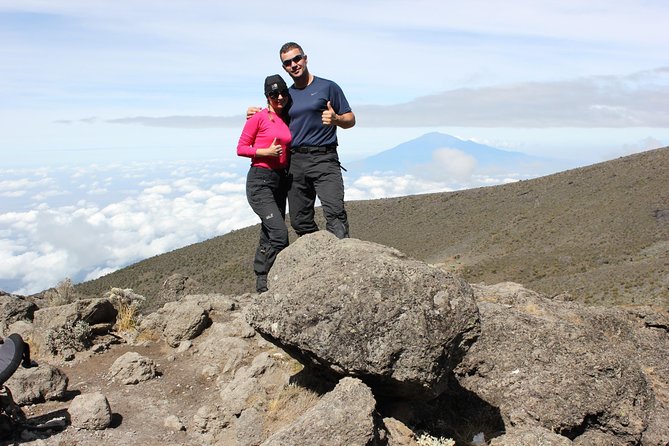
The final stage covers about 20.8 kilometers and is listed as approximately eight hours. Another timing note describes the return to the gate as about six hours, so you should prepare for a full day rather than count on the shorter estimate.
You descend through the heath and moor zone to Mandara Hut, where a warm lunch is planned. From there, the trail returns to the tropical rainforest. The vegetation feels especially noticeable after the bare, cold summit zone.
At about 1,860 meters, Marangu Gate marks the end of the trek. After saying goodbye to your guides, a short transfer takes you back to your Moshi hotel. The included shower, dinner, and breakfast arrangements before and after the climb make this final recovery period easier.
You may feel too tired for a grand celebration at first. Still, having a warm shower and a proper hotel room after five days on the mountain is a small luxury that earns its place in the package.
Why the Marangu Route appeals to many climbers
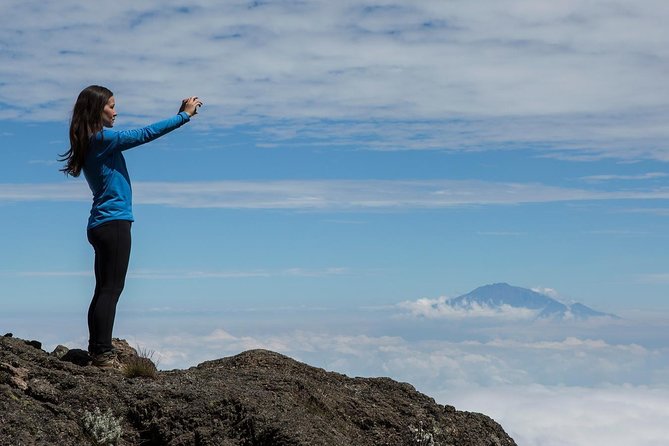
Marangu is often called the Coca-Cola Route because it is popular and direct. That nickname can make it sound easy, but the route still reaches nearly 5,900 meters and includes a punishing summit day.
The trail is well maintained, and the route is straightforward to follow with a guide. Sleeping in huts is another major advantage for people who do not want a tent-based climb. It also keeps the packing demands lower, although you still need personal hiking and trekking gear.
The scenery changes quickly. You begin under dense rainforest, move into heath and moorland, cross the open Saddle, and finish among cold rock and high-altitude terrain. The Maundi Crater stop adds a pleasant viewpoint early in the journey, while Mawenzi and Kibo provide dramatic companions from Horombo onward.
The route’s simplicity is also its limitation. You walk up and down much of the same route, rather than taking a different path for the descent. More important, the five-day schedule gives you fewer nights for altitude adjustment than a longer program.
The people behind the climb
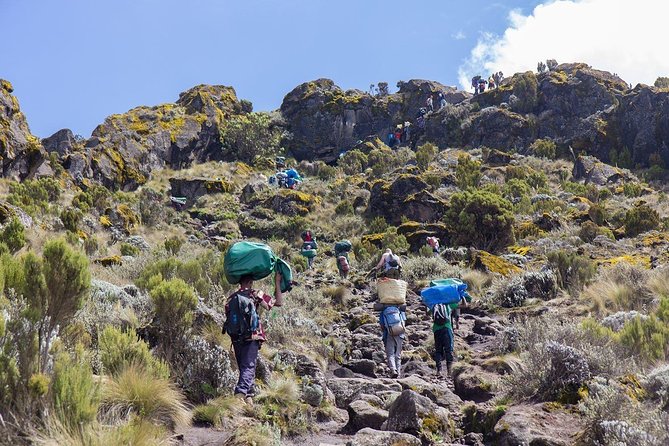
A Kilimanjaro trip depends on more than the trail. Guides set the pace, porters carry shared equipment, and the cook keeps meals moving when you are tired and cold.
The strongest praise for this experience centers on the staff, from porters and cooks to guides and the organizer, Mr. Wence. Msafiri, Rama, and Allan are named as senior guides. The available feedback describes the team as friendly, hardworking, and focused on comfort during the difficult sections.
That does not remove the need for personal preparation. You still need to bring suitable trekking clothes, personal medicine, snacks, and any water-purifying tablets you prefer. But a capable support crew changes the feel of a climb. You can concentrate on your pace and health instead of worrying about food, water, and every piece of shared equipment.
Who should choose this five-day climb?
I would consider this route if you want a private Kilimanjaro experience, prefer hut accommodation, and have limited time in Tanzania. It also suits someone who values included transfers, meals, hotel nights, and a full mountain crew.
You should think twice if your priority is the best possible acclimatization schedule. Five days is the quickest option described here, and the summit day is exceptionally long. A person who wants more time to adjust to altitude may prefer to ask the operator about a longer program before booking.
This trip is also a better match for someone comfortable with an intense physical challenge. The distance figures are substantial, especially on days four and five. The fact that most people can participate does not mean the schedule is gentle.
Pickup is offered from Moshi accommodation, and the airport transfers reduce some arrival-day planning. The activity is private, so your pace and group atmosphere should be more personal than on a large shared departure.
Practical details to settle before departure
Confirmation is provided when you book, and free cancellation is available up to 24 hours before the experience begins. Changes or cancellations inside that window are not accepted for a refund.
Ask about the hut and camping equipment wording before you arrive. Also confirm which personal gear can be rented from the operator’s equipment store in Tanzania. The package specifically excludes your personal trekking gear, so do not assume boots, warm layers, or other clothing will be waiting for you.
Pack for a midnight summit start, not just a daytime hike. Bring snacks and personal medicine because these are not included. Meals are supplied as listed, but extra food and drinks are your responsibility.
Should you book the Marangu Route?
Book this five-day climb if you want a direct, private, well-supported route with huts, strong staff support, and many major costs already covered. The price is easier to justify because it includes airport transfers, Moshi hotel nights, mountain fees, meals, water, equipment support, and staff wages.
Do not choose it simply because it is called the easiest or most popular route. The fast altitude gain and long summit day are real drawbacks. Before paying, confirm the sleeping arrangements, check what gear you can rent, and decide honestly if you are ready for a 12 to 15-hour summit day.
For a short, organized attempt at Kilimanjaro with a praised support team, this is a solid option. For the best margin of comfort and altitude adjustment, I would ask about adding more days.
FAQ
Where does the Kilimanjaro climb start?
The activity starts at Mount Kilimanjaro in Tanzania. Pickup is offered from your lodge in Moshi for the transfer to Marangu Gate.
How long does the experience last?
The climb lasts approximately five days. The program includes a hotel night before the climb and a hotel night after it.
What route does the climb use?
The climb uses the Marangu Route, which passes through rainforest, heath, moorland, the Saddle high-altitude desert, Kibo Hut, and Uhuru Peak.
Where do you sleep on the mountain?
The day-by-day plan places you at Mandara Hut, Horombo Hut, and Kibo Hut. Camping equipment is also listed among the included items, so you should confirm the exact sleeping arrangements with the operator.
How high is Uhuru Peak?
Uhuru Peak is at 5,895 meters, or 19,340 feet.
How long is the summit day?
The summit day covers about 22 kilometers and takes approximately 12 to 15 hours. The final ascent begins around midnight.
Is emergency oxygen included?
Yes. Emergency oxygen is included for emergencies only. It is not provided as summit assistance.
Are meals included?
Yes. The package includes five lunches, four dinners, and four breakfasts. Snacks, extra drinks, and meals not specified are excluded.
Is transportation included?
Return transfers between Kilimanjaro Airport and Moshi are included. A transfer from Marangu Gate back to your Moshi hotel is also included after the climb.
Is this a private tour?
Yes. Only your group participates in the activity. The support team includes a qualified mountain guide, assistant guides, porters, and a cook.
Just added in Moshi
- Zanzibar: Stone Town tour and Nakupenda beach with Lunch★ 5.0 · 1 review
- day trip lake manyara★ 5.0 · 2 reviews
- Mt Kilimanjaro 6 days Marangu route hike★ 5.0 · 3 reviews
- machame route★ 5.0 · 16 reviews
- Private Cycle to Kilimanjaro Bike Park Safari★ 5.0 · 6 reviews
- West Kilimanjaro cycling Adventures★ 4.5 · 8 reviews
- Wildlife Extravaganza: Manyara, Tarangire & Ngorongoro in 3 Days★ 5.0 · 3 reviews
- 3 Days Private E-Bike Tour in West Kilimanjaro★ 5.0 · 3 reviews
Marangu Route Climbs, compared.
Private Full Day Hiking Experience to Marangu Route
Read our review →
From Arusha/Moshi: Kilimanjaro Hike Marangu Route Day Trip
Read our review →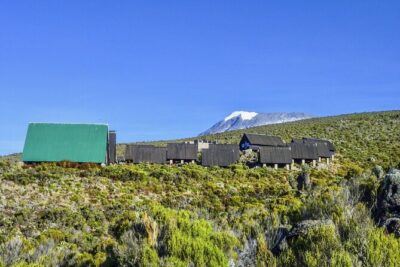
Mount Kilimanjaro Day Hike Through Marangu Route to Mandara Hut
Read our review →
Best Kilimanjaro Adventures 6 Days Marangu Route Experience
Read our review →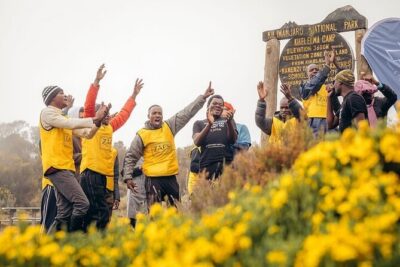
Kilimanjaro Private Climbing in 6 Days Marangu Route
Read our review →Browse the lists this tour appears in