
Reviewed · MARANGU ROUTE CLIMBS
6 Days Kilimanjaro Climbing Marangu Route
Kilimanjaro saves its hardest test for dawn. This six-day climb with Furaha Adventures follows the Marangu Route, the mountain’s oldest and best-known trail, with the special advantage of hut accommodation along much of the route. I like the steady acclimatization day at Horombo and the clear progression from rainforest to moorland, volcanic saddle, and snow near Uhuru Peak. I also like that the package covers park fees, guides, porters, a cook, meals, drinking water, and airport transfers.
The main point to check before paying is the accommodation wording. Marangu is known for huts, but the package details also mention private waterproof mountain tents, while the day-by-day plan names Mandara, Horombo, and Kibo Huts. The summit-day description also mentions Mweka Camp and Barafu, which do not fit the usual Marangu descent. Ask Furaha Adventures to confirm the exact sleeping places and descent route.
In This Review
- The climb in five useful points
- What the $2,000 price really covers
- Day 1: From Moshi to Mandara Huts at 2,723 meters
- Day 2: Heathland, giant plants, and Horombo at 3,721 meters
- Day 3: A second night at Horombo and a useful acclimatization walk
- Day 4: Across the saddle to Kibo Huts at 4,714 meters
- Day 5: Gillman’s Point, Uhuru Peak, and the descent
- Day 6: Back through Mandara to Moshi
- The scenery changes every day
- Who will get the most from this climb?
- Booking details worth checking first
- Should you book this six-day Marangu climb?
- FAQ
- How long is the Kilimanjaro climb?
- What route does the climb use?
- How much does the experience cost?
- Is this a private tour?
- Are airport transfers included?
- Are meals included?
- Is drinking water provided?
- Are guides, porters, and a cook included?
- What is not included in the price?
The climb in five useful points
- Hut-based Marangu route: This is Kilimanjaro’s classic trail, with sleeping huts named in the plan rather than tent camps alone.
- A full acclimatization day: The extra night at Horombo gives you time to rest or walk toward Mawenzi before the summit push.
- Five very different mountain zones: You move from wet rainforest to heath, open moorland, a broad volcanic saddle, and high alpine rock and snow.
- A serious summit morning: You begin between midnight and 2 a.m., reach Gillman’s Point around sunrise, then continue toward Uhuru Peak.
- A private group experience: Only your party takes part, with a professional guide team, porters, cook, and included meals.
- A package with useful inclusions: At $2,000 per person, the price includes park fees, staff wages, purified water, six breakfasts, six lunches, six dinners, and airport transfers.
What the $2,000 price really covers
At $2,000 per person, this is not a cheap mountain walk, but Kilimanjaro costs are tied to park access, staffing, food, transport, and safety support. The package includes all park fees, professional mountain guides, porters, a cook, and their salaries. That matters because the support crew is central to how the climb works, not an optional extra added at the end.
You also receive breakfast, lunch, and dinner for six days, plus clean purified drinking water. Airport transfers are included, which saves you from arranging your first ride in Tanzania. Pickup is offered, and the activity is private, so your group does not have to join strangers on the trail.
The price does not include alcoholic drinks, soft drinks, tips, or personal spending. Plan for tips as part of the real cost. The final day specifically reminds you to thank the guides, cooks, and porters before leaving them at Mandara, so carry enough local cash or otherwise arrange this in advance.
One practical issue deserves attention. The package says it provides private, waterproof, four-season mountain sleeping tents, but the route plan lists hut accommodation. Since Marangu’s appeal is its huts, confirm what you will actually use each night, along with whether the tents are backup equipment or part of the main arrangement.
More Kilimanjaro climbs:
- Kilimanjaro climb by Lemosho Route (7-day)
★ 5.0 · 651 reviews - Kilimanjaro climb, Machame Route (7-day)
★ 5.0 · 262 reviews - Kilimanjaro Climbing Lemosho Route 8 Days.
★ 5.0 · 186 reviews
Day 1: From Moshi to Mandara Huts at 2,723 meters
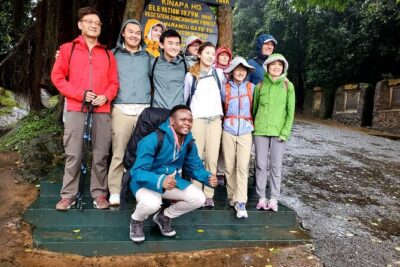
Your first morning begins with a roughly 45-minute drive from Moshi toward the Kilimanjaro National Park gate. The plan refers to passing through Machame Village before reaching the gate, where permits are issued and climbing crews prepare for departure.
Expect some waiting while permits are processed. This is not wasted time. The gate gives you a first look at the practical side of Kilimanjaro, with porters organizing loads and teams getting ready for the trail. Your guide can also use this pause to check that you have the right clothing and equipment.
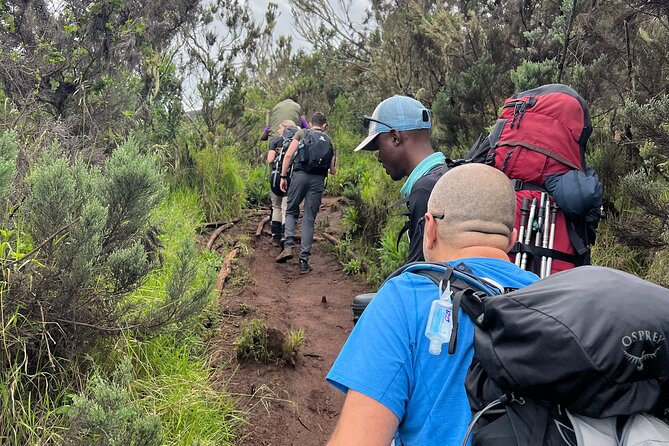
From the gate at about 1,905 meters, the path climbs to Mandara Huts at 2,723 meters. The walk takes about five hours. The first section runs through rainforest, with thick vegetation, damp soil, and changing weather.
This is one of the prettiest parts of the route, but it can also be slippery. Gaiters and trekking poles are specifically recommended, and I would take that advice seriously. Gaiters keep mud and wet vegetation out of your boots, while poles help on slick uphill and downhill sections.
The rainforest is also a good place to pay attention to your guide. You may learn about local plants, wildlife, and the way the forest changes as you gain height. The day is not meant to be a race. A calm pace gives your body the best start for the higher camps ahead.
Day 2: Heathland, giant plants, and Horombo at 3,721 meters
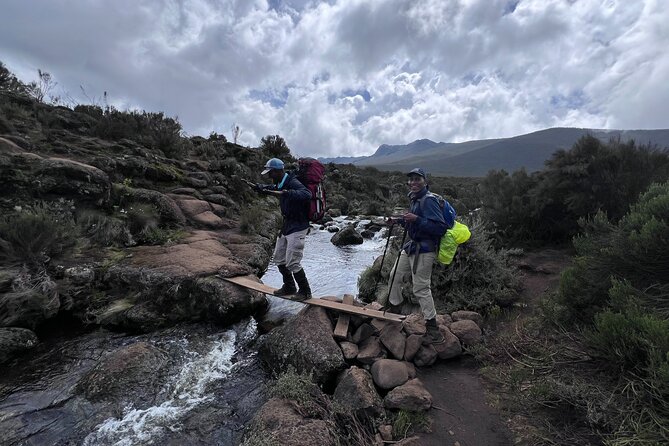
After breakfast, you leave the rainforest behind and climb through heathland. The vegetation becomes shorter and more open, with giant lobelias and groundsels appearing along the trail.
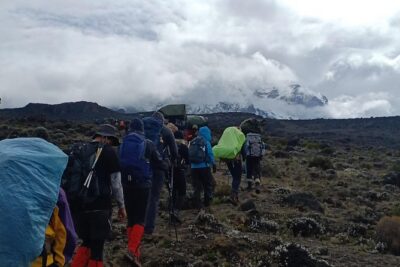
You continue toward open moorland, where small shrubs replace the taller forest growth. This change is gradual but striking. You can see more sky, feel the temperature shift, and begin to understand how quickly Kilimanjaro’s conditions change with altitude.
The walking time is about six hours, from 2,723 meters to Horombo Huts at 3,721 meters. A lunch stop breaks up the climb, with views toward Mawenzi, one of Kilimanjaro’s two major volcanic peaks.
Horombo is an important point in the trip. You are high enough for altitude symptoms to become possible, and temperatures start to fall in the late afternoon. Eat well, drink the supplied purified water, and keep warm once you stop moving.
The huts offer a more sheltered night than a tent would, assuming the hut arrangement is confirmed. You should still expect a basic mountain stay rather than hotel comfort. The value here is protection from the weather and a chance to sleep before the key acclimatization day.
Day 3: A second night at Horombo and a useful acclimatization walk
Day 3 is the reason this six-day schedule is more sensible than rushing upward. You spend a second night at Horombo, either resting at the huts or walking toward Mawenzi base camp before returning to Horombo.
That extra night helps your body adjust to altitude. It also lets you learn how the mountain feels before you reach Kibo, where the air is thinner and the summit attempt begins. You do not need to treat this as a wasted day. A measured walk, followed by rest, is one of the most useful parts of the plan.
The listed activity time is about 12 hours, but that figure appears to include the full day at Horombo rather than 12 hours of hard walking. Confirm the planned walking distance and schedule with your guide. The key idea is simple: go higher during the day, return lower to sleep, and avoid spending the whole day pushing yourself.
This is also a good time to speak openly with your guide about headaches, nausea, unusual tiredness, or trouble sleeping. A professional mountain guide should know how to monitor your condition and adjust the pace or plan when needed.
More Marangu Route climbs:
- Kilimanjaro climb, Marangu route (6-day)
★ 5.0 · 72 reviews - Climbing Kilimanjaro – Marangu Route
★ 5.0 · 65 reviews - Kilimanjaro Climbing 5 days Marangu route
★ 5.0 · 22 reviews - Best Kilimanjaro Adventures 6 Days Marangu Route Experience
★ 5.0 · 18 reviews
Day 4: Across the saddle to Kibo Huts at 4,714 meters
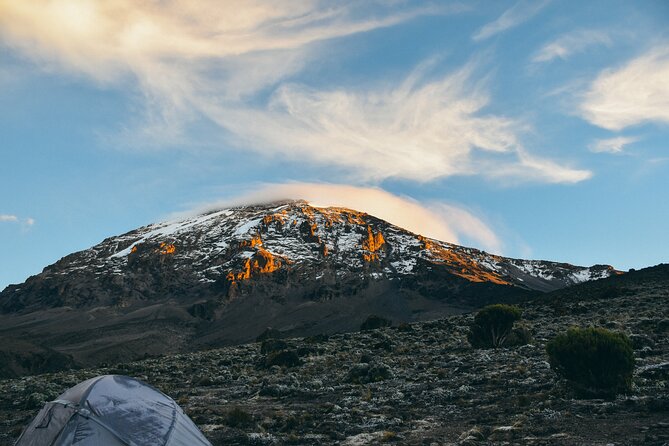
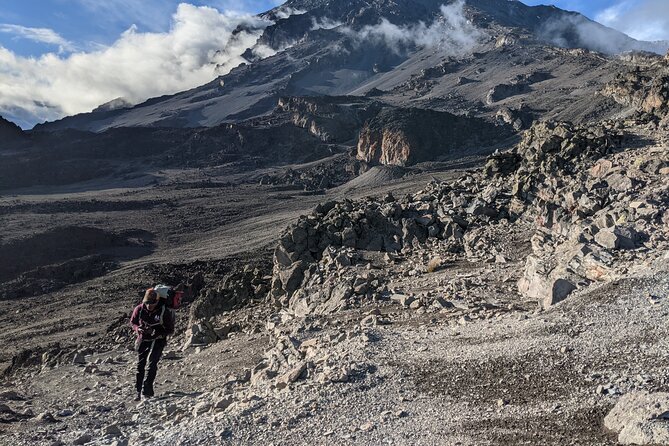
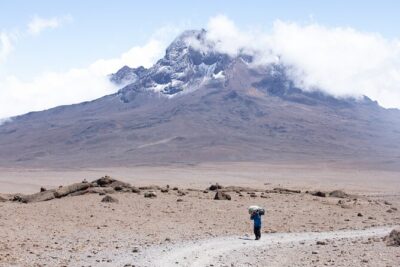
After breakfast, you leave Horombo and cross the broad saddle between Mawenzi and Kibo. The heathland fades into a stark, moonlike high-altitude setting, with fewer plants and more bare volcanic ground.
The walk takes around six hours and gains almost 1,000 meters. Lunch is taken on or near the saddle, where you can look back toward Mawenzi and ahead toward Kibo. This is a valuable visual moment because you can study the route you will follow during the night.
Kibo Huts sit at about 4,714 meters. By now the air is noticeably thin, and even simple tasks can feel tiring. Keep your pace slow and steady. The goal is to arrive with enough strength left for the midnight summit start.
You are likely to have an early dinner and rest before setting out again. The plan lists six hours at Kibo Huts, which makes sense as a short rest before the hardest part of the climb. Ask your guide how meals, water, and rest will be organized around the night start.
Day 5: Gillman’s Point, Uhuru Peak, and the descent
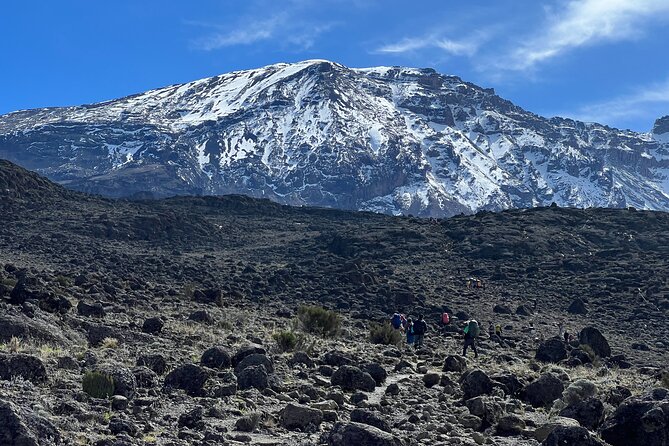
Summit day begins between midnight and 2 a.m. This early start lets you climb through the coldest, darkest hours and aim for sunrise near Gillman’s Point.
The route rises in switchbacks toward the crater rim. This is the toughest physical section, not because the distance is huge, but because of altitude, cold, darkness, and fatigue. Move slowly. Keep your hands, head, and feet warm, and follow your guide’s pace rather than trying to match a faster group.
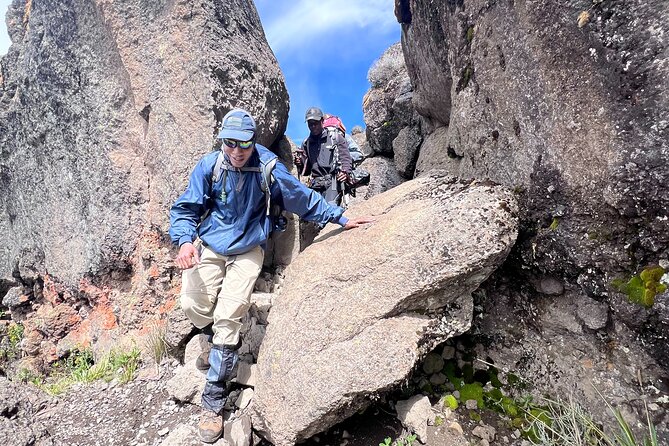
Gillman’s Point offers sunrise views and marks a major achievement. From there, the route to Uhuru Peak is described as roughly another hour, possibly over snow. Uhuru Peak reaches 5,895 meters, the highest point on Kilimanjaro.
Reaching the summit is only half of this day. The descent is steep and tiring, and loose volcanic ground can be hard on knees and ankles. Gaiters and trekking poles are again recommended.
There is an important route discrepancy here. The day description says you descend toward Mweka Camp via Barafu and spend the night at Mweka Camp, but the accommodation stop is labeled Horombo Huts. The next day begins at 3,721 meters and returns through Mandara to the Marangu gate, which suggests a different plan. Before booking, get the exact summit-night and post-summit sleeping plan in writing.
The stated walking time for the main mountain stop is about five hours, but the full summit day will likely feel much longer once the night start, ascent, celebration, and descent are counted. Treat this as the hardest day of the trip and conserve energy from the first morning.
Day 6: Back through Mandara to Moshi
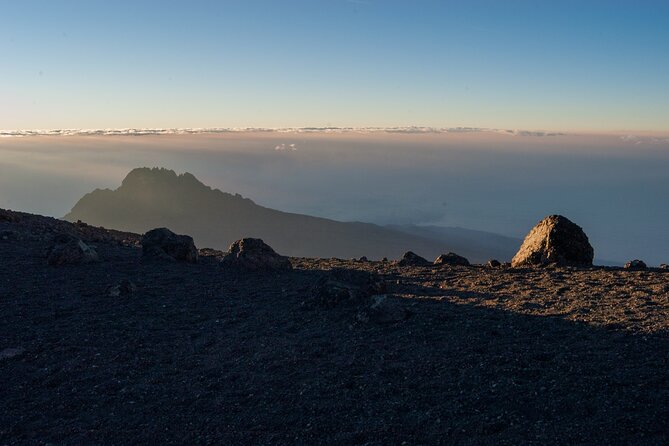
The final descent drops from about 3,721 meters to the park gate at 1,905 meters, losing roughly 1,816 meters. You stop at Mandara Huts for lunch before continuing down through the rainforest.
The lower trail can be wet, muddy, and steep, especially as the weather becomes warmer. Gaiters protect your boots and trousers, while poles help with balance. Your knees may appreciate both after the summit descent.
Before leaving the crew at Mandara, there is a team appreciation ceremony. This is a fitting close to a climb that depends heavily on guides, porters, and cooks. You then continue to the Marangu gate, where summit certificates are issued.
A vehicle takes you back to your Moshi hotel, with the drive listed at about 45 minutes. The promised hot shower and celebratory dinner will feel well earned.
The scenery changes every day
The Marangu Route is popular for good reason. It gives you a clear sequence of environments without requiring a return by the same route through all sections.
You begin in humid rainforest, where the trail may be muddy and the vegetation is thick. Then comes heathland with giant lobelias and groundsels, followed by open moorland and views toward Mawenzi. Higher up, the saddle between Mawenzi and Kibo feels dry, bare, and exposed. Near the summit, snow and volcanic rock replace nearly all plant life.
This variety keeps the route interesting, even on days when altitude makes the walking feel slow. I especially like the Horombo acclimatization day because it gives you time to notice these changes rather than rushing from camp to camp.
The Marangu Route is sometimes called the Coca-Cola Route because of its long popularity. That nickname can make it sound easy or commercial, but the summit remains a serious high-altitude climb. The huts make sleeping simpler, not the mountain lower.
Who will get the most from this climb?
This trip suits you if you want a classic Kilimanjaro route, prefer a private group, and value a planned support team. The extra night at Horombo is a strong feature for anyone who wants a more measured climb.
It may also suit first-time high-altitude trekkers who want a clear schedule and included meals. The guides and porters handle much of the practical work, while the cook prepares the included food and purified water is supplied.
You should think carefully if you dislike very early starts, basic mountain accommodation, muddy trails, or long steep descents. The summit morning is cold, dark, and demanding. No certificate or scenic view changes that.
The route may also be less suitable if you specifically want a quiet trail. Marangu is the best-known route and remains extremely popular. Its huts and familiar route make it accessible, but popularity can mean more activity around the camps.
Booking details worth checking first
Confirmation is provided at booking, and the activity operates as a private tour for your group. Pickup is offered, and the meeting information includes Kilimanjaro Airport and Kilimanjaro National Park in Tanzania.
The stated operating dates run from February 17, 2024, through December 31, 2029. The listed hours are Monday and Tuesday from 7 a.m. to 9 p.m., so confirm the correct pickup time for your arrival and climb date.
Furaha Adventures receives strong praise for its support before and during the climb. Godfrey is specifically praised for helping with the booking process through the final day in Tanzania, while the guides and porters are repeatedly described as friendly and supportive. That personal help can be valuable when you are preparing for a climb with changing weather, altitude, and equipment needs.
You can cancel for a full refund if you do so at least 24 hours before the experience start time. Changes or cancellations made within 24 hours are not accepted for a refund.
Should you book this six-day Marangu climb?
I would consider booking it if you want the classic Marangu Route, a private group, included park and crew costs, and a full acclimatization day at Horombo. The $2,000 price has solid value because it includes the major climbing expenses, meals, water, airport transfers, and staff salaries.
Before committing, ask Furaha Adventures to resolve two points: huts versus private tents, and the post-summit route and sleeping place. If those details match your expectations, this is a well-structured choice for a determined trekker who wants Kilimanjaro’s changing scenery and a supported route without rushing the acclimatization process.
FAQ
How long is the Kilimanjaro climb?
The experience lasts approximately six days.
What route does the climb use?
It uses the Marangu Route, also known as the Coca-Cola Route.
How much does the experience cost?
The listed price is $2,000 per person.
Is this a private tour?
Yes. Only your group participates in the activity.
Are airport transfers included?
Yes. Airport transfers are included, and pickup is offered.
Are meals included?
Yes. The package includes six breakfasts, six lunches, and six dinners.
Is drinking water provided?
Yes. Clean, purified drinking water is included.
Are guides, porters, and a cook included?
Yes. Professional mountain guides are included, along with porters and a cook. Their salaries are covered in the package.
What is not included in the price?
Alcoholic drinks, soft drinks, tips, and personal spending money for souvenirs are not included.
Just added in Moshi
- Zanzibar: Stone Town tour and Nakupenda beach with Lunch★ 5.0 · 1 review
- day trip lake manyara★ 5.0 · 2 reviews
- Mt Kilimanjaro 6 days Marangu route hike★ 5.0 · 3 reviews
- machame route★ 5.0 · 16 reviews
- Private Cycle to Kilimanjaro Bike Park Safari★ 5.0 · 6 reviews
- West Kilimanjaro cycling Adventures★ 4.5 · 8 reviews
- Wildlife Extravaganza: Manyara, Tarangire & Ngorongoro in 3 Days★ 5.0 · 3 reviews
- 3 Days Private E-Bike Tour in West Kilimanjaro★ 5.0 · 3 reviews
Marangu Route Climbs, compared.
Private Full Day Hiking Experience to Marangu Route
Read our review →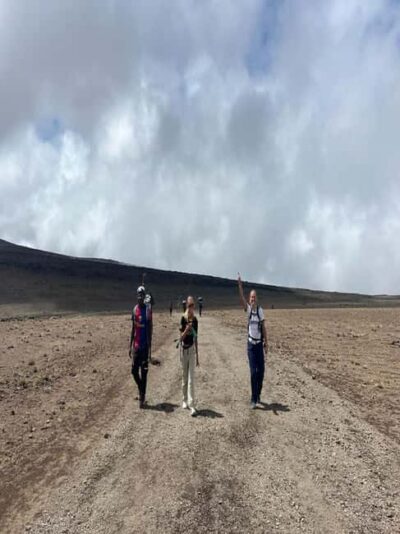
From Arusha/Moshi: Kilimanjaro Hike Marangu Route Day Trip
Read our review →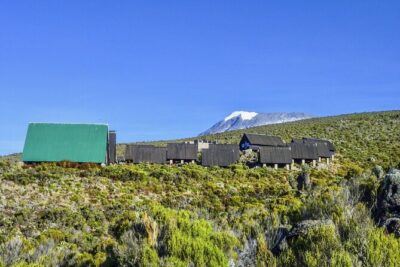
Mount Kilimanjaro Day Hike Through Marangu Route to Mandara Hut
Read our review →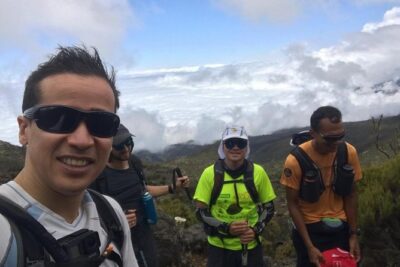
Best Kilimanjaro Adventures 6 Days Marangu Route Experience
Read our review →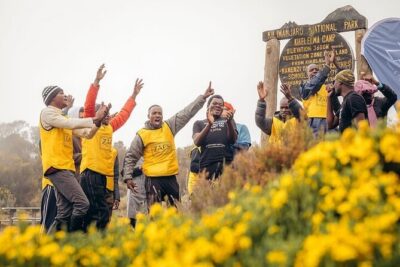
Kilimanjaro Private Climbing in 6 Days Marangu Route
Read our review →Browse the lists this tour appears in