
Reviewed · MACHAME ROUTE CLIMBS
6 Days Machame Route
Africa’s highest point demands patience. Golden Summit Adventures’ six-day Machame Route gives you a direct, challenging path up Kilimanjaro, with changing vegetation, high camps, a midnight summit push, and a final descent through the cloud forest. The private format is especially appealing if you want your own group rather than a shared departure.
I like the steady change from mossy forest to alpine desert, and I like the strong support system of guides, porters, and cooks walking with the group. The main consideration is the pace: the summit day lasts about 15 hours, and the climb to Stella Point is steep, tiring, and made harder by altitude.
In This Review
- What makes this Kilimanjaro climb worth considering
- The route in plain terms
- Day One: Machame Gate to Machame Camp
- Day Two: Crossing the Shira Plateau
- Day Three: High point, Lava Tower option, and Barranco Camp
- Day Four: The Barranco Wall and Barafu Camp
- Day Five: Uhuru Peak and the long descent to Mweka
- Day Six: Mweka Camp to Moshi
- The people behind the climb
- Is $1,900 good value?
- Who should book this route?
- Should you book Golden Summit Adventures?
- FAQ
- How long is the Machame Route experience?
- What is the price per person?
- Where does the experience take place?
- What time does the climb start?
- Is pickup available?
- Is this a private tour?
- Which route does the climb use?
- How long is the summit day?
- Who supports the climb?
- What is the cancellation policy?
What makes this Kilimanjaro climb worth considering
- Machame Gate begins the trek in a moss-covered cloud forest, before the route moves through heather, grassland, high-altitude plants, and barren alpine terrain.
- The Shira Plateau and Barranco Camp provide some of the best scenery, with views toward Kibo, Mawenzi, Mount Meru, glaciers, and striking giant senecio plants.
- The Barranco Wall requires a hands-on scramble, adding a physical challenge that is short but memorable.
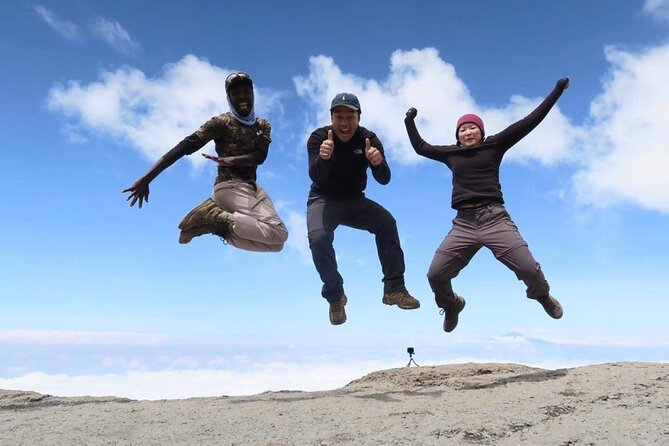
- The summit day starts around midnight, allowing you to reach Uhuru Peak, the highest point in Africa, before descending to Mweka Camp.
- A private group format gives your party the trek to itself, rather than placing you with unrelated participants.
- Support from guides, porters, and cooks is central to the experience, and a past guest specifically praised the staff’s reliability and personal care.
The route in plain terms
Machame is not a sightseeing walk with a few uphill sections. You spend six days gaining height, adjusting to thinner air, and then losing much of that height on foot. The route is rewarding because it changes scenery often, but the physical demands are real.
The daily descriptions suggest hikes of about seven to eight hours on the first four days, a much longer summit day, and seven hours on the final descent. Those times are approximate. Your speed, rest stops, weather, and altitude response will affect the actual day.
The route is also described as a seven-day trek in one part of the first day, even though the experience is sold as six days and the daily plan has six days. That is worth confirming with Golden Summit Adventures before paying, along with the exact camp arrangements and what the $1,900 price includes beyond the listed park admission.
More Machame Route climbs:
- Kilimanjaro climb, Machame Route (7-day)
★ 5.0 · 262 reviews - Climbing Kilimanjaro – Machame Route
★ 5.0 · 170 reviews - Climbing Kilimanjaro through 7 days Machame Route
★ 5.0 · 151 reviews
Day One: Machame Gate to Machame Camp
The day begins around 8 a.m. with departure from Moshi for Machame Gate. The supplied meeting information also names Kilimanjaro Airport, so confirm your pickup point in advance if you are arriving by air rather than staying in Moshi.
At the gate, your climb is registered and the guides, porters, and cooks prepare for the trek. This pause may feel administrative, but it is an important start. It gives the team time to organize supplies and lets you meet the people who will support the climb.
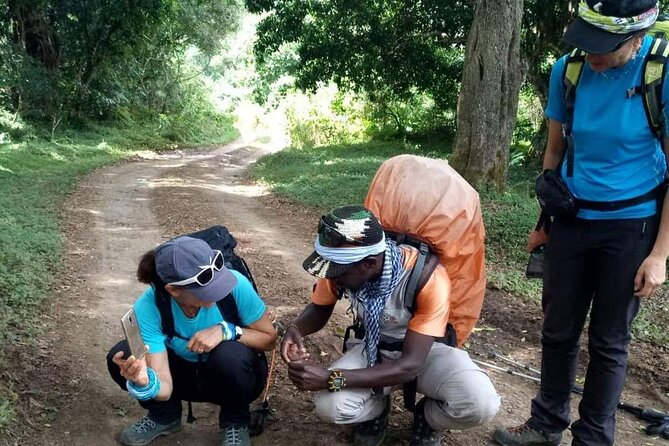
The first walk passes through Kilimanjaro’s cloud forest. Moss-covered trees create a cool, shaded opening, and the vegetation changes as you climb. By the end of the day, the forest begins to thin into heather, tall grasses, and wildflowers.
This is a good first stage because it introduces the mountain gradually. You get a sense of the route without beginning in the stark high-altitude zone. If the weather is clear, you may also see the surrounding area and Kibo Peak, your eventual summit target.
The planned walking time is about seven hours. The first day is still a proper mountain day, so do not treat it as a gentle warm-up. You will want water close at hand and enough energy for the final approach to camp.
Day Two: Crossing the Shira Plateau
The second day is described as the easiest day on the Machame Route, but that does not mean flat. Several uphill sections remain, and the trail is more exposed. On a clear day, sun and heat can become a problem, so carrying plenty of drinking water is practical advice.
The reward is a wider view. From several points, you can look down toward the plains and forests, then up toward Kibo and Mawenzi. The plants also tell the story of your increasing height. Trees become smaller, and high-altitude species such as Senecio kilimanjaro and Lobelia deckenii begin to appear.
After lunch, you climb onto the Shira Plateau. This broad high area was formed when lava from Kibo filled the Shira crater. It feels very different from the forest below, and the open setting can make the mountain seem larger and more remote.
Shira Camp gives you time to rest for the remainder of the day. Kibo lies to the west and Mount Meru to the east, so clear conditions can bring excellent views in both directions.
The seven-hour estimate is manageable only if you respect the altitude. I would keep this day slow and even. The goal is not to reach camp first. The goal is to arrive with enough energy for the harder stages ahead.
Day Three: High point, Lava Tower option, and Barranco Camp
Day three is an important acclimatization day because the trail climbs high before dropping to camp. Although the final elevation gain is only about 110 meters, the route first rises roughly 690 meters to 4,530 meters, then descends to Barranco Camp.
That up-and-down pattern can feel frustrating if you are focused only on reaching a higher camp. It makes sense physiologically, though. You spend time at greater height before sleeping lower, giving your body a useful adjustment period.
The walk begins across the Shira Plateau and continues toward the junction where the Shira and Lemosho Routes meet. The surroundings become increasingly barren, with fewer plants and more exposed ground. After lunch, you reach the highest point of the day before starting the descent.
Faster hikers may take a detour via Lava Tower, a roughly 300-foot lava formation projecting from the mountain. The option is mentioned as a detour, not a required part of the day. I would only consider it if your guide agrees that your pace and condition make sense. On Kilimanjaro, an optional high point is not automatically a good idea.
Barranco Camp is considered the most scenic campsite on this route. It sits among stands of Senecio kilimanjari, one of the mountain’s distinctive giant plants. The seven-hour day ends with a lower sleeping altitude than the high point you reached earlier, which is useful for acclimatization but does not make the route easy.
A few more options to weigh up in Moshi
- Kilimanjaro climb by Lemosho Route (7-day)
★ 5.0 · 651 reviews - Safari Serengeti And Ngorongoro
★ 5.0 · 288 reviews - Kilimanjaro Climbing Lemosho Route 8 Days.
★ 5.0 · 186 reviews - Kilimanjaro climb, Lemosho Route (8-day)
★ 5.0 · 148 reviews
Day Four: The Barranco Wall and Barafu Camp
Day four begins with the Barranco Wall. The scramble takes about an hour and a half and is the most demanding section of the day. In places, you use your hands to help pull yourself upward.
That description matters. This is not presented as a technical climbing pitch, but it is not a simple trail either. You should expect a steep, hands-on section and follow your guide’s route carefully. The challenge is concentrated rather than endless, which makes it easier to approach with patience.
At the top, you descend briefly into the greener Karanga Valley. Then the trail turns upward again toward Barafu Camp. This repeated climb and descent can be tiring, especially after the Barranco Wall, so a steady pace is more useful than a burst of speed.
Along the way, you may see several of Kibo’s glaciers, including the Heim, Kersten, and Decken Glaciers. You also pass the junction linking the Mweka descent route with the Machame trail. That connection becomes important later, when the summit attempt is over and the route turns down.
Barafu means ice, but the setting described here is mostly bleak alpine desert with little vegetation. The camp is a functional place to rest before the summit attempt, not a comfortable scenic retreat. The walking time is about eight hours, followed by an early rest period because the final ascent begins around midnight.
Day Five: Uhuru Peak and the long descent to Mweka
This is the day that defines the climb. Around midnight, you begin the final ascent by headlamp. The first six hours lead toward the crater rim, with the trail becoming steep and physically demanding.
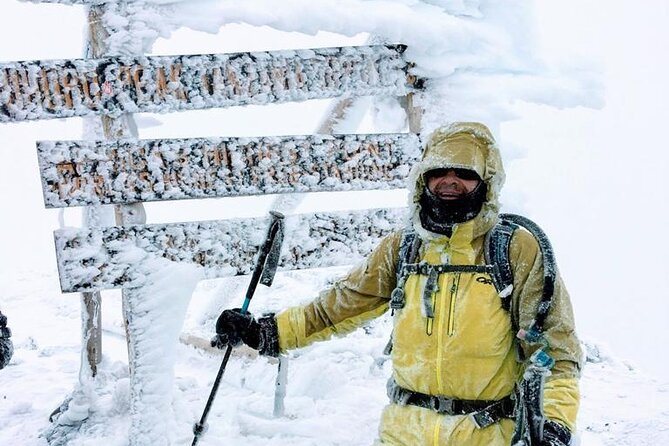
The route reaches the rim at Stella Point. From there, the walk to Uhuru Peak is a more gradual climb, but altitude remains the main problem. A trail can look less steep and still feel extremely hard when the air is thin and you have already been walking for hours.
The crater-rim section takes about an hour. At Uhuru Peak, you have reached the highest point in Africa. The plan allows time for photographs with your guide and group, followed by the descent. Views may include the mountain, crater, and clouds, depending on conditions.
The day is listed at about 15 hours, which is the clearest warning in the entire program. You climb in darkness, reach the summit after several hours, then continue down to Mweka Camp. That is a very long day on tired legs.
You should think of the summit day as two separate efforts: the climb to the top and the descent that follows. Reaching Uhuru is not the end of the work. The route down is necessary, and loose or uneven ground can be hard on knees and ankles.
Day Six: Mweka Camp to Moshi
After breakfast, you finish the trek with a descent to Mweka Gate. This final section passes through Kilimanjaro’s cloud forest, bringing you back into a greener setting after the stark conditions near Barafu and the summit.
The trail can be slippery, so watch your footing. After six days of walking, tired legs may be less stable than you expect. Vehicles wait at the lower station of Mweka Gate for the return to Moshi.
At the gate, you may buy T-shirts and sodas. These small comforts can feel well earned after the summit day. You also leave the guides, cooks, and porters there, so the program specifically reminds you to tip them before departure.
A vehicle then takes you to your Moshi hotel. The stated experience includes pickup offered, but the exact pickup and return arrangements should be confirmed, especially because the meeting information names both Kilimanjaro Airport and the Moshi area.
The people behind the climb
A Kilimanjaro trip is shaped as much by its support team as by the route. This experience uses guides, porters, and cooks who move ahead to prepare camp before you arrive. That arrangement lets you focus on walking, but it also makes tipping an important part of the final day.
One past guest gave particular praise to Elly, describing him as professional and willing to help when a flight cancellation created a problem. Elly reportedly went to the hotel to help arrange a new flight. That detail suggests a level of personal attention beyond the trail itself.
The same account praised the guides, cooks, and porters as friendly and approachable. Another highly positive account described Golden Summit Adventures as reliable, dedicated, experienced, and fun, with a personal relationship continuing after the six-day climb.
Those are useful signs, but two written accounts cannot tell you everything. Ask who your lead guide will be, how many people are in your private group, and how the company handles a slow pace or an unsuccessful summit attempt.
Is $1,900 good value?
The listed price is $1,900 per person. That is a significant sum, but a Kilimanjaro climb requires more than transport to a trailhead. You are paying for a multi-day operation with guides, porters, cooks, camp logistics, park access, and transport back to Moshi, though the supplied information does not spell out every inclusion.
The private format adds value if you want the group to consist only of your own party. You are not simply buying a six-day walk. You are buying organized support on a route where camp preparation, navigation, food service, and transport all need to work together.
Still, do not judge the price without asking for the full inclusion list. Confirm lodging before and after the climb, meals, park fees, transfers, equipment, guide-to-climber ratios, porter welfare practices, and tips. The information confirms admission tickets and pickup availability, but it does not confirm every item included in the $1,900.
Who should book this route?
This climb suits you if you want a private Kilimanjaro experience with a varied route and a serious summit goal. It is a good match for someone who values mountain scenery, accepts long walking days, and understands that the summit attempt begins at midnight.
It may not suit you if you want short daily walks, predictable comfort, or a relaxed holiday rhythm. The Barranco Wall requires scrambling, day three reaches 4,530 meters before descending, and day five lasts about 15 hours.
The program says most travelers can participate, but that should not be read as a promise that the climb will feel easy. You should judge your own fitness and health carefully and discuss any concerns with the operator before booking.
Free cancellation is available up to 24 hours before the start time. Changes or cancellations made inside that window are not accepted for a refund, and the cut-off follows local time.
Should you book Golden Summit Adventures?
I would consider this tour if the private format, six-day schedule, and $1,900 price fit your plans. The route offers excellent variety, from forest to Shira Plateau, Barranco’s giant plants, glaciers, alpine desert, and the summit crater rim.
Before you commit, get the practical details in writing. Clarify the six-day versus seven-day wording, your exact meeting point, and what the price covers. If Golden Summit Adventures gives clear answers and you are ready for the long summit day, this looks like a well-supported route with a personal touch, especially from the positive account about Elly and the approachable support team.
FAQ
How long is the Machame Route experience?
The experience is sold as a six-day trek. The daily walking times range from about seven to eight hours, except for the summit day, which is listed at about 15 hours.
What is the price per person?
The listed price is $1,900 per person.
Where does the experience take place?
The climb takes place on Mount Kilimanjaro in Tanzania, with the tour based around Moshi.
What time does the climb start?
The meeting information gives an 8 a.m. start time. It names Kilimanjaro Airport as the starting point, while the first day describes leaving Moshi for Machame Gate, so confirm your exact pickup location.
Is pickup available?
Yes. Pickup is offered, though the precise pickup arrangements are not provided.
Is this a private tour?
Yes. Only your group participates in the private activity.
Which route does the climb use?
The climb follows the Machame Route, beginning at Machame Gate and continuing through Machame Camp, Shira Camp, Barranco Camp, Barafu Camp, Uhuru Peak, and Mweka Camp before reaching Mweka Gate.
How long is the summit day?
The fifth day is listed at about 15 hours. The final ascent begins around midnight and includes the climb to Uhuru Peak followed by a descent to Mweka Camp.
Who supports the climb?
Guides, porters, and cooks accompany the group. The porters and cooks walk ahead to prepare camp before the group arrives.
What is the cancellation policy?
You can cancel at least 24 hours before the start time for a full refund. Cancellations or changes made less than 24 hours before the start time are not accepted for a refund.
Just added in Moshi
- Zanzibar: Stone Town tour and Nakupenda beach with Lunch★ 5.0 · 1 review
- machame route★ 5.0 · 16 reviews
- day trip lake manyara★ 5.0 · 2 reviews
- Mt Kilimanjaro 6 days Marangu route hike★ 5.0 · 3 reviews
- Private Cycle to Kilimanjaro Bike Park Safari★ 5.0 · 6 reviews
- West Kilimanjaro cycling Adventures★ 4.5 · 8 reviews
- Wildlife Extravaganza: Manyara, Tarangire & Ngorongoro in 3 Days★ 5.0 · 3 reviews
- 3 Days Private E-Bike Tour in West Kilimanjaro★ 5.0 · 3 reviews
Machame Route Climbs, compared.

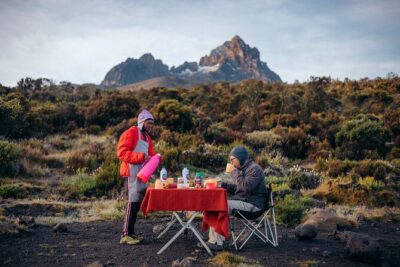
Climbing Kilimanjaro through 7 days Machame Route
Read our review →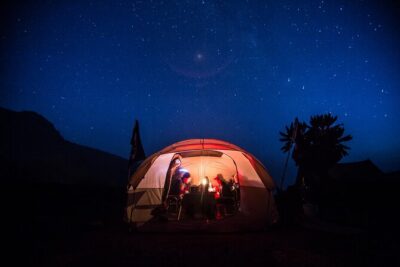
7-Day Machame Kilimanjaro Summit Tour from Arusha
Read our review →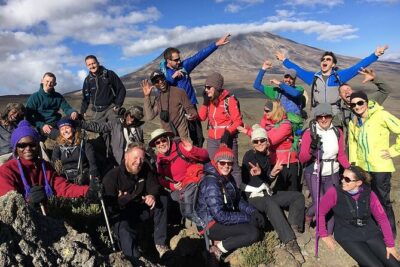
7 Days Kilimanjaro via Machame route affordable price
Read our review →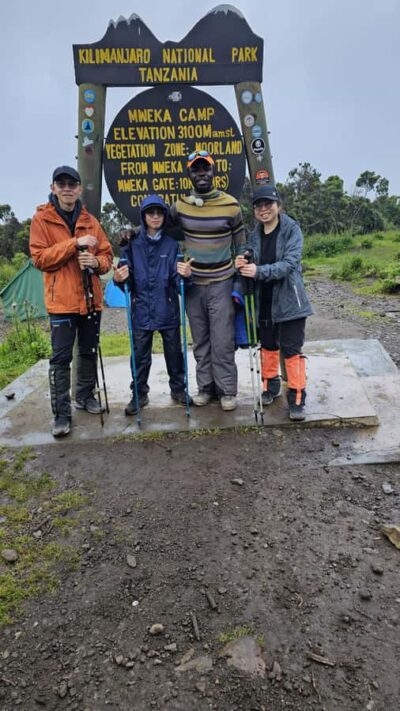
#1. Best Kilimanjaro Day hike Tour-Machame Route-ISMANI
Read our review →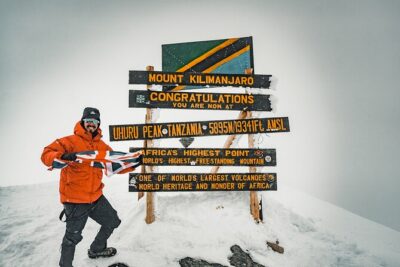
The Best of Machame Route in 6 Days: Your World’s Summit Guide
Read our review →Browse the lists this tour appears in